We all know diet plays a significant role in weight loss. As 2025 begins, many people have set goals to shed extra kilos and adopt healthier lifestyles. From counting calories to trying trendy meals, everyone is searching for the key to sustainable weight loss. But there’s a twist – what works for your friend might not work for you. This is because not all diets are designed equally. So, how can you tell if your diet is truly helping or quietly derailing your efforts? To address this question, celebrity nutritionist Rujuta Diwekar shared three key signs that indicate your diet might not be working.
Also Read:5 Essential Bedtime Rituals You Must Follow To Boost Your Weight Loss Journey
Photo: Pexels.
Here Are 3 Signs You Might Be Following the Wrong Diet:
1. Your Diet Relies on Cloud Kitchens
According to Diwekar, if your diet depends on food from a cloud kitchen and cannot be prepared in your kitchen, it’s not ideal for your health. Additionally, if your diet is limited to foods with English names, such as Greek yoghurt, avocado, and quinoa, rather than items from your local cuisine, it might not lead to sustainable weight loss.
2. Your Diet Includes More Supplements Than Food
Many people rely on supplements to meet their nutritional needs, but Diwekar advises against this approach, especially if supplements outweigh actual food in your diet. Consuming too many supplements without enough real food can harm your mental and gut health. This imbalance won’t aid your weight loss efforts or help you achieve long-term results.
3. Mealtimes Have Become Stressful
Has your diet disrupted the peace during meals? Do you constantly question whether you should have another serving? Are you endlessly scrolling through social media to compare your progress with others? If yes, Diwekar suggests that such a diet is neither practical nor sustainable.
What to Keep in Mind
Your diet should fit your lifestyle and routine, not the other way around. Remember, there’s no such thing as quick weight loss. Sustainable weight loss happens gradually, ensuring you remain healthy and fit in the long run, not just for a few months.
Photo: iStock
What to Avoid on a Weight Loss Journey
Now that you know the signs of an unsuitable diet, here are five things Diwekar advises avoiding during your weight loss journey:
Making Weight Loss Your Only Focus: Constantly thinking about weight loss without seeing immediate results can lead to frustration.
Viewing Adjustment Time as Failure: Your body takes at least three months to respond to consistent changes, so give your diet time to show results.
Treating Exercise as a Chore: Be enthusiastic about exercising, but remember that it cannot make up for an unhealthy diet.
Feeling Guilty About Eating Your Favourite Foods: Don’t criminalise eating foods you enjoy. Indulging occasionally is perfectly fine.
Overusing Fitness Trackers: Obsessively tracking steps and calories can lead to frustration. Instead, focus on consistency and allow results to come naturally.
Also Read:5 Smart Changes To Make In Your Diet Chart For Weight Loss After 30
Disclaimer: This content including advice provides generic information only. It is in no way a substitute for qualified medical opinion. Always consult a specialist or your doctor for more information. NDTV does not claim responsibility for this information.
Winter is the season of cosy mornings and chilly evenings, but it also brings challenges to our health, such as dry skin, reduced immunity, and sluggish digestion. To maintain optimum health and vitality, Dietitian Manpreet Kalra recently shared an ideal day’s diet on Instagram. Her thoughtful meal plan focuses on seasonal foods to keep the body warm, nourished, and energetic. Here’s a detailed look at her recommendations for a balanced winter day.
Also Read: 7 Kinds Of Millets, Health Benefits And Uses Shared By FSSAI
Here’s Ideal Full-Day Meal Plan For Winter, Suggested By Expert:
Morning: Coriander Seeds Water
Start your day with a cup of coriander seeds water. This soothing drink helps detoxify the body, boosts digestion, and reduces inflammation. Coriander seeds are rich in antioxidants, which help strengthen immunity, an essential factor during the cold months.
Breakfast: Vegetable Poha
For breakfast, a hearty bowl of vegetable poha loaded with seasonal vegetables is perfect. Poha, made from flattened rice, is light, easy to digest, and provides sustained energy. The addition of vegetables enhances the fibre, vitamins, and minerals content, ensuring a nutritious start to the day.
Mid-Morning Snack: Black Carrot Kanji
As a mid-meal snack, a glass of black carrot kanji not only quenches your thirst but also nourishes your gut. This fermented probiotic drink is excellent for digestion and immunity. Black carrots, rich in anthocyanins, are also great for skin health and inflammation.
Lunch: Methi & Bajra Stuffed Roti with Mint-Coriander Chutney
For lunch, enjoy 1-2 methi (fenugreek) and bajra (pearl millet) stuffed rotis paired with fresh mint-coriander chutney. Bajra keeps the body warm and provides energy, while methi helps manage blood sugar levels and supports digestion. Mint and coriander chutney add a refreshing zing and are packed with antioxidants.
Post-Lunch: Fennel-Ajwain Water
After lunch, a cup of fennel-ajwain (carom seeds) water aids digestion, prevents bloating and supports metabolism. This calming drink is especially helpful for those who experience heaviness after meals during winter.
Evening Snack: Green Tea with Roasted Makhana
As the evening chill sets in, sip on a cup of green tea accompanied by a handful of roasted makhana (fox nuts). Green tea is loaded with antioxidants and helps boost immunity, while makhana provides protein and essential nutrients without adding excess calories.
Dinner: Broccoli & Carrot Soup
Wrap up your day with a bowl of warm broccoli and carrot soup, enriched with seasonal vegetables. This low-calorie dinner is packed with fibre, vitamins, and minerals, making it both nourishing and easy to digest.
Also Read: How To Make Masala Vegetable Khichdi: A Wholesome Winter Meal
Best Winter Picks for Specific Health Needs:
Dietitian Manpreet Kalra also suggested the best winter foods for people with specific health issues/needs.
Thyroid Health: Start your day with kalonji (black seeds) and coriander seeds tea to support thyroid function.
Diabetes: Methi and bajra-stuffed roti is excellent for stabilizing blood sugar levels.
Gut Health: Black carrot kanji serves as a natural probiotic.
Skin Health: Add red carrot salad to your meals for radiant skin.
Immunity: Fresh ginger and turmeric tea is a powerhouse for fighting infections.
Hair Health: Aliv seeds ladoo, rich in iron and omega-3, can strengthen hair and prevent winter hair fall.
Dietitian Manpreet Kalra’s meal plan embraces the season’s bounty for overall well-being. Stay warm, eat right, and enjoy the cosiness of winter!
Lifestyle News Live: Stay informed with Hindustan Times’ live updates! Track the latest lifestyle news including fashion trends, style guide & Tips, India & World Events. Don’t miss today’s key news for December 10, 2024.
Latest news on December 10, 2024: Fitness coach Ralston D’Souza shared an insightful reel showing how we can hit 1500 calories in a day with a high-protein veg meal.
Lifestyle News Live: Get the latest news updates and breaking news stories from the world of lifestyle. Track all the latest fashion trends, delicious recipes, travel tips and more. Disclaimer: This is an AI-generated live blog and has not been edited by Hindustan Times staff.…Read More
Follow all the updates here:
Dec 10, 2024 1:44 PM IST
Health News LIVE: Looking for high-protein veg meal? Fitness coach shares 1,500 calorie vegetarian meal plan
Fitness coach Ralston D’Souza shared a healthy high-protein meal plan for vegetarians to meet the daily calorie requirement. Check it here.
Fashion News LIVE: Aaliyah Kashyap-Shane Gregoire’s cocktail night: Bride dazzles in red; Khushi Kapoor-Vedang Raina bring the glam
Aaliyah Kashyap and Shane Gregoire hosted a cocktail party. While the bride dazzled in red, her BFF Khushi Kapoor wore a gorgeous lehenga. See who wore what.
Weight loss – it’s something that we can all relate to. Whether you’re trying to fit into your favourite jeans, feel more confident, or just stay healthy, the goal is the same. But no matter how many hours you spend meal prepping, counting calories, or resisting those midnight snacks, the scale doesn’t budge. Sound familiar? You’re not alone. The reality is that even with all the effort you put in, sometimes your diet plan just doesn’t seem to work. If you’ve been feeling stuck, here are some reasons your diet plan might not be delivering the results you’re hoping for.
Also Read:Weight Loss Diets: Types of Fad Diets That Are Popular These Days
How Much of Each Nutrient Is Needed for Effective Weight Loss?
Our bodies need a healthy mix of macro and micronutrients to work properly and lose weight. Consultant nutritionist Rupali Datta explains, “Nutritional requirements are determined by a person’s age, sex, body weight, and physiological status.” Kids need more nutrients per kilogram than adults, and pregnant or lactating individuals have different needs to support their health and baby’s growth. This is why having a personalized plan is crucial for successful weight loss.
Photo: iStock
Here Are 5 Surprising Reasons Your Diet Plan Isn’t Giving You Results:
Even with a strict diet and exercise routine, your plan might not be giving you the results you want. Here’s why:
1. You’re Looking for Quick Fixes
If your goal is to lose a lot of weight fast, your diet plan might not be realistic. Dietician Shweta J Panchal says, “If you’re trying to drop 15-20 kilograms in just 2-3 months, you’re probably setting yourself up for failure.” Such drastic measures are hard to stick with and won’t give you sustainable results. A short-term mindset can make sticking to your plan harder in the long run.
2. You Are Trying Aimlessly
If you’re jumping into a random diet plan you found online with no clear goal in mind, don’t expect great results. As Panchal points out, “If you have any health conditions or abnormal blood tests, a generic plan isn’t going to work for you.” Before you even start changing your diet, it’s all about changing your mindset.
3. Your Diet Isn’t Tailored to You
No two bodies are the same. Everyone has their own routines, schedules, and lifestyles. If your diet plan doesn’t take those things into account, it’s less likely to work in the long run. You might end up making more lifestyle adjustments than your diet is worth.
Photo: iStock
4. You’re Going to Extremes
A lot of people think they can lose weight quickly by going to extreme diets, but those plans aren’t always sustainable. Take the Keto diet, for example – while it may work short-term, dietician Panchal explains that it’s tough to stick with in the long run. The key is balance, not extremes.
5. You’re Not in the Right Mindset
The journey to health starts in your mind. No one can force you to take care of your body – that’s something you need to do for yourself. Having the right mindset can make all the difference in achieving your weight loss goals.
Also Read: Winter Balanced Diet: How To Include 5 Food Components In Winter Diet
Disclaimer: This content including advice provides generic information only. It is in no way a substitute for qualified medical opinion. Always consult a specialist or your doctor for more information. NDTV does not claim responsibility for this information.
Got any tips for sticking to a diet plan? Drop them in the comments!
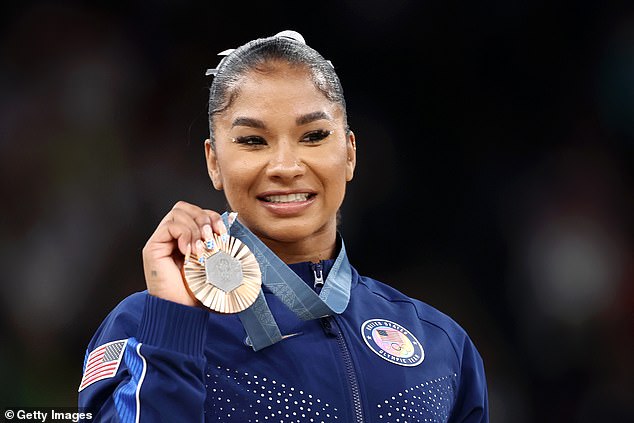
Jordan Chiles has revealed her plan to get into real estate once her gymnastics career comes to a close.
Chiles has not disclosed her timeline from moving off the balance beam and vault permanently. Her success from this past summer has clearly been on Chiles’ mind.
After becoming a huge star while representing Team USA in gymnastics at the Summer Olympics in Paris, Chiles has not kept a low profile.
She lost her bronze medal in the floor exercise competition after an appeal from Romania and Chiles has appeared at several high-profile events around the country.
Chiles is only 23 and has not declared her intentions for the Los Angeles Olympics in 2028. Chiles will be 27 if she competes at the next Olympiad to be held in the United States, the same age Simone Biles was this summer.
‘The future is such a huge word, but there are so many things that you can do within that future,’ Chiles said over the weekend. ‘Well, whenever that happens, I’m going to go into real estate. I love building. I love being creative. I love seeing things just be designed in different ways. That’s one thing.’
Olympic champion Jordan Chiles has stated she wants to get into real estate after she retires
Chiles spoke at the Teen Vogue Summit over the weekend about her future and much more
Chiles also spoke about her personal brand and how she wanted it to be viewed.
‘Do I want to become an actress? 100%. Do I want to sing? Sure. I can say all those things, but in reality, I think it’s just continuing to make a brand for myself and to make sure everybody understands that Jordan Chiles is Jordan Chiles, not just as an athlete, but also as a human.’
Chiles is only 23, the same age as many in their first years out of college. Having a plan for her future is a step in the right direction for her life outside of athletics.
‘When I was younger, I thought success was just going to school every day. I was like, “Oh yes, I’m successful. I got an A on my test. Yes.” No, now that I’m older, there’s a lot of things that go into success.’
‘You can be successful not only within your brand but also with things that you do around yourself, with people, with jobs, with a career, with hobbies.’
‘And also, I still to this day don’t consider myself famous. I don’t consider myself a celebrity. I don’t consider myself anything because I feel like I still have more to do within my community, more to do within myself.’
‘I need to mature. There’s a lot of things. So yes, I look at success differently.’
Share or comment on this article:
Olympic champion Jordan Chiles reveals plan for major career change after gymnastics
The University of Kansas doesn’t have plans to eliminate any of its money-losing Olympic sports despite great uncertainty about whether the athletic department can afford to pay student-athletes in the future, KU’s chancellor said.
The future of those programs — which range from big ones like track and field to smaller ones like golf and tennis — has been the focus of speculation across the country as a federal court in April is expected to finalize a lawsuit settlement that will allow universities to start paying student-athletes. Initially, programs like KU could spend slightly more than $20 million a year to pay student-athletes, over and above the scholarships they often receive. That amount would grow through the years as athletic department revenues grow.
But KU is like many other athletic department programs across the country: It doesn’t know where it would find $20 million a year in its current budget to pay student-athletes. But it also knows that if it doesn’t find the money — the lawsuit settlement will allow but not require schools to pay student-athletes — that remaining competitive in the top tier of college athletics will be very difficult.
Chancellor Douglas Girod has been blunt in saying he doesn’t know how KU is going to solve that problem. He knows it is not a satisfying answer — but it does have the benefit of being an honest one.
“If anyone tells you they have it figured out, they are lying,” Girod said during a brief interview recently. “I have talked to dozens of chancellors and presidents, and they are all scratching their heads.”
At this point, Girod is more comfortable in saying what KU isn’t considering: Cutting sports.
“To be honest, you don’t save a whole bunch of money doing that. It is not really a priority for us,” Girod said of using sports cuts to solve the pending budget crunch.
There may be another reason KU isn’t considering such cuts: The university would face a big loss in status if it cut any sport. Currently, NCAA rules require any university that wants to compete in the highest level of Division I athletics to field 16 sports programs. That is exactly how many KU has currently.
Student-athletes and coaches of KU Olympic sports may still have reason to be wary, though. While cutting entire programs may not be the question floating through the halls of athletic departments, the numbers suggest another question will soon emerge:
Are we in it to win it?
Roster changes
An analysis of the pending legal settlement shows KU will have some decisions to make on whether to invest new money in the Olympic sports. If it doesn’t, those sports may have a hard time competing in the future.
The reason is because major roster changes will come to college athletics as part of the legal settlement. No longer will individual sports have limits on the number of scholarships they can offer. Instead, they will have limits on how large their overall rosters can be.
The change is expected to create two impacts. The most certain one is that some students will see their college athletic careers end because there will no longer be a roster spot for them. Walk-on student-athletes — the term for student-athletes who don’t receive a scholarship — are the most likely to lose spots.
An analysis by the Journal-World found that, compared to 2023 totals, there will be 49 fewer scholarship spots for student-athletes across KU’s 16 sports when the new rules are expected to take effect in 2025-2026. That would be an almost 10% reduction in student-athletes at KU.
But the other impact might be the one that creates havoc in the competitive landscape. Schools now will be allowed to give every student-athlete who is on a roster a scholarship. That is not how the system works today.
Take, for instance, baseball. In 2023, there were 40 players on the roster. However, NCAA rules limit the number of scholarships that can be offered to 11.7, meaning most players are receiving partial scholarships, and all those partial scholarships add up to the equivalent of just less than 12 full-ride scholarships.
In the 2025-2026 school year, the size of the baseball team will shrink to 34 players. Six students will no longer have the chance to be a Jayhawk baseball player. However, all 34 remaining players can receive a full scholarship — if the university invests the money to make it happen.
How much money would that take? I haven’t seen any official numbers from KU, and to be clear, Girod and I did not dive into any of these scholarship issues during our interview. Instead, I looked at the 2023 NCAA financial filings for KU and found that the athletic department provided $15.2 million in student aid to 432 athletes. That’s an average of $35,185 per student-athlete.
If you simply use that average, it would cost about $785,000 per year to fund the approximately 22 new scholarship positions that would be available on the baseball team. That would be about a 20% increase in the total operating expenses of the baseball program. The baseball program in 2023 operated at an approximately $4 million loss.
The story is much the same for every sport other than football and men’s basketball. In total, KU, using the average above, is looking at $6.7 million in additional scholarship money that is needed to bring all its teams — minus football and men’s basketball — to the full scholarship levels. Those programs posted a $28.4 million operating loss in 2023. Only football and men’s basketball in 2023 posted an operating profit. The two sports combined had operating revenues that were $20 million over operating expenses, according to the NCAA filings.
If this were only a money question, the answers would be pretty easy. But college athletics still have elements of education, opportunity and equity. At the end of the day, though, the concept of competition is paramount.
That comes back to the growing question in college athletics: Are you in it to win it?
Take baseball as the example again. KU may decide not to invest the more than $700,000 a year in additional scholarship money to field a team that is fully stocked with scholarship players. But certainly some schools will. That discrepancy is likely to have competitive implications.
That’s the polite way to say it.
Donors to the rescue?
If you have been doing the math as we go, you realize we have a problem. The group of sports that are money-losers lost $28 million, while the two sports that are money-makers made $20 million. We are $8 million short.
Donors, along with other revenue sources, make up the difference. The $8 million gap is deceiving, though. KU had about $52 million in other expenses in 2023 that weren’t tied to any one team. That’s everything from administrative salaries to debt payments to a host of other expenses required to run a $100 million-plus enterprise.
Fortunately for KU, it had about $64 million in revenues that weren’t tied to any one team, with a little less than half that amount coming from donors. Add it all up, and Kansas Athletics ended 2023 with revenues being about $4 million greater than expenses. In the world of college athletics, that is not a given. There are many schools that end the year with a deficit and have to seek money from general university coffers to cover the shortfall. Girod has said multiple times that KU must avoid that situation at nearly all costs.
But that brings us to the 2025-2026 school year. If the lawsuit settlement is approved, KU will need to find about $20 million to pay student-athletes and another $5 million to $7 million, perhaps, to fully stock teams with scholarship players.
Maybe donors could be the answer. Maybe, but a little perspective might be helpful. Donors provided about $29 million to Kansas Athletics in 2023. That would mean donors would need to nearly double their contributions to also cover the $25 million to $27 million gap created by the lawsuit settlement. And, they might need to be prepared to do that year after year. Plus, the cost of the settlement will grow over the years. The settlement is structured such that the amount schools can pay athletes rises as the total revenue of athletic departments increases.
Additionally, there’s a question of how much more donors at KU can give. This lawsuit settlement is hitting KU at a time when it already is tapping donors in a big way for facility improvements. Donors have pledged about $250 million for renovations to the west side of David Booth Kansas Memorial Stadium. It is very likely the university will ask for additional donor dollars to complete the east side of the stadium renovations in the near future. KU is betting the new stadium will create new revenues. It will need to because KU also plans to take out at least $115 million in new debt to help pay for the west side renovations. It is unclear whether it will have to take out additional debt for the east side improvements.
Maybe donors can’t ride to the rescue. Cost-cutting might have to be part of the equation, and KU has hired one of the most renowned accounting firms in the country — Deloitte — to study athletic department finance.
The common fan on the street may be screaming that they can save the firm the trouble — reduce coaches’ salaries. KU did pay $23.5 million in coaching salaries in 2023. That’s a lot, but it also is worth noting that every KU coach could agree to work for free, and you still wouldn’t quite cover the pending $25 million to $27 million shortfall.
The payroll category that actually is larger at KU is the money paid to athletic administrators and support staff. That figure was $28.3 million in 2023. Of course, it is not realistic to simply eliminate that category, which includes everything from the athletic director to administrative assistants.
If you cut 50% from both the coaching category and the administrative category, you would basically cover your projected shortfall. That’s not a recommendation, by the way, but rather an example of how deep the cuts would have to be if you chose to operate with blunt instruments.
That’s an operation that would require a lot of anesthesia.
Of course, you could do nothing. The pending settlement doesn’t require any university to pay student-athletes. It simply allows them to pay student-athletes, and places a cap on how much.
“You don’t have to pay anything,” Jeff DeWitt, the university’s chief financial officer, noted in a recent interview. “It is a cap, not a requirement. But how do you remain the No. 1 ranked in basketball? How do you move up the Big 12 in football?”
Another option is that maybe the Big 12 Conference comes together and creates its own, lower caps on payments and/or scholarships. That may maintain some competitive balance in the conference, but what would happen in postseason play when those Big 12 schools are competing against other schools that are operating with higher caps?
That’s an operation that may require a bunker for university presidents to hide from angry fans and donors who become frustrated at early exits from NCAA tournaments or bowl blowouts.
That seemingly brings us right back to where we began.
“Nobody knows,” DeWitt said of how KU or other athletic departments are going to deal with the pending settlement. “If you want me to give you any certainty, I can’t.”
2023 Profit and Loss by Sport
— Baseball: $4.0 million loss
— Women’s basketball: $4.7 million loss
— Men’s golf: $1.2 million loss
— Women’s golf: $1.0 million loss
— Rowing: $2.2 million loss
— Soccer: $2.4 million loss
— Softball: $2.2 million loss
— Swimming & diving: $1.7 million loss
— Tennis: $1.6 million loss
— Women’s track & field/cross-country: $2.8 million loss
— Men’s track & field/cross-country: $2.8 million loss
— Volleyball: $1.9 million loss
— Men’s basketball: $3 million profit
— Football: $17 million profit
Changing Rosters
Here’s a look at changing roster sizes for the 2025-2026 season compared to 2023 numbers:
— Baseball: down 6
— Men’s cross country: no change
— Women’s cross country: down 2
— Football: down 18
— Men’s basketball: down 2
— Women’s basketball: no change
— Men’s golf: down 2
— Women’s golf: down 3
— Rowing: down 4
— Soccer: down 3
— Softball: up 2
— Swimming: down 2
— Tennis: down 1
— Men’s track: down 5
— Women’s track: down 2
— Volleyball: down 1
Scholarship changes
While roster sizes generally are going down, the number of scholarships the university can offer on each team is generally going up.
A recent study commissioned by the European Investment Bank (EIB) shows that most Bulgarians recognize the need to adapt their lifestyles to the effects of climate change. According to the survey, climate change ranks as the fifth most pressing issue in Bulgaria, following concerns about political instability, living standards, unemployment, and access to healthcare. Many respondents believe that investing in climate adaptation now will help prevent escalating costs in the future.
The survey reveals that 96% of Bulgarians acknowledge the importance of adapting to climate change, which aligns with the EU average. Half of those surveyed consider it a priority for the country in the coming years, while 46% deem it important but not urgent. Additionally, 89% believe that such adaptations require upfront investment to avoid higher costs later on. Furthermore, 88% think that addressing climate change will create jobs and boost the local economy.
Extreme weather events have had a noticeable impact on the Bulgarian population. About 94% of respondents reported experiencing at least one such event in the past five years, significantly higher than the EU average of 80%. Among these, 62% were affected by extreme heat and heatwaves, 48% by forest fires, and 45% by droughts. In particular, 81% of participants noted direct personal impacts from these events, which is 13 percentage points higher than the European average. Notably, 27% faced difficulties in accessing drinking water, while 26% dealt with power outages or energy disruptions.
The experience of these events has led to a strong recognition of the need for change. A total of 74% of Bulgarians say they will need to adjust their lifestyle due to climate change. Among them, 41% (6 percentage points higher than the EU average) believe they may have to relocate to a safer area to avoid floods, forest fires, or extreme weather. Another 34% think they may need to move to a cooler region or country to mitigate the impacts of rising temperatures.
On a personal level, many Bulgarians are aware of the steps they can take to adapt to climate change. About 71% say they understand how to adjust their homes and lifestyles, which is in line with the EU average. However, 55% of Bulgarians are not aware of public subsidies or financial support available for these adaptations, slightly below the EU average of 60%.
Participants also identified key priorities for adapting to climate change, including planting climate-resilient vegetation (48%), which is notably higher than the EU average of 35%. Other priorities include greening urban spaces by expanding green areas (40%) and improving infrastructure, such as better drainage systems, flood barriers, and storm shelters (40%).
MELBOURNE, Australia — How do you remove children from the harms of social media? Politically the answer appears simple in Australia, but practically the solution could be far more difficult.
The Australian government’s plan to ban children from social media platforms including X, TikTok, Facebook and Instagram until their 16th birthdays is politically popular. The opposition party says it would have done the same after winning elections due within months if the government hadn’t moved first.
But a vocal assortment of experts in the fields of technology and child welfare have responded with alarm. More than 140 such experts signed an open letter to Prime Minister Anthony Albanese condemning the 16-year age limit as “too blunt an instrument to address risks effectively.”
Details of what is proposed and how it will be implemented are scant. More will be known when legislation is introduced into the Parliament next week.
Leo Puglisi, a 17-year-old Melbourne student who founded online streaming service 6 News Australia at the age of 11, laments that lawmakers imposing the ban lack the perspective on social media that young people have gained by growing up in the digital age.
“With respect to the government and prime minister, they didn’t grow up in the social media age, they’re not growing up in the social media age, and what a lot of people are failing to understand here is that, like it or not, social media is a part of people’s daily lives,” Leo said.
“It’s part of their communities, it’s part of work, it’s part of entertainment, it’s where they watch content – young people aren’t listening to the radio or reading newspapers or watching free-to-air TV – and so it can’t be ignored. The reality is this ban, if implemented, is just kicking the can down the road for when a young person goes on social media,” Leo added.
Leo has been applauded for his work online. His home state Victoria nominated him for the Young Australian of the Year award, which will be announced in January. His nomination credits his platform with “fostering a new generation of informed, critical thinkers.”
One of the proposal’s supporters, cyber safety campaigner Sonya Ryan, knows from personal tragedy how dangerous social media can be for children.
Her 15-year-old daughter Carly Ryan was murdered in 2007 in South Australia state by a 50-year-old pedophile who pretended to be a teenager online. In a grim milestone of the digital age, Carly was the first person in Australia to be killed by an online predator.
“Kids are being exposed to harmful pornography, they’re being fed misinformation, there are body image issues, there’s sextortion, online predators, bullying. There are so many different harms for them to try and manage and kids just don’t have the skills or the life experience to be able to manage those well,” Sonya Ryan said.
“The result of that is we’re losing our kids. Not only what happened to Carly, predatory behavior, but also we’re seeing an alarming rise in suicide of young people,” she added.
Sonya Ryan is part of a group advising the government on a national strategy to prevent and respond to child sexual abuse in Australia.
She wholeheartedly supports Australia setting the social media age limit at 16.
“We’re not going to get this perfect,” she said. “We have to make sure that there are mechanisms in place to deal with what we already have which is an anxious generation and an addicted generation of children to social media.”
A major concern for social media users of all ages is the legislation’s potential privacy implications.
Age estimation technology has proved inaccurate, so digital identification appears to be the most likely option for assuring a user is at least 16.
Australia’s eSafety Commissioner, an office that describes itself as the world’s first government agency dedicated to keeping people safer online, has suggested in planning documents adopting the role of authenticator. The government would hold the identity data and the platforms would discover through the commissioner whether a potential account holder was 16.
Tama Leaver, professor of internet studies at Curtin University, fears that the government will make the platforms hold the users’ identification data instead.
The government has already said the onus will be on the platforms, rather than on children or their parents, to ensure everyone meets the age limit.
“The worst possible outcome seems to be the one that the government may be inadvertently pushing towards, which would be that the social media platforms themselves would end up being the identity arbiter,” Leaver said.
“They would be the holder of identity documents which would be absolutely terrible because they have a fairly poor track record so far of holding on to personal data well,” he added.
The platforms will have a year once the legislation has become law to work out how the ban can be implemented.
Ryan, who divides her time between Adelaide in South Australia and Fort Worth, Texas, said privacy concerns should not stand in the way of removing children from social media.
“What is the cost if we don’t? If we don’t put the safety of our children ahead of profit and privacy?” she asked.
A Major League Baseball logo at Angel Stadium in Anaheim, California, May 22, 2022.
Ronald Martinez | Getty Images
Major League Baseball and the Atlanta Braves have raised issues with the reorganization plan and future viability of Diamond Sports Group, the country’s largest owner of regional sports networks, according to a Friday bankruptcy court filing.
The Braves and MLB said in the objection that they have “grave concerns” with the current plan, as “there is a substantial likelihood that [Diamond Sports] will find themselves once again in financial distress and/or bankruptcy court in the near future.”
The filing noted that both MLB and the Braves have a vested interest in Diamond Sports succeeding with a reorganization plan, but they are not convinced that the one currently proposed is viable.
A representative for Diamond didn’t immediately comment on the filing. The company has until Wednesday to respond to the objection. Meanwhile, Diamond will seek approval of its reorganization plan from a U.S. bankruptcy judge on Thursday.
MLB and the Braves’ concern stems from a lack of information about the restructuring proposal, which consists of 20 documents for a total of 181 pages, according to the filing. Diamond attorneys have said in court there are limitations to what they can provide in part because of the confidentiality agreements with the company’s distribution partners, such as pay TV operators.
In addition, both the league and Braves have also requested more clarity on what Diamond’s proposed commercial partnership with Amazon will look like. Diamond attorneys have previously said in court that discussions with Amazon are still ongoing.
MLB and the Braves are also concerned about confusion over Diamond Sports’ direct-to-consumer plan, a strategy that has only become more important as more customers exit from traditional cable bundles.
This is not the first time MLB has wanted more information on Diamond’s financial plans. In October, an MLB attorney said in a court hearing that the league wanted additional information on the language used in a recent naming rights agreement deal Diamond struck with FanDuel for the regional sports networks, formerly known as Bally Sports, that Diamond owns.
The Braves are part of publicly traded company Atlanta Braves Holdings after being split off from John Malone’s Liberty Media in 2023. Malone is still a shareholder in the new company in addition to being chairman of Liberty Media.
Diamond Sports had previously said it will retain its contract with the Braves as part of its bankruptcy plan, while attempting to renegotiate its contracts with 11 other MLB teams it has deals with, or drop them.
The Friday objection does not mean that the Braves have turned away from Diamond for their regional media rights.
As of Thursday, the St. Louis Cardinals and Diamond agreed to terms for their local rights, and in an October court hearing, attorneys said that Diamond was nearing an agreement for the Miami Marlins.
On Friday, the Cincinnati Reds said they would exit their regional sport network owned by Diamond, according to a court filing.
Three of the 11 teams that Diamond was attempting to rework contracts with have since turned to MLB to produce their local games.
MELBOURNE, Australia — Australia’s states and territories on Friday unanimously backed a national plan to require most forms of social media to bar children younger than 16.
Leaders of the eight provinces held a virtual meeting with Prime Minister Anthony Albanese to discuss what he calls a world-first national approach that would make platforms including X, TikTok, Instagram and Facebook responsible for enforcing the age limit.
“Social media is doing social harm to our young Australians,” Albanese told reporters. “The safety and mental health of our young people has to be a priority.”
The government leaders had been discussing for months setting a limit, considering options from 14 to 16 years of age.
While Tasmania would have preferred 14, the state was prepared to support 16 in the interests of achieving national uniformity, Albanese said.
The legislation will be introduced into Parliament within two weeks, and the age ban would take effect a year after it passes into law, giving platforms time to work out how to exclude children. The government has yet to offer a technical solution.
The delay is also intended to allow time to address privacy concerns around age verification.
The main opposition party has given in-principle support to the 16-year age limit since it was announced on Thursday, suggesting the legislation will pass the Senate.
The minor Greens party was critical, saying the ban would prevent the emergence in Australia of future child environmental activists like Sweden’s Greta Thunberg.
More than 140 academics with expertise in fields related to technology and child welfare signed an open letter to Albanese last month opposing a social media age limit as “too blunt an instrument to address risks effectively.”
Critics say most teenagers are tech savvy enough to get around such laws. Some fear the ban will create conflicts within families and drive social media problems underground.
Meta, which owns Facebook and Instagram, argues that stronger tools in app stores and operating systems for parents to control what apps their children can use would be a “simple and effective solution.”
The government likens the proposed social media age limit to the laws that restrict the sale of alcohol to adults aged 18 and older across Australia. Children still find ways to drink, but the prohibition remains.
“We think these laws will make a real positive difference,” Albanese said.
But Lisa Given, professor of information sciences at RMIT University, described the legislation as “really problematic.”
“Many of our social networks are actually about the provision of extremely critical information to kids,” Given told Australian Broadcasting Corp.
“There’s no doubt that they’re also facing bullying and other challenges online, but they actually need the social supports to know how to navigate the platforms safely and so they need more support from parents, from care-givers, not less access to a single or multiple platforms,” Given added.
Communications Minister Michelle Rowland said children would retain access to online education and health services.
The legislation would also include strong privacy protections surrounding age verification.
“Privacy must be paramount, including that of children,” Rowland said. “We should also be very clear about the realities. These platforms know about their users in a way that no one else does.”
Rowland said YouTube would likely be included among the mainstream platforms defined under the legislation as age restricted services.
But YouTube Kids could be exempted. Gaming and messaging services would not face age restrictions, she said,
“This legislation would strike a balance between minimizing the harms experienced by young people during a critical period of their development while also supporting their access to benefits as well,” Rowland said.