hacklink hack forum hacklink film izle hacklink marsbahisizmir escortsahabetpornJojobetcasibompadişahbetBakırköy Escortcasibom9018betgit casinojojobetmarsbahis

Tag: plant

  • Taiwan takes a further step in production of AI chips with advanced new plant

    Taiwan takes a further step in production of AI chips with advanced new plant

    TAIPEI, Taiwan — Taiwan took another step in enhancing its key role in the production of advanced semiconductor chips used for artificial intelligence on Thursday with the inauguration of a new plant by Siliconware Precision Industries Co.

    The opening ceremony for the Tan-Ke factory in the central city of Taichung was attended by Jensen Huang, CEO and co-founder of California-based Nvidia Corp., a world leader in the design of AI chips, reinforcing the companies’ partnership in the production of advanced AI chips.

    SPIL is a leader in semiconductor packaging and testing.

    “The technology that we’re working on is becoming more sophisticated. Chips are getting more and more complex, and the packaging technology will need to evolve as well. What’s even more exciting is the integration of silicon photonics, enabling us to connect multiple packages into one massive system,” Huang said.

    He said Nvidia’s partnership with SPIL would be instrumental in pushing the boundaries of innovation in coming years.

    Huang also addressed the broader implications of AI development, saying that AI combined with robotics will bring tremendous benefits to Taiwan’s world-leading electronics industry.

    SPIL expressed enthusiasm for the collaboration, stating that Huang’s visit highlights the strong relationship between the two companies.

    Huang also was to visit Taiwan Semiconductor Manufacturing Co. Ltd., or TSMC, the world’s largest independent contract manufacturer of semiconductors.

    Huang’s visits reflect the critical role Taiwan plays in the global AI supply chain and underscores the growing importance of partnerships between technology leaders like Nvidia and key Taiwanese players in the semiconductor industry.

    The Biden administration has proposed a new framework for exports of the advanced computer chips used to develop AI, an attempt to balance national security concerns with the economic interests of producers and other countries.

    Part of the motivation is to make it “harder for China to circumvent existing restrictions that were focused on China,” said Johannes Himmelreich, a professor who researches AI policy at Syracuse University.

    Chip companies have criticized the policy as hastily drawn up and potentially damaging to the industry.

    Because the proposed framework includes a 120-day comment period, the incoming Republican administration could ultimately determine the rules for sales abroad of advanced computer chips designed mostly by California companies such as Nvidia and AMD but manufactured in locations such as Taiwan and South Korea.

    ___

    Associated Press writers Josh Boak in Washington, DC, and Matt O’Brien in Providence, Rhode Island, contributed to this report.

    Source link

  • A tiny grain of nuclear fuel is pulled from ruined Japanese nuclear plant, in a step toward cleanup

    A tiny grain of nuclear fuel is pulled from ruined Japanese nuclear plant, in a step toward cleanup

    TOKYO — A robot that has spent months inside the ruins of a nuclear reactor at the tsunami-hit Fukushima Daiichi plant delivered a tiny sample of melted nuclear fuel on Thursday, in what plant officials said was a step toward beginning the cleanup of hundreds of tons of melted fuel debris.

    The sample, the size of a grain of rice, was placed into a secure container, marking the end of the mission, according to Tokyo Electric Power Company Holdings, which manages the plant. It is being transported to a glove box for size and weight measurements before being sent to outside laboratories for detailed analyses over the coming months.

    Plant chief Akira Ono has said it will provide key data to plan a decommissioning strategy, develop necessary technology and robots and learn how the accident had developed.

    Despite multiple probes in the years since the 2011 disaster that wrecked the plant and forced thousands of nearby residents to leave their homes, much about the site’s highly radioactive interior remains a mystery.

    The sample, the first to be retrieved from inside a reactor, was significantly less radioactive than expected. Officials had been concerned that it might be too radioactive to be safely tested even with heavy protective gear, and set an upper limit for removal out of the reactor. The sample came in well under the limit.

    That’s led some to question whether the robot extracted the nuclear fuel it was looking for from an area in which previous probes have detected much higher levels of radioactive contamination, but TEPCO officials insist they believe the sample is melted fuel.

    The extendable robot, nicknamed Telesco, first began its mission August with a plan for a two-week round trip, after previous missions had been delayed since 2021. But progress was suspended twice due to mishaps — the first involving an assembly error that took nearly three weeks to fix, and the second a camera failure.

    On Oct. 30, it clipped a sample weighting less than 3 grams (.01 ounces) from the surface of a mound of melted fuel debris sitting on the bottom of the primary containment vessel of the Unit 2 reactor, TEPCO said.

    Three days later, the robot returned to an enclosed container, as workers in full hazmat gear slowly pulled it out.

    On Thursday, the gravel, whose radioactivity earlier this week recorded far below the upper limit set for its environmental and health safety, was placed into a safe container for removal out of the compartment.

    The sample return marks the first time the melted fuel is retrieved out of the containment vessel.

    Fukushima Daiichi lost its key cooling systems during a 2011 earthquake and tsunami, causing meltdowns in its three reactors. An estimated 880 tons of fatally radioactive melted fuel remains in them.

    The government and TEPCO have set a 30-to-40-year target to finish the cleanup by 2051, which experts say is overly optimistic and should be updated. Some say it would take for a century or longer.

    No specific plans for the full removal of the fuel debris or its final disposal have been decided.

    Source link

  • Nevada lithium mine will crush rare plant habitat US said is critical to its survival, lawsuit says

    Nevada lithium mine will crush rare plant habitat US said is critical to its survival, lawsuit says

    RENO, Nev. — Conservationists and a Native American tribe are suing the U.S. to try to block a Nevada lithium mine they say will drive an endangered desert wildflower to extinction, disrupt groundwater flows and threaten cultural resources.

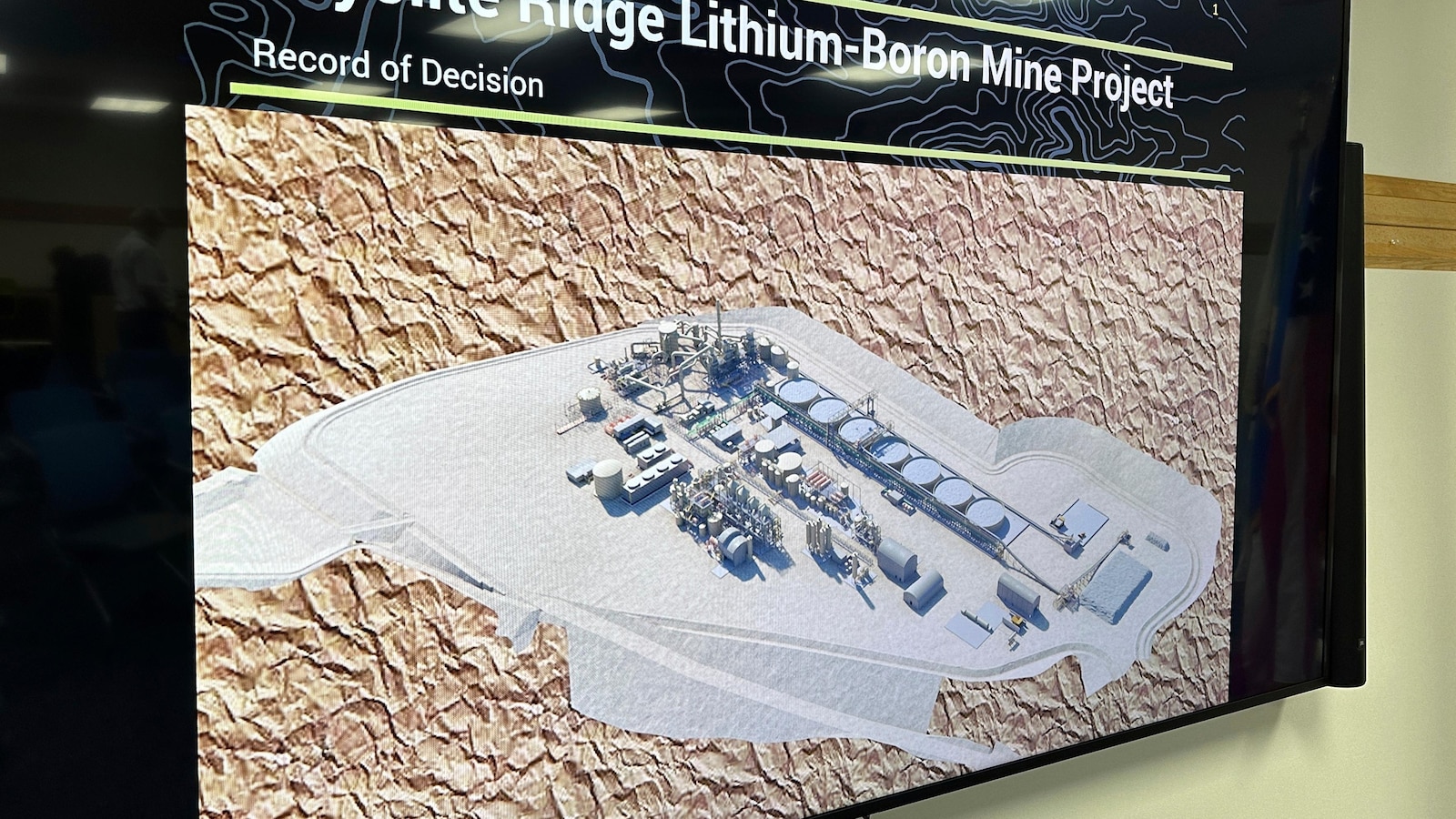
    The Center for Biological Diversity promised the court battle a week ago when the U.S. Interior Department approved Ioneer Ltd.’s Rhyolite Ridge lithium-boron mine at the only place Tiehm’s buckwheat is known to exist in the world, near the California line halfway between Reno and Las Vegas.

    It is the latest in a series of legal fights over projects President Joe Biden’s administration is pushing under his clean energy agenda intended to cut reliance on fossil fuels, in part by increasing the production of lithium to make electric vehicle batteries and solar panels.

    The new lawsuit says the Interior Department’s approval of the mine marks a dramatic about-face by U.S wildlife experts who warned nearly two years ago that Tiehm’s buckwheat was “in danger of extinction now” when they listed it as an endangered species in December 2022.

    “One cannot save the planet from climate change while simultaneously destroying biodiversity,” said Fermina Stevens, director of the Western Shoshone Defense Project, which joined the center in the lawsuit filed Thursday in federal court in Reno.

    “The use of minerals, whether for EVs or solar panels, does not justify this disregard for Indigenous cultural areas and keystone environmental laws,” said John Hadder, director of the Great Basin Resource Watch, another co-plaintiff.

    Rita Henderson, spokeswoman for Interior’s Bureau of Land Management in Reno, said Friday the agency had no immediate comment.

    Ioneer Vice President Chad Yeftich said the Australia-based mining company intends to intervene on behalf of the U.S. and “vigorously defend” approval of the project, “which was based on its careful and thorough permitting process.”

    “We are confident that the BLM will prevail,” Yeftich said. He added that he doesn’t expect the lawsuit will postpone plans to begin construction next year.

    The lawsuit says the mine will harm sites sacred to the Western Shoshone people. That includes Cave Spring, a natural spring less than a mile (1.6 kilometers) away described as “a site of intergenerational transmission of cultural and spiritual knowledge.”

    But it centers on alleged violations of the Endangered Species Act. It details the Fish and Wildlife Service’s departure from the dire picture it painted earlier of threats to the 6-inch-tall (15-centimeter-tall) wildflower with cream or yellow blooms bordering the open-pit mine Ioneer plans to dig three times as deep as the length of a football field.

    The mine’s permit anticipates up to one-fifth of the nearly 1.5 square miles (3.6 square kilometers) the agency designated as critical habitat surrounding the plants — home to various pollinators important to their survival — would be lost for decades, some permanently.

    When proposing protection of the 910 acres (368 hectares) of critical habitat, the service said “this unit is essential to the conservation and recovery of Tiehm’s buckwheat.” The agency formalized the designation when it listed the plant in December 2022, dismissing the alternative of less-stringent threatened status.

    “We find that a threatened species status is not appropriate because the threats are severe and imminent, and Tiehm’s buckwheat is in danger of extinction now, as opposed to likely to become endangered in the future,” the agency concluded.

    The lawsuit also discloses for the first time that the plant’s population, numbering fewer than 30,000 in the government’s latest estimates, has suffered additional losses since August that were not considered in the U.S. Fish and Wildlife Service’s biological opinion.

    The damage is similar to what the bureau concluded was caused by rodents eating the plants in a 2020 incident that reduced the population as much as 60%, the lawsuit says.

    The Fish and Wildlife Service said in its August biological opinion that while the project “will result in the long-term disturbance (approximately 23 years) of 146 acres (59 hectares) of the plant community … and the permanent loss of 45 acres (18 hectares), we do not expect the adverse effects to appreciably diminish the value of critical habitat as a whole.”

    Source link

  • Japanese nuclear reactor which survived earthquake that badly damaged Fukushima power plant restarts

    Japanese nuclear reactor which survived earthquake that badly damaged Fukushima power plant restarts

    TOKYO — A Japanese nuclear reactor which survived a massive 2011 earthquake and tsunami that badly damaged the nearby Fukushima nuclear power plant was restarted Tuesday for the first time since the disaster after a safety upgrade, as the government pursues a renewed expansion of nuclear energy to provide stable power and reduce carbon emissions.

    The No. 2 reactor at the Onagawa nuclear power plant on Japan’s northern coast was put back online and is expected to start generating power in early November, operator Tohoku Electric Power Co. said.

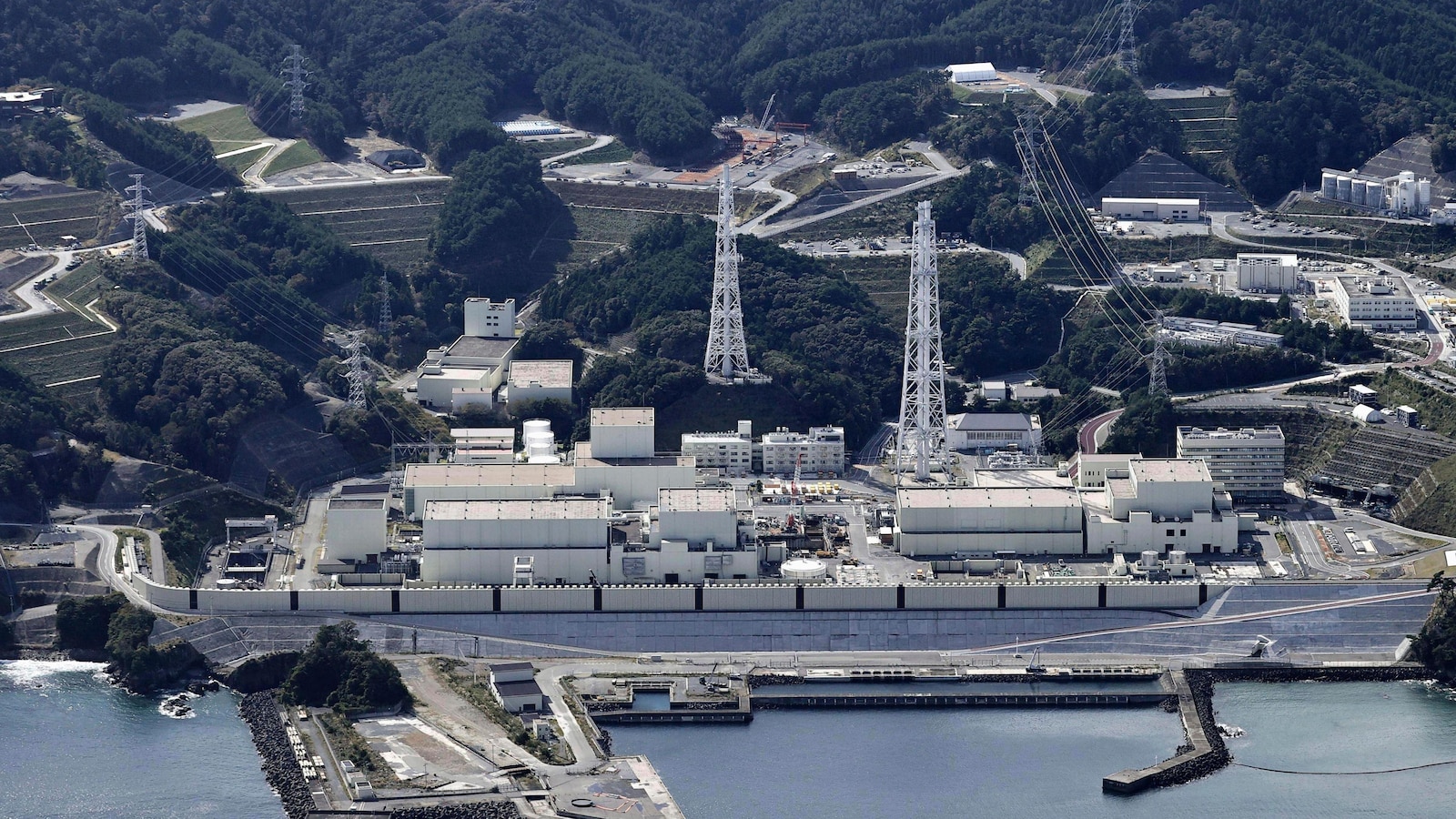
    The reactor is one of the three at the Onagawa plant, which is 100 kilometers (62 miles) north of the Fukushima Daiichi plant where three reactors melted following a magnitude 9.0 earthquake and tsunami in March 2011, releasing large amounts of radiation.

    The Onagawa plant was hit by a 13-meter (42-foot) tsunami but was able to keep its crucial cooling systems functioning in all three reactors and achieve their safe shutdowns.

    All of Japan’s 54 commercial nuclear power plants were shut down after the Fukushima disaster for safety checks and upgrades. Onagawa No. 2 is the 13th of the 33 still useable reactors to return to operation. It is also the first restart in Japan of the same type of reactor damaged in Fukushima.

    Tohoku Electric President Kojiro Higuchi said the reactor’s restart highlights the area’s recovery from the disaster.

    Last year, Japan’s government adopted a plan to maximize use of nuclear energy, including accelerating restarts of closed reactors, extending the operational life of aging plants, and developing next-generation reactors, as the country struggles to secure a stable energy supply and meet its pledge to reach carbon neutrality by 2050.

    “Nuclear energy, along with renewables, is an important power source for decarbonization,” Chief Cabinet Secretary Yoshimasa Hayashi said Tuesday. “We will maximize its use while ensuring safety.”

    Restarting nuclear reactors is also increasingly important for Japan’s economic growth, Hayashi said.

    Concern about the government’s revived push for nuclear energy grew after a magnitude 7.5 earthquake hit Japan’s Noto Peninsula on Jan. 1, 2024, killing more than 400 people and damaging more than 100,000 structures. Minor damage was reported at two nuclear facilities and evacuation plans for the region were found to be inadequate.

    For the Onagawa No. 2 reactor, Tohoku Electric in 2013 began upgrading its safety, including tsunami risk estimates and anti-quake measures. It also built an anti-tsunami wall extending up to 29 meters (95 feet) above sea level, and obtained safety approval from regulators in 2020.

    Twenty-one of Japan’s nuclear reactors, including six at Fukushima Daiichi and one at Onagawa, are currently being decommissioned because their operators chose to scrap them instead of investing large amounts for additional safety equipment required under the much-stricter post-Fukushima safety standards.

    Source link

  • Hyundai has begun producing electric SUVs at its $7.6 billion plant in Georgia

    Hyundai has begun producing electric SUVs at its $7.6 billion plant in Georgia

    SAVANNAH, Ga. — Hyundai has begun producing electric SUVs in Georgia less than two years after breaking ground on its sprawling, $7.6 billion manufacturing plant west of Savannah.

    Hyundai’s factory in Georgia held an “employee-focused celebration” Thursday as its first EV for commercial sale rolled off the assembly line, Bianca Johnson, spokesperson for Hyundai Motor Group Metaplant America, said in a statement provided Monday to The Associated Press.

    “After validating its production processes to ensure its vehicles meet Hyundai Motor Group’s high quality standards, HMGMA has started initial production of customer vehicles ahead of schedule,” Johnson said.

    She said a grand opening celebration at the Georgia plant is expected in the first quarter of 2025.

    The South Korean automaker and battery partner LG Energy Solution plan to employ 8,500 total workers at the Bryan County site, about 50 miles (80 kilometers) west of Savannah, once the plant is fully operational. Hyundai has said it will produce up to 300,000 EVs per year in Georgia, as well as the batteries that power them.

    The plant’s vehicle production areas have been completed and are being staffed by more than 1,000 workers, Johnson said. Its battery-making facilities remain under construction.

    The first vehicles being produced at the Georgia site are 2025 models of Hyundai’s Ioniq 5 electric SUVs. Johnson said those American-made EVs will arrive at U.S. dealerships before the end of this year.

    During the first half of 2024, the Ioniq 5 was America’s second-best-selling electric vehicle not made by industry leader Tesla.

    Hyundai broke ground on its Georgia plant in late October 2022. It’s the largest economic development project the state has ever seen, and came with a whopping $2.1 billion in tax breaks and other incentives from the state and local governments.

    Hyundai rushed to start making EVs in Georgia within two years of groundbreaking, spurred by federal electric vehicle incentives that reward domestic production.

    The Inflation Reduction Act, passed in 2022 with provisions intended to combat climate change, includes a tax credit that saves EV buyers up to $7,500, but only on cars made in North America with domestic batteries. Though Hyundai executives complained the law was unfair, Hyundai President and Global Chief Operating Officer Jose Munoz has also said it caused the automaker to push to open sooner in Georgia.

    Source link

  • A robot begins removal of melted fuel from the Fukushima nuclear plant. It could take a century

    A robot begins removal of melted fuel from the Fukushima nuclear plant. It could take a century

    TOKYO — A long robot entered a damaged reactor at Japan’s Fukushima nuclear power plant on Tuesday, beginning a two-week, high-stakes mission to retrieve for the first time a tiny amount of melted fuel debris from the bottom.

    The robot’s trip into the Unit 2 reactor is a crucial initial step for what comes next — a daunting, decades-long process to decommission the plant and deal with large amounts of highly radioactive melted fuel inside three reactors that were damaged by a massive earthquake and tsunami in 2011. Specialists hope the robot will help them learn more about the status of the cores and the fuel debris.

    Here is an explanation of how the robot works, its mission, significance and what lies ahead as the most challenging phase of the reactor cleanup begins.

    Nuclear fuel in the reactor cores melted after the magnitude 9.0 earthquake and tsunami in March 2011 caused the Fukushima Daiichi nuclear plant’s cooling systems to fail. The melted fuel dripped down from the cores and mixed with internal reactor materials such as zirconium, stainless steel, electrical cables, broken grates and concrete around the supporting structure and at the bottom of the primary containment vessels.

    The reactor meltdowns caused the highly radioactive, lava-like material to spatter in all directions, greatly complicating the cleanup. The condition of the debris also differs in each reactor.

    Tokyo Electric Power Company Holdings, or TEPCO, which manages the plant, says an estimated 880 tons of molten fuel debris remains in the three reactors, but some experts say the amount could be larger.

    Workers will use five 1.5-meter-long (5-foot-long) pipes connected in sequence to maneuver the robot through an entry point in the Unit 2 reactor’s primary containment vessel. The robot itself can extend about 6 meters (20 feet) inside the vessel. Once inside, it will be maneuvered remotely by operators at another building at the plant because of the fatally high radiation emitted by the melted debris.

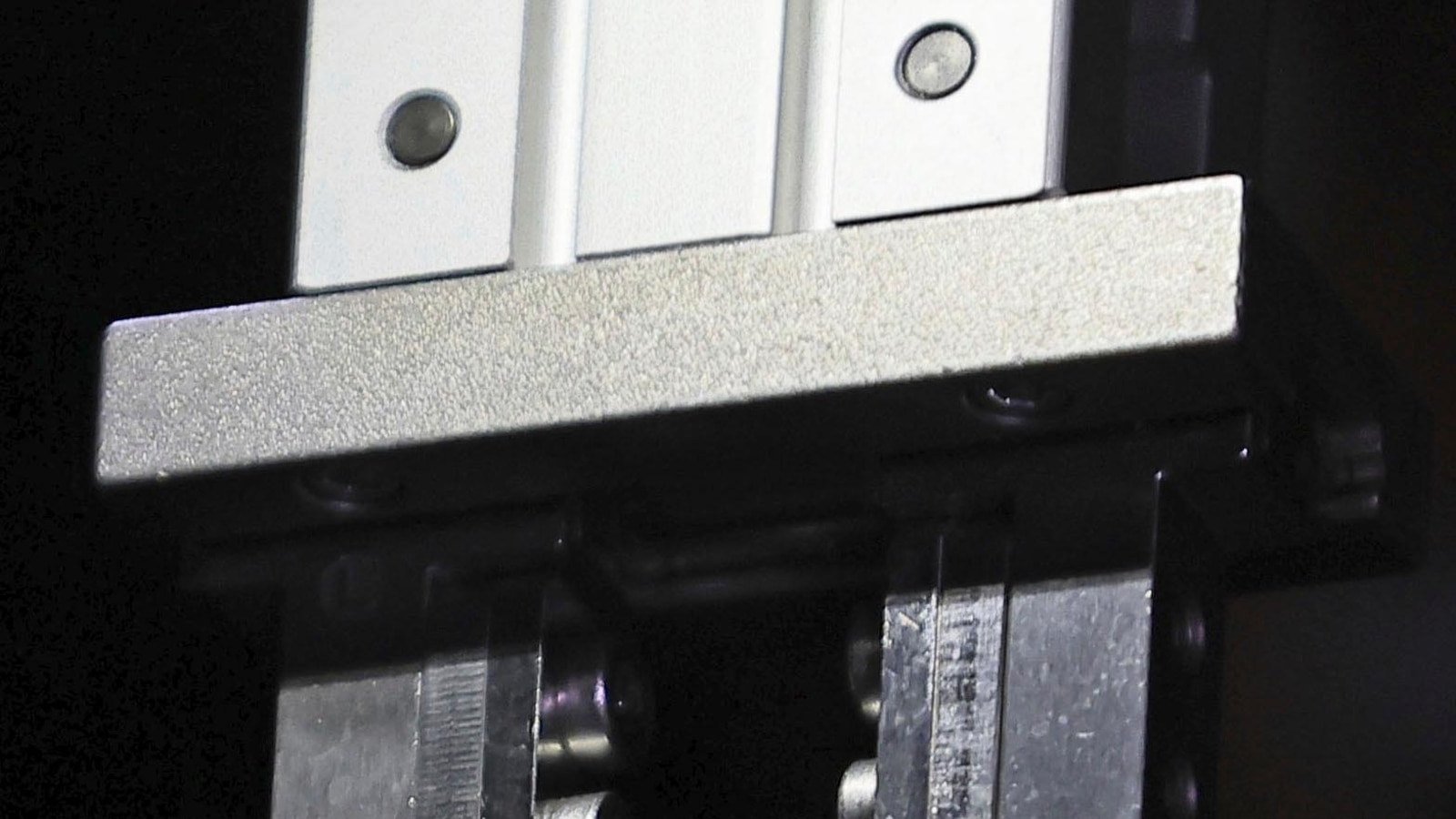
    The front of the robot, equipped with tongs, a light and a camera, will be lowered by a cable to a mound of melted fuel debris. It will then snip off and collect a bit of the debris — less than 3 grams (0.1 ounce). The small amount is meant to minimize radiation dangers.

    The robot will then back out to the place it entered the reactor, a roundtrip journey that will take about two weeks.

    The mission takes that long because the robot must make extremely precise maneuvers to avoid hitting obstacles or getting stuck in passageways. That has happened to earlier robots.

    TEPCO is also limiting daily operations to two hours to minimize the radiation risk for workers in the reactor building. Eight six-member teams will take turns, with each group allowed to stay maximum of about 15 minutes.

    Sampling the melted fuel debris is “an important first step,” said Lake Barrett, who led the cleanup after the 1979 disaster at the U.S. Three Mile Island nuclear plant for the Nuclear Regulatory Commission and is now a paid adviser for TEPCO’s Fukushima decommissioning.

    While the melted fuel debris has been kept cool and has stabilized, the aging of the reactors poses potential safety risks, and the melted fuel needs to be removed and relocated to a safer place for long-term storage as soon as possible, experts say.

    An understanding of the melted fuel debris is essential to determine how best to remove it, store it and dispose of it, according to the Japan Atomic Energy Agency.

    Experts expect the sample will also provide more clues about how exactly the meltdown 13 years ago played out, some of which is still a mystery.

    The melted fuel sample will be kept in secure canisters and sent to multiple laboratories for more detailed analysis. If the radiation level exceeds a set limit, the robot will take the sample back into the reactor.

    “It’s the start of a process. It’s a long, long road ahead,” Barrett said in an online interview. “The goal is to remove the highly radioactive material, put it into engineered canisters … and put those in storage.”

    For this mission, the robot’s small tong can only reach the upper surface of the debris. The pace of the work is expected to pick up in the future as more experience is gained and robots with additional capabilities are developed.

    TEPCO will have to “probe down into the debris pile, which is over a meter (3.3 feet) thick, so you have to go down and see what’s inside,” Barrett said, noting that at Three Mile Island, the debris on the surface was very different from the material deeper inside. He said multiple samples from different locations must be collected and analyzed to better understand the melted debris and develop necessary equipment, such as stronger robots for future larger-scale removal.

    Compared to collecting a tiny sample for analysis, it will be a more difficult challenge to develop and operate robots that can cut larger chunks of melted debris into pieces and put that material into canisters for safe storage.

    There are also two other damaged reactors, Unit 1 and Unit 3, which are in worse condition and will take even longer to deal with. TEPCO plans to deploy a set of small drones in Unit 1 for a probe later this year and is developing even smaller “micro” drones for Unit 3, which is filled with a larger amount of water.

    Separately, hundreds of spent fuel rods remain in unenclosed cooling pools on the top floor of both Unit 1 and 2. This is a potential safety risk if there’s another major quake. Removal of spent fuel rods has been completed at Unit 3.

    Removal of the melted fuel was initially planned to start in late 2021 but has been delayed by technical issues, underscoring the difficulty of the process. The government says decommissioning is expected to take 30-40 years, while some experts say it could take as long as 100 years.

    Others are pushing for an entombment of the plant, as at Chernobyl after its 1986 explosion, to reduce radiation levels and risks for plant workers.

    That won’t work at the seaside Fukushima plant, Barrett says.

    “You’re in a high seismic area, you’re in a high-water area, and there are a lot of unknowns in those (reactor) buildings,” he said. “I don’t think you can just entomb it and wait.”

    Source link