hacklink hack forum hacklink film izle hacklink marsbahisizmir escortsahabetpornJojobetcasibompadişahbetGorabetcasibom9018betgit casinojojobetmarsbahismatbetmatbet

Tag: porn

  • Judge largely blocks Tennessee’s porn site age verification law as other states enforce theirs

    Judge largely blocks Tennessee’s porn site age verification law as other states enforce theirs

    NASHVILLE, Tenn. — A Tennessee law requiring pornographic websites to verify their visitors’ age was largely blocked in court before it was to take effect Jan. 1, even as similar laws kicked in for Florida and South Carolina and remained in effect for more than a dozen other states.

    On Dec. 30, U.S. District Judge Sheryl Lipman in Memphis ruled that Tennessee’s law would likely suppress the First Amendment free speech rights of adults without actually preventing children from accessing the harmful material in question. The state attorney general’s office is appealing the decision.

    The Free Speech Coalition, an adult entertainment trade group, is suing over Tennessee’s law and those in a half-dozen other states. The coalition lists some 19 states that have passed similar laws. One prominent adult website has cut off access in several states due to their laws.

    The issue will hit the U.S. Supreme Court for oral arguments regarding Texas’ law next week.

    No one voted against Tennessee’s law last year when it passed the Republican-supermajority legislature, and GOP Gov. Bill Lee signed off on it.

    The law would require porn websites to verify visitors are at least 18 years old, threatening felony penalties and civil liability possible for violators running the sites. They could match a photo to someone’s ID, or use certain “public or private transactional data” to prove someone’s age. Website leaders could not retain personally identifying information and would have to keep anonymized data.

    The Free Speech Coalition and other plaintiffs sued, winning a preliminary injunction that blocks the attorney general from enforcement while court proceedings continue. However, the coalition expressed concern that private lawsuits or actions by individual district attorneys could be possible.

    In her ruling, Judge Lipman wrote that parental controls on minors’ devices are more effective and less restrictive.

    She wrote that under Tennessee’s law, minors still could access adult sites using VPNs, or virtual private networks, that mask a user’s location. Or, they could view pornographic material on social media sites, which are unlikely to reach the law’s threshold of one-third of its content considered harmful to minors.

    The judge also said the impact could be overly broad, potentially affecting other plaintiffs such as an online educational platform focused on sexual wellness.

    She noted that Tennessee’s definition of “content harmful to minors” extends to include text. She specifically mentioned that the phrase “the human nipple,” or crude combinations of keyboard characters, would be considered harmful as long as they lack “serious literary, artistic, political, or scientific value for minors.”

    Tennessee Attorney General Jonathan Skrmetti’s office is asking the 6th U.S. Circuit Court of Appeals to let the law take effect as the lawsuit proceeds. His spokesperson, Chad Kubis, noted that other appeals courts, including the U.S. Supreme Court, allowed similar laws to take effect.

    “The Protect Tennessee Minors Act institutes common sense age verification to stop kids from accessing explicit obscene content while protecting the privacy of adults who choose to do so,” Kubis said.

    The Free Speech Coalition has argued the law would be ineffective, unconstitutional and force people to transfer sensitive information.

    “This is a deeply flawed law that put website operators at risk of criminal prosecution for something as trivial as a mention of the human nipple,” said Free Speech Coalition Executive Director Alison Boden.

    As verification laws took effect in Florida and South Carolina last week, website PornHub cut off access there and posted a message encouraging people to contact political decision-makers. They’ve acted similarly in other states that passed verification requirements.

    Judges had paused the laws in Indiana and Texas. But circuit appeals courts stepped in to allow enforcement.

    The Supreme Court declined to halt Texas’ law in April while the court action continues. The next step is Supreme Court oral arguments on Jan. 15.

    Another age verification law is set to begin in July in Georgia.

    Source link

  • In South Korea, deepfake porn wrecks women’s lives and deepens gender conflict

    In South Korea, deepfake porn wrecks women’s lives and deepens gender conflict

    SEOUL, South Korea — Three years after the 30-year-old South Korean woman received a barrage of online fake images that depicted her nude, she is still being treated for trauma. She struggles to talk with men. Using a mobile phone brings back the nightmare.

    “It completely trampled me, even though it wasn’t a direct physical attack on my body,” she said in a phone interview with The Associated Press. She didn’t want her name revealed because of privacy concerns.

    Many other South Korean women recently have come forward to share similar stories as South Korea grapples with a deluge of non-consensual, explicit deepfake videos and images that have become much more accessible and easier to create.

    It was not until last week that parliament revised a law to make watching or possessing deepfake porn content illegal.

    Most suspected perpetrators in South Korea are teenage boys. Observers say the boys target female friends, relatives and acquaintances -– also mostly minors —- as a prank, out of curiosity or misogyny. The attacks raise serious questions about school programs but also threaten to worsen an already troubled divide between men and women.

    Deepfake porn in South Korea gained attention after unconfirmed lists of schools that had victims spread online in August. Many girls and women have hastily removed photos and videos from their Instagram, Facebook and other social media accounts. Thousands of young women have staged protests demanding stronger steps against deepfake porn. Politicians, academics and activists have held forums.

    “Teenage (girls) must be feeling uneasy about whether their male classmates are okay. Their mutual trust has been completely shattered,” said Shin Kyung-ah, a sociology professor at South Korea’s Hallym University.

    The school lists have not been formally verified, but officials including President Yoon Suk Yeol have confirmed a surge of explicit deepfake content on social media. Police have launched a seven-month crackdown.

    Recent attention to the problem has coincided with France’s arrest in August of Pavel Durov, the founder of the messaging app Telegram, over allegations that his platform was used for illicit activities including the distribution of child sexual abuse. The South Korean government said Monday that Telegram has pledged to enforce a zero-tolerance policy on illegal deepfake content.

    Police say they’ve detained 387 people over alleged deepfake crimes this year, more than 80% of them teenagers. Separately, the Education Ministry says about 800 students have informed authorities about intimate deepfake content involving them this year.

    Experts say the true scale of deepfake porn in the country is far bigger.

    The U.S. cybersecurity firm Security Hero called South Korea “the country most targeted by deepfake pornography” last year. In a report, it said South Korean singers and actresses constitute more than half of the people featured in deepfake pornography worldwide.

    The prevalence of deepfake porn in South Korea reflects various factors including heavy use of smart phones; an absence of comprehensive sex and human rights education in schools and inadequate social media regulations for minors as well as a “misogynic culture” and social norms that “sexually objectify women,” according to Hong Nam-hee, a research professor at the Institute for Urban Humanities at the University of Seoul.

    Victims speak of intense suffering.

    In parliament, lawmaker Kim Nam Hee read a letter by an unidentified victim who she said tried to kill herself because she didn’t want to suffer any longer from the explicit deepfake videos someone had made of her. Addressing a forum, former opposition party leader Park Ji-hyun read a letter from another victim who said she fainted and was taken to an emergency room after receiving sexually abusive deepfake images and being told by her perpetrators that they were stalking her.

    The 30-year-old woman interviewed by The AP said that her doctoral studies in the United States were disrupted for a year. She is receiving treatment after being diagnosed with panic disorder and post-traumatic stress disorder in 2022.

    Police said they’ve detained five men for allegedly producing and spreading fake explicit contents of about 20 women, including her. The victims are all graduates from Seoul National University, the country’s top school. Two of the men, including one who allegedly sent her fake nude images in 2021, attended the same university, but she said has no meaningful memory of them.

    The woman said the images she received on Telegram used photos she had posted on the local messaging app Kakao Talk, combined with nude photos of strangers. There were also videos showing men masturbating and messages describing her as a promiscuous woman or prostitute. One photo shows a screen shot of a Telegram chatroom with 42 people where her fake images were posted.

    The fake images were very crudely made but the woman felt deeply humiliated and shocked because dozens of people — some of whom she likely knows – were sexually harassing her with those photos.

    Building trust with men is stressful, she said, because she worries that “normal-looking people could do such things behind my back.”

    Using a smart phone sometimes revives memories of the fake images.

    “These days, people spend more time on their mobile phones than talking face to face with others. So we can’t really easily escape the traumatic experience of digital crimes if those happen on our phones,” she said. “I was very sociable and really liked to meet new people, but my personality has totally changed since that incident. That made my life really difficult and I’m sad.”

    Critics say authorities haven’t done enough to counter deepfake porn despite an epidemic of online sex crimes in recent years, such as spy cam videos of women in public toilets and other places. In 2020, members of a criminal ring were arrested and convicted of blackmailing dozens of women into filming sexually explicit videos for them to sell.

    “The number of male juveniles consuming deepfake porn for fun has increased because authorities have overlooked the voices of women” demanding stronger punishment for digital sex crimes, the monitoring group ReSET said in comments sent to AP.

    South Korea has no official records on the extent of deepfake online porn. But Reset said a recent random search of an online chatroom found more than 4,000 sexually exploitive images, videos and other items.

    Reviews of district court rulings showed less than a third of the 87 people indicted by prosecutors for deepfake crimes since 2021 were sent to prison. Nearly 60% avoided jail by receiving suspended terms, fines or not-guilty verdicts, according to lawmaker Kim’s office. Judges tended to lighten sentences when those convicted repented for their crimes or were first time offenders.

    The deepfake problem has gained urgency given South Korea’s serious rifts over gender roles, workplace discrimination, mandatory military service for men and social burdens on men and women.

    Kim Chae-won, a 25-year-old office worker, said some of her male friends shunned her after she asked them what they thought about digital sex violence targeting women.

    “I feel scared of living as a woman in South Korea,” said Kim Haeun, a 17-year-old high school student who recently removed all her photos on Instagram. She said she feels awkward when talking with male friends and tries to distance herself from boys she doesn’t know well.

    “Most sex crimes target women. And when they happen, I think we are often helpless,” she said.

    Source link

  • Riots, poetry, and AI porn: 10 highlights from St Moritz Art Film Festival

    Riots, poetry, and AI porn: 10 highlights from St Moritz Art Film Festival

    Outside, the temperatures have dropped below freezing and there’s a thick coat of snow on the Swiss Alps, but inside the legendary Dracula Club, things are just heating up. An array of international artists and filmmakers are gathered for the award ceremony of the third St Moritz Art Film Festival (SMAFF), hoping to pick up a trophy – a pile of cow poo, cast in bronze by Swiss artist Not Vital – for the best experimental film, full-length feature, or the jury’s ‘love at first sight’. The celebrations will go on late into the night.

    First hosted in 2022, SMAFF was envisioned by the architect and curator Stefano Rabolli Pansera. He was fascinated by the idea that a film festival, in its purest form, is a “beam of light [with] the force of gravity to attract people from all over the world,” he tells Dazed between films at the plush Scala Cinema. “It is ultimately a territorial project.” The territory it covers is broad, too, with curators fielding film applications – 1,756 this year alone – from artists and filmmakers all over the world, spanning the UK, Europe, and the US, Mongolia, India, Lebanon, Iran, Argentina, and more.

    Róisín Tapponi, the Assyrian Iraqi and Irish writer, plus founder of Shasha Movies and Habibi Collective, joined the curatorial team for this year’s edition, titled Meanwhile Histories and themed around time. For her, one of the main draws of the festival is its unique and intimate structure, which caters to real film lovers, rather than an audience of big film industry players. “The biggest joy of film festivals is watching films,” she says. “That’s purely the focus of this.”

    The festival is far from “provincial” in its ambitions, adds Stefano, but it is small, partly because it has to be: St Moritz is little more than a village in the middle of the Alps. The Scala has a slide and a James Turrell-decorated bar, but only one screen, with 108 seats (such glitzy surroundings can be slightly ironic, notes one nameless filmmaker over dinner, after a screening of a documentary on radical class conflict). The small scale works to its advantage, though, because it means there’s no obligation to fill 2,000 seats. This leaves a lot of room for freedom and experimentation. 

    In fact, Stefano describes the curation process as an “act of resistance against entertainment”. OK, this might conjure an image of bloated art films that feel about as exciting as watching paint dry, but what it really means is that the festival isn’t afraid to disturb or provoke (see: Paul McCarthy’s scatological closer, starring eroticised AI facsimiles of Adolf Hitler and Eva Braun – it doesn’t get much more provocative than that). Tapponi has plenty of experience with the political side of this conversation, facing censorship for her platforming of Palestinian films after October 7. But at SMAFF, she says: “There’s the freedom to show whatever we want to show.”

    Below, we’ve gathered ten highlights from the 2024 iteration of St Moritz Art Film Festival.

    We rarely think about sirens until we’re already deep in a state of emergency. The Spanish-born, London-based artist Aura Satz places these preemptive technologies in the spotlight, investigating their role in a modern world plagued by endless emergencies, interconnecting crises, and increasing alarm fatigue. Against a backdrop of sublime drone shots and newly-imagined siren sounds – composed by the likes of Kode9, Moor Mother, Laurie Spiegel, and Debit – the filmmaker explores sirens as warning systems for natural and manmade disasters, but also tools of colonial domination and state suppression. On a more existential scale, she asks: what use is a siren against slow, incalculable processes like ecological collapse? Dark and deeply insightful, the film is an urgent warning in and of itself, and rightfully picked up a bronze cow pat at this year’s festival.

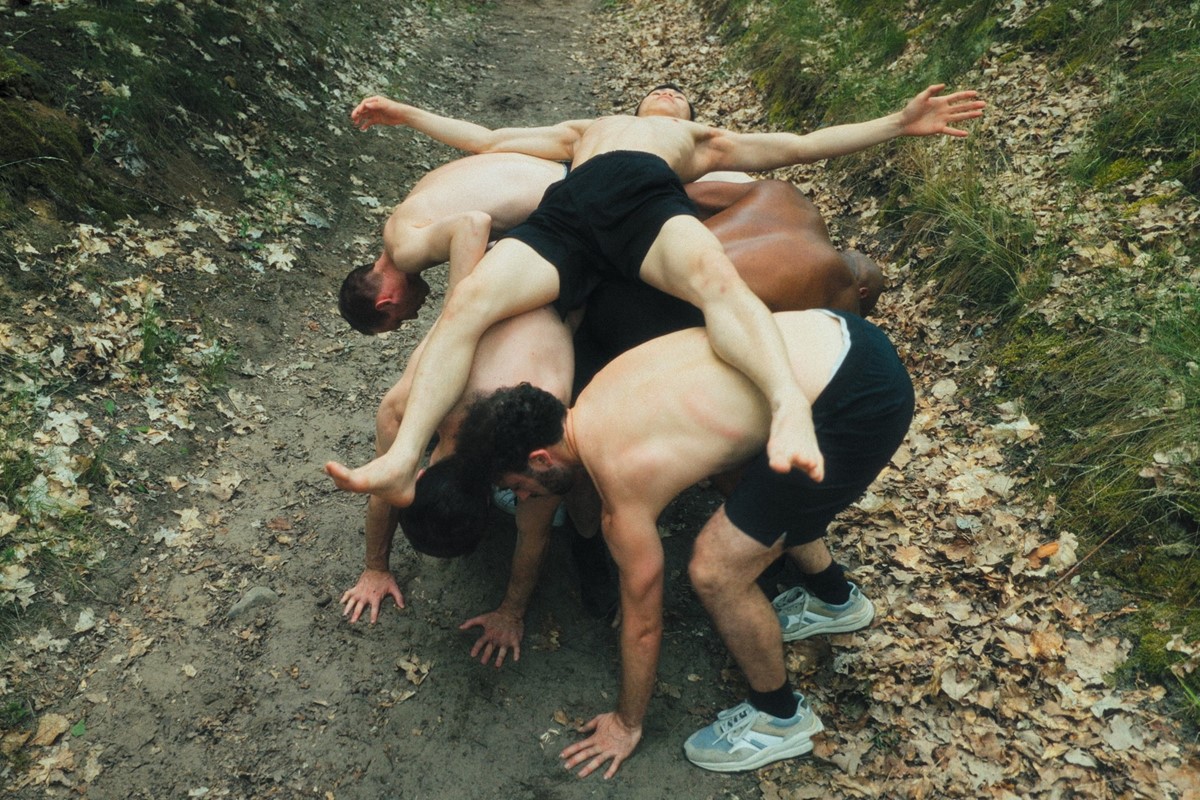
    In the second entry of his planned seven-film series taking titles from days of the week, the Korean director Young-Jun Tak places two polar opposites in direct opposition: the “hyper-femininity” of a gay male dance group, staging a take on Kenneth MacMillan’s 1974 ballet Manon in a Berlin forest and notorious cruising site, and the “hyper-masculinity” of Easter celebrations by Spanish Legion soldiers based in Malaga, lifting a crucifix into the air. Selected for the ‘Love at First Sight’ award, Love Your Clean Feet on Thursday uses these sensual performances to explore questions about gender, sexuality, and the forms they take in the midst of a public spectacle.

    Sparked by a series of student occupation protests, the burst of civil unrest that saw barricades block Paris streets in May 1968 continues to resonate to this day. The iconic French-American photographer and filmmaker Michel Auder was there to capture it, but lost the footage shortly after. Ten years later, he would return to the site of the demonstrations to interview some of those that took part, finally resulting – after a 45-year wait – in the footage we see today, in May ‘68 in ‘78. What’s most striking about the film is not the introduction (which sees Jean Tinguely recall an erotic scene between two male elephants at Amsterdam zoo) but the multifaceted sense it gives of a revolution that was, depending how you look at it, a social and cultural turning point or a farcical piece of political theatre.

    Martine Syms’ SHE MAD is an ongoing video series, and S1:E4 is just one, darkly comic episode. In it, graphic designer Martine experiences a flashback to T-Zone, a week-long summer camp from her childhood, where teenage girls are coached in self-confidence by a flamboyant supermodel and business mogul. With a visual style and patterns of speech lifted from US reality shows, the camp degenerates into chaos as the leader segregates the girls based on their race, and encourages them to yell offensive stereotypes at each other in a misguided attempt at fostering solidarity. It’s not every day that a work of ‘capital A’ Art has a cinema full of viewers laughing out loud.

    Argentine filmmaker Eduardo Williams took home the third SMAFF award (best short and experimental film) for Parsi, which sets a trancelike poem by Mariano Blatt to 360-degree footage by young people from Guinea-Bissau’s queer and trans community. His second film in the programme, Pude ver un Puma, proved equally captivating, following a group of young boys from the rooftops of their home neighbourhood, through an otherworldly landscape, into the depths of the earth, sharing spontaneous stories and pondering philosophical questions as they go.

    Britain’s history of colonial violence is still very much alive at the heart of many museum collections. Concentrating on a vast collection of (presumably looted) artefacts at Manchester Museum, artist and filmmaker Ero Sevan explores conversations on restitution and repatriation, interviewing curators and community activists alongside a creative intervention by Manchester-born artist and poet Rochá Dawkins. Together, they share ideas about unearthing the lost stories behind these artefacts and everyday objects – many of them hidden in underground archives – through community participation, in an effort to bring their lost histories to light.

    Let’s just get this out of the way: Olmo Schnabel is the son of famed artist Julian Schnabel. That might explain how he snagged the likes of Willem Dafoe and Peter Sarsgaard for his debut feature, or maybe not! Either way, the polarising film – one of the more straightforward narrative rides at SMAFF – is an intense, violent, vaguely incestuous, and occasionally tender watch, following a young man named Alejandro as he arrives in New York attempting to escape his traumatic past in Mexico. Eventually he meets another boy, Jack, who he seduces and draws into his criminal lifestyle, via strip clubs, group sex, shady drug deals, and a high octane finale.

    The titular Eileen Gray in E for Eileen was a real, relatively-unknown but hugely influential architect in mid-century France, back when many women still couldn’t officially call themselves architects. The film charts her final day and night in E-1027, a Modernist villa she designed on the French Riviera, which is interrupted by the surprise arrival of old friends and lovers. Not much is known about her reasons for leaving the house behind, and filmmakers Brennan Gerard and Ryan Kelly write into this void, using fiction to fill in the gaps in documented history. More specifically, they explore her motivations against the backdrop of her tangled relationship with Jean Badovici and another woman, at a time when queer relationships represented yet another act of radical subversion. The film itself is beautiful (obviously), shot on site in the real house after decades of uncanny tragedies and twisted sagas that have cemented its place – and Eileen’s – in French architectural history.

    Before the Great British Britpop plot, there was Robert Rauschenberg’s Grand Prize win at the Venice Biennale in 1964. Taking Venice uncovers the real story behind the successful conspiracy to ‘steal’ the award by the US government and high-placed art world insiders, with commentary from people who were really involved. On the one hand, it’s an interesting examination of how an artist can become intertwined with plots of politics and power; on the other, it’s just a fun story with some surprise twists and turns. It’s part art doc, part true crime saga, part heist thriller (where the prize is cultural reputation, rather than priceless jewels or the contents of a bank vault).

    Paul McCarthy was selected to close the festival this year, with two provocative films that explore the unsettling, uncanny, and obfuscating effects of AI. The longer of the two, HEDEIHEID, tasks the viewer with sitting through more than an hour of abstract mutations against an idyllic mountain backdrop: young women, father and grandfather figures, dogs, goats, and more appear and disappear in various states of undress, set to a jarring reading from Heidi, an iconic work of children’s fiction set in the Swiss Alps. Or, as McCarthy puts it in his artist statement: “joyful entanglement with goats penis vagina cheese wheel Swiss hut hat goat herd on hard goats petting prompt porn.” Hardly a flattering tribute to the host country’s heritage.


    Source link