hacklink hack forum hacklink film izle hacklink marsbahisizmir escortsahabetpornJojobet

Tag: Production

  • Taiwan takes a further step in production of AI chips with advanced new plant

    Taiwan takes a further step in production of AI chips with advanced new plant

    TAIPEI, Taiwan — Taiwan took another step in enhancing its key role in the production of advanced semiconductor chips used for artificial intelligence on Thursday with the inauguration of a new plant by Siliconware Precision Industries Co.

    The opening ceremony for the Tan-Ke factory in the central city of Taichung was attended by Jensen Huang, CEO and co-founder of California-based Nvidia Corp., a world leader in the design of AI chips, reinforcing the companies’ partnership in the production of advanced AI chips.

    SPIL is a leader in semiconductor packaging and testing.

    “The technology that we’re working on is becoming more sophisticated. Chips are getting more and more complex, and the packaging technology will need to evolve as well. What’s even more exciting is the integration of silicon photonics, enabling us to connect multiple packages into one massive system,” Huang said.

    He said Nvidia’s partnership with SPIL would be instrumental in pushing the boundaries of innovation in coming years.

    Huang also addressed the broader implications of AI development, saying that AI combined with robotics will bring tremendous benefits to Taiwan’s world-leading electronics industry.

    SPIL expressed enthusiasm for the collaboration, stating that Huang’s visit highlights the strong relationship between the two companies.

    Huang also was to visit Taiwan Semiconductor Manufacturing Co. Ltd., or TSMC, the world’s largest independent contract manufacturer of semiconductors.

    Huang’s visits reflect the critical role Taiwan plays in the global AI supply chain and underscores the growing importance of partnerships between technology leaders like Nvidia and key Taiwanese players in the semiconductor industry.

    The Biden administration has proposed a new framework for exports of the advanced computer chips used to develop AI, an attempt to balance national security concerns with the economic interests of producers and other countries.

    Part of the motivation is to make it “harder for China to circumvent existing restrictions that were focused on China,” said Johannes Himmelreich, a professor who researches AI policy at Syracuse University.

    Chip companies have criticized the policy as hastily drawn up and potentially damaging to the industry.

    Because the proposed framework includes a 120-day comment period, the incoming Republican administration could ultimately determine the rules for sales abroad of advanced computer chips designed mostly by California companies such as Nvidia and AMD but manufactured in locations such as Taiwan and South Korea.

    ___

    Associated Press writers Josh Boak in Washington, DC, and Matt O’Brien in Providence, Rhode Island, contributed to this report.
    Source link

  • MP Government To Invest Rs 1,500 Crore To Increase Milk Production In 5 Years

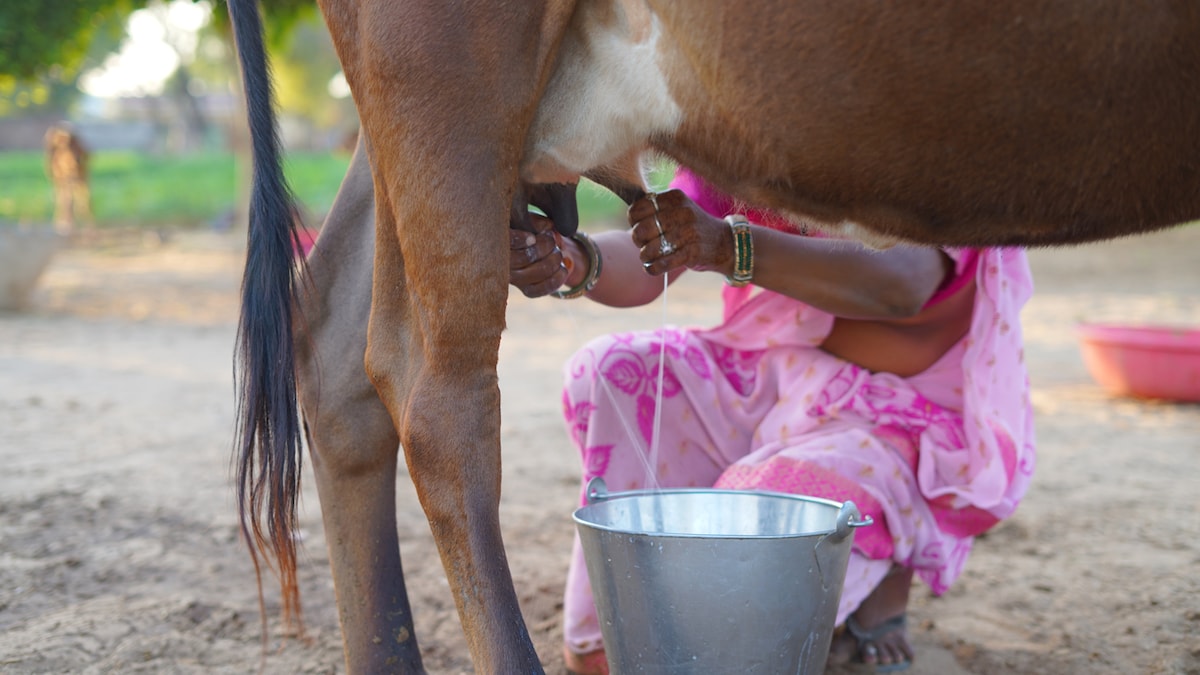
    MP Government To Invest Rs 1,500 Crore To Increase Milk Production In 5 Years

    To elevate Madhya Pradesh’s stature as a key contributor to India’s dairy industry and improve farmers’ livelihoods, the state government has announced a robust Rs 1,500 crore investment plan. Aimed at doubling milk production within five years, the initiative underscores a multifaceted approach to revolutionize the state’s dairy sector. The proposal, approved during a Cabinet meeting chaired by Chief Minister Mohan Yadav on Tuesday, marks a significant step in future-proofing the state’s agricultural economy. Senior Minister Kailash Vijayvargiya, briefing the media, highlighted a pivotal partnership between the Madhya Pradesh State Co-operative Dairy Federation (MPSCDF) and the National Co-operative Dairy Federation (NCDF).

    “The tie-up with NCDF will not only enhance milk production but also significantly boost farmers’ income,” Vijayvargiya said. He emphasized plans to motivate farmers to adopt high-yield cattle breeds, coupled with comprehensive facilities for transporting milk and dairy products to markets. Organic farming practices, supported by organic manure usage, will also be encouraged.

    In a move aligned with the National Education Policy 2020, the government will introduce an academic degree in dairy technology at Vikram University, Ujjain. The course will later be expanded to other universities, equipping youth with modern skills in dairy technology to propel Madhya Pradesh to the forefront of milk production.

    Vijayvargiya also detailed plans to expand the number of dairy co-operative committees from 6,000 to 9,000 within five years. This expansion will enable the establishment of dairy plants in villages, with transportation and branding managed by private stakeholders. The state’s flagship milk brand, Sanchi, will see a renewed push to gain a stronger foothold in national markets with NCDF’s support.

    “This is part of a larger vision to make Sanchi a national brand while ensuring the state becomes a top-tier milk producer,” Vijayvargiya added.

    The move has not been without controversy. In September last year, the Madhya Pradesh government entrusted the operations of the State Cooperative Dairy Federation to the National Dairy Development Board (NDDB) for five years. While the Opposition Congress has raised concerns, accusing the government of paving the way for Gujarat’s Amul to dominate Sanchi through “backdoor” tactics, officials maintain that the decision is rooted in expanding Sanchi’s reach and enhancing its output.

    Madhya Pradesh currently ranks third in milk production nationally, contributing 9% to the country’s total output. The state’s average per capita milk production stands at 673 grams per day, outperforming the national average of 471 grams.

    As the initiative takes shape, Madhya Pradesh’s dairy farmers are poised to witness a remarkable transformation, one that could serve as a model for other states aiming to boost agricultural incomes and build a resilient rural economy.

    Source link

  • Indias Milk Production Increases In 2024, Despite Dip In Buffalo Output

    Indias Milk Production Increases In 2024, Despite Dip In Buffalo Output

    India’s milk production rose nearly 4 per cent annually to 239.3 million tonnes in 2023-24 on better productivity, even as milk output of buffaloes declined 16 per cent annually, according to government data on Tuesday. The milk output of India, the world’s largest milk producer, stood at 230.58 MT in 2022-23. However, the annual growth rate has slowed down in the previous two fiscal years, the data showed. The growth rate was 6.62 per cent in 2017-18; 6.47 per cent in FY19; 5.69 per cent in FY20; 5.81 per cent in FY21; and 5.77 per cent in FY22. In FY23 it came down to 3.83 per cent and 3.78 per cent in FY24.

    Addressing an event to celebrate National Milk Day, Union Minister of Fisheries, Animal Husbandry and Dairying Rajiv Ranjan Singh said the milk production has increased to around 239 MT in 2023-24 on the back of improvement in productivity.

    The minister released Basic Animal Husbandry Statistics 2024 on the occasion of National Milk Day 2024, which is celebrated every year on November 26 to honour the Father of white revolution, Verghese Kurien, who was born on this day.

    Singh said the per capita milk availability has also increased to 471 gm per day in 2023-24 from 459 gm per day in 2022-23. The minister noted that the average growth in India’s milk production has been 6 per cent in the last 10 years as against the global average of 2 per cent.

    As per government data, milk production from buffaloes has decreased 16 per cent in 2023-24 compared to the previous year. Milk output from exotic/crossbred cattle has increased 8 per cent while production from indigenous/non-descript cattle increased 44.76 per cent.

    According to an official statement, the total milk production in the country is estimated at 239.30 MT during 2023-24, registering a growth of 5.62 per cent over the past 10 years. Milk output was 146.3 MT in 2014-15. The top five milk producing states during 2023-24 were Uttar Pradesh with a share of 16.21 per cent of total milk production followed by Rajasthan (14.51 per cent), Madhya Pradesh (8.91 per cent), Gujarat (7.65 per cent), and Maharashtra (6.71 per cent).

    In terms of annual growth rate, West Bengal was at the top (9.76 per cent) followed by Jharkhand (9.04 per cent), Chhattisgarh (8.62 per cent), and Assam (8.53 per cent) as compared to the previous year.

    Earlier, addressing the event, Singh emphasised the need to bring dairy farmers into the organised sector as this will boost milk production and their income and eliminate middlemen. He suggested formation of dairy cooperatives at village level. The minister also spoke on the need to boost exports of dairy products.

    Singh asked dairy farmers to vaccinate their livestock. The government is making available free vaccinations. He said the foot and mouth disease and brucellosis will be eradicated from the country by 2030 and “this will help enhance exports”.

    The minister also asked dairy farmers to adopt sex-sorted semen and artificial insemination in a big way. Singh added that the government is also focusing on breed improvement of livestock.

    On whether the pace of growth of milk output has slowed, Jayen Mehta, Managing Director, Gujarat Cooperative Milk Marketing Federation, which markets dairy products under the ‘Amul brand’, told reporters that there has been a healthy increase of 4 per cent in annual milk production in the last fiscal year and the average growth of the last 10 years has been around 6 per cent, much more than the world’s average.

    Mehta said the production depends on a lot of factors, including monsoon rains

    (Disclaimer: Except for the headline, this story has not been edited by NDTV staff and is published from a syndicated feed.)

    Source link

  • Indias Fish Production Doubles To 17.5 Million Tons In A Decade: Fisheries Minister

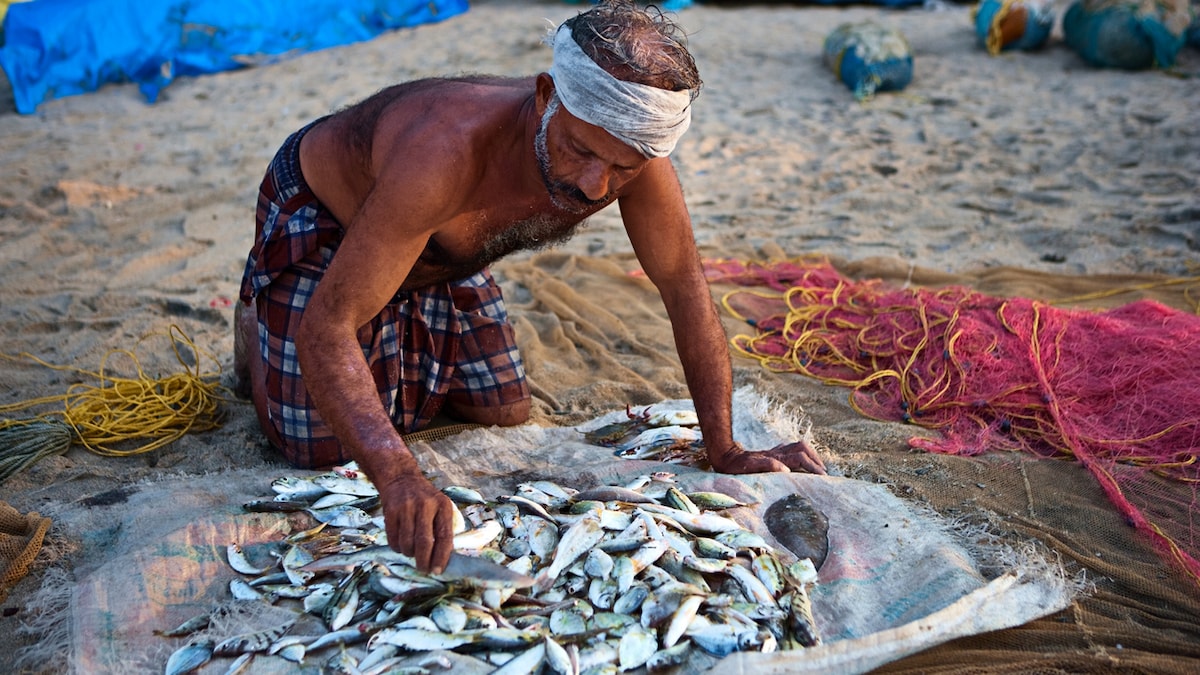
    Indias Fish Production Doubles To 17.5 Million Tons In A Decade: Fisheries Minister

    India’s annual fish production has nearly doubled since 2014 to 17.5 million tons, with inland fishing now surpassing marine fishing, contributing 13.2 million tons, Union Minister of Fisheries, Animal Husbandry & Dairying Rajiv Ranjan Singh alias Lalan Singh said on Thursday.

    In his address here to celebrate World Fisheries Day 2024, the minister said that India has now become the second-largest fish producer globally, with around 30 million people involved in fish production across the value chain. The country accounts for as much as 8 per cent of the world’s total fish production, he added.

    He said that various initiatives by the fisheries department like the Blue Revolution, the Pradhan Mantri Matsya Sampada Yojana (PMMSY), and the Pradhan Mantri Matsya Kisan Samridhi Sah-Yojana (PMMKSY) have resulted in boosting fish production in the country.

    The Minister also congratulated the fishermen and fish farmers for their role in achieving the target.

    Singh launched a series of landmark initiatives and projects aimed at transforming the fisheries sector and strengthening India’s blue economy. These included the launch of the 5th Marine Fisheries Census for data-driven policymaking, the National Plan of Action on Sharks for sustainable shark management and India’s endorsement of the Regional Plan of Action on IUU (Illegal, Unreported and Unregulated) Fishing to prevent illegal, unreported and unregulated fishing in the Bay of Bengal Region jointly in cooperation with Sri Lanka, Bangladesh and Maldives, the International Maritime Organisation-Food and Agricultural Organisation (IMO-FAO) GloLitter Partnership Project to combat marine plastic litter, and Standard Operating Procedures (SOP) for retrofitted LPG kits to promote energy-efficient, low-cost marine fishing fuels.

    Additionally, the New Single Window System (NSWS) by the Coastal Aquaculture Authority was launched to enable online registration of coastal aquaculture farms. A signed MoU was also exchanged to implement a framework for the Voluntary Carbon Market (VCM), harnessing carbon-sequestering practices in the sector.

    The Union Minister also highlighted issues like plastic pollution, carbon emissions from traditional fishing and water pollution, emphasising the government’s efforts to reduce plastics, improve water quality and promote eco-friendly practices.

    Singh mentioned the unorganised nature of the sector and the infrastructural gaps, stressing the need for reforms and initiatives like the Fisheries Infrastructure Development Fund (FIDF). He outlined a vision for sustainable development and economically empowering the fisheries sector, focusing on modern techniques, policy integration and long-term goals to ensure India’s global leadership in fish production.

    Speaking on the occasion, Manuel Barange, ADG and Director Fisheries Division FAO, Rome, emphasised the global challenges of hunger and malnutrition, highlighting the need for innovative solutions to feed a growing population. FAO’s Blue Transformation Initiative was presented during the event, focusing on sustainable aquaculture development, effective fisheries management, and enhancing aquatic food value chains.

    Progressive states, Union Territories (UTs), districts, and individuals were honoured for their remarkable contributions to the growth of the fisheries and aquaculture sector in India.

    Kerala received the award for the Best Marine State, while Telangana was recognised as the Best Inland State. Uttarakhand earned the title of Best Himalayan and Northeastern State, and Jammu & Kashmir was awarded Best Union Territory. Among the districts, Kerala’s Kollam won the Best Marine District award, Chhattisgarh’s Kanker was named Best Inland District while Assam’s Darrang received the Best Himalayan and Northeastern District award and Kulgam in Jammu & Kashmir was honoured as the Best District in a Union Territory.

    (Disclaimer: Except for the headline, this story has not been edited by NDTV staff and is published from a syndicated feed.)

    Source link

  • Dry Fruit Production In Kinnaur Declines Amid Rising Apple Farming

    Dry Fruit Production In Kinnaur Declines Amid Rising Apple Farming

    Traditional produce from Kinnaur such as dry fruits and organic products, which were once a major attraction at the Lavi Fair held here, are gradually losing ground to apples, the farmers from the region have claimed. The production of traditional Kinnauri products has been declining as more people are shifting to cultivate new varieties of apples, said dry fruit sellers who continue to sell their goods in Rampur even after the fair has ended. Atul Negi from Leo village in Kinnaur, who has been bringing his produce to the fair for many years, noted that in the past, he would bring 12-15 quintals of apricots and three to four quintals of almonds.
    However, this year, he brought only one quintal of apricots and 30 kg of almonds. “Due to the drop in production, prices are rising, and producers are facing losses,” he said. Kinnauri dry fruits like almonds, apricots, chilgoza, raj mash, peas, kala jeera, and shilajit were available at the fair, but in much smaller quantities compared to previous years. The high prices made them unaffordable for many, and most people were unable to purchase these items.
    Yashwant Singh, a farmer from Rispa village, shared that he had been bringing dry fruits and organic products to the fair for the past four to five years. However, this year, he noticed a lack of market enthusiasm, with fewer customers showing interest in his goods. More and more people are now planting apples on their vacant land, he added. Horticulture experts suggest that dry fruit production requires more labour and has a higher cost of production, while new apple varieties are fast-growing, yielding good results. As a result, the area dedicated to dry fruits is shrinking.
    Dr. Ashwani Kumar, an expert from the horticulture department, explained on Tuesday that newly imported apple varieties have a better yield and start bearing fruit within four to five years, offering growers quicker returns. “Farmers are increasingly moving away from traditional produce, with many switching to apple cultivation each year,” he said. Dr. Rajesh Jaiswal, a subject specialist from the Agriculture Department, said efforts are underway to encourage the cultivation of traditional produce by offering subsidies to farmers. He emphasised that these products have high nutritional and medicinal value, which is highly beneficial for health. 

    (Disclaimer: Except for the headline, this story has not been edited by NDTV staff and is published from a syndicated feed.)

    Source link