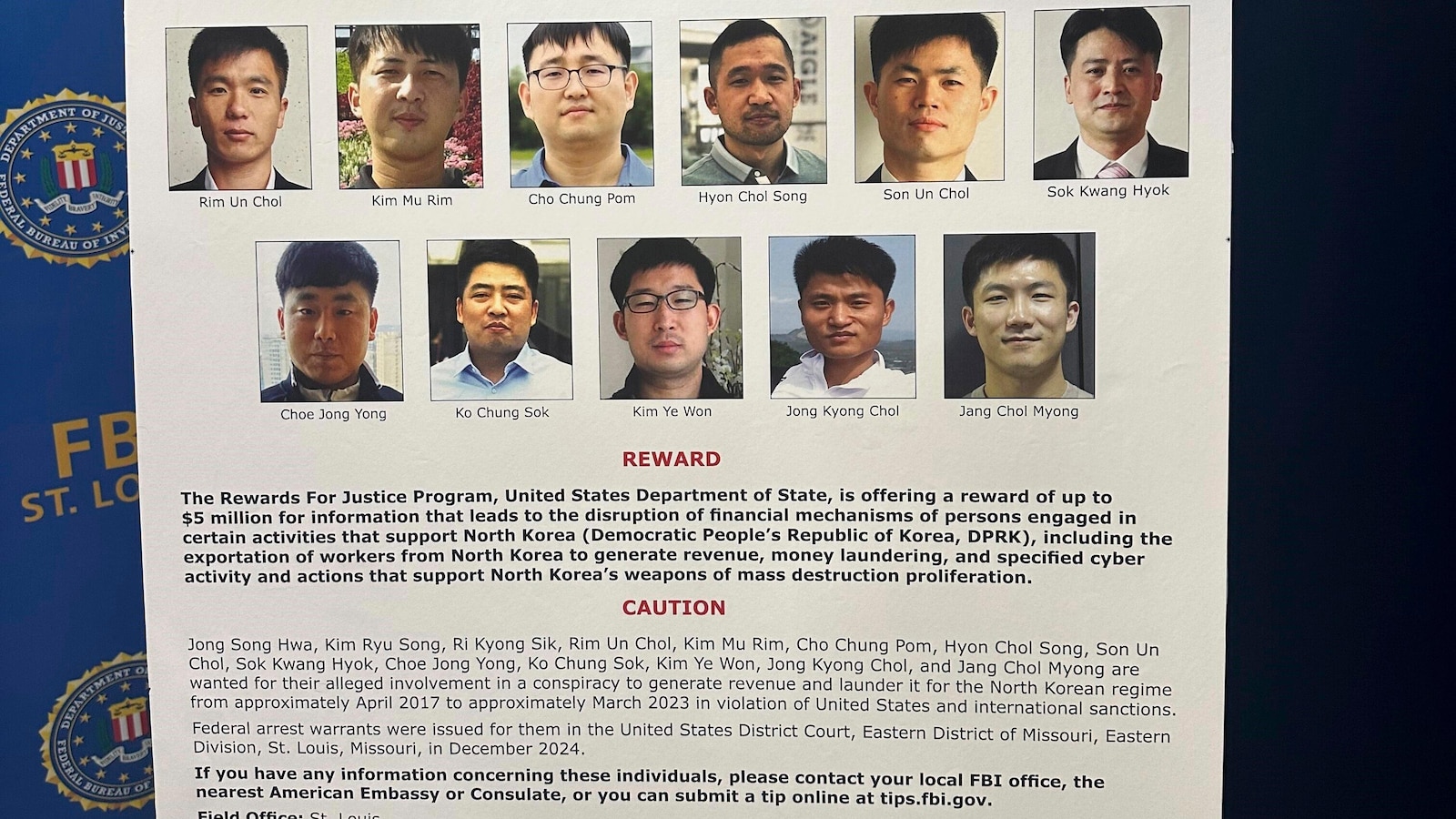
ST. LOUIS — Fourteen North Korean nationals have been indicted in a scheme using information technology workers with false identities to contract with U.S. companies — workers who then funneled their wages to North Korea for development of ballistic missiles and other weapons, the head of the FBI office in St. Louis said Thursday.
The scheme involving thousands of IT workers generated more than $88 million for the North Korean government, Ashley T. Johnson, special agent in charge of the St. Louis FBI office, said at a news conference. In addition to their wages, the workers stole sensitive information from companies or threatened to leak information in exchange for extortion payments, Johnson said.
Victims included defrauded companies and people whose identities were stolen from across the U.S., including Missouri, Johnson said. The indictments were filed Wednesday in U.S. District Court in St. Louis. All 14 people face wire fraud, money laundering, identity theft and other charges.
Most of those accused are believed to be in North Korea. Johnson acknowledged that bringing them to justice will be difficult. To help, the U.S. Department of State is offering a $5 million reward for information leading to any of the suspects.
Federal authorities said the scheme worked like this:
North Korea dispatched thousands of IT workers to get hired and work remotely or as freelancers for U.S. companies. The IT workers involved in the scheme sometimes used stolen identities. In other instances, they paid Americans to use their home Wi-Fi connections, or to pose in on-camera job interviews as the IT workers. Johnson said the FBI is going after those “domestic enablers,” too.
“This is just the tip of the iceberg,” Johnson said. “If your company has hired fully remote IT workers, more likely than not, you have hired or at least interviewed a North Korean national working on behalf of the North Korean government,” Johnson said.
The Justice Department in recent years has sought to expose and disrupt a broad variety of criminal schemes aimed at bolstering the North Korean regime, including its nuclear weapons program.
In 2021, the Justice Department charged three North Korean computer programmers and members of the government’s military intelligence agency in a broad range of global hacks that officials say were carried out at the behest of the regime. Law enforcement officials said at the time that the prosecution highlighted the profit-driven motive behind North Korea’s criminal hacking, a contrast from other adversarial nations like Russia, China and Iran that are generally more interested in espionage, intellectual property theft or even disrupting democracy.
In May 2022, the State Department, Department of the Treasury, and the FBI issued an advisory warning of attempts by North Koreans “to obtain employment while posing as non-North Korean nationals.” The advisory noted that in recent years, the regime of Kim Jong Un “has placed increased focus on education and training” in IT-related subjects.
In October 2023, the FBI in St. Louis announced the seizure of $1.5 million and 17 domain names as part of the investigation. The indictments announced Tuesday were the first stemming from the investigation.
Johnson urged companies to thoroughly vet IT workers hired to work remotely. “One of the ways to help minimize your risk is to insist current and future IT workers appear on camera as often as possible if they are fully remote,” she said.
Officials didn’t name the companies that unknowingly hired North Korean workers.
>> Jordan Botelho (Saint Louis), Notre Dame: Will return to the Fighting Irish for a sixth season, according to coach Marcus Freeman. Botelho suffered a season-ending knee injury on Sept. 14 with 77 tackles and 11 1/2 sacks and says he is down to 250 pounds after playing at 270.
>> Dean Connors (Hawaii Prep), Rice: Caught four passes for 91 yards and a touchdown in a 35-28 win over South Florida, becoming the program’s career leader in receiving yards by a running back with 912, passing Trevor Cobb and becoming the first player in school history with 1,600 career rushing yards and 900 receiving yards. Matt Sykes (Punahou) caught seven passes for 118 yards in his final college game, leading the Owls this season with 782 receiving yards. Tim Horn (Punahou) made all five of his kicks, ending his career perfect on 65 extra points and 15-for-23 on field goals.
>> Leif Fautanu (University), Arizona State: Anchored the offensive line for the Sun Devils in a 49-7 win over Arizona for the Territorial Cup. Arizona State rolled up 643 yards of total offense and held the ball for nearly 34 minutes. Fautanu ended the regular season as the highest-graded center in the Big 12 and has only missed one snap in two years — when his helmet came off. The Sun Devils will play Iowa State for the conference title on Saturday.
>> Malae Fonoti (Kahuku), Montana: Carried the ball eight times for 46 yards in a 41-27 win over Tennessee State in the playoffs, earning a meeting with South Dakota State in an FCS Championship game rematch. The freshman has played in only two games this season, but has 222 yards and a touchdown on 32 carries.
>> Dillon Gabriel (Mililani), Oregon: Threw for two touchdowns and ran for another in a 49-21 win over Washington, covering 209 yards in the air and 20 on the ground.
Don’t miss out on what’s happening!
Stay in touch with top news, as it happens, conveniently in your email inbox. It’s FREE!
>> Kyler Halvorsen (Kaiser), San Jose State: The senior booted a career-long 45-yard field goal in a 34-31 win over Stanford, the longest by a Spartan since 2021. He has made a school-record 79 straight extra points.
>> Blaze Holani (Saint Louis), Linfield: Shared the lead with five tackles for a devastating defense in a 65-3 win over Texas Lutheran in the NCAA Division III playoffs. Colby Kalaukoa (Kamehameha) had a tackle and a fumble recovery. The Wildcats will host Mary Hardin-Baylor in the third round on Saturday.
>> Trech Kekahuna (Saint Louis), Wisconsin: Caught a career-high-tying six passes for 64 yards in a 24-7 loss to Minnesota. He had five catches in his previous five games.
>> Liona Lefau (Kahuku), Texas: Made six tackles, four of them solo, with a forced fumble and pass breakup in a 17-7 win over rival Texas A&M. The forced fumble was the first of his career and came in the fourth quarter of the close game.
>> Jayden Maiava (Kaimuki), Southern California: Accounted for five touchdowns — three passing and two rushing — in a 49-35 loss to Notre Dame. He threw for 360 yards but two interceptions and was sacked once and suffered his first loss as starting quarterback for the Trojans.
>> Tanner Moku (Kamehameha), Washington State: Made seven tackles, a career-high six of them solo, in a 15-14 loss to Wyoming. Kapena Gushiken (Kamehameha) contributed three solo tackles and broke up a pass on third-and-9, but it was wiped out on a facemask penalty on a teammate.
>> Royce Pao (Kahuku), Western Colorado: Helped the running game with 59 yards on 15 carries, but the Mountaineers fell to Bemidji State 20-19 in the NCAA Division II playoffs. It was Pao’s second time this season with 15 or more carries. He finishes his sophomore season with 491 yards on 101 carries with six touchdowns.
>> Noa Purcell (Saint Louis), Colorado-Pueblo: Made six tackles and had a hurry, but the Thunderwolves fell 26-23 to Minnesota State in the NCAA Division II playoffs. Purcell closes his career with the school with 61 tackles and five sacks in 23 games.
>> GianCarlo Rufo (Punahou), Georgetown: Was selected second-team Patriot League linebacker after not missing a game for the Hoyas and leading the team with 83 tackles, with three sacks and two forced fumbles.
>> Manny Stevenson (Radford), Arkansas: Caught four passes for 49 yards and his first touchdown of the season in a 40-32 loss to Old Dominion. The senior goes into a bowl game with 80 catches in his career for 591 yards and five touchdowns.
>> Gareth Warren (Kealakehe), Lindenwood: Was named first-team all-conference for the Big South, starting every game at left tackle.
VOLLEYBALL
>> Jannie Blake (Kahuku), Eastern Washington: Had her 10th double-double of the season with 26 assists and 12 digs with two aces in a 3-1 loss to Weber State, ending her senior season with 484 assists and 213 digs.
>> Reese Diersbock (Le Jardin), UC Davis: Put down 12 kills on 38 swings in a 3-2 loss to Hawaii in the Big West championship semifinals, tying her season high. She has been in double figures in kills seven times this season, three of them against the Rainbow Wahine.
>> Malu Garcia (Moanalua), Iowa: Hit .400 for the first time since September with 11 kills in a 3-0 loss to Southern California. She closed her freshman season as the team leader in kills with 278.
>> Elena Oglivie (‘Iolani), Stanford: Had a season-high 24 digs in a 3-1 win over Louisville, giving her 2,024 in 132 matches in her career for third on the program’s career list. She was selected a second-team All-ACC selection heading into the NCAA Tournament.
>> Taina Kaauwai (Kamehameha-Hawaii), Portland: Was named to the West Coast Conference first team after leading the conference in hitting percentage and the team with 114 blocks. She is the first Pilot named to the first team since 2017. Maui Robins (Kamehameha) closed the season in style with 19 kills on 49 swings in a 3-2 loss to Pacific, adding 16 digs. She earned honorable mention from the conference.
>> Devin Kahahawai (Kamehameha), Texas: Enjoyed a career match before heading into the NCAA Tournament, earning a rare start in place of a sick teammate and putting down 19 kills with 10 digs for her first double-double.
>> Nive Tuileta (Le Jardin), Santa Clara: Had 23 assists and nine digs in a 3-0 win over Gonzaga to close the season, finishing with 3,750 assists in 114 career matches for No. 7 in school history.
NCAA Volleyball Championship
Hawaii participants, first-round matches
>> Arizona State vs. New Hampshire, Friday: Hokulani Perez (Moanalua).
>> Brigham Young vs. Loyola Chicago, Thursday: Lulu Uluave (Punahou)
>> Colorado State vs. Texas A&M, Friday: Kate Yoshimoto (Punahou), Kekua Richards (Seabury Hall).
>> Stanford vs. Sacramento State, Friday: Elena Oglivie (‘Iolani).
>> Pittsburgh vs. Morhead State, Friday: Haiti Tautua’a (Waianae)
Freeman put up a bunch of points on Saturday, but its defense really came to play.
The fifth-seeded Scotties’ defense shut out fourth-seeded Onalaska en route to a 28-0 win in a State 2B quarterfinal at Tiger Stadium in Centralia.
Freeman (10-1) forced three turnovers on downs, in addition to retrieving a fumble on defense. The Loggers (11-2) averaged more than 52 points per game this season.
“We have a phenomenal team”, Freeman first year coach Mike McKeown said. “And I don’t just mean the guys on the field – our young guys help us prepare week in and week out. Our defensive coordinator did a phenomenal job putting kids in the right spots.”
The Scotties advanced to a state semifinal in their first season in the 2B classification, but it’s their second semi in the past three seasons – Freeman reached the 1A semifinals in 2022, bowing to eventual state champ Royal 57-21.
“Football is such a special game,” McKeown said. “It requires so many moving pieces, and we have such a special group that got us here.”
Freeman junior quarterback Logan Schultz connected with receiver Nash McLean for a 30-yard first quarter touchdown pass, and the rest was up to the defense.
“We hit them first, and they had nothing to respond with,” Schultz said. “We knew what they were going to run, and we stopped them on defense, and spread things out on offense.”
Schultz threw two touchdowns and ran for another. He leads the classification in passing yards.
–Lane Mathews contributed to this report.
Gonzaga Prep to face No. 1 Camas in 4A semifinal: The Papermakers (12-0) defeated eighth-seeded Arlington (10-2) 35-21 at Doc Harris Stadium in Camas to advance in the 4A bracket.
They will host the fifth-seeded Bullpups (12-0) in a semifinal on Saturday at 1 p.m. at McKenzie Stadium in Camas. G-Prep outlasted fourth-seeded Kennedy Catholic 34-28 at Highline Stadium in Burien on Friday to advance.
Anacortes 55, West Valley 13: The visiting, seventh-seeded Eagles (11-1) saw their perfect season ended with a lopsided loss to the second-seeded Seahawks (11-1). Anacortes hosts sixth-seeded W.F. West (11-1) in a semifinal on Saturday.
Almira/Coulee-Hartline 14, Neah Bay 12: The fourth-seeded Warriors (10-2) edged the fifth-seeded Red Devils (10-2) in a quarterfinal at Lions Field. ACH takes on No. 1 Liberty Christian (Richland) (11-0) in a semifinal on Saturday. The Patriots beat ACH 50-36 on Sept. 20 in a nonleague game.
Girls soccer
Freeman 3, Mount Vernon Christian 0: Junior striker Rylee Russell is a goal-scoring machine, and she added to her state-leading total on Saturday. Russell scored twice and the Scotties (21-0) shut out the Hurricanes (17-4-1) in the State 2B/1B championship game at Federal Way Memorial Stadium.
It is the first state championship Freeman soccer has won, and the first title for the school since 2018 when baseball won.
Russell ends the season with 64 goals, most in the state across all classifications and tied for second in the country according to MaxPreps.
Goalie Kelsey Hollen made 13 saves and did not give up a single goal in four state games.
Freeman scored 152 goals this year and allowed just 12. The Scotties were the only team in the state across all classifications to enjoy a “perfect” season – all 21 wins came in regulation with no ties.
“I’m so proud of them for battling.” Freeman coach Dave Ellis said. “This was the goal they set at the beginning of the year as a family.”
After a scoreless first half, Russell got the Scotties on the board 4 minutes after intermission.
“Rylee is a good scorer,” Ellis said. “She really allowed us to open things up and exploit some things.”
“We made good passes in the second half. We made sure we found the right people.” Russell said. “We wanted to make history. We wanted to be the first.”
Freshman forward Nora Gass scored midway through the second half, and Russell sealed the game with just under 10 minutes to play. Senior Morgan LaMotte assisted on both of Russell’s goals.
“It means so much to see all of our players step on that field with so much grit.” senior Aubrey Gregory said. “I couldn’t ask for a better team to play with.”
–Lane Mathews contributed to this report.
Bellevue 2, Mt. Spokane 0: The second-seeded Wolverines (13-4-3) defeated the visiting eight-seeded Wildcats (15-5) in the State 3A third-place game at Sparks Stadium in Puyallup.
West Valley 5, Bellingham 0: The second-seeded Eagles (21-1-1) shut out the visiting fourth-seeded Bayhawks (20-4) in the State 2A third-place game at Mount Tahoma HS.
The University of Kansas doesn’t have plans to eliminate any of its money-losing Olympic sports despite great uncertainty about whether the athletic department can afford to pay student-athletes in the future, KU’s chancellor said.
The future of those programs — which range from big ones like track and field to smaller ones like golf and tennis — has been the focus of speculation across the country as a federal court in April is expected to finalize a lawsuit settlement that will allow universities to start paying student-athletes. Initially, programs like KU could spend slightly more than $20 million a year to pay student-athletes, over and above the scholarships they often receive. That amount would grow through the years as athletic department revenues grow.
But KU is like many other athletic department programs across the country: It doesn’t know where it would find $20 million a year in its current budget to pay student-athletes. But it also knows that if it doesn’t find the money — the lawsuit settlement will allow but not require schools to pay student-athletes — that remaining competitive in the top tier of college athletics will be very difficult.
Chancellor Douglas Girod has been blunt in saying he doesn’t know how KU is going to solve that problem. He knows it is not a satisfying answer — but it does have the benefit of being an honest one.
“If anyone tells you they have it figured out, they are lying,” Girod said during a brief interview recently. “I have talked to dozens of chancellors and presidents, and they are all scratching their heads.”
At this point, Girod is more comfortable in saying what KU isn’t considering: Cutting sports.
“To be honest, you don’t save a whole bunch of money doing that. It is not really a priority for us,” Girod said of using sports cuts to solve the pending budget crunch.
There may be another reason KU isn’t considering such cuts: The university would face a big loss in status if it cut any sport. Currently, NCAA rules require any university that wants to compete in the highest level of Division I athletics to field 16 sports programs. That is exactly how many KU has currently.
Student-athletes and coaches of KU Olympic sports may still have reason to be wary, though. While cutting entire programs may not be the question floating through the halls of athletic departments, the numbers suggest another question will soon emerge:
Are we in it to win it?
Roster changes
An analysis of the pending legal settlement shows KU will have some decisions to make on whether to invest new money in the Olympic sports. If it doesn’t, those sports may have a hard time competing in the future.
The reason is because major roster changes will come to college athletics as part of the legal settlement. No longer will individual sports have limits on the number of scholarships they can offer. Instead, they will have limits on how large their overall rosters can be.
The change is expected to create two impacts. The most certain one is that some students will see their college athletic careers end because there will no longer be a roster spot for them. Walk-on student-athletes — the term for student-athletes who don’t receive a scholarship — are the most likely to lose spots.
An analysis by the Journal-World found that, compared to 2023 totals, there will be 49 fewer scholarship spots for student-athletes across KU’s 16 sports when the new rules are expected to take effect in 2025-2026. That would be an almost 10% reduction in student-athletes at KU.
But the other impact might be the one that creates havoc in the competitive landscape. Schools now will be allowed to give every student-athlete who is on a roster a scholarship. That is not how the system works today.
Take, for instance, baseball. In 2023, there were 40 players on the roster. However, NCAA rules limit the number of scholarships that can be offered to 11.7, meaning most players are receiving partial scholarships, and all those partial scholarships add up to the equivalent of just less than 12 full-ride scholarships.
In the 2025-2026 school year, the size of the baseball team will shrink to 34 players. Six students will no longer have the chance to be a Jayhawk baseball player. However, all 34 remaining players can receive a full scholarship — if the university invests the money to make it happen.
How much money would that take? I haven’t seen any official numbers from KU, and to be clear, Girod and I did not dive into any of these scholarship issues during our interview. Instead, I looked at the 2023 NCAA financial filings for KU and found that the athletic department provided $15.2 million in student aid to 432 athletes. That’s an average of $35,185 per student-athlete.
If you simply use that average, it would cost about $785,000 per year to fund the approximately 22 new scholarship positions that would be available on the baseball team. That would be about a 20% increase in the total operating expenses of the baseball program. The baseball program in 2023 operated at an approximately $4 million loss.
The story is much the same for every sport other than football and men’s basketball. In total, KU, using the average above, is looking at $6.7 million in additional scholarship money that is needed to bring all its teams — minus football and men’s basketball — to the full scholarship levels. Those programs posted a $28.4 million operating loss in 2023. Only football and men’s basketball in 2023 posted an operating profit. The two sports combined had operating revenues that were $20 million over operating expenses, according to the NCAA filings.
If this were only a money question, the answers would be pretty easy. But college athletics still have elements of education, opportunity and equity. At the end of the day, though, the concept of competition is paramount.
That comes back to the growing question in college athletics: Are you in it to win it?
Take baseball as the example again. KU may decide not to invest the more than $700,000 a year in additional scholarship money to field a team that is fully stocked with scholarship players. But certainly some schools will. That discrepancy is likely to have competitive implications.
That’s the polite way to say it.
Donors to the rescue?
If you have been doing the math as we go, you realize we have a problem. The group of sports that are money-losers lost $28 million, while the two sports that are money-makers made $20 million. We are $8 million short.
Donors, along with other revenue sources, make up the difference. The $8 million gap is deceiving, though. KU had about $52 million in other expenses in 2023 that weren’t tied to any one team. That’s everything from administrative salaries to debt payments to a host of other expenses required to run a $100 million-plus enterprise.
Fortunately for KU, it had about $64 million in revenues that weren’t tied to any one team, with a little less than half that amount coming from donors. Add it all up, and Kansas Athletics ended 2023 with revenues being about $4 million greater than expenses. In the world of college athletics, that is not a given. There are many schools that end the year with a deficit and have to seek money from general university coffers to cover the shortfall. Girod has said multiple times that KU must avoid that situation at nearly all costs.
But that brings us to the 2025-2026 school year. If the lawsuit settlement is approved, KU will need to find about $20 million to pay student-athletes and another $5 million to $7 million, perhaps, to fully stock teams with scholarship players.
Maybe donors could be the answer. Maybe, but a little perspective might be helpful. Donors provided about $29 million to Kansas Athletics in 2023. That would mean donors would need to nearly double their contributions to also cover the $25 million to $27 million gap created by the lawsuit settlement. And, they might need to be prepared to do that year after year. Plus, the cost of the settlement will grow over the years. The settlement is structured such that the amount schools can pay athletes rises as the total revenue of athletic departments increases.
Additionally, there’s a question of how much more donors at KU can give. This lawsuit settlement is hitting KU at a time when it already is tapping donors in a big way for facility improvements. Donors have pledged about $250 million for renovations to the west side of David Booth Kansas Memorial Stadium. It is very likely the university will ask for additional donor dollars to complete the east side of the stadium renovations in the near future. KU is betting the new stadium will create new revenues. It will need to because KU also plans to take out at least $115 million in new debt to help pay for the west side renovations. It is unclear whether it will have to take out additional debt for the east side improvements.
Maybe donors can’t ride to the rescue. Cost-cutting might have to be part of the equation, and KU has hired one of the most renowned accounting firms in the country — Deloitte — to study athletic department finance.
The common fan on the street may be screaming that they can save the firm the trouble — reduce coaches’ salaries. KU did pay $23.5 million in coaching salaries in 2023. That’s a lot, but it also is worth noting that every KU coach could agree to work for free, and you still wouldn’t quite cover the pending $25 million to $27 million shortfall.
The payroll category that actually is larger at KU is the money paid to athletic administrators and support staff. That figure was $28.3 million in 2023. Of course, it is not realistic to simply eliminate that category, which includes everything from the athletic director to administrative assistants.
If you cut 50% from both the coaching category and the administrative category, you would basically cover your projected shortfall. That’s not a recommendation, by the way, but rather an example of how deep the cuts would have to be if you chose to operate with blunt instruments.
That’s an operation that would require a lot of anesthesia.
Of course, you could do nothing. The pending settlement doesn’t require any university to pay student-athletes. It simply allows them to pay student-athletes, and places a cap on how much.
“You don’t have to pay anything,” Jeff DeWitt, the university’s chief financial officer, noted in a recent interview. “It is a cap, not a requirement. But how do you remain the No. 1 ranked in basketball? How do you move up the Big 12 in football?”
Another option is that maybe the Big 12 Conference comes together and creates its own, lower caps on payments and/or scholarships. That may maintain some competitive balance in the conference, but what would happen in postseason play when those Big 12 schools are competing against other schools that are operating with higher caps?
That’s an operation that may require a bunker for university presidents to hide from angry fans and donors who become frustrated at early exits from NCAA tournaments or bowl blowouts.
That seemingly brings us right back to where we began.
“Nobody knows,” DeWitt said of how KU or other athletic departments are going to deal with the pending settlement. “If you want me to give you any certainty, I can’t.”
2023 Profit and Loss by Sport
— Baseball: $4.0 million loss
— Women’s basketball: $4.7 million loss
— Men’s golf: $1.2 million loss
— Women’s golf: $1.0 million loss
— Rowing: $2.2 million loss
— Soccer: $2.4 million loss
— Softball: $2.2 million loss
— Swimming & diving: $1.7 million loss
— Tennis: $1.6 million loss
— Women’s track & field/cross-country: $2.8 million loss
— Men’s track & field/cross-country: $2.8 million loss
— Volleyball: $1.9 million loss
— Men’s basketball: $3 million profit
— Football: $17 million profit
Changing Rosters
Here’s a look at changing roster sizes for the 2025-2026 season compared to 2023 numbers:
— Baseball: down 6
— Men’s cross country: no change
— Women’s cross country: down 2
— Football: down 18
— Men’s basketball: down 2
— Women’s basketball: no change
— Men’s golf: down 2
— Women’s golf: down 3
— Rowing: down 4
— Soccer: down 3
— Softball: up 2
— Swimming: down 2
— Tennis: down 1
— Men’s track: down 5
— Women’s track: down 2
— Volleyball: down 1
Scholarship changes
While roster sizes generally are going down, the number of scholarships the university can offer on each team is generally going up.
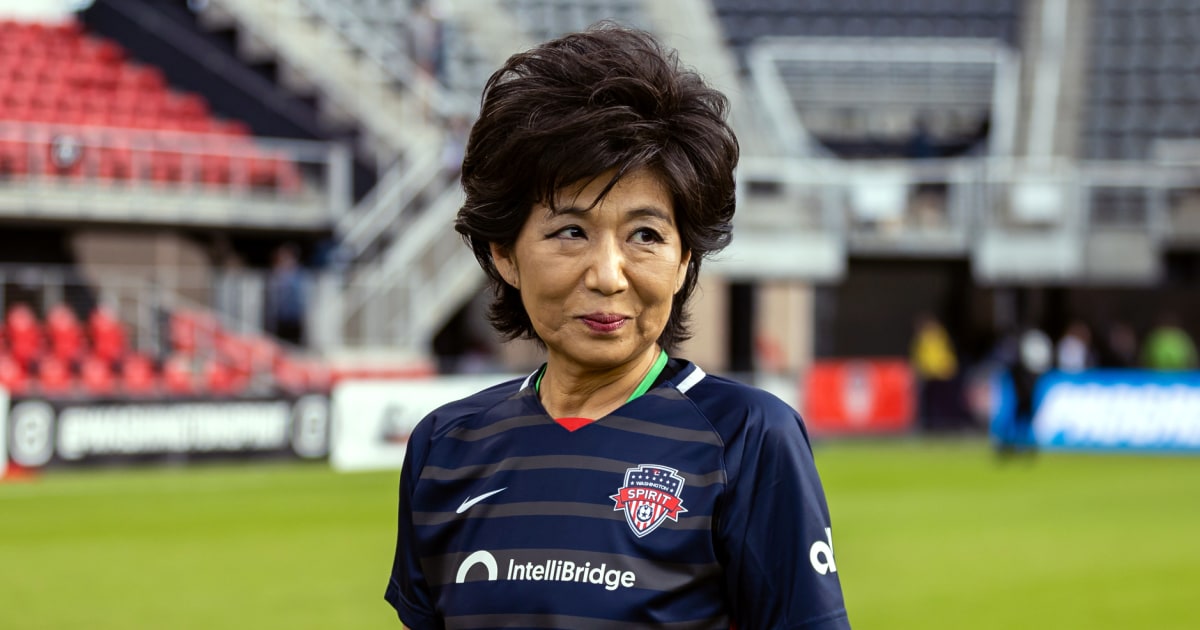
Businesswoman and philanthropist Michele Kang just made a historic donation to women’s soccer.
Kang, owner of the professional soccer team Washington Spirit, has pledged $30 million to the girls and women’s programs of U.S. Soccer, the organization announced on Tuesday. It’s the largest donation ever made to the soccer body by a woman, as well as to girls and women’s soccer.
In a news release, Kang said she hopes the donation prompts other donors to invest in women’s sports.
“Women’s sports have been undervalued and overlooked for far too long,” Kang said.
Kang’s donation will help the organization double the number of camps it currently runs to six per age group, specifically funding those for women and girls, according to the press release said.
The funds will also help expand U.S. Soccer’s digital talent identification platform, seeking to increase twelvefold the number of players recruited into the youth national team, creating 100,000 openings for female players. Additionally, the release said, the donation will be used to add 70,000 female coaches and referees, doubling the number of those female professionals today.
“Michele Kang’s gift will transform soccer for women and girls in the United States,” said Cindy Parlow Cone, president of the U.S. Soccer. “It will impact generations of women and girls in our game, including players, coaches, and referees.”
Kang, also founder and CEO of Kynisca, a global organization dedicated to women’s soccer, made history in 2022 when she became the first woman of color to own a team in the U.S. National Women’s Soccer League. She also owns Olympique Lyonnais, a women soccer team that plays in France, and London City Lionesses, in England.
When Kang first got involved in the sport two years ago, she told CNBC that it was immediately clear to her that there was “enormous potential” in the field.
“I was actually flabbergasted that not many people have seen that,” Kang told CNBC.
She told the outlet that she hopes to continue investing in teams globally and inspire girls across many countries.
“This is also about making sure that all the young girls around the world know that this is not just a U.S., English, French phenomenon,” Kang said. “When I get a team in those countries, I’m going to bring the same infrastructure, technology and capabilities to those countries so that they can feel that, ‘If I can put my best into it, I can be the next Alex Morgan.’”
Businesswoman and philanthropist Michele Kang just made a historic donation to women’s soccer.
Kang, owner of the professional soccer team Washington Spirit, has pledged $30 million to the girls and women’s programs of U.S. Soccer, the organization announced on Tuesday. It’s the largest donation ever made to the soccer body by a woman, as well as to girls and women’s soccer.
In a news release, Kang said she hopes the donation prompts other donors to invest in women’s sports.
“Women’s sports have been undervalued and overlooked for far too long,” Kang said.
Kang’s donation will help the organization double the number of camps it currently runs to six per age group, specifically funding those for women and girls, according to the press release said.
The funds will also help expand U.S. Soccer’s digital talent identification platform, seeking to increase twelvefold the number of players recruited into the youth national team, creating 100,000 openings for female players. Additionally, the release said, the donation will be used to add 70,000 female coaches and referees, doubling the number of those female professionals today.
“Michele Kang’s gift will transform soccer for women and girls in the United States,” said Cindy Parlow Cone, president of the U.S. Soccer. “It will impact generations of women and girls in our game, including players, coaches, and referees.”
Kang, also founder and CEO of Kynisca, a global organization dedicated to women’s soccer, made history in 2022 when she became the first woman of color to own a team in the U.S. National Women’s Soccer League. She also owns Olympique Lyonnais, a women soccer team that plays in France, and London City Lionesses, in England.
When Kang first got involved in the sport two years ago, she told CNBC that it was immediately clear to her that there was “enormous potential” in the field.
“I was actually flabbergasted that not many people have seen that,” Kang told CNBC.
She told the outlet that she hopes to continue investing in teams globally and inspire girls across many countries.
“This is also about making sure that all the young girls around the world know that this is not just a U.S., English, French phenomenon,” Kang said. “When I get a team in those countries, I’m going to bring the same infrastructure, technology and capabilities to those countries so that they can feel that, ‘If I can put my best into it, I can be the next Alex Morgan.’”
Saturday’s college football results provided a stark comparison.
Watching Tulane and LSU produced drastically different emotions and impressions. These are two teams, two programs, heading in different directions.
Tulane drilled Navy 35-0 while LSU lost to a mediocre Florida squad 27-16.
The difference was obvious.
Start with the obvious. Tulane players love playing for Jon Sumrall. The transition from Willie Fritz to Sumrall could not have gone better. Sumrall is incredibly positive, motivational, enthusiastic and supportive.
Brian Kelly is increasingly negative, is failing to motivate players and his berating of players is coming back at haunt him.
The numbers were clear.
Tulane held Navy to 113 yards and blanked the Midshipmen, on Senior Day, on their home turf. The Green Wave controlled the football to the tune of 35:47 to just 24:53 for Navy.
Tulane committed no turnovers while forcing two by the Midshipmen. Sam Howard was responsible for both turnovers, with an interception and he recovered a fumble.
Makhi Hughes rushed for a pair of scores while Darian Mensah passed for two touchdowns.
It was the second shutout of the season for Tulane and the fourth time that the Green Wave have held opponents under 10 points. The first time Navy was blanked since the 2020 season marked the Wave’s first win in Annapolis since 2001. Tulane had lost five of its last six meetings with the Midshipmen.
Most importantly, the win gave Tulane spot in the American Athletic Conference championship game for a third consecutive year.
Things are simply different with this Tulane team.
The goal annually is to improve weekly. We are seeing that in clear fashion from the Green Wave.
Based on the way Tulane is playing, it is easy to believe that the Green Wave would beat Kansas State and possibly Oklahoma as well if the teams played now.
With eight straight wins, Tulane (9-2) has a date with Memphis before taking on Army in the AAC title game Dec. 6. The hope of making the College Football Playoff remains alive for the Olive and Blue.
That hope is long gone for LSU.
The promise of two weeks ago has disappeared quickly and dramatically. LSU has been exposed as an average team, with a lack of overall talent to compete with the best teams in the SEC, much less the average teams in the conference.
Just a couple of weeks ago, the future of Billy Napier at Florida was in serious doubt. The former Ragin’ Cajuns head coach has since gotten a vote of confidence.
The Gators sure looked confident against the Tigers.
LSU had the ball for 41:43, an incredible number. Yet, the Tigers lost by 11 points.
The site of Kyren Lacy yelling at Kelly was perhaps a tell-tale sign.
Has Kelly lost this team?
The loss to Alabama was embarrassing. The loss at Florida to a mediocre team was equally embarrassing.
The LSU program has regressed. There are no great players on this team.
Will Campbell will get drafted high and Emory Jones could as well. Harold Perkins will get an early round call but he has been out for weeks. Mason Taylor is a good player with an NFL future. Aaron Anderson has stepped up nicely and Garrett Nussmeier will get drafted.
Still, there are no players the likes of Jayden Daniels, Malik Nabers or Brian Thomas, Jr.
Daniels covered up for many ills a year ago. The Tigers have no one to cover up for what ails it this season.
The overall talent is simply not good enough to win consistently against good competition.
Now, the questions about the coaching are coming.
LSU won 10 games in each of Kelly’s first two seasons. At 6-4, that is not going to happen this year.
In fact, there is no sure thing that wins ware coming against Vanderbilt or Oklahoma to close out the schedule.
Kelly was hired to win an SEC championship and to compete for and eventually win a national championship. After doing an excellent job in his first year in getting the Tigers to the SEC title game, the enthusiasm has waned, as has the productivity.
The LSU offensive line is vastly overrated. The running backs, outside of Caden Durham, are not good enough. The wide receivers are average.
The entire defense is average, lacking real playmakers.
Those advocating a change in coaches at LSU have this fact staring them in the face – Kelly is under contract through 2031. It would cost approximately $60 million to buy him out.
Kelly’s future at LSU is directly tied to recruiting. Right now, he has a top five class for 2025, if the commitments hold.
Bryce Underwood, the top quarterback prospect in the country, was recently lured by Michigan by a massive NIL offer. Underwood has stuck with LSU but will that be the case moving forward?
Calvary Baptist star lineman Devin Harper may flip his commitment from LSU to Ole Miss.
If that is a sign of things to come, things will get rocky for Kelly.
If it happens and is an exception to the rule, Kelly will withstand the onslaught of criticism and public frustration with his and his team’s performance this season.
In retrospect, LSU was very fortunate to get out of South Carolina with a win. A crucial penalty saved the Tigers in Columbia. LSU was very fortunate to steal an overtime win from Ole Miss, a better football team than the Tigers.
Had those wins not happened, the calls for change would be heard far and wide.
Tulane has clinched a berth in the AAC title game. Louisiana-Lafayette is having a banner season, leading the Sun Belt West Division. Southern University has clinched a berth in the SWAC championship game.
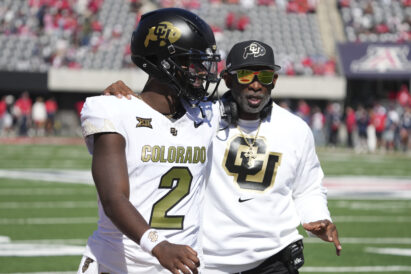
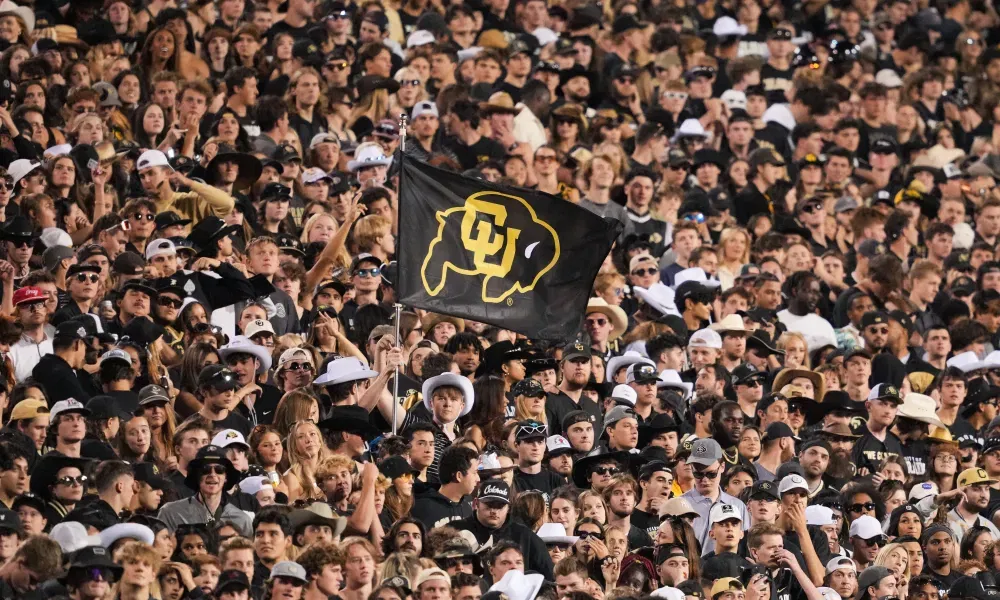
Grabbing another victory, the head coach of the Buffs, Deion Sanders, is working to live up to the title of “Coach of the Year.” Colorado (6-2) defeated Cincinnati (5-3) to earn bowl qualification for the very first time after 2016, thanks to a late field goal and a missed chance on downs before halftime. Buffs received more excellent news prior to the game, so it appears that the celebration of winning will be doubled this time. Yes, a four-star wide receiver has committed.
Deion Sanders and Co. have acquired a valuable player who will aid the squad in the years after Travis Hunter, as 2024 is his last year in CFB. And they got it. According to Hayes Fawcett of On3, Adrian Wilson, the 4-star WR, announced his commitment to Colorado on Saturday. However, before his de-commitment on October 23, Wilson was pledged to Arizona State. He has previously stated that he is committed to TCU and Oregon. But this time after committing to Buffs, Wilson mentioned to On3, “It took me a minute to find but, I’M HOME🦬.“
ADVERTISEMENT
Article continues below this ad
Plus, Wilson said to On3’s Steve Wiltfong, “What excites me the most is the opportunity to go somewhere in the air-raid offense and start.” However, given his inconsistent behavior, it is still unclear if he will ever recommit to a different program. Basically, the wide receiver has taken his pledge for the fourth time. Therefore, the CFB fans were incensed by this contradiction, and one fan wrote, “I wouldn’t believe bruh til week 1 😂.”
ADVERTISEMENT
Article continues below this ad
Safe to say, while Colorado was pleased with Wilson’s commitment, the whole college football community was mocking the 4-star wide receiver’s unstable decision.
Fans’ amusing responses to the 4-star commit
Wilson has so far this season hauled in 26 passes for 601 yards and 8 touchdowns, averaging more than 23 yards per catch, which is among his outstanding high school stats. His 1,003 catches and 14 touchdowns from the previous season solidified his status as a superb playmaker. But it is unacceptable for a high school athlete to change his pledge multiple times and one fan remarked, “I’m a buff and happy he committed to Colorado but bruh… High schoolers shouldn’t be allowed to switch up 4 times 😭😭 NIL needs some regulation.” Having the same concern in mind, another fan commented, “Bro’s on his 4th school before entering CFB. He finna be a transfer portal wizard 🧙🏾♂️”
ADVERTISEMENT
Article continues below this ad
According to the On3, Wilson is the 267th-best player in the nation for the 2025 season. “Re-opening my recruitment was not an easy decision, as I hold a great deal of respect for the coaching staff and the vision you have for the program,” the top athlete informed On3 prior to de-committing to Arizona. A fan ridiculed his assertion by writing, “Bros goin to Nebraska next week😂.” Echoing the same sentiment, another fan wrote, “🦬🦬🦬 Love the honesty😂😂😂.”
The last word from a fan, expressing uncertainty over Wilson’s final destination for the 2025 class, read, “Wonder what school he gonna be at next week.” Therefore, the fog surrounding his commitment won’t go away until the WR makes his final decision. We’ll see whether he stays with the Buffs. What do you think?
As longevity researchers continue to explore the intricacies of how to ward off chronic disease, extend human life, and even reverse aging, one thing has become clear: there’s no single cure-all yet. We haven’t reached the point where a quick fix can turn back the biological clock by a decade (healthspan) or push the human lifespan beyond its current upper limit of around 125 years. While this lack of a magic solution frustrates some, it opens exciting opportunities for wellness hotels, as we’ll soon explore.
Advanced treatments like induced pluripotent stem cell therapy, therapeutic peptides, targeted exercise routines, caloric restriction, and supplements such as resveratrol have shown promise in slowing the signs of aging—often in lab animals rather than humans. However, their ability to significantly extend healthspan or lifespan on their own remains questionable. One insightful way to frame this is: If there were a single method to extend human life by 50 years, evolution would have discovered it millions of years ago.
Instead, evidence overwhelmingly suggests that the best path to health is through comprehensive lifestyle changes. The Mediterranean diet, with its emphasis on greens, fresh herbs, fruits, nuts and fish, has long been a model for vitality. However, the diet alone isn’t enough; its benefits are magnified by complementary factors like regular moderate exercise, strong social ties, unhurried meals, time spent outdoors, and a lower-stress lifestyle.
Embracing this holistic approach requires a shift in mindset, moving away from the quick-fix mentality of modern medicine. Fortunately, the 20th-century habit of waiting for illness before seeking treatment is giving way to a more forward-thinking view: treating the body like a garden that needs consistent care—balancing water, sun, nutrition and even probiotics. As more travelers adopt this lifestyle shift, it will naturally fuel demand for wellness products and services at hotels.
In other words, because maintaining health and longevity demands ongoing effort and attention, hotels are perfectly positioned to cultivate recurring revenue streams by offering wellness services, especially with a focus on personalization, innovative packaging and loyalty programs.
Let’s bring this idea into real-world terms. Take something as simple as a hot mineral bath at a spa. Studies show these baths are excellent for relaxation, improving skin elasticity, and easing joint pain. However, the benefits from a single visit—whether actual or placebo—are fleeting. To see lasting health improvements, regular spa visits are needed.
This principle applies to many wellness practices—exercise, diet, saunas, meditation, supplements and red light therapy (RLT). Offering these services consistently and in a way that feels good in the moment is crucial for driving repeat visits. But it’s not enough to simply offer a wellness program; you must also create a compelling reason for guests to keep coming back for the long-term benefits.
Drawing from our experience with wellness-focused rebranding and property redesign, here are a few key considerations for building loyalty and repeat visits in this space:
Technology: With ongoing labor shortages, automation is essential. But more than that, it’s about data. Smart interfaces and precise customer segmentation allow for better targeting, ensuring that your wellness offerings fit seamlessly into a guest’s lifestyle and desired frequency of visits.
Theme: Wellness is a broad category that includes many practices. To stand out, your brand needs a clear, cohesive story that resonates with your current clientele. Integrating wellness services into your hotel’s core brand ensures a richer customer experience and fosters word-of-mouth marketing.
Context: Timing matters. Wellness-first guests might book treatments far in advance, while wellness-secondary guests may be more likely to engage with your offerings during their stay. Technology can help tailor your messaging to the right audience at the right time, enhancing cross-selling and increasing engagement.
Commitment: Achieving a wellness culture in your hotel requires long-term dedication. Just as individuals must form habits for better health, your wellness initiatives must evolve and improve over time. As Voltaire famously said, “Perfect is the enemy of the good.” Don’t wait for perfection—launch, learn, and refine your offerings based on real feedback.
When we’re asked at conferences or while consulting on wellness rebranding projects, What’s the one thing I should do to be healthier? our answer often surprises those still locked in the old mindset of silver bullet solutions: just think.
More people are waking up to a new way of thinking about health—proactive care instead of reactive treatments. As this shift continues, hotels stand to benefit from an increasing number of guests seeking not just relaxation, but restoration and inspiration. This trend will reshape the hospitality industry over the next decade, and it’s already in motion. The question is, how will you leverage it to boost your bottom line?
As longevity researchers continue to explore the intricacies of how to ward off chronic disease, extend human life, and even reverse aging, one thing has become clear: there’s no single cure-all yet. We haven’t reached the point where a quick fix can turn back the biological clock by a decade (healthspan) or push the human lifespan beyond its current upper limit of around 125 years. While this lack of a magic solution frustrates some, it opens exciting opportunities for wellness hotels, as we’ll soon explore.
Advanced treatments like induced pluripotent stem cell therapy, therapeutic peptides, targeted exercise routines, caloric restriction, and supplements such as resveratrol have shown promise in slowing the signs of aging—often in lab animals rather than humans. However, their ability to significantly extend healthspan or lifespan on their own remains questionable. One insightful way to frame this is: If there were a single method to extend human life by 50 years, evolution would have discovered it millions of years ago.
Instead, evidence overwhelmingly suggests that the best path to health is through comprehensive lifestyle changes. The Mediterranean diet, with its emphasis on greens, fresh herbs, fruits, nuts and fish, has long been a model for vitality. However, the diet alone isn’t enough; its benefits are magnified by complementary factors like regular moderate exercise, strong social ties, unhurried meals, time spent outdoors, and a lower-stress lifestyle.
Embracing this holistic approach requires a shift in mindset, moving away from the quick-fix mentality of modern medicine. Fortunately, the 20th-century habit of waiting for illness before seeking treatment is giving way to a more forward-thinking view: treating the body like a garden that needs consistent care—balancing water, sun, nutrition and even probiotics. As more travelers adopt this lifestyle shift, it will naturally fuel demand for wellness products and services at hotels.
In other words, because maintaining health and longevity demands ongoing effort and attention, hotels are perfectly positioned to cultivate recurring revenue streams by offering wellness services, especially with a focus on personalization, innovative packaging and loyalty programs.
Let’s bring this idea into real-world terms. Take something as simple as a hot mineral bath at a spa. Studies show these baths are excellent for relaxation, improving skin elasticity, and easing joint pain. However, the benefits from a single visit—whether actual or placebo—are fleeting. To see lasting health improvements, regular spa visits are needed.
This principle applies to many wellness practices—exercise, diet, saunas, meditation, supplements and red light therapy (RLT). Offering these services consistently and in a way that feels good in the moment is crucial for driving repeat visits. But it’s not enough to simply offer a wellness program; you must also create a compelling reason for guests to keep coming back for the long-term benefits.
Drawing from our experience with wellness-focused rebranding and property redesign, here are a few key considerations for building loyalty and repeat visits in this space:
Technology: With ongoing labor shortages, automation is essential. But more than that, it’s about data. Smart interfaces and precise customer segmentation allow for better targeting, ensuring that your wellness offerings fit seamlessly into a guest’s lifestyle and desired frequency of visits.
Theme: Wellness is a broad category that includes many practices. To stand out, your brand needs a clear, cohesive story that resonates with your current clientele. Integrating wellness services into your hotel’s core brand ensures a richer customer experience and fosters word-of-mouth marketing.
Context: Timing matters. Wellness-first guests might book treatments far in advance, while wellness-secondary guests may be more likely to engage with your offerings during their stay. Technology can help tailor your messaging to the right audience at the right time, enhancing cross-selling and increasing engagement.
Commitment: Achieving a wellness culture in your hotel requires long-term dedication. Just as individuals must form habits for better health, your wellness initiatives must evolve and improve over time. As Voltaire famously said, “Perfect is the enemy of the good.” Don’t wait for perfection—launch, learn, and refine your offerings based on real feedback.
When we’re asked at conferences or while consulting on wellness rebranding projects, What’s the one thing I should do to be healthier? our answer often surprises those still locked in the old mindset of silver bullet solutions: just think.
More people are waking up to a new way of thinking about health—proactive care instead of reactive treatments. As this shift continues, hotels stand to benefit from an increasing number of guests seeking not just relaxation, but restoration and inspiration. This trend will reshape the hospitality industry over the next decade, and it’s already in motion. The question is, how will you leverage it to boost your bottom line?