World Rugby’s new chairman, Brett Robinson, has outlined his urgent mission to tackle the sport’s acute financial crisis, after narrowly winning the vote to succeed Sir Bill Beaumont.
The former Australia flanker became the first elected figurehead of the global governing body from the southern hemisphere, by edging out ex-France captain Abdelatif Benazzi 27-25 in the second round of voting.
As expected, it had become a two-horse race when the Italian candidate, Andrea Rinaldo, was eliminated after gaining just nine votes in the first round, compared to 22 for Robinson and 21 for Benazzi.
Having come through the tense, tight ballot at a luxury hotel here in the Irish capital, the 54-year-old victor spoke about his pride and pressing priorities.
‘It’s a great privilege and honour to be elected to chair World Rugby,’ said Robinson. ‘I was honoured to be put up, but to have the game come and support me is fabulous.
‘Work starts today. There are a list of things that (World Rugby’s) Council want from me, having elected me, and I’ve got to start looking at those in some detail.
Brett Robinson has seen off the competition to become the new World Rugby chairman
Robinson (second-right) will replace outgoing Sir Bill Beaumont (second-left) in the role
The result was a disappointment for former French star Abdelatif Benazzi who expected to win
‘I was very clear leading into the elections that the financial sustainability of our member unions is at crisis point, so we have to find ways, collectively, to deal with that. I was really clear about the need to grow the game, while ensuring our core markets are in a good place.
‘I was clear about the competitions that matter to us – the Nations Championship getting off the ground, the women’s game continuing to grow, and our platform around the Sevens being reset after the Olympics. I was also really clear about listening to our fans.
‘There is not enough ball in play, too much senseless kicking, and we’re not promoting teams to attack. Finally, World Rugby as an organisation has been in the professional era for about 30 years.
‘Now, we’ve got so much to think about as an organisation, what our priorities are, and how we can be fit, lean, and ready to deliver.’
The perception going into the election was that Robinson was a status quo candidate while Benazzi was more focused on overseeing an era of global expansion.
Asked if his aim was to reinforce the game’s core unions and nations rather than targeting new markets, Robinson added: ‘We’ve done some great work in the past few months bringing our top unions together.
‘There are revenue and cost levers we can play with. We did a workshop four weeks ago, and last night the CEOs and chairs of the major unions came together as a follow-on from that. We’re into some detail about those things now.’
This was not only a satisfactory outcome for Australia, it also represented a perfect result for the RFU, who have been able to maintain English influence at the top of World Rugby.
Robinson drew attention to the Rugby Sevens platform being ‘reset’ after the Olympics
He also vowed to assist the women’s game as it ‘continued to grow’ in popularity
The result is good news for the RFU as it maintains English influence at the top of rugby
Former England full-back Jonathan Webb will serve as vice-chairman after being elected to the executive board, after the RFU strongly and openly backed Robinson’s campaign.
Benazzi had been confident of victory in the chairman election and as he hurried to leave the hotel after his agonising defeat, he lamented the decision by Rugby Africa to cast their two votes in favour of Robinson.
The Morocco-born candidate had evidently expected to be supported by the region whose leading nation, South Africa, were staunchly supportive of Benazzi’s bid for the lead role.
Shortly after the voting concluded, the president of Rugby Africa, Herbert Mensah – a Ghanaian businessman and sports administrator – could be seen posing for selfies with Robinson. It emerged that Mensah had been voted on to the new executive board.
Another man hoping to gain one of those coveted seats at the top table was former Argentina captain Agustin Pichot, who had narrowly lost the previous chairman election to Beaumont in 2020. However, the popular Pumas legend missed out, as did the president of Rugby South America, Sebastian Pineyrua.
Please provide your email address to receive an email when new articles are posted on .
We were unable to process your request. Please try again later. If you continue to have this issue please contact customerservice@slackinc.com.
Key takeaways:
Certain foods or lifestyle behaviors are associated with a lower chance of ovulatory fertility.
Setting realistic nutrition goals can help with creating a meal plan that works.
Susan Weiner, MS, RDN, CDN, CDCES, FADCES, talks with Judy Simon, MS, RDN, CD, CHES, FAND, about how women seeking to conceive, whether naturally or with assisted reproduction, can optimize nutrition to boost fertility.
Weiner:How big a factor is nutrition for women’s fertility?
Simon: The prevalence of infertility has increased over the past few decades. WHO reports infertility affects one in six individuals worldwide and, according to the CDC, that number is closer to one in five.
Women are choosing to have children later in life than ever before. We often see women in their 30s or 40s trying for baby No. 1 or No. 2 while their eggs are aging. Fertility is decreased by about half at age 40 years compared with women in their late 20s and early 30s. Meanwhile male fertility does not seem to be affected by age until closer to 50 years.
Advances in reproductive technology now allow women to successfully freeze their eggs at a younger age if they want to delay childbearing.
Age is a major factor that impacts fertility, but diet and lifestyle may also be contributing factors. Red meat and ultraprocessed food consumption has increased along with inadequate intake of fruits, vegetables, legumes and whole grains.
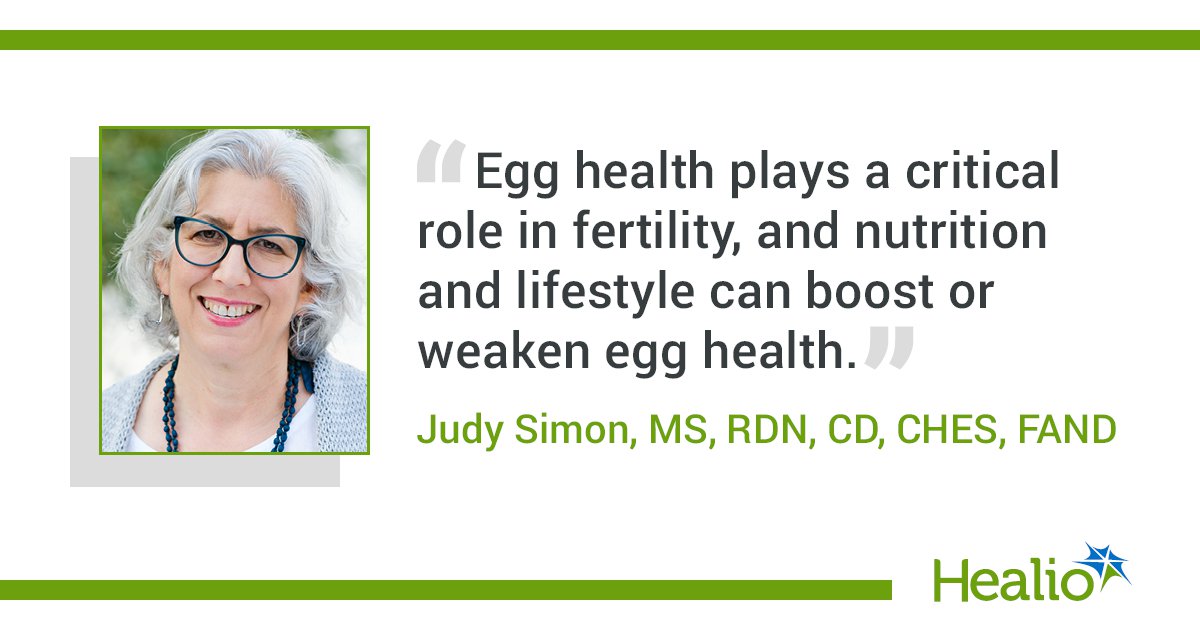
Ideally, 90 days prior to conception is an important time to optimize egg health. The fluid-filled sac (follicle) and granulosa cells in the follicle begin to develop and prepare the egg. Egg health plays a critical role in fertility, and nutrition and lifestyle can boost or weaken egg health. Eating nutritious foods high in antioxidants can reduce oxidative stress to strengthen reproductive health.
The large, observational Nurses’ Health Study established the main advice we now know as the “fertility diet.” This research showed the medical world the link between lifestyle and fertility. Practicing five or more of the following lifestyle factors was associated with a lower chance of ovulatory infertility:
Avoid trans fats mainly found in ultraprocessed and fast foods.
Cook with monounsaturated fats like olive or canola oil.
Consume protein from vegetable sources such as beans.
Choose more whole grains.
Consume full-fat yogurt or milk once a day.
Take multivitamins with folic acid and B vitamins daily.
Get iron from vegetable sources and supplements.
Drink water and avoid sugary sodas.
Lose a small amount of weight — 5% to 10% — if menstrual cycles are irregular.
Exercise 30 minutes or more daily.
Since the Nurses’ Health Study was published, many others have been conducted looking at the effects of different dietary patterns on fertility. Studies on the Mediterranean diet, fruits, vegetables, whole grains, legume, seafood, nuts seeds and olive oil have been shown to be beneficial for natural conception and IVF. Similar findings have been shown for these foods improving male fertility.
Weiner:What are the main nutritional concerns for women seeking to conceive? Do these differ during pregnancy and breastfeeding?
Simon:Optimizing diet for preconception is similar for pregnancy and breastfeeding. Unfortunately, most pregnant and lactating women are eating inadequate servings of fruits, vegetables, whole grains, beans, peas and lentils, according to National Health and Nutrition Examination Survey data. They are also consuming excess amounts of added sugars, saturated fat and sodium.
The 90-day period prior to conception is essential for optimizing gamete function and early placental development. One critical nutrient, for example, is folate, which is essential for neurodevelopment during the first month of pregnancy when a women may not even be aware she is pregnant. Ensuring she has an adequate folate level with diet and folic acid supplementation has been proven to reduce risk for neural tube defects. Omega-3, choline, iron and iodine are also essential nutrients that should be included in a preconception nutrition plan.
Aside from age and diminished ovarian reserve, polycystic ovary syndrome and endometriosis are some of the most common contributors to infertility for women. Eighty percent of women with PCOS have some degree of insulin resistance that affects their ability to ovulate and increases their risk for miscarriage. Improving their glycemic profile with diet, lifestyle and, sometimes, supplements and medications can improve their fertility and prepare them for a healthy pregnancy.
Weiner:Are there special considerations for women undergoing assisted reproduction?
Simon:Women preparing for egg freezing and IVF can greatly benefit by optimizing their diet and lifestyle 3 months prior to egg retrieval. I have worked with many women who had experienced poor retrievals and unsuccessful IVF cycles but achieved positive outcomes after improving their diet — even women with very low ovarian reserves.
IVF techniques have greatly advanced, but never reach 100%. Researchers sought to find out what role nutrition and environment might play.
From 2007 to 2017, Gaskins and colleagues looked at the combined effect of nutrition, lifestyle and environmental factors on fertility among 357 women in a subgroup of the Environment and Reproductive Health (EARTH) study who were using IVF to achieve pregnancy. They all completed a food frequency questionnaire.
The researchers’ “pro-fertility” diet was associated with the highest rates of pregnancy and the lowest rates of pregnancy loss for women undergoing assisted reproduction. This eating pattern emphasized fruits and vegetables, soy, and more seafood consumption over other animal proteins and included supplemental folic acid, vitamin D and vitamin B12 for those who were deficient.
The authors stated in their conclusion, “From a biological perspective, we hypothesize that there are many different pathways through which the ‘pro-fertility’ diet may be acting to promote fertility in women undergoing assisted reproductive technology, including enhancing the body’s capability to synthesize, repair and methylate DNA, suppress oxidative stress and support antioxidant defense, reduce systematic inflammation, and regulate glucose and insulin metabolism.”
A diet that is anti-inflammatory and high in plants, soy and seafood correlates with the highest fertility success.
Weiner:How can women start to redesign their eating plan for fertility? Is a complete dietary overhaul necessary?
Simon:I’ve worked with hundreds of women individually and in our Food for Fertility classes and learned that focusing on what women can add to their diet can be so impactful. Too many women have been fat shamed and blamed for their infertility and think they must be on a restrictive diet and focus on weight loss to get pregnant. Women with PCOS are often told to “just lose weight” and given no evidence-based guidance.
Instead, women should focus on fueling their body and reproductive system. In our book Getting to Baby, we share the three principles of a fertility-promoting diet:
Anti-inflammatory foods and those high in fiber promote a better uterine environment for implantation.
Low glycemic meals and snacks reduce inflammation and insulin resistance.
Foods high in antioxidants strengthen sperm and egg function.
Using our food-first fertility plan, I encourage women to build on the foundations of their preferences while focusing on inclusion of a plant-forward — not a strict vegetarian — meal plan. I encourage them to add in more plant foods while increasing their confidence in their abilities to nourish themselves. Setting small realistic goals, like including two fruits a day, can feel attainable.
Weiner:So many nutritional bars/supplements and vitamins are marketed to women concerned with their fertility. Is there a role for any of these? If so, how might they fit?
Simon:I do recommend a prenatal supplement 3 months prior to conception, but there are several available that are affordable and assessed by independent third parties that will meet most women’s needs.
Women often feel pressured by social media influencers to buy expensive supplements that provide many nutrients that are easily obtained with food. Some women need alternative forms of a prenatal, which are fortunately available.
Women with PCOS may benefit from additional supplements for fertility such as inositol and vitamin D.
Weiner:Women are often advised to reach a normal BMI to improve fertility and pregnancy outcomes. Any tips for losing or gaining weight?
Simon:Reproductive and obstetric medicine are guilty of weight bias, and many clinics have BMI cutoffs. Because IVF is a surgical procedure and many clinics operate in outpatient surgical clinics, they may have BMI cutoffs, usually 40 kg/m2. Luckily, most tertiary medical centers have multidisciplinary teams of health care providers who can provide IVF services to larger women with great success.
I presented at the American Society for Reproductive Medicine Scientific Congress in 2023 on a weight-inclusive approach to fertility. The ASRM obesity and reproduction committee opinion report in 2021 concluded:
Weight should not be the sole criteria for denying access to infertility treatment.
Programs should adopt specific BMI thresholds on the basis of ability to perform procedures.
Shared decision-making should be undertaken.
Research should define best practices to optimize retrievals in higher BMI.
Studies have not shown that weight loss prior to IVF yields better results. Focusing on health, not weight, is where our focus should be. Unfortunately, some women may need to change clinics to receive services. Many of the women in larger bodies who I have worked with have been able to conceive naturally or with medications or intrauterine insemination and have healthy outcomes.
Fertility can be impacted by energy balance and disordered eating patterns that affect ovulation. Women of any size can struggle with hypothalamic amenorrhea. With these women, we work on helping them balance their physical activity and food intake to meet their higher energy needs to help them ovulate. Increasing calorie- and nutrient-dense foods and reducing physical activity to increase available energy can help these women to ovulate and conceive.
Not all women who are thin struggle with fertility and not all women who are fat struggle with fertility. Medicine needs to stop conflating weight with health.
References:
For more information:
Judy Simon, MS, RDN, CD, CHES, FAND,is a registered dietitian nutritionist who specializes in reproductive health. She is the founder of Mind Body Nutrition PLLC, and a clinical instructor and clinic dietitian at the University of Washington. She is co-author of the book Getting to Baby: A Food-first Fertility Plan to Improve Your Odds and Shorten Your Time to Pregnancy and co-founder of the Food for Fertility program. She can be reached atjudy@mind-body-nutrition.com.
Susan Weiner, MS, RDN, CDN, CDCES, FADCES, is the owner of Susan Weiner Nutrition PLLC and the Healio | Women’s Health & OB/GYNNourish to Flourish column editor. She can be reached at susan@susanweinernutrition.com; X (Twitter): @susangweiner.
Detox smoothies have become popular in recent years as a quick, nutritious way to reset your body and boost your health.
These vibrant, nutrient-packed drinks promise to flush toxins, improve digestion, and give you a natural energy boost.
Whether you’re looking for a simple cleanse or want to incorporate more fruits and vegetables into your diet, detox smoothies are an easy, effective option.
What is a Detox Smoothie?
A detox smoothie is a blend of fruits, vegetables, and other natural ingredients designed to support the body’s natural detoxification processes.
The liver, kidneys, and digestive system work around the clock to remove harmful substances from your body, and detox smoothies provide nutrients that support these efforts.
Key Ingredients for an Effective Detox Smoothie:
1. Leafy Greens – Kale, spinach, and chard are rich in vitamins, minerals, and fiber. They support digestion and provide antioxidants that help reduce inflammation.
2. Citrus Fruits – Lemons, limes, and oranges are packed with Vitamin C, which supports the immune system and aids the liver in detoxifying the body.
3. Ginger – Known for its anti-inflammatory and digestive properties, ginger helps soothe the digestive tract and stimulates digestion.
4. Berries – Blueberries, raspberries, and strawberries are antioxidant powerhouses that protect the body from free radicals and aid in cleansing.
5. Cucumber – Hydrating and refreshing, cucumber is excellent for detoxing due to its high water content and natural diuretic properties, which help flush out toxins.
6. Turmeric – This vibrant yellow spice has powerful anti-inflammatory properties and supports liver function, making it a fantastic addition to detox smoothies.
7. Chia Seeds – Rich in fiber, omega-3s, and antioxidants, chia seeds help improve heart rate, improve cholesterol levels cleanse the digestive tract, and promote gut health.
Benefits of Detox Smoothies:
• Improves Digestion – Detox smoothies are rich in fiber, which aids digestion and promotes regular bowel movements.
The high water content in ingredients like cucumber and leafy greens also helps maintain hydration and flush toxins from the system.
• Increased Energy Levels – As your body eliminates toxins, you may feel more energized and alert. Detox smoothies provide a concentrated dose of vitamins and minerals that boost energy levels naturally.
• Clearer Skin – The antioxidants and hydration from detox smoothies can help improve skin clarity and reduce inflammation, leading to a brighter, more radiant complexion.
• Weight Management – Detox smoothies can be an excellent tool for weight management. They’re low in calories but high in nutrients, making them a great option for a filling, nutrient-dense meal or snack.
• Mental Clarity – By flushing out toxins, detox smoothies can help clear brain fog and improve focus and concentration.
Detox smoothies are an excellent way to nourish your body while supporting its natural cleansing processes.
Detox smoothies have become popular in recent years as a quick, nutritious way to reset your body and boost your health.
These vibrant, nutrient-packed drinks promise to flush toxins, improve digestion, and give you a natural energy boost.
Whether you’re looking for a simple cleanse or want to incorporate more fruits and vegetables into your diet, detox smoothies are an easy, effective option.
What is a Detox Smoothie?
A detox smoothie is a blend of fruits, vegetables, and other natural ingredients designed to support the body’s natural detoxification processes.
The liver, kidneys, and digestive system work around the clock to remove harmful substances from your body, and detox smoothies provide nutrients that support these efforts.
Key Ingredients for an Effective Detox Smoothie:
1. Leafy Greens – Kale, spinach, and chard are rich in vitamins, minerals, and fiber. They support digestion and provide antioxidants that help reduce inflammation.
2. Citrus Fruits – Lemons, limes, and oranges are packed with Vitamin C, which supports the immune system and aids the liver in detoxifying the body.
3. Ginger – Known for its anti-inflammatory and digestive properties, ginger helps soothe the digestive tract and stimulates digestion.
4. Berries – Blueberries, raspberries, and strawberries are antioxidant powerhouses that protect the body from free radicals and aid in cleansing.
5. Cucumber – Hydrating and refreshing, cucumber is excellent for detoxing due to its high water content and natural diuretic properties, which help flush out toxins.
6. Turmeric – This vibrant yellow spice has powerful anti-inflammatory properties and supports liver function, making it a fantastic addition to detox smoothies.
7. Chia Seeds – Rich in fiber, omega-3s, and antioxidants, chia seeds help improve heart rate, improve cholesterol levels cleanse the digestive tract, and promote gut health.
Benefits of Detox Smoothies:
• Improves Digestion – Detox smoothies are rich in fiber, which aids digestion and promotes regular bowel movements.
The high water content in ingredients like cucumber and leafy greens also helps maintain hydration and flush toxins from the system.
• Increased Energy Levels – As your body eliminates toxins, you may feel more energized and alert. Detox smoothies provide a concentrated dose of vitamins and minerals that boost energy levels naturally.
• Clearer Skin – The antioxidants and hydration from detox smoothies can help improve skin clarity and reduce inflammation, leading to a brighter, more radiant complexion.
• Weight Management – Detox smoothies can be an excellent tool for weight management. They’re low in calories but high in nutrients, making them a great option for a filling, nutrient-dense meal or snack.
• Mental Clarity – By flushing out toxins, detox smoothies can help clear brain fog and improve focus and concentration.
Detox smoothies are an excellent way to nourish your body while supporting its natural cleansing processes.