hacklink hack forum hacklink film izle hacklink marsbahisizmir escortsahabetpornJojobetcasibompadişahbetGorabetcasibom9018betgit casinomarsbahismatbetmatbetcasibom

Tag: protect

  • CSCAA Among Coaching Group Hiring Lobbyists To Protect Olympic Sports In New NCAA Era

    CSCAA Among Coaching Group Hiring Lobbyists To Protect Olympic Sports In New NCAA Era

    The College Swimming & Diving Coaches Association of America (CSCAA) is among eight coaching advocacy groups that have hired lobbying firm FGS Global to represent them in ensuring Olympic sports survive in the new NCAA.

    The CSCAA is joined by seven other coaching groups from Olympic sports:

    • The American Baseball Coaches Association
    • American Volleyball Coaches Association
    • College Swimming & Diving Association of America
    • Collegiate Rowing Coaches Association
    • Intercollegiate Tennis Association
    • National Field Hockey Coaches Association
    • U.S. Track & Field And Cross Country Coaches Association
    • National Wrestling Coaches Association

    Earlier this month the group retained FGS to lobby on federal name, image and likeness (NIL) legislation “that protects Olympic sports programs and broad-based sports sponsorship,” according to disclosure filings, Politico reports.

    The news comes as the gears are turning in regards to the landmark settlement in the House v. NCAA case, which was granted preliminary approval in October.

    The settlement will allow schools to have a revenue-sharing agreement with their student-athletes, allowing them to earn a cut of things like TV deals, ticket sales and sponsorships, which benefits football and basketball greatly and poses an imminent threat to the non-revenue-generating sports, namely Olympic sports.

    In order to comply with settlement agreements, there is fear that the funding for the non-revenue sports will be diverted elsewhere. Additionally, if athletes are deemed to be employees, funding could be cut in order to be used for player salaries.

    One of the lobbyists hired by the coaching group, Colleen Bell, is a former legislative director for Senator Richard Blumenthal, who is one of the Democrats leading these discussions on Capitol Hill, Politico reports. Also working the account for FGS will be Megan MooreBrian Gaston and Rob Mejia.

    The NCAA and Power Conferences have spent millions on a federal lobbying campaign to preserve amateurism and keep Olympic sports alive, Front Office Sports reports, specifically asking for a law that prevents student-athletes from being classified as professionals.

    However, the coaching group clearly believes they need their own lobbyists—though FBS is notably part of the NCAA and Power Conference effort, having served as a lobbyist for the Big Ten in years past.

    Front Office Sports also reported that the outcome of the U.S. election on Nov. 5 could dictate whether or not the NCAA gets the pro-amateurism law it has been seeking since 2020.

    The upcoming timeline for the settlement in the House case can be found here.


    Source link

  • Ukrainian front-line school system goes underground to protect against bombs and radiation

    Ukrainian front-line school system goes underground to protect against bombs and radiation

    ZAPORIZHZHIA, Ukraine — To be a parent in the Ukrainian front-line city of Zaporizhzhia means weighing your child’s life against the Russian weapons within striking distance.

    Most rain death in an instant: the drones, the ballistic missiles, the glide bombs, the artillery shells. But Russian soldiers control another weapon they have never deployed, with the potential to be just as deadly: The nearby Zaporizhzhia nuclear power plant.

    The NPP, as it’s known, once produced more electricity than any other nuclear power plant in Europe. It fell to Russian forces in the first weeks of the full-scale invasion, and Russia has held its six reactors ever since. The plant has come under repeated attacks that both sides blame on the other.

    These twin dangers — bombs and radiation — shadow families in Zaporizhzhia. Most of the youngest residents of the city have never seen the inside of a classroom. Schools that had suspended in-person classes during the COVID-19 pandemic more than four years ago continued online classes after the war started in February 2022.

    So with missiles and bombs still striking daily, Zaporizhzhia is going on a building binge for its future, creating an underground school system.

    Construction has begun on a dozen subterranean schools designed to be radiation- and bomb-proof and capable of educating 12,000 students. Then, officials say, they will start on the hospital system.

    The daily bombs are a more tangible fear than radiation, said Kateryna Ryzhko, a mother whose children are the third generation in her family to attend School No. 88. The main building, dating to the Soviet era of the children’s grandmother, is immaculate but the classrooms are empty. The underground version is nearly complete, and Ryzhko said she wouldn’t hesitate to send her kids to class there. Nearly four years of online learning have taken their toll on kids and parents alike.

    “Even classmates don’t recognize each other,” she said. “It’s the only safe way to have an education and not be on screens.”

    Within days of Russia’s full-scale invasion in February 2022, Zaporizhzhia’s 300,000 residents found themselves on the front lines. Unlike larger Ukrainian cities, like Kyiv or Kharkiv, there is no subway system that could do double-duty as a bomb shelter and few schools had basements where students could more safely attend classes.

    Many residents left — though some have returned. But the single-family homes and Soviet-style apartment blocks of Zaporizhzhia, the capital of the region that shares its name, filled nearly as quickly with Ukrainians fleeing areas seized by Russian forces, like the cities of Mariupol, Melitopol and Berdyansk.

    By the start of the school year in September 2022, which was supposed to mark the post-pandemic return to classrooms, schools were empty. Windows were boarded up to protect against bomb shockwaves, the lawns left unkempt. Fifty kilometers (31 miles) away, the nuclear reactor went into cold shutdown after intense negotiations between the International Atomic Energy Agency and the Russian government.

    The IAEA has rotated a handful of staff on site ever since. There are risks even in cold shutdown, when the reactor is operating but not generating power. The main danger is that its external electrical supply, which comes from Ukrainian-controlled territory under constant Russian bombardment, will be cut off for a longer period than generators can handle.

    The nuclear plant needs electricity to keep crucial backups functioning, including water pumps that prevent meltdowns, radiation monitors and other essential safety systems.

    During a recent Associated Press trip to the Ukrainian-controlled zone closest to the nuclear plant, two airborne bombs struck electrical infrastructure in a matter of minutes as night fell. Russia has repeatedly struck at Ukraine’s grid, attacks that have intensified this year. Highlighting the constant danger, electricity to the NPP was cut yet again for three days as emergency workers struggled to put out the fire. It was at least the seventh time this year that the plant was down to either a single electrical line or generator power, according to the global Nuclear Energy Agency.

    “Nuclear power plants are not meant to be disconnected from the grid. It’s not designed for that. It’s also not designed to be operating in cold shutdown for that long,” said Darya Dolzikova, a researcher on nuclear policy at the Royal United Services Institute in London.

    Ukrainian President Volodymyr Zelenskyy accuses Russia of targeting nuclear plants deliberately. The 1986 meltdown in Ukraine’s Chornobyl, on the northern border nearly 900 kilometers (550 miles) from Zaporizhzhia, increased the country’s rates of thyroid disease among Ukrainian children far from the accident site and radiation contaminated the immediate surroundings before drifting over much of the Northern Hemisphere. To this day, the area around the plant, known in Russian as Chernobyl, is an “exclusion zone” off-limits except to the technical staff needed to keep the decommissioned site safe.

    Russian forces seized control of Chornobyl in the first days of the invasion, only to be driven back by Ukrainian forces.

    The Zaporizhzhia plant has a safer, more modern design than Chornobyl and there’s not the same danger of a large-scale meltdown, experts say. But that doesn’t reduce the risk to zero, and Russia will remain a threatening neighbor even after the war ends.

    An investment that might seem extreme elsewhere is more understandable in Ukraine, said Sam Lair, a researcher at the Center for Nonproliferation Studies.

    “They are there under a conventional air and missile attack from the Russians, and they have experience with the fact that those attacks aren’t being targeted only at military targets,” Lair said. “If I were in their position, I would be building them too.”

    In addition, the Zaporizhzhia region received a European Union donation of 5.5 million iodine pills, which help block the thyroid’s absorption of some radiation.

    Since the start of the war, Russia has repeatedly alluded to its nuclear weapons stockpile without leveling direct threats. In September, Russian President Vladimir Putin said that Russia would consider any attack by a country supported by a nuclear-armed nation to be a joint attack and stressed that Russia could respond with nuclear weapons to any attack that posed a “critical threat to our sovereignty.”

    Ukrainian officials fear that the Russian attacks on Chornobyl and the Zaporizhzhia nuclear plants may be just a start. During his speech in late September to the U.N. General Assembly, Zelenskyy warned that Russia was preparing strikes on more nuclear plants, which generate a large portion of Ukraine’s electricity.

    “If, God forbid, Russia causes a nuclear disaster at one of our nuclear power plants, radiation won’t respect state borders,” Zelenskyy said.

    The cost to build a subterranean school system is enormous — the budget for the underground version of Gymnasium No. 71 alone stands at more than 112 million hryvnias ($2.7 million). International donors are covering most of it, and the national and local governments have made it a priority on par with funding the army.

    “Everybody understands that fortification and aid for the army, it’s priority No. 1,” said Ivan Fedorov, head of the Zaporizhzhia region. “But if we lose the new generation of our Ukrainians, for whom (do) we fight?”

    Daria Oncheva, a 15-year-old student at Gymnasium 71, looks forward to the underground classes, and not just because she’ll finally be in the same place as her schoolmates.

    “It’s safer than sitting at home remotely,” she said.

    School No. 88, across town, is further along, with rooms carved out and fully lined with concrete thick enough to block an initial onslaught of radiation. The contractor leading the project is also digging trenches for Ukraine’s military. When done, it will also be the primary bomb shelter for the neighborhood, whose single-family homes tend to have small orchards and trellised gardens — but no basements.

    An optimistic timeline has the school ready for children by December. It has three layers of rebar totaling 400 tons of metal, plus 3,100 cubic meters of reinforced concrete. The building will be topped by nearly a meter (yard) of earth, concealed by a soccer field and playground.

    The school will have an air filtration system, two distinct electrical lines and the ability to operate autonomously for three days, including with extra food and water supplies.

    Michael Dillon, a scientist at Lawrence Livermore National Laboratory who studies how people can survive nuclear fallout, said being underground improves survival by a factor of 10.

    But Alicia Sanders-Zakre at the International Campaign to Abolish Nuclear Weapons said ultimately people can do more — “which is eliminating these weapons instead of … building, really not even a Band-Aid, for the actual problem.”

    Lyudmila Zlatova, who has been the principal at School No. 88 for 30 years, hopes it will be a structure designed for the dangers Zaporizhzhia will face in the future. But she and the parents who gathered on a recent day were most concerned with the present, speaking at the edge of the construction pit as air raid sirens sounded.

    It takes 10 seconds for a bomb to reach the neighborhood from the front line, far too short a time to evacuate, and they land with unnerving frequency. The subterranean school’s sunless rooms and concrete corridors will only make children more comfortable, given what they’re already enduring, she said.

    “They will feel better studying without windows,” Zlatova said, peering across at the construction site.

    Zlatova believes it will bring back at least some of the families who’ve left Zaporizhzhia for other cities in Ukraine or elsewhere in Europe. The city remains fully functional, with public transit operating and grocery stores, markets and restaurants operating, and repairs ongoing for structures damaged by shelling — albeit in limited fashion. Around 150 of the school’s 650 prewar students have left the city, but she said she’s in touch with absent families and many promise to return home once there is a safe place to study.

    Gymnasium No. 6, which runs from first grade through high school, already has one. Its main building sits on the city’s easternmost edge, closer than any other school to the front 40 kilometers (25 miles) away.

    Little wonder that its principal, Kostyantyn Lypskyi, seems a little frayed at the beginning of the academic year. But at least his students can attend because parents chipped in money last year to renovate the basement shelter about 50 meters from the main school building into a series of classrooms.

    His underground school, whose concrete walls and relatively thin metal doors are not radiation proof but protect against explosions, hold around 500 people — the same number as the new designs. The school has double that number, so students will alternate weeks. The youngest children study full-time just upstairs from the shelter, and the older ones are in the main building.

    “Of course it will work,” he said. “We prepared everything for the start of the new school year.”

    In the earliest days of the school year, an air raid alarm meant he could test that confidence. It took five minutes from the moment the sirens sounded until the last children took their seats and spread out their books, awaiting instruction.

    It was morning, and they were ready for the day ahead.

    ___

    Associated Press reporter Martha Mendoza contributed from Santa Cruz, California. Alex Babenko contributed from Zaporizhzhia, Ukraine.

    ___

    The Associated Press receives support for nuclear security coverage from the Carnegie Corporation of New York and Outrider Foundation. The AP is solely responsible for all content.

    ___

    Additional AP coverage of the nuclear landscape: https://apnews.com/projects/the-new-nuclear-landscape/
    Source link

  • Citizen astronomers rally to protect Mexico’s night sky for the next generation

    Citizen astronomers rally to protect Mexico’s night sky for the next generation

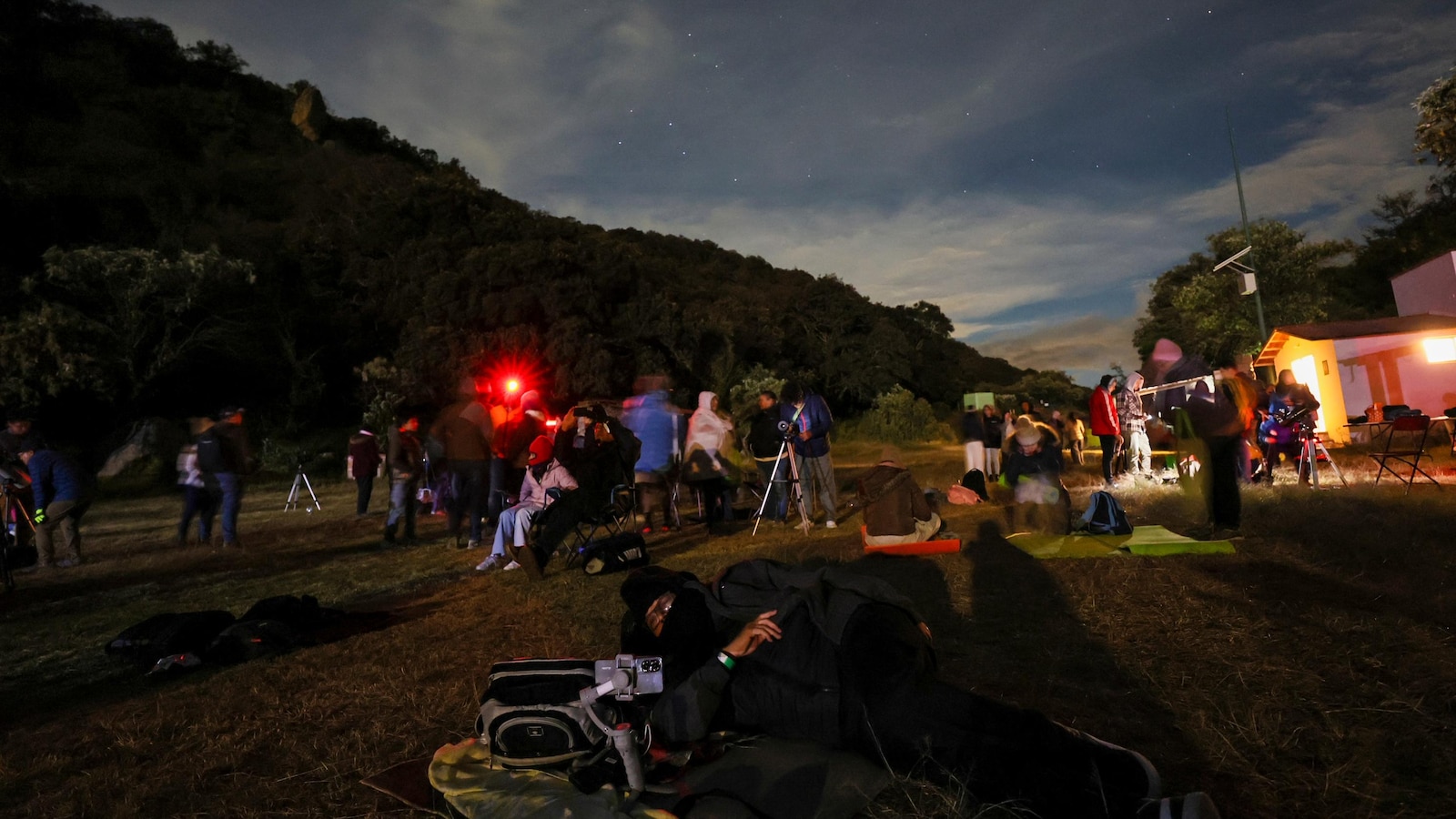
    JOYA-LA BARRETA ECOLOGICAL PARK, Mexico — As night descended, a rumble of frogs filled the air in this park outside the central Mexican city of Queretaro. In the sky, tiny stars appeared one by one, aligning into constellations.

    Juan Carlos Hernández used his weight to adjust a large telescope. “Aim for me, Rich!” he yelled to his friend. Ricardo Soriano focused a green laser on a small patch of clouds, targeting where the Tsuchinshan-Atlas comet will soon be visible.

    Hernández and other amateur astronomers worked to certify Joya-La Barreta Ecological Park last year as the first urban night sky space in Latin America by DarkSky International, an organization working to educate the public about the harm of indiscriminate lighting.

    The park sitting at about 8,520 feet (2,600 meters) above sea level on the outskirts of Queretaro gives unobstructed access to the night sky. While over 200 dark sky places exist globally, Joya-La Barreta park is only one of 11 in areas that are considered urban. Its dark sky status is under constant threat, however, from increasing light pollution and urbanization.

    Hernández, who just turned 40, has advocated relentlessly for the night sky for more than 20 years.

    The president of Queretaro’s Astronomical Society and one of the founders of the stargazing tourism agency Astronite, the aerospace engineer by day has been chasing dark areas to observe the stars since he can remember.

    “In 2014 you could see Omega (Centauri) sitting in the sky just above the city,” he said of a constellation over 17,000 light years away. “Today it’s unimaginable.”

    A 2023 study that analyzed data from more than 50,000 amateur stargazers found that artificial lighting is making the night sky across the world about 10% brighter each year. As of 2016, more than 80% of the world lived under light-polluted skies.

    Studies in Mexico show that increased urbanization and the need for city lighting in relation to security issues have caused more light contamination.

    Fernando Ávila Castro of the Institute of Astronomy at the National Autonomous University of Mexico said a good analogy to explain light pollution is noise pollution.

    “We constantly hear traffic noise from the street, but past a certain level that intensity becomes annoying, it doesn’t let you rest,” he said. “The same thing happens with light. Especially because all living beings have this internal clock, the circadian rhythm, which depends on the external values of light.”

    “When we go to sleep, we forget that an entire world remains active,” Castro said.

    The moon and stars are the light source guiding nocturnal activity for plants and animals — determining when animals emerge from hiding to find food, when plants reproduce and when certain animal species migrate. Artificial light has boomed since the industrial revolution in the 19th century, with efficient, affordable LEDs the latest type in wide use.

    “There’s also this whole part about the biodiversity,” Analette Casazza, president of another Queretaro astronomy association, said while standing under the stars Saturday night. “We can hear the singing from all the animals that live here (in Joya-La Barreta). A lot of these pollinating animals, their activity is at night.”

    Joya-La Barreta park hosts 123 species of vertebrates.

    “The real challenge we have is to get citizens involved,” said María Guadalupe Espinosa de los Reyes Ayala, Queretaro’s environment secretary. “When people arrive at a place like this and realize how much it has to offer, they see the need to protect and conserve it.”

    Hernández and other astronomy activists continue to fight to conserve the park’s nocturnal conditions and pass state regulations to reduce light pollution.

    Hernández is also fighting for the enforcement of Mexico’s General Law of Ecological Balance, passed in 2021.

    The law provides general recommendations to minimize light pollution. It’s been recognized in certain Mexican states like Sonora, Baja California and Hidalgo to protect observatories and professional astronomical observations. However in Queretaro, Hernández submitted an amendment to the state congress in 2023 to apply the regulations, but hasn’t had any luck.

    Three times a year, the citizen astronomers at Joya-La Barreta have to submit light pollution reports to DarkSky. Increased light pollution levels or a lack of visitors to the park for astronomical activities can put their certification at risk. For Ricardo Soriano, another founder of Astronite, it’s a constant cause for concern.

    “If contamination continues to grow and the government doesn’t support us, and doesn’t do more to see more beyond our certification, then we can lose it,” Soriano said. “We’ll have to leave Queretaro to try to find another park like this. I hope they can see it as something important for the state and community.”

    On Saturday, as the comet came into focus, 10-year-old Matti González, accompanied by his parents Antonio González and Brenda Estrella, burst into a smile looking through his telescope.

    “What are you going to dress up as for Halloween?” González asked his son. “An astronaut!” Matti yelled.

    Throughout the night, Hernandez ran back and forth between attendees with a red headlight guiding his path. He explained certain celestial bodies or helped focus a scope on Saturn’s rings. Pausing for a moment, he thought about Carl Sagan, and how the astronomer said the same elements that form in the final gasps of a dying star — hydrogen, oxygen, carbon — are elements found in our bodies today.

    “Looking at the sky is the most spiritual experience there can be,” Hernández said excitedly. “It’s the connection to our true molecular origins, but also to our cosmic destiny.”

    Looking up at the stars, he said: “For me, the most important thing is that the future generations know that a resource their grandparents had is being lost.”

    ____

    Follow AP’s coverage of Latin America and the Caribbean at https://apnews.com/hub/latin-america

    Source link

  • Conor McGregor Warns Dana White to Protect Dominance in Combat Sports as UFC Star Makes a Prophecy

    Conor McGregor Warns Dana White to Protect Dominance in Combat Sports as UFC Star Makes a Prophecy

    Conor McGregor has been a major part of the Ultimate Fighting Champion in its history. Whatever one’s stance may be on his fighting abilities, it is nearly impossible to deny that he has brought major attention to the sport time and again. However, it is the same Irishman who now believes that the Bare Knuckle Fighting Championship is a better place for fighters and fans than the UFC and other mixed martial arts promotions.

    That’s a major claim that has been indirectly made by the Irishman, as he pointed out a major issue with the fights in the UFC. So what’s the issue? Well, according to Conor McGregor, it’s grappling. A technique that makes up a major part of the fights has been called out by McGregor for ruining the entertainment value of the matches.

    Taking to Twitter, McGregor shared his controversial stance against grapplers in the promotion. ‘The Notorious’ claimed that grappling has been ruining the sport of MMA for fans to watch. A problem that fans are hiding despite their grievances. But wrestlers taking it to the mat for most of the matches are ruining the viewing experience, as per the Irishman. “Act like yous aren’t fed up and over this bulls**t all yous want, but I won’t. It’s just become the norm nowadays. The product is suffering because of it. If it wasn’t for the brand name already well established it would be well in the bin by now. It is in the bin in the mainstream. That’s a fact. There is no mainstream casual audience here. It needs calling out. Adjusting. A full review. MMA is better than what it has become recently imo.”

    ADVERTISEMENT

    Article continues below this ad

    He wrote another tweet where he wrote how his co-owned BKFC is the future of MMA and the fights within the promotion are much more intense than in the UFC. He claims that, unlike the influx of grappling and stalling in the Dana White-led promotion, BKFC offers more striking and action. “Bare Knuckle is where it’s at. The future! And the future is now. There is zero feeling of an event dragging on that is ever so prevalent in today’s MMA. More intense. More deadly. More bl**d. No room for stalling or escaping collision/impact. It’s sink or swim in bare knuckle. Nowhere to hide. The nastiest, craziest, wildest sport in today’s market.”

    ADVERTISEMENT

    Article continues below this ad

    It truly is a controversial take, but one that many might agree with. When it comes to the entertainment value, a sector of fans surely is more interested in seeing more striking than fighters just hugging it out for five minutes straight. However, it is also important for the other fighter to learn to get off the cage and have a better takedown defense. Sean O’Malley vs. Merab Dvalishvili could’ve been a much more intense fight if O’Malley wasn’t taken down extensively throughout the matchup. So maybe O’Malley should look toward joining the BKFC now if he ever leaves the UFC. Especially after McGregor made another major claim about what makes the promotion more superior than other MMA promotions.

    BKFC: A Better Option for Ex-UFC Fighters

    Conor McGregor claims that compared to rival MMA promoters, the BKFC is a completely different game that attracts more attention. As per the Irishman, former UFC competitors in other MMA promotions frequently don’t create much hype or interest. On the contrary, ‘The Notorious’ believes that BKFC offers more entertainment and buzz with former UFC fighters like Mike Perry and Eddie Alvarez.

    ADVERTISEMENT

    Article continues below this ad

    Talking to The MacLife, McGregor revealed that fighters like Justin Gaethje can enjoy more attention and excitement if they become a part of the BKFC. He said, “The rest of them (promotions), their best events are past fighters of the UFC maybe fighting each other or maybe fighting someone in the mid-level. It doesn’t really generate mega buzz for me, or for the fans, judging by the numbers. Let’s take Justin Gaethje, who’s a UFC veteran, former BMF holder… interim belt [holder]. Take him; let’s put him in bareknuckle; that’s exciting. That is really, really exciting. Now let’s take him and put him in another MMA organization, not so much.”

    Well, it surely looks like Conor McGregor is enjoying his work in the MMA promotion and is really happy with how the product has shaped. However, only time will tell if the BKFC ends up becoming as big as the UFC someday. But what do you think of McGregor’s claims? Do you believe in the superior qualities of the BKFC? Let us know in the comments.

    Source link

  • California governor signs bills to protect children from AI deepfake nudes

    California governor signs bills to protect children from AI deepfake nudes

    SACRAMENTO, Calif. — California Gov. Gavin Newsom signed a pair of proposals Sunday aiming to help shield minors from the increasingly prevalent misuse of artificial intelligence tools to generate harmful sexual imagery of children.

    The measures are part of California’s concerted efforts to ramp up regulations around the marquee industry that is increasingly affecting the daily lives of Americans but has had little to no oversight in the United States.

    Earlier this month, Newsom also has signed off on some of the toughest laws to tackle election deepfakes, though the laws are being challenged in court. California is wildly seen as a potential leader in regulating the AI industry in the U.S.

    The new laws, which received overwhelming bipartisan support, close a legal loophole around AI-generated imagery of child sexual abuse and make it clear child pornography is illegal even if it’s AI-generated.

    Current law does not allow district attorneys to go after people who possess or distribute AI-generated child sexual abuse images if they cannot prove the materials are depicting a real person, supporters said. Under the new laws, such an offense would qualify as a felony.

    “Child sexual abuse material must be illegal to create, possess, and distribute in California, whether the images are AI generated or of actual children,” Democratic Assemblymember Marc Berman, who authored one of the bills, said in a statement. “AI that is used to create these awful images is trained from thousands of images of real children being abused, revictimizing those children all over again.”

    Newsom earlier this month also signed two other bills to strengthen laws on revenge porn with the goal of protecting more women, teenage girls and others from sexual exploitation and harassment enabled by AI tools. It will be now illegal for an adult to create or share AI-generated sexually explicit deepfakes of a person without their consent under state laws. Social media platforms are also required to allow users to report such materials for removal.

    But some of the laws don’t go far enough, said Los Angeles County District Attorney George Gascón, whose office sponsored some of the proposals. Gascón said new penalties for sharing AI-generated revenge porn should have included those under 18, too. The measure was narrowed by state lawmakers last month to only apply to adults.

    “There has to be consequences, you don’t get a free pass because you’re under 18,” Gascón said in a recent interview.

    The laws come after San Francisco brought a first-in-the-nation lawsuit against more than a dozen websites that AI tools with a promise to “undress any photo” uploaded to the website within seconds.

    The problem with deepfakes isn’t new, but experts say it’s getting worse as the technology to produce it becomes more accessible and easier to use. Researchers have been sounding the alarm these past two years on the explosion of AI-generated child sexual abuse material using depictions of real victims or virtual characters.

    In March, a school district in Beverly Hills expelled five middle school students for creating and sharing fake nudes of their classmates.

    The issue has prompted swift bipartisan actions in nearly 30 states to help address the proliferation of AI-generated sexually abusive materials. Some of them include protection for all, while others only outlaw materials depicting minors.

    Newsom has touted California as an early adopter as well as regulator of AI technology, saying the state could soon deploy generative AI tools to address highway congestion and provide tax guidance, even as his administration considers new rules against AI discrimination in hiring practices.

    Source link

  • Why you’re more at risk of cancer in your 40s and 50s – and how to protect yourself

    Why you’re more at risk of cancer in your 40s and 50s – and how to protect yourself

    Source link

  • California governor to sign a law to protect children from social media addiction

    California governor to sign a law to protect children from social media addiction

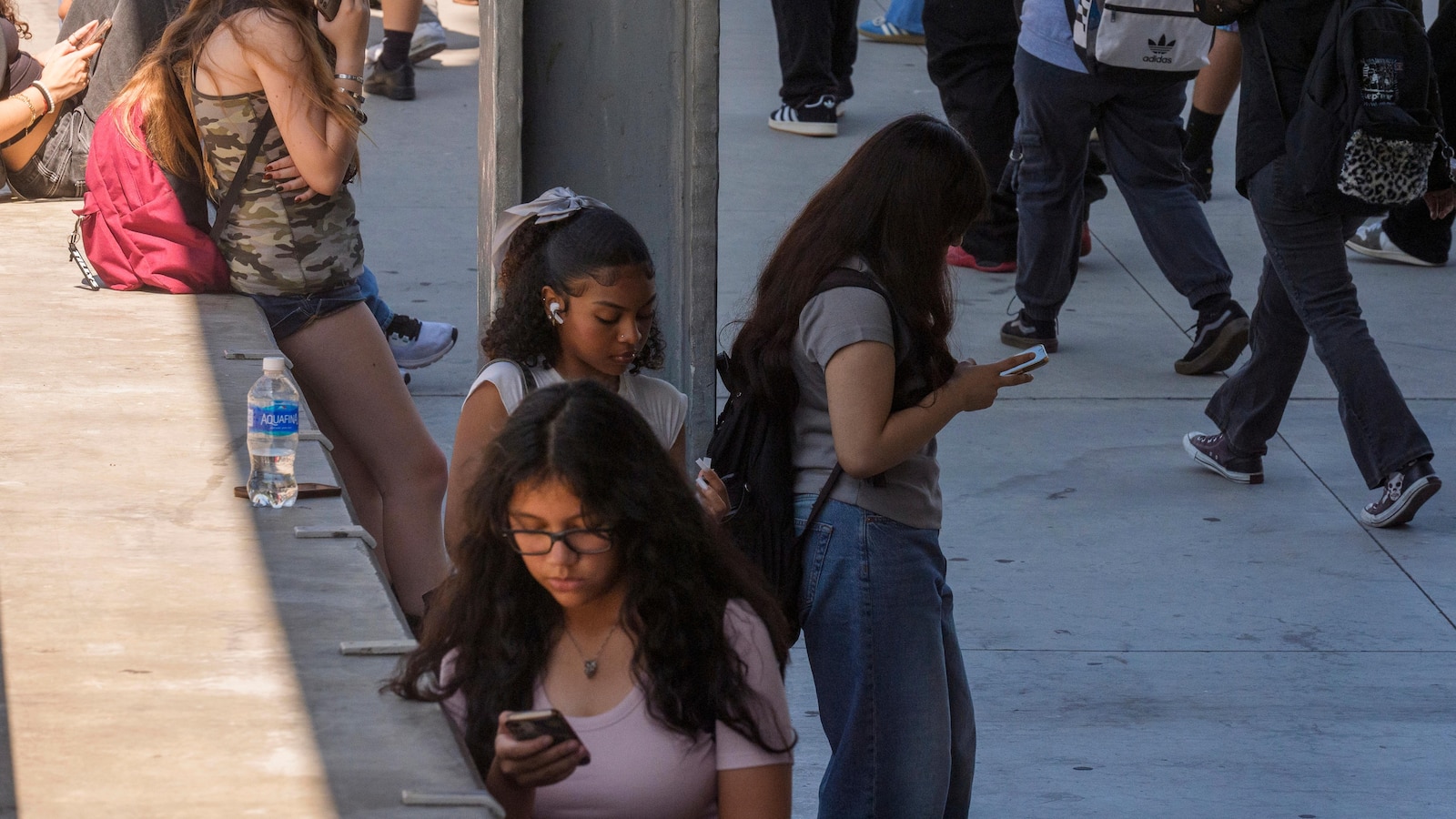
    SACRAMENTO, Calif. — California will make it illegal for social media platforms to knowingly provide addictive feeds to children without parental consent beginning in 2027 under a bill Democratic Gov. Gavin Newsom will sign, his office said Friday.

    California will follow New York state, which passed a law earlier this year allowing parents to block their kids from getting social media posts suggested by a platform’s algorithm. Utah has passed laws in recent years aimed at limiting children’s access to social media, but they have faced challenges in court.

    The California bill will take effect in a state home to some of the largest technology companies in the world after similar proposals have failed to pass in recent years. It is part of a growing push in states across the country to try to address the impacts of social media on the well-being of children.

    “Every parent knows the harm social media addiction can inflict on their children — isolation from human contact, stress and anxiety, and endless hours wasted late into the night,” Newsom said in a statement. “With this bill, California is helping protect children and teenagers from purposely designed features that feed these destructive habits.”

    The bill bans platforms from sending notifications without permission from parents to minors between 12 a.m. and 6 a.m., and between 8 a.m. and 3 p.m. on weekdays from September through May, when children are typically in school. The legislation also makes platforms set children’s accounts to private by default.

    Opponents of the legislation say it could inadvertently prevent adults from accessing content if they cannot verify their age. Some argue it would threaten online privacy by making platforms collect more information on users.

    The bill defines an “addictive feed” as a website or app “in which multiple pieces of media generated or shared by users are, either concurrently or sequentially, recommended, selected, or prioritized for display to a user based, in whole or in part, on information provided by the user, or otherwise associated with the user or the user’s device,” with some exceptions.

    The subject garnered renewed attention in June when U.S. Surgeon General Vivek Murthy called on Congress to require warning labels on social media platforms and their impacts on young people. Attorneys general in 42 states endorsed the plan in a letter sent to Congress last week.

    State Sen. Nancy Skinner, a Democrat representing Berkeley who authored the California bill, said after lawmakers approved the bill last month that “social media companies have designed their platforms to addict users, especially our kids.”

    “With the passage of SB 976, the California Legislature has sent a clear message: When social media companies won’t act, it’s our responsibility to protect our kids,” she said in a statement.

    ___

    Associated Press writer Trân Nguyễn contributed to this report.

    ___

    Austin is a corps member for The Associated Press/Report for America Statehouse News Initiative. Report for America is a nonprofit national service program that places journalists in local newsrooms to report on undercovered issues. Follow Austin on X: @sophieadanna


    Source link

  • California governor signs laws to protect actors against unauthorized use of AI

    California governor signs laws to protect actors against unauthorized use of AI

    SACRAMENTO, Calif. — California Gov. Gavin Newsom signed off Tuesday on legislation aiming at protecting Hollywood actors and performers against unauthorized artificial intelligence that could be used to create digital clones of themselves without their consent.

    The new laws come as California legislators ramped up efforts this year to regulate the marquee industry that is increasingly affecting the daily lives of Americans but has had little to no oversight in the United States.

    The laws also reflect the priorities of the Democratic governor who’s walking a tightrope between protecting the public and workers against potential AI risks and nurturing the rapidly evolving homegrown industry.

    “We continue to wade through uncharted territory when it comes to how AI and digital media is transforming the entertainment industry, but our North Star has always been to protect workers,” Newsom said in a statement. “This legislation ensures the industry can continue thriving while strengthening protections for workers and how their likeness can or cannot be used.”

    Inspired by the Hollywood actors’ strike last year over low wages and concerns that studios would use AI technology to replace workers, a new California law will allow performers to back out of existing contracts if vague language might allow studios to freely use AI to digitally clone their voices and likeness. The law is set to take effect in 2025 and has the support of the California Labor Federation and the Screen Actors Guild-American Federation of Television and Radio Artists, or SAG-AFTRA.

    Another law signed by Newsom, also supported by SAG-AFTRA, prevents dead performers from being digitally cloned for commercial purposes without the permission of their estates. Supporters said the law is crucial to curb the practice, citing the case of a media company that produced a fake, AI-generated hourlong comedy special to recreate the late comedian George Carlin’s style and material without his estate’s consent.

    “It is a momentous day for SAG-AFTRA members and everyone else because the AI protections we fought so hard for last year are now expanded upon by California law thanks to the legislature and Governor Gavin Newsom,” SAG-AFTRA President Fran Drescher said in a statement. “They say as California goes, so goes the nation!”

    California is among the first states in the nation to establish performer protection against AI. Tennessee, long known as the birthplace of country music and the launchpad for musical legends, led the country by enacting a similar law to protect musicians and artists in March.

    Supporters of the new laws said they will help encourage responsible AI use without stifling innovation. Opponents, including the California Chamber of Commerce, said the new laws are likely unenforceable and could lead to lengthy legal battles in the future.

    The two new laws are among a slew of measures passed by lawmakers this year in an attempt to reign in the AI industry. Newsom signaled in July that he will sign a proposal to crack down on election deepfakes but has not weighed in other legislation, including one that would establish first-in-the-nation safety measures for large AI models.

    The governor has until Sept. 30 to sign the proposals, veto them or let them become law without his signature.

    Source link

  • Instagram makes teen accounts private as pressure mounts on the app to protect children

    Instagram makes teen accounts private as pressure mounts on the app to protect children

    Instagram is making teen accounts mandatory for those under 18 as it tries to make the platform safer for children amid a growing backlash against how social media affects young people’s lives.

    Beginning Tuesday in the U.S., U.K., Canada and Australia, anyone under under 18 who signs up for Instagram will be placed into teen accounts — which will be private by default — and those with existing accounts will be migrated over the next 60 days. Teens in the European Union will see their accounts adjusted later this year.

    Meta acknowledges that teenagers may lie about their age and says it will require them to verify their ages in more instances, like if they try to create a new account with an adult birthday. The Menlo Park, California company also said it is building technology that proactively finds teen accounts that pretend to be grownups and automatically places them into the restricted teen accounts.

    The teen accounts will be private by default. Private messages are restricted so teens can only receive them from people they follow or are already connected to. “Sensitive content,” such as videos of people fighting or those promoting cosmetic procedures, will be limited, Meta said. Teens will also get notifications if they are on Instagram for more than 60 minutes and a “sleep mode” will be enabled that turns off notifications and sends auto-replies to direct messages from 10 p.m. until 7 a.m.

    While these settings will be turned on for all teens, 16 and 17-year-olds will be able to turn them off. Kids under 16 will need their parents’ permission to do so.

    “The three concerns we’re hearing from parents are that their teens are seeing content that they don’t want to see or that they’re getting contacted by people they don’t want to be contacted by or that they’re spending too much on the app,” said Naomi Gleit, head of product at Meta. “So teen accounts is really focused on addressing those three concerns.”

    The announcement comes as the company faces lawsuits from dozens of U.S. states that accuse it of harming young people and contributing to the youth mental health crisis by knowingly and deliberately designing features on Instagram and Facebook that addict children to its platforms.

    In the past, Meta’s efforts at addressing teen safety and mental health on its platforms have been met with criticism that the changes don’t go far enough. For instance, while kids will get a notification when they’ve spent 60 minutes on the app, they will be able to bypass it and continue scrolling.

    That’s unless the child’s parents turn on “parental supervision” mode, where parents can limit teens’ time on Instagram to a specific amount of time, such as 15 minutes.

    With the latest changes, Meta is giving parents more options to oversee their kids’ accounts. Those under 16 will need a parent or guardian’s permission to change their settings to less restrictive ones. They can do this by setting up “parental supervision” on their accounts and connecting them to a parent or guardian.

    Nick Clegg, Meta’s president of global affairs, said last week that parents don’t use the parental controls the company has introduced in recent years.

    Gleit said she thinks teen accounts will create a “big incentive for parents and teens to set up parental supervision.”

    “Parents will be able to see, via the family center, who is messaging their teen and hopefully have a conversation with their teen,” she said. “If there is bullying or harassment happening, parents will have visibility into who their teen’s following, who’s following their teen, who their teen has messaged in the past seven days and hopefully have some of these conversations and help them navigate these really difficult situations online.”

    U.S. Surgeon General Vivek Murthy said last year that tech companies put too much on parents when it comes to keeping children safe on social media.

    “We’re asking parents to manage a technology that’s rapidly evolving that fundamentally changes how their kids think about themselves, how they build friendships, how they experience the world — and technology, by the way, that prior generations never had to manage,” Murthy said in May 2023.

    Source link

  • Federal judge temporarily blocks Utah social media laws aimed to protect children

    Federal judge temporarily blocks Utah social media laws aimed to protect children

    A federal judge in Utah has temporarily blocked social media access laws that leaders said were meant to protect the mental health and personal privacy of children, saying they are unconstitutional.

    U.S. District Court Judge Robert Shelby on Tuesday issued the preliminary injunction against laws that would have required social media companies to verify the ages of their users, disable certain features and limit the use of accounts owned by Utah children.

    The laws were set to take effect on Oct. 1, but will be blocked pending the outcome of the case filed by NetChoice, a nonprofit trade association for internet companies such as Google, Meta — the parent company of Facebook and Instagram — Snap and X.

    The Utah legislature passed the Utah Minor Protection in Social Media Act to replace laws that were passed in 2023 and were challenged as unconstitutional. State officials believed the 2024 act would hold up in court.

    But Shelby disagreed.

    “The court recognizes the State’s earnest desire to protect young people from the novel challenges associated with social media use,” Shelby wrote in his order. However, the state has not articulated a compelling state interest in violating the First Amendment rights of the social media companies, he wrote.

    Republican Gov. Spencer Cox said he was disappointed in the court’s decision and was aware it could be a long battle, but said it “is a battle worth waging,” due to the harm that social media is causing children.

    “Let’s be clear: social media companies could voluntarily, at this very moment, do everything that the law put in place to protect our children. But they refuse to do so. Instead, they continue to prioritize their profits over our children’s wellbeing. This must stop, and Utah will continue to lead the fight.”

    NetChoice argues Utah residents would have to supply additional information to verify their age than social media companies usually collect, putting more information at risk of a data breach.

    Several months after Utah became the first state to pass laws regulating children’s social media use in 2023, it sued TikTok and Meta for allegedly luring in children with addictive features.

    Under the 2024 Utah laws, default privacy settings for minor accounts would have been required to restrict access to direct messages and sharing features and disable elements such as autoplay and push notifications that lawmakers argue could lead to excessive use.

    Parents could obtain access to their children’s accounts and would have grounds to sue a social media company if their child’s mental health worsens from excessive use of an algorithmically curated app. Social media companies must comply with a long list of demands — including a three-hour daily limit and a blackout from 10:30 p.m. to 6:30 a.m. — to help avoid liability.

    The laws sought to shift the burden of proof from the families onto the social media companies, requiring them to demonstrate that their curated content did not fully or partially cause a child’s depression, anxiety or self-harm behaviors. Companies would have to pay at least $10,000 in damages for each case of an adverse mental health outcome.

    NetChoice has obtained injunctions temporarily halting similar social media limitation laws in California, Arkansas, Ohio, Mississippi and Texas, the organization said.

    “With this now sixth injunction against these overreaching laws, we hope policymakers will focus on meaningful and constitutional solutions for the digital age,” said Chris Marchese, director of litigation for NetChoice.

    Source link