hacklink hack forum hacklink film izle hacklink marsbahisizmir escortsahabetpornJojobetcasibompadişahbetGorabetcasibom9018betgit casinojojobetmarsbahismatbetmatbet

Tag: Raise

  • Top Restaurant Associations Raise Concern Over Zomato, Swiggys Private Label Expansion

    Top Restaurant Associations Raise Concern Over Zomato, Swiggys Private Label Expansion

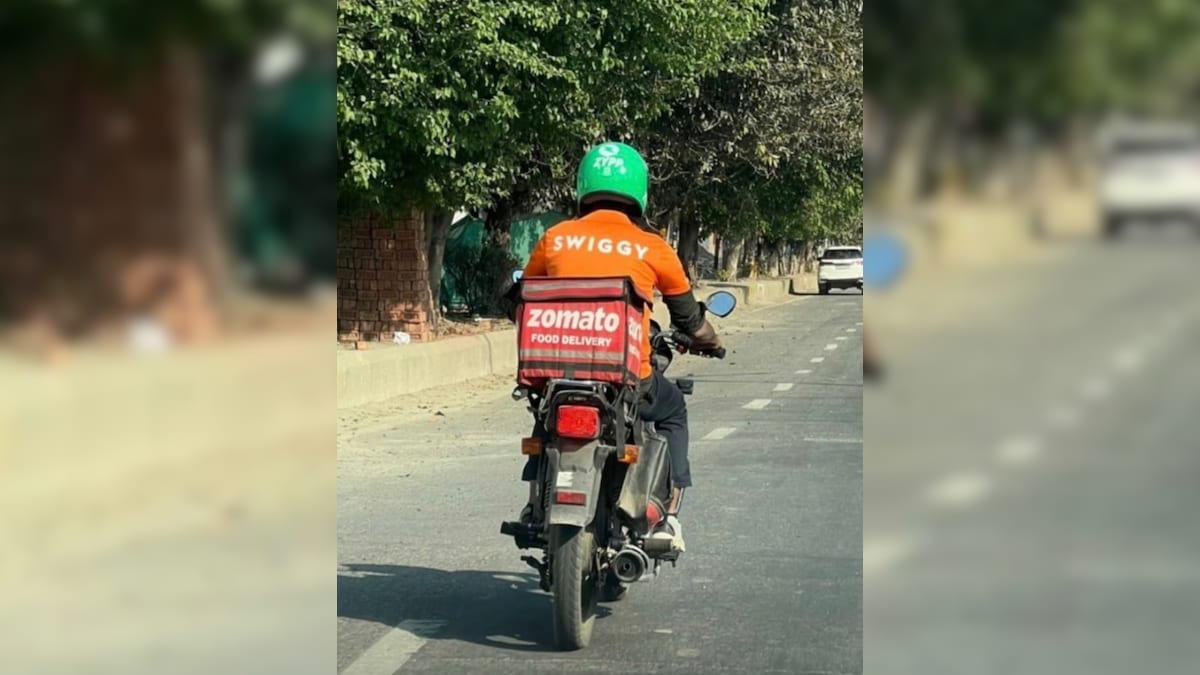
    In a move that has stirred debate across the hospitality sector, leading associations, including the Federation of Hotel & Restaurant Associations of India (FHRAI), have voiced their concerns over food delivery giants Zomato and Swiggy’s entry into the “private label” food delivery market. This development has raised significant questions about data privacy, fair competition, and food safety, with calls for regulatory intervention gaining momentum.

    According to the Federation of Hotel & Restaurant Associations of India (FHRAI), Zomato and Swiggy are now using their market dominance to directly compete with the very businesses they were meant to support.

    In its statement, the Federation of Hotel & Restaurant Associations of India (FHRAI) said Zomato and Swiggy, which initially operated as platforms connecting restaurants with customers, have now ventured into the quick commerce space by creating their own private-label food products.

    “These platforms use restaurant data to create personalized offers and discounts, which in turn puts restaurants at a disadvantage, as they are essentially competing with their own information,” the Association claimed.

    It further said, the lack of clear regulations around the production and sale of these private-label products raises concerns about the safety and quality of food being delivered to consumers.

    The Association said, the aim of raising this issue is to address the growing concerns about the misuse of restaurant data by food delivery platforms and the unfair competitive advantage these platforms now hold over restaurants.

    “By leveraging data from restaurants, such as customer preferences and sales trends, Zomato and Swiggy can create personalized deals that directly impact the restaurant’s business. This not only threatens the livelihoods of small and medium-size restaurants but also raises questions about data privacy and consent,” FHRAI said.

    Pradeep Shetty, Vice President of FHRAI, said, “We are meeting with the Commerce Ministry very soon and have requested an expedited appointment to discuss this serious issue. The actions of platforms like Zomato and Swiggy represent a direct violation of established e-commerce regulations. These companies were originally designed to function as neutral marketplace platforms, connecting consumers with restaurants, not as direct competitors”.

    Last week, the National Restaurant Association of India (NRAI) had opposed “private labelling” by Zomato and Swiggy for quick commerce food delivery via separate apps, and said it will file complaints with “relevant regulatory authorities” and initiate legal action to prevent them from monopolising the market.

    On Friday, Blinkit CEO Albinder Dhindsa, in a post on X, said that Zomato will not use its app to build Bistro, Blinkit’s new 10-minute food offering, which is currently live across a few locations in Gurugram.

    “Also, as @deepigoyal has always said, Zomato will never launch private brands on the Zomato app to compete with its restaurant partners. This still holds true. Which is why this service is not being built within Zomato (the organisation which runs the brand, or the app). This is a standalone team, with a standalone app – and no Zomato restaurant data has been used. We will not even use the Zomato app to market Bistro.

    “This is going to be a significant additional cost to us, but ethics and sticking to our word mean more than anything else to us at Zomato and we are not going to give it up to save some marketing cost,” the Blinkit CEO said in the post.

    A response from Swiggy could not be obtained as the emailed query remained unanswered. The ongoing debate underscores the tension between technology-driven food delivery platforms and the traditional restaurant ecosystem. While Zomato and Swiggy have revolutionized how consumers access food, the outcome of this conflict could redefine the dynamics of the Indian food industry for years to come.


    Source link

  • Lifestyle News Live Today November 16, 2024: Delhi AQI alert: Smog worsens; pollution continues to raise health concerns

    Lifestyle News Live Today November 16, 2024: Delhi AQI alert: Smog worsens; pollution continues to raise health concerns

    Live

    Lifestyle News Live: Stay informed with Hindustan Times’ live updates! Track the latest lifestyle news including fashion trends, style guide & Tips, India & World Events. Don’t miss today’s key news for November 16, 2024.

    Latest news on November 16, 2024: Delhi's AQI was recorded at 406.

    Latest news on November 16, 2024: Delhi’s AQI was recorded at 406.

    Lifestyle News Live: Get the latest news updates and breaking news stories from the world of lifestyle. Track all the latest fashion trends, delicious recipes, travel tips and more. Disclaimer: This is an AI-generated live blog and has not been edited by Hindustan Times staff.…Read More

    Follow all the updates here:

    Nov 16, 2024 2:30 PM IST

    Health News LIVE: Delhi AQI alert: Smog worsens; pollution continues to raise health concerns

    • A dense layer of smog enveloped Delhi for the fourth consecutive day and the AQI was recorded at 406 as of 8 am on Saturday morning, according to the CPCB.


    Read the full story here

    Nov 16, 2024 2:13 PM IST

    Lifestyle News LIVE: Frazzled due to stress? Study says it can alter your memories

    • The recent study explored how stress can alter the way the brain processes and stores memories.


    Read the full story here

    ShortsbyHindustan Times Cricket

    View All

    Watch & follow exclusive cricket content

    Nov 16, 2024 2:00 PM IST

    Fashion News LIVE: Stay active in style with the best activewear for women – Premium options from Puma and Reebok

    • Elevate your wardrobe with the impressive collections from Puma and Reebok. Explore the best activewear for women for comfort and style while working out.


    Read the full story here

    Nov 16, 2024 1:37 PM IST

    Travel News LIVE: Inside Palak Tiwari’s rumoured Maldives holiday with Ibrahim Ali Khan: Know how much the private ocean villas cost

    • Palak Tiwari and Ibrahim Ali Khan are rumored to be vacationing together in the Maldives. Check out where Palak stayed and the cost of the oceanside villas.


    Read the full story here

    Nov 16, 2024 1:29 PM IST

    Health News LIVE: Say no to cannabis! Study says it can cause cancer, and affect your next generation too

    • Cannabis has genotoxic outcomes that can affect us and also our subsequent generations. Here’s what the study says.


    Read the full story here

    Nov 16, 2024 1:25 PM IST

    Pet News LIVE: Bathing to paw care: Ultimate guide to dog’s grooming for keeping your furry friend clean and hygienic

    • Discover a detailed guide to dog care with expert advice from a veterinarian, covering all the essential tips for maintaining your dog’s health and hygiene.


    Read the full story here

    Nov 16, 2024 12:09 PM IST

    Health News LIVE: Woman reveals she lost 18 kg in 1 year by including carbs in her diet; shares healthy meal ideas

    • You don’t need to cut down on carbs as it too has nutritional value. Incorporate carbs with these meals for a balanced diet.


    Read the full story here

    Nov 16, 2024 11:26 AM IST

    Fashion News LIVE: Shalini Passi’s star-shaped Swarovski bag worth ₹4 lakh and Karan Johar’s gold Birkin drip bag steal the show. Pics

    • At an art event, Shalini Passi carried a Swarovski bag worth 4 lakh and Karan Johar blended art with luxury by carrying a gold drip Birkin bag. 


    Read the full story here

    Nov 16, 2024 11:00 AM IST

    Fashion News LIVE: Best clothing brands for men’s ethnic wear: Sangria, INVICTUS, and Rare Rabbit on Myntra

    • Sangria, INVICTUS, and Rare Rabbit are top brands for the best men’s ethnic wear. Shop from the best Myntra Fashion Carnival deals on the latest ethnic wear.


    Read the full story here

    Nov 16, 2024 10:50 AM IST

    Recipes News LIVE: Gajar ka halwa to Pitha: 5 mouth-watering traditional dishes to indulge in this winter

    Nov 16, 2024 10:12 AM IST

    Health News LIVE: Woman loses 15 kg; goes from 78 to 63 kg with a 4-week workout plan that works for gym and home

    • A fitness coach shared her 4-week workout plan on Instagram, which helped her lose 15 kg. The plan focuses on strength training and cardio. Check it out. 


    Read the full story here

    Nov 16, 2024 8:24 AM IST

    Fashion News LIVE: Radhika Merchant and her sister Anjali Merchant embrace corporate chic style in new pics with dad Viren Merchant

    • Radhika Merchant and her sister Anjali were featured on the cover of Entrepreneur India with their dad, Viren Merchant. See what the sisters wore. 


    Read the full story here

    Source link

  • Racist text messages referencing slavery raise alarms in multiple states and prompt investigations

    Racist text messages referencing slavery raise alarms in multiple states and prompt investigations

    WASHINGTON — Racist text messages invoking slavery raised alarm across the country this week after they were sent to Black men, women and students, including middle schoolers, prompting inquiries by the FBI and other agencies.

    The messages, sent anonymously, were reported in several states, including New York, Alabama, California, Ohio, Pennsylvania and Tennessee. They generally used a similar tone but varied in wording.

    Some instructed the recipient to show up at an address at a particular time “with your belongings,” while others didn’t include a location. Some of them mentioned the incoming presidential administration.

    It wasn’t yet clear who was behind the messages and there was no comprehensive list of where they were sent, but high school and college students were among the recipients.

    The FBI said it was in touch with the Justice Department on the messages, and the Federal Communications Commission said it was investigating the texts “alongside federal and state law enforcement.” The Ohio Attorney General’s office also said it was looking into the matter.

    Tasha Dunham of Lodi, California, said her 16-year-old daughter showed her one of the messages Wednesday evening before her basketball practice.

    The text not only used her daughter’s name, but it directed her to report to a “plantation” in North Carolina, where Dunham said they’ve never lived. When they looked up the address, it was the location of a museum.

    “It was very disturbing,” Dunham said. “Everybody’s just trying to figure out what does this all mean for me? So, I definitely had a lot of fear and concern.”

    Her daughter initially thought it was a prank, but emotions are high following Tuesday’s presidential election. Dunham and her family thought it could be more nefarious and reported it to local law enforcement.

    “I wasn’t in slavery. My mother wasn’t in slavery. But we’re a couple of generations away. So, when you think about how brutal and awful slavery was for our people, it’s awful and concerning,” Dunham said.

    About six middle school students in Montgomery County, Pennsylvania, received the messages too, said Megan Shafer, acting superintendent of the Lower Merion School District.

    “The racist nature of these text messages is extremely disturbing, made even more so by the fact that children have been targeted,” she wrote in a letter to parents.

    Students at some major universities, including Clemson in South Carolina and the University of Alabama, said they received the messages. The Clemson Police Department said in a statement that it been notified of the “deplorable racially motivated text and email messages” and encouraged anyone who received one to report it.

    Fisk University, a historically Black university in Nashville, Tennessee, issued a statement calling the messages that targeted some of its students “deeply unsettling.” It urged calm and assured students that the texts likely were from bots or malicious actors with “no real intentions or credibility.”

    Nick Ludlum, a senior vice president for the wireless industry trade group CTIA, said “wireless providers are aware of these threatening spam messages and are aggressively working to block them and the numbers that they are coming from.”

    David Brody, director of the Digital Justice Initiative at The Lawyers’ Committee for Civil Rights Under Law, said that they aren’t sure who is behind the messages but estimated they had been sent to more than 10 states, including most Southern states, Maryland, Oklahoma and even the District of Columbia. The district’s Metropolitan Police force said in a statement that its intelligence unit was investigating the origins of the message.

    Brody said a number of civil rights laws can be applied to hate-related incidents. The leaders of several other civil rights organizations condemned the messages, including Margaret Huang, president and CEO of the Southern Poverty Law Center, who said, “Hate speech has no place in the South or our nation.”

    “The threat — and the mention of slavery in 2024 — is not only deeply disturbing, but perpetuates a legacy of evil that dates back to before the Jim Crow era, and now seeks to prevent Black Americans from enjoying the same freedom to pursue life, liberty, and happiness,” said NAACP President and CEO Derrick Johnson. “These actions are not normal. And we refuse to let them be normalized.”

    ___

    The Associated Press receives support from several private foundations to enhance its explanatory coverage of elections and democracy. See more about AP’s democracy initiative here. The AP is solely responsible for all content.

    Source link

  • Gin And Tonic Lovers! Raise A Glass To International Gin And Tonic Day With These G and T Recipes

    Gin And Tonic Lovers! Raise A Glass To International Gin And Tonic Day With These G and T Recipes

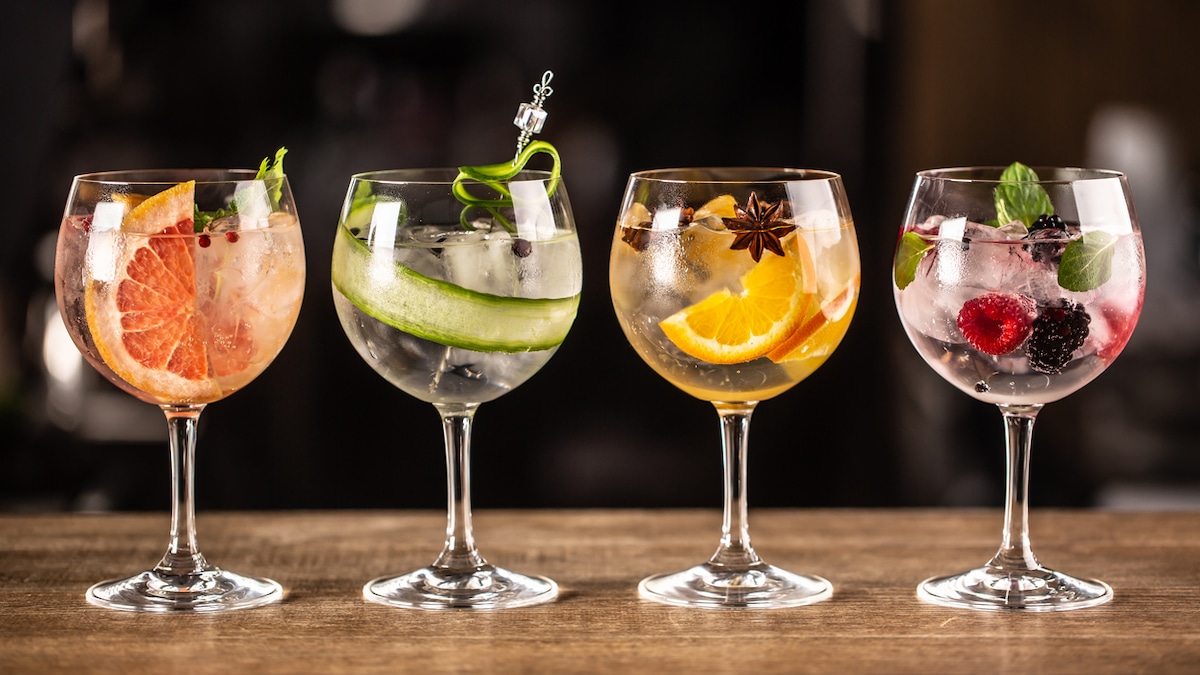
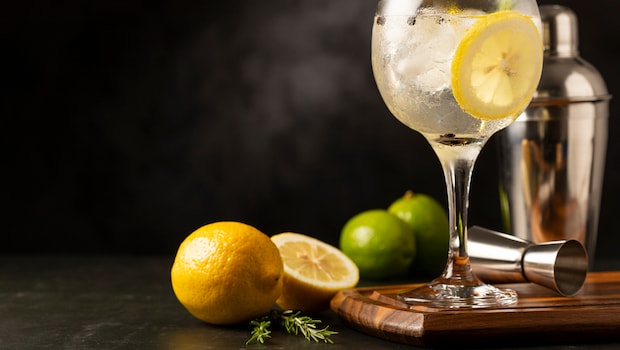
    A gin and tonic is a classic, refreshing summer cocktail-so classic that the combination is over 100 years old. It has a crisp, slightly bitter flavour and is quite easy to make. A classic G and T cocktail is made with gin and tonic water poured over a large amount of ice. Most recipes call for a ratio between 1:1 and 1:3. Gin and Tonic fans celebrate October 19 every year as International Gin and Tonic Day. The day is a wonderful opportunity to enjoy this historic drink and celebrate gin distillers and tonic producers worldwide. If you, too, are a Gin and Tonic fan, read on to learn about its history and some fabulous ways to spruce up your favourite cocktail.

    Origin of Gin and Tonic:

    The classic gin and tonic combination has a complex history. One of the first known instances of this combination was drinking it to help combat malaria in Holland in the 1840s. Tonic water contains quinine, the bitter element of this drink, which was believed to treat malaria. In the 19th century, the British Army in India also added gin to tonic water to improve the taste of this remedy drink.
    Also Read:Unlock The Secrets of Gin – History, Types, And Tips For Perfect Gin Cocktails

    Who Started International Gin and Tonic Day?

    A woman named Jayne Withers launched Gin and Tonic Day in 2012 in honour of her grandmother, Mary Edith Keyburn, who loved G and T. Jayne writes, “Mary Edith was a remarkable woman who loved to have the occasional tipple of Gin and Tonic. She passed away in the hospital on October 19, 2010, at the age of 95, with a Gin and Tonic at her side that was smuggled into the hospital in a water bottle and served in a teacup,” quoted The Gin Guide.

    Latest and Breaking News on NDTV

    Photo: iStock

    Celebrating International Gin and Tonic Day 2024:

    This October 19, host a Gin and Tonic tasting and gather all your friends and family for a fun evening. You can also take pictures from the event and post them on social media using the hashtag #internationalginandtonicday. For your special tasting, here are some fun ways to upgrade the classic Gin and Tonic.

    5 Fun Ways to Jazz Up Your Good Old G and T:

    1. Cool as a Cucumber

    Cut a cucumber into thin ribbons and arrange them in a highball glass. Add a handful of ice cubes. In a cocktail shaker, squeeze the juice of half a lime, then add gin, a splash of elderflower liqueur, a few basil leaves, and some cucumber chunks. Muddle the mixture thoroughly, then add ice. Shake well and strain the mixture into your glass. Finish by topping it with tonic and garnishing with more basil leaves.

    2. Berry Berry Tasty

    Latest and Breaking News on NDTV

    Photo: iStock

    Wash the strawberries and cut off the tops. Next, cut them in half or into quarters. Muddle the strawberries with a generous amount of freshly ground black pepper. Transfer the mixture to a glass filled with ice. Stir in the gin and top with tonic. Garnish with a strawberry and enjoy.

    3. Mint Meets Chocolate

    Pour herbal-style gin into a glass and add a few leaves of fresh mint. Add a tablespoon of chocolate liqueur. Pour in the tonic and garnish with a few sprigs of mint and grated dark chocolate. Your mint-meets-chocolate G and T is ready.
    Also Read:The Ultimate Guide To 2024’s Gin Trends: How India Is Changing The Sipping Game

    4. Peachy Not Preachy

    If you like the fruity peach flavour, this cocktail is for you. Pour your gin and tonic over ice and add the peach slices. Garnish with a sprig of thyme. For a more pronounced peach flavour, you can blend the fruit and strain it into the glass before adding the other ingredients. Stir until the drink is infused with the juice.

    5. Pine-ing for the Apple

    Latest and Breaking News on NDTV

    Photo: iStock

    Smoky, caramelized, and grilled pineapples make a fantastic G and T. Begin by grilling the pineapple wheels for 5 minutes until lightly browned. Cut one wheel of pineapple and muddle it into a cocktail shaker. Add ice, gin, lemon juice, and pineapple juice. Shake for two minutes. Strain it into a glass with ice. Top with tonic water. Garnish with another grilled pineapple wheel and serve!

    What is your favourite Gin and Tonic cocktail? Share with us in the comments section. Happy G and T Day!

    Source link

  • Changing OpenAI’s nonprofit structure would raise questions about its future

    Changing OpenAI’s nonprofit structure would raise questions about its future

    NEW YORK — The artificial intelligence maker OpenAI may face a costly and inconvenient reckoning with its nonprofit origins even as its valuation recently exploded to $157 billion.

    Nonprofit tax experts have been closely watching OpenAI, the maker of ChatGPT, since last November when its board ousted and rehired CEO Sam Altman. Now, some believe the company may have reached — or exceeded — the limits of its corporate structure, under which it is organized as a nonprofit whose mission is to develop artificial intelligence to benefit “all of humanity” but with for-profit subsidiaries under its control.

    Jill Horwitz, a professor in law and medicine at UCLA School of Law who has studied OpenAI, said that when two sides of a joint venture between a nonprofit and a for-profit come into conflict, the charitable purpose must always win out.

    “It’s the job of the board first, and then the regulators and the court, to ensure that the promise that was made to the public to pursue the charitable interest is kept,” she said.

    Altman recently confirmed that OpenAI is considering a corporate restructure but did not offer any specifics. A source told The Associated Press, however, that the company is looking at the possibility of turning OpenAI into a public benefit corporation. No final decision has been made by the board and the timing of the shift hasn’t been determined, the source said.

    In the event the nonprofit loses control of its subsidiaries, some experts think OpenAI may have to pay for the interests and assets that had belonged to the nonprofit. So far, most observers agree OpenAI has carefully orchestrated its relationships between its nonprofit and its various other corporate entities to try to avoid that.

    However, they also see OpenAI as ripe for scrutiny from regulators, including the Internal Revenue Service and state attorneys general in Delaware, where its incorporated, and in California, where it operates.

    Bret Taylor, chair of the OpenAI nonprofit’s board, said in a statement that the board was focused on fulfilling its fiduciary obligation.

    “Any potential restructuring would ensure the nonprofit continues to exist and thrive, and receives full value for its current stake in the OpenAI for-profit with an enhanced ability to pursue its mission,” he said.

    Here are the main questions nonprofit experts have:

    Tax-exempt nonprofits sometimes decide to change their status. That requires what the IRS calls a conversion.

    Tax law requires money or assets donated to a tax-exempt organization to remain within the charitable sector. If the initial organization becomes a for-profit, generally, a conversion is needed where the for-profit pays the fair market value of the assets to another charitable organization.

    Even if the nonprofit OpenAI continues to exist in some way, some experts argue it would have to be paid fair market value for any assets that get transferred to its for-profit subsidiaries.

    In OpenAI’s case, there are many questions: What assets belong to its nonprofit? What is the value of those assets? Do they include intellectual property, patents, commercial products and licenses? Also, what is the value of giving up control of the for-profit subsidiaries?

    If OpenAI were to diminish the control that its nonprofit has over its other business entities, a regulator may require answers to those questions. Any change to OpenAI’s structure will require it to navigate the laws governing tax-exempt organizations.

    Andrew Steinberg, counsel at Venable LLP and a member of the American Bar Association’s nonprofit organizations committee, said it would be an “extraordinary” transaction to change the structure of corporate subsidiaries of a tax-exempt nonprofit.

    “It would be a complex, involved process with numerous different legal and regulatory considerations to work through,” he said. “But it’s not impossible.”

    To be granted tax-exempt status, OpenAI had to apply to the IRS and explain its charitable purpose. OpenAI provided The Associated Press a copy of that September 2016 application, which shows how significantly the organization’s plans for its technology and structure have changed.

    OpenAI spokesperson Liz Bourgeois said in an email that the organization’s missions and goals remained constant, though the way it’s carried out its mission has evolved alongside advances in technology.

    When OpenAI incorporated as a nonprofit in Delaware, it wrote that its purpose was, “to provide funding for research, development and distribution of technology related to artificial intelligence.” In tax filings, it’s also described its mission as building, “general-purpose artificial intelligence (AI) that safely benefits humanity, unconstrained by a need to generate financial return.”

    Steinberg said there is no problem with the organization’s plans changing as long as it reported that information on its annual tax returns, which it has.

    But some observers, including Elon Musk, who was a board member and early supporter of OpenAI and has sued the organization, are skeptical that it has been faithful to its mission.

    The “godfather of AI” Geoffrey Hinton, who was co-awarded the Nobel Prize in physics on Tuesday, has also expressed concern about OpenAI’s evolution, openly boasting that one of his former students, Ilya Sutskever, who went on to co-found the organization, helped oust Altman as CEO before bringing him back.

    “OpenAI was set up with a big emphasis on safety. Its primary objective was to develop artificial general intelligence and ensure that it was safe,” Hinton said, adding that “over time, it turned out that Sam Altman was much less concerned with safety than with profits. And I think that’s unfortunate.”

    Sutskever, who led a team focused on AI safety at OpenAI, left the organization in May and has started his own AI company. OpenAI for its part says it is proud of its safety record.

    Ultimately, this question returns to the board of OpenAI’s nonprofit, and the extent to which it is acting to further the organization’s charitable mission.

    Steinberg said that any regulators looking at a nonprofit board’s decision will be most interested in the process through which it arrived at that decision, not necessarily whether it reached the best decision.

    He said regulators, “will often defer to the business judgment of members of the board as long as the transactions don’t involve conflict of interests for any of the board members. They don’t stand to gain financially from the transaction.”

    Whether any board members were to benefit financially from any change in OpenAI’s structure could also be of interest to nonprofit regulators.

    In response to questions about if Altman might be given equity in the for-profit subsidiary in any potential restructuring, OpenAI board chair Taylor said in a statement, “The board has had discussions about whether it would be beneficial to the company and our mission to have Sam be compensated with equity, but no specific figures have been discussed nor have any decisions been made.”

    ___

    The Associated Press and OpenAI have a licensing and technology agreement that allows OpenAI access to part of AP’s text archives.

    ___

    Associated Press coverage of philanthropy and nonprofits receives support through the AP’s collaboration with The Conversation US, with funding from Lilly Endowment Inc. The AP is solely responsible for this content. For all of AP’s philanthropy coverage, visit https://apnews.com/hub/philanthropy.

    Source link

  • Ice hockey officials not satisfied with MIAA’s recommended pay raise

    Ice hockey officials not satisfied with MIAA’s recommended pay raise

    On Wednesday, the MIAA finance committee conveyed to the board of directors its decision to institute a 7 percent pay increase for officials and referees of all MIAA sports for the 2026 fiscal year, which begins next September.

    In ice hockey, that would mean an increase of $6.79 a game from the current $97 rate per varsity game.

    That won’t cut it, the Massachusetts chapter of NIHOA said.

    “This change will not move the needle in our recruitment and retention efforts for new officials,” the chapter said in a statement. “With the season just 52 days away, we now look to the leagues to make appropriate adjustments to the MIAA’s recommendations.”

    Ice hockey officials are non-unionized independent contractors, which allows them a choice in which games they work. Currently, an abundant supply of USA Hockey games offer a pay rate of $105 that is a bit above next season’s bump from $97 to $103.79 a game. Officiating club hockey games, however, also usually comes with the bonus of being able to double a paycheck by working back-to-back games.

    NIHOA has no desire to organize its members around a job action, said Mike Ober, a representative for the group.

    Still, opting to work more lucrative non-MIAA games could, in essence, duplicate the impact of a walkout, especially in regions of the state such as the Berkshires and Cape Cod where officials are harder to find.

    “There is extraordinary sensitivity across all of our officials not to impact the student-athlete experience and not cause games not to be played,” said Ober. “I hear that every day from the officials I’m talking everywhere. But officials are choosing to work elsewhere.”

    Tom Arria, chair of the MIAA finance committee, said the decision for the pay bump was based on, “the cost of everything is going up, so it’s only right that we make sure we take care of all of our officials across the board.”

    Arria, director of athletics at Cambridge Rindge & Latin, described the “pretty significant” 7 percent pay raise as “a commitment and good faith to our officials across the board, saying ‘Hey, we value you.’ ”

    Asked about ice hockey officials’ contention they face more costs because of equipment and equipment maintenance — and a job that requires a high caliber of skating skills — Arria said, “I wouldn’t say there’s necessarily a disagreement with anything ice hockey officials have said. But we as the MIAA over the last several years, we have to think about the whole and about the group and about everyone. Every official across every sport works really hard.”

    In response to questions from the Globe, the MIAA first referenced its Sept. 26 statement, which leans on not singling out hockey officials for a special raise, especially in relation to the budgetary cycle, before adding “the position of the MIAA, and its stakeholders in the association has not changed.

    “It is most definitely an ongoing issue and needed to be addressed in a manner consistent with our adherence to school department budget cycles, it is timely to provide schools and districts with recommended rates. We respect and value all of our game officials and the decision made by the finance committee reflects the equitable distribution of rate increases for all officials.”

    Before its membership learned of the pay increase decision this week, Ober said that a September survey of its 512 members showed that more than half “of the officials in the state were going to work elsewhere this winter and they were not going to work for the $97.”

    In its three-year contract proposal to the MIAA, officials had asked for $126 per game (15-minute periods), with $6 increases in 2025-26 and 2026-27.

    Ober said that the generation of ice hockey officials “who, quote, ‘don’t do it for the money,’ they’re aging out, that generation is retiring. We still have a fair amount this season, which is why I think you’ll see a lot of hockey officials that will skate no matter what.”

    To highlight one risk factor, Ober said no other MIAA sport mandates “neck laceration protection” the way ice hockey does. That rule change, mandated by USA Hockey, will be introduced this season.

    “The tipping point is simply that our officials have recognized that there are alternatives that pay materially more and I think there’s also the recognition that our costs have increased dramatically with respect to equipment and skate sharpening that is unique to hockey,” said Ober.

    “Combining all that, we’re simply asking for fair compensation relative to the risk and costs of other sports. And if we can do that, we can course-correct on the recruiting issues.”


    Michael Silverman can be reached at michael.silverman@globe.com.


    Source link

  • Paratha, Samosa And Sugary Foods Raise Type 2 Diabetes Risk In Indians, Says ICMR Study

    Paratha, Samosa And Sugary Foods Raise Type 2 Diabetes Risk In Indians, Says ICMR Study

    Consumption of ultra-processed and fried foods can lead to chronic inflammation in the body, insulin resistance and type 2 diabetes in overweight/obese Asian-Indian adults, according to the latest study by the Madras Diabetes Research Foundation, an ICMR Centre for Advanced Research in Diabetes. The first-of-its-kind study in India has shed light on the consumption of fried and ultra-processed foods that are rich in Advanced Glycation End-products (AGEs). AGEs are a group of compounds that accumulate in the body over time and are associated with chronic diseases.
    Dr V Mohan, chairman of the Madras Diabetes Research Foundation, and Dr Mohan’s Diabetes Specialities Centre explained that the AGEs are formed in the blood. “But now we know that diet can also play a role in this. So there are diets which have high AGEs and diets which have low AGEs,” Dr Mohan said, reported PTI. Diets with high AGEs include red meat, french fries and other fried foods, bakery products, paratha, samosa and sugary foods among others.
    Also Read:Refined Oil Vs Cold Pressed Oil: Which Is Healthier For Cooking? Expert Weighs In
    The government-funded study has shown that low-AGE diets could be a potential strategy to reduce diabetes risk. Low-AGE food includes green leafy vegetables, fruits, fish, boiled items and brown rice, Dr V Mohan said. The study also noted that cooking methods like frying, roasting and grilling elevate AGE levels while boiling keeps them in check.

    Add image caption here

    Low-AGE foods may prevent diabetes risk. Photo:iStock

    The study included 38 overweight and obese Asian-Indian adults, aged 25 to 45 years, with a Body Mass Index (BMI) of 23 and above. The study observed the participants for 12 weeks and found that for those who followed a low-AGE diet, their glucose levels and inflammatory markers were lower, Dr Mookambika Ramya Bai, a research scientist at the Madras Diabetes Research Foundation and first author of the study, said. In contrast, those who ate high-AGEs foods had higher glucose levels, greater insulin resistance and more inflammatory markers in their blood.

    The rapid nutrition transition in developing countries like India has led to higher intakes of refined carbohydrates, fats and animal products. This, along with a sedentary lifestyle, increases the prevalence of obesity, diabetes and associated disorders, the study said, reported PTI. “The rise in the diabetes epidemic in India is primarily driven by obesity, physical inactivity and eating of unhealthy diets which are rich in AGEs,” Dr Mohan said.
    Also Read:The Truth About Cheat Days: Are They Really Good For You? Expert Reveals
    Prevalence of diabetes, pre-diabetes and obesity is on the rise globally and in India, there are currently 101 million individuals with diabetes, according to the study. Obesity is linked to insulin resistance, oxidative stress and inflammation, and thus, promotes the development of diseases like type 2 diabetes. The prevalence of obesity in India is 40 per cent and overweight or obesity has been linked with higher mortality, the study said. The study findings were published in the International Journal of Food Sciences and Nutrition.

    Source link

  • The Lebanon explosions raise a question: Deep into the smartphone era, who is still using pagers?

    The Lebanon explosions raise a question: Deep into the smartphone era, who is still using pagers?

    The small plastic box that beeped and flashed numbers was a lifeline to Laurie Dove in 1993. Pregnant with her first baby in a house beyond any town in rural Kansas, Dove used the little black device to keep in touch with her husband as he delivered medical supplies. He carried one too. They had a code.

    “If I really needed something I would text ‘9-1-1.’ That meant anything from, ‘I’m going to labor right now’ to ‘I really need to get ahold of you,’” she recalls. “It was our version of texting. I was as nervous as a long-tailed cat in a room full of rockers. It was important.”

    Beepers and all they symbolized — connection to each other or, in the 1980s, to drugs — went the way of answering machines decades ago when smartphones wiped them from popular culture. They resurfaced in tragic form Tuesday when thousands of sabotaged pagers exploded simultaneously in Lebanon, killing at least a dozen people and injuring thousands in a mysterious, multi-day attack as Israel declared a new phase of its war on Hezbollah.

    In many photos, blood marks the spot where pagers tend to be clipped — to a belt, in a pocket, near a hand — in graphic reminders of just how intimately people still hold those devices and the links — or vulnerability — they enable.

    Then as now — albeit in far smaller numbers — pagers are used precisely because they are old school. They run on batteries and radio waves, making them impervious to dead zones without WiFi, basements without cell service, hackings and catastrophic network collapses such as those during the Sept. 11, 2001, attacks.

    Some medical professionals and emergency workers prefer pagers to cell phones or use the devices in combination. They’re handy for workers in remote locations, such as oil rigs and mines. Crowded restaurants use them, too, handing patrons blinking, hockey puck-like contraptions that vibrate when your table is ready.

    To those who distrust data collection, pagers are appealing because they have no way to track users.

    “A mobile phone at the end of the day is like a computer that you’re carrying around, and a pager has got a fraction of that complexity,” said Bharat Mistry, the UK’s technical director for Trend Micro, a cybersecurity software company. “Nowadays it’s used by people who want to maintain their privacy … You don’t want to be tracked but you do want to be contactable.”

    From the start, people have been ambivalent about pagers and the irksome feeling of being summoned when it’s convenient for someone else.

    Inventor Al Gross, regarded by some as the “founding father” of wireless communication, patented the pager in 1949 intending to make it available to doctors. But they balked, he said, at the prospect of being on-call 24/7.

    “The doctors wanted to have nothing to do with it because it would disturb their golf game or it would disturb the patient,” Gross said in a video made when he received the Lemelson-MIT Lifetime Achievement Award in 2000. “So it wasn’t a success, as I thought it would be when it was first introduced. But that changed later.”

    By the 1980s, millions of Americans used pagers, according to reports at the time. The devices were status symbols — belt-clipped signals that a wearer was important enough to be, in effect, on call at a moment’s notice. Doctors, lawyers, movie stars and journalists wore them through the 1990s. In 1989, Sir Mix-a-Lot wrote a song about them, rapping: “Beep diddy beep, will I call you maybe.”

    By then, pagers also had become associated with drug dealers and schools were cracking down. More than 50 school districts, from San Diego to Syracuse, New York, banned their use in schools, saying they hampered the fight to control drug abuse among teenagers, The New York Times reported in 1988. Michigan prohibited the devices’ use in schools statewide.

    “How can we expect students to ‘just say no to drugs’ when we allow them to wear the most dominant symbol of the drug trade on their belts,″ James Fleming, associate superintendent for the Dade County Public Schools in Florida, was quoted as saying.

    By the mid-90s, there were more than 60 million beepers in use, according to Spok, a communications company.

    Dove, who went on to serve as the mayor of Valley Center, Kansas, and become an author, says she and her family use cell phones now. But that means accepting the risk of identity theft. In some ways, she fondly recalls the simplicity of pagers.

    “I do worry about that,” she says. “But that risk just feels like a part of life now.”

    The number of pagers globally is hard to come by. But more than 80% of Spok’s paging business deals with healthcare, with about 750,000 subscribers across large hospital systems, according to Vincent Kelly, CEO of the company.

    “When there’s an emergency, their phones don’t always work,” Kelly said, adding that pager signals are often stronger than cell phone signals in hospitals with thick walls or concrete basements. Cell networks are “not engineered to handle every single subscriber trying to call at the same time or send a message at the same time.”

    Members of Iran-backed Hezbollah on Israel’s northern border have used pagers to communicate for years. In February, the group’s leader, Hassan Nasrallah, directed Hezbollah members to ditch their cell phones in an effort to dodge what’s believed to be Israel’s sophisticated surveillance on Lebanon’s mobile phone networks.

    Tuesday’s attack appeared to be a complex Israeli operation targeting Hezbollah. But the widespread use of pagers in Lebanon meant the detonations cost an enormous number of civilian casualties. They exploded in a moment across the landscape of everyday life — including homes, cars, grocery stores and cafes.

    Kelly says first responders and large manufacturers also use pagers. The manufacturers have employees use the devices on factory floors to prevent them from taking photos.

    Most medical personnel use combinations of pagers, chat rooms, messaging and other services to communicate with patients without revealing home numbers — an effort to be truly off-duty when they’re not working.

    Dr. Christopher Peabody, an emergency physician at San Francisco General Hospital, uses pagers every day — albeit grudgingly. “We’re on a crusade to get rid of pagers, but we’re failing miserably,” said Peabody, who is also director of the UCSF Acute Care Innovation Center.

    Peabody said he and others at the hospital tested a new system and “the pager won”: The doctors stopped answering the two-way text messages and would only respond to pagers.

    In some ways, Peabody understands the resistance. Pagers provide a certain autonomy. In contrast, two-way communication carries the expectation to immediately answer and could provide an avenue for follow-up questions.

    The problem, Peabody said, is that paging is one-way communication and providers can’t communicate back and forth through the paging system. The technology, he said, is inefficient. And paging systems are not necessarily secure, a critical issue in an industry that must keep patient information private.

    “This has been a culture of medicine for many, many years,” he said, “and the pager is here to stay, most likely.”

    ____

    Parvini reported from Los Angeles.

    Source link

  • This Study Says Meat May Raise Diabetes Risk – Heres How To Ease Off Without Sacrificing Flavour

    This Study Says Meat May Raise Diabetes Risk – Heres How To Ease Off Without Sacrificing Flavour

    Eating excessive red and processed meat in your daily diet may make you feel happy, especially if you have grown up eating too much meat, however, the consequences of such a diet may not be great for your health. In a new study published in The Lancet Diabetes and Endocrinology, researchers analysed data from nearly two million adults participating in 31 studies from across 20 countries, including the United States and parts of Europe and Asia. The researchers analysed the impact of the participants’ diet on their health after an average of 10 years and found a link between meat consumption and Type 2 diabetes risk.

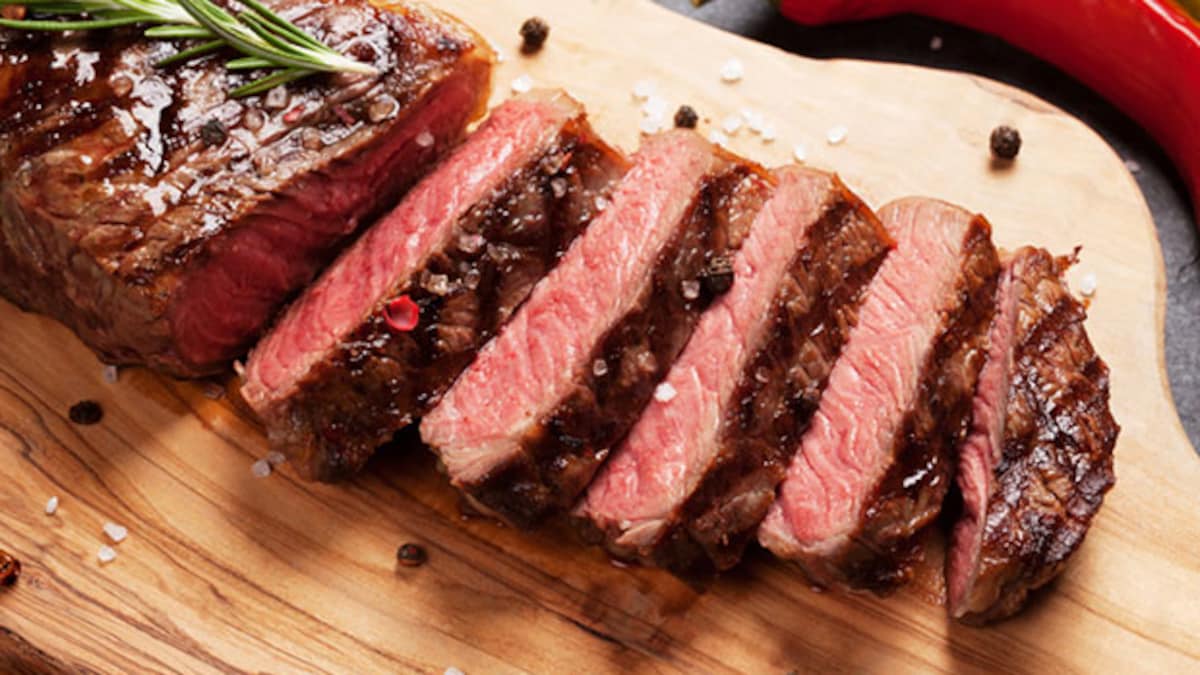
    After adjusting for other risk factors, they found that for every 1.8 ounces (about 50 grams) of processed meat, the participants ate each day, their risk for Type 2 diabetes increased by 15 per cent. Further, for every 3.5 ounces (about 100 grams) of unprocessed red meat they consumed daily, their risk increased by 10 per cent.

    Why Red And Processed Meat Is Not Good For You:

    There are possible reasons why it is not healthy to consume too much red and processed meat:

    1. According to health experts, red and processed meats tend to be higher in saturated fats which is associated with greater insulin resistance and Type 2 diabetes risk.

    2. If you are eating excessive red and/or processed meat, you may not be eating enough healthy foods like fruits and vegetables.

    3. Cooking meat at high temperatures can also form compounds that may cause cell damage, inflammation and insulin resistance, as per research.
    Also Read: Struggling with Sugar Spikes? These 3 Expert-Approved Foods Could Save Your Day

    Latest and Breaking News on NDTV

    Photo Credit: iStock

    How To Improve Diet And Reduce Meat Consumption:

    Want to reduce your overall meat consumption but struggling? Here are four key approaches to cutting back the red meat, according to Harvard Health.

    1. To Not Quit Suddenly

    Instead of suddenly stopping your meat consumption, begin by gradually reducing the amount of red meat you eat. Assess how much red meat you consume daily/weekly and start cutting that down.

    2. Choose Healthier Meats

    Since red meat is specifically associated with more health risks compared to other types of meats, you can swap it with healthier alternatives like poultry or seafood.
    Also Read: Manage Diabetes Naturally! How Clove Tea Can Help Regulate Your Blood Sugar Levels

    3. Try Plant-Based Foods

    Once you give it a try, you will learn to understand and enjoy the flavours of plant-based foods like beans, nuts, whole grains, and veggies. Choosing these more often will help reduce your meat consumption.

    Remember to eat foods that benefit your overall physical and mental health.

    Disclaimer: This content including advice provides generic information only. It is in no way a substitute for qualified medical opinion. Always consult a specialist or your doctor for more information. NDTV does not claim responsibility for this information.

    Source link