hacklink hack forum hacklink film izle hacklink marsbahisizmir escortsahabetpornceltabetcasibom girişgalabetİstanbul Escortcasibom9018betgit casinomarsbahismatbetcasibomlink 5k depositjojobetmatbet

Tag: Rarest

  • New Zealand scientists suspect specimen of world’s rarest whale died from head injuries

    New Zealand scientists suspect specimen of world’s rarest whale died from head injuries

    MELBOURNE, Australia — Scientists suspect the first complete specimen ever recorded of the world’s rarest whale died from head injuries, an expert said Friday.

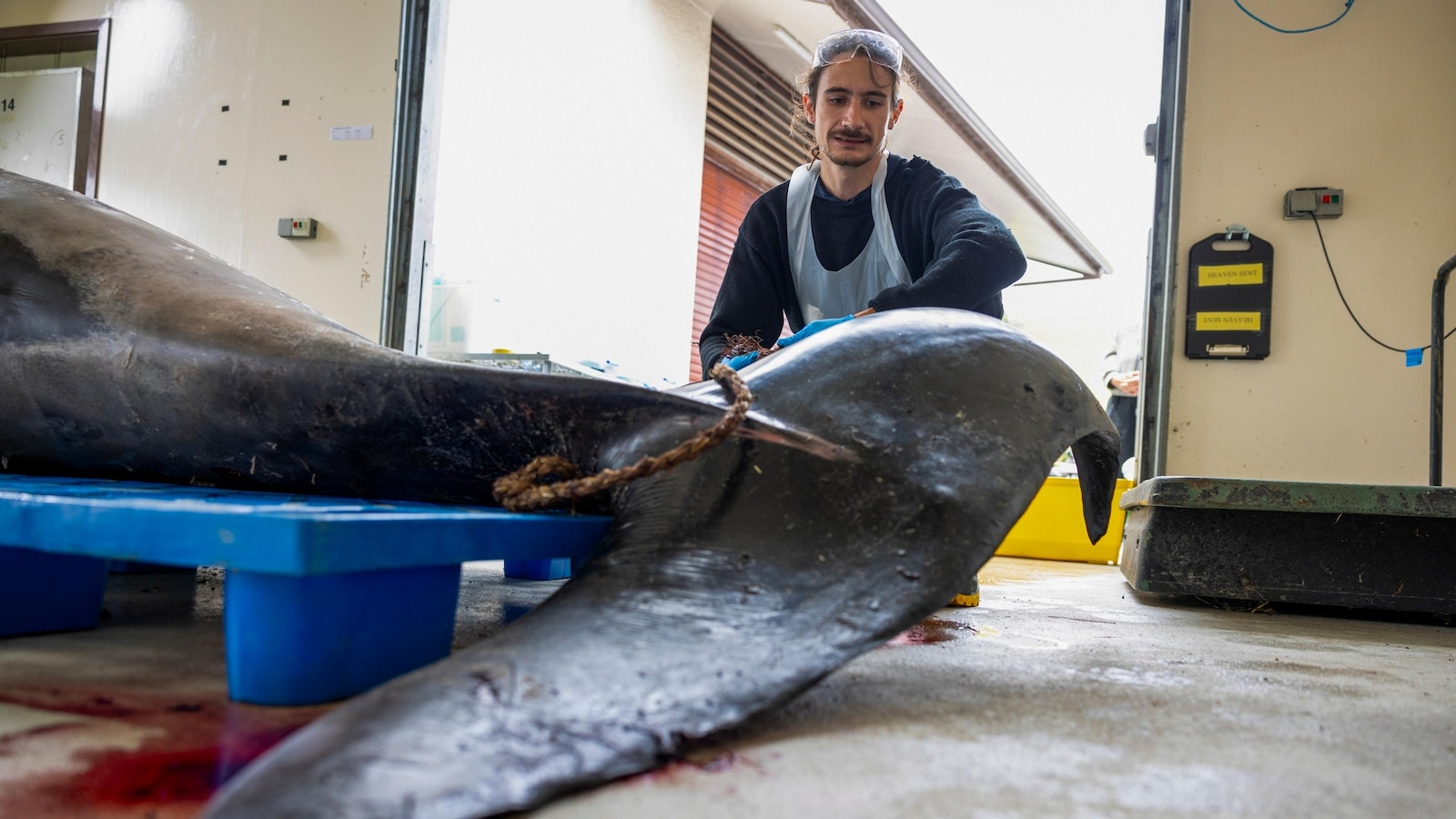
    The first dissection of a spade-toothed whale, a type of beaked whale, was completed last week after a painstaking examination at a research center near the New Zealand city of Dunedin, the local people who led the scientific team, Te Rūnanga Ōtākou, said in a statement issued by the New Zealand Department of Conservation.

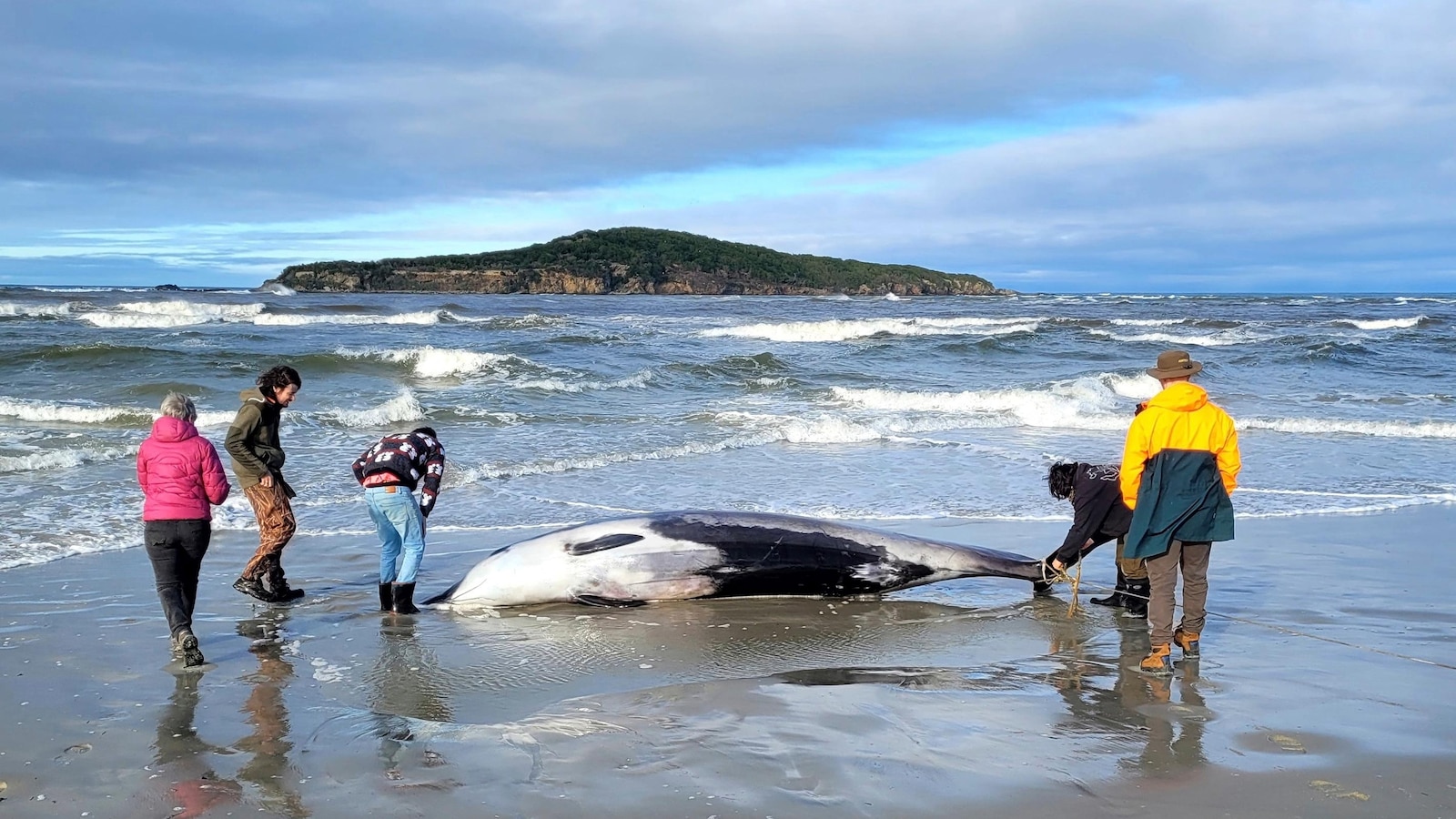
    A near-perfectly preserved 5-meter (16-foot) male was found washed up on a South Island beach in July. It was the first complete specimen ever recorded. There have only been seven known sightings and never of a living spade-toothed whale.

    New Zealand conservation agency beaked whale expert Anton van Helden said the whale’s broken jaw and bruising to the head and neck led scientists to believe that head trauma may have caused its death.

    “We don’t know, but we suspect there must have been some sort of trauma, but what caused that could be anyone’s guess,” van Helden said in a statement.

    All varieties of beaked whales have different stomach systems and researchers didn’t know how the spade-toothed type processed its food.

    The scientific team found the specimen had nine stomach chambers containing remnants of squid and parasitic worms, the statement said.

    Among the more interesting finds were tiny vestigial teeth in the upper jaw.

    “These little teeth embedded in the gum tells us something about their evolutionary history. It’s remarkable to see this and it’s just another thing that we had no idea about,” van Helden said.

    “It’s a week I’ll never forget in my life, it’s certainly a highlight and it’s the start of the storytelling around this beautiful animal,” van Helden added.

    The dissection was also notable because scientists and curators worked together with local Māori people to incorporate Indigenous knowledge and customs into each step of the process.

    Following the dissection, the local iwi, or tribe, will keep the jawbone and teeth of the whale before its skeleton is displayed in a museum. 3D printing will be used to replicate those parts retained by the iwi.

    To Māori, whales are a taonga -– a precious treasure -– and the creature has been treated with the reverence afforded to an ancestor.

    New Zealand is a whale-stranding hotspot, with more than 5,000 episodes recorded since 1840, according to the Department of Conservation.

    The first spade-toothed whale bones were found in 1872 on New Zealand’s Pitt Island. Another discovery was made at an offshore island in the 1950s, and the bones of a third were found on Chile’s Robinson Crusoe Island in 1986.

    ___

    Associated Press writer Charlotte Graham-McLay in Wellington, New Zealand, contributed to this report.
    Source link

  • Scientists gather to decode puzzle of the world’s rarest whale in ‘extraordinary’ New Zealand study

    Scientists gather to decode puzzle of the world’s rarest whale in ‘extraordinary’ New Zealand study

    WELLINGTON, New Zealand — It is the world’s rarest whale, with only seven of its kind ever spotted. Almost nothing is known about the enigmatic species. But on Monday a small group of scientists and cultural experts in New Zealand clustered around a near-perfectly preserved spade-toothed whale hoping to decode decades of mystery.

    “I can’t tell you how extraordinary it is,” said a joyful Anton van Helden, senior marine science adviser for New Zealand’s conservation agency, who gave the spade-toothed whale its name to distinguish it from other beaked species. “For me personally, it’s unbelievable.”

    Van Helden has studied beaked whales for 35 years, but Monday was the first time he has participated in a dissection of the spade-toothed variety. In fact, the careful study of the creature — which washed up dead on a New Zealand beach in July — is the first ever to take place.

    None has ever been seen alive at sea.

    The list of what scientists don’t know about spade-toothed whales is longer than what they do know. They don’t know where in the ocean the whales live, why they’ve never been spotted in the wild, or what their brains look like. All beaked whales have different stomach systems and researchers don’t know how the spade-toothed kind processes its food. They don’t know how this one died.

    Over the next week, researchers studying the 5-meter (16-foot) -long male at an agricultural research center near the city of Dunedin hope to find out.

    “There may be parasites completely new to science that just live in this whale,” said van Helden, who thrilled at the chance of learning how the species produces sound and what it eats. “Who knows what we’ll discover?”

    Only six other spade-toothed whales have ever been found, but all those discovered intact were buried before DNA testing could verify their identification.

    New Zealand is a whale-stranding hotspot, with more than 5,000 episodes recorded since 1840, according to the Department of Conservation. The first spade-toothed whale bones were found in 1872 on New Zealand’s Pitt Island. Another discovery was made at an offshore island in the 1950s, and the bones of a third were found on Chile’s Robinson Crusoe Island in 1986.

    DNA sequencing in 2002 proved that all three specimens were of the same species — and that it was distinct from other beaked whales. But researchers studying the mammal couldn’t confirm whether the species was extinct until 2010, when two whole spade-toothed whales, both dead, washed up on a New Zealand beach. But none has been studied before.

    On Monday, the seventh of its kind, surrounded by white-aproned scientists who were measuring and photographing, appeared relatively unblemished, giving no clue about its death. Researchers pointed out marks from cookiecutter sharks — normal, they said, and not the cause.

    The dissection will be quiet, methodical and slower than usual, because it is being undertaken in partnership with Māori, New Zealand’s Indigenous people. To Māori, whales are a taonga -– a precious treasure -– and the creature will be treated with the reverence afforded to an ancestor.

    Members of the local iwi, or tribe, will be present throughout the dissection and consulted at each turn, allowing them to share traditional knowledge and observe customs, such as saying a karakia -– a prayer -– over the creature before the study begins.

    “According to our beliefs and our traditions, this whale is a gift of Tangaroa, deity of the ocean,” said Tumai Cassidy from the local people Te Rūnanga Ōtākou. “It’s very important for us to respect that gift and to honor the whale.”

    The iwi will keep the jawbone and teeth of the whale at the end of the dissection, before its skeleton is displayed in a museum. 3D printing will be used to replicate those parts, using a CT scan taken of the whale’s head this week.

    “It all builds a richer picture for that species but also tells us how it interacts with our oceans,” Cassidy said.

    It’s thought that spade-toothed whales live in the vast Southern Pacific Ocean, home to some of the world’s deepest ocean trenches. Beaked whales are the ocean’s deepest divers for food, and the spade-toothed may rarely surface, adding to its mystery.

    The assembled scientists on Monday included a few who had traveled from abroad to see the whale, which was put in refrigerated storage after its discovery.

    “What we are interested in is not only how these animals died, but how they lived,” said Joy Reidenberg, a comparative anatomist from the Icahn School of Medicine at Mount Sinai in New York. “In discovering how they live, we are hoping to find discoveries that we can apply back to the human condition.”

    Source link

  • Where Can We Find Su Filindeu? The Rarest And Most Endangered Pasta In The World

    Where Can We Find Su Filindeu? The Rarest And Most Endangered Pasta In The World

    Pasta is an incredibly versatile Italian dish that has been well-absorbed by other cultures around the world. For some people, it can be one of the simplest dishes to cook. On the other hand, there exists a rare variety of pasta that even expert chefs fail to replicate. We are talking about Su Filindeu, which is said to be the rarest pasta in the world. It’s a very specific pastoral traditional recipe in Sardinia – a large Italian island in the Mediterranean Sea. It’s so difficult and time-consuming to prepare, that for 300 years only the women of a single Sardinian family knew how to make this pasta, reported BBC.

    A video posted by digital creator @sortedfood is going viral on Instagram, showing this rarest pasta in the world. “Until recently, only three people on the planet were making it,” the video says.

    ‘Su Filindeu’ translates to “the threads of God”. For more than 300 years, the recipe and technique have only been passed down through the “women in Abraini’s family – each of whom have guarded it tightly before teaching it to their daughters,” reported BBC. However, now the recipe is endangered and many people have even attempted to learn it, but failed. Celebrity chef and restaurateur Jamie Oliver is one of them.
    Also Read:Perfect Your Pesto! 5 Tips To Make Your Homemade Sauce Amazing

    In 2016, Oliver took to his Instagram handle and wrote, “Filindeu pasta in Sardinia one of the rarest pastas in the world !!! It’s amazing and very hard to make I’ve been failing for 2 hours but I think now I can go home and practice for a year or two !!! Which I will try and do. It’s good to be humbled…Seriously this pasta blew my mind !!!! Super Food Family classics big love Jamie xx oh it’s cooked in a broth made from sheep and very fresh pecorino it’s very very very delicious.”

    How Is Su Filindeu Pasta Made From Scratch?

    Su Filindeu is made following an amazing but very difficult and time-consuming process.

    First, a pasta dough is prepared using durum (semolina) flour, water, and a little bit of salt. They take the dough, fold it over, and stretch it. This process is repeated. Every time they stretch, you get multiple strands. The process is followed to make 256 perfectly even strands with the tips of your fingers, and then the needle-thin wires are stretched diagonally across a circular frame in an intricate three-layer pattern.
    Also Read:British Couple Flies To Italy For Lunch As “It’s Cheaper Than Getting To London”

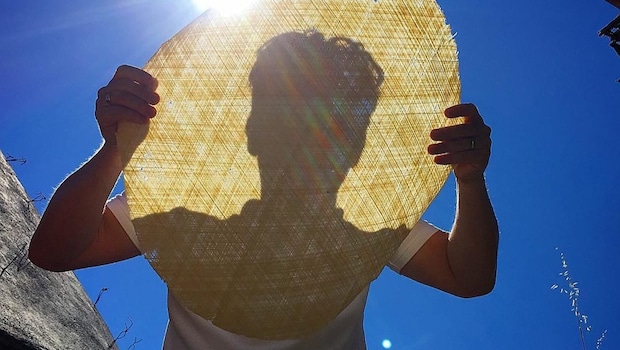
    When the three layers are formed, the base is taken outside to dry in the Sardinian sun. After several hours, the layers harden into delicate sheets of white razor-thin threads resembling stitched lace. These are then broken into circular sheets and packed into boxes.

    How Is Su Filindeu Pasta Cooked?

    Su Filindeu is cooked by simmering the pasta in sheep’s or mutton broth. The pasta is cooked for about 3 minutes until al dente. It is served in a bowl with the broth and pecorino (an Italian hard cheese produced from sheep’s milk) is sprinkled on top.

    Many hidden corners of the world are home to such amazing and unique recipes. If you found this fascinating, click here to learn about olden and golden dishes from the fabled kitchens of India.


    Source link