hacklink hack forum hacklink film izle hacklink marsbahisizmir escortsahabetpornJojobetcasibompadişahbetBakırköy Escortcasibom9018betgit casinojojobetmarsbahis

Tag: reactor

  • Japanese regulators disqualify a reactor under post-Fukushima safety standards for the first time

    Japanese regulators disqualify a reactor under post-Fukushima safety standards for the first time

    TOKYO — Japan’s nuclear watchdog on Wednesday formally disqualified a reactor in the country’s north-central region for a restart, the first rejection under safety standards that were reinforced after the 2011 Fukushima disaster. The decision is a setback for Japan as it seeks to accelerate reactor restarts to maximize nuclear power.

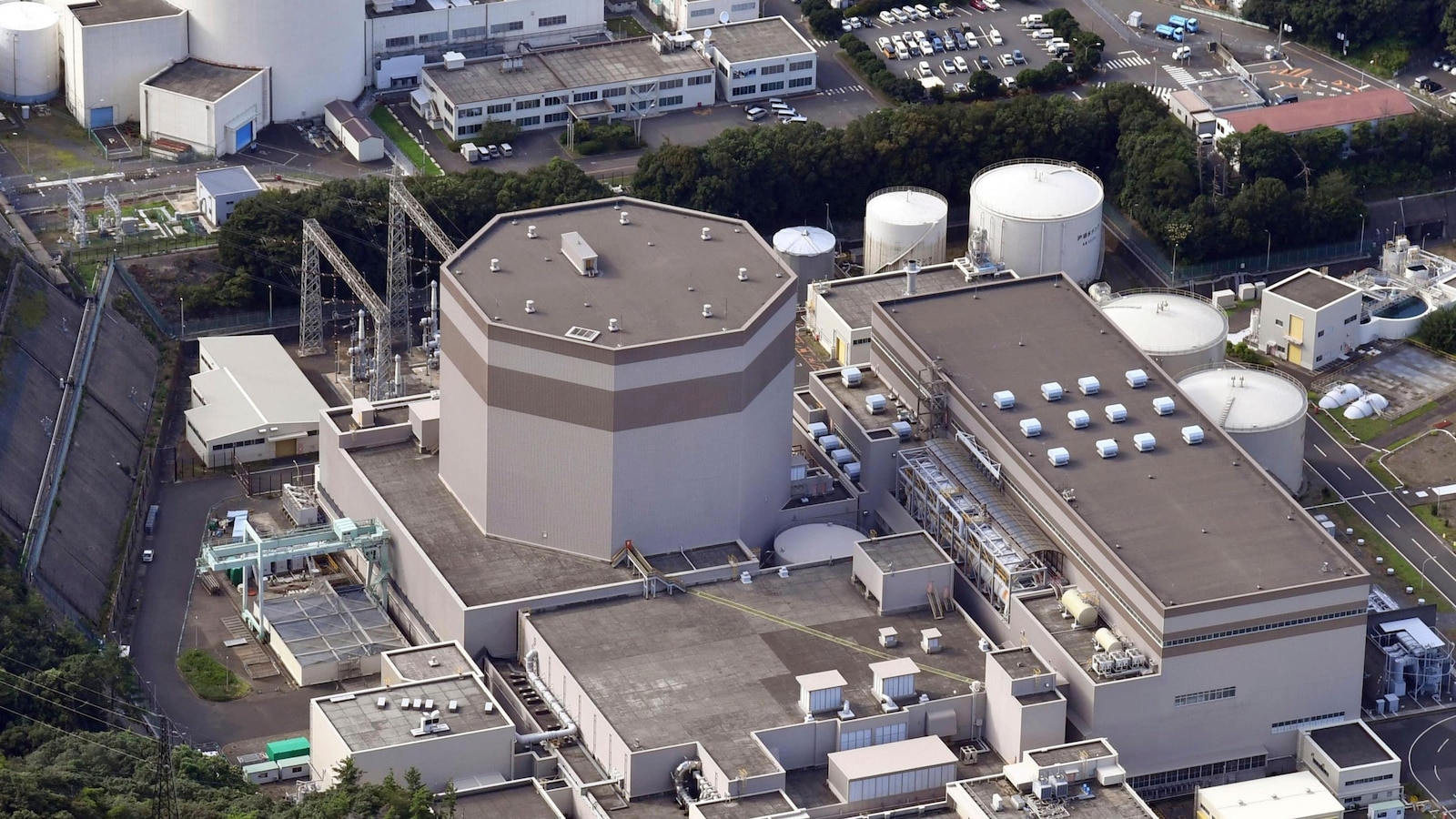
    The Nuclear Regulation Authority at a regular meeting Wednesday announced the Tsuruga No. 2 reactor is “unfit” as its operator failed to address safety risks stemming from possible active faults underneath it.

    Tsuruga No. 2, operated by the Japan Atomic Power Co., is the first reactor to be rejected under the safety standards adopted in 2013 based on lessons from the 2011 Fukushima Daiichi meltdown disaster following a massive earthquake and tsunami.

    “We reached our conclusion based on a very strict examination,” NRA chairperson Shinsuke Yamanaka told reporters.

    The verdict comes after more than eight years of safety reviews that were repeatedly disrupted by data coverups and mistakes by the operator, Yamanaka said. He called the case “abnormal” and urged the utility to take the result seriously.

    The decision is a blow to Japan Atomic Power because it virtually ends its hopes for a restart. The operator, which is decommissioning its other reactor, Tsuruga No. 1, had hoped to put No. 2 back online, but it would require an examination of dozens of faults around the reactor to prove their safety.

    An NRA safety panel concluded three months ago there’s no evidence denying the possibility of active faults about 300 meters (330 yards) north of the No. 2 reactor stretching to right underneath the facility, meaning the reactor cannot be operated.

    Japan’s government in 2022 adopted a plan to maximize the use of nuclear energy, pushing to accelerate reactor restarts to secure a stable energy supply and meet its pledge to reach carbon neutrality by 2050.

    Concern about the government’s revived push for nuclear energy grew after a magnitude 7.5 earthquake hit Japan’s Noto Peninsula on Jan. 1, 2024, killing more than 400 people and damaging more than 100,000 structures. The quake caused minor damage to two nearby nuclear facilities, and evacuation plans for the region were found to be inadequate.

    Building key nuclear facilities, such as reactors, directly above active faults is prohibited in earthquake-prone Japan.

    Yamanaka said the NRA is not immediately ordering a decommissioning because the reactor, which is offline and its spent fuel safely cooled, will not pose a major threat if active faults move.

    If the utility decides to reapply, it must address not only the faults issue but it also must implement adequate safety measures for the entire plant, Yamanaka said. Providing scientific proof of the status of faults underneath key nuclear facilities is difficult, but other operators that obtained restart permits all cleared the requirement, he noted.

    The Tsuruga No. 2 reactor first started commercial operation in February 1987 and has been offline since May 2011. The operator denied the NRA panel’s 2013 on-site inspection results, which concluded that the faults under the No. 2 reactor were active, and it applied for a restart in 2015.

    Source link

  • Research reveals China has built prototype nuclear reactor to power aircraft carrier

    Research reveals China has built prototype nuclear reactor to power aircraft carrier

    Bangkok — China has built a land-based prototype nuclear reactor for a large surface warship, in the clearest sign yet Beijing is advancing toward producing the country’s first nuclear-powered aircraft carrier, according to a new analysis of satellite imagery and Chinese government documents provided to The Associated Press.

    There have long been rumors that China is planning to build a nuclear-powered aircraft carrier, but the research by the Middlebury Institute of International Studies in California is the first to confirm it is working on a nuclear-powered propulsion system for a carrier-sized surface warship.

    China’s navy is already the world’s largest numerically, and it has been rapidly modernizing. Adding nuclear-powered carriers to its fleet would be a major step in realizing its ambitions for a true “blue-water” force capable of operating around the globe in a growing challenge to the United States.

    Nuclear carriers take longer to build than conventional carriers, but once in operation they are able to stay at sea for much longer because they do not need to refuel, and there is more room on board for fuel and weapons for aircraft, thus extending their capabilities. They are also able to produce more power to run advanced systems.

    Right now, only the United States and France have nuclear-powered carriers. The U.S. has 11 in total, which allows it to keep multiple strike groups deployed around the world at all times, including in the Indo-Pacific.

    But the Pentagon is growingly increasingly concerned about China’s rapid modernization of its fleet, including the design and construction of new carriers.

    China currently has three carriers, including the new Type 003 Fujian, which was the first both designed and built by China. It has said work is already underway on a fourth, but it has not announced whether that will be nuclear or conventionally powered.

    The modernization aligns with China’s “growing emphasis on the maritime domain and increasing demands” for its navy “to operate at greater distances from mainland China,” the Defense Department said in its most recent report to Congress on China’s military.

    Middlebury researchers were initially investigating a mountain site outside the city of Leshan in the southwest Chinese province of Sichuan over suspicions that China was building a reactor to produce plutonium or tritium for weapons. Instead they said they determined that China was building a prototype reactor for a large warship.

    The conclusion was based upon a wide variety of sources, including satellite images, project tenders, personnel files, and environmental impact studies.

    The reactor is housed in a new facility built at the site known as Base 909, which is under the control of the Nuclear Power Institute of China.

    Documents indicating that China’s 701 Institute, which is responsible for aircraft carrier development, procured reactor equipment “intended for installation on a large surface warship.” as well as the project’s “national defense designation” helped lead to the conclusion the sizeable reactor is a prototype for a next-generation aircraft carrier.

    Chinese President Xi Jinping has tasked defense officials with building a “first-class” navy and becoming a maritime power as part of his blueprint for the country’s great rejuvenation.

    The country’s most recent white paper on national defense, dated 2019, said the Chinese navy was adjusting to strategic requirements by “speeding up the transition of its tasks from defense on the near seas to protection missions on the far seas.”

    Sea trials hadn’t even started for the new Fujian aircraft carrier in March when Yuan Huazhi, political commissar for China’s People’s Liberation Army Navy, confirmed the construction of a fourth carrier. Asked if it would be nuclear-powered, he said at the time that would “soon be announced,” but so far it has not been.

    Neither China’s Defense Ministry nor Foreign Affairs Ministry responded to requests for comment.

    Even if the carrier that has been started will likely be another conventionally-powered Type 003 ship, experts say Chinese shipyards have the capability to work on more than one carrier at a time, and that they could produce a new nuclear-powered vessel concurrently.

    ___

    Tang reported from Washington D.C.

    Source link

  • A robot retrieves the first melted fuel from Fukushima nuclear reactor

    A robot retrieves the first melted fuel from Fukushima nuclear reactor

    TOKYO — A remote-controlled robot has safely returned with a tiny piece of melted fuel it collected from inside one of three damaged reactors at the tsunami-hit Fukushima Daiichi nuclear power plant for the first time since the 2011 meltdown.

    The Tokyo Electric Power Company Holdings, which manages the plant, said Saturday that the extendable fishing rod-like robot successfully clipped a gravel as big as 5 millimeters (2 inches), the size of a tiny granola bit, from the top surface of a mound of molten fuel debris that sits on the bottom of the No. 2 reactor’s primary containment vessel.

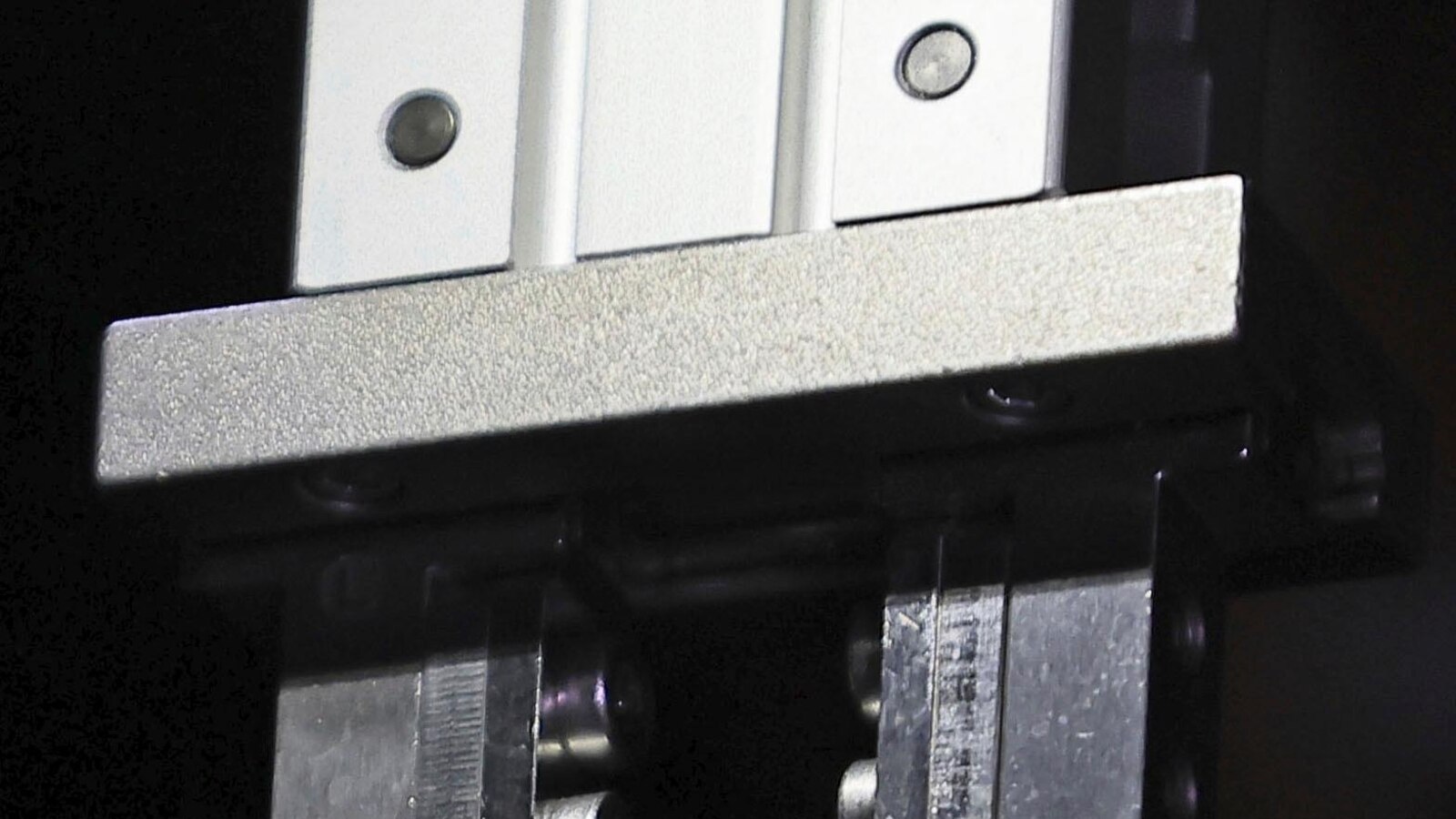
    The “telesco” robot, with its frontal tongs still holding the melted fuel bit, returned to the enclosed container for safe storage after workers in full hazmat gear pulled it out of the containment vessel earlier Saturday.

    The sample return marks the first time the melted fuel is retrieved out of the containment vessel. But the mission is not over until it’s certain that the sample’s radioactivity is below a set standard and safely placed into a container.

    If the radioactivity exceeds the limit, the robot must go back inside the reactor to find another piece. TEPCO officials said they expect the piece is small enough to meet the requirement.

    The mission initially started in August for what was supposed to be a two-week round trip but had been suspended twice due to mishaps.

    First one was the procedural mistake at the beginning that held up the work for nearly three weeks, then the robot’s two cameras designed to transmit views of the target areas for its operators in the remote control room failed. The camera problem required the robot to be pulled out all the way for replacement before the mission resumed Monday.

    Fukushima Daiichi lost its key cooling systems during the 2011 earthquake and tsunami, causing meltdowns in its three reactors. An estimated 880 tons of fatally radioactive molten fuel remains in them, and TEPCO has carried out a number of robotic probes to figure out how to decommission the plant.

    Telesco on Wednesday successfully clipped a piece presumably measuring less than 3 grams (0.1 ounce) from the planned area right underneath the Unit 2 reactor core, from which large amounts of melted fuel fell during the meltdown 13 years ago, TEPCO said.

    Plant chief Akira Ono said only the tiny spec can provide key data to plan decommissioning strategy, develop necessary technology and robots and retroactively learn how the accident had developed.

    The government and TEPCO have set a 30-to-40-year target for the cleanup, which experts say is overly optimistic and should be updated.

    No specific plans for the full removal of the fuel debris or its final disposal have been decided.

    Source link

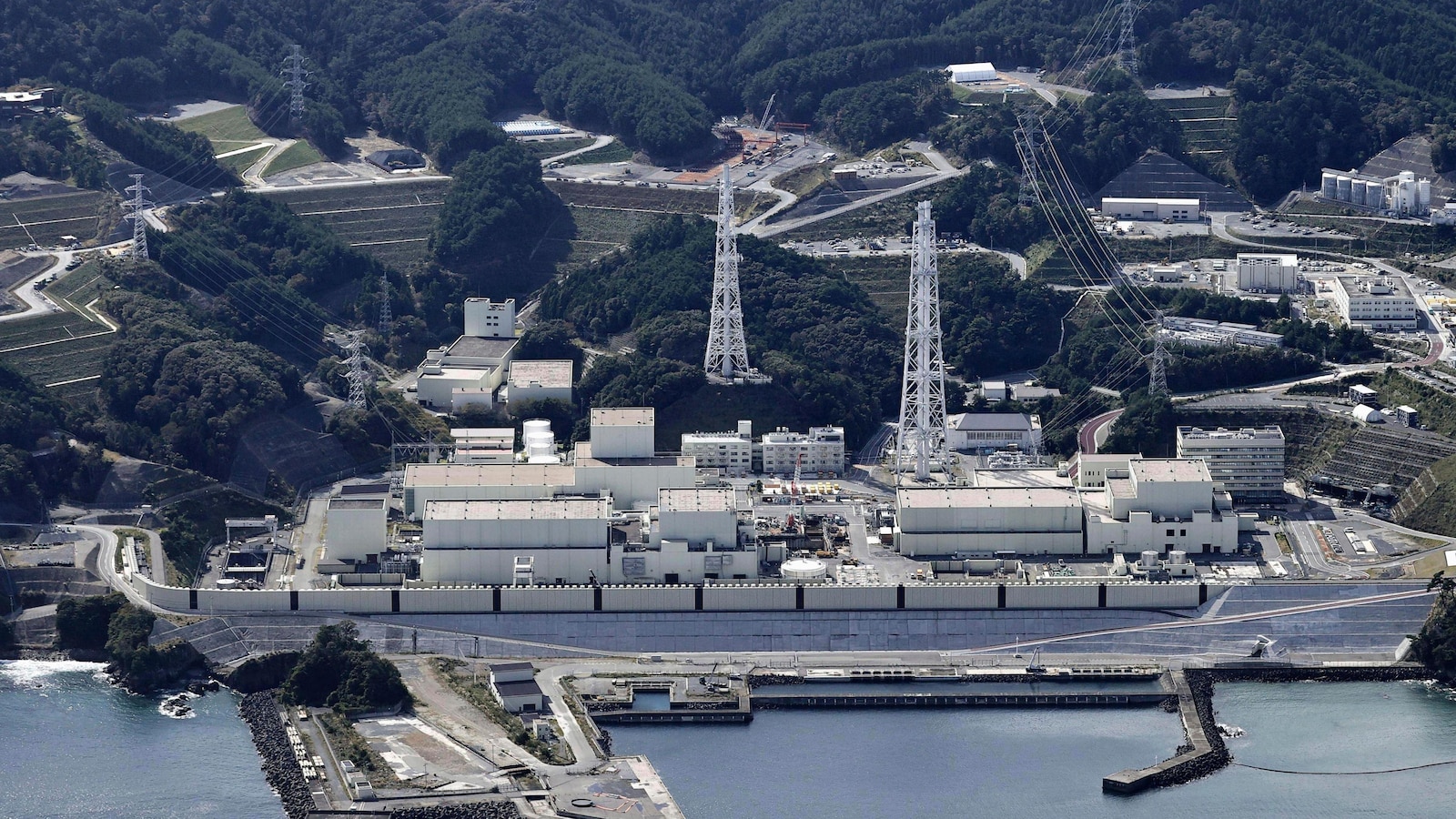
  • Japanese nuclear reactor which survived earthquake that badly damaged Fukushima power plant restarts

    Japanese nuclear reactor which survived earthquake that badly damaged Fukushima power plant restarts

    TOKYO — A Japanese nuclear reactor which survived a massive 2011 earthquake and tsunami that badly damaged the nearby Fukushima nuclear power plant was restarted Tuesday for the first time since the disaster after a safety upgrade, as the government pursues a renewed expansion of nuclear energy to provide stable power and reduce carbon emissions.

    The No. 2 reactor at the Onagawa nuclear power plant on Japan’s northern coast was put back online and is expected to start generating power in early November, operator Tohoku Electric Power Co. said.

    The reactor is one of the three at the Onagawa plant, which is 100 kilometers (62 miles) north of the Fukushima Daiichi plant where three reactors melted following a magnitude 9.0 earthquake and tsunami in March 2011, releasing large amounts of radiation.

    The Onagawa plant was hit by a 13-meter (42-foot) tsunami but was able to keep its crucial cooling systems functioning in all three reactors and achieve their safe shutdowns.

    All of Japan’s 54 commercial nuclear power plants were shut down after the Fukushima disaster for safety checks and upgrades. Onagawa No. 2 is the 13th of the 33 still useable reactors to return to operation. It is also the first restart in Japan of the same type of reactor damaged in Fukushima.

    Tohoku Electric President Kojiro Higuchi said the reactor’s restart highlights the area’s recovery from the disaster.

    Last year, Japan’s government adopted a plan to maximize use of nuclear energy, including accelerating restarts of closed reactors, extending the operational life of aging plants, and developing next-generation reactors, as the country struggles to secure a stable energy supply and meet its pledge to reach carbon neutrality by 2050.

    “Nuclear energy, along with renewables, is an important power source for decarbonization,” Chief Cabinet Secretary Yoshimasa Hayashi said Tuesday. “We will maximize its use while ensuring safety.”

    Restarting nuclear reactors is also increasingly important for Japan’s economic growth, Hayashi said.

    Concern about the government’s revived push for nuclear energy grew after a magnitude 7.5 earthquake hit Japan’s Noto Peninsula on Jan. 1, 2024, killing more than 400 people and damaging more than 100,000 structures. Minor damage was reported at two nuclear facilities and evacuation plans for the region were found to be inadequate.

    For the Onagawa No. 2 reactor, Tohoku Electric in 2013 began upgrading its safety, including tsunami risk estimates and anti-quake measures. It also built an anti-tsunami wall extending up to 29 meters (95 feet) above sea level, and obtained safety approval from regulators in 2020.

    Twenty-one of Japan’s nuclear reactors, including six at Fukushima Daiichi and one at Onagawa, are currently being decommissioned because their operators chose to scrap them instead of investing large amounts for additional safety equipment required under the much-stricter post-Fukushima safety standards.

    Source link

  • A robot resumes mission to retrieve a piece of melted fuel from inside a damaged Fukushima reactor

    A robot resumes mission to retrieve a piece of melted fuel from inside a damaged Fukushima reactor

    An extendable robot on Tuesday resumed its entry into one of three damaged reactors at Fukushima Daiichi nuclear power plant to retrieve a fragment of melted fuel debris, nearly three weeks after its earlier attempt was suspended due to a technical issue.

    The collection of a tiny sample of the spent fuel debris from inside of the Unit 2 reactor marks the start of the most challenging part of the decadeslong decommissioning of the plant where three reactors were destroyed in the March 11, 2011, magnitude 9.0 earthquake and tsunami disaster.

    The sample-return mission, initially scheduled to begin on Aug. 22, was suspended when workers noticed that a set of five 1.5-meter (5-foot) add-on pipes to push in and maneuver the robot were in the wrong order and could not be corrected within the time limit for their radiation exposure, the plant operator Tokyo Electric Power Company Holdings said.

    The pipes were to be used to push the robot inside and pull it back out when it finished. Once inside the vessel, the robot is operated remotely from a safer location.

    The robot, nicknamed “telesco,” can extend up to about 22 meters (72 feet), including the pipes pushing it from behind, to reach its target area to collect a fragment from the surface of the melted fuel mound using a device equipped with tongs that hang from the of the robot.

    The mission to obtain the fragment and return with it is to last about two weeks.

    The mix-up, which TEPCO called a “basic mistake,” triggered disappointment and raised concerns from officials and local residents. Industry Minister Ken Saito ordered TEPCO President Tomoaki Kobayakawa a thorough investigation of the cause and preventive steps before resuming the mission.

    The pipes were brought into the Unit 2 reactor building and pre-arranged at the end of July by workers from the robot’s prime contractor and its subsidiary, but their final status was never checked until the problem was found.

    TEPCO concluded the mishap was caused by a lack of attention, checking and communication between the operator and workers on the ground. By Monday, the equipment was reassembled in the right order and ready for a retrial, the company said.

    The goal of the operation is to bring back less than 3 grams (0.1 ounce) of an estimated 880 tons of fatally radioactive molten fuel that remain in three reactors. The small sample will provide key data to develop future decommissioning methods and necessary technology and robots, experts say.

    The government and TEPCO are sticking to a 30 to 40-year cleanup target set soon after the meltdown, despite criticism it is unrealistic. No specific plans for the full removal of the melted fuel debris or its storage have been decided.

    Source link