hacklink hack forum hacklink film izle hacklink marsbahisizmir escortsahabetpornJojobetcasibompadişahbet

Tag: Regulations

  • The outlook is uncertain for AI regulations as the US government pivots to full Republican control

    The outlook is uncertain for AI regulations as the US government pivots to full Republican control

    WASHINGTON — With artificial intelligence at a pivotal moment of development, the federal government is about to transition from one that prioritized AI safeguards to one more focused on eliminating red tape.

    That’s a promising prospect for some investors but creates uncertainty about the future of any guardrails on the technology, especially around the use of AI deepfakes in elections and political campaigns.

    President-elect Donald Trump has pledged to rescind President Joe Biden’s sweeping AI executive order, which sought to protect people’s rights and safety without stifling innovation. He hasn’t specified what he would do in its place, but the platform of the Republican National Committee, which he recently reshaped, said AI development should be “rooted in Free Speech and Human Flourishing.”

    It’s an open question whether Congress, soon to be fully controlled by Republicans, will be interested in passing any AI-related legislation. Interviews with a dozen lawmakers and industry experts reveal there is still interest in boosting the technology’s use in national security and cracking down on non-consensual explicit images.

    Yet the use of AI in elections and in spreading misinformation is likely to take a backseat as GOP lawmakers turn away from anything they view as potentially suppressing innovation or free speech.

    “AI has incredible potential to enhance human productivity and positively benefit our economy,” said Rep. Jay Obernolte, a California Republican widely seen as a leader in the evolving technology. “We need to strike an appropriate balance between putting in place the framework to prevent the harmful things from happening while at the same time enabling innovation.”

    Artificial intelligence interests have been expecting sweeping federal legislation for years. But Congress, gridlocked on nearly every issue, failed to pass any artificial intelligence bill, instead producing only a series of proposals and reports.

    Some lawmakers believe there is enough bipartisan interest around some AI-related issues to get a bill passed.

    “I find there are Republicans that are very interested in this topic,” said Democratic Sen. Gary Peters, singling out national security as one area of potential agreement. “I am confident I will be able to work with them as I have in the past.”

    It’s still unclear how much Republicans want the federal government to intervene in AI development. Few showed interest before this year’s election in regulating how the Federal Election Commission or the Federal Communications Commission handled AI-generated content, worrying that it would raise First Amendment issues at the same time that Trump’s campaign and other Republicans were using the technology to create political memes.

    The FCC was in the middle of a lengthy process for developing AI-related regulations when Trump won the presidency. That work has since been halted under long-established rules covering a change in administrations.

    Trump has expressed both interest and skepticism in artificial intelligence.

    During a Fox Business interview earlier this year, he called the technology “very dangerous” and “so scary” because “there’s no real solution.” But his campaign and supporters also embraced AI-generated images more than their Democratic opponents. They often used them in social media posts that weren’t meant to mislead, but rather to further entrench Republican political views.

    Elon Musk, Trump’s close adviser and a founder of several companies that rely on AI, also has shown a mix of concern and excitement about the technology, depending on how it is applied.

    Musk used X, the social media platform he owns, to promote AI-generated images and videos throughout the election. Operatives from Americans for Responsible Innovation, a nonprofit focused on artificial intelligence, have publicly been pushing Trump to tap Musk as his top adviser on the technology.

    “We think that Elon has a pretty sophisticated understating of both the opportunities and risks of advanced AI systems,” said Doug Calidas, a top operative from the group.

    But Musk advising Trump on artificial intelligence worries others. Peters argued it could undercut the president.

    “It is a concern,” said the Michigan Democrat. “Whenever you have anybody that has a strong financial interest in a particular technology, you should take their advice and counsel with a grain of salt.”

    In the run-up to the election, many AI experts expressed concern about an eleventh-hour deepfake — a lifelike AI image, video or audio clip — that would sway or confuse voters as they headed to the polls. While those fears were never realized, AI still played a role in the election, said Vivian Schiller, executive director of Aspen Digital, part of the nonpartisan Aspen Institute think tank.

    “I would not use the term that I hear a lot of people using, which is it was the dog that didn’t bark,” she said of AI in the 2024 election. “It was there, just not in the way that we expected.”

    Campaigns used AI in algorithms to target messages to voters. AI-generated memes, though not lifelike enough to be mistaken as real, felt true enough to deepen partisan divisions.

    A political consultant mimicked Joe Biden’s voice in robocalls that could have dissuaded voters from coming to the polls during New Hampshire’s primary if they hadn’t been caught quickly. And foreign actors used AI tools to create and automate fake online profiles and websites that spread disinformation to a U.S. audience.

    Even if AI didn’t ultimately influence the election outcome, the technology made political inroads and contributed to an environment where U.S. voters don’t feel confident that what they are seeing is true. That dynamic is part of the reason some in the AI industry want to see regulations that establish guidelines.

    “President Trump and people on his team have said they don’t want to stifle the technology and they do want to support its development, so that is welcome news,” said Craig Albright, the top lobbyist and senior vice president at The Software Alliance, a trade group whose members include OpenAI, Oracle and IBM. “It is our view that passing national laws to set the rules of the road will be good for developing markets for the technology.”

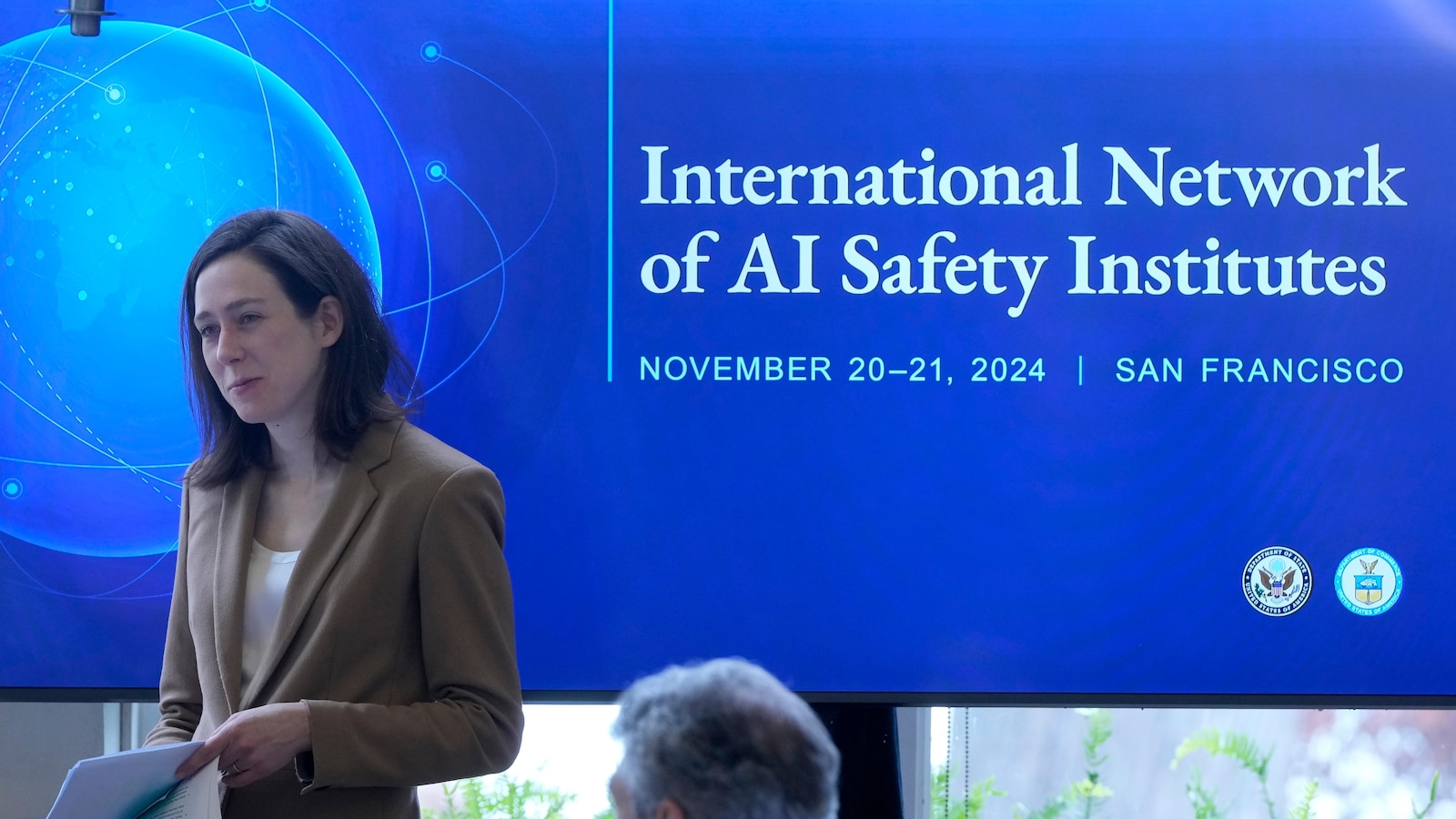
    AI safety advocates during a recent meeting in San Francisco made similar arguments, according to Suresh Venkatasubramanian, director of the Center for Tech Responsibility at Brown University.

    “By putting literal guardrails, lanes, road rules, we were able to get cars that could roll a lot faster,” said Venkatasubramanian, a former Biden administration official who helped craft White House principles for approaching AI.

    Rob Weissman, co-president of the advocacy group Public Citizen, said he’s not hopeful about the prospects for federal legislation and is concerned about Trump’s pledge to rescind Biden’s executive order, which created an initial set of national standards for the industry. His group has advocated for federal regulation of generative AI in elections.

    “The safeguards are themselves ways to promote innovation so that we have AI that’s useful and safe and doesn’t exclude people and promotes the technology in ways that serve the public interest,” he said.

    ___

    The Associated Press receives support from several private foundations to enhance its coverage of elections and democracy, and from the Omidyar Network to support coverage of artificial intelligence and its impact on society. AP is solely responsible for all content. See more about AP’s democracy initiative here and a list of supporters and funded coverage areas at AP.org
    Source link

  • Elon Musk says he and Trump have ‘mandate to delete’ regulations. Ethics laws could limit Musk role

    Elon Musk says he and Trump have ‘mandate to delete’ regulations. Ethics laws could limit Musk role

    In picking billionaire Elon Musk to be “our cost cutter” for the U.S. government, President-elect Donald Trump won’t be the first American president to empower a business tycoon to look for ways to dramatically cut federal regulations.

    President Ronald Reagan tapped J. Peter Grace to lead a bureaucratic cost-cutting commission in 1982. Still, the chemical business magnate had fewer conflicts of interest than the world’s richest man does today.

    Musk’s SpaceX holds billions of dollars in NASA contracts. He’s CEO of Tesla, an electric car business that benefits from government tax incentives and is subject to auto safety rules. His social media platform X, artificial intelligence startup xAI, brain implant maker Neuralink and tunnel-building Boring company all intersect with the federal government in various ways.

    “There’s direct conflicts between his businesses and government’s interest,” said Ann Skeet, director of leadership ethics at Santa Clara University’s Markkula Center. “He’s now in a position to try and curry favor for those enterprises.”

    Musk is also more influential, having pumped an estimated $200 million through his political action committee to help elect Trump, made himself a fixture at Mar-a-Lago since the presidential election and is on regular speaking terms with like-minded political world leaders, from Argentina’s President Javier Milei to Italy’s Prime Minister Giorgia Meloni.

    Trump has said Musk and former GOP presidential candidate Vivek Ramaswamy will lead a new “Department of Government Efficiency,” or DOGE, — a joke name that references the cryptocurrency Dogecoin and appeals to Musk’s sense of humor.

    “We finally have a mandate to delete the mountain of choking regulations that do not serve the greater good,” Musk said Wednesday on X.

    Trump has said that Musk and Ramaswamy will work from outside the government to offer the White House “advice and guidance” and will partner with the Office of Management and Budget to drive structural reform — some of which could only be done through Congress.

    “If it’s a commission, it’s outside the government” and Musk could not have a White House office or official government title, said Richard Painter, a White House ethics lawyer during the George W. Bush administration. “Then, the president takes the advice or doesn’t.”

    If it were a true government agency, however, Musk would run afoul of federal conflict of interest laws unless he divested from his businesses or recused from government matters involving them, Painter said.

    Trump could grant a rare waiver exempting Musk from those laws, a move that has been politically unpopular in the past, Painter said.

    Tesla, SpaceX and X didn’t immediately respond to requests for comment Wednesday about whether Musk would recuse himself. The Trump transition team also didn’t immediately respond to a request for comment.

    However it is structured, Musk’s ideas are expected to have an influence.

    Tesla, the electric vehicle company that made Musk the world’s wealthiest person, has had repeated skirmishes with the National Highway Traffic Safety Administration, which regulates vehicle safety. So any cuts to NHTSA funding or staffing could help Tesla.

    The agency has forced Tesla to do recalls it didn’t want, and it has opened investigations of Tesla vehicles, some of which raised questions about Musk’s claims that Tesla is close to deploying autonomous vehicles without human drivers. The agency also is working on regulations that cover vehicle automation.

    Auto safety advocates are worried that a Department of Government Efficiency co-chaired by Musk could propose draconian cuts at NHTSA.

    “That could be incredibly problematic because that would impact every rule-making from all of the agencies that currently oversee companies that Musk owns,” said Michael Brooks, executive director of the nonprofit Center for Auto Safety, a watchdog group.

    If implemented, Musk’s plan for efficiency at NHTSA could mirror what he did when he took over Twitter — draconian staff cuts, said Missy Cummings, director of the autonomy and robotics center at George Mason University and a former safety adviser to NHTSA.

    While Cummings concedes there is room for much of the federal government to become more efficient, she said that NHTSA is already understaffed and she predicted that Musk would try to slow or stop NHTSA investigations or handicap the agency so it would have trouble enforcing regulations.

    “It would just leave it as a shell of the agency that it was,” she said. “Their whole job would be to put out commercials reminding people to just wear their seat belts.”

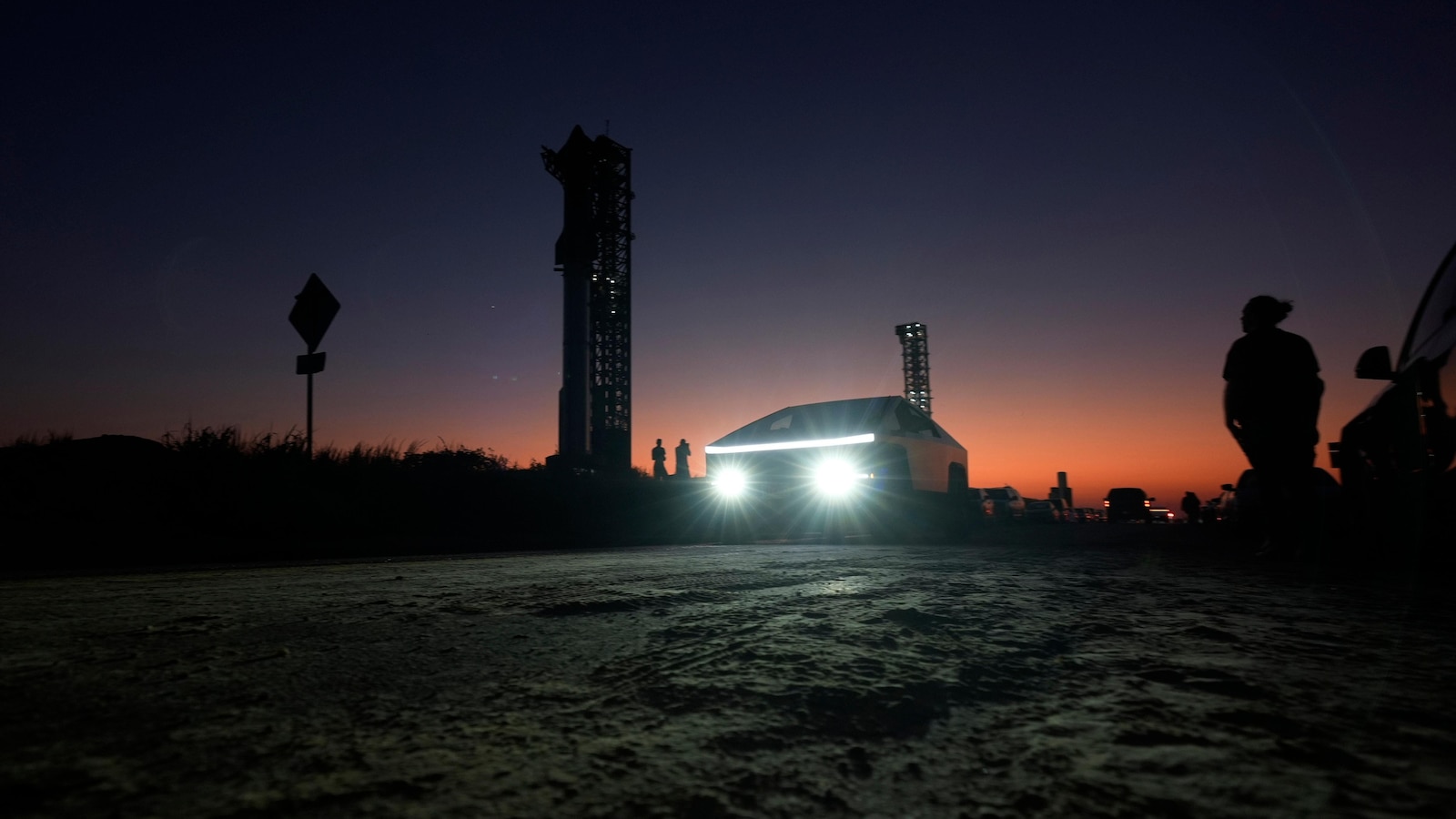
    Launching test flights out of South Texas, SpaceX’s mega rocket Starship is how NASA intends to land astronauts on the moon for the first time in more than a half-century. NASA has awarded more than $4 billion to SpaceX for the first two human moon landings coming up later this decade under the Artemis program. Musk has been at odds with the Federal Aviation Administration for slowing Starship over what he contends is excessive bureaucracy.

    SpaceX also has racked up multiple contracts with NASA over the past decade for launching supplies and astronauts to the International Space Station. The contracts for crew flights alone from 2020 through 2030 total $5 billion.

    More recently, in June, NASA awarded an $843 million contract to SpaceX to provide the vehicle for deorbiting the International Space Station at the end of its lifetime in early 2031, directing it to a fiery re-entry over the Pacific.

    SpaceX also has multiple contracts with the Defense Department, some classified and said to be worth billions. In addition, the Pentagon has purchased internet services in Ukraine from SpaceX’s Starlink constellation. The militarized version of Starlink is called Starshield.

    The social media platform X is another Musk company that has drawn scrutiny from federal regulators. The Federal Trade Commission has probed Musk’s handling of sensitive consumer data after he took control of the company in 2022 but has not brought enforcement action. The SEC has an ongoing investigation of Musk’s purchase of the social media company.

    Musk has been forceful with his political views on the platform, changing its rules, content moderation systems and algorithms to conform with his world view. After Musk endorsed Trump following an attempt on the former president’s life last summer, the platform has transformed into a megaphone for Trump’s campaign, offering an unprecedented level of free advertising that is all but impossible to calculate the value of.

    Musk’s strong interest in AI is also likely to play a role. He’s in the process of building an AI supercomputer in Memphis, Tennessee, for his AI startup xAI.

    But environmental groups have raised concerns about pollution generated by the facility’s gas turbines and its strain on the local power grid, prompting attention from the Environmental Protection Agency.

    The facility is located near predominantly Black neighborhoods that have long dealt with pollution and health risks from factories and other industrial sites.

    _____

    AP reporter Adrian Sainz in Memphis, Tennessee, and AP Aerospace Writer Marcia Dunn in Cape Canaveral, Florida, contributed to this report.

    Source link

  • Food Outlets At MG Bus Station In Hyderabad Found To Be Violating Safety And Hygiene Regulations

    Food Outlets At MG Bus Station In Hyderabad Found To Be Violating Safety And Hygiene Regulations

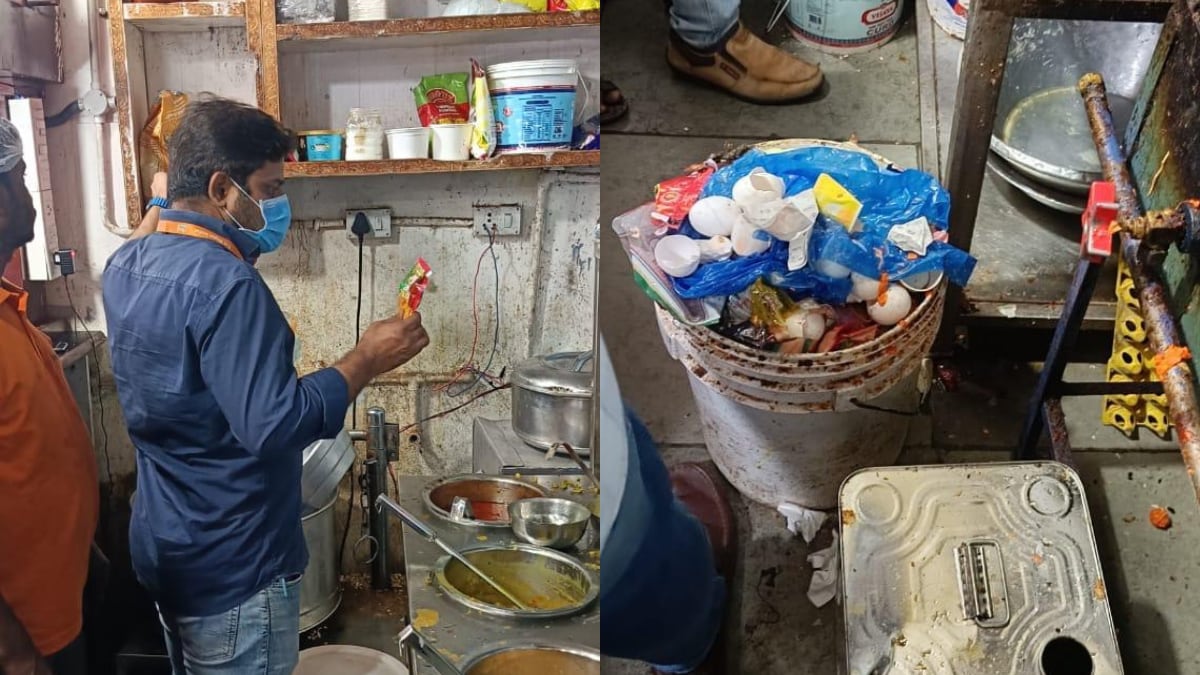
    Telangana’s Commissioner of Food Safety visited MG Bus Station in Hyderabad’s Imblibun area on September 10, 2024. The task force inspected several food outlets at the location and unearthed serious violations. Firstly, at Nandini Cafeteria, the officials found patchy flooring, water stagnation, open washroom doors, windows without insect-proof screens, 20 kilos of suspected contaminated lime pickle and unlabelled and uncovered food inside the refrigerator. The food handlers were not wearing aprons and hair caps. That’s not all. The task force seized 50 kilos of toor dal and 50 kilos of packed coriander, as they “were found without proper labels, such as the date of packing and use-by dates.” It was also observed that raw food materials such as flour and pulses were “stored directly on the floor, with no gap maintained between items and walls.” Additionally, an iron stand kept above the area for rice preparation was discovered to be corroded and rusted. The FBO [Food Business Operator] had failed to maintain the requisite pest control records and medical fitness certificates. It had also not displayed a copy of its FSSAI license in a prominent place.

    Also Read: Barbeque Nation, Nine O Nine Pub In Hyderabad’s Kothapet Inspected By Food Safety Officials

    At Yagnesh Virat Food Court, the officials discovered houseflies in the kitchen, overflowing dustbins without lids and unlabelled dishes in the fridge. They noted that the premises were “open to the external environment,” and there were no insect-proof screens. Moreover, the necessary Medical fitness certificates and pest control records were not found at the establishment at the time of the inspection.

    Also Read: Food Safety Officials Inspect Cloud Kitchens In Hyderabad’s Ameerpet Area. Here’s What They Found

    The task force also inspected Stall No. 24 at MG bus station. They found out that the FBO was operating its business without an FSSAI license. Medical fitness and pest control records were unavailable. The kitchen premises were “found in a highly unhygienic condition,” as per the officials. The dustbins were “overflowing with filth” and houseflies were hovering around them. Cobwebs were observed near the storage area. There were issues with the food too. The team discarded synthetic food colours that they discovered were being used in Chinese dishes. Additionally, cooked rice and flour were not stored properly, as they were not labelled and covered.

    Also Read: More Restaurants In Hyderabad’s Gachibowli Area Inspected By Food Safety Officials – See What Was Found

    Next, the task force conducted inspections at Raghavendra Bakery and Fast Food. The FBO did not provide a copy of its FSSAI license at the time of inspection. Medical fitness certificates and pest control records were also not available. The team made note of broken tiles, greasy walls, live cockroach infestation in the kitchen, windows without insect-proof screens and food handlers without hair caps and aprons. Synthetic colours were being used in Chinese food and were thus discarded. The officials stated that the refrigerator was in an unhygienic condition. The food stored inside it did not have labels and covering. Other food items like rice and flour, stored outside, were kept directly on the floor.

    The day before these inspections, the task force visited tiffin centres and hostels in Hyderabad’s Ashok Nagar area. Wide-ranging food safety violations were unearthed at these establishments. Click here to read the complete story.


    Source link