A remote lifestyle intervention program emphasizing diet and exercise improved function and quality of life in patients with early MS.
“Various diet and exercise protocols have been reported to improve symptoms and function in people with MS,” Prabha Siddarth, PhD, and colleagues wrote. “Evidence is accumulating that interventions as early as possible in the disease course are warranted. The study investigated the effect of a remotely delivered lifestyle program focusing on specific diet and exercise recommendations in people with early MS.”
Dr. Siddarth and colleagues conducted a retrospective study to investigate the impact of a remotely supervised lifestyle program emphasizing specific diet and exercise recommendations in patients with early MS. MS diagnosis no more than 2 years before the study started, serving as enrollment criteria.
Participants received six remote health coaching sessions over 12 weeks. Sessions covered a Mediterranean-type diet and personalized exercise plans, including duration, intensity, and type, such as aerobics, resistance, neuromotor/coordination, and flexibility.
Outcome measures included QOL; cognition, measured with the Symbol Digit Modalities Test (SDMT); fatigue, measured with the MS Fatigue Impact Scale (MFIS); fitness as estimated with Metabolic Equivalents (METS); and other objective and patient-reported outcomes. Changes were analyzed using mixed-effects general linear models and standardized pre-post differences.
Improvements Seen in QOL, Cognition, & Adherence
The researchers enrolled 15 patients (average age at baseline, 35.2; mean EDSS, 1.1). Almost all enrolled patients (n=14) completed the study.
Dr. Siddarth and colleagues reported significant improvements in overall QOL (P=0.02) and cognitive performance (per the SDMT; P=0.006), the cognitive portion of the Timed Up and Go Test (P=0.01), and the cognitive subscale of the MSQOL-29 (P=0.03). Further, significant improvements were seen in the total MFIS score (P=0.005) and the cognitive subscale (P=0.005).
Participants displayed improved adherence to the Mediterranean diet (P=0.002) and fitness (per METS; P=0.04). The researchers observed an increase in physical activity by the end of the intervention compared with baseline, though this difference was not significant.
Overall, patient satisfaction was high, with feedback indicating that the recommendations were easy to follow. Participants reported high confidence levels in knowledge about MS and were less anxious about disease management.
The findings “suggest that remotely delivered lifestyle coaching improves [QOL] and cognition in newly diagnosed MS in patients,” Dr. Siddarth and colleagues wrote. “This adds to the existing literature that it is feasible to implement lifestyle coaching to people with MS via telehealth modalities, which has also been reported for other populations with early-stage memory loss.”
A remote lifestyle intervention program emphasizing diet and exercise improved function and quality of life in patients with early MS.
“Various diet and exercise protocols have been reported to improve symptoms and function in people with MS,” Prabha Siddarth, PhD, and colleagues wrote. “Evidence is accumulating that interventions as early as possible in the disease course are warranted. The study investigated the effect of a remotely delivered lifestyle program focusing on specific diet and exercise recommendations in people with early MS.”
Dr. Siddarth and colleagues conducted a retrospective study to investigate the impact of a remotely supervised lifestyle program emphasizing specific diet and exercise recommendations in patients with early MS. MS diagnosis no more than 2 years before the study started, serving as enrollment criteria.
Participants received six remote health coaching sessions over 12 weeks. Sessions covered a Mediterranean-type diet and personalized exercise plans, including duration, intensity, and type, such as aerobics, resistance, neuromotor/coordination, and flexibility.
Outcome measures included QOL; cognition, measured with the Symbol Digit Modalities Test (SDMT); fatigue, measured with the MS Fatigue Impact Scale (MFIS); fitness as estimated with Metabolic Equivalents (METS); and other objective and patient-reported outcomes. Changes were analyzed using mixed-effects general linear models and standardized pre-post differences.
Improvements Seen in QOL, Cognition, & Adherence
The researchers enrolled 15 patients (average age at baseline, 35.2; mean EDSS, 1.1). Almost all enrolled patients (n=14) completed the study.
Dr. Siddarth and colleagues reported significant improvements in overall QOL (P=0.02) and cognitive performance (per the SDMT; P=0.006), the cognitive portion of the Timed Up and Go Test (P=0.01), and the cognitive subscale of the MSQOL-29 (P=0.03). Further, significant improvements were seen in the total MFIS score (P=0.005) and the cognitive subscale (P=0.005).
Participants displayed improved adherence to the Mediterranean diet (P=0.002) and fitness (per METS; P=0.04). The researchers observed an increase in physical activity by the end of the intervention compared with baseline, though this difference was not significant.
Overall, patient satisfaction was high, with feedback indicating that the recommendations were easy to follow. Participants reported high confidence levels in knowledge about MS and were less anxious about disease management.
The findings “suggest that remotely delivered lifestyle coaching improves [QOL] and cognition in newly diagnosed MS in patients,” Dr. Siddarth and colleagues wrote. “This adds to the existing literature that it is feasible to implement lifestyle coaching to people with MS via telehealth modalities, which has also been reported for other populations with early-stage memory loss.”
When we set out on a trip to the town of Homosha, in the north western part of Ethiopia, we would not have imagined that there was any chance of meeting a Kenyan in such a remote area, more than 600 kilometers from Addis Ababa.
The one-hour flight from the capital lands in Assosa, the regional headquarters of the state of Benishangul-Gumuz, before embarking on a 30-kilometer drive through a fairly decent highway, with the occasional crater-like pothole, to Homosha.
As you drive along the heavily forested terrain, there is little indication of the existence of a state-of the-art educational facility. Almost out of nowhere, an imposing gate announces the entrance to the Pharo School Homosha, a modern fully-fledged campus with boarding facilities for more than 200 girls sitting on 16 hectares.
It is sunset when we pull into the large compound which appears unusually dark.
“Is there an electricity outage?” we enquire. “No, here we rely on generator power because there is no supply from the grid,” says a gentleman who warmly receives us.
“The generator is just about to be switched on for the evening’s activities.”
There is something about his accent that sounds distinctly familiar.
“Karibu Homosha,” he says.
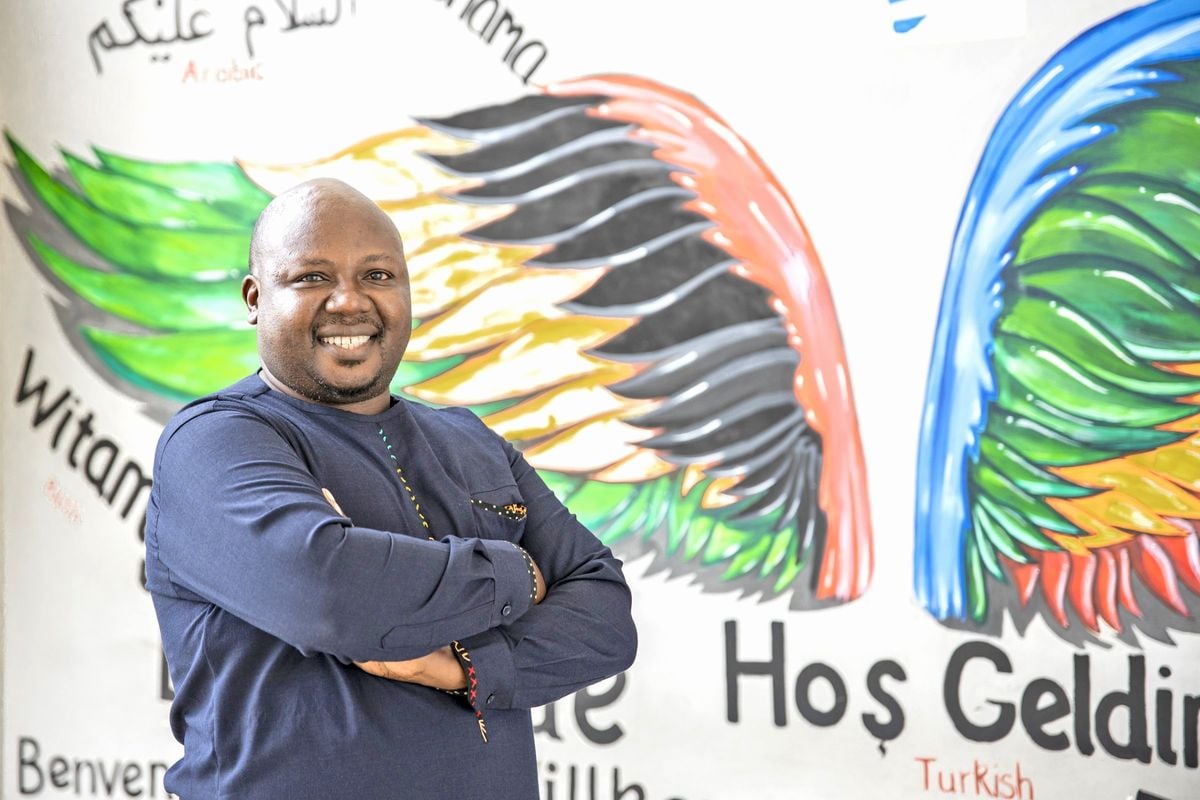
Benson Majiwa, a Kenyan teacher, is the principal of the Pharo School Homosha.
Mr Majiwa has been teaching the Ethiopian curriculum for four years now, and has been the head of the school for two years now. A graduate of Moi University (Languages) and Egerton University (Education), he started his career as a teacher in Kenya, teaching the Kenyan public school system. He then spent 12 years teaching the British curriculum, including an eight-year stint at Nairobi Jaffrey Academy.
While studying for his Master’s, his academic project on psychology was based on research at the Juvenile Remand Home in Lower Kabete.
“I found many young people who had become delinquents because they lacked someone to help them navigate life during their teenage years. That was a turning point in my life as an educationist.”
How did he end up in this remote part of Ethiopia?
During the Covid-19 pandemic, he was working at the Kinderworld International School as it transitioned from the Kenyan system to the British curriculum. During that time, he met Akif Naqvi, a British School Overseas Inspector, who would later become the Principal of the Pharo School in Homosha. Naqvi, an internationally experienced headteacher, was impressed with Mr Majiwa’s skills and headhunted him to deputise as school head at the new school in Ethiopia.
“My father was a forest officer and I grew up moving from one forest station to another, I am used to living in remote areas so this opportunity to move to a remote part of a foreign country did not faze me,” says Mr Majiwa.
Mr Majiwa with the Ethiopian classical pianist Girma Yifrashewa during the handover of a new upright piano to the school.
Photo credit: Pool
“I was also inspired by what the Pharo Foundation was doing, transforming the lives of the young girls and the community surrounding the school.”
Pharo Foundation is a privately funded organisation with headquarters in London that runs programmes in education, health, water and agriculture in Ethiopia, Somaliland, Rwanda and Kenya. Before the school in Homosha opened in February 2020, the enrolment rate for girls in the region was as low as 32 percent for those from certain communities in the region.
Mr Majiwa moved to Homosha as Deputy Head of School in August 2021, and two years later, he succeeded Naqvi as Principal. He discovered that boarding school is a relatively new concept in Ethiopia, unlike in Kenya where the model has historically been an essential part of the education system.
“There were no routines. No night preps, lessons would go on till 5pm in a region where temperatures hit 40 degrees. There was no proper dress code and the students used tiny exercise books that would fill up in a week,” he says.
He had to establish a system that would enable the students to operate within a set of rules while allowing them to also have sufficient time for co-curricular activities. In September 2024, the school received an upright piano from Pharo Foundation in the UK, and according to the principal, the performing arts aligns with the new curriculum in Ethiopia, which just like the CBC in Kenya, is founded on practical skills.
“Many of the girls can sing, and so the piano is a welcome addition that will enable them enhance their talents,” he says.
The school admits girls in Grade 9, to undertake four years of secondary education. At the moment there are 133 students and last Saturday they conducted interviews for a fresh cohort of Grade 9 with a target to hit 200 students.
Admission is based on a scholarship model, where students sit for an entrance examination to test their aptitude and academic level. For the first three years of operation, the school provided the students with all the essentials: books, uniforms, meals and sanitary pads, but parents are now required to contribute part of the children’s upkeep. However, the majority of the girls are children of peasant farmers drawn from the rural community in Homosha and require absolute support.
“The students are very committed, and teachers spend less time on supervision because the girls know what is required of them,” says Mr Majiwa.
During his first year in charge, the school attained a 100 percent pass mark in the Grade 12 national examinations and his colleagues have taken to jokingly referring to him as the “100 percent principal.”
That success was achieved despite the tremendous odds facing the institution, not least the lack of power supply which means the school is reliant on generator for 13 hours in a day.
The generator is switched on at 5.45am so that students can prepare for breakfast. It is then turned off at 12pm during lunch break and switched back on at 1pm when afternoon classes begin and go on until 5pm (classes end at 3pm). It is then turned back on at 6.45pm and switched off at 10.30pm until the next morning. Ironically the Grand Ethiopian Renaissance Dam, which has reportedly doubled Ethiopia’s electricity production, is located in the Benishangul Gamuz region.
The region is also surrounded by conflict areas such as Amhara, Gambela and Oromia, where the Oromo Liberation Army is engaged in a long-running conflict with the federal government. It also borders the Republic of Sudan to the north.
“I know in Kenya schools only need a few askaris, but here security is a huge issue and the head of security is actually a former police officer,” says Mr Majiwa.
He manages a team of 19 teachers and 58 support staff, of which 19 are security personnel.
He has learnt the Ethiopian way of life, which means being philosophical about every situation.
“They are a very hospitable people who always greet you with a smile. On the flip side, I have learnt to be very patient because people do things at their own pace. I have made my team know that there are tasks that must meet a deadline, but there are other duties which I ask them to tell me when they are comfortable completing,” he explains.
Last year, another Kenyan, Salome Maina, a teacher of English, joined the staff at the Pharo School Homosha. “Finding Mr Majiwa here was very reassuring for me and helped me settle down a lot faster,” says Ms Maina.
Salome Maina, a Kenyan who teaches English at the Pharo School, Homosha, Ethiopia.
Photo credit: Pool
Her previous job at a school at the Dadaab Refugee camp run by the humanitarian organisation, Windle International Kenya, prepared her for the experience of working in locations with extreme conditions. Last year she taught the Junior Secondary class, and this will be her first year with Grade 11 and the Grade 12 examination candidates.
“The students have a fairly good grasp of English, and whenever there are difficulties in understanding something, then I will identify the students who have understood and ask them to explain to the others in Amharic or the other local languages.”
The foreign teachers have also had to adopt to the Ethiopian school calender that begins in September and ends in July.
“When we are here, we use the Ethiopian calendar, which consists of 13 months, so we just celebrated our New Year 2017 on September 11,” says Mr Majiwa with a smile.
“I also celebrate Christmas Day twice, on December 25 and January 7 with the Ethiopian Orthodox Church”. These Kenyan teachers are motivated by the experience of making a difference to the futures of young girls in a far-flung region of Ethiopia, whose lives might have turned out very differently if they didn’t get a chance at education.
When we set out on a trip to the town of Homosha, in the north western part of Ethiopia, we would not have imagined that there was any chance of meeting a Kenyan in such a remote area, more than 600 kilometers from Addis Ababa.
The one-hour flight from the capital lands in Assosa, the regional headquarters of the state of Benishangul-Gumuz, before embarking on a 30-kilometer drive through a fairly decent highway, with the occasional crater-like pothole, to Homosha.
As you drive along the heavily forested terrain, there is little indication of the existence of a state-of the-art educational facility. Almost out of nowhere, an imposing gate announces the entrance to the Pharo School Homosha, a modern fully-fledged campus with boarding facilities for more than 200 girls sitting on 16 hectares.
It is sunset when we pull into the large compound which appears unusually dark.
“Is there an electricity outage?” we enquire. “No, here we rely on generator power because there is no supply from the grid,” says a gentleman who warmly receives us.
“The generator is just about to be switched on for the evening’s activities.”
There is something about his accent that sounds distinctly familiar.
“Karibu Homosha,” he says.
Benson Majiwa, a Kenyan teacher, is the principal of the Pharo School Homosha.
Mr Majiwa has been teaching the Ethiopian curriculum for four years now, and has been the head of the school for two years now. A graduate of Moi University (Languages) and Egerton University (Education), he started his career as a teacher in Kenya, teaching the Kenyan public school system. He then spent 12 years teaching the British curriculum, including an eight-year stint at Nairobi Jaffrey Academy.
While studying for his Master’s, his academic project on psychology was based on research at the Juvenile Remand Home in Lower Kabete.
“I found many young people who had become delinquents because they lacked someone to help them navigate life during their teenage years. That was a turning point in my life as an educationist.”
How did he end up in this remote part of Ethiopia?
During the Covid-19 pandemic, he was working at the Kinderworld International School as it transitioned from the Kenyan system to the British curriculum. During that time, he met Akif Naqvi, a British School Overseas Inspector, who would later become the Principal of the Pharo School in Homosha. Naqvi, an internationally experienced headteacher, was impressed with Mr Majiwa’s skills and headhunted him to deputise as school head at the new school in Ethiopia.
“My father was a forest officer and I grew up moving from one forest station to another, I am used to living in remote areas so this opportunity to move to a remote part of a foreign country did not faze me,” says Mr Majiwa.
Mr Majiwa with the Ethiopian classical pianist Girma Yifrashewa during the handover of a new upright piano to the school.
Photo credit: Pool
“I was also inspired by what the Pharo Foundation was doing, transforming the lives of the young girls and the community surrounding the school.”
Pharo Foundation is a privately funded organisation with headquarters in London that runs programmes in education, health, water and agriculture in Ethiopia, Somaliland, Rwanda and Kenya. Before the school in Homosha opened in February 2020, the enrolment rate for girls in the region was as low as 32 percent for those from certain communities in the region.
Mr Majiwa moved to Homosha as Deputy Head of School in August 2021, and two years later, he succeeded Naqvi as Principal. He discovered that boarding school is a relatively new concept in Ethiopia, unlike in Kenya where the model has historically been an essential part of the education system.
“There were no routines. No night preps, lessons would go on till 5pm in a region where temperatures hit 40 degrees. There was no proper dress code and the students used tiny exercise books that would fill up in a week,” he says.
He had to establish a system that would enable the students to operate within a set of rules while allowing them to also have sufficient time for co-curricular activities. In September 2024, the school received an upright piano from Pharo Foundation in the UK, and according to the principal, the performing arts aligns with the new curriculum in Ethiopia, which just like the CBC in Kenya, is founded on practical skills.
“Many of the girls can sing, and so the piano is a welcome addition that will enable them enhance their talents,” he says.
The school admits girls in Grade 9, to undertake four years of secondary education. At the moment there are 133 students and last Saturday they conducted interviews for a fresh cohort of Grade 9 with a target to hit 200 students.
Admission is based on a scholarship model, where students sit for an entrance examination to test their aptitude and academic level. For the first three years of operation, the school provided the students with all the essentials: books, uniforms, meals and sanitary pads, but parents are now required to contribute part of the children’s upkeep. However, the majority of the girls are children of peasant farmers drawn from the rural community in Homosha and require absolute support.
“The students are very committed, and teachers spend less time on supervision because the girls know what is required of them,” says Mr Majiwa.
During his first year in charge, the school attained a 100 percent pass mark in the Grade 12 national examinations and his colleagues have taken to jokingly referring to him as the “100 percent principal.”
That success was achieved despite the tremendous odds facing the institution, not least the lack of power supply which means the school is reliant on generator for 13 hours in a day.
The generator is switched on at 5.45am so that students can prepare for breakfast. It is then turned off at 12pm during lunch break and switched back on at 1pm when afternoon classes begin and go on until 5pm (classes end at 3pm). It is then turned back on at 6.45pm and switched off at 10.30pm until the next morning. Ironically the Grand Ethiopian Renaissance Dam, which has reportedly doubled Ethiopia’s electricity production, is located in the Benishangul Gamuz region.
The region is also surrounded by conflict areas such as Amhara, Gambela and Oromia, where the Oromo Liberation Army is engaged in a long-running conflict with the federal government. It also borders the Republic of Sudan to the north.
“I know in Kenya schools only need a few askaris, but here security is a huge issue and the head of security is actually a former police officer,” says Mr Majiwa.
He manages a team of 19 teachers and 58 support staff, of which 19 are security personnel.
He has learnt the Ethiopian way of life, which means being philosophical about every situation.
“They are a very hospitable people who always greet you with a smile. On the flip side, I have learnt to be very patient because people do things at their own pace. I have made my team know that there are tasks that must meet a deadline, but there are other duties which I ask them to tell me when they are comfortable completing,” he explains.
Last year, another Kenyan, Salome Maina, a teacher of English, joined the staff at the Pharo School Homosha. “Finding Mr Majiwa here was very reassuring for me and helped me settle down a lot faster,” says Ms Maina.
Salome Maina, a Kenyan who teaches English at the Pharo School, Homosha, Ethiopia.
Photo credit: Pool
Her previous job at a school at the Dadaab Refugee camp run by the humanitarian organisation, Windle International Kenya, prepared her for the experience of working in locations with extreme conditions. Last year she taught the Junior Secondary class, and this will be her first year with Grade 11 and the Grade 12 examination candidates.
“The students have a fairly good grasp of English, and whenever there are difficulties in understanding something, then I will identify the students who have understood and ask them to explain to the others in Amharic or the other local languages.”
The foreign teachers have also had to adopt to the Ethiopian school calender that begins in September and ends in July.
“When we are here, we use the Ethiopian calendar, which consists of 13 months, so we just celebrated our New Year 2017 on September 11,” says Mr Majiwa with a smile.
“I also celebrate Christmas Day twice, on December 25 and January 7 with the Ethiopian Orthodox Church”. These Kenyan teachers are motivated by the experience of making a difference to the futures of young girls in a far-flung region of Ethiopia, whose lives might have turned out very differently if they didn’t get a chance at education.
As a city dweller, there’s one thing that’s difficult for me to do: rest.
But on a three-day trip to Lazarus Island, a small island five miles from Singapore, I was forced to slow down. I spent one night in a glamping tent on thebeach.
Launched in February, Into the Woods is an accommodation that promotes slow living. My stay in the tent was 380 Singapore dollars, or $290.
Ray Lee and Sam Wong, the cofounders of Into the Woods and a married couple, said they wanted to create a space for people to relax without worrying about following an itinerary and filling their days with activities.
The founders had enjoyed camping with their kids while living abroad in the US and Australia. Despite having no hospitality or real estate background, they were eager to start something similar in Singapore.
During the pandemic, they chanced upon a government initiative to promote sustainable tourism on Lazarus Island. Lee and Wong ended up winning a three-year tender to open Into the Woods on Lazarus Island in March 2023. The couple estimates that they’ve invested almost $800,000 in the project — half of which was from their personal savings.
“We want guests to go home with the feeling of, ‘It feels like I didn’t do anything, but I feel like I achieved everything,’” Wong told me.
Can it be fulfilling to do nothing? I was about to find out.
I stayed at Into the Woods on a Sunday night in August
Upon reaching Lazarus, a staff member picked me up from the pier in a buggy. We drove past a resort that consists of tiny houses — the only other accommodation on the island, and where I spent the following night — past the island’s sole convenience store and reached the glamping tents on Lazarus Beach a few minutes later.
Related stories
There are nine tents, including six that can sleep two guests and three that can sleep up to four. The tents are fully air-conditioned and perched just a couple feet from the water.
The tent was fully air-conditioned and fitted with amenities.
Erin Liam/ Business Insider
This was no ordinary tent.
It fits a queen-sized bed, a cooking station with a microwave and fridge, and has hardwood floors. The space alsoincluded essentials for a day at the beach, from a mat to complimentary snacks and a beach bag.
Slow living on the island
The view of the beach from the bed.
Erin Liam/ Business Insider
After unpacking, I stepped out to the beach to explore. But apart from trying stand-up paddling on the island’s only water sports center, there was little to do. So, this is slow living, I thought.
I sat on the beach and took in the surroundings. It was almost 5 p.m., and the beach was full of life. Teenagers blasted pop music on their portable speakers, young kids built sand castles, and dogs ran free on the sand.
At around 6 p.m., the last ferry left the island, and apart from the sound of the waves crashing softly into the sand, the beach turned quiet. At that moment, it felt surreal; Singapore has one of the highest population densities in the world. It was strangely comforting to have such an expansive space to myself — well, and the 10 other guests on the beach.
With nowhere to eat on the island, guests can cook their own meals or pack food. I pre-ordered a barbecue meat set for around $52 from the island’s convenience store. It came with enough for two to three people and included a spread of meat skewers and sausages, along with mac and cheese and otah, a grilled fishcake dish.
It was a rare opportunity to cook my own food by the beach, so I took the time to savor each bite and take in the surroundings.
As guests are encouraged to wash their own dishes, I put the dirty cutlery and pans aside to haul to the communal kitchen sink the next morning.
Guests can cook their meals with the portable stove and cookware provided.
Erin Liam/ Business Insider
With no TV and a spotty internet connection, I was left to my own devices to figure out how to spend the rest of my evening. Thankfully, each room has a doodle book and reflection journal, and I was grateful for the opportunity to engage in some self-reflection.
That night, instead of the latest Netflix series droning in the background, the sound of the waves crashing onto the shore lulled me into a deep sleep.
The next morning, the beach was still empty
I spotted a couple who brought their Maltipoo and a Toy Poodle for a hassle-free getaway.
“Even though we have WiFi here, I don’t feel like working or checking emails,” Peiling Kong, a financial consultant in her 30s, said.
“It’s a perfect place to escape from the hustle and bustle of city life,” she added.
Kong is not alone in her desire to get away. Interest in luxury glamping experiences has grown after the pandemic, Mike Harlow, the general manager of the luxury travel agency Scott Dunn, told me after I returned from the trip.
“Being in highly stressed environments, usually at work, we’re definitely seeing people want to experience more expansive landscapes, be more in nature, and get away from the hustle and bustle of busy tourist destinations,” he said.
Glamping has gained popularity in Singapore over the past few years, with several companies offering services to set up tents on beaches and public parks. Mandai Wildlife Reserve, which manages zoos in Singapore, even offers zoo-goers the opportunity to try glamping in the wild by a lake in Singapore Zoo or by a penguin enclosure in its bird park — for around $1,300 per tent.
In the US, hotel chains have also been getting in on the action. Earlier this year, Hilton announced a partnership with AutoCamp, that allows members to use Hilton Honors points to book luxury campgrounds. Similarly, World of Hyatt members can spend points at certain Mr and Mrs Smith’s properties — which include several glamping resorts around the world.
The toilet hike lacked luxury
Although the comfy beds and air-conditioned space offered an upscale camping experience, other aspects of the stay didn’t feel as luxurious.
The tents, for example, did not include an en-suite toilet. Guests have to share a communal toilet a three-minute walk away. It’s no hardship, but it is an inconvenience — especially at the resort’s price point.
“It reminds me of my army days,” a guest in his 50s jokingly told me.
As the tents are not fitted with toilets, guests have to share the communal toilet, which has four separate showers.
Erin Liam/ Business Insider
When I returned from my trip, the cofounders told me they could not build en-suite toilets due to cost and time constraints. They said Lazarus Island is a “light-touch” destination, so they didn’t want to disrupt its natural state by installing pipes and setting up a sewage system.
The author had a restful stay doing nothing.
Erin Liam/ Business Insider
Overall, Into the Woods is a great option for those who want to try camping in Singapore without roughing it out outdoors. Just don’t expect the luxury experience you’ll get at a five-star hotel.
Sure, there wasn’t much to do. But that was the point — I left feeling recharged and ready to return to city life.
Business Insider covered the cost of the author’s stay.