A Rapid Fire session given by Lisa Hornick, OD, MBA, FAAO; Tracy Doll, OD, FAAO; Leslie O’Dell Hombach, OD, FAAO; and Pam Theriot, OD; at the AAOpt meeting in Indianapolis, Indiana on the key findings from the Tear Film and Ocular Surface Lifestyle Report, with a particular emphasis on four main areas: elective procedures and medications, cosmetics, digital eye strain, and environmental conditions. Doll details the elective medications and procedures portion of the report.
Video transcript:
Editor’s note: The below transcript has been lightly edited for clarity.
Tracy Doll, OD, FAAO:
Hi, I’m Dr. Tracy Doll, and I practice just outside of Portland, Oregon, at Sunset Eye Clinic. I love to do all things that are ocular surface and dry eye. This year, I worked with a fantastic team—Pam Theriot, Lisa Hornick, and Leslie O’Dell—and we presented on findings from the TFOS Lifestyle Report, which discussed certain risk factors that we may have for development of ocular surface dryness or dry eye. The topic that I was covering in particular was elective medications and procedures, which might surprise you, because the things that we think are elective may actually be things that are necessary to treat dry eye and other diseases. They include things like eye drops and procedures, over the counters, and prescriptions.
I talked about three main takeaways from the eye drop world, which is that hyaluronic acid is supported by TFOS as an ingredient in artificial tears. We need to stay away from BAK [benzalkonium chloride] as a preservative, and we especially need to watch BAK and ‘get the red out’ formulations of brimonidine, because they can be frequently overdosed and lead to more problems. So it was a fantastic lecture. We talked about it into my section.
We also talked about how environment, wind, and altitude can affect dry eye. We talked about digital eye strain, what’s real and what isn’t. And then the final discussion was, of course, cosmetics by Leslie O’Dell, one of the original Dry Eye Divas, and she and I worked together on that subcommittee. So it was a great lecture, great time, and some great practical takeaways.
And for elective procedures, one of the biggest surprises was that things that we consider to be necessary for treating pathologic diseases of ocular surface dryness, those are actually dry eye procedures. They’re considered elective, but I don’t consider them elective because I think that dry eye is very impactful in the daily lifestyle. But that classification, I just think it’s interesting classification. But I think all the things were practical and the things that we think that we know and don’t know. I guess one thing that surprised me is that we really don’t have good enough research on the realm of hot compresses. We don’t really have any standardized, good research in that area to say this is the right way and the best way to do it. So there’s an area of research that could be done.
One big thing that actually utilized from the TFOS just this last summer was with allergies. The report actually detailed that it may be more beneficial to use corticosteroid nasal sprays and topical preparations instead of the oral antihistamines that we all tend to grab for, because oral antihistamines can actually reduce tear production by limiting lacrimal gland blood flow. This last allergy season, I actually started telling patients to grab for the nasal sprays and the topical eye drops instead of putting them on orals.
Some key takeaways that were given from my section, in addition to the great use of hyaluronic acid and artificial tear, we want to stay away from BAK preparations, particularly when we’re using brimonidine, which is the best get the red out drop but we want to make sure we’re careful in dosing that because it is often preserved with BAK. Antihistamines, if you’re thinking about prescribing those for patients, topical nasal cortical steroids.
And then they also want to draw our attention to the surgical realm, where we want to be very careful with any procedures that cut the trigeminal nerve or affect the corneal nerves. And so they’re really, once again, recommending ocular surface optimization, getting our cataract and our LASIK patients to not have dry eye before we refer them for those procedures.
BAKU, Azerbaijan — Even as Earth sets new heat records, humanity this year is pumping 330 million tons (300 million metric tons) more carbon dioxide into the air by burning fossil fuels than it did last year.
This year the world is on track to put 41.2 billion tons (37.4 billion metric tons) of the main heat-trapping gas into the atmosphere. It’s a 0.8% increase from 2023, according to Global Carbon Project, a group of scientists who track emissions. Several United Nations reports say the globe must cut emissions by 42% by 2030 to possibly limit warming to an internationally agreed-upon threshold.
This year’s pollution increase isn’t quite as large as last year’s 1.4% jump, scientists said while presenting the data at the United Nations climate talks in Azerbaijan.
If the world continues burning fossil fuels at today’s level, it has six years before passing 1.5 degrees Celsius (2.7 Fahrenheit) above pre-industrial levels, the limit agreed to at the 2015 climate talks in Paris, said study co-author Stephen Sitch. The Earth is already at 1.3 degrees Celsius (2.3 Fahrenheit), according to the United Nations.
“We clearly are not doing enough on a global scale to reduce emissions. It’s as simple as that,” said study co-author Mike O’Sullivan, a University of Exeter climate scientist. “We need to massively increase ambition and actually just think outside the box of how we can change things, not be so tied to fossil fuel interests.”
Scientists used reported emissions from rich countries and oil industry data, O’Sullivan said. The 2024 figure includes projections for the last couple months or so. The Global Carbon Project team released figures for the four biggest carbon emitters — China, the United States, India and Europe. It also produced more detailed and final figures for about 200 countries for 2023.
The continued rise in carbon emissions is mostly from the developing world and China. Many analysts had been hoping that China — by far the world’s biggest annual carbon polluting nation with 32% of the emissions — would have peaked its carbon dioxide emissions by now. Instead China’s emissions rose 0.2% from 2023, with coal pollution up 0.3%, Global Carbon Project calculated. But it could drop to zero in the next two months and is “basically flat,” O’Sullivan said.
That’s nothing close to the increase in India, which at 8% of the globe’s carbon pollution is third-largest carbon emitter. India’s carbon pollution jumped 4.6% in 2024, the scientists said.
Carbon emissions dropped in both the United States and the European Union. They fell 0.6% in the U.S. mostly from reduced coal, oil and cement use. The U.S. was responsible for 13% of the globe’s carbon dioxide in 2024. Historically, it’s responsible for 21% of the world’s emissions since 1950, a figure that matters since the gas persists in the atmosphere for centuries.
Twenty-two nations have shown steady decreases in emissions, O’Sullivan said, singling out the United States as one of those. The biggest emission drops from 2014 to 2023 were in the United States, Japan, Germany, the United Kingdom and Ukraine.
Europe, which accounts for 7% of the world’s carbon pollution, saw its carbon dioxide output drop 3.8% from last year — driven by a big cut in coal emissions.
Global carbon emissions are well more than double what they were 50 years ago and 50% than they were in 1999. Emissions have gone up about 6% in the past decade.
“This is a needed reminder of the urgency with which we need to address the cause of the climate crisis,” said PowerShift Africa founder Mohamed Adow, who wasn’t part of the study. “The problem is the fossil fuel industry is kicking and screaming for us to slow down and to keep them in business for longer. That’s why they poured money into Donald Trump’s election campaign.”
Carbon dioxide from humanity’s burning of coal, oil and natural gas amounts to 2.6 million pounds (nearly 1.2 million kilograms) of the heat-trapping gas every second.
Total carbon emissions — which include fossil fuel pollution and land use changes such as deforestation — are basically flat because land emissions are declining, the scientists said. That’s an important and encouraging milestone amid bad news, said University of Pennsylvania climate scientist Michael Mann
The Associated Press’ climate and environmental coverage receives financial support from multiple private foundations. AP is solely responsible for all content. Find AP’s standards for working with philanthropies, a list of supporters and funded coverage areas at AP.org.
The antisemites who led last week’s attack on Jewish soccer fans in Amsterdam had called for an organized “Jew hunt” in the city in the hours leading up to the mass assault, officials and witnesses said.
Amsterdam Mayor Femke Halsema said Thursday night’s violence was sparked by people discussing “going on Jew hunts” on the Telegram app following a clash between pro-Israeli and pro-Palestinian demonstrators in the city.
Several violent episodes involving Jewish soccer fans were already breaking out in Amsterdam prior to Thursday’s attack during the Maccabi soccer game. ANP/AFP via Getty Images
Dutch authorities verified that the campaign targeting fans of the Maccabi Tel Aviv soccer team in the capital was organized, with the attackers well equipped with fireworks and other weapons to conduct “hit-and-run” assaults.
Israeli financial adviser Ofek Ziv, who was one of the nearly three dozen people injured in the assault, said he was struck in the back of the head with a rock when his group had firecrackers thrown at them outside the metro.
Ziv told the WSJ his assailants “had fire in their eyes” as they chased the Jewish soccer fans with knives and bats.
Maccabi fans also claim their locations were tracked by taxi drivers using Whatsapp and Telegram, with police confirming that some taxi drivers had responded to an online call to mobilize against the Jewish visitors.
Palestinian supporters claim Maccabi fans started the violence, with hundreds then targeting the Jewish visitors. AP
Some of the WhatsApp chats to organize the attack were titled “Community Center” with a message for a “PART 2 JEW HUNT” to take place after the Maccabi match.
Telegram said it shut down a group believed to be linked with the Amsterdam attacks, with both it and WhatsApp adding that organized violence is prohibited on their platforms as they cooperate with Dutch authorities.
Those who received the first call gathered at the Holland Casino on Wednesday, where a security guard informed the mob that 400 Maccabi supporters had gathered for the next day’s game.
Maccabi demonstrators protested outside the stadium before the assault from anti-Israeli protesters. JEROEN JUMELET/EPA-EFE/Shutterstock
Shachar Bitton, a 30-year-old Maccabi fan, said she was horrified by the crowd of about 200 people waiting for the Jewish visitors to come out, with two of her friends coming back with bloodied faces after they went outside, according to the WSJ.
Police said last week’s violence was the culmination of heated clashes earlier in the day between pro-Israel and pro-Palestinian protesters.
Officials said videos circulating on social media showed Maccabi fans touting the war in Gaza, shouting, “Let the IDF win. F— the Arabs!,” and “F— you Palestine.”
Dutch police chase after suspects who took part in the “Jew hunt.” AP
Police also reported incidents where Maccabi fans burned Palestinian flags around the city and vandalized a taxi.
“The unrest that followed was a reaction to this,” said Jazie Veldhuyzen, an Amsterdam city council member.
Despite the unrest and bloody clashes, Dutch police failed the quell the violence when it erupted on Thursday night, with hundreds taking the streets to attack the Maccabi fans.
Police said more than 60 people were arrested during the violence, with nearly three dozen people injured. AP
More than 60 people were arrested before and during the soccer match, officials said, with four suspects remaining in custody.
The violence triggered France to deploy 4,000 officers and 1,6000 stadium staff to maintain peace at a looming France-Israel soccer match to avoid the chaos that occurred in Amsterdam.
“There will be an anti-terrorist security perimeter around the stadium,” Paris police chief Laurent Nuñez told French media, noting that his officers “won’t tolerate” any violence.
French President Emmanuel Macron, who is set to attend Thursday’s game, said he hopes soccer fans from both teams will come out to portray a symbol of unity “following the intolerable antisemitic acts that followed the match in Amsterdam.”
Israel’s National Security Council, however, warned Jewish soccer fans to avoid the game and to be careful of violent attacks “under the pretense of demonstrations.”
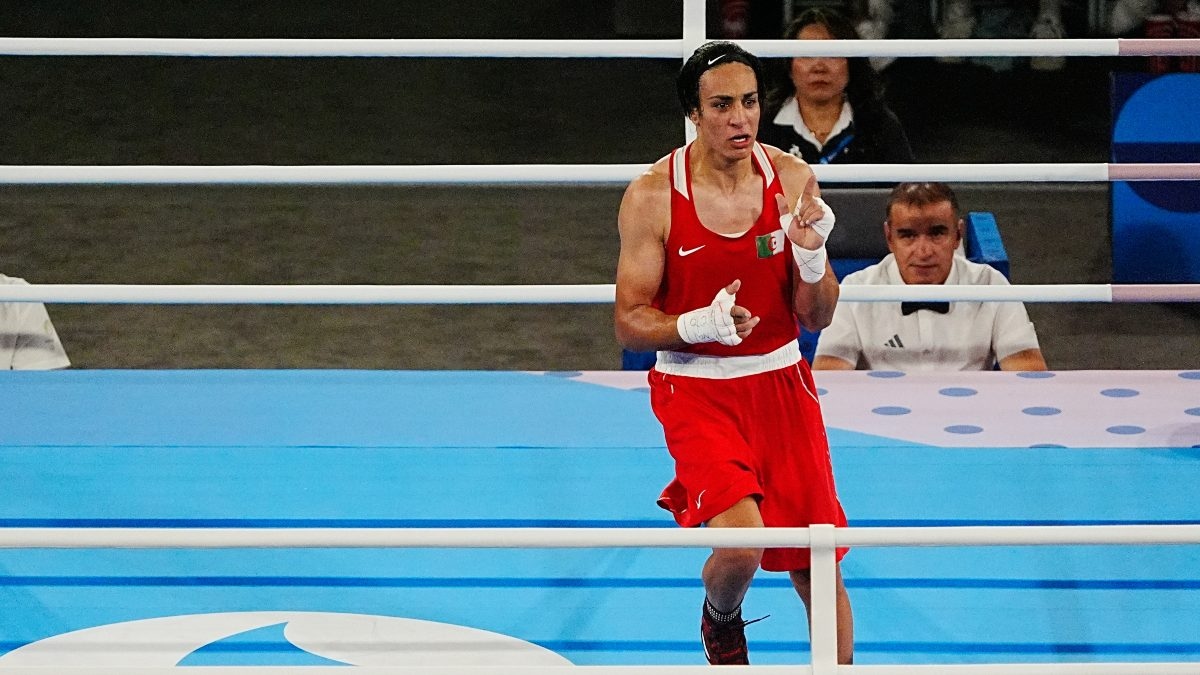
Imane Khelif’s MRI allegedly showed that the Algerian boxer lacked a uterus, had internal testes, and had a ‘micropenis’ resembling an enlarged clitoris.
read more
Algerian Olympic boxer Imane Khelif, who won the gold medal at the Paris Olympics 2024 in the 66kg women’s boxing category, is once again at the center of a gender-related controversy following revelations about her eligibility status. According to a report published in Reduxx, medical reports accessed by French journalist Djaffar Ait Aoudia confirm that Khelif has “testicles”.
The report further states that Khelif suffers from 5-alpha reductase deficiency, a sexual development disorder found in genetic males. The leaked medical reports were reportedly drafted in June of 2023 via a collaboration between the Kremlin-Bicêtre Hospital in Paris, France, and the Mohamed Lamine Debaghine Hospital in Algiers, Algeria.
A medical report on Imane Khelif, which included an MRI and additional tests, indicated characteristics associated with a disorder of sexual development. The MRI allegedly showed that Khelif lacked a uterus, had internal testes, and had a “micropenis” resembling an enlarged clitoris.
Chromosome tests reportedly confirmed an XY karyotype, and a hormone analysis indicated testosterone levels within the typical male range, the medical report claimed.
What is a 5-alpha reductase deficiency?
5-alpha reductase deficiency is a genetic condition that impacts sexual development in those who are genetically male, affecting them both before birth and during puberty. Individuals with this condition may be assigned female at birth due to ambiguous external genitalia that does not distinctly appear male or female. Typically, people with this deficiency experience masculinization at puberty, which may include increased muscle mass, body hair growth, and limited breast tissue development.
The Algerian boxer was suspended by the now-suspended International Boxing Association (IBA) in 2023 from participating in the World Championship Gold Medal fight in New Delhi after Khelif reportedly failed a chromosome test, however, the boxer was allowed by the International Olympic Committee (IOC) to take part in the Paris Olympics.
SAN FRANCISCO — X’s crowd-sourced fact-checking program, called Community Notes, isn’t addressing the flood of U.S. election misinformation on Elon Musk’s social media platform, according to a report published Wednesday by a group that tracks online speech.
The nonprofit Center for Countering Digital Hate analyzed the Community Notes feature and found that accurate notes correcting false and misleading claims about the U.S. elections were not displayed on 209 out of a sample of 283 posts deemed misleading — or 74%.
Misleading posts that did not display Community Notes even when they were available included false claims that the 2020 presidential election was stolen and that voting systems are unreliable, CCDH said.
In the cases where Community Notes were displayed, the original misleading posts received 13 times more views than their accompanying notes, the group added.
Community Notes lets X users write fact checks on posts after the users are accepted as contributors to the program. The checks are then rated by other users based on their accuracy, sources, how easily they are to understand, and whether they use neutral language. The program was launched in 2021 by the previous leadership of the site — then known as Twitter — and was called Birdwatch. Musk renamed it Community Notes after he took over the site in 2022.
Last year, X sued CCDH, blaming the group for the loss of “tens of millions of dollars” in advertising revenue after it documented an increase in hate speech on the site. The lawsuit was dismissed by a federal judge in March.
Keith Coleman, a vice president of product at X who oversees Community Notes, said in a statement that the program “maintains a high bar to make notes effective and maintain trust across perspectives, and thousands of election and politics related notes have cleared that bar in 2024. In the last month alone, hundreds of such notes have been shown on thousands of posts and have been seen tens of millions of times. It is because of their quality that notes are so effective.”
Imran Ahmed, the CEO of CCDH, however, said the group’s research “suggests that X’s Community Notes are little more than a Band Aid on a torrent of hate and disinformation that undermines our democracy and further polarizes our communities.”
What do those national flash points have in common?
All have also become influencers for youth sports participation in recent years, according to the Aspen Institute’s National State of Play 2024 report, which will be released Tuesday.
The annual report, put out by Aspen’s Sports & Society Program, also details how girls sports participation is increasing while boys participation is significantly declining; Black children are playing sports far less than they once did; and kids are specializing in one sport even more.
Meanwhile, 39.8% of children aged 6-17 regularly participated in a team sport in 2023, the highest rate since 2015, according to data from the Sports & Fitness Industry Association (SFIA), which tracks participation.
But nine of the 16 sports evaluated for the Project Play report experienced lower participation rates in 2023.
Some kids are getting priced out, others edged out by competition to make teams, while overall physical activity among U.S. youths received a D- from the Physical Activity Alliance.
“The purpose of youth sports is not to create the next Tiger Woods,” Tom Cove, senior advisor for the SFIA, says in the report. “It should be to provide a quality experience to the vast number of kids so they enjoy it, and part of that is winning, but not the main goal. If we lose sight of that, we’re doing kids and families a disservice and we’re doing sport in general a disservice.”
Aspen’s Sports & Society Program, which assists leaders in building healthy communities through Project Play, shared the full report with USA TODAY Sports before its release.
The report draws on surveys, interviews with leaders in the youth sports sector, media accounts and additional research,
Here are some highlights, and what youth and adolescent athletes and their parents can learn from them:
Fewer boys are playing sports, while girls’ participation is rising
Half of boys aged 6 to 17 participated regularly in sports in 2013, but only 41 percent did in 2023, according to SFIA data. Boys participation has sat at 41% or lower for eight straight years.
But girls aged 6 to 12 (34%) and 13-17 (38%) regularly played at higher levels in 2023 than in any recent year dating to at least 2012.
“I would speculate there’s an element to this that making teams has become really hard, and more boys can’t make the team, so they stop playing,” Cove said. “In general, girls aren’t getting cut nearly the way boys are. My sense is youth sports have become a self-fulling prophecy around travel and competition, and there aren’t enough places to play when you get cut.”
Since 2013, the core participation gap between boys and girls had shrunk from 15.4 percentage to 5.4 points.
“The decline in male sports participation could be one more reflection of this widespread decline in boys and men’s achievement,” Linda Flanagan, author of “Take Back the Game: How Money and Mania Are Ruining Kids’ Sports — and Why It Matters”, says in the Project Play report. “We also shouldn’t discount the impact of phones, which became widely available in 2012, coinciding with the start of the teenage mental health crisis.”
Karen Issokson-Silver, vice president of research and education for the Women’s Sports Foundation (WSF), suggests cost to play might be impacting participation rates for boys.
According to WSF research, women surveyed in their 20s reported the highest barrier to play sports as a child due to costs.
“It would not be surprising that this would show up in participation rates, and perhaps more so for boys where the cost of play could be considerably higher given a more competitive level of play available to them and the transportation, equipment and coaching costs associated with that,” Issokson-Silver said.
COACH STEVE: Is it worth it? 10 questions for athletes to consider if they play on a travel team
Black children are playing sports less than they once did, while Hispanic participation is on the rise
According to SFIA data, 35% of Black youth aged 6-17 regularly participated in sports during 2023, down from 45% in 2013. That year, they played at a higher rate than their white peers. White, Hispanic and Asian American children played sports more frequently in 2023 than Black youth.
“In connection to the plight of Black communities more broadly, Black youth sport involvement is integrally connected to socio-ecological conditions that are rooted in historical, political, economic, and cultural complexities,” authors of the National Black Sport Participation and Physical Activity Report wrote in 2024. “For example, despite only constituting 13.5% of the U.S. population, Black people represent 20.1% of those who live in poverty.”
Joseph Cooper, co-author of the Black sports participation and activity report, said the COVID pandemic, much lower participation rates by Black girls than boys, school closings, unemployment rates, health disparities, family compositions and Black youth interest in other activities like music, arts, dance, e-sports and multimedia could be impacting the decline in sports participation.
“It’s hard to understate the impact of COVID on the Black community,” Cooper, director of the Sport Leadership and Administration Program at the University of Massachusetts Boston, said in the Project Play report. “There was medical mistrust within communities of when it was safe to play, the opportunity structure financially to play was impacted, and a number of programs simply closed.”
SFIA data finds that regular sports participation for Hispanic children aged 6-12 increased 14% from 2022 to 2023, the highest since 2016.
“The increased sports participation is due to parents’ increased knowledge and understanding of the value sports provides to children, which has been a recent change in the Hispanic community,” Patty Godoy, co-founder of the ELLA Sports Foundation, which empowers leadership in Latina athletes, said in the report.
“For Hispanics, investing in youth sports is now seen as an investment on social capital. Sports is seen as a vehicle to attend university and break the cycle of economic challenges and social/cultural disconformities, thus opening doors for more lucrative futures.”
However, children from the lowest-income homes in some states (New Mexico, Mississippi, Louisiana) with low youth sports participation rates and large minority populations play sports at up to half the rate of those from the highest-income group.
Kids are specializing in one sports even more
The average number of sports kids aged 6-17 regularly played in 2023 was 1.63, down 13% since 2019, according to SFIA data. More than 10 years ago, children averaged more than two sports.
According to the Project Play report, the number started decreasing amid the increased commercialization of youth sports and pressure to pick one sport at younger ages.
“When counseling athletes/families, a strengths-based approach focusing on what athletes can/should be doing to optimize their development rather than emphasizing what they should not be doing seems to be more effective,” LaBotz wrote in an email after speaking last week at a National Athletic Trainers’ Association media briefing on emerging trends in youth sports specialization.
“There is currently a great deal of information on injury prevention,” she says, “but very little practical information helping families and athletes decide if/when sports specialization is appropriate, and determining any impacts that specialized training/competition (beneficial or not) may be having on their athlete.”
Tying the Caitlin Clark effect — and other ‘disruption’ to youth sports
Sports participation rates for girls have gone up during Clark’s time at Iowa and the WNBA. Cove, of the Sports & Fitness Industry Association, believes she plays a role in the rise and compares it with the participation increases among girls that also occurred in the 1990s when Mia Hamm was a national soccer star.
COACH STEVE: Jerome Williams coaches kid athletes to market themselves in fifth or sixth grade
According to Project Play, the analytics that dominate pro and college sports are now trickling down to youth sports. For example, artificial intelligence (AI) can now be used by many platforms to create virtually instant highlight clips without spending hours going through game footage.
“Technology could create a new arms race and increase the unhealthy aspects of youth sports as children and parents fight for attention from recruiters and on social media,” Jon Solomon, the Aspen Institute Sports & Society Program Community impact director, writes in the report. “The data is now here for families with means to chase certain athletic metrics. How we use it is up to us. There’s a real risk it will ramp up even more the pressure on children and the costs to play,”
Another danger of driving up the cost of youth sports is the encroachment of private equity into the multibillion industry.
Pickleball, flag football and traditional sports thrive. Some decline in participation.
Pickleball, the feel-good paddle sport enjoyed around the country, became a varsity high school sport in 2024. Montgomery County (Maryland) launched it as part of its corollary sports program that provides increased access and participation opportunities for students with disabilities.
According the Project Play Report, students with and without disabilities participate, and some schools had to turn away students because of the popularity of the program.
Flag football, backed by the NFL and some of its former stars, is a girls high school varsity sport in 13 states and became the fastest growing sport in the U.S. between from 2019 to 2023.
The rise in core youth sports participation is largely due to the popularity of the most popular sports. Basketball, baseball and soccer have the most participants, although soccer (along with wrestling) participation declined.
“Soccer is the sport that kids most often play first,” said Tom Farrey, Aspen Institute Sports & Society Program executive director. “But immediately, soccer starts losing them, as travel teams form and community leagues begin to wither, denying a sustained experience from late bloomers and kids whose families can’t afford the youth sports arms race. We’ve got to find a way to bring back in-town leagues.”
The states that have led the way among youth sports participation — Vermont (69%), Iowa (68%), North Dakota (67%), Wyoming (64%), Maine (64%), South Dakota (64%) and New Hampshire (64%) — are mostly rural and less populated. There are fewer kids, and fewer cuts.
Physical activity among half of U.S. youth barely gets a passing grade
Other grades: Overall physical activity: (D-); organization sports participation (C-); active transportation or whether kids bike or walk to school (D-); sedentary behavier (D).
A “C” grade indicates the United States is succeeding with about half of children.
Solomon, who authored the Project Play report, says it’s challenging to make overarching takeaways about the state of youth sports because the data often is lagging and tells only part of the story and no one experience summarizes every child.
But he says we’re seeing positive trends of children returning to sports at pre-pandemic levels, reflecting the value parents and their kids place in it.
“Unfortunately, there are also some children playing sports less, whether due to rising costs, transportation barriers, lack of quality programming or any programming in their community, or lack of interest by children,” Solomon tells USA TODAY Sports. “There continues to be a need for more affordable, local, quality sports programming that meets the needs and interests of young people.
“We need to do a better job of asking kids what they want from sports and then listening to them. After all, it’s their experience, not ours as adults.”
Steve Borelli, aka Coach Steve, has been an editor and writer with USA TODAY since 1999. He spent 10 years coaching his two sons’ baseball and basketball teams. He and his wife, Colleen, are now sports parents for two high schoolers. His column is posted weekly. For his past columns, click here.
Hunters in North Dakota spent $264 million on hunting-related purchases in 2022, and shooting sports participants spent $168 million on target shooting-related purchases, a new report shows.
The expenditures are part of a national report released this month by the Sportsmen’s Alliance Foundation, highlighting the economic impact of
In North Dakota, 148,100 hunters and 153,990 target shooting participants contributed to the state’s economy in 2022. In Minnesota, 754,750 shooting sports participants spent $1 billion on target shooting-related purchases in 2022, and 542,090 hunters spent $1 billion on hunting-related purchases, the report shows.
Nationally, hunters and target shooters combined contributed more than $106.2 billion in sales and contributed $133 billion to economic growth in 2022 by supporting more than 1.3 million jobs that created in excess of $80.5 billion in wages and income. In turn, that economic stimulus generated $251 billion in economic activity through the multiplier effect.
More than 39.5 million Americans participate in shooting sports, while more than 14.3 million people hunt, the report indicates.
“It’s important that people – the general public, and state and federal legislators – understand that America’s hunters and sport shooters are an incredibly important force when it comes to our national, state and local economies, as well as providing an outsized share of conservation funding at both the state and federal levels,” Evan Heusinkveld, president and CEO of the Sportsmen’s Alliance Foundation, said in a statement. “With this information, sportsmen can educate friends, family and their representatives at every level by clearly illustrating in dollars and cents what they bring to the table and mean to the bottom line.”
The complete report, which includes data on each state and legislative district, is available at
Minnesota tribes receive federal conservation grants
The Red Lake Band of Chippewa Indians and the Leech Lake Band of Ojibwe each have received Tribal grants of nearly $200,000 to benefit fish and wildlife resources on their lands, according to a news release from the U.S. Fish and Wildlife Service (FWS).
The grants from the FWS are part of a funding package that will support 35 Tribes for conservation projects across 15 states, including Minnesota. The funds will benefit a wide range of wildlife and habitat, including species of cultural or traditional importance to Indigenous communities, the FWS said.
The Red Lake Band received $199,872 to create 350 acres of early successional forest habitat, supporting deer population recovery and increasing habitat for golden-winged warblers during breeding season. The Leech Lake Band received a $199,727 grant to collect data that will assist in developing a moose management plan to guide and support future decision making. The project will provide valuable information on the moose densities, habitat use and movement patterns on the Leech Lake Band of Ojibwe Reservation, the FWS said.
The grants are provided exclusively to federally recognized Native American and Alaska Native Tribal governments and are made possible under the Related Agencies Appropriations Act of 2002 through the State and Tribal Wildlife Grants program.
“Knowledge sharing, co-stewardship and strong relationships with federally recognized Tribes are critical to conservation,” Martha Williams, director of the U.S. Fish and Wildlife Service, said in a statement. “This year, seven of the 35 Tribes receiving funding are first-time recipients under the Tribal Wildlife Grants program, broadening the reach of this vital initiative. The Service respects and supports Tribal efforts to enhance fish, wildlife, and natural and cultural resources for all.”
Know the difference between deer and elk
ST. PAUL – People occasionally report seeing elk in a wider geographical area outside of far northwestern Minnesota. Hunters need to make sure they know the difference in the field. The
– has drawings and traits listed to help distinguish elk from white-tailed deer. Additionally, people are encouraged to report elk sightings in Minnesota using the online
to report wildlife they see while hunting. Data from the observation logs help the DNR estimate population level trends for deer and track wildlife distribution for other species across the state.
. Using a mobile device or desktop computer, hunters can enter information on the log about wildlife they see each day of hunting, including deer, turkeys, bears, fishers and other species. They’ll also be able to report specific information about any deer they harvest. Hunters are encouraged to fill out a report after each hunt, even if they don’t see any deer that day. The online questionnaire will be available until Jan. 15, 2025.
DNR: Know before you hunt
ST. PAUL – As 400,000 hunters prepare for firearms deer hunting seasons in Minnesota, the DNR offers reminders about ways to be safe and successful.
Barbara Keller.
Contributed/Minnesota DNR
“Know before you go so you can focus on having a great season,” said Barb Keller, Minnesota DNR big game program leader. “It’s easy to use our website to find out what you need to know.”
– provides a comprehensive step-by-step list of information hunters need to consider before heading to deer camp. Hunters can walk through the steps to consider, including knowing the hunting regulations, planning for deer processing, getting their deer sampled for chronic wasting disease, being safe and making the most out of their hunt. To use the online tool, all hunters need to know is the deer permit area number, or DPA number, where they intend to hunt, which they can find on the
In Minnesota, archery deer season began Sept. 14 and continues through Tuesday, Dec. 31. Firearms “A” deer season begins Saturday, Nov. 9, with various closing dates depending on a hunter’s DPA. Muzzleloader begins Saturday, Nov. 30, and continues through Sunday, Dec. 15.
The world is on a path to get 1.8 degrees Celsius (3.2 Fahrenheit) warmer than it is now, but could trim half a degree of that projected future heating if countries do everything they promise to fight climate change, a United Nations report said Thursday.
But it still won’t be near enough to curb warming’s worst impacts such as nastier heat waves, wildfires, storms and droughts, the report said.
Under every scenario but the “most optimistic” with the biggest cuts in fossil fuels burning, the chance of curbing warming so it stays within the internationally agreed-upon limit “would be virtually zero,” the United Nations Environment Programme’s annual Emissions Gap Report said. The goal, set in the 2015 Paris Agreement, is to limit human-caused warming to 1.5 degrees Celsius (2.7 degrees Fahrenheit) since pre-industrial times. The report said that since the mid-1800s, the world has already heated up by 1.3 degrees Celsius (2.3 degrees Fahrenheit), up from previous estimates of 1.1 or 1.2 degrees because it includes the record heat last year.
Instead the world is on pace to hit 3.1 degrees Celsius (5.6 degrees Fahrenheit) since pre-industrial times. But if nations somehow do all of what they promised in targets they submitted to the United Nations that warming could be limited to 2.6 degrees Celsius (4.7 degrees Fahrenheit), the report said.
In that super-stringent cuts scenario where nations have zero net carbon emissions after mid-century, there’s a 23% chance of keeping warming at or below the 1.5 degrees goal. It’s far more likely that even that optimistic scenario will keep warming to 1.9 degrees above pre-industrial times, the report said.
“The main message is that action right now and right here before 2030 is critical if we want to lower the temperature,” said report main editor Anne Olhoff, an economist and chief climate advisor to the UNEP Copenhagen Climate Centre. “It is now or never really if we want to keep 1.5 alive.”
Without swift and dramatic emission cuts “on a scale and pace never seen before,” UNEP Director Inger Andersen said “the 1.5 degree C goal will soon be dead and (the less stringent Paris goal of) well below 2 degrees C will take its place in the intensive care unit.”
Olhoff said Earth’s on a trajectory to slam the door on 1.5 sometime in 2029.
“Winning slowly is the same as losing when it comes to climate change,” said author Neil Grant of Climate Analytics. “And so I think we are at risk of a lost decade.”
One of the problems is that even though nations pledged climate action in their targets submitted as part of the Paris Agreement, there’s a big gap between what they said they will do and what they are doing based on their existing policies, report authors said.
The world’s 20 richest countries — which are responsible for 77% of the carbon pollution in the air — are falling short of their stated emission-cutting goals, with only 11 meeting their individual targets, the report said.
Emission cuts strong enough to limit warming to the 1.5 degree goal are more than technically and economically possible, the report found. They just aren’t being proposed or done.
The report ”shows that yet again governments are sleepwalking towards climate chaos,” said climate scientist Bill Hare, CEO of Climate Analytics, who wasn’t part of the report.
Another outside scientist, Johan Rockstrom, director of the Potsdam Institute for Climate Impact Research, said the report confirms his worst concerns: “We are not making progress and are now following a 3.1 degree path, which is, with next to zero uncertainty, a path to disaster.”
Both the 3.1 degree and 2.6 degree calculations are a tenth of a degree Celsius warmer than last year’s version of the UN report, which experts said is within the margin of uncertainty.
Mostly the problem is “there’s one year less time to cut emissions and avoid climate catastrophe,” said MIT’s John Sterman, who models different warming scenarios based on emissions and countries policies. “Catastrophe is a strong word and I don’t use it lightly,” he said, citing the Intergovernmental Panel on Climate Change’s latest report saying 3 degrees of warming would trigger severe and irreversible damage.
The report focuses on what’s called an emissions gap. It calculates a budget of how many billions of tons of greenhouse gases — mostly carbon dioxide and methane — the world can spew and stay under 1.5 degrees, 1.8 degrees and 2 degrees of warming since pre-industrial times. It then figures how much annual emissions have to be slashed by 2030 to keep at those levels.
To keep at or below 1.5 degrees, the world must slash emissions by 42%, and to keep at or below 2 degrees, the cut has to be 28%, the report, named, “No more hot air… please !” said.
In 2023, the world spewed 57.1 billion metric tons (62.9 billion U.S. tons) of greenhouse gases, the report said. That’s 1,810 metric tons (1,995 U.S. tons) of heat-trapping gases a second.
“There is a direct link between increasing emissions and increasingly frequent and intense climate disasters,” United Nations Secretary-General Antonio Guterres said in a video messaged released with the report. “We’re playing with fire, but there can be no more playing for time. We’re out of time.”
The Associated Press’ climate and environmental coverage receives financial support from multiple private foundations. AP is solely responsible for all content. Find AP’s standards for working with philanthropies, a list of supporters and funded coverage areas at AP.org.
Indian sustainable eating habits such as limiting food waste, prioritising vegetarian diets, and consuming locally sourced foods can help address global climate change, a pressing issue worldwide, according to a report. A recent Living Planet Report by the World Wide Fund for Nature (WWF) showed that food consumption patterns followed by Indians are the most climate-friendly among the G20 nations. It stated that if people in other countries adopt the Indian diet, the world would need 0.84 per cent of the Earth to support food production by 2050. The food system is one of the major contributors to global greenhouse gas emissions.
Shravani Mali, Consumer Analyst at GlobalData, a data analytics company, said India has intensified the vegan movement, especially in metropolitan cities in recent years. “The country’s current food consumption practices, emphasise plant-based diets and climate-resilient crops such as millets, which require fewer resources and generate lower emissions compared to meat-heavy diets,” Mali said, adding that, “The transition is also connected to a wider focus on sustainability”.
Citing a recent consumer survey by GlobalData, Mali said that 79 per cent of Indians said that the sustainable or environmentally friendly feature is essential while purchasing food and drinks. “Traditional Indian diets primarily consist of lentils, grains, and vegetables. These traditional diets, which place an emphasis on seasonal and local produce, are becoming more popular as environmental issues gain more attention. Consequently, with increasing awareness, consumers will look forward to curtailing environmental burdens by adopting traditional dietary practices that prioritise plant-based foods,” Mali said.
Deepak Nautiyal, Consumer and Retail Commercial Director, APAC and Middle East at GlobalData, lauded the government for introducing several initiatives to promote environmentally sustainable practices in the country. He cited the National Millet Campaign and the International Year of Millets (2023) campaigns rolled out by the government to boost the production and consumption of millets. Millets are an environmentally sustainable source of food and nutrition. In addition, the National Mission for Sustainable Agriculture (NMSA) also aims to improve climate-resilient farming. Mali said adopting climate-friendly diets, especially Indian sustainable eating habits can be key to address critical global environmental and health challenges.
(Except for the headline, this story has not been edited by NDTV staff and is published from a syndicated feed.)
Texas quarterback Quinn Ewers (3) passes against Georgia during the second half of an NCAA college … [+] football game in Austin, Texas, Saturday, Oct. 19, 2024. (AP Photo/Rodolfo Gonzalez)
Associated Press
Another shakeup in the AP Top 25 college football poll ahead of the final weekend of play in October. The Oregon Ducks are the new No. 1 with 59 first place votes followed by No. 2 Georgia Bulldogs (2), who trounced last week’s top team Texas 30-15 in Austin. Alabama has fallen to No. 15 and Tennessee moved into the top 10 following the Volunteers victory over the Crimson Tide 24-17 causing another tear down the goal posts celebration two weeks after Vanderbilt beat Alabama.
SEC Dominance Includes Vanderbilt Joining Top 25
The Week 9 schedule features five Top 25 matchups and and four top 10 teams have a bye including No. 2 Georgia and No. 7 Tennessee. But the SEC’s biggest games continue with the No. 8 LSU Tigers (6-1) at No. 14 Texas A&M Aggies (6-1). The Tigers and Aggies are the only undefeated teams in conference play making the first place showdown in College Station a big one for third year LSU head coach Brian Kelly and first year coach Mike Elko. LSU’s one-dimentional offense is averaging 324 passing yards per game to rank top 10 in the country. The LSU offensive line has allowed just 2 sacks this season with A&M next fewest (7) sacks allowed and the Aggies more balanced offensive attack rushing (200) and passing (205) for 200+ yards per game.
Vanderbilt (5-2) cracks the Top 25 this week for the first time since 2013 – the second-longest absence among power conference teams from the AP Top 25 since Rutgers in 2012. The Commodores ranking is likely a short stay facing No. 5 Texas as an 18.5 point home underdog.
Big Ten Best At Top Including Indiana
Also, 10 teams remain undefeated this season. Three Big Ten teams are undefeated including No. 1 Oregon, No. 3 Penn State and No. 13 Indiana Hoosiers (7-0, 4-0 Big Ten) – the conferences most surprising team. ESPN’s College GameDay will make its second-ever trip to Bloomington and first with its full Saturday pageantry on the IU campus when Indiana hosts the Washington Huskies Saturday. The show will air for three hours from 9 a.m. to noon ET, hosted by Rece Davis, Desmond Howard, Pat McAfee, Nick Saban, Kirk Herbstreit and former Indiana head coach Lee Corso.
Indiana enters the weekend with the nation’s third longest active winning streak. A win by the Hoosiers will match the longest winning streak to start a season in program history. The Hoosiers are also scoring 44 points per game (top 3 in country) with a passing offense averaging 299 yards per game (top 12). But the Huskies counter with the nation’s No. 1 pass defense allowing just 127 yards per game, 50% completions and 13 pass receptions per game – both top 5 and 4.4 yards per play defense overall (top 10). Washington is a live ‘Dog this week and worthy of a bet.
So is Kansas (+10) in their in-state rivalry and Big 12 battle at No. 16 Kansas State (6-1) in a Saturday night showcase on ESPN. The Jayhawks (2-5) have suffered numerous close losses this season, but still have a stronger, balanced offensive attack averaging 195 yards per game both rushingn and passing this season.
Army (7-0) and Navy (6-0) in the American Athletic Conference both remain undefeated and in the Top 25. Army has the nation’s longest active win streak at 11 games, and
Mountain West First Place Showdown In Las Vegas
Another most watched and wagered game is Friday night in Las Vegas, where the top two teams in the Mountain West have a rematch of last year’s conference championship game. No. 17 Boise State (5-1) and UNLV (6-1) are both 2-0 in conference play ahead of the Friday night feature. Both teams run and pass for an average of more than 200 yards per game – two of 10 teams in the country with stronger and more balanced offensive attacks joining Power Four programs Ohio State, Penn State, Tennessee, Texas A&M, Iowa State, Kansas State, Clemson and Wisconsin. Also, unranked New Mexico and two Conference USA teams playing Wednesday, Liberty and Jacksonville State, also run and pass for an average of more than 200 yards per game.
But Boise State Bronco running back Ashton Jeanty is the current Heisman Trophy favorite on his way to one of the greatest statistical seasons for a running back in college football. Jeanty has 1,248 rushing yards in six games and averages 9.9 yards per rush. Watch him run as the headliner Friday night at Allegiant Stadium in Las Vegas.
FanDuel is the official odds provider for The Associated Press, who selects voters for the AP Poll from sports reporters around the country who cover college football.
AP Top 25 Week 9 Matchups and Odds
College football odds from FanDuel Sportsbook refresh periodically and are subject to change, including on props and live betting. All times Eastern and betting favorites (-) listed.
8 p.m. | No. 16 Kansas State (-10.5) vs. Kansas | ESPN2
12 p.m. | No. 18 Ole Miss (-20.5) vs. Oklahoma | ESPN
8 p.m. | No. 22 SMU (-11.5) at Duke | ACC Network
No. 23 Army | Bye
Others receiving votes: Washington State 46, Syracuse 15, UNLV 5, Duke 2, South Carolina 1, Nebraska 1, Liberty 1.
Next Saturday’s biggest game on Nov. 2 is Ohio State at Penn State, where FanDuel has an advance point spread of Buckeye’s -3.5 point favorite and game total of 49.5 points.
More big game betting action ahead and to conclude the month of October as college football’s biggest games draw the most watch and wager action with the top teams pushing for conference titles and a spot in the new 12 team College Football Playoff.