hacklink hack forum hacklink film izle hacklink marsbahisizmir escortsahabetpornJojobetcasibompadişahbet

Tag: requiring

  • California to consider requiring mental health warnings on social media sites

    California to consider requiring mental health warnings on social media sites

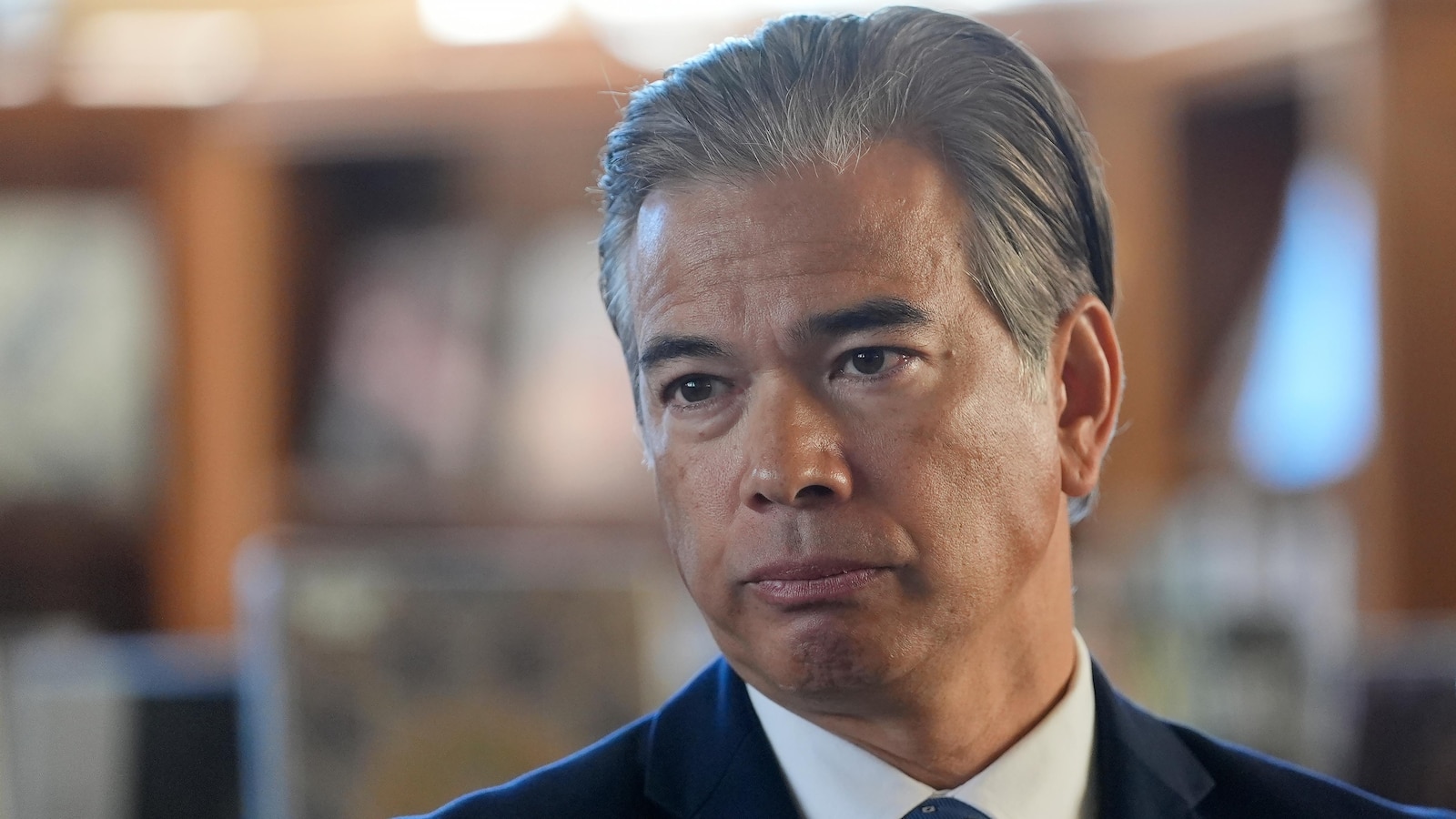
    SACRAMENTO, Calif. — California, home to some of the largest technology companies in the world, would be the first U.S. state to require mental health warning labels on social media sites if lawmakers pass a bill introduced Monday.

    The legislation sponsored by state Attorney General Rob Bonta is necessary to bolster safety for children online, supporters say, but industry officials vow to fight the measure and others like it under the First Amendment. Warning labels for social media gained swift bipartisan support from dozens of attorneys general, including Bonta, after U.S. Surgeon General Vivek Murthy called on Congress to establish the requirements earlier this year, saying social media is a contributing factor in the mental health crisis among young people.

    “These companies know the harmful impact their products can have on our children, and they refuse to take meaningful steps to make them safer,” Bonta said at a news conference Monday. “Time is up. It’s time we stepped in and demanded change.”

    State officials haven’t provided details on the bill, but Bonta said the warning labels could pop up once weekly.

    Up to 95% of youth ages 13 to 17 say they use a social media platform, and more than a third say that they use social media “almost constantly,” according to 2022 data from the Pew Research Center. Parents’ concerns prompted Australia to pass the world’s first law banning social media for children under 16 in November.

    “The promise of social media, although real, has turned into a situation where they’re turning our children’s attention into a commodity,” Assemblymember Rebecca Bauer-Kahan, who authored the California bill, said Monday. “The attention economy is using our children and their well-being to make money for these California companies.”

    Lawmakers instead should focus on online safety education and mental health resources, not warning label bills that are “constitutionally unsound,” said Todd O’Boyle, a vice president of the tech industry policy group Chamber of Progress.

    “We strongly suspect that the courts will set them aside as compelled speech,” O’Boyle told The Associated Press.

    Victoria Hinks’ 16-year-old daughter, Alexandra, died by suicide four months ago after being “led down dark rabbit holes” on social media that glamorized eating disorders and self-harm. Hinks said the labels would help protect children from companies that turn a blind eye to the harm caused to children’s mental health when they become addicted to social media platforms.

    “There’s not a bone in my body that doubts social media played a role in leading her to that final, irreversible decision,” Hinks said. “This could be your story.”

    Common Sense Media, a sponsor of the bill, said it plans to lobby for similar proposals in other states.

    California in the past decade has positioned itself as a leader in regulating and fighting the tech industry to bolster online safety for children.

    The state was the first in 2022 to bar online platforms from using users’ personal information in ways that could harm children. It was one of the states that sued Meta in 2023 and TikTok in October for deliberately designing addictive features that keep kids hooked on their platforms.

    Gov. Gavin Newsom, a Democrat, also signed several bills in September to help curb the effects of social media on children, including one to prohibit social media platforms from knowingly providing addictive feeds to children without parental consent and one to limit or ban students from using smartphones on school campus.

    Federal lawmakers have held hearings on child online safety and legislation is in the works to force companies to take reasonable steps to prevent harm. The legislation has the support of X owner Elon Musk and the President-elect’s son, Donald Trump Jr. Still, the last federal law aimed at protecting children online was enacted in 1998, six years before Facebook’s founding.

    Source link

  • Federal appeals court upholds law requiring sale or ban of TikTok in the U.S.

    Federal appeals court upholds law requiring sale or ban of TikTok in the U.S.

    A federal appeals court panel on Friday upheld a law that could lead to a ban on TikTok in a few short months, handing a resounding defeat to the popular social media platform as it fights for its survival in the U.S.

    The U.S. Court of Appeals for the District of Columbia Circuit ruled that the law, which requires TikTok to break ties with its China-based parent company ByteDance or be banned by mid-January, is constitutional, rebuffing TikTok’s challenge that the statute ran afoul of the First Amendment and unfairly targeted the platform.

    “The First Amendment exists to protect free speech in the United States,” said the court’s opinion. “Here the Government acted solely to protect that freedom from a foreign adversary nation and to limit that adversary’s ability to gather data on people in the United States.”

    TikTok and ByteDance — another plaintiff in the lawsuit — are expected to appeal to the Supreme Court. Meanwhile, President-elect Donald Trump, who tried to ban TikTok during his first term and whose Justice Department would have to enforce the law, said during the presidential campaign that he is now against a TikTok ban and would work to “save” the social media platform.

    The law, signed by President Joe Biden in April, culminated a years-long saga in Washington over the short-form video-sharing app, which the government sees as a national security threat due to its connections to China.

    The U.S. has said it’s concerned about TikTok collecting vast swaths of user data, including sensitive information on viewing habits, that could fall into the hands of the Chinese government through coercion. Officials have also warned the proprietary algorithm that fuels what users see on the app is vulnerable to manipulation by Chinese authorities, who can use it to shape content on the platform in a way that’s difficult to detect.

    However, a significant portion of the government’s information in the case has been redacted and hidden from the public as well as the two companies.

    TikTok, which sued the government over the law in May, has long denied it could be used by Beijing to spy on or manipulate Americans. Its attorneys have accurately pointed out that the U.S. hasn’t provided evidence to show that the company handed over user data to the Chinese government, or manipulated content for Beijing’s benefit in the U.S. They have also argued the law is predicated on future risks, which the Department of Justice has emphasized pointing in part to unspecified action it claims the two companies have taken in the past due to demands from the Chinese government.

    Friday’s ruling came after the appeals court panel heard oral arguments in September.

    Some legal experts said at the time that it was challenging to read the tea leaves on how the judges would rule.

    In a court hearing that lasted more than two hours, the panel – composed of two Republican and one Democrat appointed judges – appeared to grapple with how TikTok’s foreign ownership affects its rights under the Constitution and how far the government could go to curtail potential influence from abroad on a foreign-owned platform.

    The judges pressed Daniel Tenny, a Department of Justice attorney, on the implications the case could have on the First Amendment. But they also expressed some skepticism at TikTok’s arguments, challenging the company’s attorney – Andrew Pincus – on whether any First Amendment rights preclude the government from curtailing a powerful company subject to the laws and influence of a foreign adversary.

    In parts of their questions about TikTok’s ownership, the judges cited wartime precedent that allows the U.S. to restrict foreign ownership of broadcast licenses and asked if the arguments presented by TikTok would apply if the U.S. was engaged in war.

    To assuage concerns about the company’s owners, TikTok says it has invested more than $2 billion to bolster protections around U.S. user data.

    The company also argues the government’s broader concerns could have been resolved in a draft agreement it provided the Biden administration more than two years ago during talks between the two sides. It has blamed the government for walking away from further negotiations on the agreement, which the Justice Department argues is insufficient.

    Attorneys for the two companies have claimed it’s impossible to divest the platform commercially and technologically. They also say any sale of TikTok without the coveted algorithm – the platform’s secret sauce that Chinese authorities would likely block under any divesture plan – would turn the U.S. version of TikTok into an island disconnected from other global content.

    Still, some investors, including Trump’s former Treasury Secretary Steven Mnuchin and billionaire Frank McCourt, have expressed interest in purchasing the platform. Both men said earlier this year that they were launching a consortium to purchase TikTok’s U.S. business.

    This week, a spokesperson for McCourt’s Project Liberty initiative, which aims to protect online privacy, said unnamed participants in their bid have made informal commitments of more than $20 billion in capital.

    TikTok’s lawsuit was consolidated with a second legal challenge brought by several content creators — for which the company is covering legal costs — as well as a third one filed on behalf of conservative creators who work with a nonprofit called BASED Politics Inc.

    If TikTok appeals and the courts continue to uphold the law, it would fall on Trump’s Justice Department to enforce it and punish any potential violations with fines. The penalties would apply to app stores that would be prohibited from offering TikTok, and internet hosting services that would be barred from supporting it.

    Source link

  • Judge delays order in antitrust case requiring Google to open up its app store

    Judge delays order in antitrust case requiring Google to open up its app store

    SAN FRANCISCO — A federal judge on Friday delayed an order requiring Google to open up its Android app store to more competition until an appeals court decides whether to block the shake-up because of legal questions surrounding a jury’s verdict that branded Google as an illegal monopolist.

    The delay granted during a court hearing in San Francisco comes less than two weeks after U.S. District Judge James Donato issued a decision that would have forced Google to make sweeping changes to its Play Store for Android smartphones starting Nov. 1.

    The mandated changes included a provision that would have required Google to make its library of more than 2 million Android apps available to any rivals that wanted access to the inventory and also distribute the alternative options in its own Play Store.

    Google requested Donato’s order be stayed until the Ninth Circuit Court of Appeals could examine the handling of a month-long trial that led to the December 2023 verdict, which framed the Play Store as an illegal monopoly that stifles innovation and drives up consumer prices.

    In Friday’s hearing, Donato scoffed at the notion that Google could succeed in overturning the trial verdict. “The verdict in this case was amply supported by a mountain of evidence about Google’s anti-competitive conduct,” the judge said.

    But he decided the Ninth Circuit should be given a chance to consider a postponement until a panel of judges can decide can consider Google’s appeal of the 2023 trial focused on antitrust claims lodged by video game maker Epic Games.

    Donato said he wouldn’t be surprised if the Ninth Circuit imposes an even longer delay on his ruling, “but that is for someone else to decide.”

    In a statement, Google said it was pleased Donato hit the pause button while it tries to extend the delay even further. “These remedies threaten Google Play’s ability to provide a safe and secure experience and we look forward to continuing to make our case to protect 100 million U.S. Android users, over 500,000 U.S. developers and thousands of partners who have benefited from our platforms,” Google said.

    Epic declined to comment.

    It’s unclear how long the Ninth Circuit will take to decide on Google’s request for a permanent stay of Donato’s ruling while its appeals unfolds — a process that could take more than a year.

    In 2021, the Ninth Circuit delayed a provision of another federal judge’s order mandating that Apple allow links to alternative payment systems with apps made for the iPhone as part of another antitrust case brought by Epic.

    Although Apple avoided being labeled an illegal monopolist in a trial involving the iPhone app store, it unsuccessfully fought the provision requiring the company to allow alternative payment links within apps. But delaying that requirement preserved Apple’s exclusive control of a payment system that has generated commissions ranging from 15% to 30% on some e-commerce occurring within apps. Apple exhausted its avenue of appeals in the U.S. Supreme Court earlier this year.

    Google also pockets billions of dollars annually from a similar commission system within its Play Store for Android phones — a setup that is allowed to continue as long as Google can prevent Donato’s ruling from taking effect.

    In its arguments for delaying Donato’s order, Google said it wasn’t being given enough time to make the drastic changes it framed as “a Herculean task creating an unacceptable risk of safety and security failures within the Android ecosystem.”

    Google also argued the shake-up would saddle it with unreasonable costs, a contention Donato also brushed aside during Friday’s hearing.

    “I don’t want to be glib about it, but the expense that Google might incur appears to be a drop in the bucket compared to the profits it reaps annually from the Play Store,” Donato said.

    Source link