hacklink hack forum hacklink film izle hacklink marsbahisizmir escortsahabetpornJojobetcasibompadişahbetjojobet

Tag: Restrictions

  • Drone operators worry that anxiety over mystery sightings will lead to new restrictions

    Drone operators worry that anxiety over mystery sightings will lead to new restrictions

    Drones for commercial and recreational use have grown rapidly in popularity, despite restrictions on who can operate them and where they can be flown.

    No-fly zones are enforced around airports, military installations, nuclear plants, certain landmarks including the Statue of Liberty, and sports stadiums during games.

    Not everybody follows the rules. Sightings at airports have shut down flights in a few instances.

    Reported sightings of what appear to be drones flying over New Jersey at night in recent weeks have created anxiety among some residents, in part because it is not clear who is operating them or why. Some state and local officials have called for stricter rules to govern drones.

    After receiving reports of drone activity last month near Morris County, New Jersey, the Federal Aviation Administration issued temporary bans on drone flights over a golf course in Bedminster, New Jersey, that is owned by President-elect Donald Trump, and over Picatinny Arsenal Military Base. The FAA says the bans are in response to requests from “federal security partners.”

    The FAA is responsible for the regulations governing their use, and Congress has written some requirements into law.

    With a 2018 law, the Preventing Emerging Threats Act, Congress gave certain agencies in the Homeland Security and Justice departments authority to counter threats from unmanned aircraft to protect the safety of certain facilities.

    New drones must be outfitted with equipment allowing law enforcement to identify the operator, and Congress gave the agencies the power to detect and take down unmanned aircraft that they consider dangerous.

    The law spells out where the counter-drone measures can be used, including “national special security events” such as presidential inaugurations and other large gatherings of people.

    To get a “remote pilot certificate,” you must be at least 16 years old, be proficient in English, pass an aeronautics exam, and not suffer from a ”mental condition that would interfere with the safe operation of a small unmanned aircraft system.”

    Yes, but the FAA imposes restrictions on nighttime operations. Most drones are not allowed to fly at night unless they are equipped with anti-collision lights that are visible for at least 3 miles (4.8 kilometers).

    Over the past decade, pilots have reported hundreds of close calls between drones and airplanes including airline jets. In some cases, airplane pilots have had to take evasive action to avoid collisions.

    Drones buzzing over a runway caused flights to be stopped at London’s Gatwick Airport during the Christmas travel rush in 2018 and again in May 2023. Police dismissed the idea of shooting down the drones, fearing that stray bullets could kill someone.

    Advances in drone technology have made it harder for law enforcement to find rogue drone operators — bigger drones in particular have more range and power.

    Some state and local officials in New Jersey are calling for stronger restrictions because of the recent sightings, and that has the drone industry worried.

    Scott Shtofman, director of government affairs at the Association for Uncrewed Vehicle Systems International, said putting more limits on drones could have a “chilling effect” on “a growing economic engine for the United States.”

    “We would definitely oppose anything that is blindly pushing for new regulation of what are right now legal drone operations,” he said.

    AirSight, a company that sells software against “drone threats,” says more than 20 states have enacted laws against privacy invasion by drones, including Peeping Toms.

    Will Austin, president of Warren County Community College in New Jersey, and founder of its drone program, says it’s up to users to reduce public concern about the machines. He said operators must explain why they are flying when confronted by people worried about privacy or safety.

    “It’s a brand new technology that’s not really understood real well, so it will raise fear and anxiety in a lot of people,” Austin said. “We want to be good professional aviators and alleviate that.”

    ___

    Associated Press reporter Rebecca Santana in Washington, D.C., contributed.
    Source link

  • US to tighten restrictions on energy development to protect struggling sage grouse

    US to tighten restrictions on energy development to protect struggling sage grouse

    BILLINGS, Mont. — President Joe Biden’s administration on Friday proposed tighter restrictions on oil, solar and wind energy development across more than 6,500 square miles of federal land in the U.S. West to protect a declining bird species.

    However, it is doubtful the changes would survive under President-elect Donald Trump.

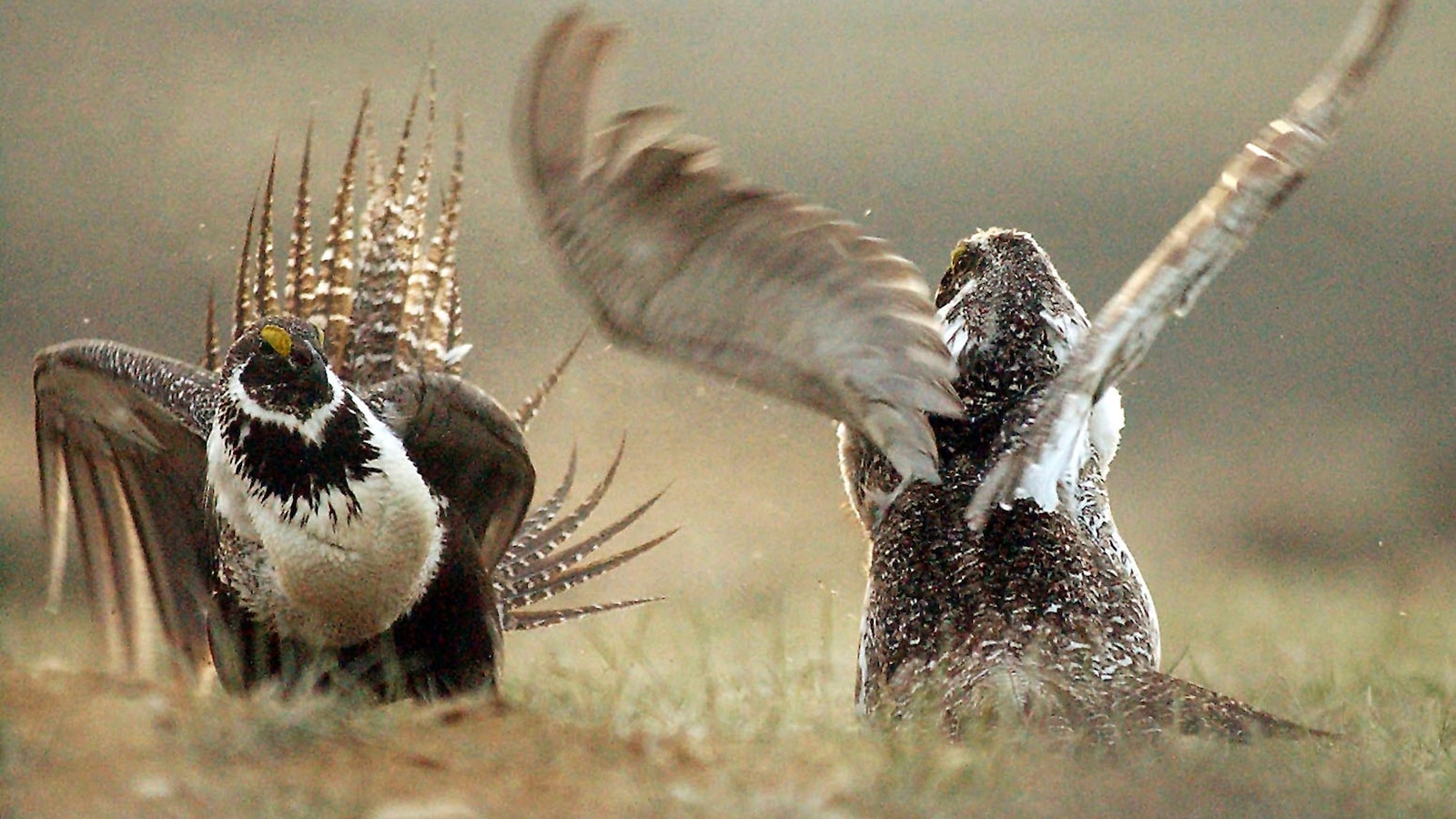
    Greater sage grouse — chicken-sized birds known for an elaborate mating ritual— were once found across much of the U.S. West. Their numbers plummeted in recent decades because of energy exploration, wildfires, disease and other pressures.

    A 2015 agreement shepherded by the Obama administration kept the birds off the endangered species list, by imposing limits on where and when development could occur across their 270,000-square mile range.

    Now officials with the Interior Department want to make the protections even stronger. Their plan would eliminate loopholes that allowed development in areas considered crucial to the bird’s long-term survival. New solar and wind projects would be excluded, and oil and gas exploration could only occur from drilling platforms located outside the protected areas.

    Trump has pushed to open more public lands to energy development in line with his mantra to “drill baby drill.” During his first administration, officials attempted to scale back the Obama-era sage grouse protections, but they were blocked in court.

    Interior Secretary Deb Haaland said Friday’s proposal would boost sage grouse while allowing development on some government lands to continue. She said the plan was based on the best science to protect the bird.

    “For too long, a false choice has been presented for land management that aims to pit development against conservation,” Haaland said in a statement.

    Yet the agency’s attempt to find a middle ground fell flat with environmentalists, industry representatives and Republican elected officials.

    Most of the land at issue — about 4,700 square miles — is in Nevada and California, according to government documents. Affected parcels also are in Wyoming, Oregon, Idaho, Colorado, Montana and the Dakotas.

    Wyoming Gov. Mark Gordon lamented what he called the administration’s “extreme indifference” to his state. The Republican governor said new layers of federal regulation would hinder practical solutions for the grouse.

    “We have shown how to successfully manage this bird and do so in a way that allows for protection of core habitat alongside responsible development,” Gordon said.

    Environmentalists, meanwhile, said officials had squandered a chance to put in place meaningful protections that could halt the grouse’s slow spiral towards extinction. They noted that loopholes allowing development would remain in place across nearly 50,000 square miles of public lands.

    “It’s death by a thousands cuts,” said Greta Anderson with Western Watersheds Project, an environmental group involved in previous sage grouse lawsuits. “The Biden administration could have stopped the cutting, and it didn’t. The fact that it’s less bad doesn’t mean it’s not bad.”

    Federal officials predicted only minimal economic impacts. They said energy companies already steer clear of sage grouse habitat, where there are limits on when and where work can be done near breeding areas. Those companies can still find opportunities on other public lands, the officials said.

    That was disputed by an energy industry representative. Kathleen Sgamma with the Western Energy Alliance said the Biden administration already had limited leasing in sage grouse habitat.

    “So they’ve denied access and then say companies are avoiding them anyway,” Sgamma said. “That’s disingenuous.”

    The Interior Department’s Bureau of Land Management will accept protests against Friday’s proposal until Dec. 9. Final decisions on changes to the agency’s land management plans will be made after the protests are resolved.

    A related proposal to help sage grouse would block for 20 years new mining projects on more than 15,625 square miles in Idaho, Montana, Nevada, Oregon, Utah and Wyoming. That proposal was part of the 2015 Obama-era protections. It was canceled under Trump then restored by a court.

    An analysis of the mining ban will be published by the end of the year, according to the Interior Department.

    Greater sage grouse once numbered in the millions across all or portions of 11 Western states. Populations have dropped 65% since 1986, according to government scientists.

    Source link

  • After years of restrictions, some on Kauai want night football games back

    After years of restrictions, some on Kauai want night football games back

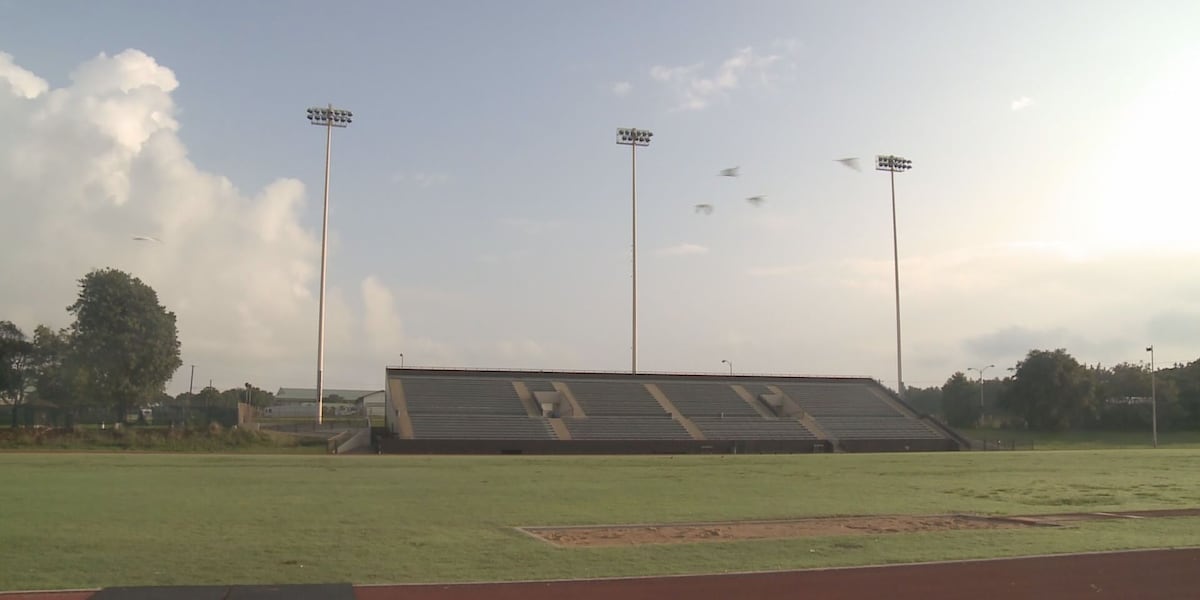
    LIHUE (HawaiiNewsNow) – There’s renewed discussion on Kauai over when high school football games are played.

    Some want to bring back those beloved Friday night lights, but finding both short and long-term solutions hasn’t come easy.

    It’s an issue dating back to 2010. Seemingly every season, there’s a debate over whether to prioritize protecting endangered birds or protecting young athletes from intense afternoon heat.

    The Kauai Interscholastic Federation confirmed there will be no nighttime games for 2024 at the recommendation of the Department of Fish and Wildlife Service.

    Rancee Thronas comes from a family of athletes and started an online petition to bring back Friday night lights.

    “I Just think it’s time to get everybody together – specialists, scientists – and just figure out a way where we can make sure the birds are taken care of but also the keiki and the families watching,” Thronas said.

    She says playing in the afternoon sun presents significant risks.

    “You’re at these games, everybody’s so hot. We’re worried about our kids and it’s a safety issue. It’s getting hotter every year and we talk about it,” she said. “I’m like, ‘OK what do we have to do to get someone to notice?’”

    This renewed discussion also comes in light of the Navy’s plan to increase inert bombing exercises at Ka’ula island, a bird sanctuary some 60 miles southwest of Kauai.

    “It’s just perfect timing because it shows an example where the federal government is allowing them to bomb an island — that’s already happening — where these birds are from and nesting, but we’re just asking to turn on stadium lights for a few hours once a week,” Thronas said.

    Friday night games were first moved to Saturday afternoons in 2010 to protect Newell’s shearwaters and other native birds. Football season coincides with fledgling season, and the county faces steep fines for every downed bird disoriented in stadium lights.

    The county even set aside $4.6 million to retrofit lights with domes, but that still wasn’t enough.

    An agreement back in 2017 did bring back four nighttime games based off risks linked to the lunar calendar. But this year, the KIF says officials with the Fish and Wildlife Department deemed the 2024 season high risk, therefore, the stadium lights will remain off.

    Kauai’s Director of Parks and Recreation Pat Porter said in an email, “While our efforts have always prioritized the safety and enjoyment of our residents, we remain committed to exploring balanced approaches that align with the needs of our athletes, families, and the greater good of our island.”

    The KIF athletic league added that coaches, trainers and staff are prepared to prevent and treat heat-related illnesses during games, and they remain committed to both athlete safety and environmental protections.

    Hawaii News Now asked the county if they would explore the idea of investing in enclosed stadiums, and they said that wasn’t in the works, but they would be open to the idea if it ever aligned with financial resources.

    Source link

  • After years of restrictions, some on Kauai want night football games back

    After years of restrictions, some on Kauai want night football games back

    LIHUE (HawaiiNewsNow) – There’s renewed discussion on Kauai over when high school football games are played.

    Some want to bring back those beloved Friday night lights, but finding both short and long-term solutions hasn’t come easy.

    It’s an issue dating back to 2010. Seemingly every season, there’s a debate over whether to prioritize protecting endangered birds or protecting young athletes from intense afternoon heat.

    The Kauai Interscholastic Federation confirmed there will be no nighttime games for 2024 at the recommendation of the Department of Fish and Wildlife Service.

    Rancee Thronas comes from a family of athletes and started an online petition to bring back Friday night lights.

    “I Just think it’s time to get everybody together – specialists, scientists – and just figure out a way where we can make sure the birds are taken care of but also the keiki and the families watching,” Thronas said.

    She says playing in the afternoon sun presents significant risks.

    “You’re at these games, everybody’s so hot. We’re worried about our kids and it’s a safety issue. It’s getting hotter every year and we talk about it,” she said. “I’m like, ‘OK what do we have to do to get someone to notice?’”

    This renewed discussion also comes in light of the Navy’s plan to increase inert bombing exercises at Ka’ula island, a bird sanctuary some 60 miles southwest of Kauai.

    “It’s just perfect timing because it shows an example where the federal government is allowing them to bomb an island — that’s already happening — where these birds are from and nesting, but we’re just asking to turn on stadium lights for a few hours once a week,” Thronas said.

    Friday night games were first moved to Saturday afternoons in 2010 to protect Newell’s shearwaters and other native birds. Football season coincides with fledgling season, and the county faces steep fines for every downed bird disoriented in stadium lights.

    The county even set aside $4.6 million to retrofit lights with domes, but that still wasn’t enough.

    An agreement back in 2017 did bring back four nighttime games based off risks linked to the lunar calendar. But this year, the KIF says officials with the Fish and Wildlife Department deemed the 2024 season high risk, therefore, the stadium lights will remain off.

    Kauai’s Director of Parks and Recreation Pat Porter said in an email, “While our efforts have always prioritized the safety and enjoyment of our residents, we remain committed to exploring balanced approaches that align with the needs of our athletes, families, and the greater good of our island.”

    The KIF athletic league added that coaches, trainers and staff are prepared to prevent and treat heat-related illnesses during games, and they remain committed to both athlete safety and environmental protections.

    Hawaii News Now asked the county if they would explore the idea of investing in enclosed stadiums, and they said that wasn’t in the works, but they would be open to the idea if it ever aligned with financial resources.

    Source link