When ET Wealth was launched 14 years ago, our mandate was very clear: empower our readers with knowledge to help them make informed financial decisions. Over the years, we have steadfastly guided readers through the complexities of money management. To celebrate our 14th milestone, our special anniversary issue dives deep into a topic close to every investor’s heart—retirement.
Our cover story explores the unique hurdles and opportunities that arise at different stages of planning for life after work. Whether you’re just starting to think about retirement, actively building your nest egg, or already enjoying its rewards, this issue is packed with insights, strategies, and inspiration to help you achieve the financial freedom you deserve.
Challenges for young earners
Khushal Aggarwal is a careful spender but he has nothing left at the end of the month to put away for his golden years. “I have more important goals than planning for retirement,” says the Delhi-based coaching teacher. High expenses is a common reason why many young people are not able to save for their retirement. The India Retirement Index Study (IRIS) by Max Life Insurance found that adequate family wealth, dependence on children and the absence of a trusted adviser also kept people from saving for their sunset years.
Why working professionals don’t save for retirement Dependency on family and generational wealth remain among the top reasons to not start retirement planning. Enough family wealth 42% Children will take care 41% Too early to think about retirement 34% More important things to consider 31% No trusted adviser 31% Source: IRIS 4.0 study by Max Life Insurance and Kantar. The survey was conducted among 2,077 respondents.
For primary earners like Aggarwal, saving money while managing household expenses on a tight income can be challenging. However, experts say a low income should not be a barrier for saving for this crucial goal. “Unlike other financial goals, such as buying a home, funding education, or travelling, retirement is non-negotiable; postponing it may impact one’s quality of life in the later years,” says Kurian Jose, CEO, Tata Pension Management.
Delaying the decision can prove costly because you will have to invest more to reach the targeted amount. At 25, a person will have to invest only Rs.14,717 a month in an option that earns 10% returns to build a corpus big enough to provide a retirement income of Rs.1 lakh per month at the age of 60. If he delays the decision by five years, the monthly investment required rises to Rs.27,652. Wait for another five years, and the required amount shoots up to Rs.53,441.Don’t be surprised by the huge difference in the amount required if you start late. Compounding is at work here. Keep in mind that the early starter also increases the amount by 10% every year. Even so, the investors who delay the decision will have to save higher amounts to reach the required corpus. A person who delays the start till the age of 40 will need to put away Rs.1.08 lakh per month, which is Rs.46,108 more than the monthly sum required if he started at 25. “Don’t underestimate the power of compounding. Even if you feel strapped for cash, cut down on non-essential expenses and prioritise retirement savings,” advises Prashant Tripathy, Managing Director & CEO, Max Life Insurance.
Use magic of compounding
Money saved during early working years plays a big role in the retirement corpus. Savings in your 20s and early 30s create the foundation for compounding to work its magic. Even larger contributions made in later years won’t have the same impact. If you invest for 30 years and increase the amount by 10% every year, what you saved in the first 15 years will account for almost 70% of the total corpus at 60. The early investments do the heavy lifting over time and form the bulk of the retirement corpus.
Warren Buffett, has some advice for young earners who find it difficult to save due to high expenses. He says, “Don’t save what is left after spending, but spend what is left after saving.” It’s a simple solution for a generation that prioritises enjoying the present over planning for the future.
To get Rs.1 lakh per month in retirement…
… you need a corpus of Rs.2.26 crore to sustain monthly withdrawals for 25 years. Withdrawals will increase by 6% every year to keep pace with inflation. For a 25-year-old, 6% inflation will push the required amount to Rs.17.37 crore when he turns 60. An early start makes it easy to reach the target.
ASSUMPTIONS : For these calculations, inflation taken at 6% , pre-retirement returns at 10%, post-retirement returns at 8%, and annual increase in investment taken at 10%
A disciplined approach and small adjustments can help young earners like Aggarwal achieve the target. Formulating a budget is your first step. Start by listing out all your expenses in a month, which will tell you where the money is going. Identify the unnecessary expenses that can be curtailed. If you are disciplined, you will be able to allocate the required funds to retirement savings.
Don’t depend on children
Four out of 10 respondents in the IRIS study by Max Life Insurance said that they were not saving for retirement because their children would take care of them in their old age. Indeed, for many people their children is their only retirement plan. Meet Kunal Sharma, a Jaipur-based logistics manager who has put retirement savings on the backburner and is focusing on saving for his child’s education. “In our family, it’s a tradition that children take care of their parents in old age. I’m focusing on giving my child the best education and upbringing. When the time comes, he will support me,” he says.
Though many Indians may agree with Sharma, this arrangement is fraught with risks. Depending on children in retirement can be problematic for several reasons. For one, the joint family is slowly giving way to the nuclear family set-up in urban India. The children may have their own financial obligations and the parents’ financial dependence on them might put pressure on their resources, lead to resentment and strain the relationship. “Children often have to balance their own financial responsibilities. They may feel the strain of supporting their ageing parents,” says Jose. Sharma’s reliance on his child for financial support can create dissonance if the child is unwilling to do it.
Many young professionals know the importance of building a sizeable retirement corpus, but still delay saving for it. Their motto is, ‘you only live once’. Take 29-year-old Ratul Mohindra. He wants to save tax and build a healthy retirement corpus, but has steadfastly stayed away from joining the National Pension System (NPS). “I don’t want to lock my money away for the long term in the NPS,” he says.
Little does Mohindra realise that the NPS is purpose-built for retirement. The very idea of retirement savings is that these shouldn’t be touched until you actually stop working. Besides offering tax benefits, the NPS instills financial discipline, ensuring that you stay on track for achieving your long-term goals.
Plan beyond finances
Securing your finances is important for a care-free retirement. However, staying healthy is equally important. As we age, medical expenses tend to rise, and if you have not paid enough attention to your health, these costs can deplete your retirement savings. Healthier individuals are less likely to encounter costly health issues. “Having a sedentary lifestyle might seem harmless when you are young, but it can drain your finances later,” says Priyank Shah, CEO, The Financialist. Building healthy habits, such as regular exercise and a balanced diet, from a young age not only helps control future medical costs, but can also lead to lower health insurance premiums, safeguarding more of your retirement nest egg. The good news is that it costs nothing to complete 10,000 steps each day. “It will ensure a more financially secure and fulfilling post-retirement life,” says Jose of Tata Pension Management. Retirement might seem far off, but the decisions you make today can significantly impact your financial security later.
Rafael Nadal means competing without a break. Just last week, the 22-time Grand Slam winner hanged up his tennis racket and said his final goodbye to an illustrious career. Facing Botic Van de Zandschulp of the Netherlands, in the QF round, Nadal seemed like a shadow of his past self as he couldn’t dominate the Dutchman. The latter managed to get the better of Rafa and took the match 6-4, 6-4 in straight sets. While many people were curious to know what would the King of Clay do after retirement, he’s made it pretty much clear now, thanks to an update coming from his hometown in Mallorca.
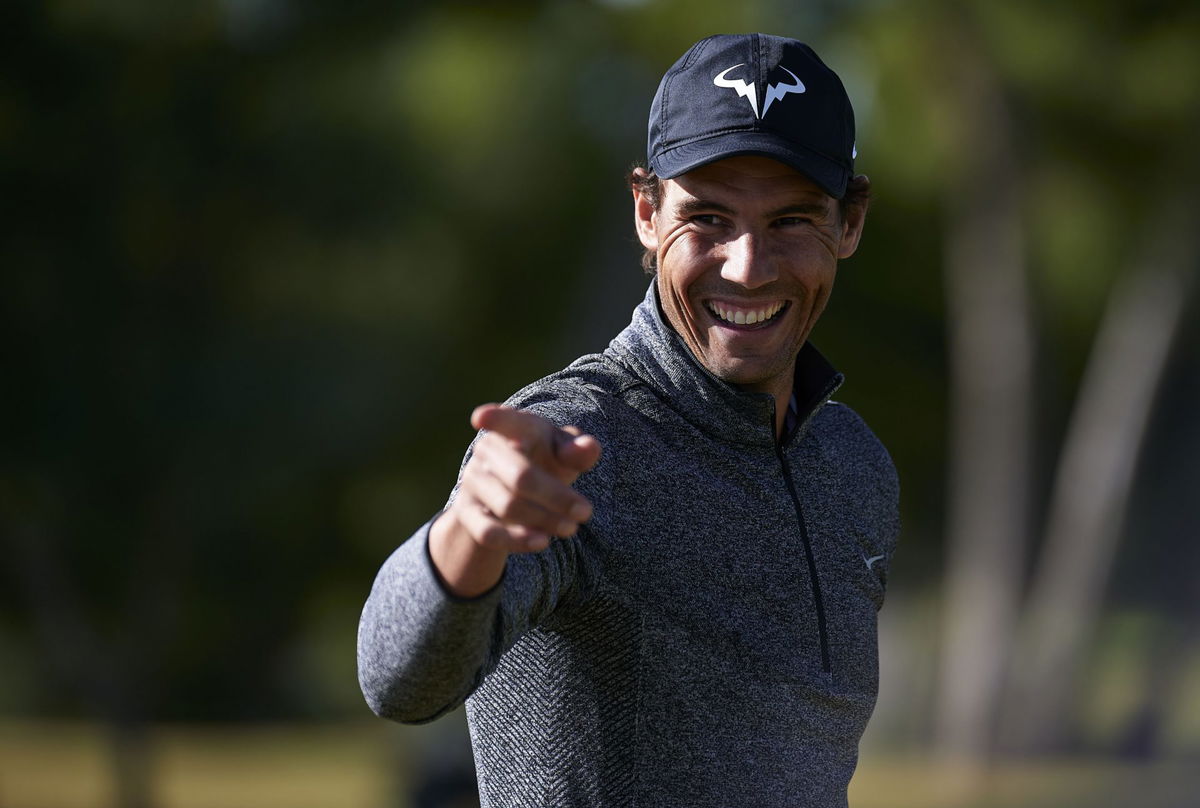
Rafael Nadal has taken to his passion for golf. The 38-year-old took to the golf course and participated in the FGB Hexagonal Q-Romia Circuit at Club de Golf Son Servera on Saturday. What’s more?
Well, he succeeded in finishing at the eighth position with a score of 76 strokes, four over par, as reported by Spanish website Ultima Hora. Nadal’s birdies on the par-5 ninth and sixteenth holes, and on the par-3 third hole, highlighted his round. At one stage, he was, in fact, on the first spot, but couldn’t maintain the lead. But earning eighth place, among close to 80 players, in the Handicap category, is still commendable to say the least, isn’t it?
ADVERTISEMENT
Article continues below this ad
While he and his team gave their best, the ultimate winner of the competition was the team of Terraza Balear Part of Gunni Trentino. On second position was Engel&Volkers Commercial, followed by God save The Par. Nadal’s The Rafael Nadal Academy took the fourth spot, while Ejusan Ecologic B rounded out the top five.
For those unaware, Nadal’s passion for golf is not new. The tennis icon, a keen golfer, has participated in the Balearic Mid-Amateur Golf Championship three times in the last four years. This year in February, Nadal outperformed the field, finishing three over par for a two-round total of 147 strokes. His seven-stroke victory over Jaime Nicolau Olmos secured him the men’s title.
In fact, he’s expressed his liking for the sport on numerous occasions in the past.
ADVERTISEMENT
Article continues below this ad
When Rafael Nadal revealed his brewing passion for golf
Back in 2012, speaking to Miami Herald, the 14-time Roland Garros champion had expressed his inner thoughts on golf. While unleashing his love for the sport, he said, “I love the game of golf in general,” he said. Continuing further, he added, “Golf is great, because you are always in beautiful places when you are playing, and the risk for injury, as you know, is very small.”
Moreover, his craze for the sport even attracted golf legend Tiger Woods, who became a fan of him! Back in 2019, during the R16 at the US Open, Woods was spotted watching Rafael Nadal. Later in that event, Nadal emerged victorious at the Flushing Meadows and lifted the trophy after defeating Daniil Medvedev in a five-set thriller. After winning the final, Rafa extended his gratitude towards Woods.
ADVERTISEMENT
Article continues below this ad
“It’s a huge honour to play in front of all of [New York fans] but to play in front of Tiger is a very special thing. I’ve always said that I don’t have idols, but if I did I would have to say that one idol is him. I always try to follow him, every single shot through the whole year,” he said. “He’s a big legend of sport, one of the greatest sportsmen of all time. I want to congratulate him for one of the most amazing comebacks of the sport ever when he won The Masters this year”, he concluded while praising Woods’ golf supremacy.
Now that the tennis chapter is over, it will be intriguing to see whether Nadal will take up golf as a permanent profession. Do you think he will ace in this role as well if he decides to go pro? Let us know in the comments below.
U.S. women’s national team goalkeeper Alyssa Naeher announced her retirement from international soccer Monday, ahead of the team’s two European friendlies against England and the Netherlands. She said the European matches will be her last.
A 2019 World Cup winner and gold medalist at this summer’s Paris Olympics, she will continue playing for the Chicago Red Stars in the NWSL. She re-signed with Chicago in September to play through the 2025 season, which will be her 10th season with the club.
For the USWNT, however, it’s the end of a major goalkeeping era. Naeher’s career stands comfortably in the top three amongst other World Cup winners Briana Scurry and Hope Solo.
“Every tear shed in the challenging times and disappointments made every smile and celebration in the moments of success that much more joyful,” Naeher wrote Monday in her announcement on social media. “This has been a special team to be a part of and I am beyond proud of what we have achieved both on and off the field.”
Naeher made her debut a decade ago in December 2014, and after stints as the primary backup goalkeeper for the 2015 World Cup and 2016 Olympics, she took over the no. 1 spot following that quarterfinal exit. Ahead of what could be her two final games for the United States, she holds a record 88 wins, 14 draws and only six losses through 113 appearances.
“Having the opportunity to be a part of the USWNT for the last 15 years has been the greatest honor,” she wrote. “When I began this journey, I never could have imagined where it would take me.”
She earned her 100th cap earlier this year during the W Gold Cup and cemented her status not just as someone who could save penalty kicks, but convert them as well. In the W Gold Cup semifinal against Canada, she buried her attempt from the spot but also saved three of Canada’s attempts — marking her as the only USWNT goalkeeper to make three saves in a PK shootout. She’d repeat the same double later that spring, against Canada, during the SheBelieves Cup.
At the Olympics this summer, she once again stepped up to help propel the USWNT to their gold medal victory, including a poster-worthy save against Brazil in the closing moments of the gold cup game at Parc des Princes. Off the field, she bonded with the forward line of Trinity Rodman, Sophia Smith and Mal Swanson (also known as “Triple Espresso”) who pulled her out of her shell.
GO DEEPER
USWNT on goalkeeper Alyssa Naeher: ‘We’re making her a little more mushy gushy’
“We’re making her a little more mushy gushy with us, which I think is nice,” Rodman said in France. “We’re opening up a side that I think has always been there, but it’s hidden a little bit.”
Jessie Knight. Getty Images for British Athletics —
The primary school teacher turned Olympian, Jessie Knight, has announced her retirement from athletics.
The 400m hurdler has made the decision to hang up her spikes having represented Great Britain for a final time at the Paris Olympics this summer.
The Windsor, Slough, Eton and Hounslow athlete (WSEH) competed for Team GB at two Olympics and won five British titles over both 400m and the 400m hurdles.
Knight, 30, shared the news on Instagram on Monday, saying: “The time has come to say goodbye to competitive sport. “Having competed since I was eight years old, I finally got my first GB call up aged 26.
“Since then, I have represented my country in two Olympic Games, two World Championships, two European Championships, one Commonwealth Games, two World Indoor Championships and one European Indoor Championships.
“I have a relay medal from Worlds, Indoor Worlds and European Indoors. I have also won two indoor 400m British titles and three 400m hurdle outdoor titles.”
She added: “The 26-year-old primary school teacher couldn’t have predicted what was going to happen over the following four years.
“It has been far from easy at times, but I am walking away with the fondest of memories, experiences of a lifetime, lessons learnt and some very special people to add to my circle.
“The Olympic Games in Paris was the perfect ending for me. I ended my career on the biggest and best stage, it doesn’t get better than that.”
Knight’s athletics career has been a rollercoaster of highs and some crushing lows. Her personal bests include a 400m 51.57 (indoors) and 54.09 in the 400m hurdles. Those times place her fourth on the UK’s all-time 400m hurdles list.
She’s also a multiple medal winner, claiming 4x400m bronze at the 2022 World Championships in Oregan and world indoor 4x400m bronze in Glasgow this year. She also claimed a 4x400m European indoor silver in Torun in 2021, alongside Zoey Clark, Ama Pipi, and Jodie Williams – who has also announced her retirement this month.
Domestically, Knight won five British titles representing WSEH, taking gold over the 400m hurdles in 2020, 2022 and 2023, while also securing bronze in 2019 and 2021. Indoors, she took gold across the 400m in 2020 and 2022, taking silver in 2021 behind Jodie Williams.
Her first Olympic Games in Tokyo proved a low point in her career as she bowed out after tripping and falling at the first hurdle in her heat. However, three years later she qualified for Paris 2024 where she made it through to the semi-finals, finishing sixth after navigating the repechage round.
Knight’s career is all the more remarkable considering her dual role as a primary school teacher.
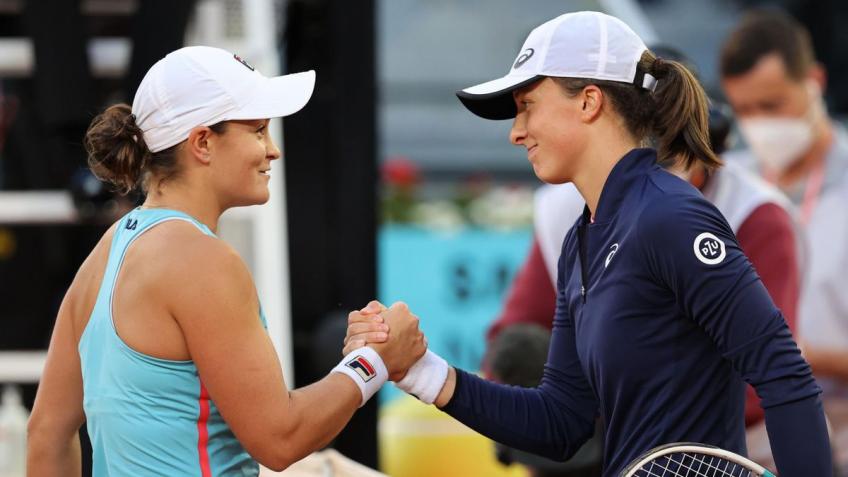
“I achieved my dreams,” said Ashleigh Barty when she announced her retirement from the sport. A young Aussie legend, who took the WTA world by storm made everyone fall in love with her rhythm on the court. However, her decision to retire from the sport sent everyone in shock, including Iga Swiatek. The current world number 2 opened up on Barty’s decision to retire and how she felt about it.
Ashleigh Barty announced her retirement from tennis in March 2022 at the young age of 25. As a former world number one and three-time Grand Slam singles champion, Barty left behind a powerful legacy. She won the French Open in 2019, Wimbledon in 2021, and the Australian Open in 2022, making her mark as one of the most versatile players in recent years. Barty also achieved success in doubles, winning the 2018 US Open with partner Coco Vandeweghe. Her impressive career included 15 singles and 12 doubles titles on the WTA Tour.
Reflecting on Barty’s unexpected retirement, current world number two Iga Swiatek recently shared her reaction. “I didn’t understand what had happened,” Swiatek admitted during an interview with the Billie Jean King Cup’s media personnel. “Ash was the undisputed leader, playing the best tennis. Even if I knew where she was going to hit, it was still difficult to face her shot.” Swiatek noted that Barty’s departure felt “strange” and was a “great loss for the sport.”
ADVERTISEMENT
Article continues below this ad
Swiatek also recognized the impact Barty’s retirement had on her career, saying, “I had only been number 2 for a few days when suddenly the opportunity to climb to the top of the rankings presented itself to me.”
“I just know at the moment in my heart for me as a person, this is right.”
World No 1 Ashleigh Barty has announced her shock retirement from professional tennis at the age of 25. pic.twitter.com/LTV3QQGt8U
Ever since retiring from the sport, Barty has ventured into new areas: she has authored books, married golfer Garry Kissick, and even played professional cricket. Known for her all-court game, Barty possessed a versatile shot-making ability and was a standout server, frequently ranking among the WTA Tour’s top players in aces and service points won.
However, this is not the first time when Iga Swiatek has opened up on Ash Barty’s retirement. Back in 2023, she opened up on the same thing.
ADVERTISEMENT
Article continues below this ad
‘I was sobbing’- when Ashleigh Barty’s retirement left Iga Swiatek crying
When Ashleigh Barty announced her retirement from tennis at just 25, Iga Swiatek, then world no. 2, felt an intense wave of emotion. “I was sobbing. I couldn’t stop crying,” Swiatek revealed. In an interview with The Players’ Tribune, the Polish star opened up about how deeply the news affected her. “It might sound strange, but I was so confused and shocked that Ash was 25, and she was retiring,” she shared.
Swiatek explained the sudden uncertainty she faced, having held the no. 2 ranking for only 3 days. “There was some confusion about what was going to happen,” she admitted. The early retirement challenged her long-held idea that players step away from the game only when their bodies can no longer cope, typically in their early 30s.
ADVERTISEMENT
Article continues below this ad
Upon watching Barty’s retirement video on Instagram, Swiatek began to understand her decision. “Right now, I understand it even more,” she reflected. Swiatek acknowledged Barty’s unmatched skill, saying, “Ash has the best tennis out there, hands down.” Struggling to process it all, she admitted, “I didn’t know if she was unhappy or something.” Interestingly, Iga Swiatek and Ash Barty have played each other twice and the Aussie star came up on top on both occasions.
Ashleigh Barty’s career was truly an exceptional one. Her retirement left a huge impact on everyone. What are your thoughts on the same? Let us know your thoughts in the comments below!
CHARLOTTESVILLE, Va. — Tony Bennett does not handle attention all that comfortably. He’s never one to seek a spotlight and, to my mind, has never called a member of the press in search of credit or to suss out a buzzy behind-the-scenes rumor. Bennett, sometimes to the frustration of the media, is often humble to a fault. Predictably, that humility was on display again Friday, perhaps for one last time.
“The University of Virginia is an amazing place because of people like Tony,” athletic director Carla Williams said during her introduction of Bennett’s retirement press conference.
As Williams’ opening remarks led into a standing ovation for Bennett, the coach predictably donned a sheepish grin, his shoulders slouched as he channeled the energy of a child who doesn’t know what to do with their body when everybody is singing the happy birthday song to them. If they’d have let Bennett retire without nothing more than a paragraph’s worth of a press release, he probably would have taken it.
What a surreal scene it was, though. One of the game’s greatest coaches is walking away, on this odd day of the 18th of October, nearly on the eve of the season, becoming the latest high-profile coach to pull the ripcord. And in doing so, Bennett puts that much more attention on the unstable environment of college athletics that has a lot of people soul-seeking and scrambling for solutions to existential problems that go a hell of a lot deeper than one man’s decision to no longer coach basketball.
“I thought it would be a little longer, to be honest, but it’s been on loan and it’s time for me to give it back,” Bennett said as he held back tears. The scene raised the question of why a 55-year-old was stepping away like this, 18 days before the start of the 2024-25 season, and Bennett provided answers.
After his news conference, he took even more questions in a one-on-one interview with CBS Sports, getting into the specifics of his exit.
“Until there’s parameters, I know I can’t do it, and that’s the whole deal here,” he told CBS Sports. “I think sometimes you almost talk yourself into things as you’re doing it. Like, I can do this. I am equipped. We can adjust. And you kind of tell yourself certain stuff and you start believing. Yep, I can. But when you kind of step back and look. Can I be as effective as I need to be? Am I fully aligned with how it has to be for this university, for these young men? Can I give everything, can we build a program in this way, or is it, is my way more designed for the old model?”
But before digging into the massive shifts in the college basketball landscape that have pushed out other legendary coaches as well, you need to go back to how Bennett’s unplanned voyage began. Before the 433 wins and the ultimate redemption of that Homeric 2019 national championship. Before the eight combined ACC titles, the national coach of the year awards and the more-than-you-realized number of NBA picks he developed in Charlottesville.
All of Bennett’s success and ACC domination over the past decade has obscured the fact that, for much of the first half of his life, he was not keen on coaching. Initially, he resisted it. He easily could have never chosen this path. Bennett saw and learned from — and was sometimes bewildered by — the life and vocation his father took. The incandescent Dick Bennett won 489 games of his own across three decades. He is a legend in his own right, but his competitiveness tortured him. In 1999, standing on the doorstep of 30 with his playing days behind him, Tony tiptoed toward the coaching sideline the only way he knew how: by offering himself as a servant for others. More than that: He primarily did it as a favor to his father. Dick knew having Tony on his staff was the only way he could spend more time with his son. So, a Hall of Fame-worthy career began as a volunteer assistant for the Wisconsin Badgers.
If Dick doesn’t ask Tony to give it a try, college basketball and the University of Virginia’s program are a lot different because of it.
Tony was quickly promoted to an assistant’s post, a spot he quietly held for seven years, first at Wisconsin and then at Washington State, until Dick retired following the 2005-06 season. Tony took over in the dim and distant outpost of Pullman, Washington, and proceeded to practically break the laws of basketball physics by winning 69 games in his first three seasons and guiding the Cougars to their only back-to-back NCAA Tournament appearances in school history. After doing the near-unthinkable with Wazzu, he was the clear choice nearly 2,500 miles away at Virginia in 2009, when former athletic director Craig Littlepage made the hire that would consequently alter college basketball for the next 10-plus years.
Virginia the best of what’s around under Bennett
Less than three weeks after Bennett got the job in 2009, he was in John Paul Jones Arena — where the team’s offices are — working late on the weekend. Hometown heroes Dave Matthews Band were back in town and playing a couple of shows that night. As it got closer to showtime, Bennett pulled back one of the curtains to peek on the scene. The place was sold out. JPJ Arena wasn’t even three years old at that point, and ‘Hoos hoops wasn’t pulling in crowds like these. Not even close. As he took in the view, Bennett felt a jolt.
“I remember thinking, man, someday if we can build this program, it’s going to look like this for basketball games,” Bennett said Friday.
Bennett’s band would indeed break through. By 2014, he’d won his first ACC title. Soon enough, he was filling JPJ just like DMB.
Under Bennett, Virginia experienced its most sustained success in school history. He stubbornly cut against the grain of tactical trends and new-age Xs-and-Os. His teams didn’t so much play in the mud as they lived in it, regularly logging last in adjusted tempo at KenPom.com.
“We did it in a unique way,” Bennett said. “That was my vision, our vision as a staff. Can we build this program that maybe is a little different than the way you do it? That’s the beauty of this sport. You get to choose how you do it, with who you do it, in the style you do it.”
“Embrace the Pace” became a cheeky mantra for the program, buoyed by Bennett’s signature pack-line defense. Virginia was a scouting nightmare to scheme against. Even if Bennett’s teams didn’t win every time, his pace would. There was no speeding up against Wahoos. He was criticized for the cosmetics but the results were undeniable. Bennett won 70% of his ACC games, his success over Duke and North Carolina unmatched by any other program in the conference during his tenure. He’s one of the greatest coaches in ACC history.
Virginia’s NCAA Tournament run in 2019 was more impressive after what happened in 2018.
Getty Images
The 74-54 flameout vs. UMBC in the first round of the 2018 NCAAs marked a historic blast. Never before had a No. 16 seed toppled a No. 1. (Virginia was, in fact, the No. 1 overall seed in that tournament.) Bennett, drawing on his father’s instincts, refused to abandon his principles. Putting his trust in his faith, he believed he was supposed to experience such humiliation in order to find higher ground. One year later, the Cavaliers rebounded to maximum reclamation and hit the mountaintop by winning the national title, doing so with one of the most dramatic runs of close-call games in NCAA history. They may well play college basketball for a millennium to come on this planet, and still the human race might not see a year-over-year redemption story like it again.
That was the high point. Now, the sober reality.
In the past year, Bennett said, his assistants effectively had to continue to pull him closer to the new model, the new way of college coaching. He gave retirement serious thought in the days following Virginia’s 67-42 loss to Colorado State in the First Four — I can now share that Bennett talked about this with me off the record in April — but before he could really allow himself to push through on that, recruiting in the portal pulled him into the next phase of the job, and then the next. He didn’t want to be pulled any more.
This week, he broke free.
Bennett could have had another decade of good-to-great coaching in him if he felt it. But that feeling sapped from him in recent months, and in just the past week, the epiphany hit. With three days to get away, Tony and his wife, Laurel, headed out of town to Tides Inn, on the Rappahannock River. Over the course of 48 hours, he faced his truth. He said it hit him in a way that was inescapable.
“We lost a lot of players that I think we wouldn’t have lost [before NIL regulations],” Bennett said. “And that’s OK because it’s a new model. And so you’ve got to decide, where’s the line, how far can we go? … It’s confusing. I’ll be honest, it’s confusing.
“I realized if we can’t have the right players to compete, the gap could grow,” Bennett added. “I felt I was the one holding them back.”
Bennett called Williams to deliver the news Tuesday. She asked him to sleep on it and decide for sure after going through Wednesday’s practice. Bennett told me he went into that practice open-minded and willing to maybe double-back on his decision, just in case he needed to be nudged back onto his course.
“In practice, I tried,” he said. “I felt the things that would probably take some of my ability to communicate with them and the joy that’s needed for them to play along with the intensity and the purpose. I felt that, even in that practice, when I knew probably what I was doing and it was almost confirmed.”
One of Bennett’s favorite quotes, for decades, purportedly comes from a missionary named Jim Elliott, who said: “He is no fool who gives what he cannot keep to gain what he cannot lose.” Bennett used the quote in his press conference on Friday.
“I realized if we can’t have the right players to compete, the gap could grow. I felt I was the one holding them back.”
Tony Bennett
The thing he cannot lose is what he finds himself wanting most now: time with his family, time spent on those closest with him, time not wasted by worrying every day about the state of a basketball roster, how much a player in the transfer portal will cost, how much money Virginia has to raise to make sure it doesn’t fall a tier or two down in the hierarchy of the ACC. Those things have picked and peeled away at a job that is very much not what it was in 2019, let alone in 2009.
“Now that I’m not in it, I can say this. It’s too much,” Bennett told me. “You go from the moment the season ends, you’re trying to fill your roster and you’re in there and you gotta go, go, go. You gotta be on campus. And the season’s long enough, whether you are in the tournament, the moment it ends you’re right away trying to rebuild your roster, and you’re in there, and it was two months of insane work. You’re just going, going, going.”
For as pure as Bennett’s reputation is as a coach, a father and a man, the timing of it has understandably come under some criticism. After Bennett went so far as to attend ACC Tipoff a week ago to meet with the media, the move comes off as calculated. To go up and quit on the program while overseeing a team peppered with unproven players was to put Virginia in a very tight spot. And in doing so, it forced the hand of Williams, who tapped longtime Bennett lieutenant Ron Sanchez as interim head coach for the season.
Decision to retire couldn’t wait
I asked Bennett about why retiring now was appropriate. The offseason is over. The time coaches cherish the most — the actual games — is upon us. He could have privately decided to retire come March 2025 and kept to himself.
“It wasn’t like I got this set and I planned this date,” Bennett said. “If you’re battling things and you’re not all in and have the passion to give. You have to know who you are, and you have to be all in with everything. If you know you’re fighting yourself in this — because you’re still recruiting, you’re still involved with stuff — you’re gonna have to keep building, and you’re always worrying about what’s next. And I felt, even in the fall, I felt things I haven’t felt for a long time, or maybe I’ve been battling and coaching some of my perspective. Sometimes, you know, my anger — and people say, ‘Oh, you don’t get angry’ — but I felt myself becoming a little more transactional in mindset. At times. And then I’d catch myself, but I felt that battle being waged inside, and I never want to be like that. That’s why I’m not equipped for this.”
It’s fair to criticize the timing of the move, but not the reasons behind it. Bennett isn’t dismissing the skeptics, but to hear him on Friday was to hear a man comfortable in his truth and confident in the next phase of Virginia’s program. If he wasn’t, he would have likely pushed through for one final season.
Bennett signed a contract in June, tricking himself into thinking he was ready. But the regulations and guardrails he hopes come to the sport for the stability of everyone involved were never in the near-future. College sports is evolving at a pace that is pushing championship-winning coaches out of the profession. First it was Roy Williams in 2021. Then Mike Krzyzewski and Jay Wright in 2022. But Bennett is 55, easily the youngest of them all. A guy who never initially wanted to get into coaching found himself looking around and wondering what profession he was in. It certainly wasn’t the one he volunteered for in Madison 25 years ago.
“When you have that battle, if you’re not all in and locked … I didn’t want to have the regret of being 80% of what I could be. Because it’s a fine line here,” Bennett said. “We don’t have all the things the others have in terms of five-stars — we’ve got good players — but it’s a way that you have to build them. If I’m 70%, 80%, that’s not fair to the players. You know what? This staff, they’re the ones that are thinking they can handle this model better than I can. And until it changes, no one will be able to handle it fully, but that’s what led to it at this time.
“You do have to be all in, and I don’t know exactly what that looks like,” he said. “There’s good things about this new stuff. I mentioned that [in my press conference], and I mean it. But there’s a lot that’s not healthy and not good, and it’s spinning out of control. There has to be change.”
He’s going to lobby for a true shutdown period in the offseason — if not two — where coaches are mandated to not have any contact with recruits, to enable more balance. Without it, he knows more accelerated retirements are guaranteed in the next few years. He wants to be an agent for positive developments in college athletics. Taking into account the money that’s now flowing across high-profile college sports, Bennett sees a major mental health crisis coming for college athletes if more protections aren’t put around them ASAP.
For as much as he has concern there, he also wants to give himself to his family more than he ever has — wife, children and parents. Dick and Anne Bennett are 81 years old. He’s only gotten to see them once or twice a year in recent years. I remember Bennett calling me on an August morning in 2023 for our Candid Coaches series as he sipped coffee outside next to his mother. He was as chatty then as I’ve ever heard him.
“I don’t want to live with regrets,” he said Friday.
And so, this seems to be it. I asked if he was retired for good from all of basketball coaching, not just college.
“Right now, I think it’s done,” Bennett said. “I need a break. That was even something Carla talked about. Maybe you need a sabbatical, or something like that. But in this landscape, I don’t foresee myself getting back. I really don’t. That wasn’t the intention at all of this, to just get a break. I think you know when it’s your time, and I hope I can impact in whatever way it is, whether it’s around the game in different ways, or something else, that’s too soon to know.”
Laurel Bennett told me the one stipulation of this decision was that there were no more big decisions coming soon thereafter. No plans for next week, next month, next year.
He is no fool who gives what he cannot keep to gain what he cannot lose.
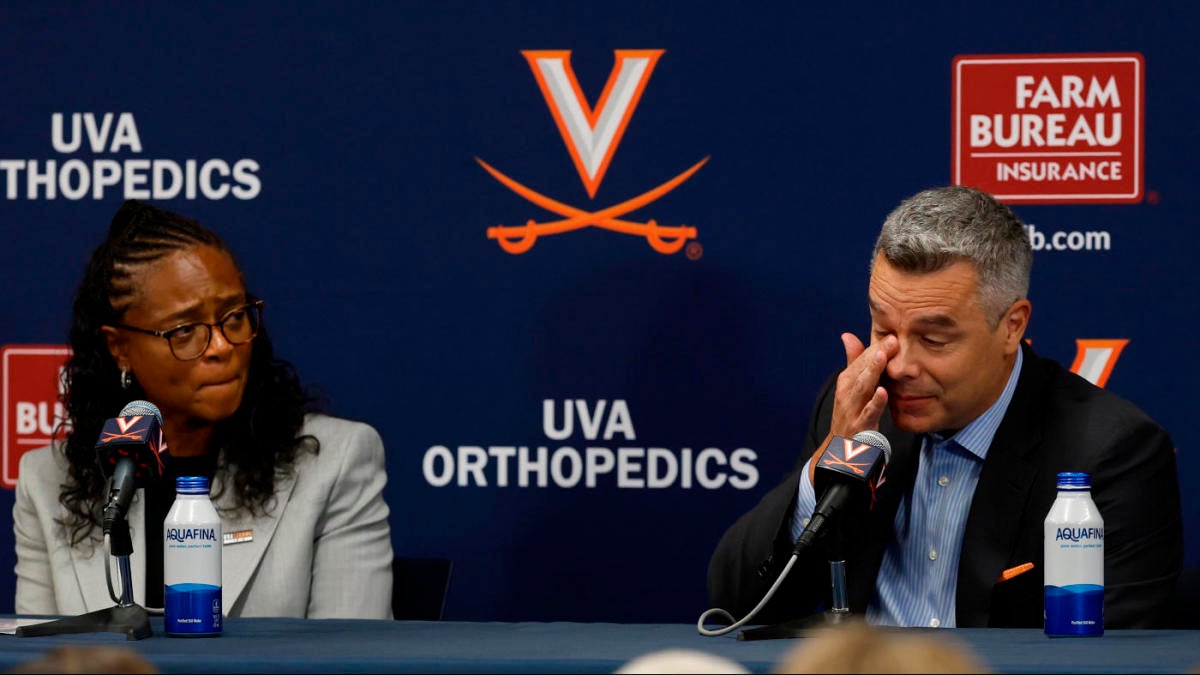
Virginia coach Tony Bennett and athletic director Carla Williams talk at John Paul Jones Arena.
Getty Images
As for his role around the team, don’t expect him to pop up at a lot of games in the season ahead. Bennett said he doesn’t plan on being a constant public presence around official Virginia basketball events; he knows he needs to provide some distance to best help the transition process.
“This was never mine, and it was time to give it back,” Bennett said. “And that’s the peace that I have.”
About an hour after he told me those words, after the Bennetts quietly made their way off campus to go enjoy a truly stress-free weekend and entered the next stage of their lives, the sounds of the inevitable season manifested as they do. A bouncing basketball could be heard inside John Paul Jones Arena from one of the players who was out early to get up shots. The video board displayed a graphic with multiple images of the greatest coach in Virginia basketball history, complete with championship trophies at his feet. It read: “THANK YOU COACH TONY BENNETT.”
One by one, more and more, they all popped into the arena. Players, coaches, managers. Most of them were there because of one man: Tony Bennett. Practice was soon to begin. The music over the PA speakers got louder. Shortly before 2 p.m., Sanchez walked out, a folded practice plan in his left hand. Indiana Pacers coach/Virginia alum Rick Carlisle spoke to the team in a circle at mid-court.
At 2 p.m., the video board flickered. The graphic with Bennett’s pictures swapped, replaced by what’s almost always there as default: a logo for Virginia basketball.
In Charlottesville, a new era begins. And in that moment, the reality hit hard in more ways than one.
Taiwanese need about NT$15 million (US$466,200) to maintain a comfortable lifestyle in retirement, but nearly 80 percent said they lack the finances to meet that target, a survey released on Tuesday by CTBC Bank (中國信託銀行) showed.
Retirement planning has rapidly grown in importance as Taiwan is set to become a “super-aged society” next year when people aged 65 and older account for 20 percent of the population, CTBC retail banking chief Yang Shui-hui (楊淑惠) said.
The issue must not be taken lightly with life expectancy in Taiwan increasing with medical and technology breakthroughs, she said.
Photo: An Rong Xu, Bloomberg
Taiwan’s current life expectancy is 81.21 years, suggesting a 0.21 percent increase from last year, according to government data, which showed a similar rate of growth in the past three years.
Most respondents said they would need an estimated NT$14.27 million to maintain a decent lifestyle after retirement, while 20 percent said they needed NT$25 million, the survey showed.
Eighty-seven percent of the respondents said they use investment tools to manage their wealth, while more than 50 percent reported investment returns of more than 5 percent in the past three years, it said.
Still, 53 percent describe market movements as “evasive” and are worried about their long-term investments, it said.
Stocks were cited as the most popular investment tool among respondents, accounting for 66.9 percent, followed by fixed-term deposits at 62.9 percent and exchange-traded funds (ETFs) at 41.9 percent, it said.
ETFs have overtaken savings-related insurance policies as the third-favorite investment vehicle, with 55 percent of respondents saying they preferred investment products that promise regular and stable cash flows.
That helped account for the surge in scale of local ETFs that feature monthly or quarterly distributions of cash dividends, CTBC Bank said, adding that a growing number of Taiwanese are counting on passive income from ETFs to sustain their lifestyle after retirement.
Nevertheless, 34.9 percent said they do not have a designated retirement account, while 34.8 percent said they worry that no one would take care of their children or sick family members after their death, and 16.1 percent said they worry about a lack of knowledge about whom and how to pass on their wealth, the survey showed.
As for what they want in retirement, good health is considered the most valuable at 81 percent, followed by traveling the world at 55 percent, and developing hobbies and habits at 23 percent, it said.
CTBC Bank conducted the poll from July 26 to Aug. 15 with 1,200 people older than 30.
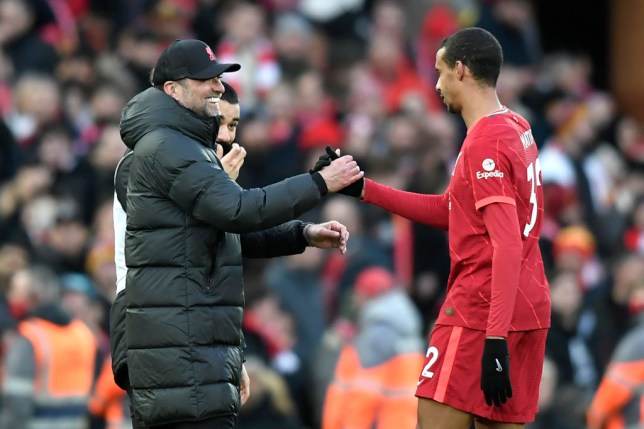
Joel Matip has announced his retirement from football (Picture: Getty)
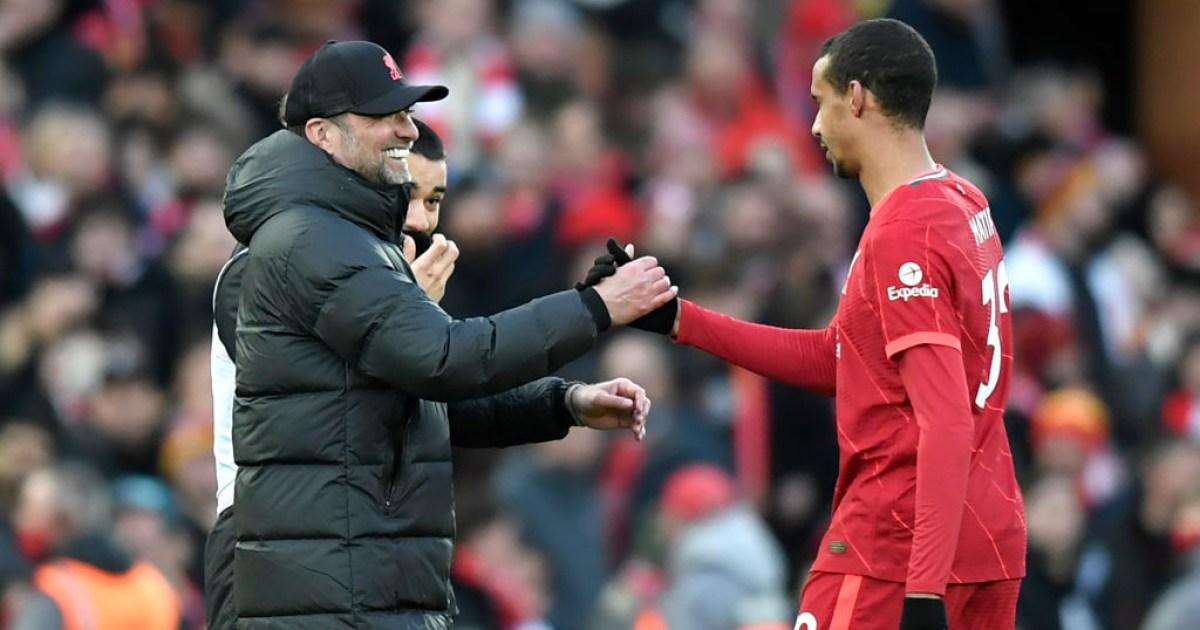
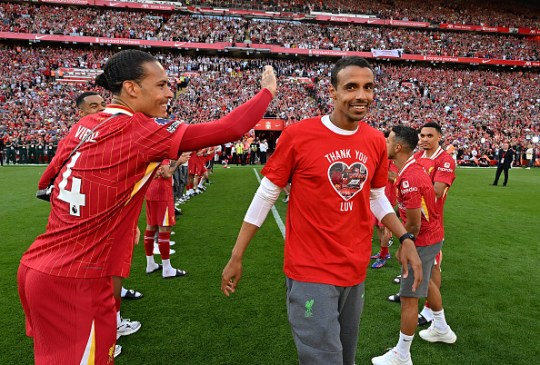
Former Liverpool defender Joel Matip has announced his retirement from football after his departure from Anfield this summer.
Matip arrived from German club Schalke in 2016 and went on to make 201 appearances during his eight-year spell with the Reds.
The Cameroonian won five major trophies whilst the club, including the Champions League and Premier League in successive seasons.
Matip was known for his rangy figure and confidence in bringing the ball out of defence and achieved cult status for his hugely successful centre-back partnership with Virgil van Dijk.
However, he was limited to just nine appearances in his final season having suffered a crucial ligament injury against Fulham in December 2023.
And after leaving the club following the expiration of his contract, Matip has now retired, following in the footsteps of Thiago Alcantara who also hung up his boots this summer after leaving the club.
Jurgen Klopp, who also left Anfield after nine years at the helm, paid tribute to Matip when the defender’s departure from Liverpool was first confirmed.
Joel Matip left Liverpool this summer (Picture: Getty)
‘In all the years that I have been involved in football, I am not sure I have come across too many players who are more loved than Joel Matip,’ the German said.
‘I’m not even sure it would be possible to say anything bad about him. A wonderful professional, a wonderful footballer and a wonderful human being – we have been blessed to have him with us for as long as we have.
‘Joel’s qualities as a player are there for all to see and as a club, we have benefited from them since the moment he joined.
‘I don’t think he’s had too many headlines over the years but he has only ever been a very famous figure within our group.
‘I have said before that if there was one person who wouldn’t care if he was underrated it would be Joël, but the truth is we could not have rated him more highly.’
Prior to joining Liverpool, Matip made 258 appearances for Schalke, helping the side win the DFB Pokal and German Super Cup.
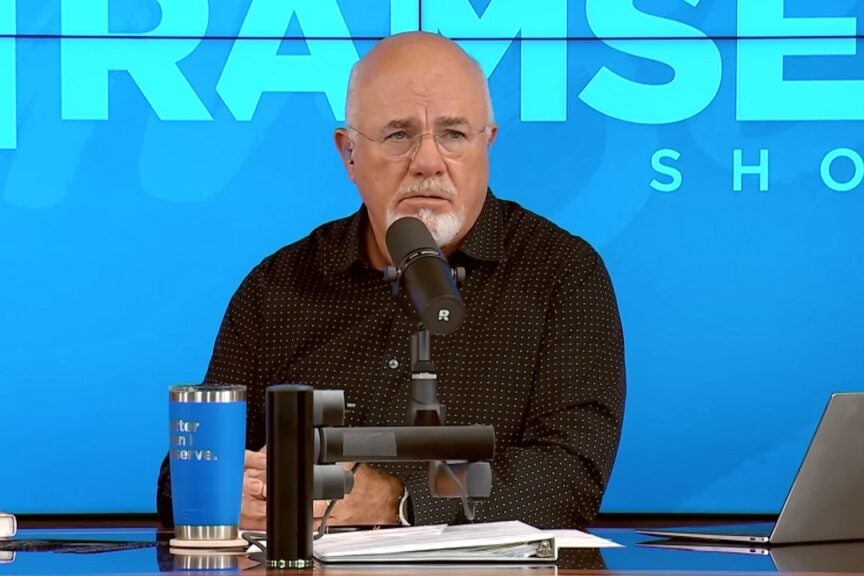
A recent call on The Ramsey Show posted to TikTok highlighted how fast even a solid income can vanish under the pressure of debt and overspending. Alyssa, a mental health therapist, called in to discuss her family’s financial struggles after recently getting remarried. Despite their combined income of $130,000 – well above the national average of $80,610 in 2023 – Alyssa and her husband barely make ends meet. With only $3,000 in savings and no contributions to retirement, they’re stuck in a cycle of paycheck-to-paycheck living.
Don’t Miss:
They owe $60,000 on cars, have a $240,000 mortgage, and are burdened by $140,000 in student loan debt –$90,000 from Alyssa’s schooling, and $40,000 from her husband, who has little to show for it. “Who’s the lawyer?” Dave Ramsey asked, pointing out how massive the debt seemed. Alyssa chuckled, responding, “I’m a mental health therapist.”
Ramsey’s co-host, George Kamel, questioned why they hadn’t aggressively tackled the debt yet. Alyssa explained that fear keeps holding them back while they’ve tried – particularly concerns about having enough for her 9-year-old daughter. Alyssa, who’s self-employed, and her husband, who works in construction, face income instability. She worries about catastrophic expenses wiping them out.
That didn’t sit well with Ramsey, who cut right to the chase. “You’re making $130,000 a year, and you’re freaking broke. That’s what I’m worried about. You’re driving cars you can’t afford, and you have a lifestyle that’s absolutely asinine.”
“And that’s got nothing to do with a 9-year-old,” Ramsey added. “What does she need that’s costing you thousands of dollars a month?” Alyssa admitted that it wasn’t the child’s expenses, more of a “just in case” mentality.
But while Ramsey’s blunt advice may sting, Alyssa’s situation isn’t all that uncommon. According to a 2023 survey by Payroll.org, 78% of Americans live paycheck to paycheck, a 6% increase from the previous year. Earning a good income is no longer a guarantee of financial security, especially when debt and overspending take over.
“You guys have no idea where this money goes,” Ramsey pointed out, urging Alyssa to look at their situation as if she were counseling another family. “If I hired you to look at this family objectively, you’d tell them to sell a car or two. You’re not going on vacation because you’re broke.”
Ramsey then got Alyssa to confront a hard truth. “You’ve got student loan debt hanging on so long you think it’s a pet,” he said. He laid a path for them to be debt-free in two to two and a half years – if they make serious sacrifices. That means no vacations, selling at least one car, cutting unnecessary spending, and finally facing the uncomfortable reality of their financial choices. “It won’t be comfortable,” Ramsey said. He added, “It’ll set you up for an awesome life for the rest of your lives.”
As tough as Ramsey’s advice may be, it offers a real shot at a better future. No matter how uncomfortable, making sacrifices now can set you up for financial freedom.
A financial advisor could be the next step to getting things on track. They can guide you on paying off debt and investing for retirement, helping you make decisions that benefit your present and future self.
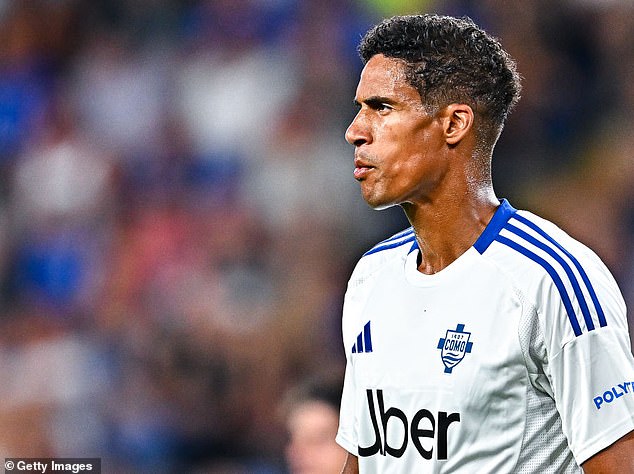
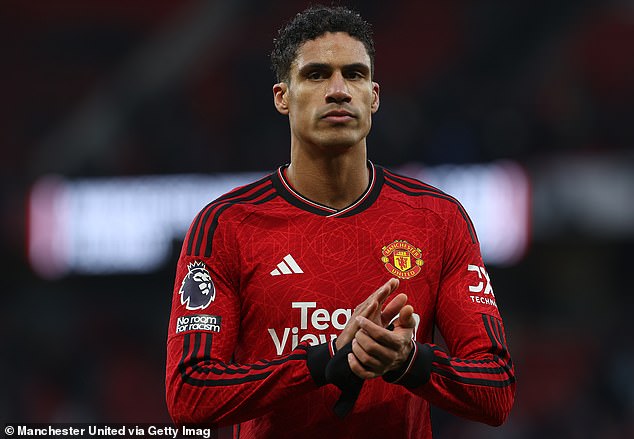
Former Manchester United, Real Madrid and France star Raphael Varane has announced his retirement from football.
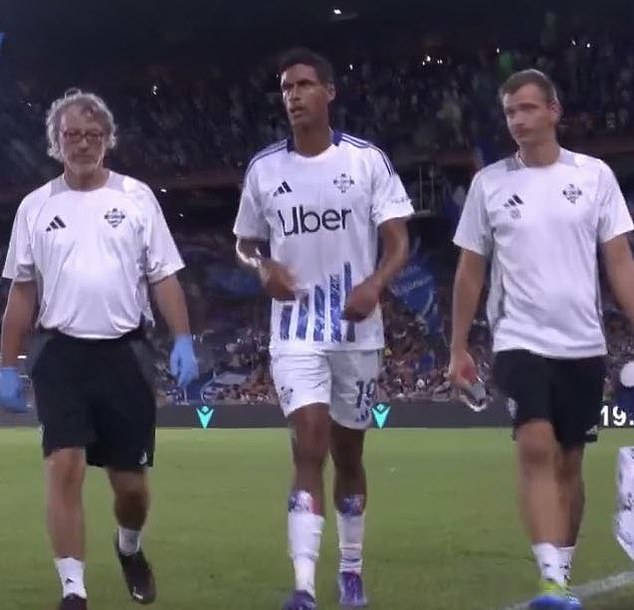
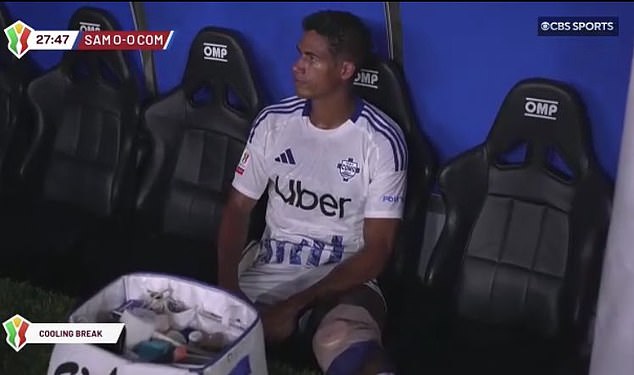
Varane, 31, has struggled to stay fit in recent years and suffered a serious knee injury just 20 minutes into his debut for Como last month.
Varane was subsequently left out of Como’s Serie A squad given he’s expected to be sidelined for an extended period of time.
As a result, Le Parisien had previously reported that the 31-year-old was considering a shock retirement.
And now, Varane has called time on his glittering career, revealing the decision via a post on his Instagram account on Wednesday morning.
Legendary France defender Raphael Varane, 31, has announced his retirement from football
The former Manchester United star has called time on his glittering career in the game
Varane joined Italian side Como in the summer, but suffered a serious knee injury on his debut
Varane is set to be out for an extended period of time and was left out of Como’s Serie A squad
Alongside a series of photos from his career, Varane wrote in a statement: ‘They say all good things must come to an end.
‘In my career I have taken on many challenges, rose to occasion after occasion, almost all of it was supposed to be impossible. Incredible emotions, special moments and memories that will last a lifetime. Reflecting on these moments, it is with immense pride and a feeling of fulfillment that I am announcing my retirement from the game that we all love.
‘I hold myself to the highest standard, I want to go out strong, not just holding on to the game. It takes a big dose of courage to listen to your heart and your instinct. Desire and needs are two different things. I have fallen and risen a thousand times, and this time, it’s the moment to stop and hang my boots up with my final game winning a trophy at Wembley.
‘I have loved fighting for myself, my clubs, my country, my teammates and the supporters of every team I have played for. From Lens to Madrid to Manchester, and playing for our national team. I have defended every badge with everything I have, and loved every minute of the journey. The game at the highest level is a thrilling experience. It tests every level of your body and your mind. The emotions we experience you cannot find anywhere else. As athletes, we are never satisfied, never accepting of success. It is our nature and what fuels us.
‘I have no regrets, I wouldn’t change a thing. I have won more than I could have even dreamed of, but beyond the accolades and trophies, I am proud that no matter what, I have stuck to my principles of being sincere and have tried to leave everywhere better than I found it. I hope I have made you all proud.
‘And so, a new life begins off the pitch. I will remain with Como. Just without using my boots and shin pads. Something I am looking forward to sharing more about soon.
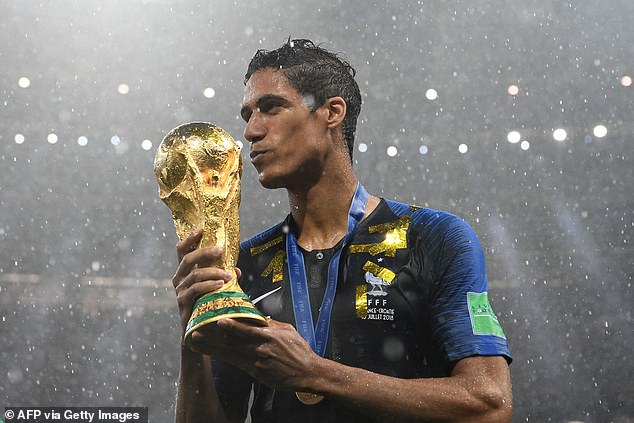
Varane won the World Cup with France in 2018 and earned 93 caps in total for Les Bleus
The French central defender, 31, is best known for his glittering 10 years with Real Madrid
‘For now, to the supporters of every club I played for, to my teammates, coaches and staff… from the bottom of my heart, thank you for making this journey more special than my wildest dreams could ever foresee.
‘Thank you, football. With love, Rapha.’
Several of Varane’s former team-mates and clubs were quick to pay tribute to the Frenchman, while the France national team also passed on their well-wishes.
Posting on X, they said: ‘Damn dust in the eye. Thanks for the work Raph. We all wish you a good retirement. #ProudtobeBlue.’
The World Cup winner had joined Como as a free agent over the summer after his contract with Manchester United expired at the end of last season.
He made the move to Italy on a two-year deal – where he linked up with Cesc Fabregas’ side – and joined fellow former Premier League stars Pepe Reina and Alberto Moreno in Como’s squad.
But now, Varane has terminated his contract with the Serie A outfit as he prepares for the next chapter of his life.
Varane, who came through the youth ranks at Lens, played at the top level for 14 years.
After one season in the first team with the Ligue 1 side, the central defender joined Real Madrid in 2011 aged 18.
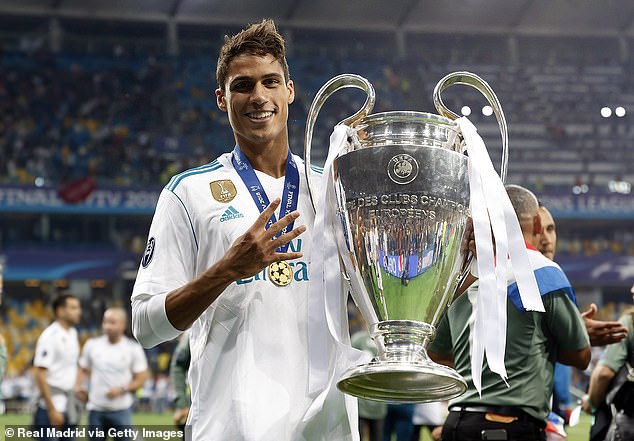
He went on to make 360 appearances for the Spanish giants, winning three La Liga titles, four Champions Leagues and a Copa del Rey, among several other trophies over a decade.
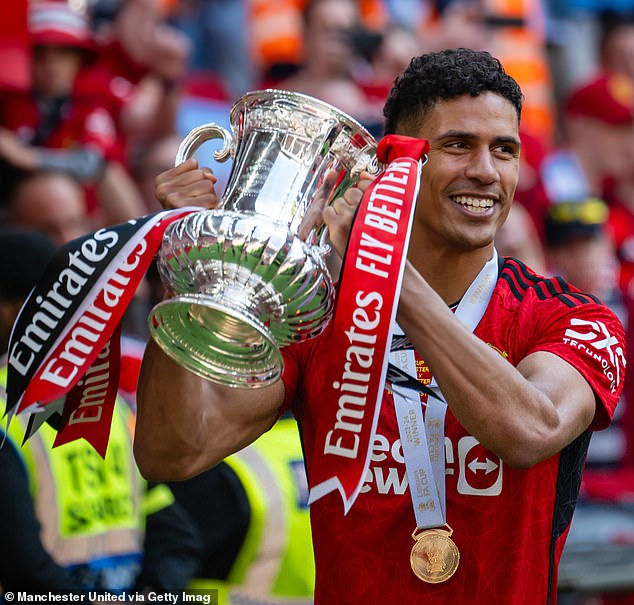
Varane won the FA Cup and Carabao Cup with United during his three-year spell at the club
Varane revealed he was planning to stay with Como in a new role that is yet to be announced
The Frenchman moved to United in 2021 and displayed his quality despite being hampered by injuries during his three years at Old Trafford, racking up 95 appearances for the Red Devils.
His last game in a United shirt saw him lift the FA Cup as he started the 2-1 victory over Man City at Wembley in May, while he also won the Carabao Cup with the club.
Varane also shone for France in their 2018 World Cup triumph, with the defender racking up 93 caps in total for Les Bleus before he retired from international duty at the age of 29 in February 2023.