hacklink hack forum hacklink film izle hacklink marsbahisizmir escortsahabetpornJojobetcasibompadişahbet

Tag: ruling

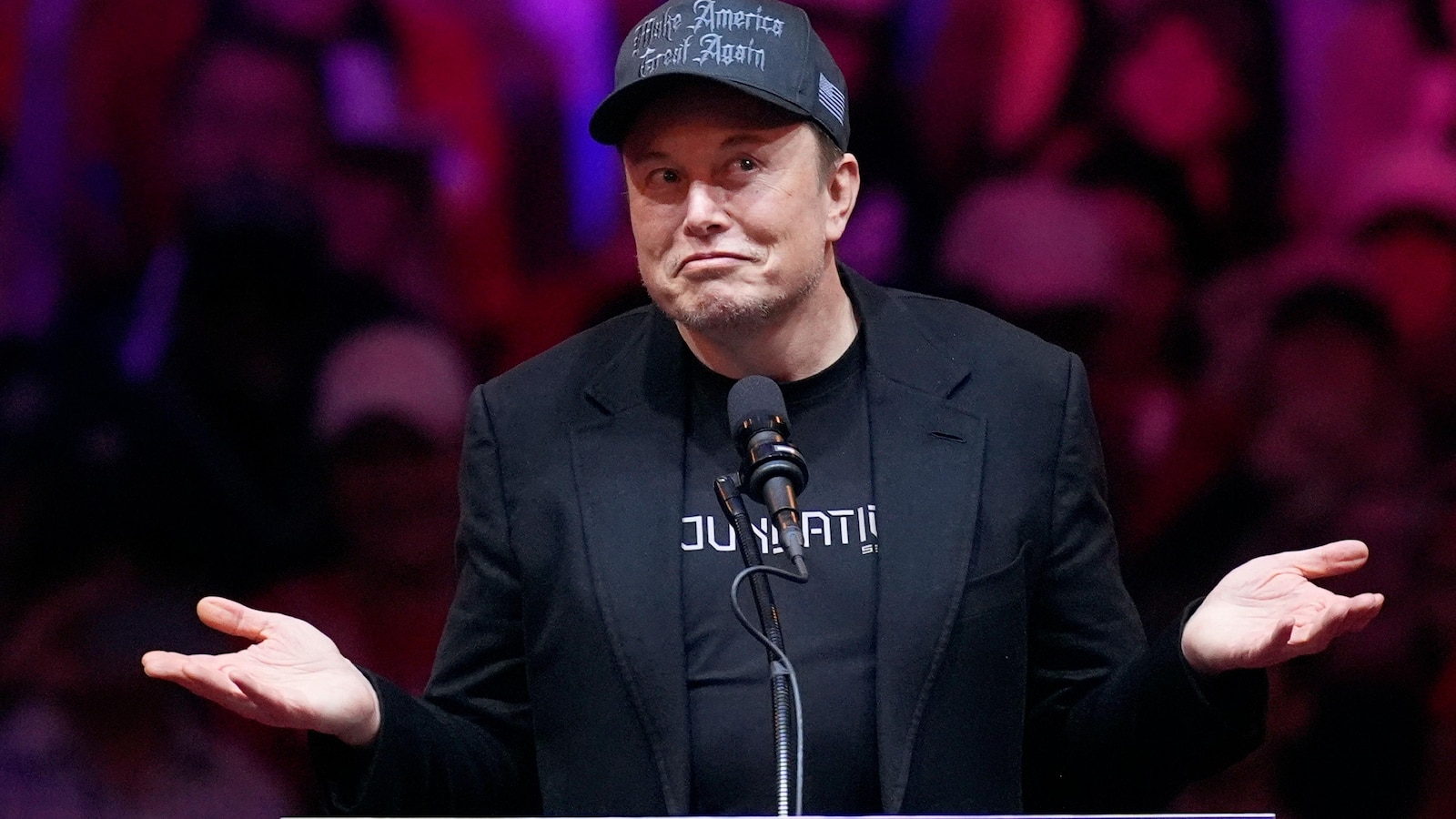
  • Delaware judge reaffirms ruling that invalidated massive Tesla pay package for Elon Musk

    Delaware judge reaffirms ruling that invalidated massive Tesla pay package for Elon Musk

    DOVER, Del. — A Delaware judge has reaffirmed her ruling that Tesla must revoke Elon Musk’s multibillion-dollar pay package

    Chancellor Kathaleen St. Jude McCormick on Monday denied a request by attorneys for Musk and Tesla’s corporate directors to vacate her ruling earlier this year requiring the company to rescind the unprecedented pay package.

    McCormick also rejected an equally unprecedented and massive fee request by plaintiff attorneys, who argued that they were entitled to legal fees in the form of Tesla stock valued at more than $5 billion. The judge said the attorneys were entitled to a fee award of $345 million.

    The rulings came in a lawsuit filed by a Tesla stockholder who challenged Musk’s 2018 compensation package.

    McCormick concluded in January that Musk engineered the landmark pay package in sham negotiations with directors who were not independent. The compensation package initially carried a potential maximum value of about $56 billion, but that sum has fluctuated over the years based on Tesla’s stock price.

    Following the court ruling, Tesla shareholders met in June and ratified Musk’s 2018 pay package for a second time, again by an overwhelming margin.

    Defense attorneys then argued that the second vote makes clear that Tesla shareholders, with full knowledge of the flaws in the 2018 process that McCormick pointed out, were adamant that Musk is entitled to the pay package. They asked the judge to vacate her order directing Tesla to rescind the pay package.

    McCormick, who seemed skeptical of the defense arguments during an August hearing, said in Monday’s ruling that those arguments were fatally flawed.

    “The large and talented group of defense firms got creative with the ratification argument, but their unprecedented theories go against multiple strains of settled law,” McCormick wrote in a 103-page opinion.

    The judge noted, among other things, that a stockholder vote standing alone cannot ratify a conflicted-controller transaction.

    “Even if a stockholder vote could have a ratifying effect, it could not do so here due to multiple, material misstatements in the proxy statement,” she added.

    Meanwhile, McCormick found that the $5.6 billion fee request by the shareholder’s attorneys, which at one time approached $7 billion based on Tesla’s trading price, went too far.

    “In a case about excessive compensation, that was a bold ask,” McCormick wrote.

    Attorneys for the Tesla shareholder argue that their work resulted in the “massive” benefit of returning shares to Tesla that otherwise would have gone to Musk and diluted the stock held by other Tesla investors. They value that benefit at $51.4 billion, using the difference between the stock price at the time of McCormick’s January ruling and the strike price of some 304 million stock options granted to Musk.

    While finding that the methodology used to calculate the fee request was sound, the judge noted that the Delaware’s Supreme Court has noted that fee award guidelines “must yield to the greater policy concern of preventing windfalls to counsel.”

    “The fee award here must yield in this way, because $5.6 billion is a windfall no matter the methodology used to justify it,” McCormick wrote. A fee award of $345 million, she said, was “an appropriate sum to reward a total victory.”

    The fee award amounts to almost exactly half the current record $688 million in legal fees awarded in 2008 in litigation stemming from the collapse of Enron.

    Source link

  • Volleyball case ruling reveals farce of transgender hysteria

    At least one judge has seen the transphobic hysteria for what it is.

    In denying a request to upend this week’s Mountain West volleyball tournament and/or force San Jose State to leave one of its players home, a federal judge called out the disingenuousness of the lawsuit. And in doing so, revealed the farce behind this sudden groundswell of opposition to transgender women athletes.

    “The Court finds their delay in filing this action and seeking emergency relief related to the MWC Tournament weakens their arguments,” U.S. District Judge S. Kato Crews wrote in his ruling issued Monday.

    “The movants could have sought injunctive relief much earlier if the exigencies of the circumstances required mandatory court intervention.”

    Source link

  • Volleyball case ruling reveals farce of transgender hysteria

    At least one judge has seen the transphobic hysteria for what it is.

    In denying a request to upend this week’s Mountain West volleyball tournament and/or force San Jose State to leave one of its players home, a federal judge called out the disingenuousness of the lawsuit. And in doing so, revealed the farce behind this sudden groundswell of opposition to transgender women athletes.

    “The Court finds their delay in filing this action and seeking emergency relief related to the MWC Tournament weakens their arguments,” U.S. District Judge S. Kato Crews wrote in his ruling issued Monday.

    “The movants could have sought injunctive relief much earlier if the exigencies of the circumstances required mandatory court intervention.”

    Source link

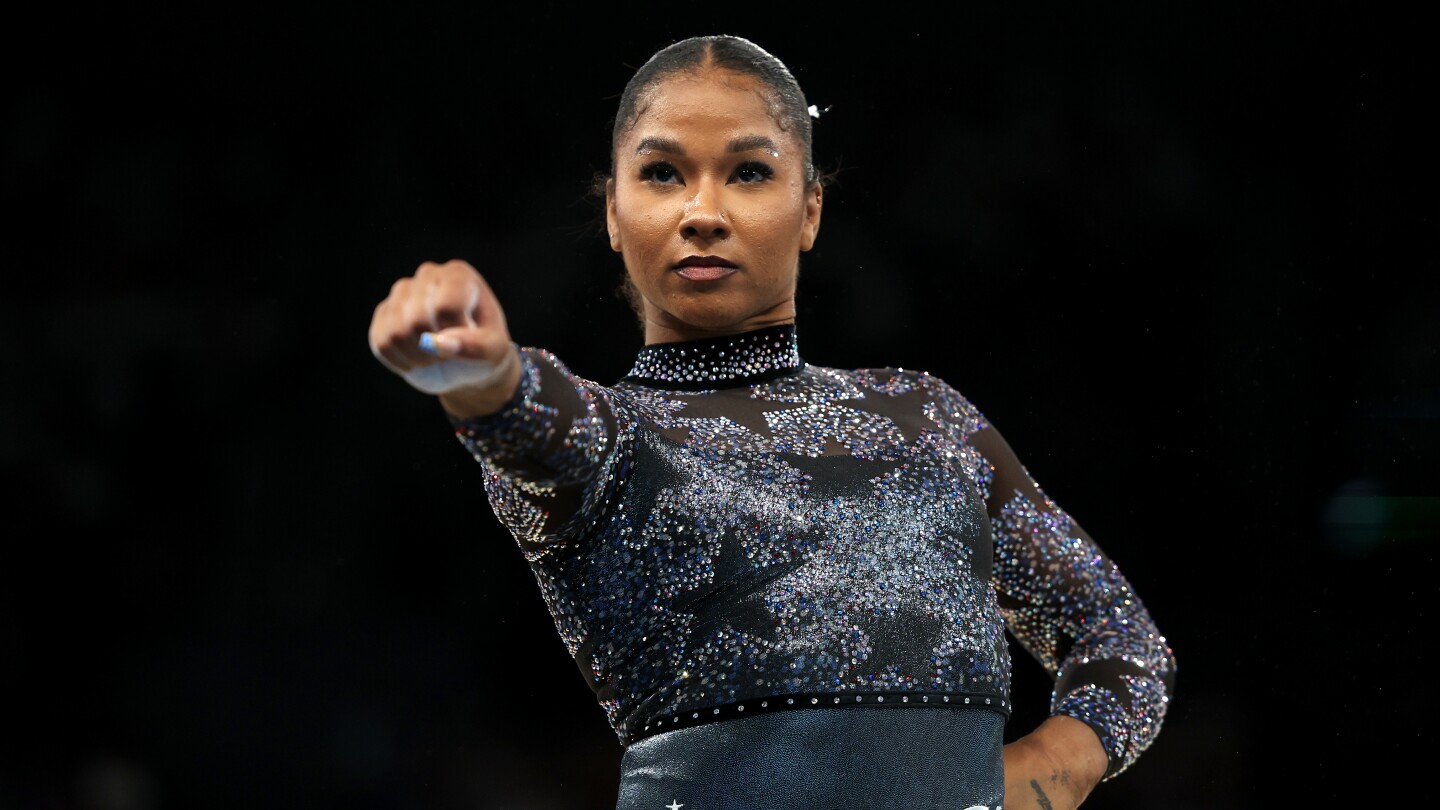
  • Jordan Chiles appeals Olympic floor exercise bronze medal ruling, submits video

    Jordan Chiles appeals Olympic floor exercise bronze medal ruling, submits video

    Jordan Chiles appealed a court decision that moved her from third place back to fifth in the Olympic floor exercise final over the timing of an inquiry into her initial score.

    Law firms representing Chiles announced Monday that they filed an appeal of the Court of Arbitration for Sport (CAS) ruling to the Federal Supreme Court of Switzerland.

    On Aug. 5, Chiles won the Olympic floor exercise bronze medal after a U.S. inquiry into her difficulty score led to the score being raised by one tenth. That moved her from fifth place into bronze-medal position, passing Romanians Sabrina Voinea and Ana Barbosu.

    After a Romanian appeal, a CAS panel on Aug. 10 reverted Chiles’ score because the scoring inquiry was recorded as submitted four seconds past the one-minute time limit. Chiles was moved back to fifth place. Barbosu became the bronze medalist.

    On Aug. 15, Chiles called the decision “devastating” and that it felt “unjust” in a social media post.

    Rulings by CAS, which is headquartered in Switzerland, can be appealed to Swiss federal court on limited procedural grounds.

    One of the law firms representing Chiles is asking the Swiss court to find the CAS decision “was procedurally deficient” for two reasons it specified:

    • CAS refused to consider video evidence found on Aug. 11 that showed the inquiry was submitted on time. (A video, with the aid of footage from a Simone Biles documentary filming, was submitted with Monday’s appeal. In it, Chiles’ score comes up. Her coaches briefly discuss making an inquiry. Then one of her coaches is heard (but not seen) saying “inquiry for Jordan” twice and another time saying “for Jordan” before the one-minute time limit.)
    • Chiles was not properly informed that CAS panel chair Hamid Gharavi had a conflict of interest. Gharavi “has acted as counsel for Romania for almost a decade and was actively representing Romania at the time of the CAS arbitration,” according to the law firm.

    “Given these undeniable deficiencies, Chiles asks the Federal Supreme Court to reinstate the score that she rightfully earned at the floor event final,” the law firm wrote.

    The firm also said Chiles was informed of the CAS hearing “a few hours before it began” and “did not receive the necessary time and opportunity to prepare any defense.”

    The U.S. Olympic and Paralympic Committee previously said CAS sent emails to incorrect addresses at the USOPC and USA Gymnastics up until less than 24 hours before the hearing and two days past the deadline to submit objections.

    CAS previously said it disclosed that Gharavi represents Romania “in investment arbitrations” and that Gharavi’s inclusion on the panel was not objected to before or through the end of the proceedings.

    In a statement Monday, USA Gymnastics said it “made a collective, strategic decision to have Jordan lead the initial filing. USAG is closely coordinating with Jordan and her legal team and will make supportive filings with the court in the continued pursuit of justice for Jordan.”

    The USOPC said in a Monday statement, “In collaboration with Jordan’s counsel and USA Gymnastics, we are pursuing a coordinated approach, with Jordan’s team leading the initial appeal. Due to the egregious errors and oversight by CAS in handling the case and overlooking clear evidence of Jordan’s rightful bronze win, we are determined to ensure she receives the recognition she deserves. Our commitment to truth in this matter remains steadfast.”


    Source link

  • Google faces new antitrust trial after ruling declaring search engine a monopoly

    Google faces new antitrust trial after ruling declaring search engine a monopoly

    ALEXANDRIA, Va. — One month after a judge declared Google’s search engine an illegal monopoly, the tech giant faces another antitrust lawsuit that threatens to break up the company, this time over its advertising technology.

    The Justice Department and a coalition of states contend that Google built and maintains a monopoly over the technology that matches online publishers to advertisers. Dominance over the software on both the buy side and the sell side of the transaction enables Google to keep as much as 36 cents on the dollar when it brokers sales between publishers and advertisers, the government contends in court papers.

    Google says the government’s case is based on an internet of yesteryear, when desktop computers ruled and internet users carefully typed precise World Wide Web addresses into URL fields. Advertisers now are more likely to turn to social media companies like TikTok or streaming TV services like Peacock to reach audiences.

    In recent years, Google Networks, the division of the Mountain View, California-based tech giant that includes such services as AdSense and Google Ad Manager that are at the heart of the case, actually have seen declining revenue, from $31.7 billion in 2021 to $31.3 billion in 2023, according to the company’s annual reports.

    The trial over the alleged ad tech monopoly begins Monday in Alexandria, Virginia. It initially was going to be a jury trial, but Google maneuvered to force a bench trial, writing a check to the federal government for more than $2 million to moot the only claim brought by the government that required a jury.

    The case will now be decided by U.S. District Judge Leonie Brinkema, who was appointed to the bench by former President Bill Clinton and is best known for high-profile terrorism trials including Sept. 11 defendant Zacarias Moussaoui. Brinkema, though, also has experience with highly technical civil trials, working in a courthouse that sees an outsize number of patent infringement cases.

    The Virginia case comes on the heels of a major defeat for Google over its search engine. which generates the majority of the company’s $307 billion in annual revenue. A judge in the District of Columbia declared the search engine a monopoly, maintained in part by tens of billions of dollars Google pays each year to companies like Apple to lock in Google as the default search engine presented to consumers when they buy iPhones and other gadgets.

    In that case, the judge has not yet imposed any remedies. The government hasn’t offered its proposed sanctions, though there could be close scrutiny over whether Google should be allowed to continue to make exclusivity deals that ensure its search engine is consumers’ default option.

    Peter Cohan, a professor of management practice at Babson College, said the Virginia case could potentially be more harmful to Google because the obvious remedy would be requiring it to sell off parts of its ad tech business that generate billions of dollars in annual revenue.

    “Divestitures are definitely a possible remedy for this second case,” Cohan said “It could be potentially more significant than initially meets the eye.”

    In the Virginia trial, the government’s witnesses are expected to include executives from newspaper publishers including The New York Times Co. and Gannett, and online news sites that the government contends have faced particular harm from Google’s practices.

    “Google extracted extraordinary fees at the expense of the website publishers who make the open internet vibrant and valuable,” government lawyers wrote in court papers. “As publishers generate less money from selling their advertising inventory, publishers are pushed to put more ads on their websites, to put more content behind costly paywalls, or to cease business altogether.”

    Google disputes that it charges excessive fees compared to its competitors. The company also asserts the integration of its technology on the buy side, sell side and in the middle assures ads and web pages load quickly and enhance security. And it says customers have options to work with outside ad exchanges.

    Google says the government’s case is improperly focused on display ads and banner ads that load on web pages accessed through a desktop computer and fails to take into account consumers’ migration to mobile apps and the boom in ads placed on social media sites over the last 15 years.

    The government’s case “focuses on a limited type of advertising viewed on a narrow subset of websites when user attention migrated elsewhere years ago,” Google’s lawyers write in a pretrial filing. “The last year users spent more time accessing websites on the ‘open web,’ rather than on social media, videos, or apps, was 2012.”

    The trial, which is expected to last several weeks, is taking place in a courthouse that rigidly adheres to traditional practices, including a resistance to technology in the courtroom. Cellphones are banned from the courthouse, to the chagrin of a tech press corps accustomed at the District of Columbia trial to tweeting out live updates as they happen.

    Even the lawyers, and there are many on both sides, are limited in their technology. At a pretrial hearing Wednesday, Google’s lawyers made a plea to be allowed more than the two computers each side is permitted to have in the courtroom during trial. Brinkema rejected it.

    “This is an old-fashioned courtroom,” she said.

    Source link

  • Stakeholder in Trump’s Truth Social parent company wins court ruling over share transfer

    Stakeholder in Trump’s Truth Social parent company wins court ruling over share transfer

    DOVER, Del. — A federal judge in Delaware has ruled in favor of a firm seeking assurance that it will be able to sell its minority stake in the parent company of former president Donald Trump’s Truth Social platform.

    The judge on Friday granted summary judgment to Florida-based United Atlantic Ventures LLC in a lawsuit filed against Minnesota-based Odyssey Transfer and Trust Co., a business that handles securities transfers among registered shareholders.

    UAV is owned by Andrew Litinsky and Wesley Moss, former contestants on Trump’s TV show, “The Apprentice” who also helped facilitate a merger that took Trump Media public in March.

    Since then, UAV and Trump Media have been battling in courts in both Delaware and Florida over UAV’s stake in the company. Attorneys for Trump Media assured a state judge in Delaware earlier this year that UAV was entitled to an 8.6% stake and would suffer no merger-related dilution. They now contend, however, that UAV is not entitled to its shares because of pre-merger mismanagement by Litinsky and Moss.

    Friday’s ruling involves UAV’s concerns that it will not receive its Trump Media shares, currently valued at about $350 million, from Odyssey when a post-merger lockup period expires Sept. 19. According to court filings, Odyssey told UAV earlier this year that it would be taking direction from TMTG and its lawyers.

    After Odyssey filed a lawsuit, the parties appeared to have reached a resolution, with Odyssey saying it would remove transfer restrictions on the share after the lockup period expires “without preference to any TMTG shareholder.” After seeking approval from Trump Media, however, Odyssey tried to change that language to “on the same basis as other similarly situated TMTG shareholders.”

    Trump holds about 115 million TMTG shares, or roughly 60% of the company’s outstanding shares.

    U.S. District Judge Gregory Williams questioned Odyssey’s conduct, noting that it claimed the language change was “immaterial,” while allowing it to scuttle settlement negotiations.

    “Even outside settlement negotiations, Odyssey’s conduct has been elusive,” Williams wrote.

    Williams ordered that when Odyssey is notified by TMTG of the expiration of the lockup provisions, it must promptly notify UAV, remove transfer restrictions on all shares and not interfere with the delivery of the shares.

    TMTG’s share price hit a high of $79.38 on its first day of trading but is now hovering around $17, closing Friday at $17.10.

    Source link