hacklink hack forum hacklink film izle hacklink marsbahisizmir escortsahabetpornJojobetcasibompadişahbetGorabetcasibom9018betgit casinojojobetmarsbahismatbetmatbet

Tag: Samsung

  • Samsung aims to turn its next generation of Galaxy smartphones into AI companions

    Samsung aims to turn its next generation of Galaxy smartphones into AI companions

    SAN JOSE, Calif. — Samsung is injecting another dose of artificial intelligence into its next lineup of Galaxy smartphones, escalating an effort to simplify people’s lives while deepening their dependence on a device that accompanies them almost everywhere.

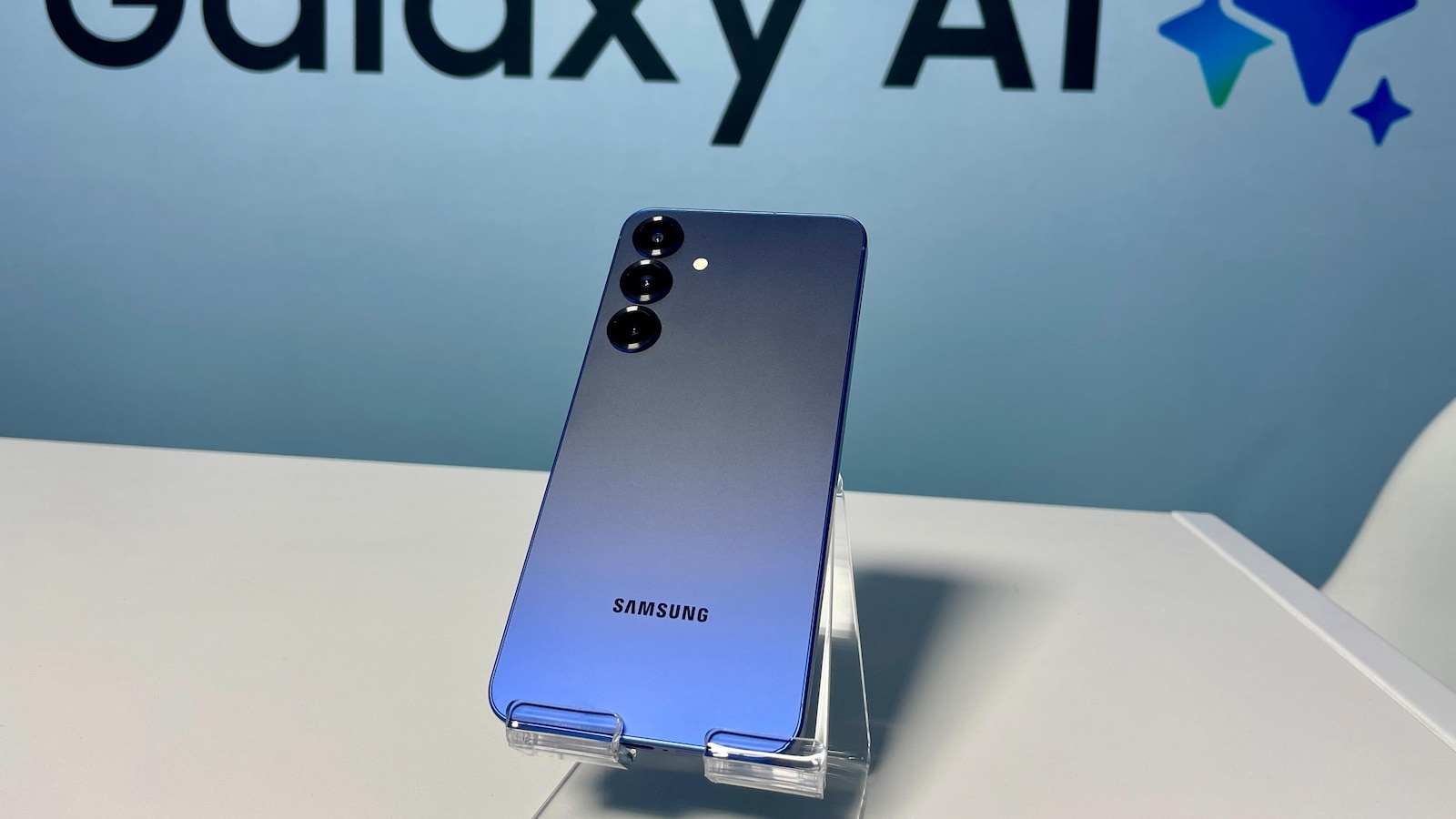
    The three Galaxy S25 models unveiled Wednesday in San Jose, California, are the second generation to be designed for the AI age — a craze that market-leading Apple joined last September with the release of the iPhone 16. Most of the hardware on the Galaxy S25 is mostly the same as last year’s model, except for a faster chip and a more powerful ultrawide lens on the camera.

    In its next phase, Samsung is positioning the Galaxy S25 as an “AI companion” capable of pulling more requests out of conversations, learning people’s routines, anticipating people’s needs and performing more technological tricks, such as being able to remove unwanted sounds from videos or identifying the name of a song upon request.

    The AI on the new Galaxy phones has been designed to toggle from one app to another to fetch, summarize and manage information, entertainment and other content stored on the devices. In an attempt to make the technology even more indispensable, the AI on Galaxy S25 will be able to create customized digital dossiers on users’ behavior patterns and other unique characteristics that Samsung is calling a “personal data engine.”

    “Everything you see here is the beginning of a new reality,” said TM Roh, the Samsung executive who oversees its smartphones. “Things that you thought you could never do, but now you can.”

    As Apple has been doing with its AI features, Samsung is promising that its technology will shield users’ privacy while also peering into their lives. Samsung is providing the protection primarily by keeping all the knowledge accrued by its AI technology on the Galaxy devices — within a digital fortress the company nicknamed after Fort Knox, the Kentucky Army base seated next to the U.S. government’s depository for gold.

    After raising prices last year, Samsung is standing pat with the Galaxy S25 phones, with the standard model starting at $800, the Plus model at $1,000 and the Ultra model at $1,300. The phones are scheduled to be in stores starting Feb. 7.

    Forrester Research analyst Thomas Husson thinks the Galaxy S25 models “will offer a more intuitive user experience with more integrated vocal and cross-app experiences, but AI is not yet a key reason to buy a new smartphone.”

    Samsung is doubling down on its AI bet after getting a sales bump from the past year’s emphasis on the technology. The South Korean company sold 32 million of its Galaxy S24 models from January through September last year, a 25% increase from the same time in the previous year, according to the research group Canalys.

    But Samsung didn’t fare as well in the lower end of the smartphone market, where it was hurt by cheaper devices made by Chinese competitors. That’s one of the reasons Samsung’s total smartphone shipments fell by 1% last year, leaving it slightly behind Apple in the worldwide market, according to the research firm International Data Crop.

    As was the case with last year’s models, the Galaxy S25 will draw heavily on AI technology made by Google, the maker of the free operating system Android that Samsung has long used for its smartphones.

    Some of the new AI tricks, such as the ability to deploy Google’s “circle to search” technology to quickly identify the song title of music playing in a video, will debut on the Galaxy S25 before coming to other Android phones later this year. Google also has been planting more AI on its own phone, the Pixel, but that device still lags far behind the iPhone and Galaxy.
    Source link

  • Samsung Galaxy Watch Ultra review: A strong contender for the ‘Ultra’ lifestyle

    Samsung Galaxy Watch Ultra review: A strong contender for the ‘Ultra’ lifestyle

    When Samsung unveiled its first premium outdoor fitness watch, the Galaxy Watch Ultra, it was clear the tech giant was taking a shot at the likes of Garmin and Apple’s outdoor adventure offerings. Naturally, I was intrigued. Having worn my Apple Watch Ultra 2 for quite some time, I was curious about how Samsung’s take on the premium fitness smartwatch would hold up—especially when worn side by side with Apple’s flagship.

    After a month of near-daily wear and comparison with my Apple Watch Ultra 2, I found myself impressed by the Galaxy Watch Ultra’s ambition but slightly underwhelmed by some aspects. Here’s why.

    The Looks: Sleek and Strong

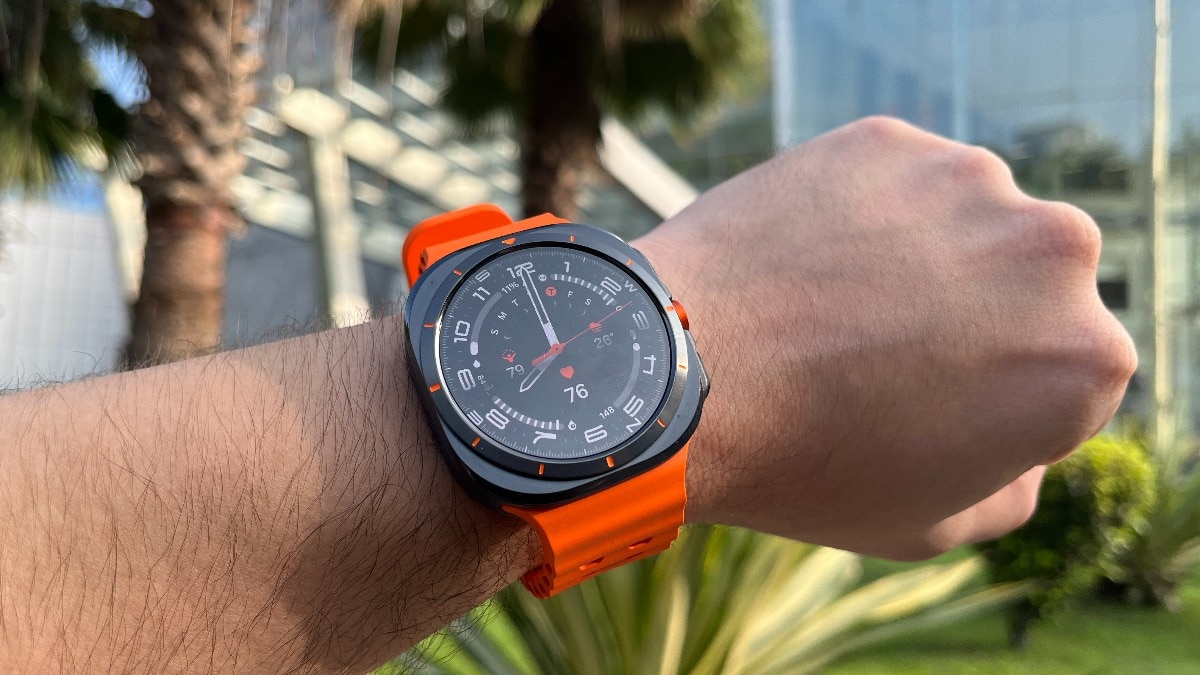
    Let’s start with the obvious: the Galaxy Watch Ultra is a beauty. Samsung has gone all-in on the rugged aesthetic with a 47mm titanium case and a sapphire crystal face. It’s built to endure the great outdoors, whether you’re diving, hiking, or biking. Water resistance up to 10 ATM? Check. IP68 rating for dust and water resistance? Double-check. It even boasts the ability to withstand temperatures as high as 55 degrees Celsius and elevations up to 9,000 metres (no, I didn’t hike Everest to confirm).

    That said, the Galaxy Watch Ultra’s design, while striking, is also oddly reminiscent of its main competitor, Apple. The orange band feels distinctly familiar, and the side button bears an uncanny resemblance to Apple’s Action button. Even the Double Pinch gesture feels like a riff on Apple’s Double Tap feature. But hey, imitation is the sincerest form of flattery, right?

    In terms of looks, Samsung has nailed it. However, if you’re looking for something more visually distinctive than the Apple Watch Ultra, you might find it a tad derivative.

    Performance and Features

    Functionally, the Galaxy Watch Ultra performs well. It tracks a plethora of activities and provides detailed metrics, much like its competitors. However, having switched between my Apple Watch Ultra 2 and this, I immediately noticed a few limitations.

    Navigation on the Galaxy Watch Ultra can be a bit tricky. I often found myself swiping through several menus before finding the feature I needed, whether it was Track Back or checking my heart rate. The Apple Watch’s interface feels far more intuitive in this regard. There’s room for improvement, and it feels like something that future updates could streamline, but for now, it’s a slight hindrance.

    Battery Life: Good, but Could Be Better

    Now, battery life is always a critical aspect of any outdoor fitness watch, and here’s where I wish Samsung would’ve pushed the boundaries a bit more. The Galaxy Watch Ultra’s battery life is decent at about two days, which is great for a smartwatch but not quite up to scratch for a serious weekend camping trip. With Power Saving mode on, you can squeeze out about 3-5 days, but even then, it’s far below what you’d get from a Garmin, for example. For someone like me, who tends to forget to charge things until they’re on their last 10%, this was a slight letdown.

    Health Insights: The AGEs Dilemma

    One of Samsung’s standout features is its Advanced Glycation End-products (AGEs) index. While the science behind it is intriguing—measuring these products can help assess risks for conditions like diabetes or stroke—it’s still very experimental. For now, it feels like more of a novelty than a game-changing health feature. 

    Body composition measurements, on the other hand, were fairly consistent and helpful. My readings aligned with what I typically expect as a health-conscious individual, and they stayed steady over the testing period. But again, there’s nothing here that dramatically surpasses what’s already on the market.

    Sleep Tracking: Penguins and Puppies

    Samsung’s sleep-tracking features are impressive, especially the “sleep animal” profiles that give you fun insights into your sleep habits. As someone who often wakes up during the night (thanks to my puppy, who seems to think my pillow is her personal playground), I was identified as a “penguin,” which was surprisingly accurate. It’s a nice touch, though not a revolutionary one—Fitbit has been doing this for a while.

    Sports and Adventure: Missing a Few Key Plays

    The Galaxy Watch Ultra is clearly designed with the adventurer in mind, with dual-band GPS, a compass, and Track Back features. As an outdoor enthusiast, I appreciated these, but they aren’t quite as intuitive or well-integrated as on the Apple Watch Ultra. Finding them during an activity was often more cumbersome than it should be.

    While it has plenty of useful metrics like cadence and vertical oscillation, it’s missing a few of the sports features that make the Apple Watch Ultra stand out, such as diving. If you’re big into water sports, you’ll probably find this lacking compared to Apple’s ecosystem.

    Connectivity and Compatibility: Android Bias

    Here’s where things get a bit tricky. As an Android user, you’ll likely have a great experience with the Galaxy Watch Ultra, especially if you’re on a Samsung phone. However, if you’re using a non-Samsung Android, or worse, switching from an iPhone like I did, the experience becomes a little fragmented.

    Certain features, like the ECG, are only available with a Samsung phone. And while the watch syncs up with apps like Google Fit, Samsung Health is really the optimal partner here, which limits its appeal to non-Samsung users. It doesn’t help that Samsung still lacks the seamless satellite messaging or connectivity features that the Apple ecosystem offers.  

    The Verdict: A Solid First Attempt

    There’s no denying that the Samsung Galaxy Watch Ultra is a well-built, highly capable outdoor fitness watch. But after testing it extensively, sometimes alongside my Apple Watch Ultra 2, it feels more like a promising work in progress than a market leader.

    Samsung has plenty of potential to catch up in future iterations, and for Android users, this is one of the best options available right now. However, if you’re coming from the Apple Watch ecosystem, especially if you’re deep into outdoor adventures, you might find it hard to switch fully. 

    The Galaxy Watch Ultra is a solid debut, but it’s not quite the category disruptor it could be – at least, not yet.

    Source link

  • Epic Games sues Google and Samsung over phone settings, accusing them of violating antitrust laws

    Epic Games sues Google and Samsung over phone settings, accusing them of violating antitrust laws

    LOS ANGELES — Video game maker Epic Games sued Google and Samsung on Monday, accusing the tech companies of coordinating to block third-party competition in application distribution on Samsung devices.

    At issue is Samsung’s “Auto Blocker” feature, which only allows for apps from authorized sources, such as the Samsung Galaxy Store or Google Play Store, to be installed. The feature is turned on by default but can be changed in a phone’s settings. The tool prevents the installation of applications from unauthorized sources and blocks “malicious activity,” according to Samsung.

    In a lawsuit filed in San Francisco federal court — Epic’s second against Google — the company said Auto Blocker “is virtually guaranteed to entrench Google’s dominance over Android app distribution.” Epic, developer of the popular game “Fortnite,” filed the suit to prevent Google from “negating the long overdue promise of competition in the Android App Distribution Market,” according to the complaint.

    “Allowing this coordinated illegal anti-competitive dealing to proceed hurts developers and consumers and undermines both the jury’s verdict and regulatory and legislative progress around the world,” Epic Games said in a post on its website.

    Google did not immediately respond to a request for comment. Samsung said it “actively fosters market competition, enhances consumer choice, and conducts its operations fairly.”

    “The features integrated into our devices are designed in accordance with Samsung’s core principles of security, privacy, and user control, and we remain fully committed to safeguarding users’ personal data. Users have the choice to disable Auto Blocker at any time,” Samsung said, adding that it plans to “vigorously contest Epic Game’s baseless claims.”

    Epic launched its Epic Games Store on iPhones in the European Union and on Android devices worldwide in August. The company claims that it now takes “an exceptionally onerous 21-step process” to download a third-party app outside of the Google Play Store or the Samsung Galaxy Store. But a support page on Epic’s website shows a four-step process to remove the Auto Blocker setting.

    Epic won its first antitrust lawsuit against Google in December after a jury found that Google’s Android app store had been protected by anti-competitive barriers that damaged smartphone consumers and software developers.

    The game maker says the “Auto Blocker” feature was intentionally crafted in coordination with Google to preemptively undermine the jury’s verdict in that case.

    “Literally no store can compete with the incumbents when disadvantaged in this way,” Epic Games CEO Tim Sweeney said on X. “To have true competition, all reputable stores and apps must be free to compete on a level playing field.”

    Source link