WASHINGTON — The U.S. has updated a decades-old science and technology agreement with China to reflect their growing rivalry for technological dominance. The new agreement, signed Friday after many months of negotiations, has a narrower scope and additional safeguards to minimize the risk to national security.
The State Department said the agreement sustains intellectual property protections, establishes new guardrails to protect the safety and security of researchers and “advances U.S. interests through newly established and strengthened provisions on transparency and data reciprocity.”
It covers only basic research and does not facilitate the development of critical and emerging technologies, the department said. This includes technologies related to artificial intelligence and quantum computing, which are considered crucial for economic strength and military supremacy.
The first such agreement was signed in January 1979 when the two countries established diplomatic ties to counter the influence of the Soviet Union and when China severely lagged behind the U.S. and other Western nations in science and technology.
The agreement was last extended in 2018, and given temporary extensions last year and this year to allow for negotiations. Washington had come to view the agreement as failing to reflect the shift in U.S.-China relations and China’s emergence as a heavyweight in the field. The new agreement extends cooperation for five years.
As the tech war between the two countries has escalated, the U.S. has banned exports of advanced chips to China and restricted U.S. investments in certain technologies that could boost China’s military capabilities. Cooperation in science and technology chilled in universities and research institutions after a Trump-era program was introduced to curb China’s spying. The program was ended in 2022 after multiple unsuccessful prosecutions of researchers and because of concerns that it had prompted racial profiling.
Deborah Seligsohn, an assistant professor of political science at Villanova University, said the new agreement would lead to fewer government-to-government programs, but, through its limited scope and stronger safeguards, it would allow for the cooperation to be sustained “through a more difficult relationship.”
Earlier this year, Rep. Andy Barr, a Kentucky Republican, said the decades-long cooperation had resulted in the U.S. “providing all sorts of scientific and technical knowledge to Chinese scientists in what would amount to the greatest outpouring of American scientific and technology expertise in history.”
Rep. Gregory Meeks, a Democrat from New York, argued that the U.S. and the global community also have benefited from research collaborations that have “prevented diseases, reduced pollution, and deepened our understanding of the Earth’s history.”
But Meeks said he favored congressional oversight to ensure projects under the agreement would be in line with U.S. values and interests.
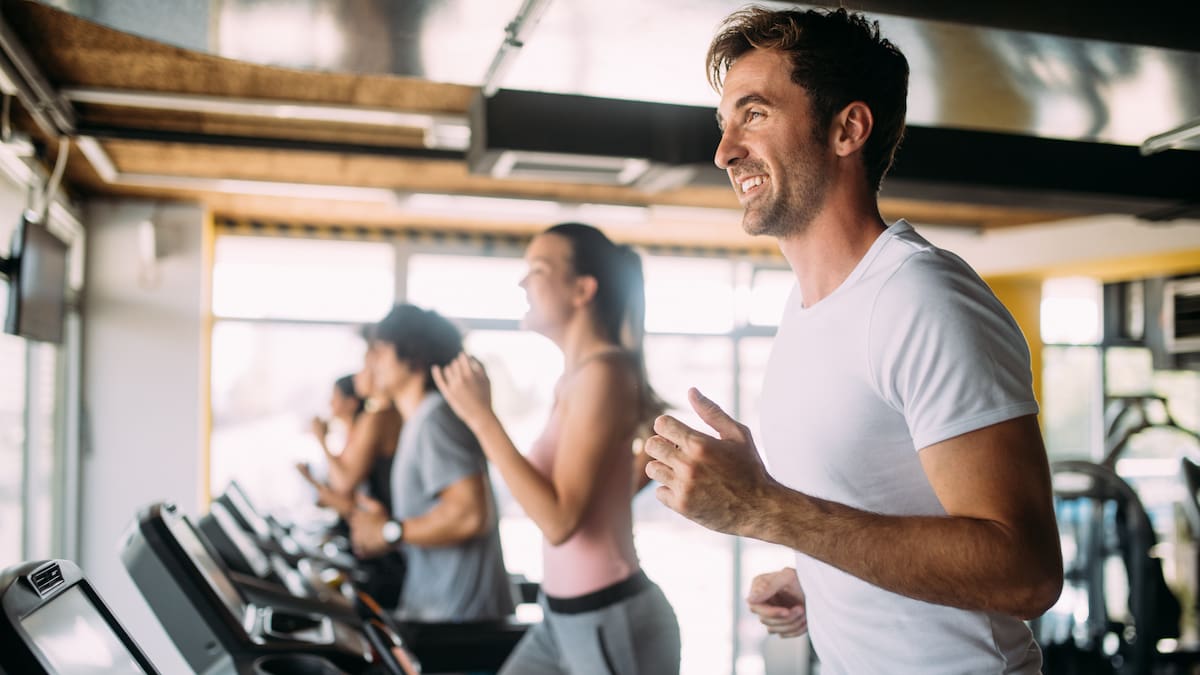
“We’ve done studies where we look at people who are really active,” including runners racing across America, Pontzer said, “and people who are really sedentary, and actually, they’re burning the same number of calories,” which helps explain why people rarely lose much weight with exercise, even as the exercise makes them healthier.
That discovery is only one of many from Pontzer and his colleagues, who have been busily upending entrenched ideas about our metabolisms in recent years.
Now, with calories and weight control becoming top-of-mind topics as we enter the holiday season, I talked with Pontzer about what the latest science says about our metabolisms and whether they’re affected by exercise, differ between men and women, and can be “boosted”. We also talked about why he thinks Thanksgiving is the most human holiday we have. (The following interview was edited for length and clarity.)
Q. Exercising more means we’ll burn more calories.
A: No, not overall.
Exercising more does not mean we’ll burn more calories. Photo / 123rf
Q. A more basic question, then, and one I don’t think I could answer: What is our metabolism?
A. Your metabolism is all the work that all 37 trillion of your cells do every day. You can measure that work in the energy required. That’s why we measure your metabolism in calories, which are a measurement of energy.
Q. Most of us probably think our metabolisms are fastest when we’re going through puberty and start slowing down drastically when we reach midlife, and also that men’s are faster than women’s. But none of that is true?
A. So, how to begin? The main determinant of how many calories you burn every day is how many cells you have at work. Bigger people burn more calories. The type of cells matters, too. Fat cells burn a little energy, but not much. So, when we look at women versus men, men will burn more calories than women, but it’s because men tend to be a bit bigger and carry a bit less fat. If I compare a man and woman who have the same body size and same fat percentage, I would expect exactly the same energy expenditure per day.
Q. And teenagers are burning the most calories?
A. Yes, the highest total calories burned in your lifetime probably happens in late adolescence. But pound for pound, nobody burns calories like a 3 or 4-year-old child. Their metabolisms are white hot because of just how much work their cells are doing with all that growth and development. But they’re tiny, so the total calories is still quite small.
A child’s metabolism is “white hot”, burning the most calories per pound of body weight. Photo / 123rf
Q. Does someone’s metabolism slow down a lot during middle age? It sure feels like it.
A. I’m in my late 40s and I definitely feel different in the way I respond to food when I eat than when I was in my 20s. But, shockingly, no. We’ve done this measurement now on thousands of adults from their 20s through their 50s and beyond. But in that block, the 20s to 50s, we don’t see any changes in the metabolic rate, after you control for size. There does seem to be some slowing after age 60.
Metabolic rates don’t slow between ages 20 and 50, contrary to popular belief. Photo / 123rf
Q. But many of us gain weight during middle age. If we can’t blame our slowing metabolisms, what’s going on?
A. If it’s not the energy-burned side of the equation, it must be the energy we’re eating. Why might that change? One reason is we get more stressed. It’s easy to develop unhealthy eating habits. Plus, if we look at how people actually gain weight, it won’t surprise anybody that we typically gain a few pounds around Thanksgiving and into the Christmas season, then lose it with New Year’s resolutions. As we get older, we seem to get a little better at putting it on and not quite as diligent about taking it off.
Q. So where does exercise fit in? I’m a runner and I’d like to think the more I run, the more calories I burn and the more weight I lose. But no?
A. I thought so too. But it turns out it’s not so simple. If you exercise today, you’ll burn more energy today. But if you really change your lifestyle and start exercising regularly and that becomes your new normal, your body adjusts and you wind up not burning more calories overall. Basically, if you spend more energy on exercise, your body finds ways to spend less on other stuff. But here’s the good news. The adjustments the body makes, which include reductions to inflammation and stress reactivity, may be a big part of why exercise is so good for us.
Q. Can we boost our metabolisms with the right pills or foods?
A. No, there’s no way to boost your metabolism by what you eat. You can go high carb, low carb, low fat, high protein. None of those seem to have any measurable effects on calories burned per day.
There’s no magic food or pill to boost metabolism despite diet myths. Photo / 123rf
Q. What about thinking hard? Won’t that burn extra calories?
A. Wouldn’t that be nice, if all it took was enlightened conversations around the Thanksgiving table to burn away dessert, or if discussing chess strategy helped us lose weight? But no. It’s true your brain is incredibly hungry. Basically, it runs a 5k every day, burning through about 300 kilocalories, the same as a 5k. But that’s true whether you’re deep in thought or totally zoned out.
Your brain burns about 300 calories daily, even if you’re not thinking hard. Photo / 123rf
Q. You mentioned Thanksgiving. Will eating one enormous meal, as many of us do at Thanksgiving [or Christmas], raise our metabolisms and help us burn those extra calories?
A. You do burn about 10% of the calories you consume during digestion, thanks to everything from chewing the food to digesting it and dealing with it in your cells. But that’s pretty minor. Realistically, if you want to avoid gaining weight at Thanksgiving or Christmas, you’ll need to eat less. But let’s stop for a minute here and I’ll put on my anthropologist’s hat, and we can talk about what’s really amazing about the festive season, which is that we all sit around and share food. It’s the strangest thing we do.
Q. Strange how?
A. No other ape shares like we do. It’s anomalous in the natural world. But we do it every day. And whenever there’s a big moment to celebrate, we do it by sharing food. So, of course, we should be aware of the health aspects. But let’s not lose sight of the fact that in humans, food is a social bond and especially at Christmas . Maybe give yourself one day to focus on that aspect and not worry too much about the calories. It’s okay, honestly, to just enjoy the pie.
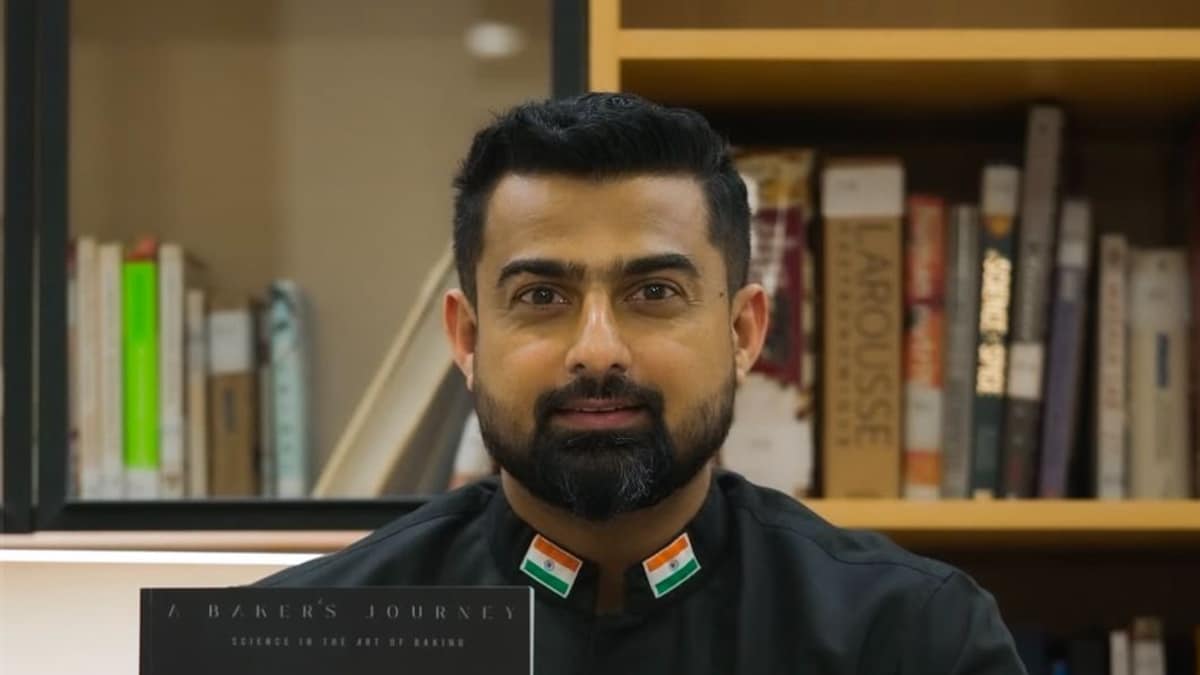
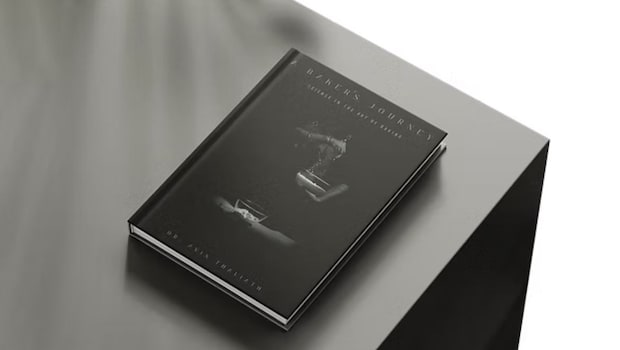
Dr Avin Thaliath’s A Baker’s Journey- Science in the Art of Baking is an eloquent blend of culinary science, historical anecdotes, and practical artistry. This book explores the intricate processes that define the craft of baking while celebrating the transformative power of bread-making as both an art and a science. Thaliath, a seasoned pastry chef and educator, has penned a resource that caters to novices, home bakers, and professionals alike.
Content Overview
The book is thoughtfully divided into chapters, each unravelling the mysteries of core ingredients like flour, sugar, and yeast, and their chemical interplay in baking. Starting from fundamental insights such as the anatomy of a wheat kernel to advanced topics like dough dynamics and gluten structure, Thaliath systematically builds the reader’s understanding. Particularly engaging are the sections on “Magic Within” and “Heat’s Serenade,” where he marries chemistry with culinary techniques. Recipes sprinkled throughout the chapters offer practical applications of the scientific principles discussed. From classic baguettes to quinoa bread and rye loaves, these are crafted with precision and clarity, making them approachable yet rewarding for all skill levels.
Strengths
Scientific Depth: Thaliath excels in making the science of baking accessible. Concepts such as the interaction between protein and water in gluten formation are presented with clarity, ensuring readers grasp the “why” behind techniques.
Cultural and Historical Insights: Stories like the origin of the baguette or the evolution of focaccia root the book in cultural richness, offering a narrative that’s as delightful as the recipes themselves.
Professional Expertise: With years of teaching and baking experience, Thaliath’s passion and depth of knowledge shine through. The book is a testament to his belief in blending tradition with modern techniques.
User-Friendly Format: The structured layout, complete with tables, illustrations, and easy-to-follow recipes, enhances usability.
Areas for Improvement
The book, while comprehensive, is primarily ingredient-focused. Expanding on presentation and plating techniques, especially for aesthetic-driven bakes like pastries, would enrich the reader’s journey further. Additionally, more visual aids, such as step-by-step photos for complex techniques, could enhance its appeal to visual learners.
Conclusion
A Baker’s Journey – Science in the Art of Baking is not just a cookbook; it’s an educational odyssey. Dr Avin Thaliath has successfully bridged the gap between scientific precision and culinary passion, creating a resource that will undoubtedly inspire bakers to innovate and perfect their craft. This book is a must-have for anyone passionate about understanding the science behind their bakes and elevating their skills to professional levels.
Rating: 4.5/5
I recommend this book for culinary enthusiasts, aspiring bakers, and seasoned professionals seeking to deepen their baking knowledge.