hacklink hack forum hacklink film izle hacklink marsbahisizmir escortsahabetpornJojobetcasibompadişahbetjojobet

Tag: Scientists

  • How scientists with disabilities are making research labs and fieldwork more accessible

    How scientists with disabilities are making research labs and fieldwork more accessible

    SAN BERNARDINO, Calif. — The path to Lost Lake was steep and unpaved, lined with sharp rocks and holes.

    A group of scientists and students gingerly made their way, using canes or a helping hand to guide them. For those who couldn’t make the trek, a drone brought the lake — blue and narrow — into view.

    The field trip was designed to illustrate the challenges disabled researchers often face — and how barriers can be overcome.

    “Just because you can’t do it like someone else doesn’t mean you can’t do it,” said Anita Marshall, a University of Florida geologist leading the outing. The group included scientists with sight, hearing and mobility disabilities.

    Marshall’s organization ran the field trip to the lake along the San Andreas Fault, outside of San Bernadino. Her group — the International Association for Geoscience Diversity — and others are working to improve access to field and lab work so that those with disabilities feel welcome and stay.

    Taormina Lepore, a Western Michigan University paleontologist who went on the trip, said scientists tend to value a single, traditional way of getting things done.

    At Lost Lake, everyone got a view — even if they couldn’t physically get there.

    “It’s really about empathy, as much as it is about science,” said Lepore, who also researches science education.

    Disabled people make up about 3% of the science, technology, engineering and math workforce, according to 2021 data from the National Science Foundation.

    Scientists with disabilities say that’s in part because labs, classrooms and field sites aren’t designed to accommodate them. Students and faculty are still told that they can’t work in a lab or do research safely, said Mark Leddy, who formerly managed disability-related grants for the National Science Foundation.

    The Americans with Disabilities Act, passed in 1990, sets minimum regulations for new buildings and labs, including ramps and wheelchair-accessible walkways.

    But modifying older labs can be a complicated and lengthy process.

    Alyssa Paparella is working on her doctorate in biology at Baylor College of Medicine and founded an online community for disabled scientists. She said a science building at one of her former schools had no automatic buttons to open doors.

    “What is that saying about who you want actually working in the laboratories?” she said. “That’s the front door that they’re not even able to get in.”

    Leddy said researchers with disabilities are invaluable because of their life experiences. They have to constantly come up with creative ways to get past barriers in their lives — a problem-solving skill that’s indispensable in a lab.

    “If they don’t feel welcome, if they don’t get access, then how can they contribute that talent?” Leddy said.

    Venu Varanasi, a biomaterials engineer at the University of Texas at Arlington who has low vision, prints out signage using high-contrast color combinations and encourages his students to keep floors and counters clutter-free so he can navigate the lab more easily.

    He said those modifications also keep accidents to a minimum for non-disabled students.

    “When you realize that you have a person with a disability, you have an opportunity, not a problem,” he said.

    At Purdue University in Indiana, engineering professor Brad Duerstock helped design an accessible biomedical lab years ago with support from the school and a National Institutes of Health grant, removing cabinets under sinks and fume hoods so that wheelchairs can easily pull up.

    The cost of making a lab more accessible varies depending on how extensive the changes are, Duerstock said. Some schools set aside money for improvements and science organizations can offer grants.

    On the California geology field trip, the group explored the lake carved into the landscape by the San Andreas Fault, where the grating of two tectonic plates can cause earthquakes.

    The group included rock enthusiasts at all different stages of their careers. A handful were students. Others were professors, eager to explore the outdoors in a group they could trust to look after them.

    Central Connecticut State University professor Jennifer Piatek, who uses a wheelchair, saw the lake through drone footage and used a pocket lens to examine rocks brought back by other participants.

    She said it was nice to be part of a community that anticipated her needs. For example, their bus pulled forward to park at a flatter location to make it easier for her to get off.

    You can learn a lot from images and maps, “but really you need to get to the space to be in it,” said Piatek, who studies planetary geology.

    Lepore, a neurodivergent person with low vision, scanned rocks using an artificial intelligence app that described their color and shape out loud.

    “Nature is not inherently accessible,” she said. “Nature just doesn’t have ramps and the kinds of things that we might wish it had. But there are so many workarounds and ways that we as geoscientists can make things truly open.”

    Bushra Hussaini uses tips from the field trips to support interns and volunteers with disabilities at New York’s American Museum of Natural History, where she works. She said the supportive community of geologists is what keeps her coming back. “We learn from each other and we help each other,” she said.

    Before heading out, Marshall urged the participants to ask for a hand or a shoulder to lean on if needed. She and others from the organization have been leading field trips every year as an offshoot from the Geological Society of America’s annual meeting.

    As a doctoral student, Marshall would go on field trips with her peers only to wait back in the van, frustrated, because the organizers hadn’t thought about how to accommodate her disabilities.

    She wants things to be different for the next generation of scientists.

    “The whole point of these little day trips is to just plant that seed out there,” Marshall said, “that there’s another way forward.”

    ___

    AP video journalist Eugene Garcia contributed to this report.

    ___

    The Associated Press Health and Science Department receives support from the Howard Hughes Medical Institute’s Science and Educational Media Group and the Robert Wood Johnson Foundation. The AP is solely responsible for all content.

    Source link

  • Scientists drill nearly 2 miles down to pull 1.2 million-year-old ice core from Antarctic

    Scientists drill nearly 2 miles down to pull 1.2 million-year-old ice core from Antarctic

    An international team of scientists announced Thursday they’ve successfully drilled one of the oldest ice cores yet, penetrating nearly 2 miles (2.8 kilometers) to Antarctic bedrock to reach ice they say is at least 1.2 million years old.

    Analysis of the ancient ice is expected to show how Earth’s atmosphere and climate have evolved. That should provide insight into how Ice Age cycles have changed, and may help in understanding how atmospheric carbon changed climate, they said.

    “Thanks to the ice core we will understand what has changed in terms of greenhouse gases, chemicals and dusts in the atmosphere,” said Carlo Barbante, an Italian glaciologist and coordinator of Beyond EPICA, the project to obtain the core. Barbante also directs the Polar Science Institute at Italy’s National Research Council.

    The same team previously drilled a core about 800,000 years old. The latest drilling went 2.8 kilometers (about 1.7 miles) deep, with a team of 16 scientists and support personnel drilling each summer over four years in average temperatures of about minus-35 Celsius (minus-25.6 Fahrenheit).

    Italian researcher Federico Scoto was among the glaciologists and technicians who completed the drilling at the beginning of January at a location called Little Dome C, near Concordia Research Station.

    “It was a great a moment for us when we reached the bedrock,” Scoto said. Isotope analysis gave the ice’s age as at least 1.2 million years old, he said.

    Both Barbante and Scoto said that thanks to the analysis of the ice core of the previous Epica campaign they have assessed that concentrations of greenhouse gases, such as carbon dioxide and methane, even during the warmest periods of the last 800,000 years, have never exceeded the levels seen since the Industrial Revolution began.

    “Today we are seeing carbon dioxide levels that are 50% above the highest levels we’ve had over the last 800,000 years,” Barbante said.

    The European Union funded Beyond EPICA (European Project for Ice Coring in Antarctica) with support from nations across the continent. Italy is coordinating the project.

    The announcement was exciting to Richard Alley, a climate scientist at Penn State who was not involved with the project and who was recently awarded the National Medal of Science for his career studying ice sheets.

    Alley said advancements in studying ice cores are important because they help scientists better understand the climate conditions of the past and inform their understanding of humans’ contributions to climate change in the present. He added that reaching the bedrock holds added promise because scientists may learn more about Earth’s history not directly related to the ice record itself.

    “This is truly, truly, amazingly fantastic,” Alley said. “They will learn wonderful things.”

    ___

    Associated Press writer Melina Walling contributed from Chicago. Santalucia reported from Rome.

    ___

    The Associated Press’ climate and environmental coverage receives financial support from multiple private foundations. AP is solely responsible for all content. Find AP’s standards for working with philanthropies, a list of supporters and funded coverage areas at AP.org.

    Source link

  • New Zealand scientists suspect specimen of world’s rarest whale died from head injuries

    New Zealand scientists suspect specimen of world’s rarest whale died from head injuries

    MELBOURNE, Australia — Scientists suspect the first complete specimen ever recorded of the world’s rarest whale died from head injuries, an expert said Friday.

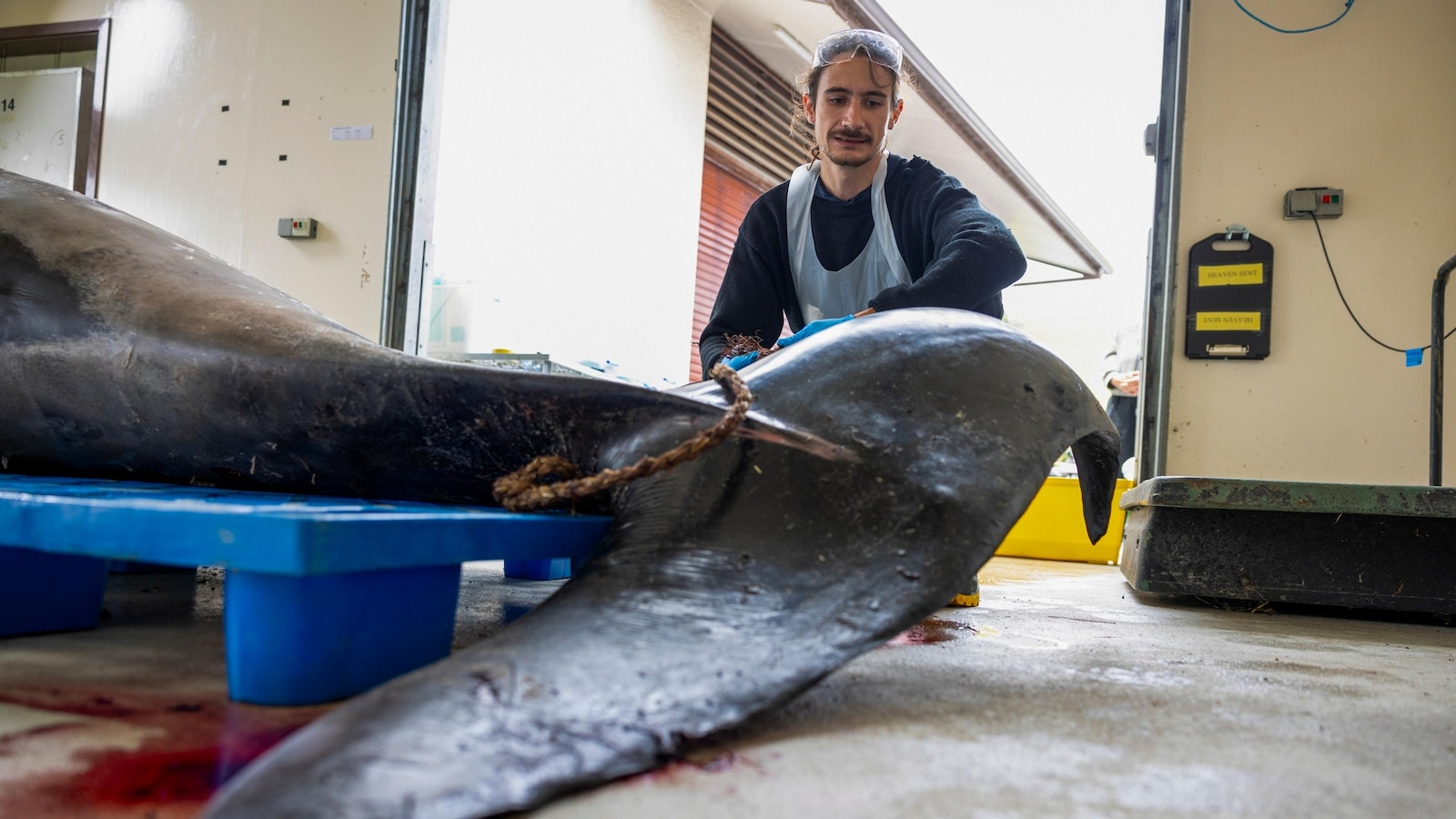
    The first dissection of a spade-toothed whale, a type of beaked whale, was completed last week after a painstaking examination at a research center near the New Zealand city of Dunedin, the local people who led the scientific team, Te Rūnanga Ōtākou, said in a statement issued by the New Zealand Department of Conservation.

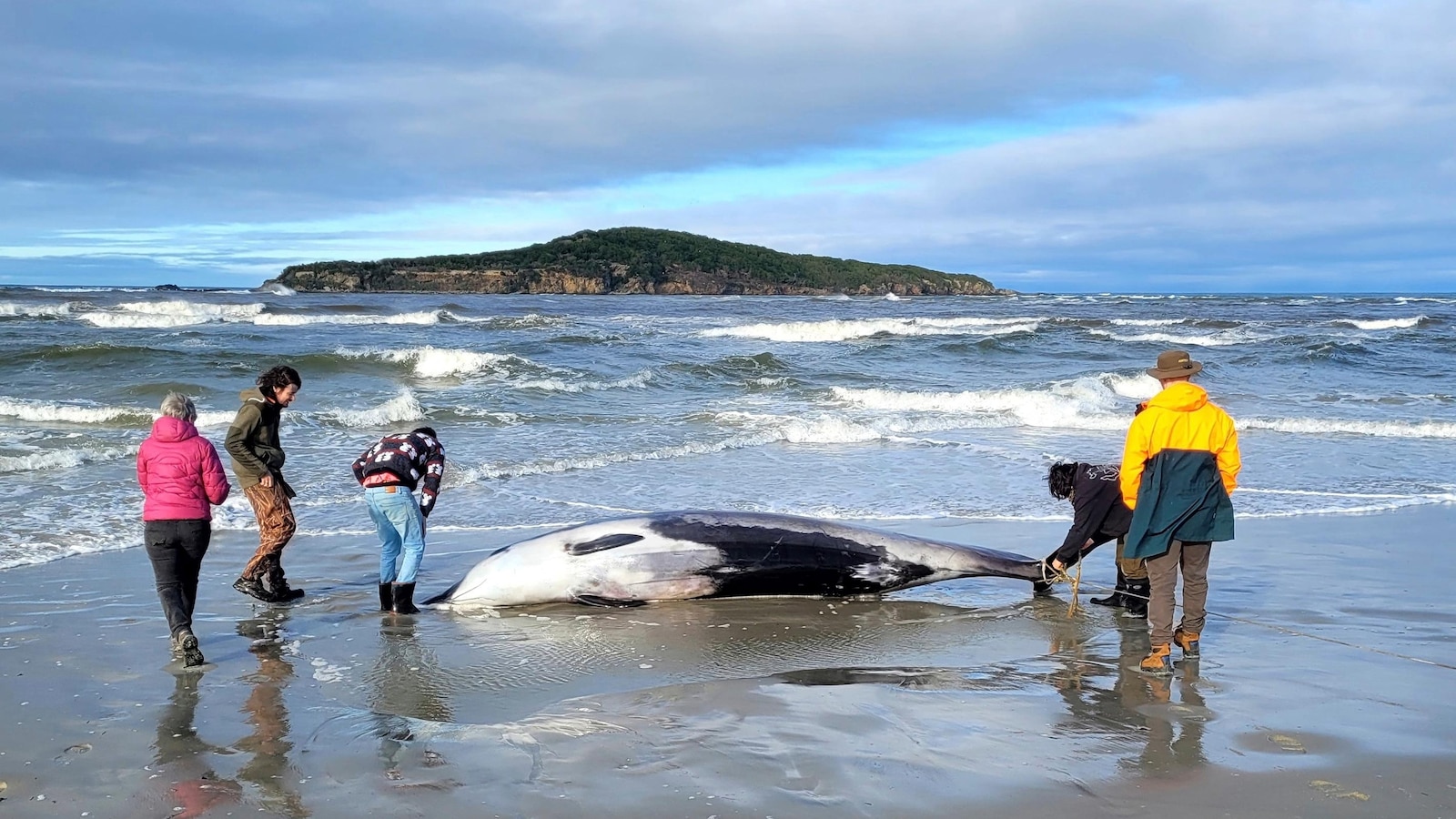
    A near-perfectly preserved 5-meter (16-foot) male was found washed up on a South Island beach in July. It was the first complete specimen ever recorded. There have only been seven known sightings and never of a living spade-toothed whale.

    New Zealand conservation agency beaked whale expert Anton van Helden said the whale’s broken jaw and bruising to the head and neck led scientists to believe that head trauma may have caused its death.

    “We don’t know, but we suspect there must have been some sort of trauma, but what caused that could be anyone’s guess,” van Helden said in a statement.

    All varieties of beaked whales have different stomach systems and researchers didn’t know how the spade-toothed type processed its food.

    The scientific team found the specimen had nine stomach chambers containing remnants of squid and parasitic worms, the statement said.

    Among the more interesting finds were tiny vestigial teeth in the upper jaw.

    “These little teeth embedded in the gum tells us something about their evolutionary history. It’s remarkable to see this and it’s just another thing that we had no idea about,” van Helden said.

    “It’s a week I’ll never forget in my life, it’s certainly a highlight and it’s the start of the storytelling around this beautiful animal,” van Helden added.

    The dissection was also notable because scientists and curators worked together with local Māori people to incorporate Indigenous knowledge and customs into each step of the process.

    Following the dissection, the local iwi, or tribe, will keep the jawbone and teeth of the whale before its skeleton is displayed in a museum. 3D printing will be used to replicate those parts retained by the iwi.

    To Māori, whales are a taonga -– a precious treasure -– and the creature has been treated with the reverence afforded to an ancestor.

    New Zealand is a whale-stranding hotspot, with more than 5,000 episodes recorded since 1840, according to the Department of Conservation.

    The first spade-toothed whale bones were found in 1872 on New Zealand’s Pitt Island. Another discovery was made at an offshore island in the 1950s, and the bones of a third were found on Chile’s Robinson Crusoe Island in 1986.

    ___

    Associated Press writer Charlotte Graham-McLay in Wellington, New Zealand, contributed to this report.

    Source link

  • Scientists claim they’ve found the cause of mystery colon cancers in young people – and the lifestyle factors that are to blame

    Scientists claim they’ve found the cause of mystery colon cancers in young people – and the lifestyle factors that are to blame

    Colon cancers may be surging in under 50s because some young people’s bodies are ageing faster than they should be, experts have claimed.

    Researchers at the University of Miami have discovered the phenomenon — dubbed accelerated ageing — may increase the risk of developing the disease.

    Accelerated ageing is said to have occurred when a person’s biological age is greater than their actual — or chronological — age.

    While chronological age refers to years lived, biological age is based on physiological markers that reflect the impact of genetics, lifestyle choices and environmental factors on the body.

    It can be determined through sophisticated DNA analysis saliva or blood tests.

    In the latest series of The Kardashians, Kim, mum Kris and sister Khloe, all took biological ageing tests. 

    They discovered Khloe’s biological age was 28 — 11 years younger than her actual age, 39.

    Kim, 43, meanwhile, was given a biological age of 34, with Kris six years younger than her actual age. 

    If a person is 50, but their biological age is 55, their ageing has accelerated by five years, said Dr Shria Kumar, a colorectal cancer specialist behind the new research

    If a person is 50, but their biological age is 55, their ageing has accelerated by five years, said Dr Shria Kumar, a colorectal cancer specialist behind the new research

    If a person is 50, but their biological age is 55, their ageing has accelerated by five years, said Dr Shria Kumar, a colorectal cancer specialist behind the new research.

    ‘That might be reflected in overall body functioning,’ she added. 

    ‘It sounds pretty theoretical, but actually accelerated aging has been shown to be predictive of time to death and even of multiple cancers.

    Colorectal cancer rates in people under 50, called early-onset colorectal cancer, are on the rise.

    The finding comes amid a worldwide explosion of colon cancers in younger patients that has baffled doctors.

    While it is most common in over-50s, the disease has surged by 50 per cent in the younger age-groups over the past three decades, recent data suggests.

    For this reason in the US, health chiefs now recommended colon cancer screening — also known as bowel cancer screening — starts at 45.

    Some doctors now say this needs to be moved even younger, because half of early-onset colorectal cancers occur in people under 45, according to the latest statistics from the National Cancer Institute. 

    In the latest series of The Kardashians, Kim, mum Kris and sister Khloe, all took biological ageing tests

    In the latest series of The Kardashians, Kim, mum Kris and sister Khloe, all took biological ageing tests 

    While chronological age refers to years lived, biological age is based on physiological markers that reflect the impact of genetics, lifestyle choices and environmental factors on the body. It can be determined through sophisticated DNA analysis saliva or blood tests

    While chronological age refers to years lived, biological age is based on physiological markers that reflect the impact of genetics, lifestyle choices and environmental factors on the body. It can be determined through sophisticated DNA analysis saliva or blood tests

    In the UK, however, NHS screening is only available to those aged 54 to 74.

    The exact reason for the link between accelerated ageing and colon cancer isn’t fully understood. 

    However, some factors that raise a person’s risk of early-onset colorectal cancer also elevate biological age. 

    These include poor diets — including diets high in ultra-processed foods — obesity, smoking, alcohol consumption and other lifestyle habits.

    Other key factors in accelerated ageing are pollution and stress. 

    Earlier this year, separate research found young people diagnosed with certain types of cancer – especially lung, gastrointestinal and uterine cancers – were more likely to suffer accelerated ageing.

    Intriguingly, the US researchers involved in the study said there was ‘strong evidence’ that the risk of accelerated ageing, and therefore of developing cancer, increased with each successive generation born after 1965.

    And that may mean Gen Z – those born between 1997 and 2012 who are becoming young adults today – are at a far greater risk of developing potentially deadly diseases such as cancer at a much earlier stage than their parents or grandparents.

    Professor Ilaria Bellantuono, co-director of the Healthy Lifespan Institute at the University of Sheffield, told MailOnline: ‘We don’t know enough to say for certain that younger generations are ageing faster or why,’ she says. 

    ‘That research hasn’t been done. But it’s not impossible. We are seeing more disease in younger people, the kinds of diseases we might normally expect to be developing in older adults.

    ‘And biological ageing is a risk factor for those diseases. In the same way that smokers increase their risk of lung cancer, does accelerated ageing increase the risk of developing more multiple long-term chronic conditions?’

    Dr Kumar suggested that testing for accelerated ageing could help flag up younger individuals who need to be offered regular screening and colonoscopies. 

    Colon cancer screening comes in the form of convenient stool-sample tests carried out at home. 

    It is offered as early detection of the disease has been shown to improve both treatment options and outcomes for this disease.

    A positive screening test result is typically followed by a colonoscopy, during which any polyps found can be removed. 

    ‘It sounds pretty theoretical, but accelerated aging has been shown to be predictive of time to death and even of multiple cancers,’ Dr Kumar continued. 

    ‘What’s really exciting about the opportunity in colorectal cancer is that we have a clear prevention tactic. 

    ‘Colonoscopy is not only early detection, but also cancer prevention.’

    Source link

  • Apex the $45M stegosaurus is on display in New York. Here’s what scientists hope to learn about it

    Apex the $45M stegosaurus is on display in New York. Here’s what scientists hope to learn about it

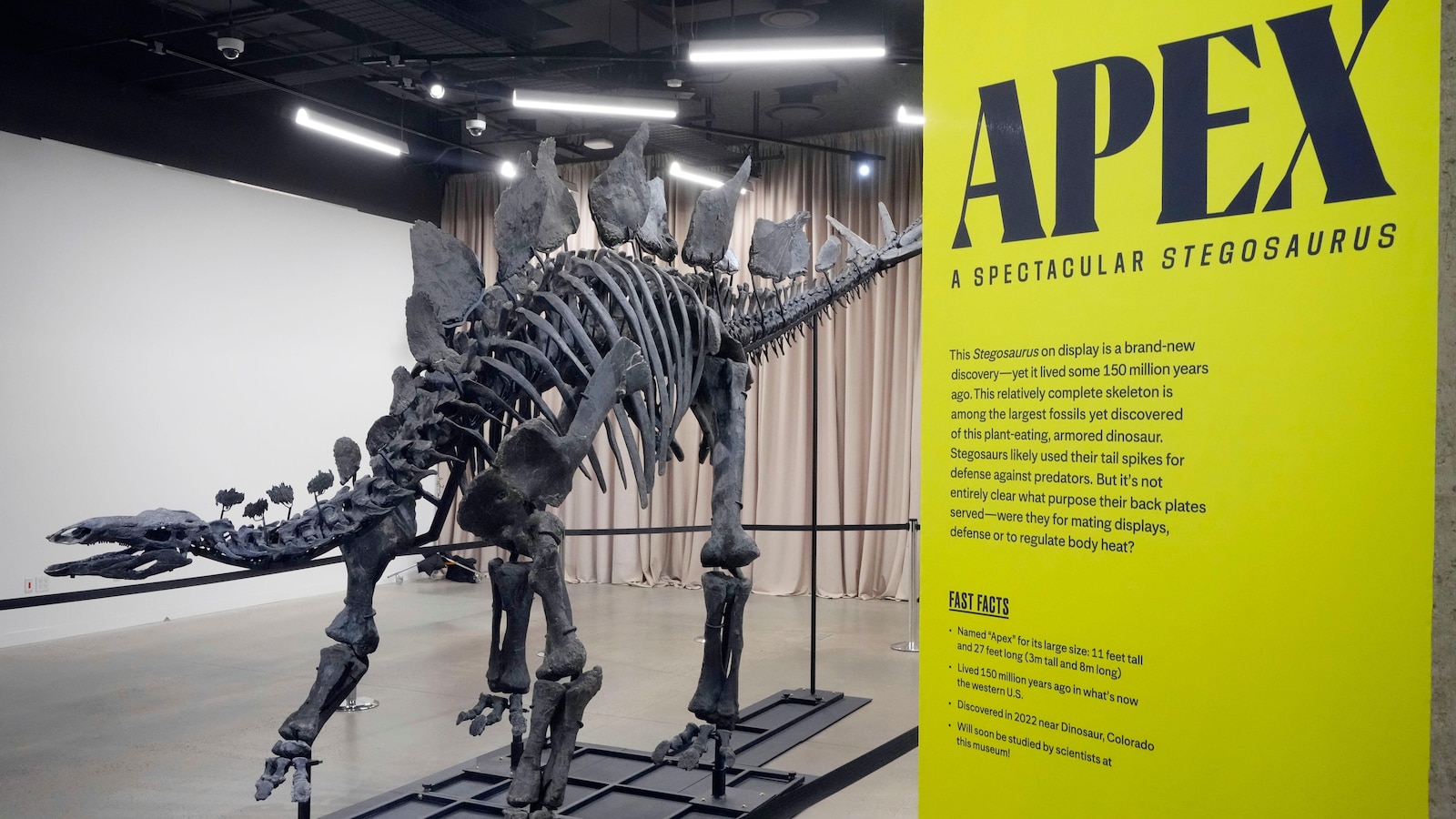
    NEW YORK — The most expensive dinosaur fossil ever discovered will be on view in New York starting this weekend, American Museum of Natural History officials announced Wednesday.

    The giant stegosaurus fossil, dubbed “Apex,” is 11 feet (3.3 meters) tall and 27 feet (8.2 meters) nose to tail. The display will start in a giant atrium at the museum’s entrance before being moved to the museum’s existing fossil halls next year.

    The museum also confirmed the identity of the philanthropist who purchased Apex. Billionaire hedge fund manager and longtime museum donor Ken Griffin bought it at an auction in July for $45 million, the most ever paid for dinosaur remains. Sean Decatur, president of the American Museum of Natural History, said that Griffin approved a long-term loan of Apex, as well as allowing scientists to take samples from the fossil for analysis.

    “This partnership allows Apex to have pride of place at a museum world-renowned for its dinosaur collection and for its longstanding leadership in paleontology and, even more exciting, enables us to pursue specialized Stegosaurus research centered around this extraordinary and scientifically important specimen,” Decatur said in a statement Wednesday.

    Of the more than 80 stegosauri made available to scientific institutions, very few are substantially complete, the statement said. Apex is the most complete specimen ever found, Decatur said. With about 80% of its 320 bones preserved, it is miraculous for creature that has been dead for 150 million years. The specimen is also prized by scientists because it is estimated to have died at a relatively old age, and it could reveal insights into stegosaurus metabolism and bone growth.

    Scientists will make CT scans of the internal structures of the dinosaur’s skull and analyze a small sample extracted from one of its giant thigh bones, the statement said.

    “As exciting as is it is to have this dinosaur on display, it is even more exciting to have the opportunity to study it and make important scientific data available for research,” said Roger Benson, who curates the American Museum of Natural History’s fossil amphibians, reptiles, birds and plants.

    The museum’s paleontologists have a long record of breaking ground in dinosaur research, including identifying the first dinosaur eggs and early evidence of dinosaur feathers, the statement said.

    Commercial paleontologist Jason Cooper discovered in Apex on his land near Dinosaur, Colorado, on the Utah border near Dinosaur National Monument.

    Griffin’s successful $44.6 million bid for Apex over the summer set a record for dinosaur remains, beating out the $31.8 million paid for “Stan,” the remains of a Tyrannosaurus rex sold in 2020. Like Apex, the Stan fossils were purchased by a private individual with plans to make it available to the public. The T. rex has been slated to be on display in Abu Dhabi, in United Arab Emirates, at a museum that opens in late 2025.

    Source link

  • Scientists gather to decode puzzle of the world’s rarest whale in ‘extraordinary’ New Zealand study

    Scientists gather to decode puzzle of the world’s rarest whale in ‘extraordinary’ New Zealand study

    WELLINGTON, New Zealand — It is the world’s rarest whale, with only seven of its kind ever spotted. Almost nothing is known about the enigmatic species. But on Monday a small group of scientists and cultural experts in New Zealand clustered around a near-perfectly preserved spade-toothed whale hoping to decode decades of mystery.

    “I can’t tell you how extraordinary it is,” said a joyful Anton van Helden, senior marine science adviser for New Zealand’s conservation agency, who gave the spade-toothed whale its name to distinguish it from other beaked species. “For me personally, it’s unbelievable.”

    Van Helden has studied beaked whales for 35 years, but Monday was the first time he has participated in a dissection of the spade-toothed variety. In fact, the careful study of the creature — which washed up dead on a New Zealand beach in July — is the first ever to take place.

    None has ever been seen alive at sea.

    The list of what scientists don’t know about spade-toothed whales is longer than what they do know. They don’t know where in the ocean the whales live, why they’ve never been spotted in the wild, or what their brains look like. All beaked whales have different stomach systems and researchers don’t know how the spade-toothed kind processes its food. They don’t know how this one died.

    Over the next week, researchers studying the 5-meter (16-foot) -long male at an agricultural research center near the city of Dunedin hope to find out.

    “There may be parasites completely new to science that just live in this whale,” said van Helden, who thrilled at the chance of learning how the species produces sound and what it eats. “Who knows what we’ll discover?”

    Only six other spade-toothed whales have ever been found, but all those discovered intact were buried before DNA testing could verify their identification.

    New Zealand is a whale-stranding hotspot, with more than 5,000 episodes recorded since 1840, according to the Department of Conservation. The first spade-toothed whale bones were found in 1872 on New Zealand’s Pitt Island. Another discovery was made at an offshore island in the 1950s, and the bones of a third were found on Chile’s Robinson Crusoe Island in 1986.

    DNA sequencing in 2002 proved that all three specimens were of the same species — and that it was distinct from other beaked whales. But researchers studying the mammal couldn’t confirm whether the species was extinct until 2010, when two whole spade-toothed whales, both dead, washed up on a New Zealand beach. But none has been studied before.

    On Monday, the seventh of its kind, surrounded by white-aproned scientists who were measuring and photographing, appeared relatively unblemished, giving no clue about its death. Researchers pointed out marks from cookiecutter sharks — normal, they said, and not the cause.

    The dissection will be quiet, methodical and slower than usual, because it is being undertaken in partnership with Māori, New Zealand’s Indigenous people. To Māori, whales are a taonga -– a precious treasure -– and the creature will be treated with the reverence afforded to an ancestor.

    Members of the local iwi, or tribe, will be present throughout the dissection and consulted at each turn, allowing them to share traditional knowledge and observe customs, such as saying a karakia -– a prayer -– over the creature before the study begins.

    “According to our beliefs and our traditions, this whale is a gift of Tangaroa, deity of the ocean,” said Tumai Cassidy from the local people Te Rūnanga Ōtākou. “It’s very important for us to respect that gift and to honor the whale.”

    The iwi will keep the jawbone and teeth of the whale at the end of the dissection, before its skeleton is displayed in a museum. 3D printing will be used to replicate those parts, using a CT scan taken of the whale’s head this week.

    “It all builds a richer picture for that species but also tells us how it interacts with our oceans,” Cassidy said.

    It’s thought that spade-toothed whales live in the vast Southern Pacific Ocean, home to some of the world’s deepest ocean trenches. Beaked whales are the ocean’s deepest divers for food, and the spade-toothed may rarely surface, adding to its mystery.

    The assembled scientists on Monday included a few who had traveled from abroad to see the whale, which was put in refrigerated storage after its discovery.

    “What we are interested in is not only how these animals died, but how they lived,” said Joy Reidenberg, a comparative anatomist from the Icahn School of Medicine at Mount Sinai in New York. “In discovering how they live, we are hoping to find discoveries that we can apply back to the human condition.”

    Source link

  • Cancer rates among younger women soaring as scientists warn that diet and lifestyle are contributing to the rise

    Cancer rates among younger women soaring as scientists warn that diet and lifestyle are contributing to the rise

    Cancer rates among younger Scots women are soaring in Scotland, new figures have shown.

    Diagnoses in women under 50 have risen, while cases of bowel cancer in both genders have soared.

    The figures are revealed in Scotland’s cancer statistics for 2022 and are the latest in a global trend of rising cancers in younger people.

    Scientists have a number of theories about why cases are increasing in the under 50s, including more awareness of symptoms, and improved diagnosis.

    But there are also fears diet and lifestyle are contributing.

    Catherine, Princess of Wales, 42,  had chemotherapy after it was discovered she had cancer

    Catherine, Princess of Wales, 42,  had chemotherapy after it was discovered she had cancer

    Scots cycling champion Sir Chris Hoy, 48, recently revealed he has terminal prostate cancer

    Scots cycling champion Sir Chris Hoy, 48, recently revealed he has terminal prostate cancer

    The Public Health Scotland report shows 36,036 new cancers registered in Scotland in 2022, an increase of one per cent compared with 2021.

    This is in-line with a long-term trend of increasing number of cancer diagnoses over time.

    In females aged under 50 the overall cancer rate has increased by 6.5 per cent since 2012, from 123 cancers per 100,000 population to 131 per 100,000 population.

    The rate in males under 50 remained fairly constant over this period.

    However, risks of bowel cancer have ‘increased significantly’ with a 30 per cent increase, from 6 per 100,000 population to 8 per 100,000 population in both females and males under 50 years old between 2012 and 2022.

    Bowel cancers, also known as colorectal cancers, are linked to obesity, eating red and processed meat, drinking too much alcohol and not getting enough dietary fibre.

    There has been an increased awareness thanks to campaigners such as ‘Bowelbabe’ Dame Deborah James, who died from bowel cancer aged 40 in 2022.

    Dame Deborah was diagnosed with bowel cancer in 2016 at the age of 35 and became an outspoken campaigner, encouraging people to check for signs of the deadly disease.

    But there have been a number of other high-profile people diagnosed with cancer at an early age.

    They include Catherine, Princess of Wales, 42, who announced in March this year that she was undergoing chemotherapy after cancer was found following an abdominal procedure. She has since completed her chemotherapy treatment.

    Last month Scots cycling champion Sir Chris Hoy, 48, announced he had terminal prostate cancer.

    Scottish Labour’s health spokeswoman Jackie Baillie said the rise in cancer in the under 50s ‘is deeply concerning and should be investigated.’

    She added: ‘Scottish Labour will improve access to screening services including the roll out of cervical screening self-sampling so cancers can be identified early and many tragedies averted.’

     A study published in the British Medical Journal last year found cases of early onset of cancer – among the under 50s – increased overall globally by 79 per cent between 1990 and 2019.

    Diets high in red meat and low in fruit as well as high alcohol consumption and tobacco use were pinned as the main risk factors.

    It is not known why cancers are rising overall in women, but that may be linked to puberty starting earlier in girls, and women having babies later in life, exposing them to hormones for longer.

     Sophia Lowes, senior health information manager at Cancer Research UK, said: ‘Globally and in the UK, we’re seeing a small increase in rates of early onset cancers, affecting people aged 25-49. 

    ‘This increase is partly due to population growth – though this doesn’t change how difficult it is for those who are diagnosed with cancer. 

    ‘There isn’t a clear answer to what’s causing the rise, but preventable risk factors, genetics and improvements to early detection might all play a part.

    ‘Though this may seem alarming, it’s important to remember that cancer is primarily a disease of older age, with the majority of new cancer cases worldwide being diagnosed in those aged 50 and above.’

    A Scottish Government spokesman said: ‘One of the key risk factors for developing cancer is age, and with an ageing population we are seeing a long-term trend of increasing cancer incidence over time. Our Cancer Strategy published last year makes clear our commitment to not only treat but prevent cancer where possible.’

    Source link

  • The dark energy pushing our universe apart may not be what it seems, scientists say

    The dark energy pushing our universe apart may not be what it seems, scientists say

    NEW YORK — Distant, ancient galaxies are giving scientists more hints that a mysterious force called dark energy may not be what they thought.

    Astronomers know that the universe is being pushed apart at an accelerating rate and they have puzzled for decades over what could possibly be speeding everything up. They theorize that a powerful, constant force is at play, one that fits nicely with the main mathematical model that describes how the universe behaves. But they can’t see it and they don’t know where it comes from, so they call it dark energy.

    It is so vast it is thought to make up nearly 70% of the universe — while ordinary matter like all the stars and planets and people make up just 5%.

    But findings published earlier this year by an international research collaboration of more than 900 scientists from around the globe yielded a major surprise. As the scientists analyzed how galaxies move they found that the force pushing or pulling them around did not seem to be constant. And the same group published a new, broader set of analyses Tuesday that yielded a similar answer.

    “I did not think that such a result would happen in my lifetime,” said Mustapha Ishak-Boushaki, a cosmologist at the University of Texas at Dallas who is part of the collaboration.

    Called the Dark Energy Spectroscopic Instrument, it uses a telescope based in Tucson, Arizona to create a three-dimensional map of the universe’s 11-billion-year history to see how galaxies have clustered throughout time and across space. That gives scientists information about how the universe evolved, and where it might be heading.

    The map they are building would not make sense if dark energy were a constant force, as it is theorized. Instead, the energy appears to be changing or weakening over time. If that is indeed the case, it would upend astronomers’ standard cosmological model. It could mean that dark energy is very different than what scientists thought — or that there may be something else altogether going on.

    “It’s a time of great excitement, and also some head-scratching and confusion,” said Bhuvnesh Jain, a cosmologist at the University of Pennsylvania who is not involved with the research.

    The collaboration’s latest finding points to a possible explanation from an older theory: that across billions of years of cosmic history, the universe expanded and galaxies clustered as Einstein’s general relativity predicted.

    The new findings aren’t definitive. Astronomers say they need more data to overturn a theory that seemed to fit together so well. They hope observations from other telescopes and new analyses of the new data over the next few years will determine whether the current view of dark energy stands or falls.

    “The significance of this result right now is tantalizing,” said Robert Caldwell, a physicist at Dartmouth College who is not involved with the research, “but it’s not like a gold-plated measurement.”

    There’s a lot riding on the answer. Because dark energy is the biggest component of the universe, its behavior determines the universe’s fate, explained David Spergel, an astrophysicist and president of the Simons Foundation. If dark energy is constant, the universe will continue to expand, forever getting colder and emptier. If it’s growing in strength, the universe will expand so speedily that it’ll destroy itself in what astronomers call the Big Rip.

    “Not to panic. If this is what’s going on, it won’t happen for billions of years,” he said. “But we’d like to know about it.”

    ___

    Associated Press video journalist Mary Conlon reported from New York.

    ___

    The Associated Press Health and Science Department receives support from the Howard Hughes Medical Institute’s Science and Educational Media Group. The AP is solely responsible for all content.

    Source link

  • Amid Earth’s heat records, scientists report another bump upward in annual carbon emissions

    Amid Earth’s heat records, scientists report another bump upward in annual carbon emissions

    BAKU, Azerbaijan — Even as Earth sets new heat records, humanity this year is pumping 330 million tons (300 million metric tons) more carbon dioxide into the air by burning fossil fuels than it did last year.

    This year the world is on track to put 41.2 billion tons (37.4 billion metric tons) of the main heat-trapping gas into the atmosphere. It’s a 0.8% increase from 2023, according to Global Carbon Project, a group of scientists who track emissions. Several United Nations reports say the globe must cut emissions by 42% by 2030 to possibly limit warming to an internationally agreed-upon threshold.

    This year’s pollution increase isn’t quite as large as last year’s 1.4% jump, scientists said while presenting the data at the United Nations climate talks in Azerbaijan.

    If the world continues burning fossil fuels at today’s level, it has six years before passing 1.5 degrees Celsius (2.7 Fahrenheit) above pre-industrial levels, the limit agreed to at the 2015 climate talks in Paris, said study co-author Stephen Sitch. The Earth is already at 1.3 degrees Celsius (2.3 Fahrenheit), according to the United Nations.

    “We clearly are not doing enough on a global scale to reduce emissions. It’s as simple as that,” said study co-author Mike O’Sullivan, a University of Exeter climate scientist. “We need to massively increase ambition and actually just think outside the box of how we can change things, not be so tied to fossil fuel interests.”

    Scientists used reported emissions from rich countries and oil industry data, O’Sullivan said. The 2024 figure includes projections for the last couple months or so. The Global Carbon Project team released figures for the four biggest carbon emitters — China, the United States, India and Europe. It also produced more detailed and final figures for about 200 countries for 2023.

    The continued rise in carbon emissions is mostly from the developing world and China. Many analysts had been hoping that China — by far the world’s biggest annual carbon polluting nation with 32% of the emissions — would have peaked its carbon dioxide emissions by now. Instead China’s emissions rose 0.2% from 2023, with coal pollution up 0.3%, Global Carbon Project calculated. But it could drop to zero in the next two months and is “basically flat,” O’Sullivan said.

    That’s nothing close to the increase in India, which at 8% of the globe’s carbon pollution is third-largest carbon emitter. India’s carbon pollution jumped 4.6% in 2024, the scientists said.

    Carbon emissions dropped in both the United States and the European Union. They fell 0.6% in the U.S. mostly from reduced coal, oil and cement use. The U.S. was responsible for 13% of the globe’s carbon dioxide in 2024. Historically, it’s responsible for 21% of the world’s emissions since 1950, a figure that matters since the gas persists in the atmosphere for centuries.

    Twenty-two nations have shown steady decreases in emissions, O’Sullivan said, singling out the United States as one of those. The biggest emission drops from 2014 to 2023 were in the United States, Japan, Germany, the United Kingdom and Ukraine.

    Europe, which accounts for 7% of the world’s carbon pollution, saw its carbon dioxide output drop 3.8% from last year — driven by a big cut in coal emissions.

    Global carbon emissions are well more than double what they were 50 years ago and 50% than they were in 1999. Emissions have gone up about 6% in the past decade.

    “This is a needed reminder of the urgency with which we need to address the cause of the climate crisis,” said PowerShift Africa founder Mohamed Adow, who wasn’t part of the study. “The problem is the fossil fuel industry is kicking and screaming for us to slow down and to keep them in business for longer. That’s why they poured money into Donald Trump’s election campaign.”

    Carbon dioxide from humanity’s burning of coal, oil and natural gas amounts to 2.6 million pounds (nearly 1.2 million kilograms) of the heat-trapping gas every second.

    Total carbon emissions — which include fossil fuel pollution and land use changes such as deforestation — are basically flat because land emissions are declining, the scientists said. That’s an important and encouraging milestone amid bad news, said University of Pennsylvania climate scientist Michael Mann

    ___

    Read more of AP’s climate coverage at http://www.apnews.com/climate-and-environment

    ___

    Follow Seth Borenstein on X at @borenbears

    ___

    The Associated Press’ climate and environmental coverage receives financial support from multiple private foundations. AP is solely responsible for all content. Find AP’s standards for working with philanthropies, a list of supporters and funded coverage areas at AP.org.



    Source link

  • Scientists detect traces of an ancient Mayan city in southern Mexico using laser-sensor technology

    Scientists detect traces of an ancient Mayan city in southern Mexico using laser-sensor technology

    NEW ORLEANS — Archaeologists using laser-sensing technology have detected what may be an ancient Mayan city cloaked by jungle in southern Mexico, authorities said Wednesday.

    The lost city, dubbed Valeriana by researchers after the name of a nearby lagoon, may have been as densely settled as the better-known pre-Hispanic metropolis of Calakmul, in the south part of the Yucatan peninsula.

    What the study, published this week in the journal Antiquity, suggest is that much of the seemingly empty, jungle-clad space between known Maya sites may once have been very heavily populated.

    “Previous research has shown that a large part of the present-day state of Campeche is a landscape that was transformed by its ancient inhabitants,” said Adriana Velázquez Morlet of Mexico’s National Institute of Anthropology and History, a co-author of the report. “Now, this study shows that a little-known region was a urbanized landscape.”

    Mexico’s National Institute said about 6,479 structures have been detected in LiDAR images covering an area of about 47 square miles (122 square kilometers). The technique maps landscapes using thousands of lasers pulses sent from a plane, which can detect variations in topography that ware not evident to the naked eye.

    Those images revealed structures that include what appear to be temple platforms, ceremonial ball courts, housing platforms, agricultural terraces and even what appears to be a dam. The Institute said the structures may date to between 250 and 900 A.D., but the settlement could have been started 100 years earlier.

    A consortium of researchers made the discovery by using software to re-examine a 2013 LIDAR survey originally carried out to measures deforestation. While re-examining the data, Luke Auld-Thomas, then a graduate student at Tulane University, noticed strange formations in the survey of the jungle.

    Auld-Thomas’s advisor, Tulane professor Marcello Canuto, said the extensive data they’ve collected will “allow us to tell better stories of the ancient Mayan people,” marrying what scientists already know – political and religious histories – with new details about how ancient civilizations were run.

    “We have always been able to talk about the ancient Maya especially in the lowland regions because of their hieroglyphic texts, because they left us such interesting record,” he said. “What we are now able to do is match that information with their settlement and the population and what they were fighting over, what they were ruling over, what they were trading.”

    Susan D. Gillespie, an anthropology professor at the University of Florida who was not connected to the study, said that while LiDAR is a valuable tool, some of the features would have to be confirmed by researchers on the ground.

    “They realize that small natural rock piles (chich in the local parlance) were likely misinterpreted as house mounds, being the same size and shape. Thus, they recognize that their feature counts are preliminary,” Gillespie wrote.

    “The final caveat, which I think must always kept in mind, is contemporaneity of use of mapped features,” Gillespie said. “LiDAR maps what’s on the surface, but not when it was used. So, a large region might be dense with structures, but the size of an occupation at any one time cannot known with aerial survey data alone.”

    Source link