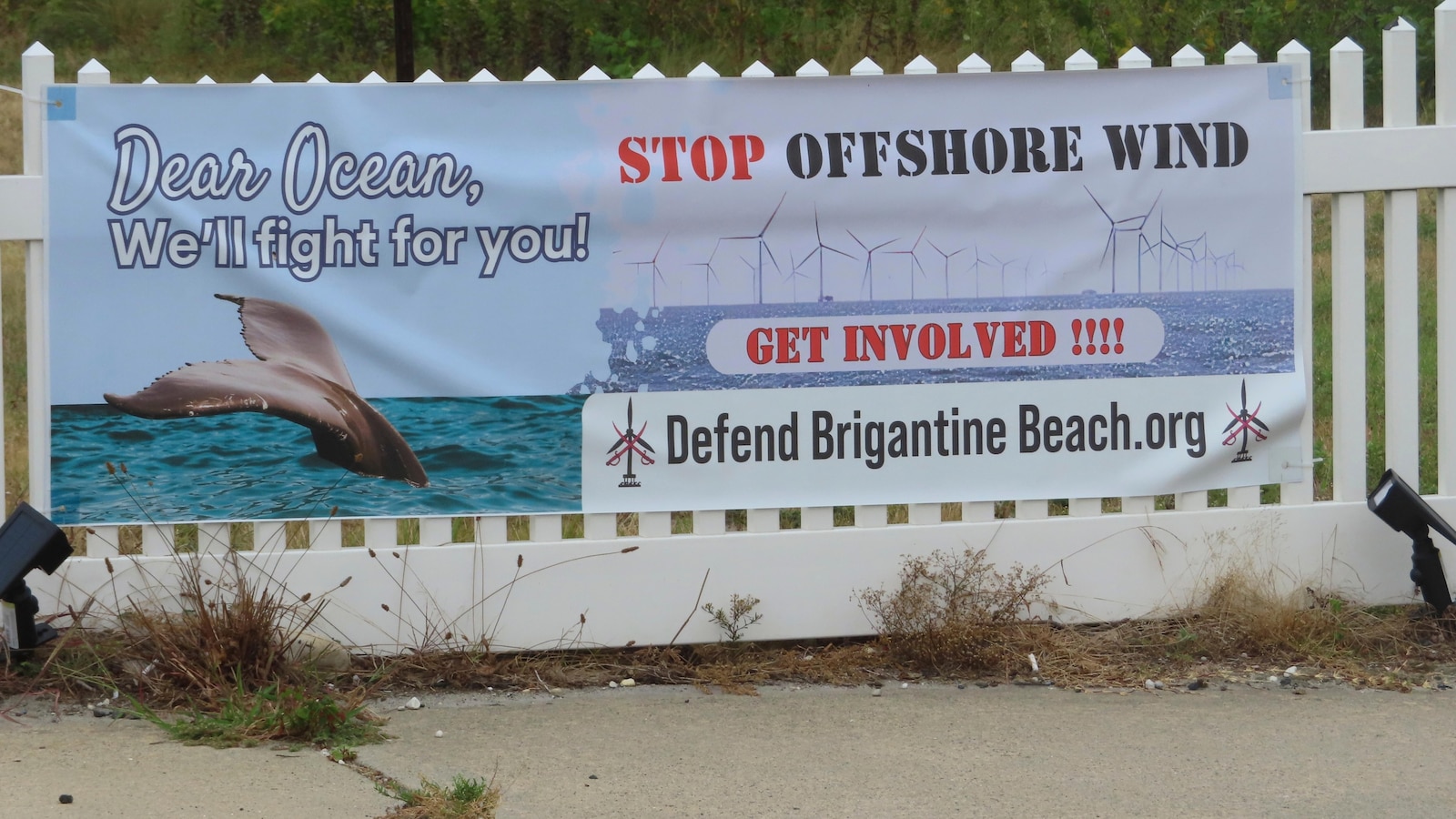
BRIGANTINE, N.J. — Opponents of offshore wind around the U.S. are pelting projects with lawsuits seeking to cancel them or tie them up for years in costly litigation.
The court cases represent another hurdle the nascent industry must overcome, particularly along the East Coast where opposition to offshore wind farms is vocal and well-organized.
They add another pressure point for an industry already struggling with escalating prices, shaky supply chains, and a handful of highly publicized turbine failures that opponents are seizing on as proof that the structures are unreliable and unsafe, something the industry denies.
There are 13 cases pending in federal courts targeting offshore wind projects, according to the American Clean Power Association, an offshore wind trade group. An undetermined number of additional lawsuits are active in state courts, they said.
Robin Shaffer is president of Protect Our Coast NJ, a citizens group that has filed numerous lawsuits in New Jersey against two offshore projects currently or previously proposed.
Shaffer said his group was at least partly responsible for scuttling two New Jersey wind farms proposed by Orsted that the Danish wind giant scrapped last October, saying they were no longer financially workable.
“An ancillary benefit of our legal strategy is to give pause or doubt in the minds of investors in the big corporations that are undertaking these projects,” he said. “Last year, we saw Orsted leave its commitment to build Ocean Wind off the southern New Jersey coast amidst the uncertainty of two lawsuits we filed, as well as another filed by Cape May County.”
Opponents cite altered views of the horizon from wind turbines and concerns about what the structures might do to marine life. They also cite rising projected prices for electricity generated from the wind farms, and point to recent turbine collapses off Martha’s Vineyard in Massachusetts and at Doggers Bank off the English coast as proof the technology is risky.
Supporters say offshore wind is necessary to combat climate change, which they call the principal threat to the ocean and its inhabitants.
“Offshore wind projects undergo rigorous environmental reviews and permitting processes, in addition to a lengthy public comment period,” said Jason Ryan, a spokesman for the Clean Power Association. “The current slate of U.S. offshore wind projects under construction and development are among the most carefully planned and analyzed infrastructure projects in U.S. history; we are confident their permits will withstand legal scrutiny.”
Paulina O’Connor, executive director of the New Jersey Offshore Wind Alliance, said offshore wind is needed to combat climate change.
“On the heels of one of the hottest summers on record, it is disappointing to see another frivolous lawsuit filed by those with opposing views,” she said of the most recent lawsuit.
That action was filed Friday by Save LBI, another New Jersey citizen group. It claims that Atlantic Shores, the New Jersey project furthest along its state’s approval path, would violate noise ordinances during pile driving and operation of hundreds of wind turbines. The group says it has several other lawsuits on the way. Atlantic Shores declined to comment.
Other litigation in New Jersey challenged Orsted’s now-scrapped wind farm plan, a state tax break the company would have received, and even the placement of a power cable that would bring electricity from the project onshore. A group of Jersey Shore towns sued Atlantic Shores, and fishing and environmental groups sued two federal agencies overseeing offshore wind projects. They are appealing the dismissal of their suit after a judge ruled they had no legal standing to sue.
Offshore wind foes in other states are also turning to the courts.
In March, The National Legal and Policy Center, a conservative watchdog group in Virginia, sued Dominion Energy and the federal government hoping to block a wind farm off the coast of Virginia Beach. Dominion called the suit meritless and said it employs multiple layers of protection for the marine environment.
Last year, a Rhode Island nonprofit known for its seaside mansions sued the federal government challenging the permitting process for offshore wind energy projects off Martha’s Vineyard in Massachusetts. The Preservation Society of Newport County said the presence of hundreds of wind turbines off the New England coast would ruin ocean views from several of its historic properties.
Also in Rhode Island, the anti-wind group Green Oceans sued the federal government in April, saying it illegally gave Orsted permits for its South Fork Wind and Revolution Wind projects. Orsted declined comment on the lawsuit but noted that South Fork is fully operational and Revolution recently installed its first turbine.
On the West Coast, the Confederated Tribes of Coos, Lower Umpqua and Siuslaw Indians in Oregon, whose culture reveres the ocean, sued the federal government Tuesday over plans to hold an offshore wind energy auction next month.
And in March, fishermen sued California over plans for three floating wind farms.
___
Follow Wayne Parry on X at www.twitter.com/WayneParryAC