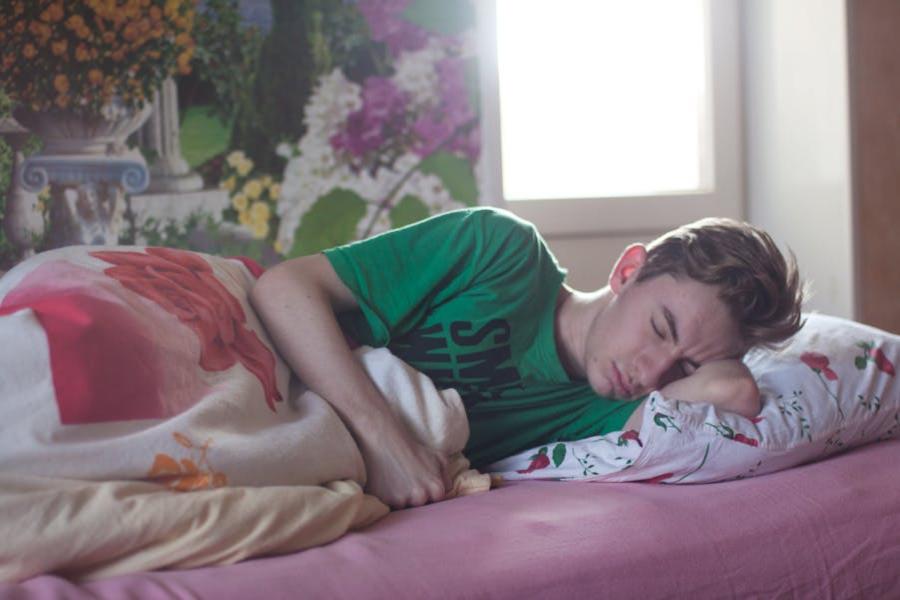
The holidays are fast approaching and with endless gatherings, to-do lists, and the countdown to the end of the year, sleep is often sacrificed. For the sake of your physical and mental wellness, keeping your sleep in check over the next few months will be essential. One-on-one free, confidential coaching is available to improve your sleep hygiene.
Adequate sleep
Detangle the assumption that you can operate effectively on minimal sleep. The amount of shut eye you get is a direct reflection on how your body reacts to everything else. Inadequate sleep can affect everything from your weight and increased risk of heart disease to mental health and focus. Aim for seven to nine hours nightly so your body has a long enough cycle to relax, reset, and recover.
Cognitive function
Do you notice yourself feeling foggy or having a hard time remembering basic details? It could be caused by lack of sleep. Sleep is critical for cognitive function affecting your ability to think clearly, make decisions and process information. Even when at rest, your brain is doing hard work. A good night’s sleep is essential for everyday functioning like being alert, exercising problem-solving skills and having emotional and social intelligence. Conversely, lack of sleep can lead to irritability, mood swings and decreased motivation.
Physical health
Sleep is just as important for your physical health as it is for your mental health. Quality sleep leads to hormone regulation that directly affects appetite, immune function and performance. Inadequate sleep can make you more susceptible to weight gain and poor metabolism, illnesses and burnout, and lethargy – be it endurance and energy during a workout or even when performing the simplest tasks like emptying the dishwasher.
Chronic conditions
Developing chronic health conditions is often linked to the lack of healthy living, such as proper diet and exercise. Sleep should not be overlooked. Insufficient sleep increases the risk of developing hypertension, diabetes, high blood pressure, cardiovascular diseases, depression and anxiety. Your entire body will feel stronger due to the sleep you feed it, resulting in decreased risks.
The perfect recipe is as simple as good sleep equals good health. Through all the stages of a proper sleep cycle, your body is preparing to wake feeling refreshed with optimal brain and body functions. While you might have the occasional poor night of sleep, keep in mind just how vital a good night’s sleep actually is. Don’t neglect shut-eye, prioritize it!
Lifestyle News Live: Stay informed with Hindustan Times’ live updates! Track the latest lifestyle news including fashion trends, style guide & Tips, India & World Events. Don’t miss today’s key news for November 5, 2024.
Latest news on November 5, 2024: Sleep is integral to the brain’s health. Chronic sleep problems make the brain age faster.
Lifestyle News Live: Get the latest news updates and breaking news stories from the world of lifestyle. Track all the latest fashion trends, delicious recipes, travel tips and more. Disclaimer: This is an AI-generated live blog and has not been edited by Hindustan Times staff.…Read More
Follow all the updates here:
Nov 5, 2024 11:23 AM IST
Health News LIVE: Poor sleep can age your brain by 3 years; study reveals alarming link between sleep problems and brain age
A new study has uncovered a shocking connection between chronic sleep disturbances and accelerated brain ageing.
Fashion News LIVE: Sharvari, Shahid Kapoor make heads turn; Aditya Roy Kapur keeps it casual at Citadel Honey Bunny event: Who wore what
Many celebrities attended the Citadel: Honey Bunny special screening, including Sharvari, Shahid Kapoor, and Aditya Roy Kapur. See who wore what at the event.
Fashion News LIVE: Samantha Ruth Prabhu’s red mane, gold dress steal the show; Varun Dhawan in all-black at Citadel Honey Bunny screening
Samantha Ruth Prabhu and Varun Dhawan stole the show at Ciatdel Honey Bunny screening. While Samantha wore a golden dress, Varun rocked an all-black look.
New Study reveals how work, nightlife, tech, and coffee shape sleep patterns on both sides of the Pond
Londoners drink more coffee than New Yorkers yet still manage to squeeze in more sleep each night, proving the ‘City That Never Sleeps’ reputation holds true – with a surprising edge on shut-eye.
In an independent study commissioned by sleep-tech company Simba, a survey of 2,000 adults across both cities examined everything from work schedules and nightlife to tech habits and caffeine intake. The findings?
New Yorkers may be renowned for their fast-paced lifestyle, but it comes at the cost of sleep, with residents averaging just 6 hours and 36 minutes per night.
Londoners, however, are clocking more quality slumber at 6 hours and 48 minutes nightly—amounting to three extra days of sleep each year – in comparison to their New York counterparts.
However, despite enjoying better and longer sleep, Londoners are still reaching for coffee more often, consuming 109.5 more cups annually per person than New Yorkers. Even with all those brews, the Big Smoke seems to be winning the ‘rest race.’
As urban sleep deprivation continues to be a growing health concern, these insights spotlight a cultural divide between two iconic metropolises – and reveal how lifestyle choices may just be fuelling a sleep deprivation pandemic.
Healthy adults need to sleep seven – nine hours a night on a regular basis for optimal health, according to the American Academy of Sleep Medicine and British National Health Service (NHS).
With city dwellers on both sides of the Atlantic consistently falling short of the essential seven – nine hour sleep goal overall, this new report highlights a looming sleep deprivation crisis in major urban areas. Simba warns this chronic lack of sleep can lead to serious health issues, affecting everything from mental well-being to physical performance.
Big Smoke vs. Big AppleThe report commissioned by sleep tech firm Simba – who has analysed body profile data from 10 million sleepers to engineer cutting edge sleep solutions tailored to every sleep style and body type – uncovers shared anxieties and differences in what residents are losing sleep over.
The cost of living is the biggest source of stress for both – with 31% of Londoners and 30% of New Yorkers indicating this as their biggest worry keeping them awake.
Health is the second major source of shared nighttime anxiety, with 19% of Londoners and 21% of New Yorkers reporting it as a significant factor affecting their sleep.
When it comes to neighbourhood noise, New Yorkers struggle more, with 19% citing it as a major sleep disruptor compared to just 13% of Londoners.
On the flip side, job stress is a more acute concern for Londoners, with 18% saying it’s a source of sleeplessness, compared to just 14% of New Yorkers.
Family life and children are also keeping more London parents awake in contrast to their counterparts across the pond. (16% London Vs 13% New York)
With the US presidential election looming on November 5, 2024, the race between Kamala Harris and Donald Trump appears to be keeping many New Yorkers awake at night – political instability is a concern for 12% of New Yorkers, compared to 9% of Londoners.
Conversely, healthcare access is weighing much more heavily on the minds of Londoners right now. The UK health secretary, Wes Streeting recently told Sky News that NHS waiting lists need to be “millions lower” by the next general election in 2029.
Only 3% of New Yorkers reported being kept awake by difficulty getting a GP appointment, compared to 8% of Londoners.
Cities rely heavily on night workers, from healthcare professionals and emergency responders to hospitality and delivery staff, but night shift work comes with great personal sacrifice. The World Health Organisation (WHO) has classified it as ‘probably carcinogenic’.
According to the findings, nearly double the respondents in New York reported working primarily at night, (7% in New York Vs 4% in London). Night workers often require more support compared to their daytime counterparts. Research from The Liminal Space indicates that night workers are 37 percent more likely to have a heart attack, and 44 percent more likely to develop diabetes than those who work during the day.
“While Londoners and New Yorkers both grapple with financial pressures and health concerns that impact their sleep, there are distinct differences at play. Noise levels, job-related stress, and political worries reflect the unique challenges of urban living in each city,” says Lisa Artis, Deputy CEO of Simba’s charity partner, The Sleep Charity “The higher percentage of night workers could also be contributing to New York’s elevated sleep challenges. Getting a good night’s sleep is key for our physical and emotional health. Research has shown that a lack of sleep can increase the risk of conditions such as heart disease, obesity and stroke as well as increase our anxiety and stress levels. While both cities have vibrant social scenes and demanding jobs, it seems Londoners are carving out a bit more time for rest – or maybe just hitting the snooze button a little more often!”
Post-pandemic lifestyle choices and routines may also offer some clues as to why the Big Smoke is getting slightly more shut-eye compared to the Big Apple.
Almost a third (32%) of Londoners report going out less than before Covid, compared to just 27% of New Yorkers. With fewer late nights, Londoners are likely getting to bed earlier, setting the stage for better sleep.
On the flip side, New Yorkers outpace Londoners when it comes to prioritising self-care (31% New York Vs 27% London).
Nevertheless, Londoners are thriving more when it comes to work-life balance. Over a quarter (26%) of Londoners say it’s a bigger priority now, compared to only 19% of New Yorkers.
Similarly, 21% of Londoners say they are prioritising sleep more these days, while only 18% of New Yorkers do the same.
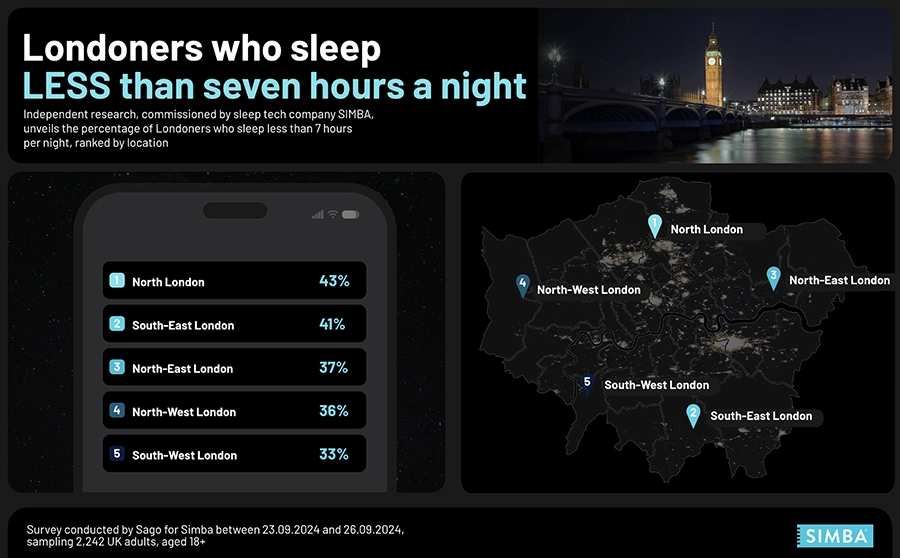
A closer look at both cities revealed that those in North East London (Barking and Dagenham, Hackney, Havering, Newham, Redbridge, Tower Hamlets and Waltham Forest) get the most sleep in London with a third (33%) registering an average ofeight hours of sleep or above each night.
But just a few boroughs away in North London (Barnet, Camden, Enfield, Haringey, Islington and Westminster) Londoners are getting the least sleep in the capital with over two in five (43%) registering six hours of sleep or less on average each night.
Across the pond, Manhattan gets the most sleep in New York with nearly a third (30%) banking an average of eight hours sleep or above each night, while in Staten Island they’re strapped for shut-eye with over half (58%) registering six hours of sleep or less each night – making them the worst sleepers in the city.
Steve Reid, CEO and Co-Founder of sleep technology brand Simba, who commissioned the study, said: “We’re dedicated to creating the perfect night’s sleep for everyone, every night. Rest levels in both cities are dangerously low. Sleep is essential for overall health, impacting everything from mental wellbeing to physical resilience, and is crucial for coping with the stresses of city life.”
Sustainability is also at the heart of Simba’s mission. As a B Corp™ accredited company, Simba operates zero-waste factories and incorporates recyclable materials in their products, making them an eco-conscious choice for customers who value both luxury and environmental responsibility. By prioritising both innovation and sustainability, Simba has cemented itself as a leader in the sleep industry, becoming the world’s most five-star rated mattress brand, with over 90 awards and more than 325,000 five-star reviews from satisfied customers.
Dr. Nickhil Jakatdar has been working at the cutting edge of preventive health and longevity over the last 10 years with the 3 D’s – data, doctors, and dietitians – to go from being diagnosed with heart disease at the age of 41, to now having all his blood markers and body measurements in the green and his epigenetic biological age at 41 while his chronological age is 51. With a Ph.D. in Electrical Engineering and Computer Science from UC Berkeley and more than 60 patents to his name, Dr. Jakatdar has always believed in a scientific, data driven and practical approach to solving problems. He has founded or run 5 startups in the areas of semiconductors, consumer mobile video and molecular diagnostics and serves on the Advisory Boards of the South Asian Heart Center in California, the Center for Information Technology Research in the Interest of Society (CITRIS), has been a TEDx speaker and has been the youngest recipient of the esteemed UC Berkeley Distinguished Alumni Award. LESS … MORE
Today’s post (#24) covers a collection of issues that I used to believe were age-related but my data demonstrated they were both caused by my lifestyle and were also solvable through my lifestyle. I am picking a few topics that I think may resonate with you: the inability to go back to sleep in the middle of the night, dealing with lower back pain and the curious case of feeling sleepy in the late mornings. Let me explain each of the three:
Inability to go back to sleep in the middle of the night: Those who have known me a long time can attest to the fact that my daily total sleep duration is less than most people. However, as research has now shown, it is the consistency of the sleep start and end times, along with the quality of the sleep stages (deep, REM, light, awake) that matter more than simply judging sleep by the total duration. While about 60% of my nights were good on these metrics, there were 40% where I would wake up in the middle of the night (restroom visit, something on my mind that was bothering me, indigestion, etc.) and I just couldn’t go back to sleep easily. I would toss and turn and finally get frustrated and get out of bed. I made some changes to reduce that 40% by drinking my last glass of water about two hours before going to bed, not being on my phone for 30 mins before bedtime, eating three hours before bedtime, etc. and those things helped bring down the 40% bad sleep nights down to about 20%, but that was still 20% more than it needed to be. Further experiments didn’t help reduce that and I had resigned myself to the fact that I had to live with it. That is, until I read this fascinating blog on breathing techniques and their impact on sleep. Unfortunately I can’t find that blog anymore but I do follow the simple breathing technique it suggested: close your eyes, take a few deep breaths that are about 6 seconds in and the same amount out. Focus on maintaining a consistent breathing pattern. Try to blank out your mind either by picking a single word that you can keep repeating in your mind or by focusing on your breath alone. Don’t stress about your thoughts wandering or getting the counts exactly right because that will work against you going back to sleep. Regular yoga practitioners have this down pat but I needed a bit of practice. And the results were amazing! I would start the process and within ten minutes or less, I would go back to sleep. Now there are very few nights where I am unable to go back to sleep, which are almost always due to the fact that I couldn’t say no to that last slice of cake or ice-cream! I should note that there are other techniques that may work well, such as the popular 4-7-8 technique (inhale for 4 seconds, hold for 7 seconds and exhale for 8 seconds) but I find that trying to keep a count of all that has been counterproductive for me, especially in the middle of the night when I don’t want a cognitive overload.
Lower back pain: In my case, there have been three very clear reasons for lower back pain: falls during soccer, poor form during a deadlift or a squat and poor posture. The soccer related back pain is usually short lived and I view it as the collateral damage of playing a contact sport, that I am willing to accept. The poor form during strength training was something I have overcome by getting the right guidance from a trainer as well as by not getting carried away with the weights I use. It is now rarely an issue. The last one – poor posture – is something I have to constantly remind myself of. It is not like I don’t know what good posture is all about but when I am not thinking, I find my core collapsing, that leads to rounded shoulders, an arched lower back, protruding abdomen and a tilted pelvis. I visited a posture expert, Dr. Esther Gokhale, at Stanford a few years ago. Based on her personal experiences, she came up with the Gokhale Method that has been published in a book as well as through her workshops and her TEDx talk. There are many fundamental concepts in her approach that are simple but powerful; I am going to simplify it to what I use on a daily basis. Roll your shoulders back which will make your hands feel like those of a dinosaur, stick out your butt, engage your core and your glutes and take deep breaths that feel like you are elongating your spine. This will feel strange at first and you will forget to keep it that way all day but every time you think about your posture, make these changes. Over time this becomes more natural but unfortunately a bad posture requires such little effort and energy that it is easy to fall back into it. The lower back pain is my reminder that it is my posture that I need to work on, and it never fails. The second image above serves as my modeling gig for the year; the bad vs. good image. As you can see, the changes aren’t that obvious between a bad and a good posture but they are critical. For those interested in learning more about the Gokhale Method, I highly recommend signing up for Esther’s workshops or reading her book.
The curious case of feeling sleepy in the late mornings: I experienced this over the last couple of months where I would feel really sleepy in the late mornings and early afternoons. Initially I thought I was tired because my workouts were more intense or I required longer recovery times from my weekend soccer games or my sleep wasn’t as good but there wasn’t really anything that I had changed dramatically on any of those fronts. Looking at all my data that I had been tracking, I couldn’t find any clear correlation and so my only conclusion kept coming back to “this is what happens in your fifties…”. And then one day in the middle of all this, I didn’t feel sleepy in the late morning, which begged the question what was so special about that day. All of a sudden the reason became clear: I had been taking an anti-allergic (Zyrtec) every morning for years and it had worked well. About 2 months back, I had switched to a generic version which looked like it was essentially the same drug but significantly cheaper. I tracked the starting date of that medication to exactly the time my various markers (resting heart rate, sleep schedules, etc.) changed. The day I didn’t feel sleepy was the one day I had forgotten to take the medication. I immediately stopped taking the generic version of the medication and the results were instantaneous. I was back to feeling like my old self all over again. Post this incident, I have now started tracking my medications through my app so I can pinpoint which medication is having what side-effects. For each of you, there may be other such side-effects of medications you may not have attributed to it and continue to live with it. Hopefully this gives you some food for thought. One of the topics I will dedicate a whole blog post to is the area of pharmacogenomics: the study of how our genes affect our response to drugs, and therefore knowing our genetic makeup can lead to determining which drugs and what dosage, are right for each individual.
I hope these interventions are useful to those that have dealt with any of these issues. I would love to hear from those that this actually helped or if there is more clarity I should be providing to make the interventions more practically actionable.
Dr. Nickhil Jakatdar has been working at the cutting edge of preventive health and longevity over the last 10 years with the 3 D’s – data, doctors, and dietitians – to go from being diagnosed with heart disease at the age of 41, to now having all his blood markers and body measurements in the green and his epigenetic biological age at 41 while his chronological age is 51. With a Ph.D. in Electrical Engineering and Computer Science from UC Berkeley and more than 60 patents to his name, Dr. Jakatdar has always believed in a scientific, data driven and practical approach to solving problems. He has founded or run 5 startups in the areas of semiconductors, consumer mobile video and molecular diagnostics and serves on the Advisory Boards of the South Asian Heart Center in California, the Center for Information Technology Research in the Interest of Society (CITRIS), has been a TEDx speaker and has been the youngest recipient of the esteemed UC Berkeley Distinguished Alumni Award. LESS … MORE
Today’s post (#24) covers a collection of issues that I used to believe were age-related but my data demonstrated they were both caused by my lifestyle and were also solvable through my lifestyle. I am picking a few topics that I think may resonate with you: the inability to go back to sleep in the middle of the night, dealing with lower back pain and the curious case of feeling sleepy in the late mornings. Let me explain each of the three:
Inability to go back to sleep in the middle of the night: Those who have known me a long time can attest to the fact that my daily total sleep duration is less than most people. However, as research has now shown, it is the consistency of the sleep start and end times, along with the quality of the sleep stages (deep, REM, light, awake) that matter more than simply judging sleep by the total duration. While about 60% of my nights were good on these metrics, there were 40% where I would wake up in the middle of the night (restroom visit, something on my mind that was bothering me, indigestion, etc.) and I just couldn’t go back to sleep easily. I would toss and turn and finally get frustrated and get out of bed. I made some changes to reduce that 40% by drinking my last glass of water about two hours before going to bed, not being on my phone for 30 mins before bedtime, eating three hours before bedtime, etc. and those things helped bring down the 40% bad sleep nights down to about 20%, but that was still 20% more than it needed to be. Further experiments didn’t help reduce that and I had resigned myself to the fact that I had to live with it. That is, until I read this fascinating blog on breathing techniques and their impact on sleep. Unfortunately I can’t find that blog anymore but I do follow the simple breathing technique it suggested: close your eyes, take a few deep breaths that are about 6 seconds in and the same amount out. Focus on maintaining a consistent breathing pattern. Try to blank out your mind either by picking a single word that you can keep repeating in your mind or by focusing on your breath alone. Don’t stress about your thoughts wandering or getting the counts exactly right because that will work against you going back to sleep. Regular yoga practitioners have this down pat but I needed a bit of practice. And the results were amazing! I would start the process and within ten minutes or less, I would go back to sleep. Now there are very few nights where I am unable to go back to sleep, which are almost always due to the fact that I couldn’t say no to that last slice of cake or ice-cream! I should note that there are other techniques that may work well, such as the popular 4-7-8 technique (inhale for 4 seconds, hold for 7 seconds and exhale for 8 seconds) but I find that trying to keep a count of all that has been counterproductive for me, especially in the middle of the night when I don’t want a cognitive overload.
Lower back pain: In my case, there have been three very clear reasons for lower back pain: falls during soccer, poor form during a deadlift or a squat and poor posture. The soccer related back pain is usually short lived and I view it as the collateral damage of playing a contact sport, that I am willing to accept. The poor form during strength training was something I have overcome by getting the right guidance from a trainer as well as by not getting carried away with the weights I use. It is now rarely an issue. The last one – poor posture – is something I have to constantly remind myself of. It is not like I don’t know what good posture is all about but when I am not thinking, I find my core collapsing, that leads to rounded shoulders, an arched lower back, protruding abdomen and a tilted pelvis. I visited a posture expert, Dr. Esther Gokhale, at Stanford a few years ago. Based on her personal experiences, she came up with the Gokhale Method that has been published in a book as well as through her workshops and her TEDx talk. There are many fundamental concepts in her approach that are simple but powerful; I am going to simplify it to what I use on a daily basis. Roll your shoulders back which will make your hands feel like those of a dinosaur, stick out your butt, engage your core and your glutes and take deep breaths that feel like you are elongating your spine. This will feel strange at first and you will forget to keep it that way all day but every time you think about your posture, make these changes. Over time this becomes more natural but unfortunately a bad posture requires such little effort and energy that it is easy to fall back into it. The lower back pain is my reminder that it is my posture that I need to work on, and it never fails. The second image above serves as my modeling gig for the year; the bad vs. good image. As you can see, the changes aren’t that obvious between a bad and a good posture but they are critical. For those interested in learning more about the Gokhale Method, I highly recommend signing up for Esther’s workshops or reading her book.
The curious case of feeling sleepy in the late mornings: I experienced this over the last couple of months where I would feel really sleepy in the late mornings and early afternoons. Initially I thought I was tired because my workouts were more intense or I required longer recovery times from my weekend soccer games or my sleep wasn’t as good but there wasn’t really anything that I had changed dramatically on any of those fronts. Looking at all my data that I had been tracking, I couldn’t find any clear correlation and so my only conclusion kept coming back to “this is what happens in your fifties…”. And then one day in the middle of all this, I didn’t feel sleepy in the late morning, which begged the question what was so special about that day. All of a sudden the reason became clear: I had been taking an anti-allergic (Zyrtec) every morning for years and it had worked well. About 2 months back, I had switched to a generic version which looked like it was essentially the same drug but significantly cheaper. I tracked the starting date of that medication to exactly the time my various markers (resting heart rate, sleep schedules, etc.) changed. The day I didn’t feel sleepy was the one day I had forgotten to take the medication. I immediately stopped taking the generic version of the medication and the results were instantaneous. I was back to feeling like my old self all over again. Post this incident, I have now started tracking my medications through my app so I can pinpoint which medication is having what side-effects. For each of you, there may be other such side-effects of medications you may not have attributed to it and continue to live with it. Hopefully this gives you some food for thought. One of the topics I will dedicate a whole blog post to is the area of pharmacogenomics: the study of how our genes affect our response to drugs, and therefore knowing our genetic makeup can lead to determining which drugs and what dosage, are right for each individual.
I hope these interventions are useful to those that have dealt with any of these issues. I would love to hear from those that this actually helped or if there is more clarity I should be providing to make the interventions more practically actionable.
In some cases, snoring can also lead to suffocation.
Snoring is a vibration of the tissues in the throat caused by the partial obstruction of airflow.
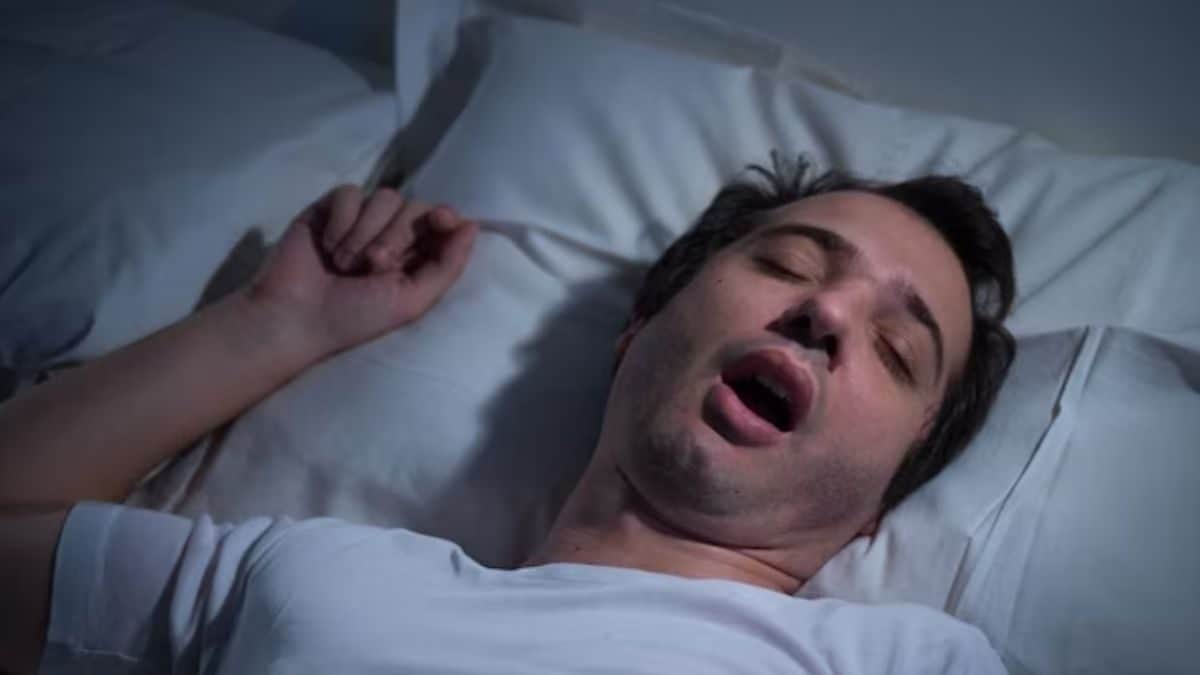
Snoring is a common problem faced by many people. Even though the snoring person may not notice it while sleeping, it can be a difficult situation for others around them. In some cases, snoring can also lead to suffocation. But why does this happen? Snoring is a vibration of the tissues in the throat caused by the partial obstruction of airflow through the mouth and nose during sleep.
Men are more prone to snoring than women. Excessive weight in the neck or throat area can also sometimes cause snoring. Airway obstruction, obesity and lack of sleep are common causes of snoring.
A Mumbai-based doctor Sheetal Goyal explained, “Several factors can lead to this obstruction including a stuffy nose, enlarged tonsils or adenoids, excess weight, sleeping position and the natural relaxation of the throat muscles with age. When we sleep, the muscles in our throat relax, collapsing the airway and causing snoring. In addition, lifestyle habits such as drinking alcohol and smoking can further relax the throat muscles and increase nasal congestion, making the situation worse”.
Tips to Reduce Snoring:
Maintain a Healthy Weight:
Maintaining a healthy weight is crucial as extra weight in the neck area narrows the airway. Even a small amount of weight loss can make a significant difference.
Healthy Sleeping Position:
Adjusting the sleeping position is also important. Sleeping on your side instead of your back can help prevent the tongue from falling backwards and blocking the airway.
Hydration:
Staying hydrated is crucial, as dehydration can lead to thick mucus that worsens snoring.
Managing Allergies:
Managing allergies is another effective strategy, as they are a major cause of stuffy noses. Using air purifiers to limit exposure to allergens and taking antihistamines can help improve airflow.
Reducing Alcohol Consumption:
It is essential to limit the consumption of alcohol and sedatives before bed, as these substances relax the throat muscles, thus increasing susceptibility to snoring.
Healthy Lifestyle:
Exercise and a healthy lifestyle can further improve overall sleep quality.
Lifestyle Desk
Our life needs a bit of style to get the perfect zing in the daily routine. News18 Lifestyle is one-stop destination for everything you need to know a…Read More
In some cases, snoring can also lead to suffocation.
Snoring is a vibration of the tissues in the throat caused by the partial obstruction of airflow.
Snoring is a common problem faced by many people. Even though the snoring person may not notice it while sleeping, it can be a difficult situation for others around them. In some cases, snoring can also lead to suffocation. But why does this happen? Snoring is a vibration of the tissues in the throat caused by the partial obstruction of airflow through the mouth and nose during sleep.
Men are more prone to snoring than women. Excessive weight in the neck or throat area can also sometimes cause snoring. Airway obstruction, obesity and lack of sleep are common causes of snoring.
A Mumbai-based doctor Sheetal Goyal explained, “Several factors can lead to this obstruction including a stuffy nose, enlarged tonsils or adenoids, excess weight, sleeping position and the natural relaxation of the throat muscles with age. When we sleep, the muscles in our throat relax, collapsing the airway and causing snoring. In addition, lifestyle habits such as drinking alcohol and smoking can further relax the throat muscles and increase nasal congestion, making the situation worse”.
Tips to Reduce Snoring:
Maintain a Healthy Weight:
Maintaining a healthy weight is crucial as extra weight in the neck area narrows the airway. Even a small amount of weight loss can make a significant difference.
Healthy Sleeping Position:
Adjusting the sleeping position is also important. Sleeping on your side instead of your back can help prevent the tongue from falling backwards and blocking the airway.
Hydration:
Staying hydrated is crucial, as dehydration can lead to thick mucus that worsens snoring.
Managing Allergies:
Managing allergies is another effective strategy, as they are a major cause of stuffy noses. Using air purifiers to limit exposure to allergens and taking antihistamines can help improve airflow.
Reducing Alcohol Consumption:
It is essential to limit the consumption of alcohol and sedatives before bed, as these substances relax the throat muscles, thus increasing susceptibility to snoring.
Healthy Lifestyle:
Exercise and a healthy lifestyle can further improve overall sleep quality.
Lifestyle Desk
Our life needs a bit of style to get the perfect zing in the daily routine. News18 Lifestyle is one-stop destination for everything you need to know a…Read More
Stay informed with Hindustan Times’ live updates! Track the latest lifestyle news including fashion trends, style guide & Tips, India & World Events. Don’t miss today’s key news for October 2, 2024.
Latest news on October 2, 2024: Sleep disturbances in children at the age of 10 can trigger 2.7 times higher risk for suicidal ideation and suicide attempts after two years.
Get the latest news updates and breaking news stories from the world of lifestyle. Track all the latest fashion trends, delicious recipes, travel tips and more. Disclaimer: This is an AI-generated live blog and has not been edited by Hindustan Times staff.…Read More
Follow all the updates here:
Oct 2, 2024 4:32 PM IST
Health News LIVE: Sleep disturbances in children can trigger suicide risk: Study explains
Daily nightmares were associated with higher risk of suicidal tendencies in children at the age of 10.
Health News LIVE: Is meditation as pain-reliever a bogus concept? New study quashes long-held belief
Mindfulness meditation and placebo effect demonstrated two different brain mechanisms, further proving that meditation has a real effect on pain relief.
Health News LIVE: Doctors warn breast cancer is rising among younger women despite medical advancements, more awareness
Despite earlier detection and advancements in treatment, breast cancer remains the second leading cause of cancer deaths among women overall, as per a US study.
Health News LIVE: Amazon Great Indian Festival Sale 2024: Workout with comfort with sports bras, track pants and more at 80% off
Amazon Great Indian Festival Sale 2024: Check out this list of the best fitness wear like sports bras, running shorts, track pants and more at 80% off.
Fashion News LIVE: Kylie Jenner looks like a goth princess in black gown at her Paris Fashion Week runway debut: Pics and videos
Kylie Jenner just made her Paris Fashion Week runway debut. And she looked like the perfect goth princess. Check out photos and videos of her stunning look.
Fashion News LIVE: Sonam Kapoor glitters in ‘insane’ golden skirt suit that accentuates her body elegantly
Sonam Kapoor says yes to a skirt suit. The actor wowed in a golden Tamara Ralph look at a recent event. Check out all the photos of her glamorous outfit.
Festivals News LIVE: Navratri 2024: Full list of 9 colours of Navratri and their significance
Navratri, honouring Goddess Durga, starts on October 3 and ends with Dussehra on October 12. Each day features a specific colour symbolising various virtues.
Health News LIVE: Amazon Great Indian Festival Sale: Shop gym equipment like treadmills, air bikes and more at up to 80% off
The Amazon Sale is offering unbeatable deals on gym equipment like dumbbells, treadmills, and air bikes. Start your home workout routine with these offers!
People should check their sugar profile regularly.
If you are in the pre-diabetic stage, then the first thing to do is to put restrictions on your unhealthy diet.
Diabetes is one of the non-curable diseases in the world. People with this disease can live long and healthy lives if they manage their condition. Another way to prevent diabetes is to diagnose it at a pre-diabetic stage. This is such a stage which gives you a chance to recover, for which you can get more than a year. If you recover in this stage, then the chances of diabetes are reduced in the body. Renowned diabetologist Dr Paras Agarwal explains the meaning of the pre-diabetic stage and offers a few preventive measures which you can follow to recover from this stage. Dr Paras Agarwal asks the people to check their sugar profile. There are mainly three types of tests in the sugar profile. The first is fasting blood sugar. It denotes how much sugar is there in your blood on an empty stomach. If it is up to 100, then you are normal, but if it has reached 126, then it is in the pre-diabetic stage.
The second test is HB1AC. In this, the average blood sugar of three months is measured. If it is between 5.7 percent to 6.4 percent, then you are in the pre-diabetic stage. If the glucose tolerance is between 140 mg/dL to 199 mg/dL, then it is in the pre-diabetic stage.
Restrict Unhealthy Diet
If you are in the pre-diabetic stage, then the first thing to do is to put restrictions on your unhealthy diet. Do not consume processed food, junk food, fast food, pizza, burgers, packaged food etc. from now on. Avoid eating too many fried and sweet things at home as well. You must stay away from alcohol, cigarettes, tobacco, and drugs.
Go Natural
Include natural things in your diet such as whole grains, pure pulses, green leafy vegetables, fresh fruits, seeds and dry fruits. Make chapati with fenugreek leaves, spinach or cook vegetables and eat them. Eat things made from gram flour or sattu.
Physical Exercise
Include and increase physical exercises in your daily schedule. Walking, running, bicycle riding, swimming, sports and other outdoor activities can help you in staying active and healthy. If you are in the office, then climb stairs for half an hour a day, even if you climb for only 5 minutes at a time. Every day, in some way or the other, take out half an hour for physical exercise
Stress Management
Yoga and meditation are the best medicines to control stress. Even if there is no stress, yoga and meditation will be beneficial for you. Sleep early at night and wake up early. Do not sleep with stress, if your sleep breaks in between, then this is also not a good sign, so have a peaceful sleep. About 7 to 8 hours of sleep is necessary for a fit body.
Lifestyle Desk
Our life needs a bit of style to get the perfect zing in the daily routine. News18 Lifestyle is one-stop destination for everything you need to know a…Read More
Sleep is a fundamental aspect of human health, influencing everything from mental clarity to physical well-being. Yet, despite its critical role, many people need help to get enough rest. In fact, statistics about sleep reveal a global crisis of sleep deprivation that affects millions. The lack of adequate sleep can have serious consequences, whether due to lifestyle choices, work demands, or health issues. This article delves into key statistics about sleep, shedding light on patterns, challenges, and the implications of insufficient rest. We’ll explore the prevalence of sleep disorders, the impact of poor sleep on health, and what the data tells us about improving sleep hygiene. Understanding these statistics is crucial for making informed sleep habits and overall health decisions.
The Importance Of Sleep: Understanding Key Statistics
Sleep plays a vital role in maintaining health and well-being. Studies show that adults require 7-9 hours of sleep per night to function optimally. However, a significant percentage of the population needs to meet this requirement, leading to widespread sleep deprivation.
Sleep deprivation affects various aspects of health, including cognitive function, mood, and physical health. Research indicates that chronic sleep deprivation can lead to serious health issues such as obesity, diabetes, cardiovascular diseases, and even mortality.
Sleep affects productivity and performance, as well as health. Insufficient sleep is linked to decreased productivity, workplace accidents, and higher absenteeism. These statistics highlight the economic impact of poor sleep on society.
Understanding sleep patterns can help identify the root causes of sleep problems. Factors such as stress, lifestyle choices, and sleep disorders contribute to poor sleep quality. Addressing these factors can improve sleep hygiene and overall health.
Common Sleep Disorders And Their Prevalence
Sleep Apnea: A Widespread Issue
Sleep apnea is a common sleep disorder characterized by interrupted breathing during sleep. It affects millions of people worldwide, with a significant portion remaining undiagnosed. Untreated sleep apnea can lead to severe health complications.
Insomnia: Struggling to Sleep
Insomnia, the inability to fall or stay asleep, is another prevalent sleep disorder. It affects up to 30% of adults at some point. Chronic insomnia can severely impact daily functioning and overall well-being.
Restless Legs Syndrome: An Uncomfortable Reality
Restless Legs Syndrome (RLS) causes uncomfortable sensations in the legs, leading to an uncontrollable urge to move them. This disorder affects 5-10% of the population and can significantly disrupt sleep quality.
Narcolepsy: Sudden Sleep Attacks
Narcolepsy is a neurological disorder that affects the brain’s ability to control sleep-wake cycles—people with narcolepsy experience excessive daytime sleepiness and sudden sleep attacks, which can be dangerous and debilitating.
Circadian Rhythm Disorders: Out of Sync
Circadian rhythm disorders occur when there is a misalignment between an individual’s internal clock and the external environment. Shift work, jet lag, and irregular sleep schedules can disrupt circadian rhythms, affecting sleep quality and health.
Sleep And Its Effects On Mental Health
The Link Between Sleep and Depression: There is a strong link between sleep and depression. Studies show that people with insomnia are at a higher risk of developing depression. Conversely, treating sleep problems can improve symptoms of depression.
Anxiety and Sleep Disruption: Anxiety can cause significant sleep disruption. People with anxiety disorders often experience difficulty falling asleep and staying asleep. Addressing anxiety through therapy or medication can improve sleep quality.
Sleep and Cognitive Function: Adequate sleep is essential for cognitive function. Sleep helps consolidate memories and supports learning and problem-solving skills. Chronic sleep deprivation can lead to cognitive decline and increase the risk of neurodegenerative diseases.
The Role of Sleep in Stress Management: Sleep plays a crucial role in stress management. Lack of sleep can increase stress levels, while good sleep can enhance the body’s resilience to stress. Practicing good sleep hygiene can help manage stress effectively.
Conclusion
Statistics about sleep underscore the critical role sleep plays in our overall health and well-being. Sleep impacts every aspect of our lives, from cognitive function to physical health. By understanding the importance of sleep and taking proactive steps to improve sleep quality, individuals can significantly enhance their health, productivity, and quality of life. Prioritizing sleep is not just a lifestyle choice; it’s a necessity for maintaining balance and longevity.
FAQs
1. How much sleep do adults need? Most adults need 7-9 hours of sleep per night to function optimally. However, individual needs can vary based on age, health, and lifestyle.
2. What are the signs of sleep deprivation? Common signs of sleep deprivation include fatigue, irritability, difficulty concentrating, and impaired memory. Chronic sleep deprivation can also lead to more serious health issues.
3. How can I improve my sleep quality? Improving sleep quality involves establishing a consistent sleep schedule, creating a relaxing bedtime routine, optimizing your sleep environment, and managing stress.
4. What is the impact of poor sleep on health? Poor sleep can lead to a range of health issues, including an increased risk of chronic conditions like heart disease, diabetes, and mental health disorders.