hacklink hack forum hacklink film izle hacklink marsbahisizmir escortsahabetpornJojobet

Tag: Slow

  • Financial and community hurdles slow geothermal energy development in Southeast Asia

    Financial and community hurdles slow geothermal energy development in Southeast Asia

    JAKARTA, Indonesia — Providing round-the-clock energy, using minimal space and considered a clean source of power — geothermal energy seems like an ideal option for countries like Indonesia and the Philippines, where the potential is high, and governments are seeking to transition away from highly polluting fossil fuels.

    Yet most of the potential of geothermal energy, created by harnessing heat produced by the earth from underground reservoirs of hot water to power turbines that generate electricity, remains untapped in these countries and across the world — as financial, regulatory and community roadblocks have stalled growth.

    More readily available financing and domestic regulatory changes are starting to address these barriers, but experts say more should be done to unlock the vast clean energy source trapped just beneath the Earth’s surface.

    Countries with high geothermal potential — such as the United States, Indonesia and the Philippines — are usually located close to tectonically active regions where hot water or steam is naturally carried to the Earth’s surface through volcanic activity, or can be accessed by shallow drilling.

    “We’re essentially standing on our own sun, which we can get clean, reliable energy from,” said Marit Brommer, CEO of the International Geothermal Association based in Germany.

    Experts also laud geothermal plants for their ability to operate continuously to meet the minimum level of power demanded around-the-clock, unaffected by weather, with long lifespans and minimal maintenance.

    As countries shift towards renewable and cleaner energy, geothermal use is expected to grow: In Southeast Asia, geothermal power generation is expected to increase tenfold from 2020 to 2050, reaching 276 million megawatt-hours, according to the International Energy Agency.

    With their steaming volcanoes and bubbling lakes, Indonesia and the Philippines — two archipelagic Southeast Asian countries located on the seismically active “Ring of Fire” — are the second and third-largest users of geothermal energy in the world, with some of the highest geothermal energy potential. The U.S. is number one.

    Yet Indonesia uses less a tenth of its gargantuan reserves, making up 6% of its power supply. In the Philippines, about 8% of geothermal capacity has been developed, constituting 14.6% of the country’s energy use, the country’s largest source of renewable energy.

    Both countries plan to expand use of geothermal energy as they transition away from fossil fuels: Indonesia aims to increase the share of geothermal power generation by at least 8% by 2030, making it the second-largest renewable energy source after hydropower. The Philippine government is targeting several projects to boost geothermal capacity by adding nearly 1.5 gigawatts, nearly doubling its current use.

    But the exploratory stage of geothermal development — when companies do tests and drilling to confirm the size, temperature, pressure, and potential production rates of sites — is expensive and risky. That makes it hard to attract finance for development, said Shigeru Yamamura, an energy specialist at the Asia Development Bank.

    “That’s the most difficult part of developers, because (financially) they cannot take 100% of the exploration risk themselves,” Yamamura told The Associated Press.

    Climate finance for geothermal development is limited for most Southeast Asian nations, accounting for only 9% of finance available for the Association of Southeast Asian Nations — a political and economic bloc of ten states in the region, which includes Indonesia and the Philippines.

    A 2024 ASEAN energy report said “blended finance” using both public and private sources, grants and green bonds could help bridge the gap.

    The Philippine government has announced green energy auction schemes for geothermal energy and is preparing a “smart green grid plan” that prioritizes renewable energy — vital to enable private developers to get financing from banks. This signals progress in policy support for investment, Yamamura said.

    Indonesian President Prabowo Subianto has focused on geothermal as part of the country’s energy transition. The Ministry of Energy and Mineral Resources says it’s working to shorten permitting times and considering ways to increase rates of return on investments in geothermal projects. The state electric utility, Perusahaan Listrik Negara, also said it’s committed to ramping up geothermal energy development.

    The World Bank is providing a $150 million loan to scale up Indonesian investments in geothermal energy by reducing the risks of early-stage exploration. The Green Climate Fund and the Clean Technology Fund are providing a $127.5 million.

    Even when finance is secured, community pushback can slow development.

    In Indonesia, residents of villages have protested projects, citing safety and environmental concerns: Several geothermal sites in Indonesia have had deadly gas leaks in the past five years.

    Some Indonesian communities don’t understand what geothermal energy is and how they could benefit from its development, said Timothy Ravis, a doctoral student in global development at Cornell University.

    Protests at geothermal sites in the Philippines have led at least one company to pay royalties to Indigenous groups worried about land degradation caused by geothermal development.

    Governments and businesses should work to gain the consent of communities near projects to help ensure they succeed, said Brommer.

    “We need to show that this development benefits all people, not just a company,” she said. “It’s not about being a good neighbor, it’s about being the best neighbor and really working with communities to respect their concerns.”

    ___

    The Associated Press’ climate and environmental coverage receives financial support from multiple private foundations. AP is solely responsible for all content. Find AP’s standards for working with philanthropies, a list of supporters and funded coverage areas at AP.org.

    Source link

  • Ruben Amorim will have to ditch his three at the back philsophy at Man United, writes DANNY MURPHY – the squad he is inheriting is too slow!

    Ruben Amorim will have to ditch his three at the back philsophy at Man United, writes DANNY MURPHY – the squad he is inheriting is too slow!

    • Ruben Amorim will need to adapt his style to suit his Manchester United players
    • The 39-year-old is inheriting squad ill-suited to his preferred football philosophy
    • LISTEN NOW: It’s All Kicking Off!, available wherever you get your podcasts. New episodes every Monday and Thursday

    I’m sure Ruben Amorim is intelligent enough to realise he can’t just copy and paste what he did at Sporting Lisbon in order to create immediate success at Manchester United.

    To ask a squad which lacks athleticism and confidence to replicate his preferred 3-4-3 with high energy and flying wing backs carries big risks in the Premier League.

    The best managers adapt to personnel. Pep Guardiola’s Manchester City tweaked things when Erling Haaland arrived. Jurgen Klopp opted for three midfield runners only after Philippe Coutinho had left.

    Initially, if Amorim demands this set of United players be progressive with the press and play a higher line, it would invite trouble. The central defenders don’t have the pace to compensate for a lack of numbers in midfield, particularly when Leny Yoro is injured.

    In Portugal, Sporting have the best players so it makes sense to be braver with philosophy and formation. United are a different case. Against better teams, they lack legs at this level.

    Ruben Amorim needs to be flexible based on the squad he is inheriting at Manchester United

    Ruben Amorim needs to be flexible based on the squad he is inheriting at Manchester United

    The 39-year-old has found great success playing high-tempo football with a 3-4-3 in Portugal

    The 39-year-old has found great success playing high-tempo football with a 3-4-3 in Portugal

    But United do not currently have the players to make that work against the best sides

    But United do not currently have the players to make that work against the best sides

    It’ll be interesting to see if Amorim is playing three at the back in a year’s time. Few top teams do. Chelsea were the last side to win the title that way, under Antonio Conte in 2017.

    If United lose control in midfield against top teams like Liverpool or City by playing two there, they will get dominated, so a lot of onus is on the wing backs to help without possession.

    With Luke Shaw out, they don’t have a left-footer on that side, which makes them unbalanced.

    I have read about interest in Bayern Munich’s Alphonso Davies but he’s world class and would surely expect Champions League football.

    Some managers begin playing three centre halves but move on from it. There is a reason Mikel Arteta doesn’t play that way despite winning the FA Cup with wing backs. Crystal Palace were great in a 3-4-3 last season but opponents have started to figure out Oliver Glasner’s side.

    Let’s assume Amorim starts with some variation on the 3-4-3 because it’s what he knows. He’ll have to find the right midfield pair, as athletic as he can find in United’s current ranks.

    Captain Bruno Fernandes will need to be accommodated into the front three to make room for an athletic midfield pairing

    Captain Bruno Fernandes will need to be accommodated into the front three to make room for an athletic midfield pairing

    Given that he has worked successfully with Manuel Ugarte before, the Uruguayan would probably take one of the spots but I don’t think it would suit Bruno Fernandes to be alongside him. His creative strengths would be better served in the front three.

    Maybe Kobbie Mainoo would be the best fit of those available. Like Michael Carrick, he reads the game so well he doesn’t always need to rattle into people to break up play.

    Manchester UnitedRuben Amorim


    Source link

  • In Beirut, a photographer’s frozen moments slow down time and allow the contemplation of destruction

    In Beirut, a photographer’s frozen moments slow down time and allow the contemplation of destruction

    We watch video after video, consuming the world on our handheld devices in bites of two minutes, one minute, 30 seconds, 15. We turn to moving pictures — “film” — because it comes the closest to approximating the world that we see and experience. This is, after all, 2024, and video in our pocket — ours, others’, everyone’s — has become our birthright.

    But sometimes — even in this era of live video always rolling, always recording, always capturing — sometimes the frozen moment can entrance the eye like nothing else. And in the process, it can tell a larger story that echoes long after the moment was captured. That’s what happened this past week in Beirut, through the camera lens of Associated Press photographer Bilal Hussein and the photographs he captured.

    When Hussein set up his camera outside an evacuated Beirut apartment building Tuesday after Israel announced it would be targeted as part of military operations against Hezbollah, he had one goal in mind — only one. “All I thought of,” he says, “was photographing the missile while it was coming down.”

    He found a safe spot. He ensured a good angle. He wasn’t stressed, he said; like many photographers who work in such environments, he had been in situations like this one before. He was ready.

    When the attack came — a bomb, not a missile in the end — Hussein swung into action. And, unsurprisingly for a professional who has been doing this work for two decades, he did exactly what he set out to do.

    The sequence of images he made bursts with the explosive energy of its subject matter.

    In one frame, the bomb hangs there, a weird and obtrusive interloper in the scene. It is not yet noticed by anyone around it, ready to bring its destruction to a building that, in moments, will no longer exist. The building’s balconies, a split-second from nonexistence, are devoid of people as the bomb finds its mark.

    These are the kind of moments that video, rolling at the speed of life or even in slow motion, cannot capture in the same way. A photo holds us in the scene, stops time, invites a viewer to take the most chaotic of events and break it down, looking around and noticing things in a strangely silent way that actual life could not.

    In another frame, one that happened micromoments after the first, the building is in the process of exploding. Let’s repeat that for effect, since even as recently as a couple generations ago photographs like this were rare: in the process of exploding.

    Pieces of building are shooting out in all directions, in high velocity — in real life. But in the image they are frozen, outward bound, hanging in space awaiting the next seconds of their dissolution — just like the bomb that displaced them was doing milliseconds before. And in that, a contemplation of the destruction — and the people it was visited upon — becomes possible.

    The technology to grab so many images in the course of little more than one second — and do it in such clarity and high resolution — is barely a generation old.

    So to see these “stills,” as journalists call them, come together to paint a picture of an event is a combination of artistry, intrepidity and technology — an exercise in freezing time, and in giving people the opportunity to contemplate for minutes, even hours, what took place in mere seconds. This holds true for positive things that the camera captures — and for visitations of violence like this one as well.

    Photography is random access. We, the viewers of it, choose how to see it, process it, digest it. We go backward and forward in time, at will. We control the pace and the speed at which dizzying images hurtle at us. And in that process, something unusual for this era emerges: a bit of time to think.

    That, among many other things, is the enduring power of the still image in a moving-picture world — and the power of what Bilal Hussein captured on that clear, sunny day in Beirut.

    ___

    Ted Anthony is the director of new storytelling and newsroom innovation for The Associated Press. Follow him at http://x.com/anthonyted

    Source link

  • 90s sports legend undergoes scans amid fears brain may be on ‘slow decline’

    90s sports legend undergoes scans amid fears brain may be on ‘slow decline’

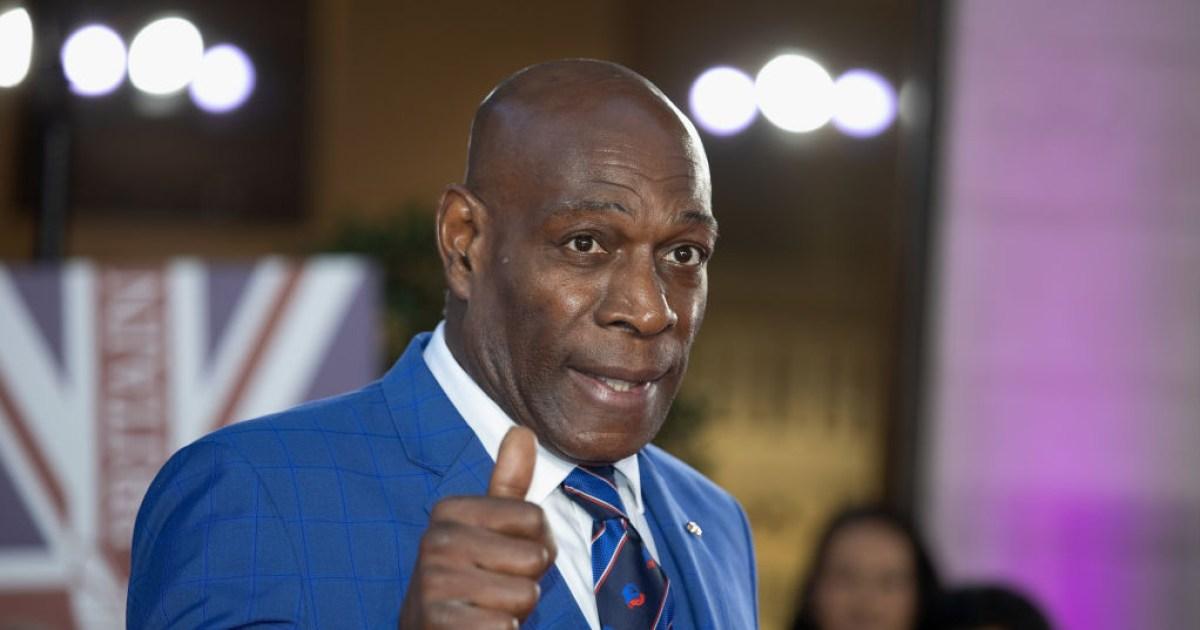
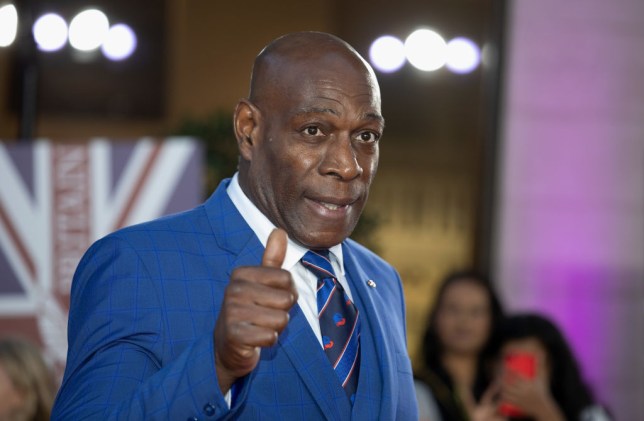
    Bruno is one of boxing’s most beloved characters (Picture: Getty Images)

    Frank Bruno, one of the most celebrated names in British boxing history, is undergoing brain scans amid fears his ‘brain might be on a slow decline’.

    Bruno was one of the biggest names in British sport in the late 1980s and 90s, a ferocious and endearing heavyweight with 38 of his 40 victories in the ring coming via knockout.

    His crowning moment came in 1995 when he beat Oliver McCall at Wembley to win the WBC heavyweight title on home soil.

    The Londoner also twice shared the ring with Mike Tyson in 1989 and 1996 with that second meeting proving to be his last fight before retirement.

    Bruno provided unforgettable moments in the ring, retiring with 40 wins from 45 fights with his five career defeats all coming via knockout.

    His career, along with those of fellow British greats Nigel Benn, Chris Eubank and Lennox Lewis, has been chronicled in the new Amazon documentary Four Kings.

    During the series, Bruno’s daughter Rachel explained doctors are trying to establish whether blows to the head during his gruelling 14-year career in the ring have caused long-term damage.

    Bruno retired from the ring in 1996 (Picture: John Gichigi/Getty Images)

    ‘We have learned recently that his brain might be on a slow decline,’ she said.

    ‘They are just doing scans and tests at the moment. With the impact of his career and constant knocks to the head, it’s obviously probably not helped.

    ‘We don’t know how fast his brain is going to decline. It’s sad but we’re a strong family and we want to cherish these moments.’

    Bruno added: ‘I fulfilled my dream. ‘I won the world championship. I’ve got some beautiful kids. What more do you need?’

    Bruno is involved in a number of mental health initiatives and tweeted last week he is in good health.

    ‘Can I confirm my health is fine I am doing speaking events every week and audiences who see & hear me up and down the country will testify to that. People are booking me all the time in fact the diary is looking good.’

    A source close to Bruno also explained the 62-year-old’s checks are a routine process for any retired fighter with the former world champion ‘healthier than he has been in years’.

    ‘Frank’s in a great place at the moment and feeling fitter and healthier than he has in years,’ a source told The Sun.

    ‘Each week he will be at three or four events talking about his career and working.

    ‘All retired boxers have regular checks, and Frank is no different.’


    Source link

  • Football: Somerset can’t overcome slow start at Central | Newsletter

    Football: Somerset can’t overcome slow start at Central | Newsletter

    The Somerset football team has been a fast starter in most of its games this season, only to see games turn on them in the later stages of the night.

    A fast start wasn’t in the cards for the Spartans on Friday at St. Croix Central. The Spartans played a lethargic first quarter which opened the opportunity for Central to build a 24-0 lead.

    Somerset improved over the rest of the game, but couldn’t regain all the ground it had given Central, resulting in a 40-28 Spartan loss. The loss ends the chances of Somerset reaching the WIAA playoffs this season. The Spartans are 0-5 in the Middle Border Conference and 1-6 overall.

    The Spartans will play their final two games at home, this Friday versus Altoona and against Amery in their season finale the following Friday. Somerset coach Joe Hutter was blunt in his assessment of the team’s situation.

    “We know our fate,” he said. “We’re going to write the last two chapters of our book (on the season) and we know that’s what we’ll remember most is how we finished.”

    Altoona and Somerset share the bottom spot in the MBC standings with 0-5 records.

    Somerset has played evenly with some of the top teams in the MBC so the Spartans’ slow start against Central was surprising. Central opened the game with a 69-yard scoring drive where the Panthers overpowered the Spartan defense. Somerset’s offense looked just as flat, failing to get a first down in its first possession. Central then blocked Somerset’s first punt, setting up an easy second touchdown. Somerset’s second possession was just as listless and a short punt set up Central for a third early score. Somerset trailed 24-0 with just over nine minutes elapsed in the game.

    Somerset senior quarterback Kane Donnelly tried to lift the Spartans out of their doldrums with a 75-yard run that set up a five-yard touchdown sweep by Blake Fox late in the first quarter.

    It wasn’t until well into the second quarter that a Somerset setback carried the ball. From then on, Wyatt Mielke was a weapon in helping the Spartans maintain drives. He finished with 10 carries for 66 yards. That came during Somerset’s second scoring drive, when Mielke covered most of the yardage. A three-yard pass from Donnelly to Jake Krier got the touchdown that cut Central’s lead to 24-14 with 2:24 left in the first half. Central missed a field goal at the end of the quarter, leaving the score at 24-14 at the break.

    The Spartans went nowhere on their first possession of the second half, leaving a short field for Central to drive for another score that made the margin 32-14. Give the Spartans credit, they did not give up.

    Somerset drove 53 yards on its next possession, with a 24-yard from Mielke sparking the drive. The Spartans got another short touchdown pass from Donnelly to Krier, who was getting inside position on his slant patterns to give Donnelly a clear target as Krier slashed into the end zone.

    Somerset scored again after recovering a Central fumble late in the third quarter. Donnelly kept the drive alive by racing for 25 yards on a fake punt. Donnelly hit Carson Belisle with a five-yard touchdown pass on the second play of the fourth quarter to shave Central’s lead to 32-28.

    That’s as close as the Spartans could get. Central followed with a drive that ate up most of the fourth quarter, scoring with 2:52 left in the game.

    Somerset struggled on third down in the game, making a first down on one of 13 chances. They were better on fourth down, moving the chains on six of eight tries. The Spartans were also hurt by penalties, drawing eight flags, including several that called back significant gains.

    Donnelly led the Spartans with 153 yards rushing on 18 carries. He completed eight of his 24 pass attempts for 38 yards.

    Source link

  • Lifestyle interventions can slow or reverse some illnesses | Health

    Lifestyle interventions can slow or reverse some illnesses | Health

    HAVE YOU ever gone to the doctor and spent more time talking about how to treat your symptoms, rather than what is causing them? Have you been prescribed medications that merely mask your symptoms, or even make them worse?

    Addressing the root cause of your symptoms is at the heart of understanding your ailments, and this can be a game changer in achieving lasting health and wellness.

    According to Dr Orlando Thomas, medical doctor and functional medicine practitioner at Thomas Medical and Shockwave Centre, understanding the root cause of a disease is like unravelling a mystery. Symptoms are often manifestations of an underlying imbalance or dysfunction within the body.

    “For instance, chronic conditions like diabetes, autoimmune diseases, or digestive disorders may have multifaceted origins. Addressing the root cause involves identifying these origins – be it genetic, environmental, or lifestyle-related – and developing a personalised strategy to restore balance,” he said.

    Dr Thomas, who was the main speaker at the ‘Transforming Lives Through Healthy Living’ series of presentations held at the Portmore Seventh-day Adventist Church, said the human body is a complex system, and illness often arises from imbalances within this system.

    “These imbalances can be triggered by various factors, including poor nutrition, stress and environmental toxins. By identifying and addressing these root causes, we can alleviate symptoms that also promote long-term health and well-being,” Dr Thomas said.

    According to the World Health Organization (WHO), the world’s biggest killer is ischaemic heart disease, responsible for 13 per cent of the world’s total deaths. Since 2000, the largest increase in deaths has been caused by this disease, rising by 2.7 million to 9.1 million deaths in 2021.

    As a newly emerged cause of deaths, COVID-19 was directly responsible for 8.8 million deaths in 2021, and consequently, largely pushed down other leading causes of death by one place. Instead of being the second- and third-leading causes of death as in 2019, stroke and chronic obstructive pulmonary disease became the third and fourth in 2021, responsible for approximately 10 per cent and five per cent of total deaths, respectively.

    Lower respiratory infections remained the world’s most deadly communicable disease other than COVID-19, ranked as the fifth-leading cause of death. However, the number of deaths has gone down substantially: in 2021 it claimed 2.5 million lives, 370,000 fewer than in 2000.

    Deaths from other non-communicable diseases were also on the rise. Trachea, bronchus and lung cancers deaths have risen from 1.2 million in 2000 to 1.9 million in 2021 and are now ranked sixth among leading causes of death.

    According to Dr Thomas, in conventional medicine, medical practitioners tend to treat these diseases individually, but most people that have one of these illnesses also have three or more that are referred to as comorbidities.

    “They all go together. Most diabetics have hypertension and poor circulation, and may be at the risk of getting a stroke or a heart attack. The question is, why do many of these diseases go together? Because the root causes are the same, and as such, reversing these diseases also takes the same or similar strategies,” he said.

    Addressing the root causes of illnesses, he said, represents a paradigm shift in our approach to health and wellness. By focusing on the underlying imbalances that give rise to disease, we can move beyond symptom management to truly promote health and vitality.

    Many people suffer from different factors, including chronic stress, poor diet, and the lack of sleep. By addressing these underlying issues, he said, we can enhance our body’s natural ability to fight off illness. “As we continue to face new health challenges, this holistic approach will be critical in supporting our collective well-being,” Dr Thomas said.

    COMMON THINGS TO LIVE LONGER:

    • Good nutrition: What you eat has a direct impact on the cells in your body, which in turn has an impact on longevity. A healthy diet provides cells with vital sources of energy and keeps them stable and working as they should. Healthy foods support your immune cells, which defend against infections and other health threats, protect other cells from damage, and help the body repair or replace damaged cells.

    • Role of exercise: Many studies show that physical activity contributes to greater longevity, due to the many positive effects it has on the body. These effects include stronger heart and lung function, improved health of blood vessels, stronger muscles, better balance, and a healthier weight.

    OTHER LIFESTYLE CHOICES THAT CONTRIBUTE TO LONGEVITY:

    In addition to healthy eating and being more active, the following lifestyle choices can have an enormous impact on longevity and quality of life:

    • Do not smoke: Smoking has been proven to shorten lifespan. Smoking damages lung function, hearth, skin and oral health, and it increases the risk of cancer.

    • Limit alcohol: Excessive alcohol use increases your risk of liver damage, cancer, and serious accidents. It can impair your immune system and result in depression. Drinking alcohol in moderation means one drink or less per day for women, and two drinks or less per day for men.

    • Get enough sleep: Getting quality sleep is vital to good health and well-being throughout your life and may even extend it. Over time, inadequate sleep can raise your risk for chronic health problems, affecting your heart, brain, lungs, immune system, and more.

    • Hydrate: Those who stay well hydrated appear to be healthier, develop fewer chronic conditions like heart and lung disease, and live longer than those who do not.

    • Socialise: More frequent social activity was associated with significantly longer survival. In fact, the greater the frequency of socialisation, the greater the likelihood of living longer.

    • Think positive: You may be surprised that your outlook on life can contribute to longevity. Two recent studies found that optimism is linked to a longer lifespan in women from diverse racial and ethnic groups, and to better emotional health in older men.

    keisha.hill@gleanerjm.com

    SOURCE: World Health Organization

    Source link

  • Ex-ESPN analyst blames Travis Kelce’s slow start on ‘jet-setting’ offseason lifestyle

    Ex-ESPN analyst blames Travis Kelce’s slow start on ‘jet-setting’ offseason lifestyle

    A former ESPN draft analyst has said the quiet part out loud when it comes to Travis Kelce.

    While speaking on the Ryen Russillo Podcast this week, former ESPN draft analyst Todd McShay didn’t hold back in offering his opinion as to why the Kansas City Chiefs tight end is off to a slow start in the 2024 season.

    Kelce, who turns 35 in October, has just eight catches for 69 yards through three games.

    McShay blamed the 9-time Pro Bowler’s sluggish start in part on his offseason lifestyle, which includes traveling around the world with his popstar girlfriend Taylor Swift, and physical conditioning.

    “Every broadcast I’ve watched for the last few weeks, it’s like, are we not allowed to say that he’s out of shape?” McShay said. “That he’s been partying all offseason? He’s been jet-setting around with the most famous person probably in the entire world, that he’s drinking, going to the U.S. Open, he’s got cocktails in.”

    Russillo then pushed back, pointing out that having some drinks in the offseason isn’t that big of a deal, but McShay, who was part of ESPN’s talent layoffs in June 2023, just kept on going.

    “What I do know is, I want you to take a picture from preseason 2022 and then take a picture preseason 2024. They’re barely the same human being, Ryan,” said McShay.

    “And everyone’s like, ‘We gotta get him the ball. Why isn’t he part of the offense? The defense is double covering him. Here’s the thing, bottom line with Kelce, the coverage and the respect he gets is the same—the athlete is not… He’s not in the same shape. He’s not the same. I don’t see the same explosiveness. I see him wearing down a bit in-game.”

    McShay also pointed out Kelce’s increasing interests outside of football that take time away from preparation, such as his $100 million podcast deal, slew of commercials and move into film.

    Chiefs quarterback Patrick Mahomes addressed Kelce’s slow start this week, blaming the lack of production on other team’s scheming to take him away.

    “It’s crazy because the respect factor teams have for Travis is unreal, and it’s well-deserved,” Mahomes said. “We’re calling a lot of plays for Travis and it’s like two or three (defenders) are going to him.

    But the tape doesn’t lie, and Kelce, who has made a career running past defenders and finding soft spots in the zone defenses, does look less explosive than in past years.

    But he’s also in his 12th season and has played a ton of football in his career, so he could just be experiencing the athleticism decline that comes for every great player eventually.

    Either way, his lack of production hasn’t stopped the Chiefs (3-0) from winning.

    Source link

  • Ex-ESPN analyst blames Travis Kelce’s slow start on ‘jet-setting’ offseason lifestyle

    Ex-ESPN analyst blames Travis Kelce’s slow start on ‘jet-setting’ offseason lifestyle

    A former ESPN draft analyst has said the quiet part out loud when it comes to Travis Kelce.

    While speaking on the Ryen Russillo Podcast this week, former ESPN draft analyst Todd McShay didn’t hold back in offering his opinion as to why the Kansas City Chiefs tight end is off to a slow start in the 2024 season.

    Kelce, who turns 35 in October, has just eight catches for 69 yards through three games.

    McShay blamed the 9-time Pro Bowler’s sluggish start in part on his offseason lifestyle, which includes traveling around the world with his popstar girlfriend Taylor Swift, and physical conditioning.

    “Every broadcast I’ve watched for the last few weeks, it’s like, are we not allowed to say that he’s out of shape?” McShay said. “That he’s been partying all offseason? He’s been jet-setting around with the most famous person probably in the entire world, that he’s drinking, going to the U.S. Open, he’s got cocktails in.”

    Russillo then pushed back, pointing out that having some drinks in the offseason isn’t that big of a deal, but McShay, who was part of ESPN’s talent layoffs in June 2023, just kept on going.

    “What I do know is, I want you to take a picture from preseason 2022 and then take a picture preseason 2024. They’re barely the same human being, Ryan,” said McShay.

    “And everyone’s like, ‘We gotta get him the ball. Why isn’t he part of the offense? The defense is double covering him. Here’s the thing, bottom line with Kelce, the coverage and the respect he gets is the same—the athlete is not… He’s not in the same shape. He’s not the same. I don’t see the same explosiveness. I see him wearing down a bit in-game.”

    McShay also pointed out Kelce’s increasing interests outside of football that take time away from preparation, such as his $100 million podcast deal, slew of commercials and move into film.

    Chiefs quarterback Patrick Mahomes addressed Kelce’s slow start this week, blaming the lack of production on other team’s scheming to take him away.

    “It’s crazy because the respect factor teams have for Travis is unreal, and it’s well-deserved,” Mahomes said. “We’re calling a lot of plays for Travis and it’s like two or three (defenders) are going to him.

    But the tape doesn’t lie, and Kelce, who has made a career running past defenders and finding soft spots in the zone defenses, does look less explosive than in past years.

    But he’s also in his 12th season and has played a ton of football in his career, so he could just be experiencing the athleticism decline that comes for every great player eventually.

    Either way, his lack of production hasn’t stopped the Chiefs (3-0) from winning.

    Source link

  • What to Stream: George Strait, ‘Rebel Ridge,’ Astro Bot, ‘Slow Horses’ and Mormon influencers

    What to Stream: George Strait, ‘Rebel Ridge,’ Astro Bot, ‘Slow Horses’ and Mormon influencers

    “The Secret Lives of Mormon Wives,” a docuseries following young wives in Utah, and the suspenseful thriller “Rebel Ridge” are some of the new television, films, music and games headed to a device near you.

    Also among the streaming offerings worth your time as selected by The Associated Press’ entertainment journalists: the return of the acclaimed English spy series “Slow Horses,” Astro Bot gets his own full full-fledged adventure on the PlayStation 5 and George Strait will release his 31st studio album, “Cowboys and Dreamers.”

    — Jeremy Saulnier makes lean, suspenseful thrillers, several of which (“Blue Ruin,” “The Green Room”) have turned into cult favorites. His latest, “Rebel Ridge” (on Netflix starting Friday Sept. 6), stars Aaron Pierre as an ex-Marine who becomes ensnared in a violent battle with a corrupt small-town police department and its chief (Don Johnson). The film, engrossing and stylish, is enlivened by the magnetic presence of Pierre.

    “The Boy and the Heron” didn’t turn out to be Hayao Miyazaki’s swan song. (He’s said to be at work again on another film.) But it did live up to the considerable expectations built up for the long-in-coming late opus from the Japanese anime master. The film, streaming Friday, Sept. 6, on Max, was the best animated feature winner at the Oscars earlier this year and – in a first for the 83-year-old Miyazaki – No. 1 for a weekend at the box office. In it, a 12-year-old boy named Mahito, uprooted from Tokyo after the death of his mother during World War II, discovers a portal into a fantastical realm. In my review, I wrote that “The Boy and the Heron” is like “returning to a faintly familiar dreamland. Only, since the only location here is really Miyazaki’s boundless imagination, it’s less the feeling of stepping back into a recognizable place than it is revisiting a well-remembered sense of discombobulation and wonder.”

    AP Film Writer Jake Coyle

    — They call him King George for a reason. On Friday, George Strait will release his 31st studio album, “Cowboys and Dreamers,” a collection of classic-sounding contemporary country from a Texas troubadour who has nothing left to prove, and no reason to quit. Standouts include a collaboration with Chris Stapleton (“Honky Tonk Hall of Fame”), who opened for Strait on his recent stadium tour, a cover of Waylon Jennings’ “Waymore’s Blues,” and the Jimmy Buffet-informed vacation stomper, “MIA Down in MIA.”

    — The internet was primed for an electroclash revival, and in The Dare, it has a figurehead. The musical project of Harrison Patrick Smith, The Dare has quickly become a stalwart of New York City nightlife, largely due to the success of his amorous anthem “Girls.” He’s further cemented his nascent fame by producing and co-writing “Guess,” a deluxe club tune from Charli XCX’s extended “BRAT,” and a remix featuring Billie Eilish. When his debut album releases on September 6, titled “What’s Wrong With New York?”, all eyes and ears will be back on his own nostalgic-sounding Anglophilia. Put on your best suit and hit the dance floor.

    — MJ Lenderman is no stranger to this space — last year, AP named an album by his band, Asheville, North Carolina’s alt-country indie rockers Wednesday, as one of 2023’s best. As a soloist, the multi-instrumentalist — but perhaps most principally, a guitarist — has made a name for himself for his lax songwriting style – funny, acerbic, cutting with a wizened equanimity. On “Morning Fireworks,” his skills have been sharpened. Heartbreak is amusing and suburban and timeless. It, like last year’s “Rat Saw God,” feels like an easy contender for one of 2024’s most exciting releases.

    — A master of disco, soul, R&B and beyond, Sylvester’s unimpeachable legacy gets a new release in “Live at The Opera House,” a massive collection of over two hours of material. That includes 13 songs captured from his performance at the San Francisco War Memorial Opera House on March 11, 1979. It will be released as a box set, for those looking to dive into its exclusive photographs and liner notes. For everyone else, it will hit streaming on Friday, Sept. 6.

    AP Music Writer Maria Sherman

    “Slow Horses,” Apple TV+ British spy series starring Gary Oldman, returns for season four just in time for the Primetime Emmy Awards. Season three received nine nominations including outstanding drama series and lead actor for Oldman. The show’s new season is also rated 100% fresh on Rotten Tomatoes. In “Slow Horses,” MI5 agents who’ve made big mistakes are relegated to a division run by Oldman’s character Jackson Lamb. The story is based on Mick Herron’s “Slough House” novels. It returns Wednesday.

    — First there was Bravo’s “The Real Housewives of Salt Lake City,” and now Hulu is introducing “The Secret Lives of Mormon Wives,” a docuseries following young wives in Utah who are members of The Church of Jesus Christ of Latter-day Saints. They are also online influencers who banded together to create TikTok content they called #MomTok. The women juggle their online personas with family life and remaining in good standing with the Church — and each other — after a sex scandal brings worldwide attention. It premieres Friday, Sept. 6.

    — In “The Wonderland Massacre & The Secret History of Hollywood,” crime writer Michael Connelly examines the 1981 quadruple massacre at Wonderland Avenue in Los Angeles that inspired the film “Boogie Nights.” It premieres Sunday, Sept. 8 on MGM+.

    Alicia Rancilio

    — It’s been way too long since we’ve had a lovable new mascot to play with, but Sony is hoping Astro Bot can pick up the slack. The little guy first showed up in a game for Sony’s virtual reality headset, but this is the first time he’ll get a full-fledged adventure on the PlayStation 5. It begins with the destruction of the droid’s mothership, leaving him to travel across more than 50 planets to reassemble his crew — and perhaps meet some iconic PlayStation characters along the way. It’s the sort of running-and-jumping silliness that made stars out of Spyro the Dragon and Ratchet & Clank, interspersed with acrobatic flying antics. Astro Bot lifts off Friday, Sept. 6.

    The Casting of Frank Stone is an intriguing collaboration between two preeminent horror game makers. It’s set in the world of Behaviour Interactive’s Dead By Daylight, a multiplayer survival hit, but it’s a solo game from Until Dark designer Supermassive Games. The title character is a serial killer, while the protagonists are four teenagers who come up with the brilliant idea of making a movie about him. If you’ve played either of the aforementioned titles, you know someone’s going to wind up on the wrong end of a meat hook. The gore starts flowing Tuesday on PlayStation 5, Xbox X/S and PC.

    Lou Kesten


    Source link