hacklink hack forum hacklink film izle hacklink marsbahisizmir escortsahabet

Tag: Social

  • Trump Administration shuts down White House Spanish-language page, social media

    Trump Administration shuts down White House Spanish-language page, social media

    Within hours of President Donald Trump’s inauguration, the new administration took down the Spanish-language version of the official White House website.

    The site — currently https://www.whitehouse.gov/es/ — now gives users an “Error 404” message. It also included a “Go Home” button that directed viewers to a page featuring a video montage of Trump in his first term and on the campaign trail. The button was later updated to read “Go To Home Page”.

    Hispanic advocacy groups and others expressed confusion at the abrupt change and frustration at what some called the administration’s lack of efforts to maintain communication with the Latino community, which helped propel him to the presidency.

    The Spanish profile of the White House’ X, @LaCasaBlanca and the government page on reproductive freedom also were disbanded. Meanwhile, the Spanish versions of other government agencies such as the Department of Labor, Justice and Agriculture remained available for users on Tuesday.

    Asked about the changes, White House principal deputy press secretary Harrison Fields responded Tuesday that the administration is “committed to bringing back online the Spanish translation section of the website.”

    “It’s day two. We are in the process of developing, editing and tweaking the White House website. As part of this ongoing work, some of the archived content on the website went dormant. We are committed to reloading that content in a short timeline,” he said without elaborating.

    Trump removed the Spanish version of the page in 2017. At that time, White House officials said they would reinstate it. President Joe Biden reinstated the page in 2021.

    The page’s removal coincided with Trump’s first-day wave of executive orders highlighted by the launch of an illegal immigration crackdown that was one of his key campaign pledges. Trump on Monday declared a national emergency at the U.S.-Mexico border and announced plans to send U.S. troops to help support immigration agents and restrict refugees and asylum.

    According to 2023 Census Bureau estimates, about 43.4 million Americans — 13.7% of the U.S. population age 5 and older — speak Spanish at home. The U.S. has no official language.

    Monica Rivera, a brand and communications strategist in New York City of Puerto Rican and Cuban descent, said the shutdown sends a clear signal.

    “There are 43 million Latinos who speak Spanish as their first language and removing access to information directly from the White House draws a distinct line as to who they are serving and more dangerously, signals to the administration’s MAGA base that we as Latinos are ‘other’ and a less significant part of this country,” Rivera said.

    Anthony Hernandez, a paralegal in the nation’s capital, wasn’t initially aware of the move and said it suggests what the coming years of a second Trump presidency would look like, with specific issues making headlines while “minor but equally malicious things like that go unnoticed.”

    “A move like shutting down the Spanish White House page and X profile serves no purpose other than to cut off resources for millions of Hispanic Americans and immigrants attempting to enter the United States legally,” Hernandez said. “And it’s a slap in the face to the millions of Hispanic voters that supported him in this recent election.”

    Trump’s secretary of state, Marco Rubio, is Cuban American and speaks Spanish. At his swearing-in Tuesday, he gave remarks in Spanish, thanking God, his family and Trump.

    Meanwhile, Hispanic leaders and communication strategy experts expressed surprise with the page’s removal, given Trump’s popularity with certain Latino voters.

    “If the White House is seriously interested in engaging with Latinos, the second largest group in this country, then they need to make sure that updates can also be distributed in Spanish, a preferred language for millions in our community,” said Frankie Miranda President and CEO of the Hispanic Federation.

    He called that a way to ensure “everyone is a part of the civic process.”

    Kris Klein Hernández, a U.S. historian specializing in race, gender, and sexuality at Connecticut College, said the content removal from official White House websites not only limits the access available to Spanish-speaking U.S. citizens and migrants but leads “some to question which constituencies the administration prioritizes.”

    Jeff Lee, former deputy cabinet secretary and deputy director of external and international affairs for former California Gov. Jerry Brown, said the move seems counterintuitive given the opportunity to “showcase” policy changes, especially ones related to economics and border security.

    “I didn’t see any other language mediums that got the kibosh. So I think that’s a really interesting thing to single out — if that’s the case,” Lee said.

    AP VoteCast, a nationwide survey of more than 120,000 voters, found Trump won a larger share of Black and Latino voters than he did in 2020, and most notably among men under age 45. Young Latinos, particularly young Latino men, also were more open to Trump than in 2020. Roughly half of young Latino men voted for Democratic Vice President Kamala Harris, compared with about 6 in 10 who went for Biden.

    Source link

  • Ancient DNA suggests women were heart of social networks in Celtic society in Britain

    Ancient DNA suggests women were heart of social networks in Celtic society in Britain

    Female family ties were at the heart of social networks in Celtic society in Britain before the Roman invasion, a new analysis suggests.

    Genetic evidence from a late Iron Age cemetery shows that women were closely related while unrelated men tended to come into the community from elsewhere, likely after marriage.

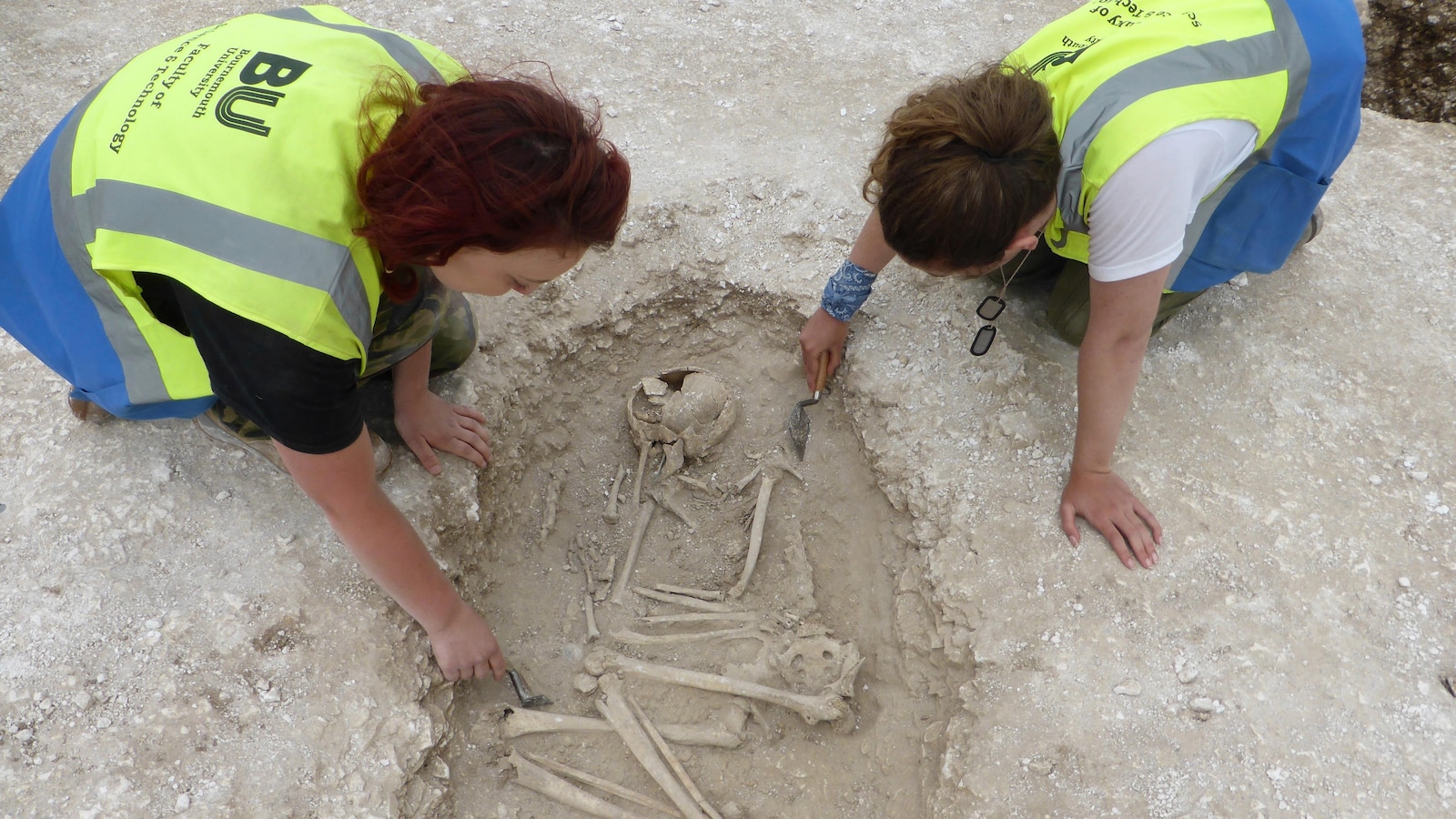
    An examination of ancient DNA recovered from 57 graves in Dorset in southwest England shows that two-thirds of the individuals were descended from a single maternal lineage. The cemetery was used from around 100 B.C. to 200 A.D.

    “That was really jaw-dropping – it’s never been observed before in European prehistory,” said study co-author Lara Cassidy, a geneticist at Trinity College Dublin.

    The findings, published Wednesday in the journal Nature, suggest that women stayed in the same circles throughout life – maintaining social networks and likely inheriting or managing land and property.

    Meanwhile “it’s your husband who is coming in as a relative stranger, dependent on a wife’s family for land and livelihood,” said Cassidy.

    This pattern – called matrilocality – is historically rare.

    Archaeologists studying grave sites in Britain and Europe have previously only detected the opposite pattern – women leaving their homes to join their husband’s family group – in other ancient time periods, from the neolithic to the early Medieval period, said Guido Gnecchi-Ruscone at the Max Planck Institute in Germany, who was not part of the study.

    In studies of pre-industrial societies from around 1800 to the present, anthropologists found that men join their wives’ extended family households only 8% of the time, said Cassidy.

    But archaeologists already knew there was something special about the role of women in Iron Age Britain. A patchwork of tribes with closely related languages and art styles – sometimes referred to as Celtic – lived in England before the Roman invasion in 43 A.D. Valuable items have been found buried with Celtic women, and Roman writers, including Julius Caesar, wrote with disdain about their relative independence and fighting prowess.

    The pattern of strong female kinship connections that the researchers found does not necessarily imply that women also held formal positions of political power, called matriarchy.

    But it does suggest that women had some control of land and property, as well as strong social support, making Britain’s Celtic society “more egalitarian than the Roman world,” said study co-author and Bournemouth University archaeologist Miles Russell.

    ___

    The Associated Press Health and Science Department receives support from the Howard Hughes Medical Institute’s Science and Educational Media Group and the Robert Wood Johnson Foundation. The AP is solely responsible for all content.

    Source link

  • Why Are We Taxing Popcorn Differently? Indias New GST Rates Cause Social Media Stir

    Why Are We Taxing Popcorn Differently? Indias New GST Rates Cause Social Media Stir

    NEW DELHI – India’s move to tax popcorn differently based on its sugar or spice content has drawn criticism from the opposition and sparked social media outrage, with two former government economic advisers questioning the tax system introduced in 2017.

    The Goods and Services Tax (GST) Council, chaired by the finance minister and including state representatives, announced on Saturday that non-branded popcorn mixed with salt and spices would attract a 5% GST, pre-packaged and branded popcorn 12%, and caramel popcorn, categorised as a sugar confectionery, 18%.

    The differential rates came into effect immediately, ending confusion over rates as popcorn was taxed differently across states.

    Explaining the rationale behind the decision to tax caramel popcorn at 18%, Finance Minister Nirmala Sitharaman said that any product with added sugar is taxed differently.

    The announcement, however, sparked a social media storm on Sunday, with opposition politicians, economists and supporters of Prime Minister Narendra Modi’s government criticising the move and others creating memes and poking fun at it.

    “Complexity is a bureaucrat’s delight and citizens’ nightmare,” India’s previous Chief Economic Adviser K V Subramanian wrote on X. He questioned the rationale of the decision he said will contribute minimally to tax revenues, but inconvenience citizens.

    His predecessor, Arvind Subramanian, said “the folly is compounded because instead of at least moving in the direction of simplicity we are veering to greater complexity, difficulty of enforcement and just irrationality”.

    One widely circulated post on X showed an image of a branded “salt caramel” popcorn packet and said how it would send the taxman into a tizzy calculating the tax rate on it.

    Jairam Ramesh, leader and spokesman of the main opposition Congress party, said the “absurdity of three different tax slabs for popcorn under GST … only brings to light a deeper issue that the growing complexity of a system that was supposed to be a Good and Simple Tax”.

    A finance ministry spokesperson, the GST Council Secretariat and a spokesman for the ruling Bharatiya Janata Party did not respond to requests for comment on the controversy.

    The GST system has run into similar controversies for its tax classifications in the past and faced questions although not on this scale.

    Previous controversies have involved taxing chapatis or unleavened Indian flatbread differently from layered flatbreads, different rates for curd and yogurt, and cream bun versus bun and cream served separately.

    (Reporting by Nikunj Ohri; Editing by YP Rajesh (Reuters))

    (Disclaimer: Except for the headline, this story has not been edited by NDTV staff and is published from a syndicated feed.)

    Source link

  • California to consider requiring mental health warnings on social media sites

    California to consider requiring mental health warnings on social media sites

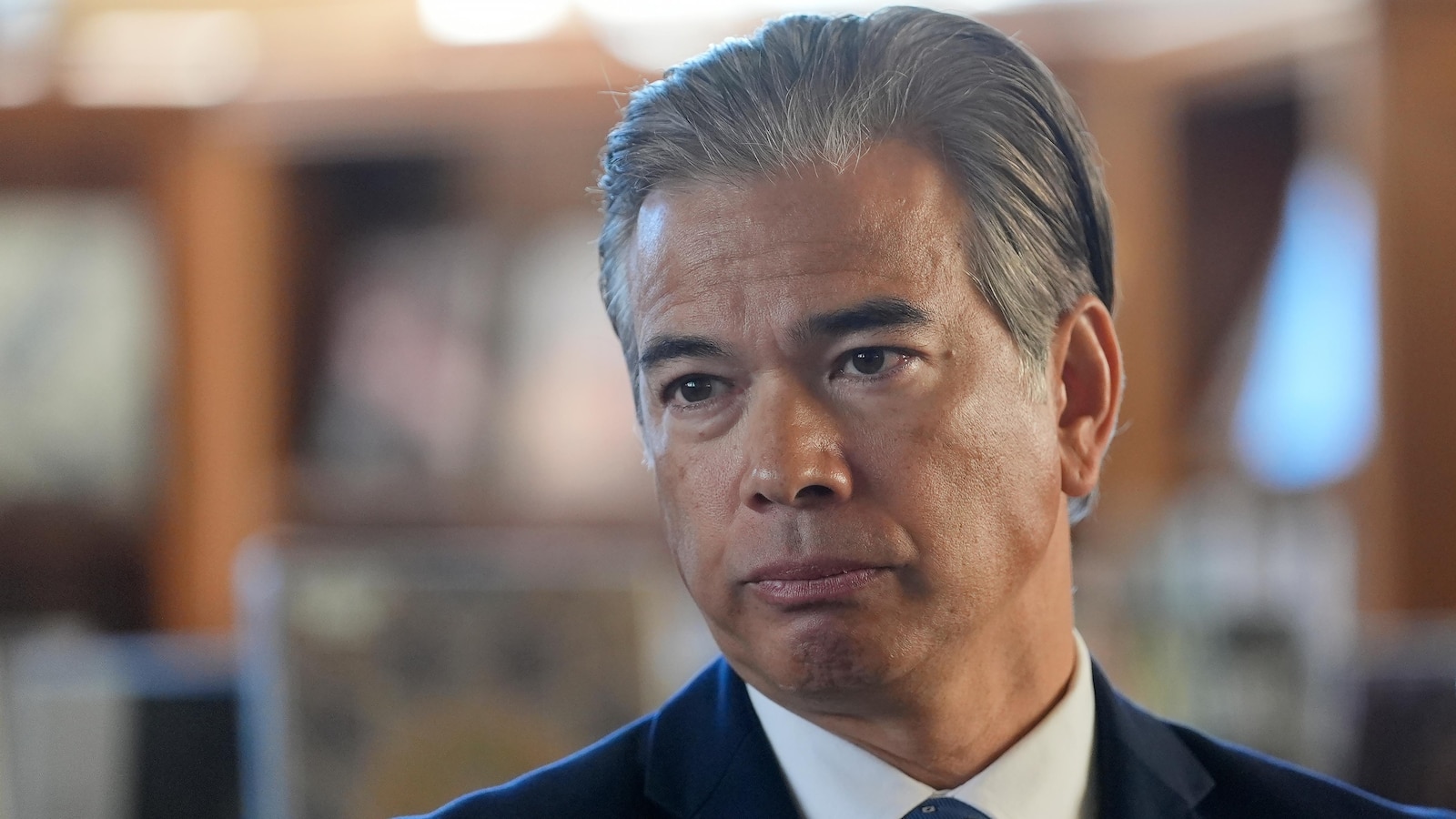
    SACRAMENTO, Calif. — California, home to some of the largest technology companies in the world, would be the first U.S. state to require mental health warning labels on social media sites if lawmakers pass a bill introduced Monday.

    The legislation sponsored by state Attorney General Rob Bonta is necessary to bolster safety for children online, supporters say, but industry officials vow to fight the measure and others like it under the First Amendment. Warning labels for social media gained swift bipartisan support from dozens of attorneys general, including Bonta, after U.S. Surgeon General Vivek Murthy called on Congress to establish the requirements earlier this year, saying social media is a contributing factor in the mental health crisis among young people.

    “These companies know the harmful impact their products can have on our children, and they refuse to take meaningful steps to make them safer,” Bonta said at a news conference Monday. “Time is up. It’s time we stepped in and demanded change.”

    State officials haven’t provided details on the bill, but Bonta said the warning labels could pop up once weekly.

    Up to 95% of youth ages 13 to 17 say they use a social media platform, and more than a third say that they use social media “almost constantly,” according to 2022 data from the Pew Research Center. Parents’ concerns prompted Australia to pass the world’s first law banning social media for children under 16 in November.

    “The promise of social media, although real, has turned into a situation where they’re turning our children’s attention into a commodity,” Assemblymember Rebecca Bauer-Kahan, who authored the California bill, said Monday. “The attention economy is using our children and their well-being to make money for these California companies.”

    Lawmakers instead should focus on online safety education and mental health resources, not warning label bills that are “constitutionally unsound,” said Todd O’Boyle, a vice president of the tech industry policy group Chamber of Progress.

    “We strongly suspect that the courts will set them aside as compelled speech,” O’Boyle told The Associated Press.

    Victoria Hinks’ 16-year-old daughter, Alexandra, died by suicide four months ago after being “led down dark rabbit holes” on social media that glamorized eating disorders and self-harm. Hinks said the labels would help protect children from companies that turn a blind eye to the harm caused to children’s mental health when they become addicted to social media platforms.

    “There’s not a bone in my body that doubts social media played a role in leading her to that final, irreversible decision,” Hinks said. “This could be your story.”

    Common Sense Media, a sponsor of the bill, said it plans to lobby for similar proposals in other states.

    California in the past decade has positioned itself as a leader in regulating and fighting the tech industry to bolster online safety for children.

    The state was the first in 2022 to bar online platforms from using users’ personal information in ways that could harm children. It was one of the states that sued Meta in 2023 and TikTok in October for deliberately designing addictive features that keep kids hooked on their platforms.

    Gov. Gavin Newsom, a Democrat, also signed several bills in September to help curb the effects of social media on children, including one to prohibit social media platforms from knowingly providing addictive feeds to children without parental consent and one to limit or ban students from using smartphones on school campus.

    Federal lawmakers have held hearings on child online safety and legislation is in the works to force companies to take reasonable steps to prevent harm. The legislation has the support of X owner Elon Musk and the President-elect’s son, Donald Trump Jr. Still, the last federal law aimed at protecting children online was enacted in 1998, six years before Facebook’s founding.

    Source link

  • Toddler social skills: Helping your child build friendships and confidence, Lifestyle News

    Toddler social skills: Helping your child build friendships and confidence, Lifestyle News

    Watching your toddler interact with others is a heartwarming and sometimes hilarious experience. But behind those first playdates and shy exchanges lies an important journey, building social skills.

    Developing friendships and confidence during the toddler years is key to your child’s emotional and social growth, helping them navigate the world with empathy and resilience.

    In this article, we’ll explore practical tips and strategies to nurture your toddler’s budding social skills, support their confidence, and lay the foundation for meaningful connections that will last a lifetime.

    Understanding social development in toddlers

    Toddlers are naturally curious and eager to explore their environment, including interactions with peers.

    However, their social skills are still developing, and they often rely on parents and caregivers for guidance. At this stage, behaviours like parallel play (playing alongside other kids without much interaction) and occasional conflicts are completely normal.

    Encourage patience, model good behaviour, and celebrate small social successes to help your child gradually build their skills.

    Tips to enhance toddler social skills

    1. Encouraging playtime with peers

    Playtime is one of the most effective ways for toddlers to develop social skills. Whether it’s at the park, daycare, or a playgroup, these interactions help them learn concepts like sharing, turn-taking, and co-operation.

    Tips for success:

    • Organise short and supervised playdates.
    • Choose activities that encourage teamwork, like building blocks or group games.
    • Step in gently if conflicts arise, guiding them to resolve disagreements peacefully.

    2. Teaching empathy through everyday interactions

    Empathy is a cornerstone of building strong relationships, and you can teach this skill even at a young age. Start by helping your toddler identify and understand emotions, both their own and others’.

    How to teach empathy:

    • Use simple phrases like, “How do you think your friend feels when you take their toy?”
    • Read books about friendship and emotions to spark discussions.
    • Praise acts of kindness, such as sharing or comforting a friend.

    3. Modelling positive social behaviour

    Children often learn by observing their parents and caregivers. Be mindful of how you interact with others, as your actions set the tone for your toddler’s behaviour.

    Examples of modelling:

    • Greet neighbours or friends warmly in front of your child.
    • Practise polite manners, like saying “please” and “thank you.”
    • Show patience and understanding in challenging social situations.

    4. Boosting confidence through small wins

    Confidence is closely tied to social skills. When toddlers feel secure in their abilities, they are more likely to engage positively with peers. Help them build confidence by acknowledging their achievements, no matter how small.

    Ways to encourage confidence:

    • Celebrate when they share or take turns.
    • Provide opportunities for them to try new things independently, like choosing a snack or solving a puzzle.
    • Avoid being overly critical when mistakes happen; instead, focus on solutions and growth.

    5. Navigating challenges like shyness or aggression

    Some toddlers may struggle with shyness, while others may display aggressive tendencies during social interactions. These behaviours are common and can be addressed with patience and consistency.

    For shy toddlers:

    Avoid forcing them into social situations; let them warm up at their own pace.

    Encourage smaller, quieter playdates to help them feel comfortable.

    For aggressive behaviour:

    Address it calmly but firmly, explaining why certain actions are hurtful.

    Teach alternative ways to express frustration, like using words or seeking help from an adult.

    Developing social skills is a gradual process, but with your support, your toddler can grow into a confident and compassionate individual. Celebrate their milestones, no matter how small, and remember that every interaction is an opportunity to learn.

    By fostering empathy, modelling good behaviour, and encouraging positive playtime experiences, you’re giving your child the tools they need to build meaningful friendships and face the world with confidence. Keep nurturing their social journey, and watch them thrive!

    [[nid:709820]]

    This article was first published in theAsianparent.

    Source link

  • Toddler social skills: Helping your child build friendships and confidence, Lifestyle News

    Toddler social skills: Helping your child build friendships and confidence, Lifestyle News

    Watching your toddler interact with others is a heartwarming and sometimes hilarious experience. But behind those first playdates and shy exchanges lies an important journey, building social skills.

    Developing friendships and confidence during the toddler years is key to your child’s emotional and social growth, helping them navigate the world with empathy and resilience.

    In this article, we’ll explore practical tips and strategies to nurture your toddler’s budding social skills, support their confidence, and lay the foundation for meaningful connections that will last a lifetime.

    Understanding social development in toddlers

    Toddlers are naturally curious and eager to explore their environment, including interactions with peers.

    However, their social skills are still developing, and they often rely on parents and caregivers for guidance. At this stage, behaviours like parallel play (playing alongside other kids without much interaction) and occasional conflicts are completely normal.

    Encourage patience, model good behaviour, and celebrate small social successes to help your child gradually build their skills.

    Tips to enhance toddler social skills

    1. Encouraging playtime with peers

    Playtime is one of the most effective ways for toddlers to develop social skills. Whether it’s at the park, daycare, or a playgroup, these interactions help them learn concepts like sharing, turn-taking, and co-operation.

    Tips for success:

    • Organise short and supervised playdates.
    • Choose activities that encourage teamwork, like building blocks or group games.
    • Step in gently if conflicts arise, guiding them to resolve disagreements peacefully.

    2. Teaching empathy through everyday interactions

    Empathy is a cornerstone of building strong relationships, and you can teach this skill even at a young age. Start by helping your toddler identify and understand emotions, both their own and others’.

    How to teach empathy:

    • Use simple phrases like, “How do you think your friend feels when you take their toy?”
    • Read books about friendship and emotions to spark discussions.
    • Praise acts of kindness, such as sharing or comforting a friend.

    3. Modelling positive social behaviour

    Children often learn by observing their parents and caregivers. Be mindful of how you interact with others, as your actions set the tone for your toddler’s behaviour.

    Examples of modelling:

    • Greet neighbours or friends warmly in front of your child.
    • Practise polite manners, like saying “please” and “thank you.”
    • Show patience and understanding in challenging social situations.

    4. Boosting confidence through small wins

    Confidence is closely tied to social skills. When toddlers feel secure in their abilities, they are more likely to engage positively with peers. Help them build confidence by acknowledging their achievements, no matter how small.

    Ways to encourage confidence:

    • Celebrate when they share or take turns.
    • Provide opportunities for them to try new things independently, like choosing a snack or solving a puzzle.
    • Avoid being overly critical when mistakes happen; instead, focus on solutions and growth.

    5. Navigating challenges like shyness or aggression

    Some toddlers may struggle with shyness, while others may display aggressive tendencies during social interactions. These behaviours are common and can be addressed with patience and consistency.

    For shy toddlers:

    Avoid forcing them into social situations; let them warm up at their own pace.

    Encourage smaller, quieter playdates to help them feel comfortable.

    For aggressive behaviour:

    Address it calmly but firmly, explaining why certain actions are hurtful.

    Teach alternative ways to express frustration, like using words or seeking help from an adult.

    Developing social skills is a gradual process, but with your support, your toddler can grow into a confident and compassionate individual. Celebrate their milestones, no matter how small, and remember that every interaction is an opportunity to learn.

    By fostering empathy, modelling good behaviour, and encouraging positive playtime experiences, you’re giving your child the tools they need to build meaningful friendships and face the world with confidence. Keep nurturing their social journey, and watch them thrive!

    [[nid:709820]]

    This article was first published in theAsianparent.

    Source link

  • Being a disability awareness advocate: Woman shares bond with blind son on social media, Lifestyle News

    Being a disability awareness advocate: Woman shares bond with blind son on social media, Lifestyle News

    Nothing can fully prepare one for parenthood. 

    First-time parents often understand that they should brace themselves for the challenges, expected or otherwise, that come with welcoming a new member to the family.

    But when you find out that your baby is blind, what happens then?

    This was the reality of Singaporean couple Koh Wei Shi, 34, and Eric Koh, 35, in 2020, when their son, Elliot, was born.

    It took them a while before they realised something was amiss.

    Wei Shi recalled how Elliot showed signs of “developmental delays” during his first few months.

    The first-time mum shared in a chat with AsiaOne: “We knew that he’s probably behind others his age but we just thought that different children would develop at a different pace.”

    ‘We were lost and shocked’

    Back then, Covid-19 was at its peak so country-wide restrictions and preventive measures kept social interactions to a minimum.

    This actually played a role in delaying Elliot’s diagnosis as his parents did not get a lot of opportunities for him to “meet people”.

    Once Covid-19 measures were lifted, a visit to a friend’s house helped Wei Shi notice how “behind” Elliot was in his development.

    The contrast when Elliot was sat alongside another baby of the same age was stark.

    Her son was neither flipping (rolling over) nor lifting his head, so this prompted a visit to the paediatrician.

    After getting a referral to an ophthalmologist, an eye care specialist, the couple’s worst fears were realised.

    While they suspected that their son might be going through “some developmental delays”, they did not expect to learn that he was blind and unlikely to ever gain sight.

    “We were both lost and shocked,” she recalled.

    Wei Shi acknowledged that, due to his visual impairment, Elliot’s life experiences were bound to differ significantly from her own and her husband’s.

    She also wondered if her son’s condition might limit his ability to experience everyday activities, whether it was a trip to the playground, socialising with friends or even going to school.

    She said: “I remember us looking at him sleeping and then just crying because we could not understand why this was happening to him.”

    Growing up blind 

    Reality sank in for Wei Shi and her husband when a doctor suggested they read a developmental guide for parents of babies with severely impaired sight, Show Me What My Friends Can See.

    Upon reading the book, Wei Shi understood that the next step was not about attempting to correct Elliot’s sight.

    Instead, they had to focus on how to best raise him as someone who cannot see.

    Four years on and Wei Shi’s description of her parenting journey is short and simple: Fulfilling.

    “Every day I’m learning and it has taught me to be a more empathetic and compassionate person,” she said.

    It’s a journey Wei Shi has shared with her husband, Eric, and along the way, the couple discovered their strengths in parenting.

    She’s often guiding Elliot with his schoolwork, while Eric would be on hand to plan and prepare for a family day out.

    They focus on playing to their strengths while supporting each other when needed.

    “If I do need his help, I will just have to voice out and he will come,” Wei Shi explained.

    [[nid:618095]]

    When asked about her son’s personality, Wei Shi broke into a smile and mentioned how outgoing and chatty Elliot is.

    His sense of humour has a tendency to amuse his peers and adults alike.

    Wei Shi is aware, however, that Elliot may not always have such a positive impact on everyone he meets.

    In fact, his lack of sight will likely lead to him having to deal with prejudice and discrimination as he grows up.

    For now, people are generally understanding when they find out that Elliot is blind, Wei Shi said.

    It’s a situation she has experienced numerous times when out and about with her son.

    A stranger’s immediate reaction tends to be one of shock.

    “Then you can see sadness [on their faces],” Wei Shi reflected, before saying: “I don’t actually know if it is sadness or compassion. They probably just pity him.”

    How does it make her feel? We ask.

    She admitted that, initially, dealing with such situations was tough and was a reminder that her son was seen as different.

    Eventually, Wei Shi got used to such interactions and understood that people may not be behaving or reacting this way on purpose.

    Nowadays, she views these situations as opportunities to raise awareness that blindness need not be looked down on or perceived as a disadvantage.

    “Instead of letting my emotions take over, I will take the chance to advocate for him and explain to [people] that he’s okay. It’s a chance for people to learn,” she said.

    Through such exchanges, Wei Shi hopes that it creates an effect where more people will begin to have a more positive outlook on blind individuals.

    Building an online community

    Creating a social media account to document the life of her young child was not something Wei Shi thought she would do but Elliot’s diagnosis shifted her perspective.

    She struggled to find information on raising blind children in Singapore and had to reach out to resources overseas instead.

    “I started to chat with some of them and they were really supportive. It was a nice community that was very open to sharing,” Wei Shi recalled.

    Learning about how well these blind children were doing was inspiring, and it gave Wei Shi hope that Elliot’s development would progress in due time.

    That’s when she decided to be a beacon of hope to others in Singapore, by starting the social media account Blindandshine, where she documents Elliot’s life journey.

    “If a baby gets diagnosed with the same condition, [the] parents can have somebody to reach out to. That was the initial intention [of the account],” she said.

    As of the time of writing, Blindandshine has more than 7,500 followers on Instagram and over 6,000 followers on TikTok.

    Scrolling through both accounts, one would find content documenting Elliot’s daily life — from his Brazilian jiu-jitsu classes to family outings.

    Unsurprisingly, curiosity about her son’s condition has prompted questions from people online, but Wei Shi has no qualms engaging with them in order to address common misconceptions on blindness.

    “I think people come from a place of sympathy, and they just mean well for the child and family,” she said.

    Generally, their social media content has been positively received by viewers, and what’s most heartening is the response by some.

    Whether it’s a parent showing their video to their child, or an educator sharing it with a class, Wei Shi is thankful for the conscious effort in raising awareness on the cause.

    “I think that means my message is not just reaching a particular group of people, the people have become advocates themselves,” she added.

    [[nid:682053]]

    amierul@asiaone.com

    Source link

  • Being a disability awareness advocate: Woman shares bond with blind son on social media, Lifestyle News

    Being a disability awareness advocate: Woman shares bond with blind son on social media, Lifestyle News

    Nothing can fully prepare one for parenthood. 

    First-time parents often understand that they should brace themselves for the challenges, expected or otherwise, that come with welcoming a new member to the family.

    But when you find out that your baby is blind, what happens then?

    This was the reality of Singaporean couple Koh Wei Shi, 34, and Eric Koh, 35, in 2020, when their son, Elliot, was born.

    It took them a while before they realised something was amiss.

    Wei Shi recalled how Elliot showed signs of “developmental delays” during his first few months.

    The first-time mum shared in a chat with AsiaOne: “We knew that he’s probably behind others his age but we just thought that different children would develop at a different pace.”

    ‘We were lost and shocked’

    Back then, Covid-19 was at its peak so country-wide restrictions and preventive measures kept social interactions to a minimum.

    This actually played a role in delaying Elliot’s diagnosis as his parents did not get a lot of opportunities for him to “meet people”.

    Once Covid-19 measures were lifted, a visit to a friend’s house helped Wei Shi notice how “behind” Elliot was in his development.

    The contrast when Elliot was sat alongside another baby of the same age was stark.

    Her son was neither flipping (rolling over) nor lifting his head, so this prompted a visit to the paediatrician.

    After getting a referral to an ophthalmologist, an eye care specialist, the couple’s worst fears were realised.

    While they suspected that their son might be going through “some developmental delays”, they did not expect to learn that he was blind and unlikely to ever gain sight.

    “We were both lost and shocked,” she recalled.

    Wei Shi acknowledged that, due to his visual impairment, Elliot’s life experiences were bound to differ significantly from her own and her husband’s.

    She also wondered if her son’s condition might limit his ability to experience everyday activities, whether it was a trip to the playground, socialising with friends or even going to school.

    She said: “I remember us looking at him sleeping and then just crying because we could not understand why this was happening to him.”

    Growing up blind 

    Reality sank in for Wei Shi and her husband when a doctor suggested they read a developmental guide for parents of babies with severely impaired sight, Show Me What My Friends Can See.

    Upon reading the book, Wei Shi understood that the next step was not about attempting to correct Elliot’s sight.

    Instead, they had to focus on how to best raise him as someone who cannot see.

    Four years on and Wei Shi’s description of her parenting journey is short and simple: Fulfilling.

    “Every day I’m learning and it has taught me to be a more empathetic and compassionate person,” she said.

    It’s a journey Wei Shi has shared with her husband, Eric, and along the way, the couple discovered their strengths in parenting.

    She’s often guiding Elliot with his schoolwork, while Eric would be on hand to plan and prepare for a family day out.

    They focus on playing to their strengths while supporting each other when needed.

    “If I do need his help, I will just have to voice out and he will come,” Wei Shi explained.

    [[nid:618095]]

    When asked about her son’s personality, Wei Shi broke into a smile and mentioned how outgoing and chatty Elliot is.

    His sense of humour has a tendency to amuse his peers and adults alike.

    Wei Shi is aware, however, that Elliot may not always have such a positive impact on everyone he meets.

    In fact, his lack of sight will likely lead to him having to deal with prejudice and discrimination as he grows up.

    For now, people are generally understanding when they find out that Elliot is blind, Wei Shi said.

    It’s a situation she has experienced numerous times when out and about with her son.

    A stranger’s immediate reaction tends to be one of shock.

    “Then you can see sadness [on their faces],” Wei Shi reflected, before saying: “I don’t actually know if it is sadness or compassion. They probably just pity him.”

    How does it make her feel? We ask.

    She admitted that, initially, dealing with such situations was tough and was a reminder that her son was seen as different.

    Eventually, Wei Shi got used to such interactions and understood that people may not be behaving or reacting this way on purpose.

    Nowadays, she views these situations as opportunities to raise awareness that blindness need not be looked down on or perceived as a disadvantage.

    “Instead of letting my emotions take over, I will take the chance to advocate for him and explain to [people] that he’s okay. It’s a chance for people to learn,” she said.

    Through such exchanges, Wei Shi hopes that it creates an effect where more people will begin to have a more positive outlook on blind individuals.

    Building an online community

    Creating a social media account to document the life of her young child was not something Wei Shi thought she would do but Elliot’s diagnosis shifted her perspective.

    She struggled to find information on raising blind children in Singapore and had to reach out to resources overseas instead.

    “I started to chat with some of them and they were really supportive. It was a nice community that was very open to sharing,” Wei Shi recalled.

    Learning about how well these blind children were doing was inspiring, and it gave Wei Shi hope that Elliot’s development would progress in due time.

    That’s when she decided to be a beacon of hope to others in Singapore, by starting the social media account Blindandshine, where she documents Elliot’s life journey.

    “If a baby gets diagnosed with the same condition, [the] parents can have somebody to reach out to. That was the initial intention [of the account],” she said.

    As of the time of writing, Blindandshine has more than 7,500 followers on Instagram and over 6,000 followers on TikTok.

    Scrolling through both accounts, one would find content documenting Elliot’s daily life — from his Brazilian jiu-jitsu classes to family outings.

    Unsurprisingly, curiosity about her son’s condition has prompted questions from people online, but Wei Shi has no qualms engaging with them in order to address common misconceptions on blindness.

    “I think people come from a place of sympathy, and they just mean well for the child and family,” she said.

    Generally, their social media content has been positively received by viewers, and what’s most heartening is the response by some.

    Whether it’s a parent showing their video to their child, or an educator sharing it with a class, Wei Shi is thankful for the conscious effort in raising awareness on the cause.

    “I think that means my message is not just reaching a particular group of people, the people have become advocates themselves,” she added.

    [[nid:682053]]

    amierul@asiaone.com

    Source link

  • Australian father of teen sextortion victim backs banning young children from social media

    Australian father of teen sextortion victim backs banning young children from social media

    MELBOURNE, Australia — Wayne Holdsworth became an advocate for banning Australian children younger than 16 from social media because his son took his own life after falling victim to an online sextortion scam.

    Mac Holdsworth died last year at his Melbourne family home at the age of 17 after a 47-year-old Sydney man who purported to be an 18-year-old woman demanded money for an intimate image the boy had shared.

    Since then, the grieving father has taken his tragic story to around 20 schools to warn students of the risks of social media.

    “I saw firsthand the damage that social media could do. I saw Mac, my son, get sexually extorted on social media,” Holdsworth said. “His mental health deteriorated at a rapid rate.”

    Online predators began approaching the teenager before his 16th birthday and his father believes such a ban could have saved his life.

    Australia’s House of Representatives on Wednesday voted for such a ban and the Senate is expected to make it law soon.

    Holdsworth said most of the 3,000 students he’s spoken to, from age 12 to 17, agree with a ban on children under the age of 16.

    “They come up to me and they say, ‘I’m so glad that this is going to be implemented,’” Holdsworth said. “Even the kids see it now that they’re going to be protected from those predators outside that are preying on them.”

    He said three girls approached him after a school address on Monday to tell him that they were being subjected to sextortion. One had already handed over 2,500 Australian dollars ($1,600) of her parents’ money to a blackmailer.

    Holdsworth said he was the first adult they had confided in.

    “The parent won’t know until the credit card statement comes out,” he said.

    “So it’s prevalent. It happened last night and it’ll happen tonight,” he added.

    Holdsworth described the government plan to ban children younger than 16 from social media as “absolutely essential for the safety of our children.”

    But not all parents are convinced that banning young children from social media is the answer.

    Critics say the legislation was rushed through Parliament without adequate scrutiny, would not work, would create privacy risks for users of all ages and would take away parents’ authority to decide what’s best for their children.

    They also argue the ban would isolate children, deprive them of positive aspects of social media, drive children to the dark web, make children too young for social media reluctant to report harms they encounter, and take away incentives for platforms to make online spaces safer.

    Independent Sydney lawmaker Kylea Tink on Tuesday became the first member of the House of Representatives to speak publicly against the bill, which would make platforms including TikTok, Facebook, Snapchat, Reddit, X and Instagram liable for fines of up to 50 million Australian dollars ($33 million) for systemic failures to prevent young children from holding accounts.

    “As a mom of three young adults … I’m very aware of the negative impacts of social media and the challenges of parenting in this digital world,” Tink told Parliament. “I also recognize, however, that my children are digital natives and are very literate about how these platforms work. For this reason, I encourage everyone involved in this debate to ensure they are listening to the voices of young Australians when it comes to this decision-making process rather than assuming that the grownups in the room know best.”

    Tink was among 13 lawmakers who voted against the bill in the House on Wednesday. They were overwhelmed by 102 legislators who voted for it.

    The platforms have urged a Senate committee that examined the legislation on Monday to delay a vote until after a government-commissioned evaluation of age assurance technologies is completed next June.

    The four-hour committee meeting on Monday attracted 15,000 written submissions.

    X Corp. told the committee that billionaire entrepreneur Elon Musk’s platform had “serious concerns as to the lawfulness of the bill,” including its compatibility with the U.N. Convention on the Rights of the Child and the International Covenant on Civil and Political Rights.

    “There is no evidence that banning young people from social media will work and to make it law in the form proposed is highly problematic,” X said.

    Meta, which owns Facebook and Instagram, said the legislation was “inconsistent with what Australian parents have told us that they want, which is a simple and effective way for them to set controls and manage their teens’ online experience.”

    Under the bill, parental consent for children to use social media does not override the ban.

    Lizzie O’Shea, chair of the Digital Rights Watch charity, which aims to uphold the digital rights of Australians, said she was appalled by the process and limited timeframe the government used to pass such significant and contentious legislation.

    She said she was very aware of the serious risks posed by social media platforms, “but I do not support a ban personally because I understand both the limits of that particular policy and the expert evidence that is coming out from people who work in this space about the problems for young people being excluded from those spaces,” O’Shea said.

    Her concerns centered on privacy, negative mental health impacts on excluded children and the possibility that young children would find ways to access social media spaces that would become even less child friendly as a result of the ban.

    “I’m profoundly aware of the dangers of large social media platforms running a certain kind of business model that prioritizes data extraction and exploitation of vulnerability over the public interest or the building of community and the protection of democracy,” she said.

    Swinburne University digital media expert Belinda Barnet, who supports the ban, feels she is part of a minority among professionals in the digital field.

    “I like it mainly because I think many of the social media platforms as they exist right now are not suitable environments for young children,” she said.

    Source link

  • Australia’s House of Representatives passes bill that would ban young children from social media

    Australia’s House of Representatives passes bill that would ban young children from social media

    MELBOURNE, Australia — Australia’s House of Representatives on Wednesday passed a bill that would ban children younger than 16 years old from social media, leaving it to the Senate to finalize the world-first law.

    The major parties backed the bill that would make platforms including TikTok, Facebook, Snapchat, Reddit, X and Instagram liable for fines of up to 50 million Australian dollars ($33 million) for systemic failures to prevent young children from holding accounts.

    The legislation passed 102 votes in favor to 13 against. If the bill becomes law this week, the platforms would have one year to work out how to implement the age restrictions before the penalties are enforced.

    Opposition lawmaker Dan Tehan told Parliament the government had agreed to accept amendments in the Senate that would bolster privacy protections. Platforms would not be allowed to compel users to provide government-issued identity documents including passports or driver’s licenses. The platforms also could not demand digital identification through a government system.

    “Will it be perfect? No. But is any law perfect? No, it’s not. But if it helps, even if it helps in just the smallest of ways, it will make a huge difference to people’s lives,” Tehan told Parliament.

    Communications Minister Michelle Rowland said the Senate would debate the bill later Wednesday. The major parties’ support all but guarantees the legislation will pass in the Senate, where no party holds a majority of seats.

    Lawmakers who were not aligned with either the government or the opposition were most critical of the legislation during debate on Tuesday and Wednesday.

    Criticisms include that the legislation had been rushed through Parliament without adequate scrutiny, would not work, would create privacy risks for users of all ages and would take away parents’ authority to decide what’s best for their children.

    Critics also argue the ban would isolate children, deprive them of positive aspects of social media, drive children to the dark web, make children too young for social media reluctant to report harms they encountered and take away incentives for platforms to make online spaces safer.

    Independent lawmaker Zoe Daniel said the legislation would “make zero difference to the harms that are inherent to social media.”

    “The true object of this legislation is not to make social media safe by design, but to make parents and voters feel like the government is doing something about it,” Daniel told Parliament.

    “There is a reason why the government parades this legislation as world-leading, that’s because no other country wants to do it,” she added.

    T he platforms had asked for the vote on legislation to be delayed until at least June next year when a government-commissioned evaluation of age assurance technologies made its report on how the ban could been enforced.

    Melbourne resident Wayne Holdsworth, whose 17-year-old son Mac took his own life last year after falling victim to an online sextortion scam, described the bill as “absolutely essential for the safety of our children.”

    “It’s not the only thing that we need to do to protect them because education is the key, but to provide some immediate support for our children and parents to be able to manage this, it’s a great step,” the 65-year-old online safety campaigner told The Associated Press on Tuesday.

    “And in my opinion, it’s the greatest time in our country’s history,” he added, referring to the pending legal reform.

    Source link