hacklink hack forum hacklink film izle hacklink marsbahisizmir escortsahabetpornJojobet

Tag: Social

  • Thurston County Public Health & Social Services Announces LifeSteps LifeStyle Change Program

    Thurston County Public Health & Social Services Announces LifeSteps LifeStyle Change Program

    Submitted by Lesley Price, RD, CD, Population Health Program, for Thurston County Public Health & Social Services

    Thurston County Public Health & Social Services (TCPHSS) is proud to continue a new public health initiative from our Population Health Program for our community, LifeSteps LifeStyle Change Program.  LifeSteps is a 16-week in-person program series for adults based on five components: nutrition, physical activity, behavior modification, small group support and personal lifestyle change.  TCPHSS is offering this program free to participants!

    LifeSteps® is a researched-based cognitive-behavioral nutrition and lifestyle program.  It is a program that helps participants change their thoughts to be more positive, by changing negative attitudes, and create tiny habits that can improve their health.  Or simply put – a program that helps you make lifelong, positive improvements in your minds and bodies!

    Some examples of behavior modifications (new habits) that can be made to help create these sustainable improvements in our minds and bodies include:

    • Positive self-talk (affirmations). Instead of beating yourself up for eating that bowl of ice cream after dinner – praise yourself for the new habit you are working on of taking the stairs instead of the elevator at work.
    • Daily WOWs – focus on one thing that went that went well each day (encouraging non health related – life is more than just healthy eating and physical activity)
    • Instead of circling the grocery store parking lot in your car 3 times looking for a close place to park – park farther away and walk if you are able.
    • Instead of having a sitting meeting at work, do some walking meetings.
    • Instead of eating on a 10.5 to 12-inch dinner plate, dig out your Grandma’s China which likely has a 9-inch dinner plate (portions have increased significantly over the years).

    Each of the 16 weeks in the program you will take one small, achievable step to create a personal action plan that leads to a healthier version of yourself.  You will be provided guidance on what is included in a more nutrient dense eating pattern by a Certified LifeSteps Leader who is a Registered Dietitian with over 30 years of experience in the nutrition field.  

    The possible benefits of LifeSteps are endless!  Even the smallest behavior (habit) change can have lifelong rewards.  You may feel better physically and emotionally.  You may have more energy and have a more positive outlook on life.  Your health could improve, and you might even make some lifelong friends!

    If you are interested in finding out if this program may be the right fit for you, attend one of the required in-person orientations being offered at TCPHSS on Tuesday, January 14 or 21, 2025, from 2 p.m. – 3 p.m.  If you are still interested after the orientation, you will be scheduled for a one-on-one consultation with the Registered Dietitian to ensure this program is the right fit for you. 

    The program dates for the in-person 16-week sessions will be held Tuesdays, January 28 – May 13, 2025, from 2 p.m. – 3 p.m.

    Register for one of the orientation dates online.

    Contact Lesley Price, RD, CD for more information at 360.480.4654 or email LifeSteps@co.thurston.wa.us. 

    Source link

  • Social media sites call for Australia to delay its ban on children younger than 16

    Social media sites call for Australia to delay its ban on children younger than 16

    MELBOURNE, Australia — An advocate for major social media platforms told an Australian Senate committee Monday that laws to ban children younger than 16 from the sites should be delayed until next year at least instead of being rushed through the Parliament this week.

    Sunita Bose, managing director of Digital Industry Group Inc., an advocate for the digital industry in Australia including X, Instagram, Facebook and TikTok, was answering questions at a single-day Senate committee hearing into world-first legislation that was introduced into the Parliament last week.

    Bose said the Parliament should wait until the government-commissioned evaluation of age assurance technologies is completed in June.

    “Parliament is asked to pass a bill this week without knowing how it will work,” Bose said.

    The legislation would impose fines of up to 50 million Australian dollars ($33 million) on platforms for systemic failures to prevent young children from holding accounts.

    It seems likely to be passed by Parliament by Thursday with the support of the major parties.

    It would take effect a year after the bill becomes law, allowing the platforms time to work out technological solutions that would also protect users’ privacy.

    Bose received heated questions from several senators and challenges to the accuracy of her answers.

    Opposition Sen. Ross Cadell asked how his 10-year-old stepson was able to hold Instagram, Snapchat and YouTube accounts from the age of 8, despite the platforms setting a nominal age limit of 13.

    Bose replied that “this is an area where the industry needs to improve.”

    She said the proposed social media ban risked isolating some children and driving children to “darker, less safe online spaces” than mainstream platforms.

    Bose said her concern with the proposed law was that “this could compromise the safety of young people,” prompting a hostile response from opposition Sen. Sarah Henderson.

    “That’s an outrageous statement. You’re trying to protect the big tech giants,” Henderson said.

    Unaligned Sen. Jacqui Lambie asked why the platforms didn’t use their algorithms to prevent harmful material being directed to children. The algorithms have been accused of keeping technology-addicted children connected to platforms and of flooding users with harmful material that promotes suicide and eating disorders.

    “Your platforms have the ability to do that. The only thing that’s stopping them is themselves and their greed,” Lambie said.

    Bose said algorithms were already in place to protect young people online through functions including filtering out nudity.

    “We need to see continued investment in algorithms and ensuring that they do a better job at addressing harmful content,” Bose said.

    Questioned by opposition Sen. Dave Sharma, Bose said she didn’t know how much advertising revenue the platforms she represented made from Australian children.

    She said she was not familiar with research by the Harvard T.H. Chan School of Public Health that found X, Facebook, Instagram, TikTok, YouTube and Snapchat made $11 billion in advertising from U.S. users under 18 in 2022.

    Communications department official Sarah Vandenbroek told the committee said the evaluation of age assurance technologies that will report in June would assess not only their accuracy but also their security and privacy settings.

    Department Deputy Secretary James Chisholm said officials had consulted widely before proposing the age limit.

    “We think it’s a good idea and it can be done,” Chisholm told the committee.

    Source link

  • A social media ban for children younger than 16 is introduced in Australia’s Parliament

    A social media ban for children younger than 16 is introduced in Australia’s Parliament

    MELBOURNE, Australia — Australia’s communications minister introduced a world-first law into Parliament on Thursday that would ban children younger than 16 from social media, saying online safety was one of parents’ toughest challenges.

    Michelle Rowland said TikTok, Facebook, Snapchat, Reddit, X and Instagram were among the platforms that would face fines of up to 50 million Australian dollars ($33 million) for systemic failures to prevent young children from holding accounts.

    “This bill seeks to set a new normative value in society that accessing social media is not the defining feature of growing up in Australia,” Rowland told Parliament.

    “There is wide acknowledgement that something must be done in the immediate term to help prevent young teens and children from being exposed to streams of content unfiltered and infinite,” she added.

    The bill has wide political support. After it becomes law, the platforms would have one year to work out how to implement the age restriction.

    “For too many young Australians, social media can be harmful. Almost two-thirds of 14- to 17-years-old Australians have viewed extremely harmful content online including drug abuse, suicide or self-harm as well as violent material. One quarter have been exposed to content promoting unsafe eating habits,” Rowland said.

    Government research found that “95% of Australian care-givers find online safety to be one of their toughest parenting challenges,” she said.

    Social media had a social responsibility and could do better in addressing harms on their platforms, she said.

    “This is about protecting young people, not punishing or isolating them, and letting parents know that we’re in their corner when it comes to supporting their children’s health and wellbeing,” Rowland said.

    Child welfare and internet experts have raised concerns about the ban, including isolating 14- and 15-year-olds from their already established online social networks.

    Rowland said there would not be age restrictions placed on messaging services, online games or platforms that substantially support the health and education of users.

    “We are not saying risks don’t exist on messaging apps or online gaming. While users can still be exposed to harmful content by other users, they do not face the same algorithmic curation of content and psychological manipulation to encourage near-endless engagement,” Rowland said.

    The government announced last week that a consortium led by British company Age Check Certification Scheme has been contracted to examine various technologies to estimate and verify ages.

    In addition to removing children under 16 from social media, Australia is also looking for ways to prevent children under 18 from accessing online pornography, a government statement said.

    Age Check Certification Scheme’s chief executive Tony Allen said Monday the technologies being considered included age estimation and age inference. Inference involves establishing a series of facts about individuals that point to them being at least a certain age.

    Rowland said the platforms would also face fines of up to AU$50 million ($33 million) if they misused personal information of users gained for age-assurance purposes.

    Information used for age assurances must be destroyed after serving that purpose unless the user consents to it being kept, she said.

    Digital Industry Group Inc., an advocate for the digital industry in Australia, described the age limit as a “20th century response to 21st century challenges.”

    Source link

  • Australia won’t force social media users to share their personal details when child ban takes effect

    Australia won’t force social media users to share their personal details when child ban takes effect

    MELBOURNE, Australia — Australia’s communications minister said Wednesday the government won’t force social media users to hand over their personal information to tech companies, as children younger than 16 are set to be banned from the platforms.

    Michelle Rowland plans to introduce into Parliament on Thursday world-first legislation that would make X, TikTok, Facebook and Instagram responsible for excluding Australian children younger than 16 from the platforms.

    After the bill becomes law, the platforms would have one year to work out how to implement the ban on younger children before they face fines of up to 50 million Australian dollars ($33 million) for systemic breaches.

    How the platforms will be able to determine the ages of account holders is not yet known.

    Rowland told Parliament on Wednesday the legislation will contain “robust provisions” to protect social media users’ privacy.

    “This is not about government mandating any form of technology or demanding any personal information be handed over to social media companies,” Rowland said.

    The government announced last week that a consortium led by British company Age Check Certification Scheme has been contracted to examine various technologies to estimate and verify ages.

    In addition to removing children under 16 from social media, Australia is also looking for ways to prevent children under 18 from accessing online pornography, a government statement said.

    Age Check Certification Scheme’s chief executive Tony Allen said Monday the technologies being considered included age estimation and age inference. Inference involves establishing a series of facts about individuals that point to them being at least a certain age.

    “None of these methods is 100% accurate,” Allen told Australian Broadcasting Corp.

    Allen’s company will report back to the Australian government by the end of June next year.

    “I think if people understand the risk and the check is carried out close to that risk, then I think people generally are OK … We don’t want our children to be exposed to extreme violent video games or to pornography or to suicide material or to things that are going to cause them problems with their mental development such as body dysmorphia and weight loss and stuff like that,” Allen said.

    “What people are less keen on is having to go through ID check and verifications to access the internet generally or to do things online generally,” Allen added.

    Digital Industry Group Inc., an advocate for the digital industry in Australia, described the age limit as a “20th century response to 21st century challenges.”

    Source link

  • About 20% of Americans regularly get their news from influencers on social media, report says

    About 20% of Americans regularly get their news from influencers on social media, report says

    About one in five Americans – and a virtually identical share of Republicans and Democrats – regularly get their news from digital influencers who are more likely to be found on the social media platform X, according to a report released Monday by the Pew Research Center.

    The findings, drawn from a survey of more than 10,000 U.S. adults and an analysis of social media posts posted this summer by influencers, provide an indication of how Americans consumed the news during the height of the U.S. presidential campaign that President-elect Donald Trump ultimately won.

    The study examined accounts run by people who post and talk regularly about current events – including through podcasts and newsletters – and have more than 100,000 followers on Facebook, Instagram, YouTube, X or TikTok. They include people across the political spectrum, such as the progressive podcast host Brian Tyler Cohen and conservative podcaster Ben Shapiro, as well as non-partisan personalities like Chris Cillizza, a former CNN analyst who now runs his own newsletter.

    The report found that news influencers posted mostly about politics and the election, followed by social issues like race and abortion and international events, such as the Israel-Hamas war. Most of them – 63% – are men and the majority – 77% – have no affiliation, or background, with a media organization. Pew said about half of the influencers it sampled did not express a clear political orientation. From the ones that did, slightly more of them identified as conservative than as liberal.

    During the campaign, both parties and presidential campaigns had courted influencers, including creators who weren’t very political, to compete for voters who are increasingly getting most of their news from non-traditional sources.

    The Republican and Democratic national conventions had credentialed influencers to cover their events this past summer. Vice President Kamala Harris sat down with Alex Cooper for her “Call Her Daddy” podcast and talked a little Bay Area basketball with the fellows on “All the Smoke.” Meanwhile, Trump hung out with the bros on the “Bussin’ With the Boys,” “Flagrant” and the popular podcaster Joe Rogan as part of a series of appearances targeting young male voters.

    “These influencers have really reached new levels of attention and prominence this year amid the presidential election,” Galen Stocking, senior computational social scientist at Pew Research Center, said in a statement. “We thought it was really important to look at who is behind some of the most popular accounts – the ones that aren’t news organizations, but actual people.”

    Even though 85% of news influencers have a presence on X, many of them also have homes on other social media platforms, such as Facebook, Instagram, YouTube and TikTok.

    Racial minorities, young adults and adults with a lower income were more likely to get their news from news influencers, according to the report. Most of the people surveyed by Pew said news influencers have helped them better understand current events, while roughly a quarter say what they hear has not made much of a difference. A small share — 9% — say influencers have confused them more.

    Media analysts have long been concerned about how influencers – most of whom don’t have to abide by editorial standards – could fuel misinformation, or even be used by America’s adversaries to churn out content that fits their interests. On social media, though, some influencers have positioned themselves as figures presenting neglected points of view.

    Pew, which is doing the study as part of an initiative funded by the Knight Foundation, said 70% of the survey respondents believe the news they get from influencers is somewhat different than what they hear elsewhere. Roughly a quarter said it was “extremely or very different.”

    The report found TikTok is the only one of the major platforms where influencers who identify as right-leaning do not outnumber those who are more liberal. Pew said news influencers on the short-form video app were more likely than those on other sites to show support for LGBTQ+ rights or identify as part of the LGBTQ+ community. The platform also had the smallest gender gap for news influencers.

    ____

    AP media writer David Bauder contributed to this report.

    Source link

  • What is Bluesky, the fast-growing social platform welcoming fleeing X users?

    SAN FRANCISCO — Disgruntled X users are again flocking to Bluesky, a newer social media platform that grew out of the former Twitter before billionaire Elon Musk took it over in 2022. While it remains small compared to established online spaces such as X, it has emerged as an alternative for those looking for a different mood, lighter and friendlier and less influenced by Musk.

    Championed by former Twitter CEO Jack Dorsey, Bluesky was an invitation-only space until it opened to the public in February. That invite-only period gave the site time to build out moderation tools and other features. The platform resembles Musk’s X, with a “discover” feed and a chronological feed for accounts that users follow. Users can send direct messages and pin posts, as well as find “starter packs” that provide a curated list of people and custom feeds to follow.

    Bluesky said in mid-November that its total users surged to 15 million, up from roughly 13 million at the end of October, as some X users look for an alternative platform to post their thoughts and talk to others online. The post-election uptick in users isn’t the first time Bluesky has benefited from people leaving X. The platform gained 2.6 million users in the week after X was banned in Brazil in August — 85% of them from Brazil, the company said. About 500,000 new users signed up in one day in October, when X signaled that blocked accounts would be able to see a user’s public posts.

    Across the platform, new users — among them journalists, left-leaning politicians and celebrities — have posted memes and shared that they were looking forward to using a space free from advertisements and hate speech. Some said it reminded them of the early days of Twitter more than a decade ago.

    Despite Bluesky’s growth, X posted after the election that it had “dominated the global conversation on the U.S. election” and had set new records.

    Bluesky, though, has bigger ambitions than to supplant X. Beyond the platform itself, it is building a technical foundation — what it calls “a protocol for public conversation” — that could make social networks work across different platforms — also known as interoperability — like email, blogs or phone numbers.

    Currently, you can’t cross between social platforms to leave a comment on someone’s account. Twitter users must stay on Twitter and TikTok users must stay on TikTok if they want to interact with accounts on those services. Big Tech companies have largely built moats around their online properties, which helps serve their advertising-focused business models.

    Bluesky is trying to reimagine all of this and working toward interoperability.

    Source link

  • Australia’s plan to ban children from social media proves popular and problematic

    Australia’s plan to ban children from social media proves popular and problematic

    MELBOURNE, Australia — How do you remove children from the harms of social media? Politically the answer appears simple in Australia, but practically the solution could be far more difficult.

    The Australian government’s plan to ban children from social media platforms including X, TikTok, Facebook and Instagram until their 16th birthdays is politically popular. The opposition party says it would have done the same after winning elections due within months if the government hadn’t moved first.

    The leaders of all eight Australian states and mainland territories have unanimously backed the plan, although Tasmania, the smallest state, would have preferred the threshold was set at 14.

    But a vocal assortment of experts in the fields of technology and child welfare have responded with alarm. More than 140 such experts signed an open letter to Prime Minister Anthony Albanese condemning the 16-year age limit as “too blunt an instrument to address risks effectively.”

    Details of what is proposed and how it will be implemented are scant. More will be known when legislation is introduced into the Parliament next week.

    Leo Puglisi, a 17-year-old Melbourne student who founded online streaming service 6 News Australia at the age of 11, laments that lawmakers imposing the ban lack the perspective on social media that young people have gained by growing up in the digital age.

    “With respect to the government and prime minister, they didn’t grow up in the social media age, they’re not growing up in the social media age, and what a lot of people are failing to understand here is that, like it or not, social media is a part of people’s daily lives,” Leo said.

    “It’s part of their communities, it’s part of work, it’s part of entertainment, it’s where they watch content – young people aren’t listening to the radio or reading newspapers or watching free-to-air TV – and so it can’t be ignored. The reality is this ban, if implemented, is just kicking the can down the road for when a young person goes on social media,” Leo added.

    Leo has been applauded for his work online. His home state Victoria nominated him for the Young Australian of the Year award, which will be announced in January. His nomination credits his platform with “fostering a new generation of informed, critical thinkers.”

    One of the proposal’s supporters, cyber safety campaigner Sonya Ryan, knows from personal tragedy how dangerous social media can be for children.

    Her 15-year-old daughter Carly Ryan was murdered in 2007 in South Australia state by a 50-year-old pedophile who pretended to be a teenager online. In a grim milestone of the digital age, Carly was the first person in Australia to be killed by an online predator.

    “Kids are being exposed to harmful pornography, they’re being fed misinformation, there are body image issues, there’s sextortion, online predators, bullying. There are so many different harms for them to try and manage and kids just don’t have the skills or the life experience to be able to manage those well,” Sonya Ryan said.

    “The result of that is we’re losing our kids. Not only what happened to Carly, predatory behavior, but also we’re seeing an alarming rise in suicide of young people,” she added.

    Sonya Ryan is part of a group advising the government on a national strategy to prevent and respond to child sexual abuse in Australia.

    She wholeheartedly supports Australia setting the social media age limit at 16.

    “We’re not going to get this perfect,” she said. “We have to make sure that there are mechanisms in place to deal with what we already have which is an anxious generation and an addicted generation of children to social media.”

    A major concern for social media users of all ages is the legislation’s potential privacy implications.

    Age estimation technology has proved inaccurate, so digital identification appears to be the most likely option for assuring a user is at least 16.

    Australia’s eSafety Commissioner, an office that describes itself as the world’s first government agency dedicated to keeping people safer online, has suggested in planning documents adopting the role of authenticator. The government would hold the identity data and the platforms would discover through the commissioner whether a potential account holder was 16.

    Tama Leaver, professor of internet studies at Curtin University, fears that the government will make the platforms hold the users’ identification data instead.

    The government has already said the onus will be on the platforms, rather than on children or their parents, to ensure everyone meets the age limit.

    “The worst possible outcome seems to be the one that the government may be inadvertently pushing towards, which would be that the social media platforms themselves would end up being the identity arbiter,” Leaver said.

    “They would be the holder of identity documents which would be absolutely terrible because they have a fairly poor track record so far of holding on to personal data well,” he added.

    The platforms will have a year once the legislation has become law to work out how the ban can be implemented.

    Ryan, who divides her time between Adelaide in South Australia and Fort Worth, Texas, said privacy concerns should not stand in the way of removing children from social media.

    “What is the cost if we don’t? If we don’t put the safety of our children ahead of profit and privacy?” she asked.

    Source link

  • Australia will require social media platforms to act to prevent online harm to users

    Australia will require social media platforms to act to prevent online harm to users

    MELBOURNE, Australia — Australia plans to require social media platforms to act to prevent online harms to users such as bullying, predatory behavior and algorithms pushing destructive content, the government said Thursday.

    “The Digital Duty of Care will place the onus on digital platforms to proactively keep Australians safe and better prevent online harms,” Communications Minister Michelle Rowland said in a statement.

    The proposed changes to the Online Safety Act were announced before the government next week introduces to Parliament world-first legislation that would ban children younger than 16 from platforms including X, Instagram, Facebook and TikTok.

    Critics have argued that removing children from social media reduced incentives for platforms to provide safer online environments.

    Social media has been blamed for an increase in children taking their own lives and developing eating disorders due to bulling and exposures to negative body images.

    Rowland said making tech companies legally responsible for keeping Australians safe was an approach already adopted by Britain and the European Union.

    Digital businesses would be required to take reasonable steps to prevent foreseeable harms on their platforms and services. The duty of care framework would be underpinned by risk assessment and risk mitigation, and informed by safety-by-design principles, the minister said.

    Legislating a duty of care would mean services can’t “set and forget.” Instead, their obligations would mean they need to continually identify and mitigate potential risks, as technology and service offerings change and evolve, she said.

    The categories of harm in the legislation include harm to young people and mental well-being, promotion of harmful practices and illegal activity.

    The government has not said when the duty of care legislation will be introduced to Parliament or outlined the punishment for breaches.

    The Digital Industry Group Inc., an advocate for the digital industry in Australia better known as DIGI, welcomed government efforts to “future-proof” the Online Safety Act.

    “DIGI’s members together represent some of the safest sections of the Internet, and their work to keep people safe on their services never stops,” DIGI managing director Sunita Bose said in a statement.

    “While we wait for further details about this announcement, DIGI’s members will continue to deliver safety-by-design on their services and work constructively with the government to keep Australians safe online,” Bose added.

    Swinburne University digital media expert Belinda Barnet described the duty of care as a “great idea.”

    “It’s quite pioneering to expect that platforms that host Australian users would have a duty of care responsibility in terms of the content they show and the experiences they offer,” Barnet said.

    “It’s making the platforms take responsibility and that just simply doesn’t happen at the moment. There’s an assumption that they’re a neutral third party. They’re not responsible for the impact of that content,” Barnet added.

    Source link

  • Work and Social Life with Epilepsy: Tips from Neurologists for a Balanced Lifestyle

    Work and Social Life with Epilepsy: Tips from Neurologists for a Balanced Lifestyle

    Work and Social Life with Epilepsy: Tips from Neurologists for a Balanced Lifestyle

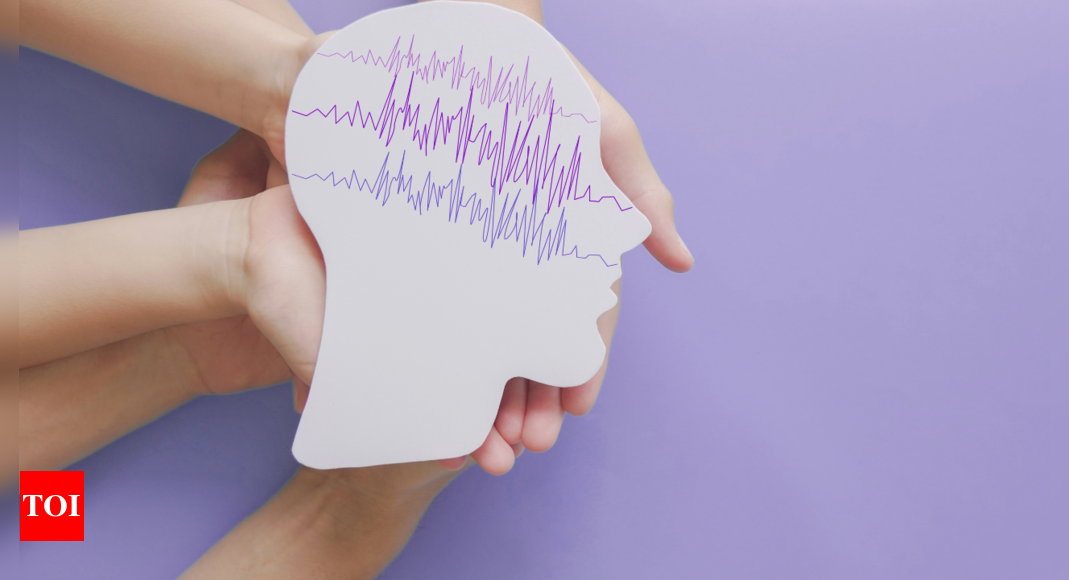
    Epilepsy affects an estimated 10 million individuals in India, accounting for around 1% of the population. Affecting almost 50 million people globally, makes it one of the most prevalent neurological disorders.
    Epilepsy is a neurological condition in which brain activity becomes abnormal, resulting in seizures or bouts of unusual behaviour, sensations, and, in some cases, loss of consciousness.
    People with epilepsy frequently experience changes in their quality of life, such as work, relationships, social interactions, decreased mobility as well as effects on learning. To live a nearly normal life, it is critical to understand how to effectively control epilepsy and seek specialized medical care.
    Living with epilepsy presents distinct problems and those suffering from it need extensive support from their family, community, and medical team to lead a healthy and fulfilling life.
    Managing epilepsy with a balanced lifestyle
    Epilepsy can be managed appropriately to lead a safe and enjoyable life. For this, you need to know the importance of a balanced lifestyle – one that includes eating well, getting enough sleep, regular exercise, socializing and maintaining a support network can help you feel more secure and improve your overall quality of life.
    You should realize that a healthy and well-balanced diet assures success. Eating well also has a positive impact on your health. Always choose for high-quality, natural products. Consult a dietitian to develop your diet. Drinking adequate water will benefit your health. Avoid undesirable habits such as smoking, drinking, and stress. To cope with stress, use breathing methods such as deep breathing.
    It is important to understand that regular physical activity and exercise have a significant impact on the body’s condition. Not only does your body grow more fit and healthy, but so do your sentiments and attitudes towards the environment.
    Make some time for regular workout.
    It is critical to recognize that epileptic seizures occur spontaneously. You should always keep a certificate with you so that physicians can provide rapid assistance.
    In addition, get to understand what factors impact seizure triggers. Avoid loud noises, strong lighting, and fighting. Always keep your medicine and doctor’s contact information with you. Surround yourself with good things and make a strategy for the day.

    International Epilepsy Day: Debunking common myths around epilepsy

    Building a support network is essential for everyone, especially those with epilepsy. Your family and friends should constantly be aware of the sickness. This will allow you to receive proper support and request assistance in the event of a seizure. Keeping in contact with family and friends improves your well-being and helps you avoid stress. Appropriate groups and societies can make you feel at ease.
    Participating in relevant communities and support groups will benefit your treatment. Talking about your personality and understanding other people’s concerns might help you relax. Being in such a group will make you feel at ease.
    Lastly, you should understand that timely treatment and medication will allow you to enjoy life fully. An important step for a person with epilepsy is to take medications on time and not to forget about it. By following these simple yet effective tips, people with epilepsy can continue to live healthy and productive life.
    (Dr Praveen Gupta, Principal Director & Chief of Neurology, Fortis Hospital)


    Source link

  • Work and Social Life with Epilepsy: Tips from Neurologists for a Balanced Lifestyle

    Work and Social Life with Epilepsy: Tips from Neurologists for a Balanced Lifestyle

    Work and Social Life with Epilepsy: Tips from Neurologists for a Balanced Lifestyle

    Epilepsy affects an estimated 10 million individuals in India, accounting for around 1% of the population. Affecting almost 50 million people globally, makes it one of the most prevalent neurological disorders.
    Epilepsy is a neurological condition in which brain activity becomes abnormal, resulting in seizures or bouts of unusual behaviour, sensations, and, in some cases, loss of consciousness.
    People with epilepsy frequently experience changes in their quality of life, such as work, relationships, social interactions, decreased mobility as well as effects on learning. To live a nearly normal life, it is critical to understand how to effectively control epilepsy and seek specialized medical care.
    Living with epilepsy presents distinct problems and those suffering from it need extensive support from their family, community, and medical team to lead a healthy and fulfilling life.
    Managing epilepsy with a balanced lifestyle
    Epilepsy can be managed appropriately to lead a safe and enjoyable life. For this, you need to know the importance of a balanced lifestyle – one that includes eating well, getting enough sleep, regular exercise, socializing and maintaining a support network can help you feel more secure and improve your overall quality of life.
    You should realize that a healthy and well-balanced diet assures success. Eating well also has a positive impact on your health. Always choose for high-quality, natural products. Consult a dietitian to develop your diet. Drinking adequate water will benefit your health. Avoid undesirable habits such as smoking, drinking, and stress. To cope with stress, use breathing methods such as deep breathing.
    It is important to understand that regular physical activity and exercise have a significant impact on the body’s condition. Not only does your body grow more fit and healthy, but so do your sentiments and attitudes towards the environment.
    Make some time for regular workout.
    It is critical to recognize that epileptic seizures occur spontaneously. You should always keep a certificate with you so that physicians can provide rapid assistance.
    In addition, get to understand what factors impact seizure triggers. Avoid loud noises, strong lighting, and fighting. Always keep your medicine and doctor’s contact information with you. Surround yourself with good things and make a strategy for the day.

    International Epilepsy Day: Debunking common myths around epilepsy

    Building a support network is essential for everyone, especially those with epilepsy. Your family and friends should constantly be aware of the sickness. This will allow you to receive proper support and request assistance in the event of a seizure. Keeping in contact with family and friends improves your well-being and helps you avoid stress. Appropriate groups and societies can make you feel at ease.
    Participating in relevant communities and support groups will benefit your treatment. Talking about your personality and understanding other people’s concerns might help you relax. Being in such a group will make you feel at ease.
    Lastly, you should understand that timely treatment and medication will allow you to enjoy life fully. An important step for a person with epilepsy is to take medications on time and not to forget about it. By following these simple yet effective tips, people with epilepsy can continue to live healthy and productive life.
    (Dr Praveen Gupta, Principal Director & Chief of Neurology, Fortis Hospital)


    Source link