hacklink hack forum hacklink film izle hacklink marsbahisizmir escortsahabetporn

Tag: Social

  • Australian states back national plan to ban children younger than 16 from social media

    Australian states back national plan to ban children younger than 16 from social media

    MELBOURNE, Australia — Australia’s states and territories on Friday unanimously backed a national plan to require most forms of social media to bar children younger than 16.

    Leaders of the eight provinces held a virtual meeting with Prime Minister Anthony Albanese to discuss what he calls a world-first national approach that would make platforms including X, TikTok, Instagram and Facebook responsible for enforcing the age limit.

    “Social media is doing social harm to our young Australians,” Albanese told reporters. “The safety and mental health of our young people has to be a priority.”

    The government leaders had been discussing for months setting a limit, considering options from 14 to 16 years of age.

    While Tasmania would have preferred 14, the state was prepared to support 16 in the interests of achieving national uniformity, Albanese said.

    The legislation will be introduced into Parliament within two weeks, and the age ban would take effect a year after it passes into law, giving platforms time to work out how to exclude children. The government has yet to offer a technical solution.

    The delay is also intended to allow time to address privacy concerns around age verification.

    The main opposition party has given in-principle support to the 16-year age limit since it was announced on Thursday, suggesting the legislation will pass the Senate.

    The minor Greens party was critical, saying the ban would prevent the emergence in Australia of future child environmental activists like Sweden’s Greta Thunberg.

    More than 140 academics with expertise in fields related to technology and child welfare signed an open letter to Albanese last month opposing a social media age limit as “too blunt an instrument to address risks effectively.”

    Critics say most teenagers are tech savvy enough to get around such laws. Some fear the ban will create conflicts within families and drive social media problems underground.

    Meta, which owns Facebook and Instagram, argues that stronger tools in app stores and operating systems for parents to control what apps their children can use would be a “simple and effective solution.”

    The government likens the proposed social media age limit to the laws that restrict the sale of alcohol to adults aged 18 and older across Australia. Children still find ways to drink, but the prohibition remains.

    “We think these laws will make a real positive difference,” Albanese said.

    But Lisa Given, professor of information sciences at RMIT University, described the legislation as “really problematic.”

    “Many of our social networks are actually about the provision of extremely critical information to kids,” Given told Australian Broadcasting Corp.

    “There’s no doubt that they’re also facing bullying and other challenges online, but they actually need the social supports to know how to navigate the platforms safely and so they need more support from parents, from care-givers, not less access to a single or multiple platforms,” Given added.

    Communications Minister Michelle Rowland said children would retain access to online education and health services.

    The legislation would also include strong privacy protections surrounding age verification.

    “Privacy must be paramount, including that of children,” Rowland said. “We should also be very clear about the realities. These platforms know about their users in a way that no one else does.”

    Rowland said YouTube would likely be included among the mainstream platforms defined under the legislation as age restricted services.

    But YouTube Kids could be exempted. Gaming and messaging services would not face age restrictions, she said,

    “This legislation would strike a balance between minimizing the harms experienced by young people during a critical period of their development while also supporting their access to benefits as well,” Rowland said.

    Source link

  • When should kids start using social media? Australia’s government proposes age limit of 16

    When should kids start using social media? Australia’s government proposes age limit of 16

    MELBOURNE, Australia — The Australian government announced on Thursday what it described as world-leading legislation that would institute an age limit of 16 years for children to start using social media, and hold platforms responsible for ensuring compliance.

    “Social media is doing harm to our kids and I’m calling time on it,” Prime Minister Anthony Albanese said.

    The legislation will be introduced in Parliament during its final two weeks in session this year, which begin on Nov. 18. The age limit would take effect 12 months after the law is passed, Albanese told reporters.

    The platforms including X, TikTok, Instagram and Facebook would need to use that year to work out how to exclude Australian children younger than 16.

    “I’ve spoken to thousands of parents, grandparents, aunties and uncles. They, like me, are worried sick about the safety of our kids online,” Albanese said.

    Social media platforms would be penalized for breaching the age limit, but under-age children and their parents would not.

    “The onus will be on social media platforms to demonstrate they are taking reasonable steps to prevent access. The onus won’t be on parents or young people,” Albanese said.

    Antigone Davis, head of safety at Meta, which owns Facebook and Instagram, said the company would respect any age limitations the government wants to introduce.

    “However, what’s missing is a deeper discussion on how we implement protections, otherwise we risk making ourselves feel better, like we have taken action, but teens and parents will not find themselves in a better place,” Davis said in a statement.

    She added that stronger tools in app stores and operating systems for parents to control what apps their children can use would be a “simple and effective solution.”

    X did not immediately respond to a request for comment on Thursday. TikTok declined to comment.

    The Digital Industry Group Inc., an advocate for the digital industry in Australia, described the age limit as a “20th Century response to 21st Century challenges.”

    “Rather than blocking access through bans, we need to take a balanced approach to create age-appropriate spaces, build digital literacy and protect young people from online harm,” DIGI managing director Sunita Bose said in a statement.

    More than 140 Australian and international academics with expertise in fields related to technology and child welfare signed an open letter to Albanese last month opposing a social media age limit as “too blunt an instrument to address risks effectively.”

    Jackie Hallan, a director at the youth mental health service ReachOut, opposed the ban. She said 73% of young people across Australia accessing mental health support did so through social media.

    “We’re uncomfortable with the ban. We think young people are likely to circumvent a ban and our concern is that it really drives the behavior underground and then if things go wrong, young people are less likely to get support from parents and carers because they’re worried about getting in trouble,” Hallan said.

    Child psychologist Philip Tam said a minimum age of 12 or 13 would have been more enforceable.

    “My real fear honestly is that the problem of social media will simply be driven underground,” Tam said.

    Australian National University lawyer Associate Prof. Faith Gordon feared separating children from there platforms could create pressures within families.

    Albanese said there would be exclusions and exemptions in circumstances such as a need to continue access to educational services.

    But parental consent would not entitle a child under 16 to access social media.

    Earlier this year, the government began a trial of age-restriciton technologies. Australia’s eSafety Commissioner, the online watchdog that will police compliance, will use the results of that trial to provide platforms with guidance on what reasonable steps they can take.

    Communications Minister Michelle Rowland said the year-long lead-in would ensure the age limit could be implemented in a “very practical way.”

    “There does need to be enhanced penalties to ensure compliance,” Rowland said.

    “Every company that operates in Australia, whether domiciled here or otherwise, is expected and must comply with Australian law or face the consequences,” she added.

    Source link

  • Women, Marriage And Social Status: ‘Emma’

    Women, Marriage And Social Status: ‘Emma’

    The real evils, indeed, of Emma’s situation were the power of having rather too much her own way..”

    Behind any story, novel, or piece of writing is the author, who often leaves a piece of themselves in their writing. The writing often reflects either their thoughts, opinions, times, or everything contrary to that. Similarly, we find the legacy of Jane Austen in 19th-century English middle-class society. 

    Jane Austen was an English novelist in the early 19th century. Her novels were usually set around the lives of women in the English middle class of the period. The novels often narrate society and the lives of women, or rather, life through these women’s eyes. 

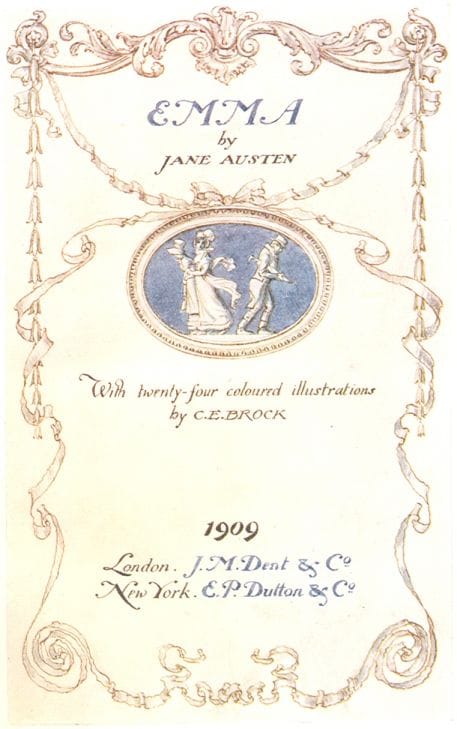
    One of the most prominent writings by Austen is Emma, published in 1815. Emma is the story of a young woman residing in Highbury, located around north London, and her attempts at matchmaking. 

    The high society in Emma

    Emma’s narrative revolved primarily around marriage and society, with a side of the mundane lifestyle of the characters. A society that was predominantly occupied by social status and marriage; who should marry whom, the perfect match, and the social eligibility to be considered compatible. Matters such as courtships, gentlemen and ladies, how beneficial their marriage would end up being and so on. In such a societal model, celibacy was a luxury only for the well-off, while for others it just meant inability or undesirable for courtship.

    Source: Wikimedia Commons

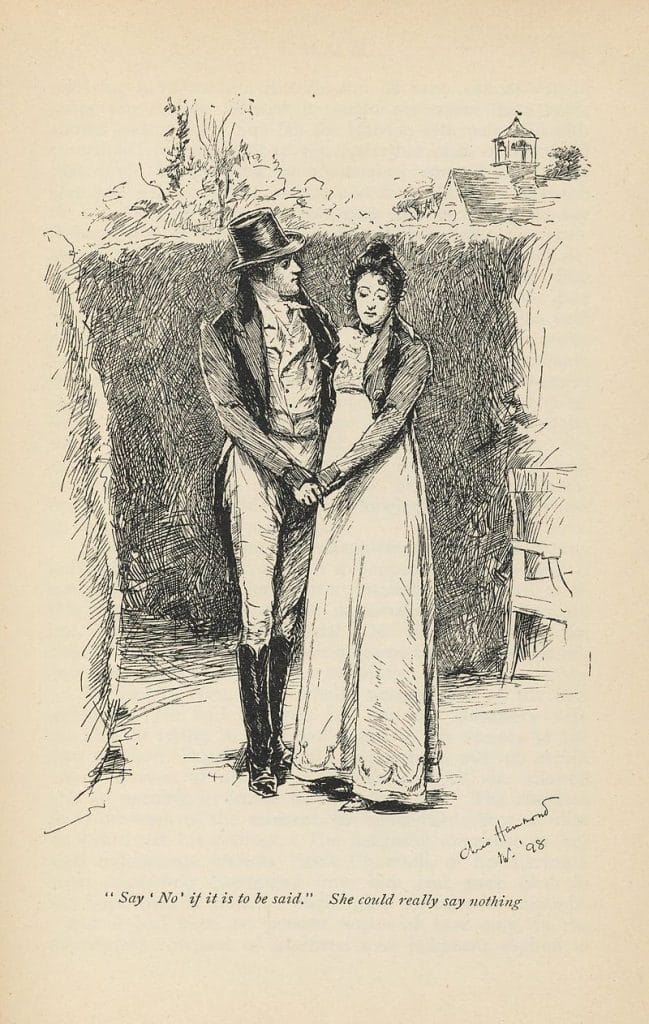
    Women were shown to be primarily occupied with just men, with nothing better to be occupied with. The Bechdel test could just give up on this piece of fiction. The writer laid an undertone for a good amount of subtle social class politics where status was steered by birth, wealth and connections in the high society. When there is a slight scope of Miss Smith’s match with Mr Martin, who is considered to be of a lower social class, Emma finds it astounding that he could even consider the real possibility of the proposal being accepted. She expresses her view of the potential outcome: “You banished to Abbey Mill Farm! You confined to the society of the illiterate and vulgar all your life! I wonder how the young man could have the assurance to ask it. He must have a pretty good opinion of himself.

    Regardless of the period in which it was written, Emma’s character is not perfect. She’s deluded, flawed, privileged, independent, and makes her own decisions, which aren’t right. How can it be? A woman can’t make her decisions, can she? She is also very conscious of the social class and where one may marry, as she tries to steer Harriet out of the marriage with Mr. Martin for unreal and shallow reasons. He is not a good enough match for her dear friend and will grow old to be a worse version of his current self. 

    I am going to take a heroine whom no one but myself will much like

    Emma is the story of a woman with strong opinions who made bad decisions. No one can know for certain other than Austen herself, but maybe Emma was never meant to be the perfect protagonist, character, or even woman. The protagonist, Emma Woodhouse, is shown to be a self-deluded young woman of 21 who sees things to her convenience, as she wants/believes things to be. She is “handsome, clever, and rich, with a comfortable home and happy disposition.” Being the younger of two sisters and motherless since very young, she makes up her mind to never marry. As a consequence of her sister’s marriage and a very affectionate, indulgent father, she became the mistress of her house quite early. 

    Emma’s character is flawed yet perfect at the same time, for the storyline and characterisation are way ahead of their time. Emma is independent, the mistress of her house even while her father is present. She has all the luxury and prestige and privileges, she can make her own decisions without any restrictions and yet she makes the wrong ones and influences her friend as well to align with her. She is aware the entire time of the social standing of Harriet and “adopts” her. 

    Source: Wikimedia Commons

    There have been various adaptations of Emma as well such as Emma (1972), Emma (1996)  with Gwyneth Paltrow as Emma and also Emma (1996) with Kate Beckinsale as Emma. Some modern takes on it include Clueless (1995) and the Bollywood make Aisha (2010), wherein we find the social commentary and intended shallowness of the characters to be brought better to life.  

    Marriage as an only way to sustain a woman

    Marriage is essentially shown to be the only way for a woman to sustain herself, being employable or even the willingness to be so is not appreciated in the least and is seen as the last resort. Also not something which a woman of society would be advised to do which is very apparent by society’s hushed behaviour towards Miss Fairfax’s decision to be employed and the pity conveyed.

    Similarly, drawn from the quote “…and lament that Highbury afforded no young man worthy of giving her independence,— nobody that she could wish to scheme about for her.” Emma’s initial decision to remain a spinster could be afforded by her simply due to her social class.

    The parallels which can be drawn from this book which is over 200 years old now is amusing, for yes we have progressed but we are not very far from where we used to be. With the passage of time, there has been an improvement in societal perception towards marriage and female employment but marriage is often seen to be the only purpose of a woman which the literature suggestively mocks throughout the narrative, the tone of which is often missed by many. 


    Source link

  • Women, Marriage And Social Status: ‘Emma’

    Women, Marriage And Social Status: ‘Emma’

    The real evils, indeed, of Emma’s situation were the power of having rather too much her own way..”

    Behind any story, novel, or piece of writing is the author, who often leaves a piece of themselves in their writing. The writing often reflects either their thoughts, opinions, times, or everything contrary to that. Similarly, we find the legacy of Jane Austen in 19th-century English middle-class society. 

    Jane Austen was an English novelist in the early 19th century. Her novels were usually set around the lives of women in the English middle class of the period. The novels often narrate society and the lives of women, or rather, life through these women’s eyes. 

    One of the most prominent writings by Austen is Emma, published in 1815. Emma is the story of a young woman residing in Highbury, located around north London, and her attempts at matchmaking. 

    The high society in Emma

    Emma’s narrative revolved primarily around marriage and society, with a side of the mundane lifestyle of the characters. A society that was predominantly occupied by social status and marriage; who should marry whom, the perfect match, and the social eligibility to be considered compatible. Matters such as courtships, gentlemen and ladies, how beneficial their marriage would end up being and so on. In such a societal model, celibacy was a luxury only for the well-off, while for others it just meant inability or undesirable for courtship.

    Source: Wikimedia Commons

    Women were shown to be primarily occupied with just men, with nothing better to be occupied with. The Bechdel test could just give up on this piece of fiction. The writer laid an undertone for a good amount of subtle social class politics where status was steered by birth, wealth and connections in the high society. When there is a slight scope of Miss Smith’s match with Mr Martin, who is considered to be of a lower social class, Emma finds it astounding that he could even consider the real possibility of the proposal being accepted. She expresses her view of the potential outcome: “You banished to Abbey Mill Farm! You confined to the society of the illiterate and vulgar all your life! I wonder how the young man could have the assurance to ask it. He must have a pretty good opinion of himself.

    Regardless of the period in which it was written, Emma’s character is not perfect. She’s deluded, flawed, privileged, independent, and makes her own decisions, which aren’t right. How can it be? A woman can’t make her decisions, can she? She is also very conscious of the social class and where one may marry, as she tries to steer Harriet out of the marriage with Mr. Martin for unreal and shallow reasons. He is not a good enough match for her dear friend and will grow old to be a worse version of his current self. 

    I am going to take a heroine whom no one but myself will much like

    Emma is the story of a woman with strong opinions who made bad decisions. No one can know for certain other than Austen herself, but maybe Emma was never meant to be the perfect protagonist, character, or even woman. The protagonist, Emma Woodhouse, is shown to be a self-deluded young woman of 21 who sees things to her convenience, as she wants/believes things to be. She is “handsome, clever, and rich, with a comfortable home and happy disposition.” Being the younger of two sisters and motherless since very young, she makes up her mind to never marry. As a consequence of her sister’s marriage and a very affectionate, indulgent father, she became the mistress of her house quite early. 

    Emma’s character is flawed yet perfect at the same time, for the storyline and characterisation are way ahead of their time. Emma is independent, the mistress of her house even while her father is present. She has all the luxury and prestige and privileges, she can make her own decisions without any restrictions and yet she makes the wrong ones and influences her friend as well to align with her. She is aware the entire time of the social standing of Harriet and “adopts” her. 

    Source: Wikimedia Commons

    There have been various adaptations of Emma as well such as Emma (1972), Emma (1996)  with Gwyneth Paltrow as Emma and also Emma (1996) with Kate Beckinsale as Emma. Some modern takes on it include Clueless (1995) and the Bollywood make Aisha (2010), wherein we find the social commentary and intended shallowness of the characters to be brought better to life.  

    Marriage as an only way to sustain a woman

    Marriage is essentially shown to be the only way for a woman to sustain herself, being employable or even the willingness to be so is not appreciated in the least and is seen as the last resort. Also not something which a woman of society would be advised to do which is very apparent by society’s hushed behaviour towards Miss Fairfax’s decision to be employed and the pity conveyed.

    Similarly, drawn from the quote “…and lament that Highbury afforded no young man worthy of giving her independence,— nobody that she could wish to scheme about for her.” Emma’s initial decision to remain a spinster could be afforded by her simply due to her social class.

    The parallels which can be drawn from this book which is over 200 years old now is amusing, for yes we have progressed but we are not very far from where we used to be. With the passage of time, there has been an improvement in societal perception towards marriage and female employment but marriage is often seen to be the only purpose of a woman which the literature suggestively mocks throughout the narrative, the tone of which is often missed by many. 


    Source link

  • Women, Marriage And Social Status: ‘Emma’

    Women, Marriage And Social Status: ‘Emma’

    The real evils, indeed, of Emma’s situation were the power of having rather too much her own way..”

    Behind any story, novel, or piece of writing is the author, who often leaves a piece of themselves in their writing. The writing often reflects either their thoughts, opinions, times, or everything contrary to that. Similarly, we find the legacy of Jane Austen in 19th-century English middle-class society. 

    Jane Austen was an English novelist in the early 19th century. Her novels were usually set around the lives of women in the English middle class of the period. The novels often narrate society and the lives of women, or rather, life through these women’s eyes. 

    One of the most prominent writings by Austen is Emma, published in 1815. Emma is the story of a young woman residing in Highbury, located around north London, and her attempts at matchmaking. 

    The high society in Emma

    Emma’s narrative revolved primarily around marriage and society, with a side of the mundane lifestyle of the characters. A society that was predominantly occupied by social status and marriage; who should marry whom, the perfect match, and the social eligibility to be considered compatible. Matters such as courtships, gentlemen and ladies, how beneficial their marriage would end up being and so on. In such a societal model, celibacy was a luxury only for the well-off, while for others it just meant inability or undesirable for courtship.

    Source: Wikimedia Commons

    Women were shown to be primarily occupied with just men, with nothing better to be occupied with. The Bechdel test could just give up on this piece of fiction. The writer laid an undertone for a good amount of subtle social class politics where status was steered by birth, wealth and connections in the high society. When there is a slight scope of Miss Smith’s match with Mr Martin, who is considered to be of a lower social class, Emma finds it astounding that he could even consider the real possibility of the proposal being accepted. She expresses her view of the potential outcome: “You banished to Abbey Mill Farm! You confined to the society of the illiterate and vulgar all your life! I wonder how the young man could have the assurance to ask it. He must have a pretty good opinion of himself.

    Regardless of the period in which it was written, Emma’s character is not perfect. She’s deluded, flawed, privileged, independent, and makes her own decisions, which aren’t right. How can it be? A woman can’t make her decisions, can she? She is also very conscious of the social class and where one may marry, as she tries to steer Harriet out of the marriage with Mr. Martin for unreal and shallow reasons. He is not a good enough match for her dear friend and will grow old to be a worse version of his current self. 

    I am going to take a heroine whom no one but myself will much like

    Emma is the story of a woman with strong opinions who made bad decisions. No one can know for certain other than Austen herself, but maybe Emma was never meant to be the perfect protagonist, character, or even woman. The protagonist, Emma Woodhouse, is shown to be a self-deluded young woman of 21 who sees things to her convenience, as she wants/believes things to be. She is “handsome, clever, and rich, with a comfortable home and happy disposition.” Being the younger of two sisters and motherless since very young, she makes up her mind to never marry. As a consequence of her sister’s marriage and a very affectionate, indulgent father, she became the mistress of her house quite early. 

    Emma’s character is flawed yet perfect at the same time, for the storyline and characterisation are way ahead of their time. Emma is independent, the mistress of her house even while her father is present. She has all the luxury and prestige and privileges, she can make her own decisions without any restrictions and yet she makes the wrong ones and influences her friend as well to align with her. She is aware the entire time of the social standing of Harriet and “adopts” her. 

    Source: Wikimedia Commons

    There have been various adaptations of Emma as well such as Emma (1972), Emma (1996)  with Gwyneth Paltrow as Emma and also Emma (1996) with Kate Beckinsale as Emma. Some modern takes on it include Clueless (1995) and the Bollywood make Aisha (2010), wherein we find the social commentary and intended shallowness of the characters to be brought better to life.  

    Marriage as an only way to sustain a woman

    Marriage is essentially shown to be the only way for a woman to sustain herself, being employable or even the willingness to be so is not appreciated in the least and is seen as the last resort. Also not something which a woman of society would be advised to do which is very apparent by society’s hushed behaviour towards Miss Fairfax’s decision to be employed and the pity conveyed.

    Similarly, drawn from the quote “…and lament that Highbury afforded no young man worthy of giving her independence,— nobody that she could wish to scheme about for her.” Emma’s initial decision to remain a spinster could be afforded by her simply due to her social class.

    The parallels which can be drawn from this book which is over 200 years old now is amusing, for yes we have progressed but we are not very far from where we used to be. With the passage of time, there has been an improvement in societal perception towards marriage and female employment but marriage is often seen to be the only purpose of a woman which the literature suggestively mocks throughout the narrative, the tone of which is often missed by many. 


    Source link

  • GoFundMe bets social media can unlock Gen Z giving. A Meta partnership and new tools will test that

    GoFundMe bets social media can unlock Gen Z giving. A Meta partnership and new tools will test that

    NEW YORK — New GoFundMe tools will make it easier to circulate causes across online platforms in a push to cater toward younger generations.

    The crowdfunding site hopes to meet digital natives in the online spaces where they frequently advocate, streamlining the donation experience to encourage more charity and connecting traditional nonprofits with a demographic that prefers direct contributions over institutional giving. Among the features rolling out this fall are fundraising widgets for video game streamers, personalized profiles to highlight users’ philanthropic interests and an integrated button on Instagram to donate.

    “We play a really important role helping people ask for help and give help in the world,” GoFundMe CEO Tim Cadogan told The Associated Press. “We want to make sure that people can carry that with them, and communicate and express that, in the places where they spend time.”

    The products reflect the for-profit company’s internal recognition that Gen Z’s habits make social media an untapped source to drive charitable contributions. Gen Z respondents ages 12-27 are much more likely than older people to regularly share causes or fundraisers on their accounts, according to a survey led this summer by GoFundMe. Half reported doing so at least once a week and 41% said social media content compelled them to research or support a cause.

    GoFundMe allows users to create online fundraising pages where both their personal networks and benevolent strangers can help cover large costs with collective gifts. People turn to the platform for help affording basic needs like rent or unexpected emergencies like surgeries. The company collects a transaction fee of 2.9% plus 30 cents for every donation.

    It’s not the only player in this space. But GoFundMe, already the largest crowdfunding site with $30 billion generated since 2010, has recently moved to increase its influence in the philanthropic sector. It signed a deal in 2022 to acquire Classy, an online fundraising platform that facilitates giving specifically for nonprofits.

    This latest announcement marks GoFundMe’s entrance into a market dominated by competitor Tiltify, which enables fundraising on virtual livestreams. On Monday, GoFundMe released in-video fundraising widgets for live streamers across platforms including Twitch and Instagram Live. A QR code brings viewers to the donation page and a tracker shows how close the campaign is to reaching its goal.

    The moves also signal the continuation of GoFundMe’s attempts to better serve nonprofit partners in addition to everyday organizers.

    A Meta partnership will launch Oct. 31 on Instagram for organizers in the United States, Canada, United Kingdom, Ireland and Australia. GoFundMe promises a “seamless” integration of fundraisers on Instagram Stories and a “polished look” to help campaigns stand out.

    Nonprofits will be able to nurture donor relationships further with identifying data on contributors who give through Instagram, according to a company spokesperson.

    “It’s equally important for us to support nonprofit organizations who are often working on really big, big, deep structural issues,” Cadogan said.

    The company is also building out user profiles. Starting Nov. 13, individuals and organizations can personalize their own accounts with more details about their giving.

    The customizable pages can be made private. But Cadogan said the goal is to inspire others toward action through more public proclamations of users’ own charitable efforts. Organizers can pin a fundraiser or nonprofit to their page with a brief description about why the cause matters to them. Unique links will track collective impact with reminders of how many people gave money from a link on your profile.

    If LinkedIn is the site where users highlight their professional side, Cadogan said he wants GoFundMe Profiles to be the site where people show “this is me as a person that does good in the world.”

    “We hope that over time that becomes the place on the internet that you express your altruistic side of your identity,” he said.

    Youth-facing organizations must follow young people to the platforms where they find community, according to Fast Forward Executive Director Shannon Farley. Her organization helps nonprofits scale their impact with software and she previously ran an online network of millennial philanthropists.

    Online spaces provide a “real opportunity” for digital-first nonprofits, she said, but it’s harder for a “traditional, brick and mortar organization” to break into them.

    “Social media is where young people and young donors live,” Farley said. “If you’re not going to the places where people are every day, you’re missing out on a whole group of people who could be backing your cause.”

    ___

    Associated Press coverage of philanthropy and nonprofits receives support through the AP’s collaboration with The Conversation US, with funding from Lilly Endowment Inc. The AP is solely responsible for this content. For all of AP’s philanthropy coverage, visit https://apnews.com/hub/philanthropy.

    Source link

  • Tech firms remove social media accounts of a Russian drone factory after an AP investigation

    Tech firms remove social media accounts of a Russian drone factory after an AP investigation

    Google, Meta and TikTok have removed social media accounts belonging to an industrial plant in Russia’s Tatarstan region aimed at recruiting young foreign women to make drones for Moscow’s war in Ukraine.

    Posts on YouTube, Facebook, Instagram and TikTok were taken down following an investigation by The Associated Press published Oct. 10 that detailed working conditions in the drone factory in the Alabuga Special Economic Zone, which is under U.S. and British sanctions.

    Videos and other posts on the social media platforms promised the young women, who are largely from Africa, a free plane ticket to Russia and a salary of more than $500 a month following their recruitment via the program called “Alabuga Start.”

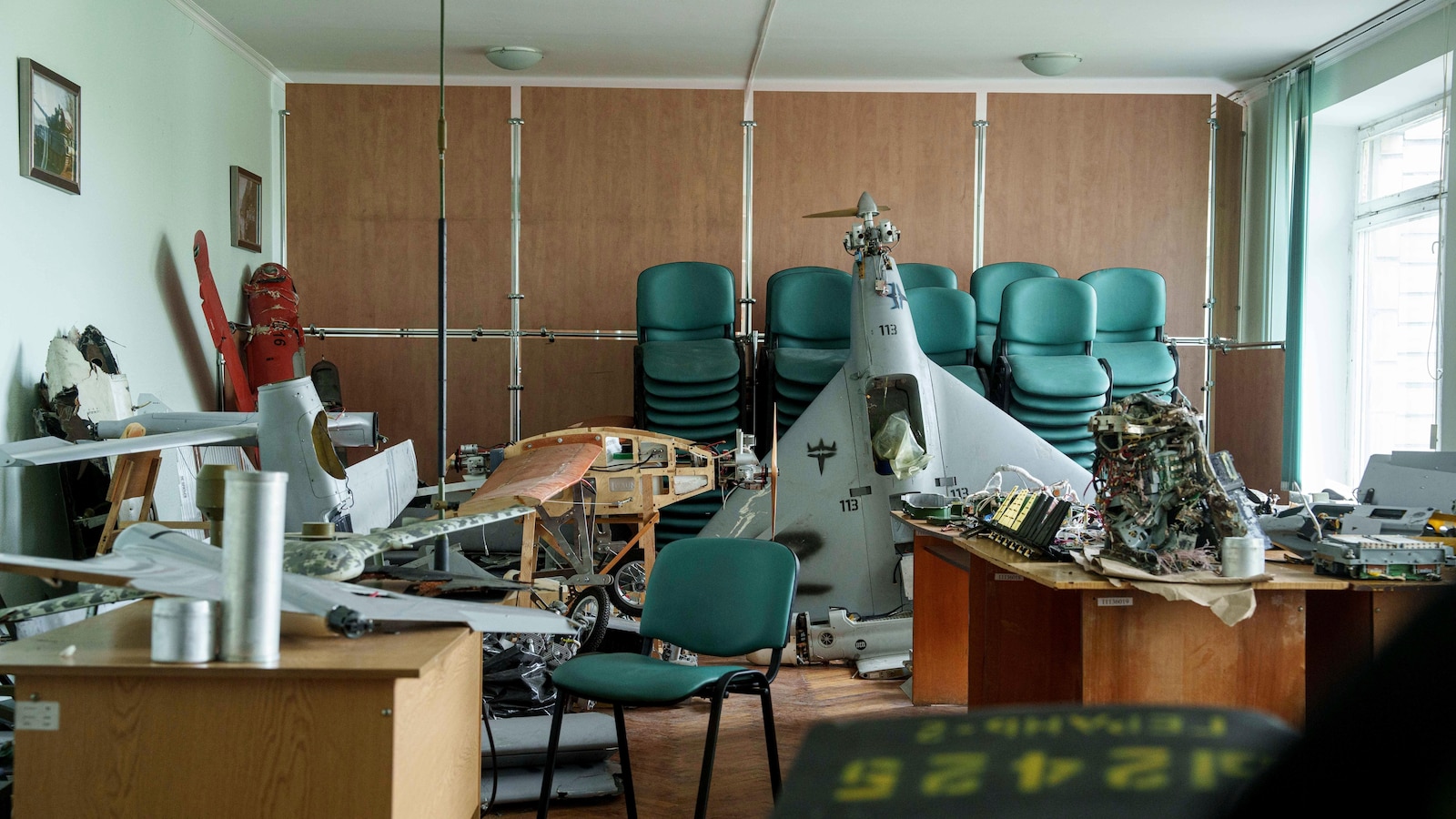
    But instead of a work-study program in areas like hospitality and catering, some of them said they learned only arriving in the Tatarstan region that they would be toiling in a factory to make weapons of war, assembling thousands of Iranian-designed attack drones to be launched into Ukraine.

    In interviews with AP, some of the women who worked in the complex complained of long hours under constant surveillance, of broken promises about wages and areas of study, and of working with caustic chemicals that left their skin pockmarked and itching. AP did not identify them by name or nationality out of concern for their safety.

    The tech companies also removed accounts for Alabuga Polytechnic, a vocational boarding school for Russians aged 16-18 and Central Asians aged 18-22 that bills its graduates as experts in drone production.

    The accounts collectively had at least 158,344 followers while one page on TikTok had more than a million likes.

    In a statement, YouTube said its parent company Google is committed to sanctions and trade compliance and “after review and consistent with our policies, we terminated channels associated with Alabuga Special Economic Zone.”

    Meta said it removed accounts on Facebook and Instagram that “violate our policies.” The company said it was committed to complying with sanctions laws and said it recognized that human exploitation is a serious problem which required a multifaceted approach, including at Meta.

    It said it had teams dedicated to anti-trafficking efforts and aimed to remove those seeking to abuse its platforms.

    TikTok said it removed videos and accounts which violated its community guidelines, which state it does not allow content that is used for the recruitment of victims, coordination of their transport, and their exploitation using force, fraud, coercion, or deception.

    The women aged 18-22 were recruited to fill an urgent labor shortage in wartime Russia. They are from places like Uganda, Rwanda, Kenya, South Sudan, Sierra Leone and Nigeria, as well as the South Asian country of Sri Lanka. The drive also is expanding to elsewhere in Asia as well as Latin America.

    Accounts affiliated to Alabuga with tens of thousands of followers are still accessible on Telegram, which did not reply to a request for comment. The plant’s management also did not respond to AP.

    The Alabuga Start recruiting drive used a robust social media campaign of slickly edited videos with upbeat music that show African women smiling while cleaning floors, wearing hard hats while directing cranes, and donning protective equipment to apply paint or chemicals.

    Videos also showed them enjoying Tatarstan’s cultural sites or playing sports. None of the videos made it clear the women would be working in a drone manufacturing complex.

    Online, Alabuga promoted visits to the industrial area by foreign dignitaries, including some from Brazil, Sri Lanka and Burkina Faso.

    In a since-deleted Instagram post, a Turkish diplomat who visited the plant had compared Alabuga Polytechnic to colleges in Turkey and pronounced it “much more developed and high-tech.”

    According to Russian investigative outlets Protokol and Razvorot, some pupils at Alabuga Polytechnic are as young as 15 and have complained of poor working conditions.

    Videos previously on the platforms showed the vocational school students in team-building exercises such as “military-patriotic” paintball matches and recreating historic Soviet battles while wearing camouflage.

    Last month, Alabuga Start said on Telegram its “audience has grown significantly!”

    That could be due to its hiring of influencers, who promoted the site on TikTok and Instagram as an easy way for young women to make money after leaving school.

    TikTok removed two videos promoting Alabuga after publication of the AP investigation.

    Experts told AP that about 90% of the women recruited via the Alabuga Start program work in drone manufacturing.

    ___

    Find more AP coverage at https://apnews.com/hub/russia-ukraine

    Source link

  • OnlyFans erotic star ‘flees to Switzerland owing Italian tax officials £1.25million after they probed her lavish lifestyle on social media’

    OnlyFans erotic star ‘flees to Switzerland owing Italian tax officials £1.25million after they probed her lavish lifestyle on social media’

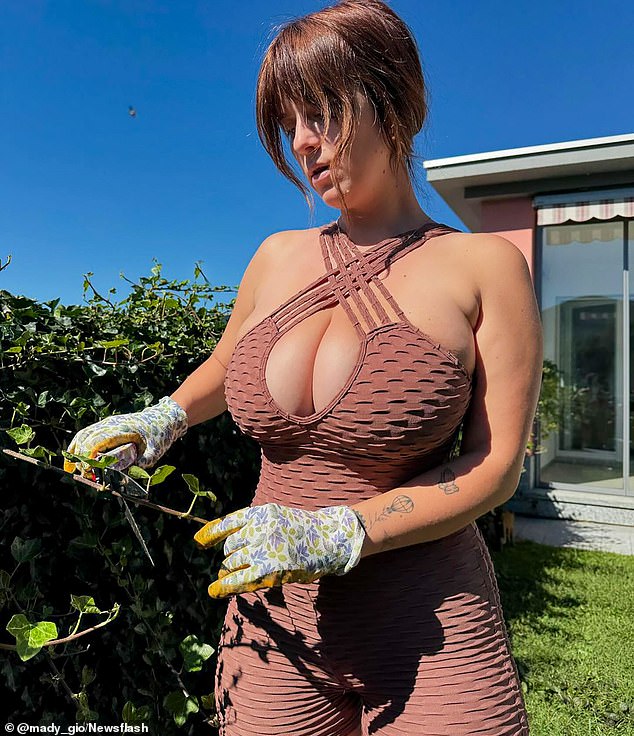
    • Tax officials scrutinised Madalina Ioana Filip’s lavish lifestyle on social media

    An OnlyFans star who fled to Switzerland after being accused of owing £1.25million in taxes has hit back at claims that she is on the run.

    Italian officials say Madalina Ioana Filip, known as Mady Gio, owes them a fortune after allegedly evading tax by claiming she was paying it abroad.

    The 27-year-old is believed to have left Italy while the inquiry was ongoing and says she plans to stay in Switzerland.

    She told her 1.5 million Instagram followers that Italian taxmen have demanded 1.5 million euros after accusing her of not declaring all her earnings in 2021.

    Authorities reportedly looked into the lavish lifestyle she displayed on social media and spoke of in interviews, and found that the earnings she declared were not proportionate.

    The 27-year-old left Italy while the inquiry was ongoing and says she plans to stay in Switzerland

    The 27-year-old left Italy while the inquiry was ongoing and says she plans to stay in Switzerland

    She told her 1.5 million Instagram followers that Italian taxmen have demanded 1.5 million euros after accusing her of not declaring all her earnings in 2021

    Mady was therefore reported to the Public Prosecutor’s Office of Busto Arsizio for the crime of false declaration, according to Italian media

    Investigators reportedly said that she decided to move her residence to Switzerland in early 2022.

    She allegedly did so to obtain a more favorable tax situation, declaring just over 50 thousand euros of income. 

    Her case is reportedly being handled by the public prosecutor’s office in Busto Arsizio, Lombardy.

    But the adult content creator shrugged off the demand saying simply: ‘I now live in Switzerland.’

    She added: ‘I have always paid taxes, both in Italy and Switzerland.’

    Taking to Instagram on October 7, Mady raged against claims that she’s a tax cheat.

    She said: ‘I read newspaper articles accusing me of tax evasion.

    ‘My right to privacy and, above all, the inviolable principle of innocence until proven guilty have been violated.

    Mady, who is believed to hold joint UK-Italian nationality, left Rome while the inquiry was ongoing

    Mady, who is believed to hold joint UK-Italian nationality, left Rome while the inquiry was ongoing

    ‘These are just accusations for which I have already instructed my lawyers to defend me in all appropriate places.’

    According to Italian news agency ANSA, her lawyer Riccardo Lanza said: ‘We will challenge every provision. 

    ‘My client has relied on professionals who at this point will have to answer for any errors. She has always acted according to the law’. 

    The star, who is of Romanian origin, reportedly moved to Italy aged 12 and grew up in Varese.

    She previously worked as a waitress for ten years in her family’s restaurant and bars for around 1,000 euros a month.

    Since moving into OnlyFans content, she says her highest paying clients pay an average of 7,000 euros each per month, and last year she was listed as the woman who earns the most on the site in Italy.

    The 27-year-old adult content creator shrugged off the prosecutor’s demand saying simply: ‘I now live in Switzerland’

    Mady has made a number of TV and radio appearances and recently spoke in an interview with talk show La Zanzara.

    She said of her job: ‘It’s not a walk in the park: you always need a new idea to earn the figures I earn. It’s a job like all the others, it’s a job I like and it’s almost a blessing. 

    ‘Before I was a nun, thanks to OnlyFans I’ve opened up my mind.’

    Asked whether she’d ever reconsider her dramatic life change with her move into adult content, she said: ‘Second thoughts? None, on the contrary. I wish I had done it before. 

    ‘I was a waitress for 10 years in the family restaurant. At home everyone is happy, even the great-grandmother. 

    ‘She says that as long as I don’t kill anyone and I pay taxes, you can do anything’.

    Source link

  • Facebook, YouTube and TikTok users in Europe get forum to challenge social media content decisions

    Facebook, YouTube and TikTok users in Europe get forum to challenge social media content decisions

    LONDON — Social media users in the European Union will soon have a new forum to challenge decisions by platforms to remove posts and videos for breaking their rules or leave up others that may violate them.

    An “out of court dispute settlement body” named the Appeals Center Europe said Tuesday it has been certified by Irish regulators to act as a referee on content moderation disputes across the 27-nation EU, starting with cases involving Facebook, YouTube and TikTok.

    The center is similar to Meta’s Oversight Board, a quasi-independent body set up in 2020 that acts like a supreme court for thorny decisions about content moderation issues on Facebook, Instagram and Threads submitted by users around the world.

    Under the EU’s digital rulebook known as the Digital Services Act, or DSA, tech companies and social media platforms are required to work with dispute settlement bodies and comply with any decisions they make. EU officials in Brussels wanted to give EU citizens a way to challenge any decisions made by Big Tech companies as they sought to balance the right to free speech against the goal of curbing online risks.

    The center will hear appeals from users or groups located in the EU about “everything from violence and incitement to hate speech to bullying and harassment,” CEO Thomas Hughes said.

    “It could be everything from a case that relates to a head of state all the way through to a neighborly dispute,” Hughes said.

    The Digital Services Act is a sweeping set of regulations that requires tech and social media companies operating in Europe to clean up their platforms under threat of hefty fines.

    The Appeals Center, based in Dublin, where many Silicon Valley tech companies have their European headquarters, will start hearing complaints from users before the end of the year. It’s initially dealing with Facebook, YouTube and TikTok users because it wanted to start with the biggest platforms, with plans to add others later. Unlike the Oversight Board, which can cherry pick the biggest and most important cases, the center will have to rule on every case it gets.

    The Oversight Board both issues binding decisions on individual cases, such as ruling in September on three separate posts with the controversial Palestinian rallying cry “ from the river to the sea,” and also weighs in on wider policy issues with non-binding recommendations, such as guidance in July on updating Meta’s policies on non-consensual deepfakes after reviewing a case involving deepfake intimate images of two women.

    The Appeals Center’s decisions, in contrast, will be limited to whether content such as a post, photo or video violates each platform’s rules.

    Hughes said the center will hire staff from across the EU to handle what he said could be up to tens of thousands of cases each year. The staff will have expertise in specific regions, languages and policy areas.

    Meta’s Oversight Board is providing 15 million euros ($16.5 million) in startup funding, said Hughes, who was previously the Oversight Board’s director. He added that the two bodies will operate separately but will “point in the same direction in terms of platform accountability and transparency, user rights” and applying a human rights framework to online speech.

    The Appeals Center will fund its ongoing operations by charging tech companies 95 euros for every case it hears, as well as a 5 euro fee from users who raise disputes. This “nominal” fee is intended to stop people from “gaming or abusing” the system and will be refunded if a user wins, Hughes said.

    The decisions are not binding, but users will still get their money back if the center rules in favor of their disputes, regardless of the action the platform does or does not take.

    There’s a 90-day deadline for decisions, but in most cases they will be made much more quickly, he said.

    ___

    Associated Press writer Barbara Ortutay in San Francisco contributed to this report.

    Source link