The Legacy Lifestyle rewards programme has been awarded Best Programme of the Year 2024 in the Travel and Hospitality category by The South African Loyalty Awards, which were held on Wednesday, 11 September.
The Legacy Lifestyle rewards programme brings together 250 partners in travel, hospitality, entertainment, retail and dining, and has a membership base of over 1.2 million.
The South African Loyalty Awards is an industry-focussed platform that celebrates loyalty excellence and innovation from the country’s best loyalty programmes.
Legacy Lifestyle says that it has consistently offered unique member benefits, exclusive rewards, a seamless user experience, unparalleled flexibility and significant value across various categories.
As a customer-centric brand, Legacy Lifestyle is dedicated to increasing member value through strong partnerships and effective communication campaigns. Moving forward, the brand adds that it will continue to refine its value propositions while staying responsive to emerging trends. This is ensuring that through innovation, Legacy Lifestyle empowers its members to live their best possible lifestyle.
By understanding member preferences, analysing their behaviour, and using a targeted multi-channel approach, Legacy Lifestyle says that it has successfully enhanced the value it offers to members — making it easier for them to travel more frequently and integrate leisure activities into their everyday lives. The programme boasts a 47% increase in redemption rates (versus 2023 results) and a massive 128% increase in repeat purchases in 2024.
Annual Return on Investment based on increased conversion rates and revenue growth is listed at 281%.
In addition to taking home the title of Best Programme of the Year 2024 in the Travel and Hospitality category, Legacy Lifestyle was also highly commended in the categories of Best Use of Multi-Channel Loyalty Communication and Best Short-Term Loyalty Marketing Campaign for 2024.
Legacy Lifestyle’s Managing Director Michael Levinsohn was also acknowledged in the category of Loyalty Industry Talent of the Year for his contributions to the loyalty sector.
“Entering four categories in the annual South African Loyalty Awards and winning in all four is a testament to the talent and dedication of our entire team. However, the most important recognition comes from our 1.2 million members who continuously support us by shopping with our partners and earning Cash-Back rewards,” says Michael Levinsohn, Managing Director of Legacy Lifestyle.
“That’s where our focus will remain in the weeks and months ahead as we develop new products and services for our members, delivering tangible value and innovation,” adds Levinsohn.
Legacy Lifestyle’s Chief Marketing Officer, Angela du Preez, concludes, “We are truly honoured to be recognised at the South African Loyalty Awards. These accolades highlight the significant value our members see in our programme and affirm that we are on the right path as we remain dedicated to enhancing our customers’ lives with even more meaningful travel and hospitality rewards and benefits.”
Legacy Lifestyle Wins at 2024 South African Loyalty Awards Legacy Lifestyle South African Loyalty Awards Best Programme of the Year Legacy Lifestyle rewards programme
CAPE TOWN, South Africa — Scientists in South Africa say they have identified an outbreak of rabies in seals that is believed to be the first time the virus has spread in sea mammals.
At least 24 Cape fur seals that were found dead or euthanized in various locations on South Africa’s west and south coast had rabies, state veterinarian Dr. Lesley van Helden said.
Rabies, which affects mammals and can be passed to people, is almost always fatal once symptoms appear. Rabies spreads via saliva, usually through bites but also sometimes when animals lick and groom each other.
The virus has long been seen in wild animals such as raccoons, coyotes, foxes, jackals and in domestic dogs. But it had never been recorded spreading among marine mammals, van Helden and other experts said this week.
The only other known case of rabies in a sea mammal was in a ringed seal in Norway’s Svalbard islands in the early 1980s. That seal had likely been infected by a rabid arctic fox, researchers said, and there was no evidence of rabies spreading among seals there.
Authorities in South Africa first discovered rabies in Cape fur seals in June after a dog was bitten by a seal on a Cape Town beach. The dog became infected with rabies, prompting rabies tests on brain samples from 135 seal carcasses that researchers had already collected since 2021. Around 20 new samples also were collected and more positives have come back on subsequent tests.
Scientists are trying to work out how rabies was passed to the seals, whether it is spreading widely among their large colonies and what can be done to contain it.
“It’s all very, very new,” said Greg Hofmeyr, a marine biologist who studies seals in South Africa. “A lot of research is required … there are a lot of unknowns here.”
There are approximately 2 million seals migrating back and forth between South Africa, Namibia and Angola along Africa’s south and west coast. The most likely possibility, van Helden said, is that rabies was first passed onto seals by jackals in Namibia, where the wolf-like animals hunt seal pups on the coastline.
The genes of the rabies virus found in the seals matched the rabies in black-backed jackals in Namibia. It also showed rabies was being transmitted between seals, because most of the virus sequences were closely related, she said.
“So, it’s basically established itself in the seal population and it’s being maintained by them biting each other,” van Helden said.
The seals live in close proximity to people in places in South Africa, especially on beaches around the city of Cape Town. The city has issued warnings to locals, said Gregg Oelofse, Cape Town’s head of coastal and environmental management.
Authorities had been mystified for the past three years by reports of excessively aggressive seals and an increase in seal attacks on people, some of whom had been bitten. No human cases of rabies have been recorded as a result.
Oelofse said that city authorities had started vaccinating the small numbers of seals at two popular Cape Town harbors, where they are considered an attraction.
One of the positive rabies tests was on a seal carcass collected in August 2022, meaning rabies had been in the seal population for at least two years, Oelofse said.
“It’s been here for a while longer than we’ve known about it,” he said.
Experts said there were still many unknowns.
It’s hard to predict long-term transmission dynamics, U.S. Centers for Disease Control and Prevention spokesman Dave Daigle said. He noted previous instances of rabies viruses winding up in new hosts and then dying out. In 2021 in the U.S., for example, gray foxes were spreading the raccoon rabies virus variant for two years, and then transmission stopped.
The U.S. public health agency is watching the situation in South Africa, but has yet to see “clear evidence that this is going to be a long-term issue,” Daigle said.
Another unknown is if the vaccine will be effective in seals. It’s never been tested, but experts think it should work.
There’s also a logistical question, van Helden said: How do you vaccinate a significant number of seals that live largely in the ocean and migrate back and forth along a coastline that is more than 3,500 kilometers (2,170 miles) long. Land animals can be vaccinated by dropping bait that releases oral vaccines when eaten, but seals generally will only eat live fish, she noted.
South African officials have been collaborating with international experts.
Seal researcher Hofmeyr said that some other seal species come into contact with Cape fur seals and then travel to other parts of the world and that was a concern for further spread.
“The chances of that happening are very low, but the implications of that if it does happen are very important,” he said.
The Gamecocks (2-1, 1-1 SEC) face No. 5 Ole Miss, No. 4 Alabama then No. 13 Oklahoma in three consecutive weeks, with only one of those games in Williams-Brice Stadium. First-year starting quarterback LaNorris Sellers, has been battle-tested through the past two games, and faced injuries in both.
For most of the second quarter at Kentucky on Sept. 7, Sellers was on the sideline or in the locker room with what he said was a hip injury. He returned to finish the game, and practiced 24 hours later with no issue.
In the 36-33 loss to LSU on Saturday, Sellers left the field one snap before halftime. Sellers said an LSU defender rolled up on his ankle while he was getting sacked, and it just “flattened” his ankle.
“In the moment, it was hurting, but at halftime (trainers) took the tape off, looked at it and they re-taped it, figured out nothing was really like crazy wrong,” Sellers said. “They just re-taped it again, and I was good to go.”
Coach Shane Beamer said he thinks Sellers will be fine, and decided after giving him a series in the third quarter that it looked like Sellers couldn’t move like he wanted to, and thought going the rest of the way with backup quarterback Robby Ashford, was the right call.
Ashford took over with big shoes to fill, as Sellers arguably played his best two quarters. Sellers scored on the opening drive of the game and ran for a 75-yard touchdown about 4 minutes before halftime. In the first half, he completed eight of 15 passes for 112 yards to go with 88 rushing yards. He threw an interception, fumbled once and took two sacks.
Ashford finished the game 2-for-4 passing for 42 yards and rushed 11 times for 35 yards. He was sacked three times. In the second half, South Carolina had seven penalties called, one that took away a 43-yard pass downfield that Ashford completed to Dalevon Campbell.
“Those kill drives, because we had some much momentum,” Ashford said of the penalties.
Sellers and Beamer said there’s no immediate nor major concern about his ankle. Sellers left the postgame media room with ice around it, but he walked with no help. However, he may not see the field much in the next two weeks.
South Carolina hosts Akron, a team that is statistically weaker than the Gamecocks, on Saturday (7:30 p.m.). In Week 4, South Carolina has an open date, giving the entire team a rest. With three straight SEC games in October, Beamer may take a more conservative route with Sellers’ recovery this week.
After naming Sellers the starter in August, Beamer said he feels like the Gamecocks can win with more than one quarterback.
Beamer has never alluded to any game this year being easy, or a cake walk, but Sellers was injured back-to-back in the first two SEC games of the year. While it may be a risk to the rhythm, playing Ashford more against Akron can give Sellers optimal rest to prepare for the grueling October schedule.
WEIGHT OF THE LOSS:South Carolina proves vs LSU it can compete in SEC but not that it can handle success there
Lulu Kesin covers South Carolina athletics for The Greenville News and the USA TODAY Network. Email her at lkesin@gannett.com and follow her on X, formerly known as Twitter, @Lulukesin
The death rattle was last week’s confirmation of an alliance between the South African and New Zealand national unions for reciprocal tours from 2026 onwards. It signalled the sad demise of a coalition designed to foster all of Southern Hemisphere rugby.
In that goal, Sanzar (an acronym for South Africa New Zealand Australia Rugby, later altered to Sanzaar to add Argentina) has failed miserably.
And now the two biggest boys are taking their ball and playing elsewhere, ending the Rugby Championship as a true rival to Europe’s Six Nations tournament and condemning Australia and Argentina (and Japan) to bleak commercial futures.
All Blacks lock Tupou Vaa’i following the defeat to the Springboks. Photo / Photosport
The annual Southern Hemisphere tournament is already truncated every four years due to the World Cup. Now it will be reduced further every second year to accommodate South Africa and New Zealand’s self-interest and greed.
There’s a certain irony in New Zealand and South Africa’s joint turning-of-the-back on Rugby Australia, given it was the prize of domination of the Australian pay-TV market that forced rugby to turn professional in 1995 following a monumental scrap between Rupert Murdoch and Kerry Packer.
“Sanzar”, then comprising the three founding unions, emerged from the chaos as the shiny new hope for international professional rugby, creating the annual Tri Nations test tournament and Super Rugby franchise competition as its prized jewels.
And, for a while there, it worked incredibly well. The Tri-Nations regularly produced more spectacular rugby than the Six Nations. And the thought that any European club team could hold a candle to the winning Super Rugby champions was considered laughable.
How the wheel has turned.
After bringing in Argentina, Sanzaar flirted for decades with Japan and exploited rather than assisted the Pacific Island nations (with New Zealand and Australia the main beneficiaries).
But in the end, the opportunity to build a southern version of the Six Nations alliance was squandered. And for that, New Zealand Rugby (NZR) has to shoulder most of the blame.
NZR’s hubris before and during the Covid pandemic when it attempted to become the sole owner of the Super Rugby competition to entice a bigger fee from private-equity suitors Silver Lake has bitten it back harder than anybody could have predicted.
It resulted in the South Africans taking their Super Rugby teams to Europe, kicking off an unforeseen but predictable decline in New Zealand rugby standards through the loss of regular contact with the Republic. And it alienated the Australians and Argentines.
Little wonder what we’ve ended up with: a limp Super Rugby Pacific competition still dominated by Kiwi franchises, a Wallabies team that are a mere shadow of the John Eales-led era when they (temporarily) became the All Blacks’ greatest foes and Argentina stalled as a growing superpower by being handed fewer games against the Boks and All Blacks.
Murdoch paid US$555 million ($903m) for the first 10 years of Sanzar’s broadcasting rights, which at roughly a third each per national union represented around US$18m ($29m) to Rugby Australia annually.
Three decades on, the same Australian rights are only worth an extra two million dollars at A$29m ($31m) – a massive failure by Sanzaar given the explosive growth of sports rights globally.
Sanzar’s inability to work collectively to develop the most lucrative broadcasting market available to it is a glaring example of its negligence as a meaningful rugby body.
‘Desperate’ NZR hitches a ride on the Springboks express
In the wake of Sanzaar’s implosion, NZR has thrown its arms up in despair and headed for the exit door on the arm of South Africa, who suddenly is our new beau.
That, of course, has everything to do with short-term opportunism.
With the Richie McCaw-Dan Carter era consigned to fading memories, the Springboks have suddenly stepped forward as the game’s new giants.
Richie McCaw and Dan Carter, an era “consigned to fading memories”, Sports Insider writes. Photo / Photosport
That’s inconvenient for us, given the narrative NZR sold to gain private equity investment (you know, “you’re buying into the best team in the history of world sport”). But it also presented the only real commercial growth opportunity identified since jumping in bed with Silver Lake.
That’s what last week’s announcement of a “strategic alliance” with the South Africans was really about.
There’s money to be made out of the historical battle between both nations. Indeed, should we be surprised that the marketing theme for the new pact is “The Greatest Rugby Rivalry”?
It makes sense because fans in both nations have a hankering for the nostalgic return of “old-style tours” and All Blacks-Springboks clashes are consistently a cut above all other tests (when not ruined by match officials).
What doesn’t make sense is how the commercials worked back in the tour days.
Under International Rugby Board (the IRB, before it became World Rugby) rules, host nations retain all commercial rights including broadcasting from tours while paying the visiting team’s travel and accommodation expenses.
It is also why an extra test – beyond the three to be played in the Republic in 2026 and three here when the Boks tour in 2030 – has been scheduled. It will be played offshore, probably in the US or Europe, to further raise the revenue haul for the two unions.
It is also why an extra test – beyond the three to be played in the Republic in 2026 and three here when the Boks tour in 2030 – has been scheduled. It will be played offshore, probably in the US or Europe, to further raise the revenue haul for the two unions.
Sports Insider moles say the deal is already paying off. South African broadcaster SuperSport has written out a massive cheque for rights to the reciprocal tours and offshore tests.
A desperate NZR is also likely to use the alliance to beef up the content supplied to Sky NZ in the next tranche of broadcasting rights, hopefully minimising an anticipated fall in value during negotiations currently under way.
New Zealand is fortunate we are flavour of the month with South Africa right now. We saw the passion of the fanbase at Ellis Park and Newlands over the past fortnight over a clash with the rugby nation they respect the most.
That’s lucky for us, even if it adds substantial pressure to stop the rot against the Boks. After all, a rivalry is only a rivalry when neither side is regularly dominating the other.
But where does all of this leave Australia?
Australian rugby has every right to be ‘seriously pissed off’
Sports Insider’s spies across the ditch tell me that Rugby Australia is “seriously pissed off” with their New Zealand colleagues over the diminishing of the Rugby Championship as an annual product.
But the size of the South African SuperSport cheque has allowed NZR to throw the Australians a token gesture.
The Wallabies will miss out as New Zealand and South Africa make their own rugby deal. Photo / Photosport
To compensate the Australians while the Boks and All Blacks wander off to play their own games and the Wallabies and Argentina’s Pumas twiddle their thumbs, we’ve come up with the genius idea of an Anzac Day test.
The All Blacks will play the Wallabies in Perth on Anzac weekend in 2026, giving the Aussies a sap the same year the full tour of South Africa occurs.
Rugby Australia will get much-needed income, including the Western Australian state government hosting Super Rugby Pacific’s “Super Round”, involving all teams, the same weekend as the test.
It means taking All Blacks and Wallabies contenders out of Super Rugby for two rounds and effectively ruining the competition even further, but what the heck… the Aussies needed to be pacified somehow.
If it all sounds crazy and cynical, it might be because it is.
Sanzaar has failed to understand scarcity can be a winner in elite sport. The Six Nations works because each country only plays each other once a year. It’s an occasion and every test counts.
Instead we try to jam in as many as three Bledisloe Cup tests most years and wonder why they have lost their lustre.
The US podcaster taking shots at Auckland
Sometimes you need an outsider to point out the bleeding obvious.
Cue American podcaster Ryen Russillo from the huge American sports and popular culture site, The Ringer.
His popular Russillo On The Road podcasts regularly draw massive audiences among sports fans interested in travelling the world to experience new sport and cultural experiences.
Russillo was a guest of the New Zealand Breakers. His almost two-hour long podcast on his Kiwi experiences is at times funny, sometimes insightful and occasionally piercing.
In short, he loved New Zealand, especially Queenstown, but Auckland… meh!
The City of Sails simply didn’t do it for him. In fact, he likened it to being similar to the “outskirts of a small Canadian city”.
His ultimate advice to his huge audience – “spend a day in Auckland and then get out and go to the South Island”.
Russillo wasn’t being uncharitable. He admitted to long harbouring a desire to visit New Zealand and had anticipated Auckland being the highlight of his trip.
Instead, after a 13-hour flight and checking into a CBD hotel, he went walking and was delighted to find a beautiful harbour at the bottom of the street. The only trouble was “it was all industrial”.
“So got to the hotel, did the excited energy walk… the city of Auckland? Not blown away,” he said. “It reminded me of some of the outskirts of small cities in Canada.”
“It’s got all this incredible water at the north part of the city… but there’s no park. The problem is the waterfront is all very industrial. It’s all just ports… the port is almost the entire line of walking this main northernmost part of the street closest to the water.
“It doesn’t have the layout it should for the waterline that it has… I’m just being honest.”
Russillo was disappointed with how Auckland’s waterfront presented itself. He had expected better. Where’s the sporting precinct? Why aren’t there more public facilities for people to enjoy along the harbour?
At the same time, those of us who tuned into the live rugby in Cape Town last Sunday morning were greeted with spectacular images surrounding Newlands Stadium with fans enjoying food and drinks in brilliant sunshine by the water before a leisurely stroll to a magnificent venue basking in a stunning sunset.
Cape Town’s waterfront venue looked great last weekend – a stark contrast with Auckland. Photo / 123rf
Call South Africa a third world country all you like… Cape Town didn’t present like that to the world last weekend. The stadium and its surrounding areas were vibrant and pulsing.
And so we continue to miss a trick: Eden Park advocates denigrate a waterfront stadium option while expecting the likes of Russillo to check into a motel in Kingsland if he wants to have a sports experience in our biggest city.
So instead of talking up Auckland as a sports destination, Russillo laments the lack of vision while driving past Eden Park as a taxi passenger on his way to the airport to cut short his visit so he can head elsewhere in Aotearoa.
Aucklanders, are you listening?
Team of the Week
Anna Grimaldi: Spared New Zealand blushes at the Paralympics by ensuring the team returned with a gold medal and showed off her bountiful personality along the way.
St Thomas of Canterbury College: The little Christchurch school that can successfully defended their national rugby league championship, beating Auckland’s De La Salle in the final and showing the Warriors where the best young talent currently lies.
Aaron Gate: The reigning New Zealand Sportsman of the Year is taking his spectacular mullet and stepping away from the cycling track to concentrate on road racing, signing for a leading European team competing on the UCI World Tour.
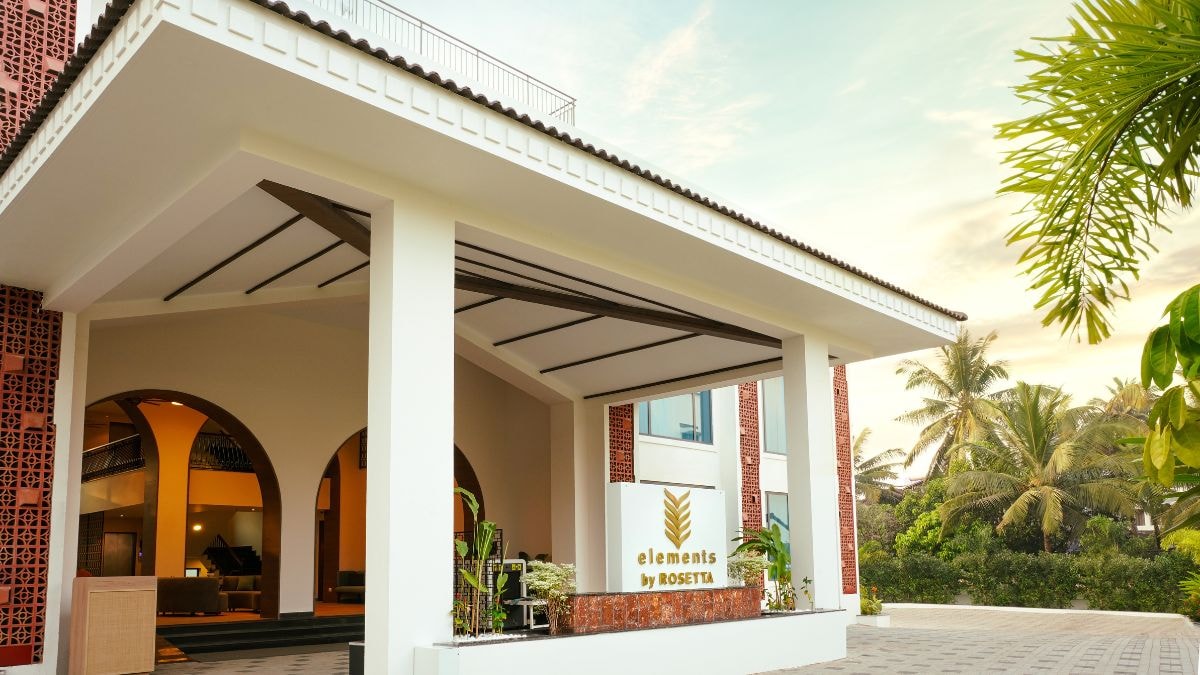
We recently had the blessed chance to escape the worst of the Mumbai monsoon with a short getaway to Goa. Rosetta Hospitality has established a new luxury property in South Goa called Elements by Rosetta Varca Goa and we spent a leisurely weekend checking out its offerings. The hotel is around two kilometres away from Varca Beach and is nestled in a quaint bylane surrounded by lush vegetation. Our drive down to the hotel (and subsequent trips to and from sightseeing spots) were through serenely beautiful routes crossing quiet settlements, chapels, plantations and natural water bodies. It is the kind of picturesque paradise South Goa is often associated with.
Photo Credit: Toshita Sahni
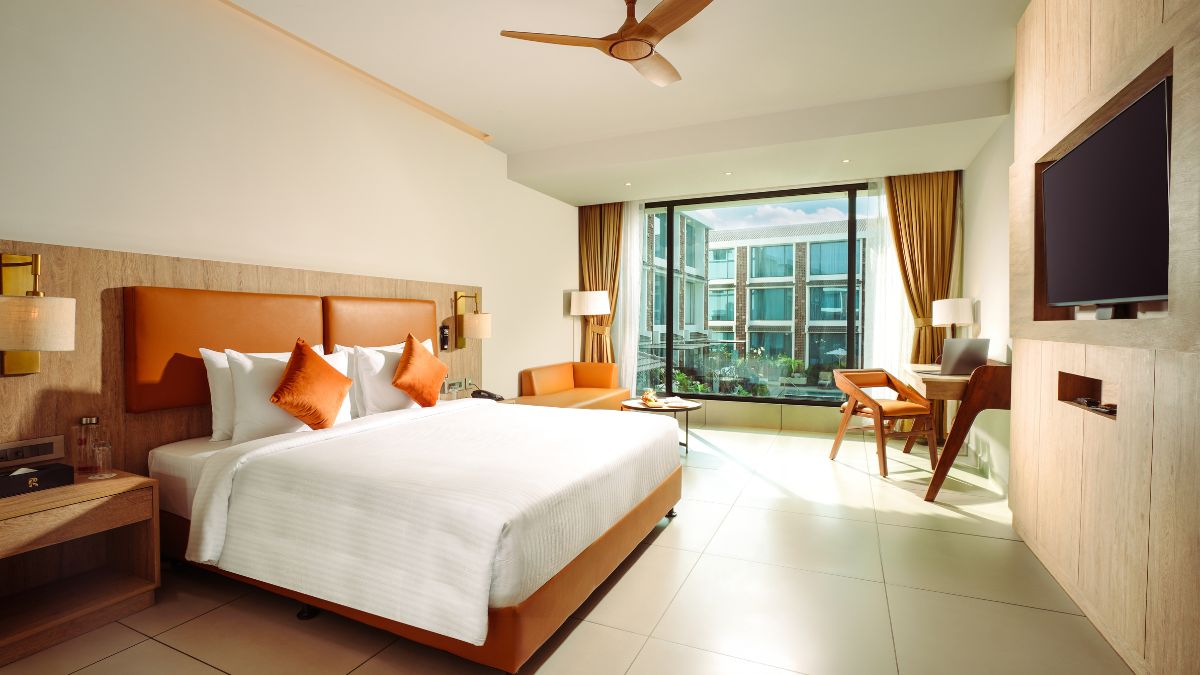
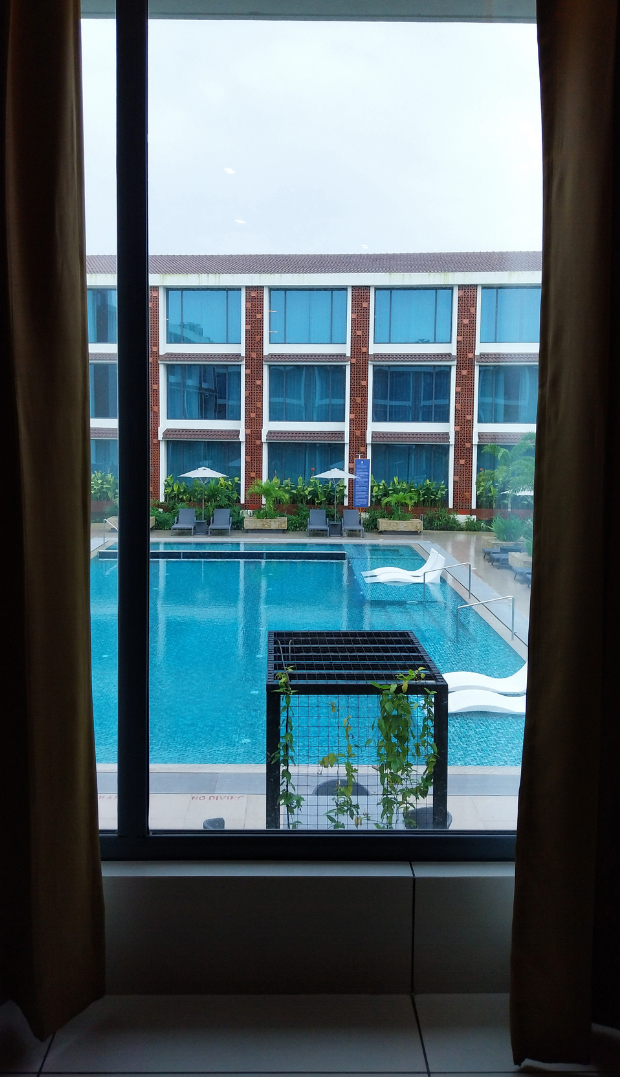
We checked into our room on the first floor and the first thing we noticed was how spacious it was! Some non-resort properties can have rather cramped rooms that dampen a vacation mood, but you will not face such a problem here. The decor had a minimalistic style, with brown and white accents. The room was well-equipped with standard fittings and amenities. There was a writing desk where we managed to complete some work despite the tempting view of the pool below.
Photo Credit: Elements by Rosetta
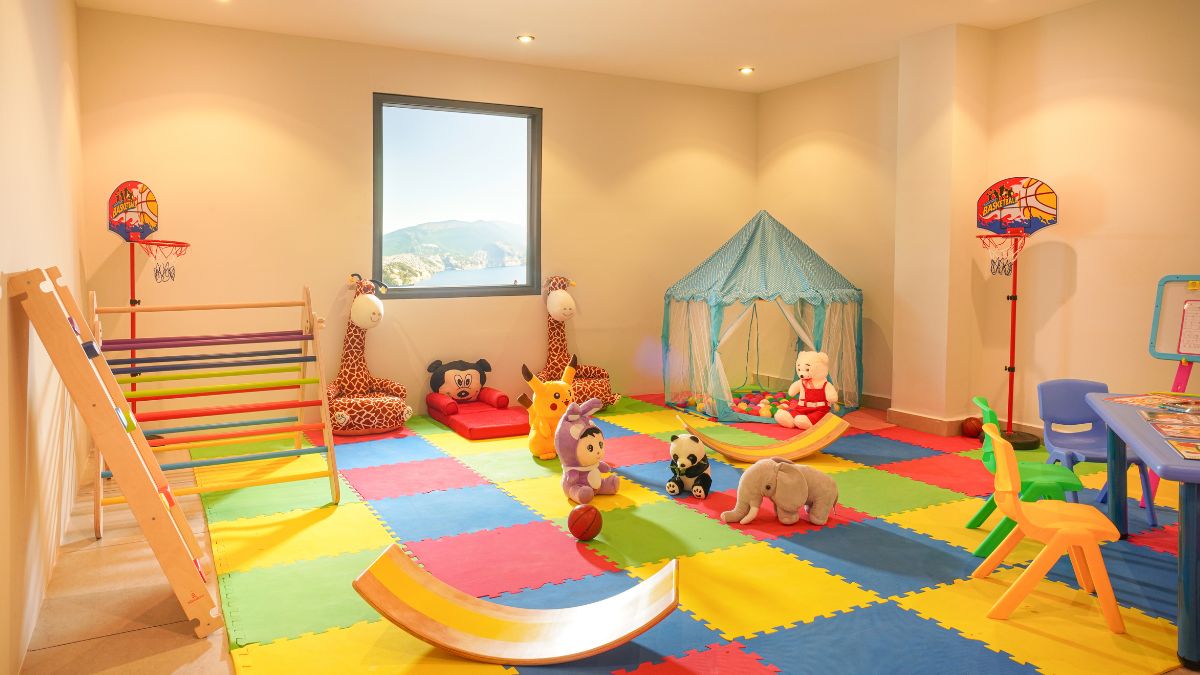
Other rooms also boast bathtubs and outdoor jacuzzis, we were told. Those who don’t want to go for a swim can also unwind at the poolside Collins Bar, the spa or the gym. Those travelling with young ones should know there’s a dedicated kids’ play area on the property as well as a family activity centre called Rosetta Engage. Jai Sreedhar, Joint Managing Director of Rosetta Hospitality, says, “We believe that our new property will resonate with travellers who value quality and sophistication without compromising on affordability.” He also clarified that the new hotel aims to “bring Rosetta Hospitality to Goa and not vice versa.”
Photo Credit: Elements by Rosetta
Photo Credit: Elements by Rosetta
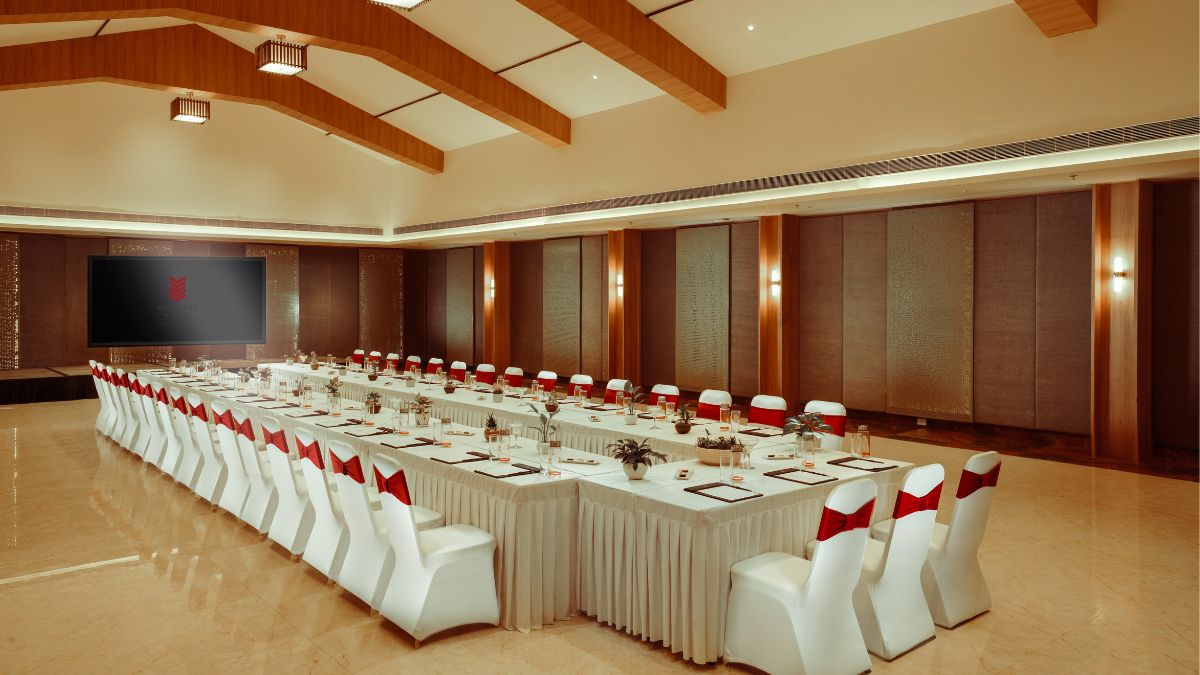
The property also boasts versatile venues for different occasions: a grand ballroom of 4000 sq. ft., a 5000 sq. ft. outdoor lawn, and spacious board rooms for conferences and meetings. Errol Fernandes, the Chairman and Managing Director of Rosetta Hospitality highlights that the hotel aims to attract a diverse clientele, including corporate groups, wedding parties, and leisure travellers.
Photo Credit: Toshita Sahni
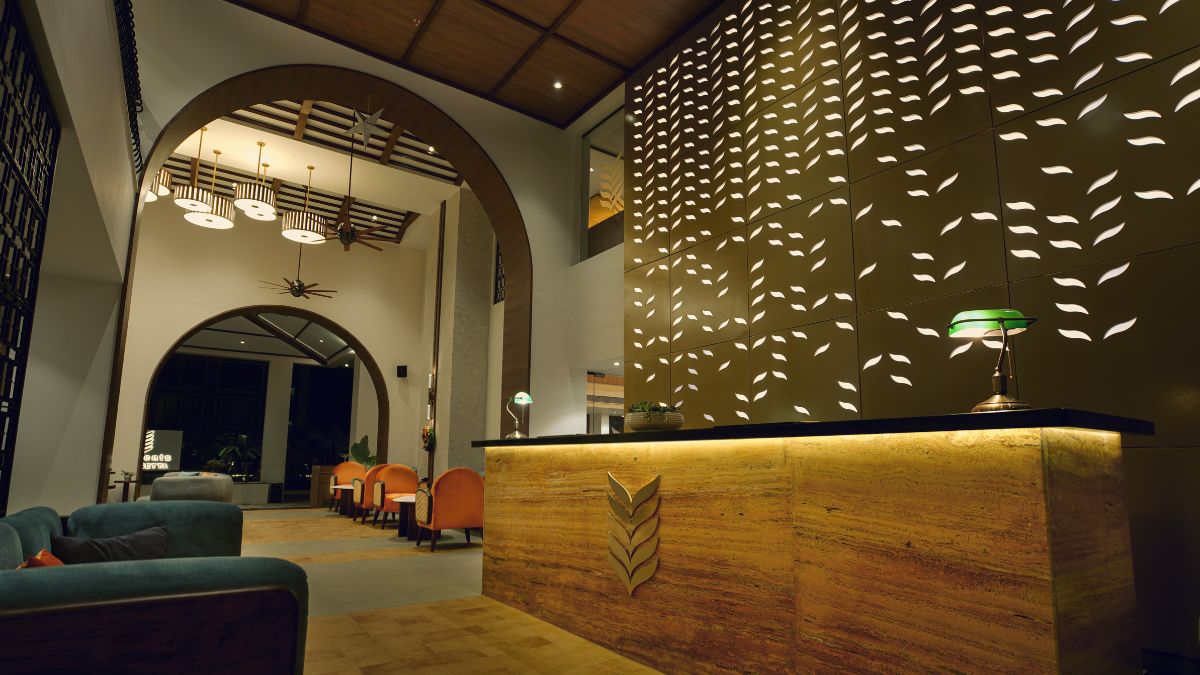
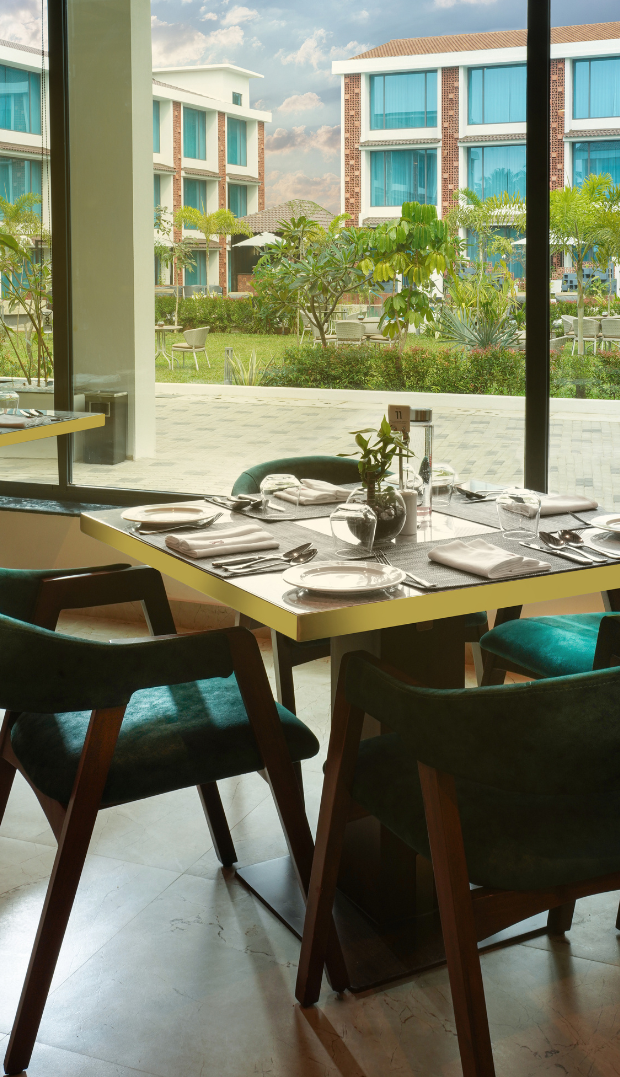
The pool and an adjoining lawn form the centre of the property – the accommodation wings (currently having a total of 74 rooms) and reception building are located on its four sides. The main building, which also houses the restaurant – Cucina Rosetta – is thus only a short walk away from most rooms. We enjoyed a lavish buffet breakfast every day of our trip in the main restaurant. The spread was colourful and well-curated. Along with South Indian and English breakfast staples, the restaurant also included delicious North Indian fare. However, we’d have liked to have more local Goan delicacies as part of the buffet. There were live counters for dosas, eggs, waffles, pancakes and more – most of which were easily customisable on request. Apart from these, we relished fresh baked items, salads, juices and more to round off our meal before we headed out to explore the area.
Photo Credit: Elements by Rosetta
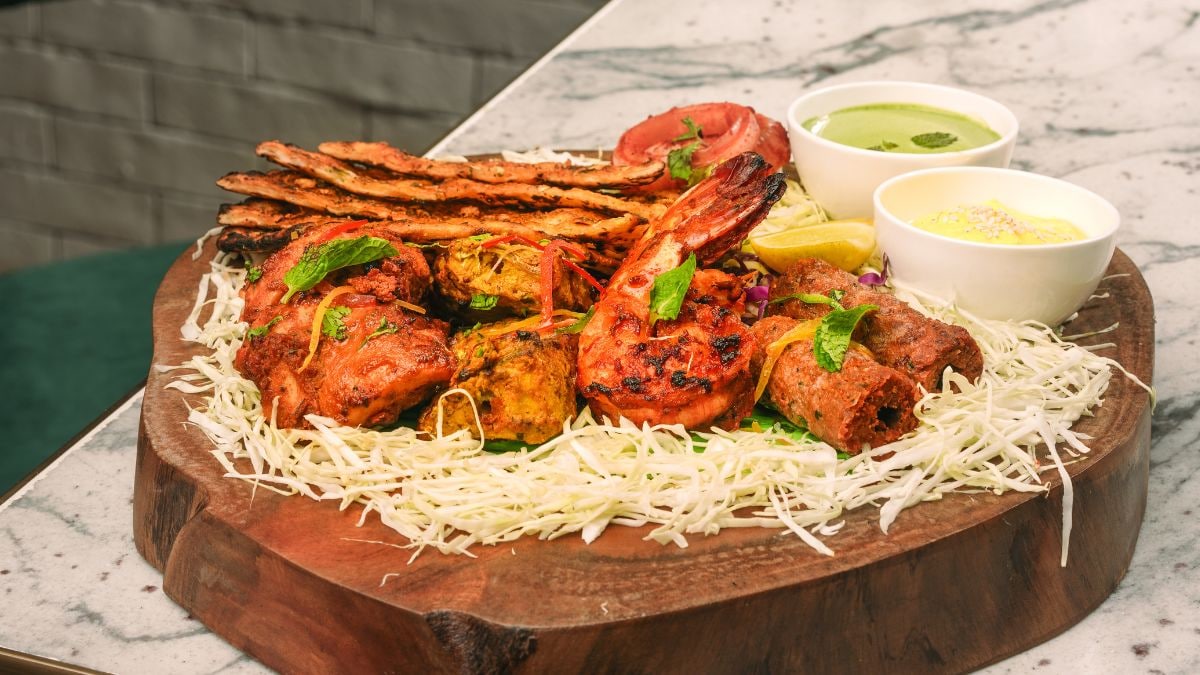
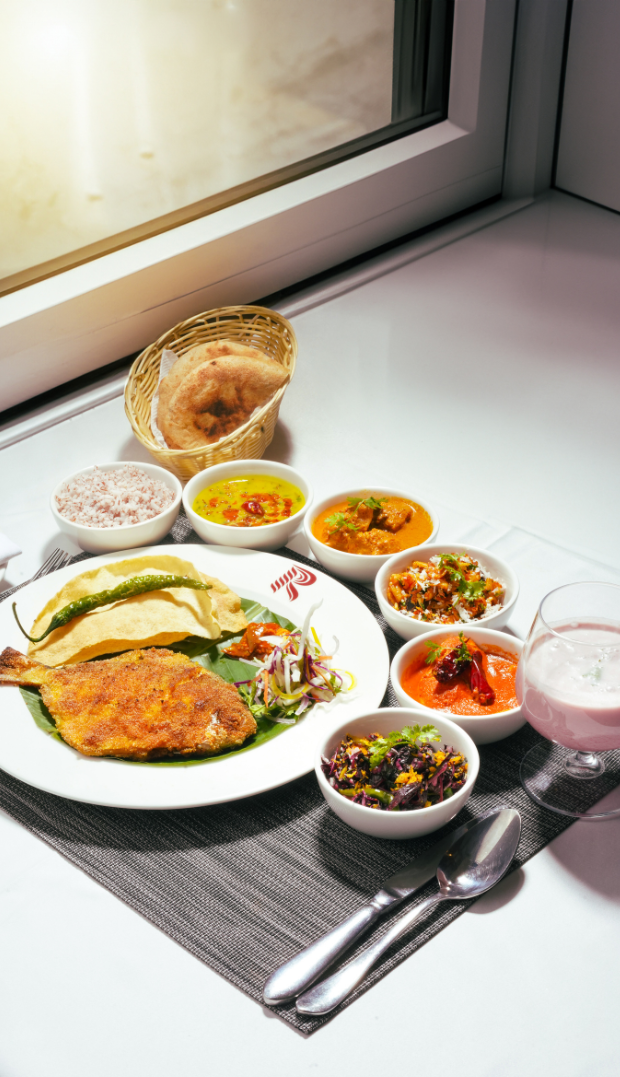
We also enjoyed a selection of Cucina Rosetta’s lunch and dinner delicacies through buffet meals. The North Indian cuisine, including Rajasthani delights, especially stood out to us. The kebabs and tikkas, as well as classic gravies, were yummy and satisfying. While one can also take comfort in their Pan-Asian and Italian offerings, don’t miss the chance to taste some Goan food while you’re here. Apart from favourites like Vindaloo, Xacuti and Cladine, the a la carte menu also features a set “Goan meal experience” (with veg and non-veg options). We paired our food with great classic cocktails made with premium spirits, including local libations like feni. Our multiple meals made us realise that Elements by Rosetta manages to cater to a wide variety of tastes and preferences, and attempts to provide choices that will please different categories of travellers.
Photo Credit: Elements by Rosetta
Elements by Rosetta Varca Goa kept us relaxed and comfortable during our short trip to South Goa. If you’re looking for a reliable option for your next vacation or destination event, consider this cosy new hotel.
For most observers, it was proof of sport’s ability, if only for a fleeting moment, to bring people together – even when they live on opposite sides of one of the world’s most heavily armed borders.
But one of the most celebrated images of the Paris Olympics – a selfie taken by medal-winning table tennis players from either side of the divided Korean peninsula – appears to have landed the North Korea duo in trouble back home.
In a rare moment of Korean-style ping-pong diplomacy, the South Korean mixed doubles players Lim Jong-hoon and Shin Yu-bin and the North Korean pairing Kim Kum-yong and Ri Jong-sik beamed as they posed for a selfie on the podium after receiving their bronze and silver medals at the South Paris Arena last month. The Chinese gold medallists, Wang Chuqin and Sun Yingsha, also appear in the photos.
One of the images was posted to the Games’ official Instagram site, where it drew hundreds of thousands of likes, while People magazine named it as one of the Olympics’ top 12 moments of sportsmanship in Paris.
But this week media reports claimed that Kim and Ri had been placed under “ideological scrutiny”. The Daily NK, a North Korea-focused website based in Seoul, quoted a high-ranking source in Pyongyang as saying that athletes and members of the North Korean Olympic Committee had been undergoing a month-long “ideological scrubbing” since returning home in mid-August – reportedly standard procedure for sportsmen and women who have been exposed to life outside the communist state.
The website reported the country’s athletes had been instructed not to interact with fellow competitors from other countries, including the South, and were warned that “fraternisers” could face punishment.
The table tennis players were reportedly singled out for criticism in a report submitted to officials for “grinning” as they posed alongside athletes from a country the regime has described as its “number one enemy”.
The selfie was snapped at a time of heightened tensions between the two Koreas, whose 1950-53 conflict ended in a truce but not a peace treaty. The North recently protested against joint military exercises involving the South Korean, US and Japanese forces, while growing cooperation between the North’s leader, Kim Jong-un, and Russian president Vladimir Putin have caused alarm across the region.
It isn’t clear what, if any, sanctions the table tennis players could face. That, the Korea Times suggested, could depend on how much remorse they show for momentarily lowering their guard in Paris.
North Korean athletes returning from international competitions undergo a three-stage “ideological review” that ends with self-reflection sessions by team members, in which they are expected to criticise “inappropriate behaviour” among their teammates, as well as reflecting on their own actions, the Korea Times said.
The newspaper quoted a source as saying that heartfelt expressions of contrition can spare athletes “political or administrative punishments”, the nature of which is unclear.
Human Rights Watch said the reports “demonstrate the North Korean government’s efforts to control behaviour beyond its borders.
“The International Olympic Committee … has a responsibility to protect athletes from all forms of harassment and abuse, as set out in the Olympic Charter,” it said in a statement. “North Korean athletes should not fear retribution for actions at the Games, not least when their actions embody the values of respect and friendship, on which the Olympic movement is built.”
While Kim and Ri won a silver medal, other athletes have reportedly been punished for underperforming.
The Daily NK cited the case of the North Korean football team, who were knocked out of the 2010 World Cup in South Africa after losing all three of their group games and conceding 12 goals.
The players were reportedly subjected to a six-hour excoriation for “betraying” the communist nation’s ideological struggle, while their coach, Kim Jung-hun, was forced to work on a building site.
Let us all accept that the very idea of lauki ki sabzi is off-putting. In fact, as kids, most of us either sneakingly dumped it in the waste bin or tried avoiding the meal altogether. But nothing doing, you love it or not, lauki (or bottle gourd) has always been a part of the quintessential Indian diet. Why you wonder? It is because of the goodness the vegetable brings along. It is hydrating, enriched with minerals, vitamins and antioxidants and helps boost metabolism, burn fat and lower cholesterol levels. Hence, we constantly search for unique recipes to make lauki interesting for all. And guess what, we recently came across one such dish that will make you fall for the vegetable instantly. It’s called sorakaya pachadi.
Sorakaya Pachadi, The Ultimate Lauki Chutney To Try:
To put it simply, sorakaya is bottle gourd (lauki) and pachadi literally means ‘pounded’. Popular in Andhra Pradesh and Telangana, it is a fresh, hand-pounded chutney that is usually consumed with rice. Pachadi is also consumed in other South Indian states, but if you delve in deep, you will find every region having its uniqueness in the recipe. For instance, Kerala enjoys pachadi raw and fresh, while people in Andhra Pradesh and Telangana, al dante the vegetables before pounding them.
Alongside, sorakaya pachadi (South Indan bottle gourd chutney) is super healthy as well. The dish keeps the nutrients of the vegetable intact, with inclusion of some added benefits of the spices and other ingredients.
Also Read: 5 South Indian Chutney Recipes You Must Try
Photo Credit: iStock
The Easiest Sorakaya Pachadi Recipe To Replicate At Home:
As mentioned earlier, a pachadi recipe finds unqiueness in every region and every household. During our search for a simple and easy to replicate recipe, we came across a video on social media that looked delicious and perfect to enjoy with rice, roti and paratha. The recipe video has been shared on Instagram by food vlogger Vantaamrutham. Let’s take a look.
Heat oil in a pan.
Saute cumin, green chillies and peanuts. Keep aside.
Heat some more oil and cook few garlic gloves with diced lauki, tomatoes and turmeric powder for low-medium flame.
Cook for eight to ten minutes on low-medium flame for 80-90 percent.
Add tamarind and switch of the flame.
Put everything in a blender and blend coarsely. You can hand pound the chutney, with salt.
Next, prepare a tadka with seeds mix, curry leaves, hing and red chilli and add the chutney.
Mix everything well, garnish with coriander leaves and your pachadi is ready.
Watch the detailed Sorakaya Pachadi recipe video here:
Also Read: How To Make South Indian-Style Pachadi – Find The Recipes For 5 Types Of Pachadi
For more such delicious bottle gourd recipes, click here.
About Somdatta SahaExplorer- this is what Somdatta likes to call herself. Be it in terms of food, people or places, all she craves for is to know the unknown. A simple aglio olio pasta or daal-chawal and a good movie can make her day.
A piping hot cup of chai + flavourful namkeen = a match made in heaven! Won’t you agree? Ask any Indian, no teatime is complete without a crunchy and crispy side of namkeen. From aloo lachha to khatta meetha, the options are endless. Market-bought namkeen are packed with preservatives and extra calories, which often makes it an unhealthy option if we want to overindulge. But would this mean we would just stop consuming namkeen altogether!? Of course not! If you are a fan of namkeen but not the ones that make you feel guilty, then you have landed on the right page! Here, we bring you a guilt-free namkeen recipe that is made from none other than jowar puffs. Yes, you read that right! This South-Indian style millet namkeen is packed with flavour and nutrition that would make your teatime a delight! But before we learn how to make it, let’s dive into some commonly asked questions.
Also Read: Jowar Upma, Jowar Chilla And More: Try These 5 Jowar Recipes For A Protein-Packed Meal
Is Millet Namkeen A Good Snack Option For Weight Management?
Absolutely! This millet namkeen, which is made with jowar (sorghum), is perfect for weight management. For the unversed, jowar is gluten-free and rich in fibre which can keep you full for longer periods. This in turn reduces the need for unhealthy snacking. This millet namkeen is lower in calories as compared to several processed snacks and satiates your hunger and nutrition levels. Plus, the combination of millets and spices when paired with a piping hot cup of tea, makes for a perfect evening snack that you can enjoy guilt-free!
How To Ensure That Your Millet Namkeen Remains Crispy And Crunchy For Long?
Although this millet namkeen tastes best when consumed fresh, if you have made a large batch, you can maintain its freshness with proper storage technique. After you have prepared the millet namkeen, store it in an airtight container to prevent moisture from entering it. Keep it in a cool and dry place, away from direct sunlight as it would otherwise become stale. You can store and consume it for up to 10 days.
Millet Namkeen Recipe: How To Make South Indian-Style Millet Namkeen
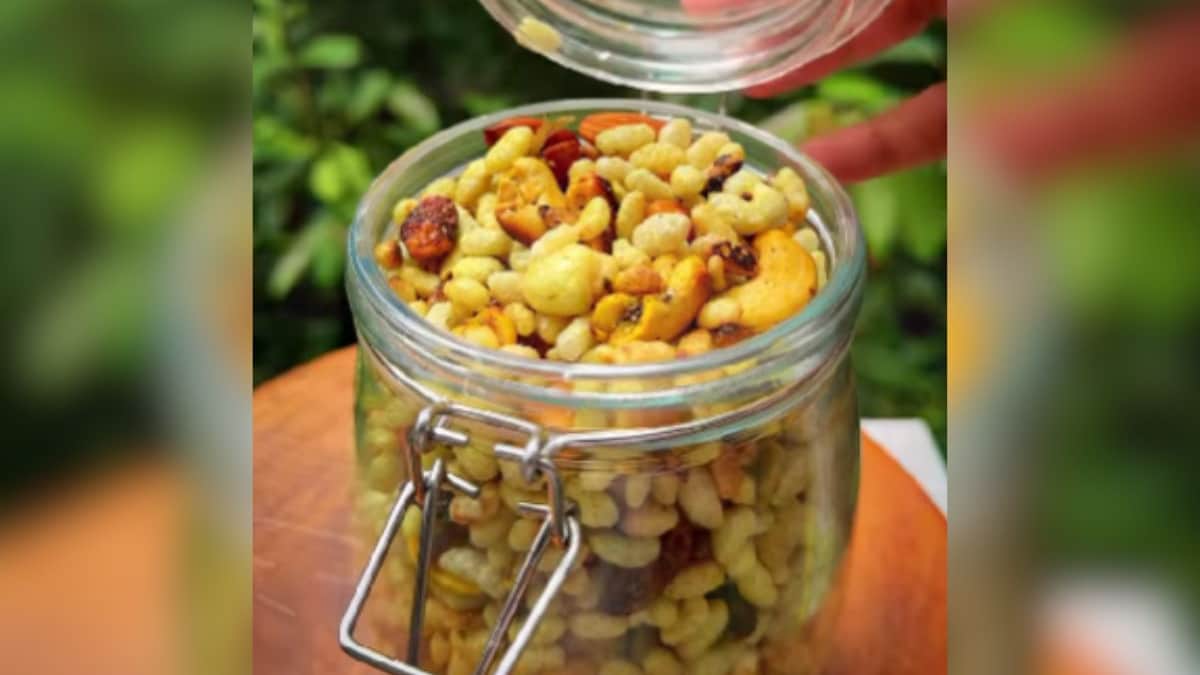
To make millet namkeen at home is pretty simple. This recipe was shared on Instagram by digital content creator @somewhatchef. To make this namkeen, start by heating some coconut or sesame oil in a pan. Once done, add crushed garlic, mustard seeds, curry leaves, and let them splutter. After the garlic turns golden, add turmeric and salt to taste. Let the masala cook for a few minutes. Then add nuts and seeds of your choice – cashews, almonds, peanuts, etc. Mix well and let it cool for 2 minutes. Meanwhile, in a separate kadhai, dry roast jowar murmura and makhana until crispy. Once the masala has been cooked, mix ingredients from both the kadhai. Let the ingredients sit for a while to soak in the flavours and enjoy!
Watch the full video below:
Also Read: Jowar Masala Roti: A Healthy Alternative To Your Regular Rotis
So, make your teatime deliciously wonderful with this easy-to-make millet namkeen recipe.