hacklink hack forum hacklink film izle hacklink marsbahisizmir escortsahabetpornJojobet Giriş

Tag: Spains

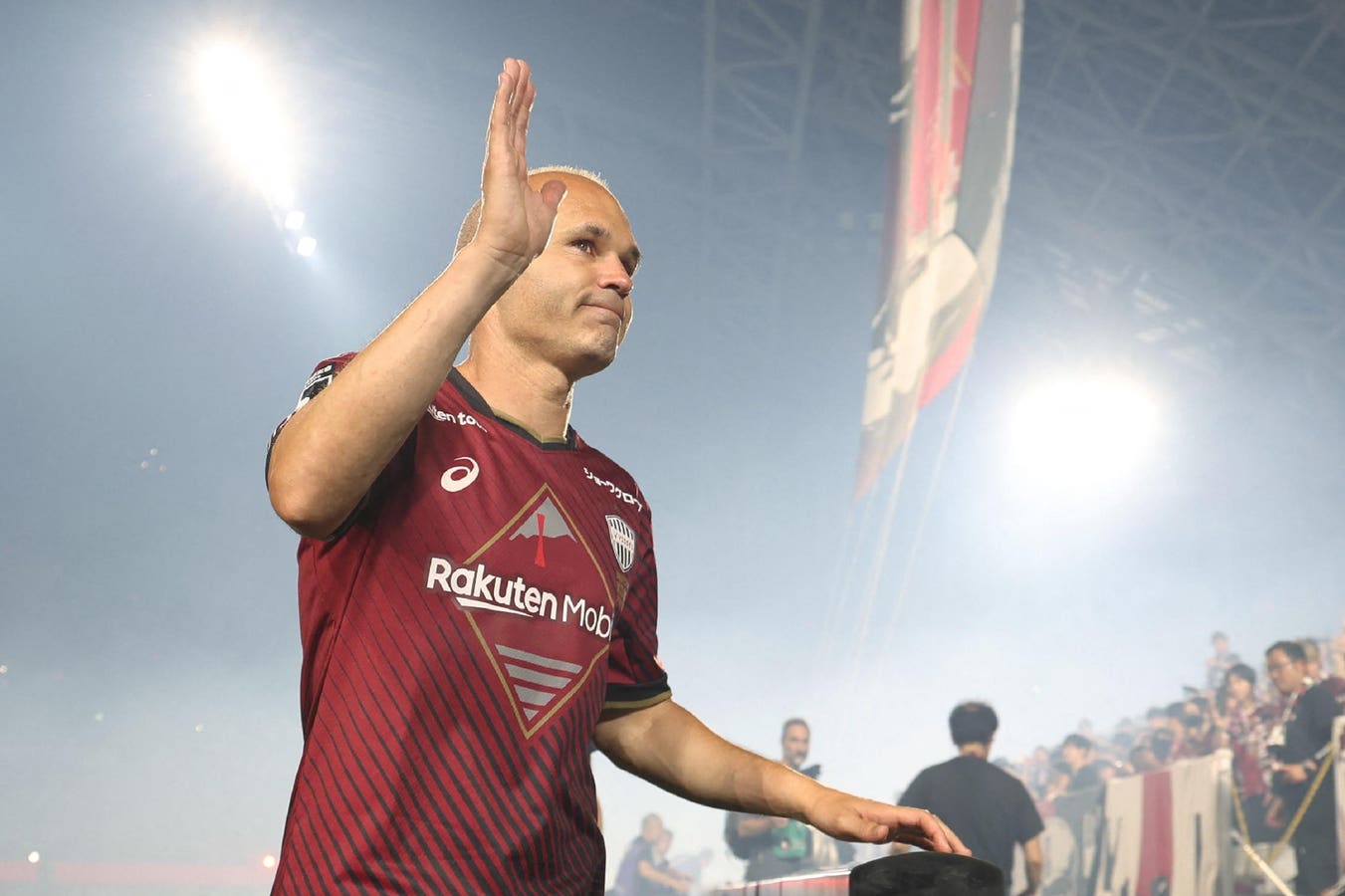
  • Soon After Retiring, Spain’s Andres Iniesta Is A Soccer Club Owner

    Soon After Retiring, Spain’s Andres Iniesta Is A Soccer Club Owner

    A month after hanging up his cleats, Andrés Iniesta is still a player in the soccer world.

    Except it’s no longer from the middle of the field, where he spent the lion’s share of a sparkling career weaving his magic for Spain and Barcelona. This time, Iniesta will be shaping the game from an executive position after becoming the co-owner of Danish third-division enterprise Helsingør.

    The acquisition happened through Iniesta’s sport and entertainment brand Never Say Never, alongside real estate investment company Stoneweg, with the pair buying most of the 19-year-old club’s shares. Based in the Scandinavian country’s northeast, just across the water from Sweden, the team sits seventh in a 12-strong division after 15 league games.

    While there’s a sense of surprise, with Iniesta making the move so soon after ending his playing days in the UAE with Emirates Club, negotiations between Iniesta’s company and Helsingør began as early as April (Danish), according to the Danish outlet Tipsbladet. Now, the 40-year-old is fresh from experiencing the Helsingør training base firsthand.

    “The goal is to see the side improve year after year, players coming through the academy, facilities getting better, and a team people can feel proud of,” Iniesta told national channel TV2, as reported today. Exciting times for Iniesta then, but arguably more so for the young players there, who now have a legendary World Cup winner overseeing their progress in the sport.

    What Barcelona Great Iniesta Brings

    Famous players going on to purchase or part-control clubs is hardly new. Iniesta’s former Barça teammate Gerard Pique has controlled third-tier Andorra for six years. Meanwhile, retired stars like David Beckham, Paolo Maldini, Ronaldo Nazario, and Zlatan Ibrahimovic have dipped their toes into ownership. And while it requires patience before such projects click into gear, they don’t always result in roaring success.

    As someone who’s already gained wealth and status in the game, Helsingør could be a fun, nothing-to-lose endeavor for Iniesta. If taken seriously, the project has legs, however. Despite not owning a club before, the Spaniard comes from Fuentealbilla, a small locality like Helsingør (although Helsingør is bigger), and understands the game outside the major cities. He also came through Barcelona’s famous youth system and will offer input on developing the youngsters.

    Equally, he has a taste for business, with partnerships from Ariel detergent to Konami video games and ventures from Mikakus footwear to his native wine company, Bodega Iniesta, among his repertoire. Scandinavia’s soccer market is exciting, too. It doesn’t have the strongest leagues but produces enviable stars: Erling Haaland, Viktor Gyökeres, and Rasmus Højlund are examples. A short drive from Helsingør, Superliga outfit Nordsjælland is fuelled by the novel Ghana-based academy Right To Dream, offering a pathway for African talents.

    Iniesta lacks a Ballon d’Or trophy, yet has won the World Cup, European Championship, and Champions League—claiming man of the match awards in all three—not to mention a host of domestic accolades with Barcelona. Acclimatizing to life outside the dressing room, he’s now sensing further prosperity from the director’s box.

    Source link

  • Spain’s horrific flooding another nasty hit in a fall where climate extremes just keep coming

    Spain’s horrific flooding another nasty hit in a fall where climate extremes just keep coming

    Even for an era of more extreme weather, this autumn has seemingly shifted into yet another gear, especially in a rain-weary Europe where massive and deadly flooding in Spain’s Valencia region is the latest incarnation.

    At least 95 people have been killed in flooding that sent cars piling up like flotsam on the beach, while an ocean away much of the United States bakes through a nearly rain-free October that has created a flash drought.

    Scientists trying to explain what’s happening, especially with a spate of deadly European downpours, see two likely connections to human-caused climate change. One is that warmer air holds and then dumps more rain. The other is possible changes in the jet stream — the river of air above land that moves weather systems across the globe — that spawn extreme weather.

    Several climate scientists and meteorologists said the immediate cause of the flooding is called a cut-off lower pressure storm system that migrated from an unusually wavy and stalled jet stream. That system simply parked over the region and poured rain. This happens often enough that in Spain they call them DANAs, for the Spanish acronym for the system, meteorologists said.

    In America, it was a sunny, high-pressure system with no moisture that plunked down like a dome and kept storms away.

    “If we’re getting all the dryness, somebody else is getting all the rain,” said Yale Climate Connection meteorologist Jeff Masters, co-founder of Weather Underground.

    “The same extremely wavy jet stream that is causing the U.S. drought is also responsible for the horrific flooding in eastern Spain,” said climate scientist Jennifer Francis at the Woodwell Climate Research Center in Cape Cod. She’s a pioneer in a theory that attributes a wavier and slower-moving jet stream to climate change because the Arctic is warming so much it’s no longer a lot colder than the rest of the planet. That theory is gaining more acceptance, but it’s not fully embraced by the climate science community.

    “Attributions are always tricky. Generally speaking, the jet stream, because of the changes we are seeing due to climate change, is having more pronounced undulations,” said Maria Jose Sanz, scientific director of the BC3 Basque Center for Climate Change. These DANAs happen when there are more undulations, often in the winter, she said.

    ETH Zurich climate scientist Erich Fischer isn’t fully sold about the wavy jet stream theory, but then he ticks off the cut-off low storm systems that have doused and flooded Europe this fall: last week in France, twice in Italy in September and October, flooding in Austria and Czech Republic in September. And then there are the October floods in the Balkans, but Fischer isn’t sure they are quite similar enough. Parts of Poland, Germany and the Czech Republic got three months of rain in just five days in September, according to the European climate service Copernicus.

    “I’ve only been talking about the ones in autumn. We had a whole series in the Alps causing flash floods during summer,” Fischer said. “Starting with Bavaria, southern Germany in June, and then it was something like six events in Austria and Switzerland in the mountains, extreme thunderstorms, and now this autumn. So in terms of heavy rainfall, it was an extremely unusual stretch.”

    He said the systems, especially in Spain, France and Austria, got stuck and “the rain did not move” from the same valleys for hours.

    “It’s incredible,” he said.

    Even without the potential changes to the jet stream, several scientists said they are sure that basic physics are making storms like this wetter.

    It’s a core equation in physics called the Clausius-Clapeyron relation. It says for every degree Celsius the air warms, it can hold 7% more moisture (4% more for every degree Fahrenheit). The world has warmed 1.3 degrees Celsius because of greenhouse gases, so it’s about 9% to 10% heavier rain, at the least, said Imperial College climate scientist Friederike Otto. She helps run World Weather Attribution that checks for human fingerprints in extreme weather, sometimes finding them, sometimes not.

    “It is very clear that climate change did play a role,” especially in short bursts like what happened in Valencia, Otto said.

    That air holding more moisture may be “just for starters,” meteorologist Masters said. When the moisture condenses it releases heat energy, which goes into the storm, invigorates it, increases its updrafts and allows it to pull even more moisture from a larger area, which could boost rainfall as much as 20%, he said.

    “It just kind of feeds and you get a vicious cycle,” he said.

    Fischer found a similar storm in the same place in 1957. But this year’s storm, with warmer air stoking it, was much wetter. The 1957 storm dumped around 250 millimeters of rain (10 inches), but this week’s had reports of more than 490 millimeters (19 inches) in just eight hours, Fischer said. There could be rain gauge issues involved, but part of this is the atmosphere holding and dumping more water.

    And then you add a toasty Mediterranean sea.

    It had its warmest surface temperature on record in mid-August, with a mean temperature of 28.47 Celsius, said Carola Koenig of the Centre for Flood Risk and Resilience at Brunel University of London.

    “This facilitates a greater uptake of moisture in the air, resulting in more rain when the atmosphere starts to cool in the autumn,” she said. “As things stand, Spain needs to embrace itself for continued heavy rain for the next few days.”

    There may be different ways of counting and attributing climate change and the havoc it wreaks, Otto said, but one thing is for certain: “Burning fossil fuels causes climate change and climate change causes death and destruction.”

    ___

    Read more of AP’s climate coverage at http://www.apnews.com/climate-and-environment

    ___

    Follow Seth Borenstein on X at @borenbears

    ___

    The Associated Press’ climate and environmental coverage receives financial support from multiple private foundations. AP is solely responsible for all content. Find AP’s standards for working with philanthropies, a list of supporters and funded coverage areas at AP.org.


    Source link

  • Olympic Swimmer Carlos Peralta Takes Over As General Director of Spain’s Doping Agency

    Olympic Swimmer Carlos Peralta Takes Over As General Director of Spain’s Doping Agency

    CELAD, Spain’s anti-doping agency, announced Wednesday that Olympic swimmer Carlos Peralta will take over as the organization’s general director. The Governing Council, the highest anti-doping authority in Spain, made the appointment as Peralta takes over from Silvia Calzón, who departs the post after less than a year to Spanish Prime Minister Pedro Sánchez’s cabinet.

    Peralta raced for Spain at the 2016 Olympics in the 200-meter butterfly, made finals at the 2014 and 2016 European Championships, and is a 21x Spanish champion, giving him experience in sport at the highest level.

    In addition to his athletic experience, Peralta’s extensive resume in medicine made him an attractive candidate for the job. He graduated with a degree in medicine from the Complutense University of Madrid and holds three master’s degrees—one in health management and planning, one in hospital and health service management, and another in bioethics. In April, Peralta began working with CELAD as Director of the Department of Anti-Doping Prevention Policies in Sport.

    José Manuel Rodríguez Uribes, president of the CELAD governing council, said Peralta’s appointment represents “a commitment to the continuity of the management model implemented over these months by Silvia Calzón,” as he serves as the seventh head of the Spanish anti-doping agency since its creation in 2008.

    Peralta will have his hands full in the new role, as Inside The Games reports the Spanish anti-doping agency is still facing several outstanding issues, namely the crisis surrounding previous director José Luis Terreros “who was dismissed after the High Sports Council referred alleged irregularities (unresolved positive cases) during his tenure to the public prosecutor,” which the World Anti-Doping Agency (WADA) threatened sanctions over.

    Spain has been the site of multiple major doping violations—not just by Spaniards—since the 1990s. The most infamous is Operation Puerto, which began in 2006, dismantled a doping ring that involved athletes of multiple nationalities and contributed to doping’s inclusion in the Spanish penal code.

    In the press release announcing Peralta as the new general director, CELAD said that it had strengthened its commitment to fighting anti-doping in recent months by testing athletes more extensively and taking steps to meet objectives set by WADA.


    Source link