hacklink hack forum hacklink film izle hacklink marsbahisizmir escortsahabetpornJojobet

Tag: species

  • Muddy footprints suggest 2 species of early humans were neighbors in Kenya 1.5 million years ago

    Muddy footprints suggest 2 species of early humans were neighbors in Kenya 1.5 million years ago

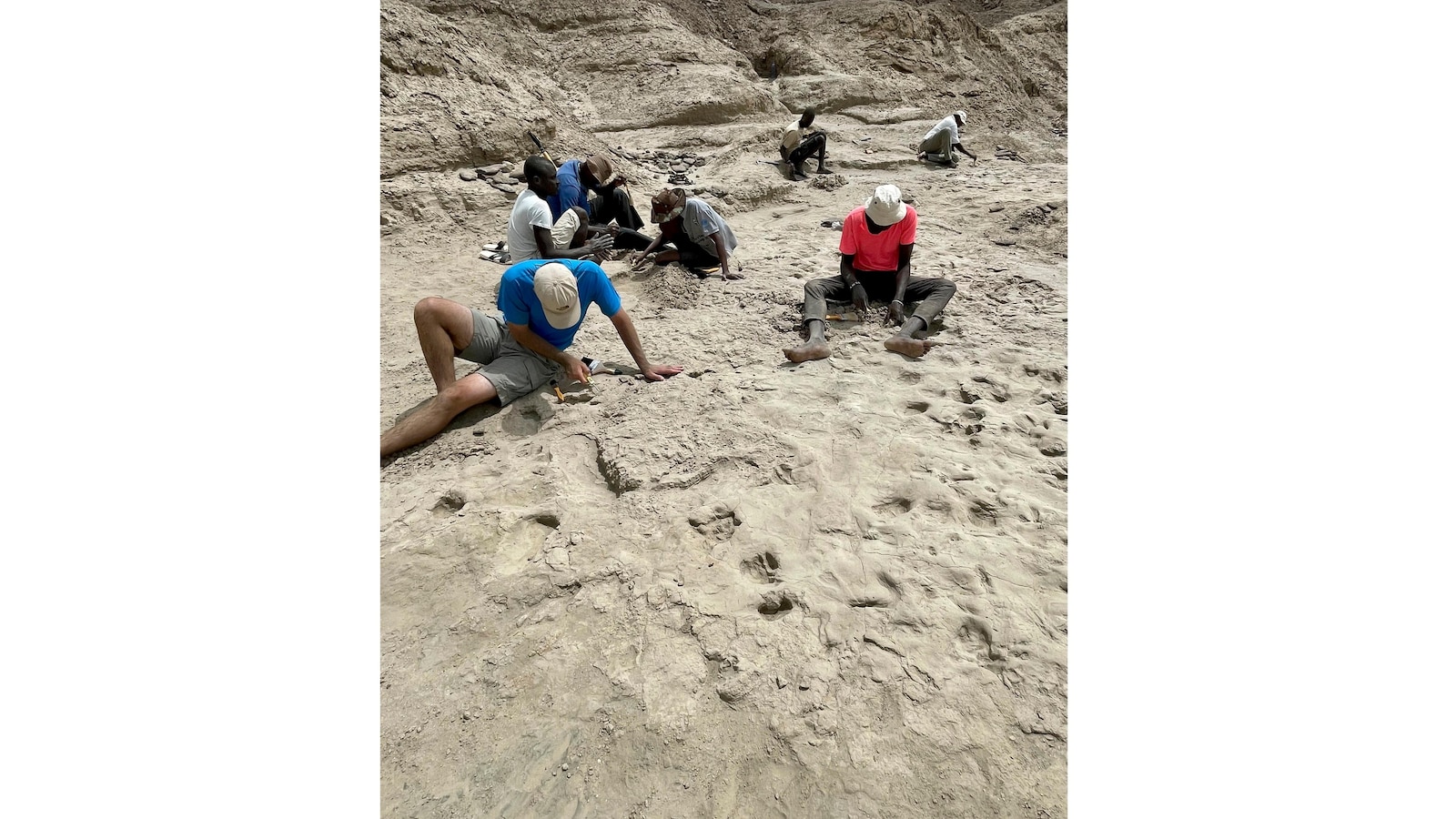
    WASHINGTON — Muddy footprints left on a Kenyan lakeside suggest two of our early human ancestors were nearby neighbors some 1.5 million years ago.

    The footprints were left in the mud by two different species “within a matter of hours, or at most days,” said paleontologist Louise Leakey, co-author of the research published Thursday in the journal Science.

    Scientists previously knew from fossil remains that these two extinct branches of the human evolutionary tree – called Homo erectus and Paranthropus boisei – lived about the same time in the Turkana Basin.

    But dating fossils is not exact. “It’s plus or minus a few thousand years,” said paleontologist William Harcourt-Smith of Lehman College and the American Museum of Natural History in New York, who was not involved in the study.

    Yet with fossil footprints, “there’s an actual moment in time preserved,” he said. “It’s an amazing discovery.”

    The tracks of fossil footprints were uncovered in 2021 in what is today Koobi Fora, Kenya, said Leaky, who is based at New York’s Stony Brook University.

    Whether the two individuals passed by the eastern side of Lake Turkana at the same time – or a day or two apart – they likely knew of each other’s existence, said study co-author Kevin Hatala, a paleoanthropologist at Chatham University in Pittsburgh.

    “They probably saw each other, probably knew each other was there and probably influenced each other in some way,” he said.

    Scientists were able to distinguish between the two species because of the shape of the footprints, which holds clues to the anatomy of the foot and how it’s being used.

    H. erectus appeared to be walking similar to how modern humans walk – striking the ground heel first, then rolling weight over the ball of the foot and toes and pushing off again.

    The other species, which was also walking upright, was moving “in a different way from anything else we’ve seen before, anywhere else,” said co-author Erin Marie Williams-Hatala, a human evolutionary anatomist at Chatham.

    Among other details, the footprints suggest more mobility in their big toe, compared to H. erectus or modern humans, said Hatala.

    Our common primate ancestors probably had hands and feet adapted for grasping branches, but over time the feet of human ancestors evolved to enable walking upright, researchers say.

    The new study adds to a growing body of research that implies this transformation to bipedalism – walking on two feet — didn’t happen at a single moment, in a single way.

    Rather, there may have been a variety of ways that early humans learned to walk, run, stumble and slide on prehistoric muddy slopes.

    “It turns out, there are different gait mechanics – different ways of being bipedal,” said Harcourt-Smith.

    ___

    The Associated Press Health and Science Department receives support from the Howard Hughes Medical Institute’s Science and Educational Media Group. The AP is solely responsible for all content.
    Source link

  • Pair of rare Amur tiger cubs debuting at Minnesota Zoo are raising hopes for the endangered species

    Pair of rare Amur tiger cubs debuting at Minnesota Zoo are raising hopes for the endangered species

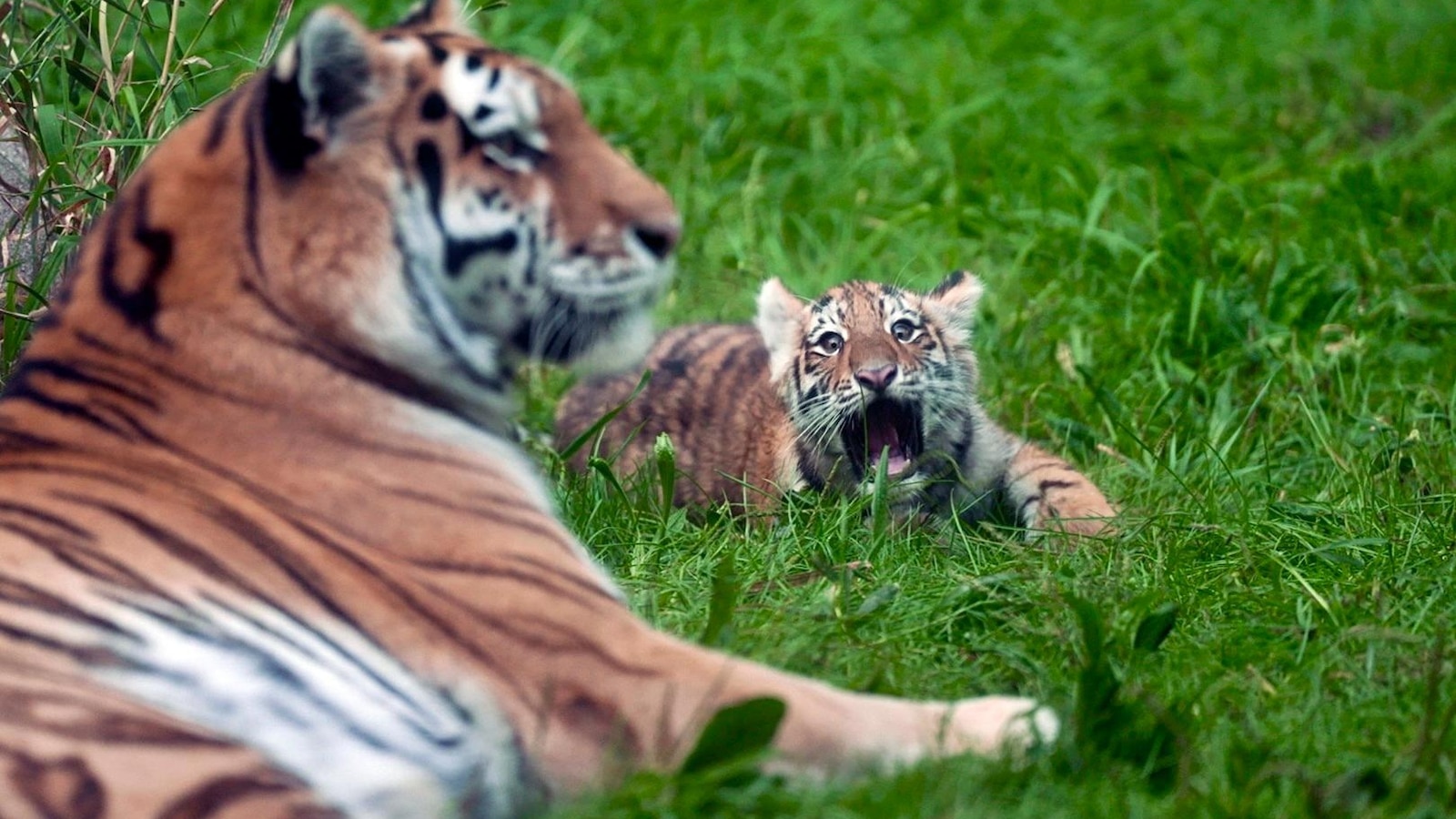
    APPLE VALLEY, Minn. — A pair of rare Amur tiger cubs are making their public debut at the Minnesota Zoo, raising hopes for preserving an endangered species that’s native to far eastern Russia and northern China.

    Andrei and Amaliya got to venture outside and feel the grass of their new home under their paws Wednesday for the first time since their 12-year-old mother, Dari, gave birth on May 23.

    “They’ve done quite well since then,” zoologist Trista Fischer said. “We’ve monitored them very closely. Dari’s been fantastic. She’s provided outstanding maternal care. And so today we’ve reached the point where they’re fully vaccinated and they’re now about 40 to 45 pounds (18-20 kilograms).”

    Scientists estimate the Amur tiger population is just around 400 to 500 in the wild. They were near the brink of extinction in the 1930s and 1940s but have recovered somewhat since then. It’s tricky to breed them, and around one in four Amur cubs don’t make it to adulthood, whether it’s in the wild or in captivity, she said. Poachers are another major threat.

    But the Minnesota Zoo, located in the Minneapolis suburb of Apple Valley, has a long history of conserving tigers. Its Amur tigers have produced 57 cubs, 46 of which survived for at least 30 days. Of those 46, 21 have gone on to produce litters of their own, amounting to another 86 cubs. The births of Andrei and Amaliya raised the zoo’s population to seven Amur tigers, including their sire, Luka.

    Fischer is the leading coordinator for the Tiger Species Survival Plan, a breeding program in the United States with facilities in other countries that works on a global level to preserve the big cats. The plan manages three groups of tigers: Sumatran, Malayan and Amur.

    “This litter is so valuable to the population right now,” she explained, saying the genetic diversity of heathy tigers in human care could someday be used to help support populations in the wild.

    Zoo spokesperson Zach Nugent said the cubs will remain housed together with their mom for about 18 months, before Andrei, the male, is moved to separate housing, around the same time a male cub in the wild would start venturing out on his own. Amaliya, the female, may spend a little more time with Dari, up to 24 months. Then Fischer will determine whether either cub should be bred, and potentially moved for that to another accredited zoo, which typically happens after the cubs are 2 years old.

    “Aww, I love when they get their little Yoda ears,” Fischer said referring to the pointy ears of the Star Wars character as she watched Amaliya and Andrei explore the new terrain of their enclosure. She said it was an emotional, exciting and proud moment for her and her team.

    “Our work’s not over, but all that work so far is really paying off in how well that these cubs are acclimating to a new surrounding, pretty much immediately,” she said as the little tigers roamed outside with their mother. “They’re showing a lot of resiliency, which is something that we work hard for in human care. We want these animals to have a lot of confidence and be able to adapt to new environments just as they’re doing today.”

    ___

    AP writer Steve Karnowski reported from Minneapolis.

    Source link