hacklink hack forum hacklink film izle hacklink marsbahisizmir escortsahabetpornJojobetcasibompadişahbetjojobet

Tag: Studies

  • Multiple Studies Reinforce the Emotional Well-Being of the RV Lifestyle for Kids

    Multiple Studies Reinforce the Emotional Well-Being of the RV Lifestyle for Kids

    WASHINGTON, DC / ACCESSWIRE / October 30, 2024 / Studies for years have revealed how RVing provides many physical and mental health benefits to living an active outdoor lifestyle, and two new research reports are demonstrating how those benefits extend to children.

    ‘Our recent surveys have shown that new RVers are younger and more diverse than ever before, and they are choosing RVing as a way to connect with nature and to counterbalance stress,’said Craig Kirby RV Industry Association President & CEO. ‘What these new studies show is that the physical and mental health benefits of outdoor recreation also extend to children.’

    According to the KOA 2024 Camping & Outdoor Hospitality Report on Outdoors and Wellness, campers who bring along their children say that spending time outdoors improves the children’s emotional well-being, relationships, and physical health. These findings confirm those uncovered in an earlier study, published in the International Journal of Environmental Research and Public Health, which shows the lifelong importance of childhood exposure to natural outdoor environments for physical, mental, and cognitive development.

    In its global study of 7,000 parents and children, the IKEA Play Report 2024noted that ‘children are less physically active and spend more time indoors. Most families spend a significant part of their everyday lives inside – and a lot of it in front of screens.’ The report continues, ‘The world faces unprecedented health, social, and ecological challenges – and intense global competition. This pressure has severe consequences in the form of decreasing wellbeing; mentally, emotionally, and physically.’

    Indeed, the increasingly indoor and sedentary lifestyles of children have been associated with ‘unfavorable behavioral conduct, lower self-esteem, poor concentration, and reduced psychological well-being, quality of life, and physical health,’ according to the International Journal study. This, it claims, has resulted in adults with significantly worse mental health.

    The health benefits of nature, it continues, have been attributed to ‘reduction in air pollution; increased physical activity, including walking and biking; and improved mental restoration through alleviation of anxiety and stress.’

    ‘This data does not come as a surprise to RV owners who grew up camping in their parents’ or grandparents’ RVs,’ added Kirby. ‘Not only do they value the myriad of benefits their children reap by spending time outdoors, they also experience a strengthening of family bonds by taking RV trips together.’

    This latter fact is born out in the KOA study by 93% of the respondents who agreed that camping strengthens family relationships. IKEA’s study found that the top parents’ emotional play priority is ‘having fun together as a family.’

    ‘Also among IKEA’s findings was that ‘making memories together’ was a top priority for parents – and that’s definitely what drives second- and third-generation RV buyers.’ said Kirby.

    Contact:

    Monika Geraci
    mgeraci@rvia.org

    Go RVing

    Go RVing’s mission is to inspire potential RVers, spark curiosity, and raise awareness about the benefits and accessibility of RVing through rich, authentic, and diverse storytelling. www.GoRVing.com.

    SOURCE: Go RVing

    View the original press release on accesswire.com

    Source link

  • New Studies Show How Post-Treatment Lifestyle Choices Shape Long-Term Outcomes After Breast Cancer Diagnosis

    New Studies Show How Post-Treatment Lifestyle Choices Shape Long-Term Outcomes After Breast Cancer Diagnosis

    Three studies led by Dana-Farber Cancer Institute researchers have encouraging implications for patients with breast cancer.

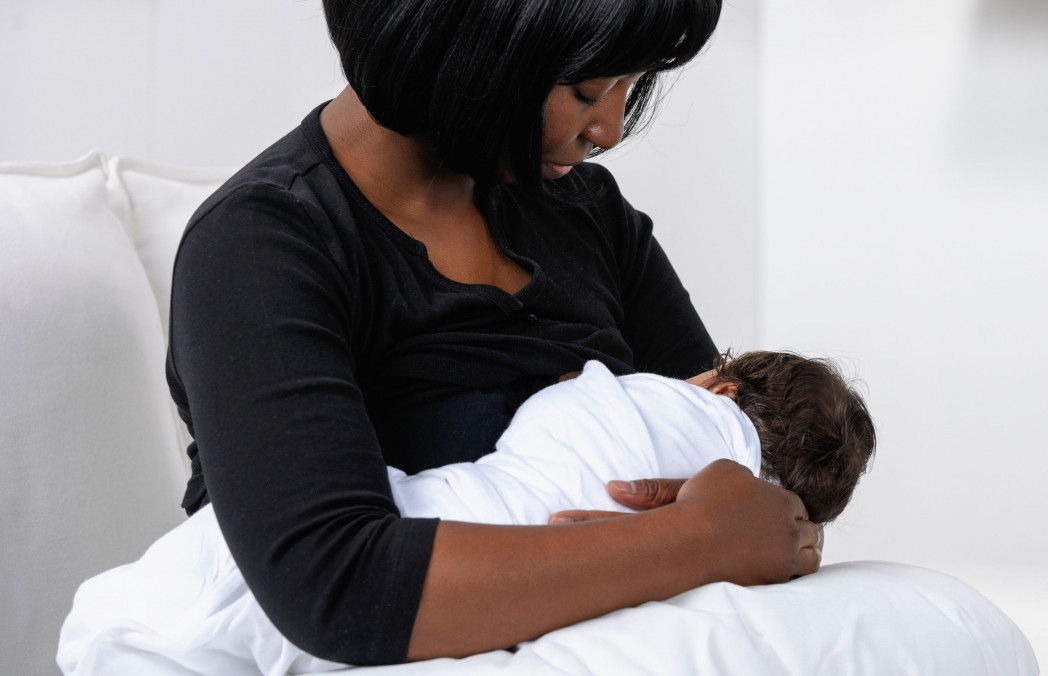
    Two studies focus on breastfeeding after breast cancer diagnosis and treatment. The studies found it was safe and feasible for young patients carrying specific genetic variations to breastfeed without raising their risk of a cancer recurrence or a cancer in the other breast, and that it was safe and feasible to breastfeed for patients with hormone receptor-positive (HR+) breast cancer who conceived after a temporary interruption of endocrine therapy. The third study shows that a telephone-based coaching program can significantly increase physical activity in overweight patients, potentially improving their outcomes. The studies were presented at the European Society of Medical Oncology (ESMO) Congress 2024 in Barcelona, Spain.

    Breastfeeding after breast cancer safe and feasible in survivors of breast cancer

    The first study was a collaboration among investigators at 78 hospitals and cancer treatment centers worldwide. It involved 474 patients with inherited mutations in the cancer-susceptibility genes BRCA1 or BRCA2 who became pregnant after being diagnosed with Stage I-III invasive breast cancer at age 40 or younger.

    Researchers divided the patients into two groups – those who breastfed after delivering a child and those who did not – and tracked their health over time. At a median of seven years after delivery, there was no difference between the two groups in the incidence of cancer in the region of the original tumor or in the opposite breast. Disease-free survival – how long patients live free of cancer – and overall survival were also the same for the two groups.

    The second study provides breastfeeding outcomes from the POSITIVE trial which demonstrated early safety of the temporary interruption of endocrine therapy to attempt pregnancy. A key secondary endpoint was breastfeeding outcomes. The study involved 518 patients at age 42 or younger with HR+, Stage I-III breast cancer. Of these patients, 317 went on to have a live birth and 196 chose to breastfeed. Breast conserving surgery was a key factor favoring breastfeeding.

    Prior research led by Dana-Farber has demonstrated that young breast cancer survivors who have breast conserving therapy and then go on to breastfeed can have challenges nursing from the treated breast and need to rely on the opposite unaffected breast to feed the baby.

    “These studies provide the first evidence on the safety of breastfeeding after breast cancer in both young patients carrying BRCA variations that predispose to breast cancer, as well as patients who conceived after pausing endocrine therapy,” says Ann Partridge, MD, MPH, the founder and director of the Program for Young Adults with Breast Cancer at Dana-Farber, and a senior investigator on the study. “Our findings emphasize the possibility of supporting maternal and infant needs without compromising maternal safety.”

    Proffered paper session: Supportive and palliative care

    • Breastfeeding in women with hormone receptor-positive breast cancer who conceived after temporary interruption of endocrine therapy: Results from the POSITIVE trial (1814O)
    • Ann Partridge, MD, MPH, Dana-Farber, co-senior investigator

    Proffered paper session: Supportive and palliative care

    • Breastfeeding after breast cancer in young BRCA carriers: results from an international cohort study (1815O)
    • Ann Partridge, MD, MPH, Dana-Farber, co-senior investigator

    A coaching program for increased exercise

    The third study draws on data from the Breast Cancer Weight Loss (BWEL) trial, which is exploring whether participating in a weight loss program after a breast cancer diagnosis can reduce the risk of cancer recurrence in women with a body mass index (BMI) in the overweight or obese range. The BWEL trial randomized 3,180 women with breast cancer to a group that received a telephone-based coaching program focused on reducing calories and increasing exercise combined with health education materials versus health education materials alone.

    The study’s primary goal is to determine whether the weight loss program reduces the risk of cancer recurrence and secondary aims focus on evaluating whether the weight loss program helps breast cancer survivors to exercise more and eat a healthier diet.

    The study, presented at ESMO,  looks at changes in exercise in 541 BWEL study participants who took part in a substudy that evaluated their exercise patterns over time. Half of the patients took part in the weight loss program and the education program, and the other half received educational materials only.

    At the time of enrolling in the trial, patients in both groups did very little exercise—a median of zero minutes per week in the health education group and 10 minutes per week in the weight loss group. By six months after enrollment, women receiving the weight loss program increased their weekly exercise by a median 40 minutes and the women in the education group did not increase their exercise at all. Additionally, women taking part in the weight loss program were more likely to exercise at least 150 minutes per week—a level of exercise linked to many health benefits–and less likely to report no exercise at all, as compared to women in the education alone group.

    Across all the patients in the study, those who engaged in at least 150 minutes of moderate or vigorous physical activity per week had greater weight loss than those who did not.

    “Our results show that a telephone-based weight-loss intervention can motivate this group of patients to be more physically active,” says the study’s first author, Jennifer Ligibel, MD, the Director of the Leonard P. Zakim Center for Integrative Therapies and Healthy Living at Dana-Farber. “We’ll continue to follow these patients to determine whether changes in exercise influence cancer outcomes.”

    Mini oral session: Supportive and palliative care

    • Effect of a weight loss intervention (WLI) on exercise behaviors in women with breast cancer: Results from the Breast Cancer Weight Loss (BWEL) Trial (1817MO)
    • Jennifer Ligibel, MD, Dana-Farber, presenting author

    This news release was published by Dana-Farber Cancer Institute on September 15, 2024.

    Click here for more news from ESMO 2024.


    Source link

  • Studies on pigeon-guided missiles, swimming abilities of dead fish among Ig Nobles winners

    Studies on pigeon-guided missiles, swimming abilities of dead fish among Ig Nobles winners

    BOSTON — BOSTON (AP) — A study that explores the feasibility of using pigeons to guide missiles and one that looks at the swimming abilities of dead fish were among the winners Thursday of this year’s Ig Nobels, the prize for comical scientific achievement.

    Held less than a month before the actual Nobel Prizes are announced, the 34th annual Ig Nobel prize ceremony at the Massachusetts Institute of Technology was organized by the Annals of Improbable Research magazine’s website to make people laugh and think. Winners received a transparent box containing historic items related to Murphy’s Law — the theme of the night — and a nearly worthless Zimbabwean $10 trillion bill. Actual Nobel laureates handed the winners their prizes.

    “While some politicians were trying to make sensible things sound crazy, scientists discovered some crazy-sounding things that make a lot of sense,” Marc Abrahams, master of ceremonies and editor of the magazine, said in an e-mail interview.

    The ceremony started with Kees Moliker, winner of 2003 Ig Noble for biology, giving out safety instructions. His prize was for a study that documented the existence of homosexual necrophilia in mallard ducks.

    “This is the duck,” he said, holding up a duck. “This is the dead one.”

    After that, someone came on stage wearing a yellow target on their chest and a plastic face mask. Soon, they were inundated with people in the audience throwing paper airplanes at them.

    Then, the awards began — several dry presentations which were interrupted by a girl coming on stage and repeatedly yelling “Please stop. I’m bored.” The awards ceremony was also was broken up by an international song competition inspired by Murphy’s Law, including one about coleslaw and another about the legal system.

    The winners were honored in 10 categories, including for peace and anatomy. Among them were scientists who showed a vine from Chile imitates the shapes of artificial plants nearby and another study that examined whether the hair on people’s heads in the Northern Hemisphere swirled in the same direction as someone’s hair in the Southern Hemisphere.

    Other winners include a group of scientists who showed that fake medicine that causes side effects can be more effective than fake medicine that doesn’t cause side effects and one showing that some mammals are cable of breathing through their anus — winners who came on stage wearing a fish-inspired hats.

    Julie Skinner Vargas accepted the peace prize on behalf of her late father B.F. Skinner, who wrote the pigeon-missile study. Skinner Vargas is also the head of the B.F. Skinner Foundation.

    “I want to thank you for finally acknowledging his most important contribution,” she said. “Thank you for putting the record straight.”

    James Liao, a biology professor at the University of Florida, accepted the physics prize for his study demonstrating and explaining the swimming abilities of a dead trout.

    “I discovered that a live fish moved more than a dead fish but not by much,” Liao said, holding up a fake fish. “A dead trout towed behind a stick also flaps its tail to the beat of the current like a live fish surfing on swirling eddies, recapturing the energy in its environment. A dead fish does live fish things.”

    Source link