hacklink hack forum hacklink film izle hacklink marsbahisizmir escortsahabetpornJojobetcasibompadişahbetjojobet

Tag: survival

  • Garden survival tips for a lock up and go lifestyle

    Garden survival tips for a lock up and go lifestyle

    December is the month when we head for sun, sea or mountains. Maybe even a white Christmas. Wouldn’t it be nice to know that that your garden can cope better with the vagaries of the weather while you are away? Not just for the festive season, but for all those well-deserved breaks during the year.

    Here’s how to make your garden just a little more bullet proof

    • Watering is probably the biggest headache. Install an automatic irrigation system and before you leave make sure that all the sprayers are working and that the timer settings are correct.
    • If you have lots of pots set up an irrigation system for them as well or move the pots into a shady position where they won’t dry out as fast.
    • Another long term solution is to plant weather hardy plants that can cope with heat, or excessive rainfall as well as those that are resistant to weather related diseases like mildew and other fungus diseases.
    • Plants will be more resilient in healthy, fertile soil that drains well. Regularly enrich the soil with compost and other organics, especially when planting.

    Weather hardy and disease-resistant plants
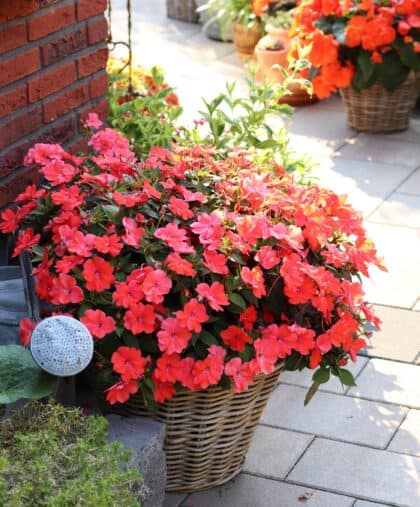
    Sunpatiens Compact.

    Sunpatiens ‘Compact’ thrives in sun or partial shade and tolerates all kinds of weather, from spring through to the first frost, and is disease resistant, particularly against downy mildew. Plants will be more compact (36cm high and wide) in sunny beds and may be taller under shadier conditions. Those in full sun need more watering than those in partial shade. The range has 13 different flower colours.

    Euphorbia ‘Glamour’.

    Euphorbia ‘Glamour’ is a spreading perennial that produces masses of tiny white flowers. Plants sail through heat and drought and rebound from wet weather. This is the best euphorbia variety for in ground performance, being easy to grow and disease free. It is a brilliant bed filler that likes full sun but will tolerate partial shade.
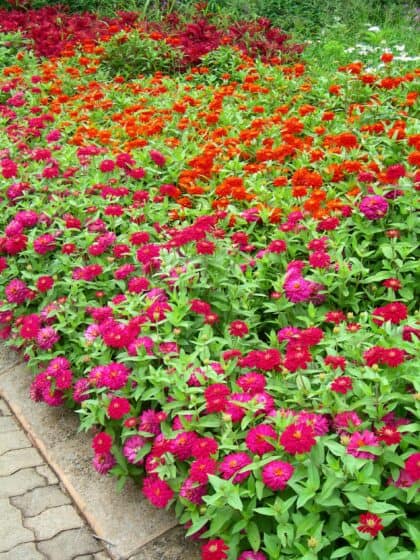
    Zinnia ‘Zahara’.

    Zinnia ‘Zahara’ is a heating loving variety for full sun and unlike older zinnia varieties that are plagued by mildew, it has superior disease tolerance. It has large single or double flowers on compact plants. Plants have very low water needs once the plants are established in the ground making it a good choice for hot and dry conditions. Space 20 to 25cm apart.
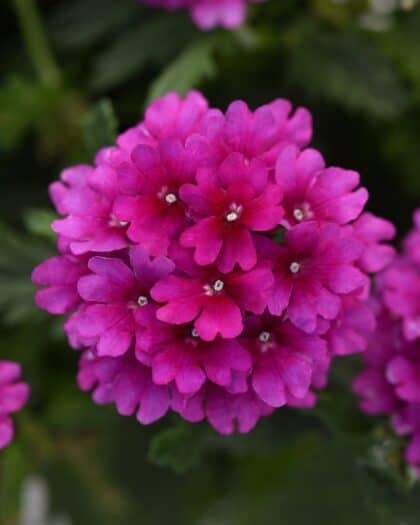
    Verbena ‘Cadet’.

    Verbena ‘Cadet’ is an upright growing verbena that has proven powdery mildew resistance and has the same heat performance as Verbena ‘Endurascape’ which flowers continually and does not cycle in and out of flower. Plants  grow best with full sun and should not be over watered. They are suitable for garden beds or pots and the flowers attract butterflies and bees.

    Petchoa ‘BeautiCal’ French Vanilla.

    Petchoa ‘BeautiCal’ is a cross between petunia and calibrachoa and recovers from rain faster than traditional petunias. Plants are also more mildew resistant. They boast showy petunia-sized flowers and a blooming habit that is as abundant as calibrachoa. The unusual bloom colours include cinnamon, caramel yellow, French vanilla, sunray pink and Bordeaux. The compact, rounded plants are suitable for pots, hanging baskets and smaller garden beds. Allow the soil to moderately dry out before watering and fertilise monthly.
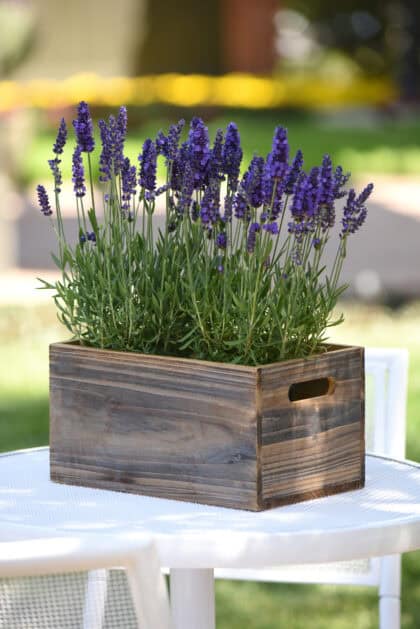
    Lavender ‘Blue

    Lavandula angustifolia ‘Blue Spear’ is an English lavender with tall, big flower spikes that stand upright and close together so that the impression is of a mass of flowers. It is easy to grow, also coping with dry heat. It attracts butterflies and nectar-seeking birds. It can take morning sun and should not be over-watered. Let the soil dry out moderately before watering again. This is a good picking lavender and can be used in pot pourri because of its fragrance.

    Marcada™ Interspecific Geranium is a strong growing geranium that flowers prolifically but drops its dead flowers so there is no need to deadhead. It is semi-trailing, tolerating heat as well as cooler conditions, and is drought tolerant, needing to be kept drier than other geraniums. It is suitable for medium-sized containers, as well as in the garden. Pant in a position that receives sun or semi-shade, in fertile, well composted soil that drains well. Water regularly and thoroughly, but let the soil dry out in-between  watering. Feed garden plants once a month and pot plants every two weeks.

    Dahlia Dalaya ‘Devi’.

    Dahlia ‘Dalaya’ is a mini dahlia but with big, exotic blooms in a range of vivid colours. Unlike the dahlias of old it is highly resistant to powdery mildew, provided it is grown in soil that drains well.

    The blooms appear to be hand-painted, with deeply coloured centres, either bi-coloured or  brushed with swirls of colour. The  bright yellow stamens attract butterflies, bees and other pollinators.. Being a dwarf variety, the plant is bushy and compact, growing up to knee height. For more information on plants best suited for your lifestyle, visit Ball Straathof.


    Article and images supplied by Alice Coetzee.


    For more on gardening, visit Get It Magazine.

    Stay in the know. Download the Caxton Local News Network App here.

    Source link

  • Garden survival tips for a lock up and go lifestyle

    Garden survival tips for a lock up and go lifestyle

    December is the month when we head for sun, sea or mountains. Maybe even a white Christmas. Wouldn’t it be nice to know that that your garden can cope better with the vagaries of the weather while you are away? Not just for the festive season, but for all those well-deserved breaks during the year.

    Here’s how to make your garden just a little more bullet proof

    • Watering is probably the biggest headache. Install an automatic irrigation system and before you leave make sure that all the sprayers are working and that the timer settings are correct.
    • If you have lots of pots set up an irrigation system for them as well or move the pots into a shady position where they won’t dry out as fast.
    • Another long term solution is to plant weather hardy plants that can cope with heat, or excessive rainfall as well as those that are resistant to weather related diseases like mildew and other fungus diseases.
    • Plants will be more resilient in healthy, fertile soil that drains well. Regularly enrich the soil with compost and other organics, especially when planting.

    Weather hardy and disease-resistant plants

    Sunpatiens Compact.

    Sunpatiens ‘Compact’ thrives in sun or partial shade and tolerates all kinds of weather, from spring through to the first frost, and is disease resistant, particularly against downy mildew. Plants will be more compact (36cm high and wide) in sunny beds and may be taller under shadier conditions. Those in full sun need more watering than those in partial shade. The range has 13 different flower colours.

    Euphorbia ‘Glamour’.

    Euphorbia ‘Glamour’ is a spreading perennial that produces masses of tiny white flowers. Plants sail through heat and drought and rebound from wet weather. This is the best euphorbia variety for in ground performance, being easy to grow and disease free. It is a brilliant bed filler that likes full sun but will tolerate partial shade.

    Zinnia ‘Zahara’.

    Zinnia ‘Zahara’ is a heating loving variety for full sun and unlike older zinnia varieties that are plagued by mildew, it has superior disease tolerance. It has large single or double flowers on compact plants. Plants have very low water needs once the plants are established in the ground making it a good choice for hot and dry conditions. Space 20 to 25cm apart.

    Verbena ‘Cadet’.

    Verbena ‘Cadet’ is an upright growing verbena that has proven powdery mildew resistance and has the same heat performance as Verbena ‘Endurascape’ which flowers continually and does not cycle in and out of flower. Plants  grow best with full sun and should not be over watered. They are suitable for garden beds or pots and the flowers attract butterflies and bees.

    Petchoa ‘BeautiCal’ French Vanilla.

    Petchoa ‘BeautiCal’ is a cross between petunia and calibrachoa and recovers from rain faster than traditional petunias. Plants are also more mildew resistant. They boast showy petunia-sized flowers and a blooming habit that is as abundant as calibrachoa. The unusual bloom colours include cinnamon, caramel yellow, French vanilla, sunray pink and Bordeaux. The compact, rounded plants are suitable for pots, hanging baskets and smaller garden beds. Allow the soil to moderately dry out before watering and fertilise monthly.

    Lavender ‘Blue

    Lavandula angustifolia ‘Blue Spear’ is an English lavender with tall, big flower spikes that stand upright and close together so that the impression is of a mass of flowers. It is easy to grow, also coping with dry heat. It attracts butterflies and nectar-seeking birds. It can take morning sun and should not be over-watered. Let the soil dry out moderately before watering again. This is a good picking lavender and can be used in pot pourri because of its fragrance.

    Marcada™ Interspecific Geranium is a strong growing geranium that flowers prolifically but drops its dead flowers so there is no need to deadhead. It is semi-trailing, tolerating heat as well as cooler conditions, and is drought tolerant, needing to be kept drier than other geraniums. It is suitable for medium-sized containers, as well as in the garden. Pant in a position that receives sun or semi-shade, in fertile, well composted soil that drains well. Water regularly and thoroughly, but let the soil dry out in-between  watering. Feed garden plants once a month and pot plants every two weeks.

    Dahlia Dalaya ‘Devi’.

    Dahlia ‘Dalaya’ is a mini dahlia but with big, exotic blooms in a range of vivid colours. Unlike the dahlias of old it is highly resistant to powdery mildew, provided it is grown in soil that drains well.

    The blooms appear to be hand-painted, with deeply coloured centres, either bi-coloured or  brushed with swirls of colour. The  bright yellow stamens attract butterflies, bees and other pollinators.. Being a dwarf variety, the plant is bushy and compact, growing up to knee height. For more information on plants best suited for your lifestyle, visit Ball Straathof.


    Article and images supplied by Alice Coetzee.


    For more on gardening, visit Get It Magazine.

    Stay in the know. Download the Caxton Local News Network App here.

    Source link

  • Garden survival tips for a lock up and go lifestyle

    Garden survival tips for a lock up and go lifestyle

    December is the month when we head for sun, sea or mountains. Maybe even a white Christmas. Wouldn’t it be nice to know that that your garden can cope better with the vagaries of the weather while you are away? Not just for the festive season, but for all those well-deserved breaks during the year.

    Here’s how to make your garden just a little more bullet proof

    • Watering is probably the biggest headache. Install an automatic irrigation system and before you leave make sure that all the sprayers are working and that the timer settings are correct.
    • If you have lots of pots set up an irrigation system for them as well or move the pots into a shady position where they won’t dry out as fast.
    • Another long term solution is to plant weather hardy plants that can cope with heat, or excessive rainfall as well as those that are resistant to weather related diseases like mildew and other fungus diseases.
    • Plants will be more resilient in healthy, fertile soil that drains well. Regularly enrich the soil with compost and other organics, especially when planting.

    Weather hardy and disease-resistant plants

    Sunpatiens Compact.

    Sunpatiens ‘Compact’ thrives in sun or partial shade and tolerates all kinds of weather, from spring through to the first frost, and is disease resistant, particularly against downy mildew. Plants will be more compact (36cm high and wide) in sunny beds and may be taller under shadier conditions. Those in full sun need more watering than those in partial shade. The range has 13 different flower colours.

    Euphorbia ‘Glamour’.

    Euphorbia ‘Glamour’ is a spreading perennial that produces masses of tiny white flowers. Plants sail through heat and drought and rebound from wet weather. This is the best euphorbia variety for in ground performance, being easy to grow and disease free. It is a brilliant bed filler that likes full sun but will tolerate partial shade.

    Zinnia ‘Zahara’.

    Zinnia ‘Zahara’ is a heating loving variety for full sun and unlike older zinnia varieties that are plagued by mildew, it has superior disease tolerance. It has large single or double flowers on compact plants. Plants have very low water needs once the plants are established in the ground making it a good choice for hot and dry conditions. Space 20 to 25cm apart.

    Verbena ‘Cadet’.

    Verbena ‘Cadet’ is an upright growing verbena that has proven powdery mildew resistance and has the same heat performance as Verbena ‘Endurascape’ which flowers continually and does not cycle in and out of flower. Plants  grow best with full sun and should not be over watered. They are suitable for garden beds or pots and the flowers attract butterflies and bees.

    Petchoa ‘BeautiCal’ French Vanilla.

    Petchoa ‘BeautiCal’ is a cross between petunia and calibrachoa and recovers from rain faster than traditional petunias. Plants are also more mildew resistant. They boast showy petunia-sized flowers and a blooming habit that is as abundant as calibrachoa. The unusual bloom colours include cinnamon, caramel yellow, French vanilla, sunray pink and Bordeaux. The compact, rounded plants are suitable for pots, hanging baskets and smaller garden beds. Allow the soil to moderately dry out before watering and fertilise monthly.

    Lavender ‘Blue

    Lavandula angustifolia ‘Blue Spear’ is an English lavender with tall, big flower spikes that stand upright and close together so that the impression is of a mass of flowers. It is easy to grow, also coping with dry heat. It attracts butterflies and nectar-seeking birds. It can take morning sun and should not be over-watered. Let the soil dry out moderately before watering again. This is a good picking lavender and can be used in pot pourri because of its fragrance.

    Marcada™ Interspecific Geranium is a strong growing geranium that flowers prolifically but drops its dead flowers so there is no need to deadhead. It is semi-trailing, tolerating heat as well as cooler conditions, and is drought tolerant, needing to be kept drier than other geraniums. It is suitable for medium-sized containers, as well as in the garden. Pant in a position that receives sun or semi-shade, in fertile, well composted soil that drains well. Water regularly and thoroughly, but let the soil dry out in-between  watering. Feed garden plants once a month and pot plants every two weeks.

    Dahlia Dalaya ‘Devi’.

    Dahlia ‘Dalaya’ is a mini dahlia but with big, exotic blooms in a range of vivid colours. Unlike the dahlias of old it is highly resistant to powdery mildew, provided it is grown in soil that drains well.

    The blooms appear to be hand-painted, with deeply coloured centres, either bi-coloured or  brushed with swirls of colour. The  bright yellow stamens attract butterflies, bees and other pollinators.. Being a dwarf variety, the plant is bushy and compact, growing up to knee height. For more information on plants best suited for your lifestyle, visit Ball Straathof.


    Article and images supplied by Alice Coetzee.


    For more on gardening, visit Get It Magazine.

    Stay in the know. Download the Caxton Local News Network App here.

    Source link

  • Nevada lithium mine will crush rare plant habitat US said is critical to its survival, lawsuit says

    Nevada lithium mine will crush rare plant habitat US said is critical to its survival, lawsuit says

    RENO, Nev. — Conservationists and a Native American tribe are suing the U.S. to try to block a Nevada lithium mine they say will drive an endangered desert wildflower to extinction, disrupt groundwater flows and threaten cultural resources.

    The Center for Biological Diversity promised the court battle a week ago when the U.S. Interior Department approved Ioneer Ltd.’s Rhyolite Ridge lithium-boron mine at the only place Tiehm’s buckwheat is known to exist in the world, near the California line halfway between Reno and Las Vegas.

    It is the latest in a series of legal fights over projects President Joe Biden’s administration is pushing under his clean energy agenda intended to cut reliance on fossil fuels, in part by increasing the production of lithium to make electric vehicle batteries and solar panels.

    The new lawsuit says the Interior Department’s approval of the mine marks a dramatic about-face by U.S wildlife experts who warned nearly two years ago that Tiehm’s buckwheat was “in danger of extinction now” when they listed it as an endangered species in December 2022.

    “One cannot save the planet from climate change while simultaneously destroying biodiversity,” said Fermina Stevens, director of the Western Shoshone Defense Project, which joined the center in the lawsuit filed Thursday in federal court in Reno.

    “The use of minerals, whether for EVs or solar panels, does not justify this disregard for Indigenous cultural areas and keystone environmental laws,” said John Hadder, director of the Great Basin Resource Watch, another co-plaintiff.

    Rita Henderson, spokeswoman for Interior’s Bureau of Land Management in Reno, said Friday the agency had no immediate comment.

    Ioneer Vice President Chad Yeftich said the Australia-based mining company intends to intervene on behalf of the U.S. and “vigorously defend” approval of the project, “which was based on its careful and thorough permitting process.”

    “We are confident that the BLM will prevail,” Yeftich said. He added that he doesn’t expect the lawsuit will postpone plans to begin construction next year.

    The lawsuit says the mine will harm sites sacred to the Western Shoshone people. That includes Cave Spring, a natural spring less than a mile (1.6 kilometers) away described as “a site of intergenerational transmission of cultural and spiritual knowledge.”

    But it centers on alleged violations of the Endangered Species Act. It details the Fish and Wildlife Service’s departure from the dire picture it painted earlier of threats to the 6-inch-tall (15-centimeter-tall) wildflower with cream or yellow blooms bordering the open-pit mine Ioneer plans to dig three times as deep as the length of a football field.

    The mine’s permit anticipates up to one-fifth of the nearly 1.5 square miles (3.6 square kilometers) the agency designated as critical habitat surrounding the plants — home to various pollinators important to their survival — would be lost for decades, some permanently.

    When proposing protection of the 910 acres (368 hectares) of critical habitat, the service said “this unit is essential to the conservation and recovery of Tiehm’s buckwheat.” The agency formalized the designation when it listed the plant in December 2022, dismissing the alternative of less-stringent threatened status.

    “We find that a threatened species status is not appropriate because the threats are severe and imminent, and Tiehm’s buckwheat is in danger of extinction now, as opposed to likely to become endangered in the future,” the agency concluded.

    The lawsuit also discloses for the first time that the plant’s population, numbering fewer than 30,000 in the government’s latest estimates, has suffered additional losses since August that were not considered in the U.S. Fish and Wildlife Service’s biological opinion.

    The damage is similar to what the bureau concluded was caused by rodents eating the plants in a 2020 incident that reduced the population as much as 60%, the lawsuit says.

    The Fish and Wildlife Service said in its August biological opinion that while the project “will result in the long-term disturbance (approximately 23 years) of 146 acres (59 hectares) of the plant community … and the permanent loss of 45 acres (18 hectares), we do not expect the adverse effects to appreciably diminish the value of critical habitat as a whole.”

    Source link

  • Experts stress early detection, lifestyle and technology’s role in breast cancer survival – Firstpost

    Experts stress early detection, lifestyle and technology’s role in breast cancer survival – Firstpost

    Breast cancer is the most commonly diagnosed cancer type among women worldwide and the leading cause of death in women. Annually, over 2.3 million breast cancer cases are reported, making it the most common cancer among adults.

    In 95% of countries, breast cancer ranks as the first or second leading cause of female cancer deaths. However, breast cancer survival rates vary greatly between and within countries. Alarmingly, nearly 80% of breast and cervical cancer deaths occur in low- and middle-income countries.

    A 2020 study by the International Agency for Research on Cancer revealed that out of 4.4 million cancer-related deaths among women, approximately 1 million children were left orphaned. Notably, 25% of these orphans lost their mothers to breast cancer. Children who lose their mothers to cancer often face lifelong health and educational disadvantages, leading to chronic social disruption and financial hardship in many instances.

    Dr Vaishali Zamre, Director & Head, of the Breast Cancer Centre at Andromeda Cancer Hospital (Sonipat) and Dr Rohan Khandelwal, Lead Consultant and Head of Breast Center at CK Birla Hospital (Gurugram) shared insights with Firstpost on various aspects surrounding the topic.

    How crucial is early detection in improving breast cancer survival rates, and what role does mammography play in this?

    Dr Zamre: Breast cancer is the commonest cancer affecting women, globally. Advancements in treatments have led to significantly higher survival rates. Presently, with modern treatment, the 5-year survival rates for stage 1, stage 2 and stage 3 breast cancer are 95%, 92% and 70%, respectively. It cannot be overemphasized that early detection is important for better outcomes. Not only does it lead to higher survival rates, but the cost and duration of the treatment is also less. Patients diagnosed in the early stage do not need to undergo complete removal of the breast.

    Mammography plays an important role in early detection. An adequately performed mammography can detect abnormalities that represent cancer (such as abnormal-looking microcalcifications, small speculated masses, etc) much before these abnormalities become palpable with fingers. Cancers that do not have any clinical manifestations and are diagnosed only on mammograms are staged as stage 0 cancers. These cancers have a nearly 100% survival rate after treatment. 3-D mammography, an advanced mammography technology, has been found to improve the detection rate cancer by nearly 50-55%. The introduction of artificial intelligence in breast imaging has improved detection rates of breast cancer even further.

    Some studies link hormone replacement therapy to an increased risk of breast cancer. Could you share the latest research on this and offer advice to women considering or currently using HRT?

    Dr Khandelwal: HRT or Hormonal replacement therapies are given in females who are reaching menopause and it generally includes both progesterone and estrogen in different dosages. So, it does increase the risk of breast cancer when compared to the general population especially if it is given for a longer duration. It should be reserved only for those females who have major symptoms of menopause and should not be given to all patients.

    With advancements in AI and 3D mammography, how has breast cancer detection improved? Are these new technologies widely accessible, and how do they compare to traditional mammograms?

    Dr Zamre: There is no doubt that this advanced technology will be of tremendous help in improving the accuracy of breast imaging results as well as saving reporting time but presently there are certain ethical and legal dilemmas in total adoption of AI in breast imaging reporting. In our country, such advanced technology is not widely available. It is presently available in bigger cities and major healthcare Institutes.

    Given that 1 in 8 women will develop breast cancer in their lifetime, what preventative measures should women take to reduce their risk?

    Dr Khandelwal: The risk factors of breast cancer are categorised into modifiable and non-modifiable risk factors. The modifiable risk factors are the ones that one can take care of, excessive weight gain, smoking and alcohol should be avoided and breastfeeding would be the one thing that has a preventive role in case of breast cancer.

    Genetic predisposition, lifestyle, and environmental factors all play roles in breast cancer risk. Could you discuss the most common risk factors today and how women can proactively manage them?

    Dr Zamre: The most common risk factor of breast cancer is female gender. Being a woman, itself poses the biggest risk of breast cancer development. As far as the modifiable risk factors are concerned, lifestyle-related factors like consumption of a high-calorie diet, obesity, lack of physical activity, and unsupervised use of hormone pills are some of the important factors that pose additional risks. There is no sure way of totally preventing breast cancer from happening but to reduce the risk, women should watch their diet, incorporate fresh vegetables and fruits, avoid high fat-containing and processed food, adopt regular physical activity and avoid excessive use of over-the-counter medication without a valid prescription.

    What are the latest treatment options for triple-negative breast cancer, which tends to be more aggressive and harder to treat?

    Dr Khandelwal: Triple-negative breast Cancer is considered to be an aggressive type of breast cancer when compared to other molecular biologies. Immunotherapy with pembrolizumab and targeted cancer therapy with some medications are available these days along with chemotherapy drugs

    Genetic mutations like BRCA1 and BRCA2 significantly increase breast cancer risk.  What specific measures should women with high genetic risk consider?

    Dr Zamre: Women who are carriers of high-risk genetic mutations like BRCA 1 or 2, should consult a breast oncologist and a genetic counselor. Certain risk-reducing strategies are discussed during such sessions. Removal of both breasts and both-sided fallopian tubes and ovaries has been found to significantly reduce the risk (Nearly 95-98%) of having breast and ovarian cancers in the future. However, such surgeries are advised for high-risk women who are above 40 years of age and have had children. Women who are younger than this age or who are not willing for this surgical risk-reducing strategy are advised Tab, Tamoxifen 20 mg once a day to reduce the risk of breast cancer in the future. However, there are many studies about the use of Tamoxifen in this population with variable outcomes. Moreover, there is no consensus about the duration of use of this drug. It has also been found to have compliance issues. Patients who are not willing for both surgical and medical risk-reducing methods are advised close surveillance in the form of annual mammography and or MRI of the breasts (depending on the age of the woman), a clinical breast examination once in six months. This is done for breast cancer surveillance. There is no reliable test for ovarian cancer surveillance.

    Despite significant awareness efforts, many women still avoid or delay screenings. What are the common barriers to breast cancer screening, and how can public health campaigns more effectively reach at-risk groups?

    The common barriers to breast cancer screening are lack of awareness and hesitation on the part of women these days. Public health awareness talks on campaigns should be organized so that women understand that this is something that they can talk about and should talk about freely.

    Immunotherapy and targeted therapies have emerged as treatment options in recent years. Could you explain how these newer treatments differ from traditional chemotherapy and their impact on patient outcomes?

    Dr Zamre: Breast cancer cells have different receptors on the cell membrane or inside the nucleus. Based on the presence or absence of these receptors or amplification of these genes, many different molecular subtypes of breast cancer can be recognized. Her 2 neu is one such receptor, if found to be present on the breast cancer cell, makes that particular subtype responsive to targeted drugs. Targeted cancer drugs work by targeting these receptors on cancer cells that help them to grow and survive. There are many types and generations of anti-Her 2 targeted medications. These when used along with chemotherapy or without have been found to improve breast cancer outcome.

    Immunotherapy uses our immune system to fight cancer. It works by helping the immune system recognise and attack cancer cells. Immunotherapy drugs like check point inhibitors, cytokines, cancer vaccines etc help in improving the outcome of breast cancer in suitably selected patients. Oncologists carry out certain tests to understand the suitability of a particular patient for immunotherapy. Immunotherapy medicines are used in different stages of breast cancer, e.g. before surgery in neoadjuvant setting along with chemotherapy or after surgery along with chemotherapy in adjuvant setting. They are used with variable results in metastatic stage of breast cancer also.

    Source link