hacklink hack forum hacklink film izle hacklink marsbahisizmir escortsahabetpornJojobetcasibompadişahbetGorabetcasibom9018betgit casinojojobetmarsbahismatbetmatbet

Tag: survivors

  • Tents arrive for survivors of quake that hit holy city in freezing high-altitude Tibet, killing 126

    Tents arrive for survivors of quake that hit holy city in freezing high-altitude Tibet, killing 126

    BEIJING — Rescue workers in the freezing, high-altitude Tibet region in western China searched Wednesday for more survivors and victims of a strong earthquake that struck a day earlier near a holy city for Tibetan Buddhists, killing at least 126 people and leveling thousands of houses.

    Tents, quilts and other relief items were being delivered to people whose homes were uninhabitable or unsafe. Temperatures fell well below freezing overnight in an area with an average altitude of about 4,200 meters (13,800 feet).

    The confirmed death toll stood at 126 with another 188 injured as of Tuesday evening. The earthquake struck the city of Xigaze, the traditional seat of the Panchen Lama, the second-highest figure in Tibetan Buddhism. It was not immediately known whether he was in his Tashi Lhunpo Monastery at the time of the quake or how much damage the city sustained. The quake’s distance from Xigaze, which sprawls across a high altitude plain, was about 25 kilometers (15 miles).

    The Chinese government and followers of the Dalai Lama, Tibetan Buddhism’s highest figure, have feuded over who should hold the position of Panchen Lama since a boy appointed by the Dalai Lama disappeared in the mid-1990s and a Chinese-backed candidate was approved for the position. The Dalai Lama, viewed by the Chinese government as a dangerous separatist, denounced the move and has refused to recognize the current Panchen Lama.

    China’s government says Tibet has been part of its territory for centuries, but many Tibetans say they were functionally independent for most of that time. China’s People’s Liberation Army invaded the territory in 1950 and the Dalai Lama fled to India nine years later during an uprising against Chinese rule, seen as eroding Tibet’s unique Buddhist culture.

    More than 500 aftershocks were recorded after the earthquake, which the U.S. Geological Survey said measured magnitude 7.1. China’s earthquake center recorded a magnitude of 6.8.

    The quake was also about 75 kilometers (50 miles) from Mount Everest and the border with Nepal, where the shaking sent people running out of their homes in the capital.

    The dead included at least 22 of the 222 residents of Gurum, the official Xinhua News Agency cited the village’s Communist Party chief, Tsering Phuntsog, as saying. The victims included his 74-year-old mother, and several other of his relatives remained buried in the debris.

    “Even young people couldn’t run out of the houses when the earthquake hit, let alone old people and children,” Tsering Phuntsog said.

    More than 3,600 houses collapsed, according to a preliminary survey, and 30,000 residents have been relocated, Xinhua said, citing the city government in Xi, also known by its Tibetan spelling, Shigatse.

    The Ministry of Emergency Management has 1,850 rescuers on the ground along with firefighters and others, state broadcaster CCTV said.

    Tibet is generally closed to foreign journalists over reports about the ill treatment of the native population by Chinese authorities.

    Chinese leader Xi Jinping ordered “all-out rescue efforts to save lives and minimize casualties,” Xinhua reported. Communications in the area have also been restored, allowing smoother delivery of emergency goods, it said.

    A candlelight vigil was planned in Dharamsala, India, home of the Dalai Lama and a large Tibetan population, on Wednesday night, and an announcement on the Dalai Lama’s website said he would lead a prayer ceremony in memory of the victims on Thursday.

    Asked about the prayer ceremony, Chinese Foreign Ministry spokesperson Guo Jiakun said, “We are very clear about the separatist nature and political schemes of the Dalai Lama and remain highly vigilant.”

    Guo expressed confidence that the people in the earthquake zone would be able to rebuild under “the strong leadership” of the Communist Party.

    ___

    Bodeen reported from Taipei, Taiwan.

    Source link

  • Many cancer survivors struggle to maintain an active lifestyle

    Many cancer survivors struggle to maintain an active lifestyle

    THIS CONTENT IS BROUGHT TO YOU BY THE University of Agder read more

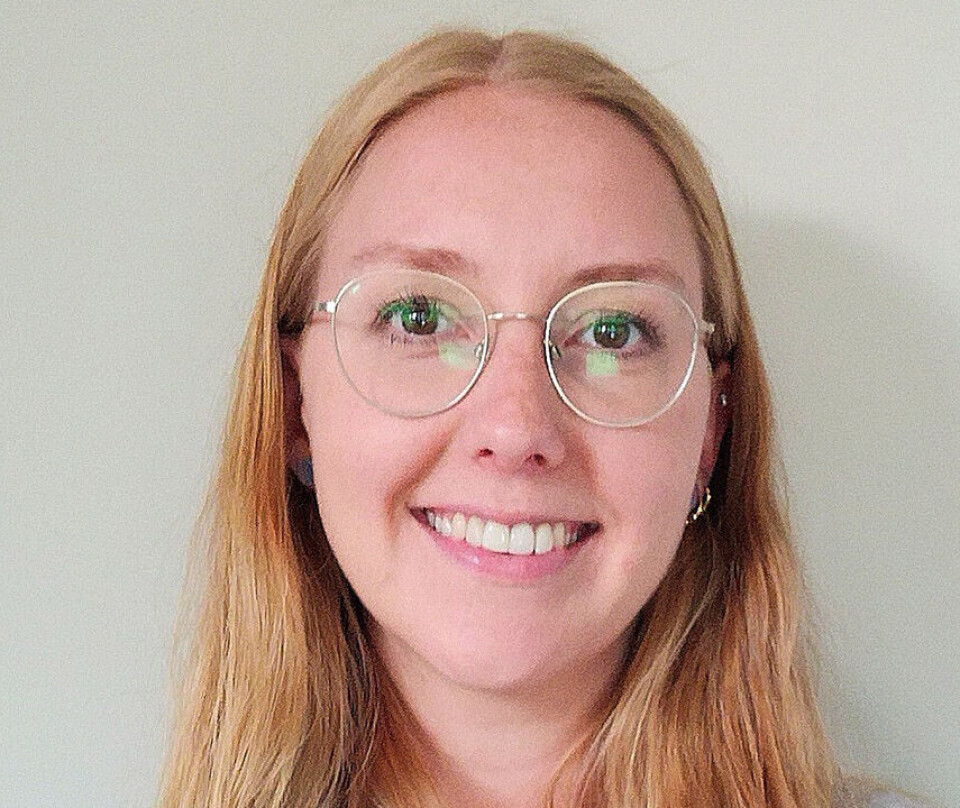
    “Many people are left with seriously deteriorated health after surviving cancer. It’s not something you just get over,” says Benedikte Western.

    Physical activity is beneficial before, during, and after chemotherapy. New research has taken a closer look at those who opt out.

    “Those who cope best with cancer treatment are often those who had an active lifestyle before diagnosis. It reduces the risk of delayed injury and complications,” says Benedikte Western.

    Not active beforehand either

    She has examined 34 different studies, all of which involved cancer patients partaking in exercise programmes. She noticed several common traits among those who started but dropped out of the studies. 

    One of them was that they did not have an active lifestyle before getting cancer.

    “Their dropping out midway compromises the research. It skews the results when those completing the programme already led active lives prior to their illness. After all, they aren’t the ones this research is aiming to help,” says Western.


    Benedikte Western has pursued her doctoral studies at UiA’s Faculty of Health and Sport Sciences.

    Typically, those who did not complete an exercise programme following cancer treatment were overweight and had less formal education.

    However, some exercise programmes had more dropouts than others, and people quit at different times. Some exercised regularly during treatment but quit afterwards.

    Not random 

    “We need to bear this in mind when we design these studies. Who quits isn’t random, and for us to find effective solutions for everyone, we need to give extra attention to those who are more likely to quit,” says Western.

    It is naturally easier to stick with existing good habits than to form new ones. 

    For many, cancer treatment alone is challenging enough. In some cases, the treatment itself can result in functional impairments.

    “Many cancer survivors struggle with fatigue and feel that resting doesn’t help. Sleep is often affected, and some have to remove a lot of tissue or skin. Hormonal levels can also be affected. Adding a lifestyle change to all this can be tough, but simply avoiding it won’t make things any better,” says Western.

    Lasting change

    Adopting a more active lifestyle can be challenging and mostly depends on the individual. Therefore, Western also investigated so-called ‘self-management skills’ – the ability of cancer survivors to make a lasting lifestyle change.

    “Changing people’s behaviour is complex. That’s why we need more knowledge about what people need help with, and what they believe they can handle on their own. Everyone’s backgrounds and starting points are unique, the key is to figure out what contributes to permanent changes,” says Western.

    She found that those reporting higher levels of physical activity were also generally more actively engaged in life. They had hobbies and activities they felt gave their lives value. 

    They also monitored their health, had reasonable expectations of themselves, and insight into what influenced their health.

    High chance of getting cancer again

    “The aim is to find out which characteristics can help cancer survivors become more physically active. It’s a big challenge that requires resources, personnel, and different offers for different people. Right now, support to cancer survivors is quite arbitrary,” says Western.

    An often under-communicated risk is that cancer survivors have a high chance of getting a different type of cancer. This could be due to the cancer treatment itself but is also largely related to lifestyle. That makes the efforts to encourage cancer survivors to get active even more important.

    “Many people are left with seriously deteriorated health after surviving cancer. It’s not something you just get over. That’s why it’s important to offer the survivors a way of being physically active that is sustainable,” she says.

    Reference:

    Western, B. Methodological considerations when monitoring and promoting physical activity in cancer populations: Towards translation of evidence into broader application and impactDoctoral dissertation at the University of Agder, 2024.

    ———

    Read the Norwegian version of this article on forskning.no

    More content from the University of Agder:

    Source link