hacklink hack forum hacklink film izle hacklink marsbahisizmir escortsahabetpornJojobet

Tag: suspend

  • Trump issues an executive order to suspend the US TikTok ban. But can it stick?

    Trump issues an executive order to suspend the US TikTok ban. But can it stick?

    President Donald Trump signed an executive order Monday to keep TikTok operating for 75 days, a relief to the social media platform’s users even as national security questions persist.

    TikTok’s China-based parent ByteDance was supposed to find a U.S. buyer or be banned on Jan. 19. Trump’s order could give ByteDance more time to find a buyer.

    “I guess I have a warm spot for TikTok,” Trump said.

    Trump has amassed nearly 15 million followers on TikTok since he joined last year, and he has credited the trendsetting platform with helping him gain traction among young voters. Yet its 170 million U.S. users could not access TikTok for more than 12 hours between Saturday night and Sunday morning.

    The platform went offline before the ban approved by Congress and upheld by the U.S. Supreme Court took effect on Sunday. After Trump promised to pause the ban on Monday, TikTok restored access for existing users. Google and Apple, however, still have not reinstated TikTok to their app stores.

    Business leaders, lawmakers, legal scholars, and influencers who make money on TikTok are watching to see how Trump tries to resolve a thicket of regulatory, legal, financial and geopolitical issues with his signature.

    TikTok’s app allows users to create and watch short-form videos, and broke new ground by operating with an algorithm that fed viewers recommendations based on their viewing habits. But concerns about its potential to serve as a tool for Beijing to manipulate and spy on Americans pre-date Trump’s first presidency.

    In 2020, Trump issued executive orders banning dealings with ByteDance and the owners of the Chinese messaging app WeChat. Courts ended up blocking the orders, but less than a year ago Congress overwhelmingly passed a law citing national security concerns to ban TikTok unless ByteDance sold it to an approved buyer.

    The law, which went into force Sunday, allows for fines of up to $5,000 per U.S. TikTok user against major mobile app stores — like the ones operated by Apple and Google — and internet hosting services like Oracle if they continued to distribute TikTok to U.S. users beyond the deadline for ByteDance’s divestment.

    Trump on Sunday said he had asked TikTok’s U.S. service providers to continue supporting the platform and app while he prepared to sign an executive order to stop the ban for now.

    “The order will also confirm that there will be no liability for any company that helped keep TikTok from going dark before my order,” Trump posted on Truth Social, his social networking site.

    The law that Congress passed and now-former President Joe Biden signed in April allowed for a 90-day extension if there had been progress toward a sale before the statute’s effective date. Less certain is whether that provision can be applied retroactively, according to Sarah Kreps, director of Cornell University’s Tech Policy Institute.

    “Executive orders cannot override existing laws,” Kreps said. “It’s not clear that the new president has that authority to issue the 90-day extension of a law that’s already gone into effect.”

    Kreps also doubts the conditions for a delay exist at this point without so much as even a potential buyer being named to prove that a sale was moving along.

    But Alan Rozenshtein, a University of Minnesota law professor, has written that the law also empowers the president to decide what constitutes a “qualified divestiture” — suggesting Trump could have discretion to say whether or when ByteDance meets the terms of the Protecting Americans from Foreign Adversary Controlled Applications Act.

    Although ByteDance spent months repeating it wasn’t interested in selling, Beijing on Monday also signaled a possible easing on China’s stance on TikTok to allow it to be divested from its Chinese parent company. China’s vice president held meetings with Vice President JD Vance and Tesla tech titan Elon Musk on Sunday.

    Chinese Foreign Ministry spokeswoman Mao Ning, said Monday that business operations and acquisitions “should be independently decided by companies in accordance with market principles.”

    “If it involves Chinese companies, China’s laws and regulations should be observed,” Mao said.

    Until now, it was widely believed that Beijing would not allow the sale of TikTok, which had come to embody China’s defiance in the face of “U.S. robbery.” However, TikTok was among several issues brought up in a phone call between Chinese President Xi Jinping and Trump on Friday, though details were not available.

    Trump later announced plans to delay the TikTok ban and suggested a joint venture in which the U.S. would get a 50% ownership of the app. Shou Zi Chew, TikTok’s CEO, attended Trump’s inauguration, seated with American tech heavyweights.

    The Justice Department is generally tasked with enforcing the laws of the federal government, so it’s possible that Trump will direct the DOJ to ignore the law. Such a move might itself be subject to legal scrutiny but would buy time for TikTok.

    Trump’s efforts to save TikTok may put him at odds with some of the House members and senators who voted for the law, which received broad bipartisan support. House Speaker Mike Johnson called ByteDance’s ownership “a very dangerous thing,” and said he expected a full sale to happen.

    “I think we will enforce the law,” Johnson told NBC News’ “Meet the Press” on Sunday.

    Legislators now stand to “look a little bit silly” if the ban doesn’t last, Kreps said.

    “(The case) becomes about the separations of powers, and checks and balances, that we don’t have a king who decides what happens with the law,” Kreps said. “Enforcement isn’t only up to the executive branch.”

    Sen. Tom Cotton of Arkansas, in a message posted on X, listed a number of state and federal agencies, and private entities, that might be willing to go to court to get the ban enforced.

    “Any company that hosts, distributes, services, or otherwise facilitates communist-controlled TikTok could face hundreds of billions of dollars of ruinous liability under the law, not just from DOJ, but also under securities law, shareholder lawsuits, and state AGs,” Cotton noted.

    Despite the intense scrutiny and potential costs involved, the machinations over TikTok are in some ways just business as usual for the tech companies involved, according to Gus Hurwitz, a legal scholar with the International Center for Law and Economics.

    “The fines that we’re talking about are civil penalties and companies risk civil penalties all the time,” Hurwitz said.

    Still, the hard business calculus of complying with a law in limbo or risk defying a president who holds lucrative federal contracts over those companies could come into focus if shareholders sue.

    Oracle, for example, has a part of the Pentagon’s $9 billion contract to build its cloud computing network.

    “This actually could be the right business decision to make,” Hurwitz said. “That’s not necessarily a breach of duty to shareholders.”

    There’s been lots of questions about how companies such as Oracle and Akamai Technologies are powering TikTok’s servers to stay online, while others such as Apple and Google have made the app unavailable for new users to download.

    None of the companies have responded to requests for comment.

    Oracle in 2020 announced it had a 12.5% stake in TikTok Global after securing its business as the app’s cloud technology provider.

    Meanwhile, as of Monday night, a search for TikTok on Apple’s app store directs to an online statement that reads in part: “Apple is obligated to follow the laws in the jurisdictions where it operates,” while Google’s app store notes downloads for TikTok “are paused due to current US legal requirements.”

    ___

    Ho reported from Seattle. Maya Sweedler and Didi Tang in Washington contributed reporting.
    Source link

  • How one Brazilian judge could suspend Musk’s X in the coming hours

    How one Brazilian judge could suspend Musk’s X in the coming hours

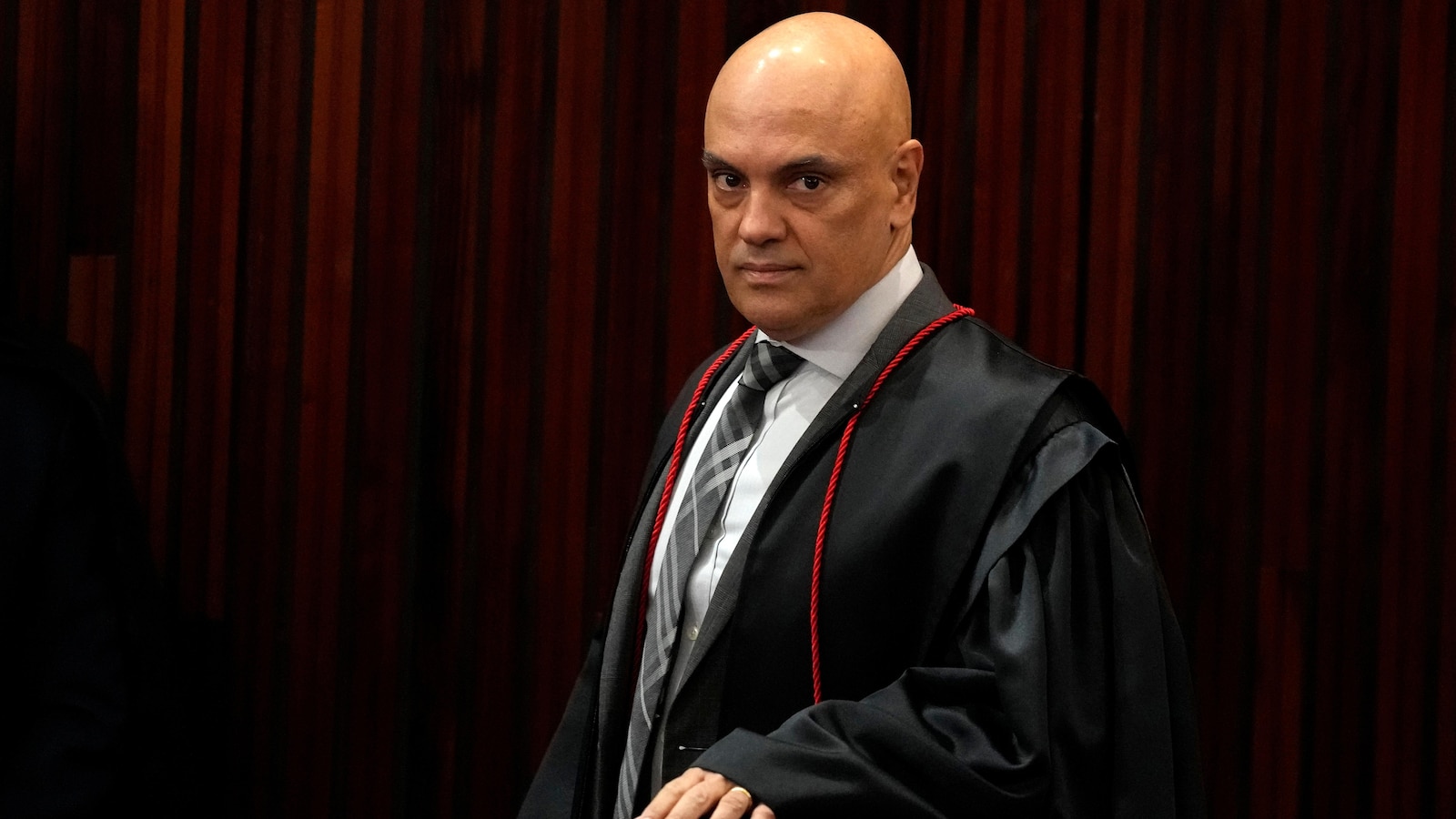
    SAO PAULO — It’s a showdown between the world’s richest man and a Brazilian Supreme Court justice.

    The justice, Alexandre de Moraes, has threatened to suspend social media giant X nationwide if its billionaire owner Elon Musk doesn’t swiftly comply with one of his orders. Musk has responded with insults, including calling de Moraes a “tyrant” and “a dictator.”

    It is the latest chapter in the monthslong feud between the two men over free speech, far-right accounts and misinformation. Many in Brazil are waiting and watching to see if either man will blink.

    Earlier this month, X removed its legal representative from Brazil on the grounds that de Moraes had threatened her with arrest. On Wednesday night at 8:07 p.m. local time (7:07 p.m. Eastern Standard Time), de Moraes gave the platform 24 hours to appoint a new representative, or face a shutdown until his order is met.

    De Moraes’ order is based on Brazilian law requiring foreign companies to have legal representation to operate in the country, according to the Supreme Court’s press office. This ensures someone can be notified of legal decisions and is qualified to take any requisite action.

    X’s refusal to appoint a legal representative would be particularly problematic ahead of Brazil’s October municipal elections, with a churn of fake news expected, said Luca Belli, coordinator of the Technology and Society Center at the Getulio Vargas Foundation, a university in Rio de Janeiro. Takedown orders are common during campaigns, and not having someone to receive legal notices would make timely compliance impossible.

    “Until last week, 10 days ago, there was an office here, so this problem didn’t exist. Now there’s nothing. Look at the example of Telegram: Telegram doesn’t have an office here, it has about 50 employees in the whole world. But it has a legal representative,” Belli, who is also a professor at the university’s law school, told The Associated Press.

    Any Brazilian judge has the authority to enforce compliance with decisions. Such measures can range from lenient actions like fines to more severe penalties, such as suspension, said Carlos Affonso Souza, a lawyer and director of the Institute for Technology and Society, a Rio-based think tank.

    Lone Brazilian judges shut down Meta’s WhatsApp, the nation’s most widely used messaging app, several times in 2015 and 2016 due to the company’s refusal to comply with police requests for user data. In 2022, de Moraes threatened the messaging app Telegram with a nationwide shutdown, arguing it had repeatedly ignored Brazilian authorities’ requests to block profiles and provide information. He ordered Telegram to appoint a local representative; the company ultimately complied and stayed online.

    Affonso Souza added that an individual judge’s ruling to shut down a platform with so many users would likely be assessed at a later date by the Supreme Court’s full bench.

    De Moraes would first notify the nation’s telecommunications regulator, Anatel, who would then instruct operators — including Musk’s own Starlink internet service provider — to suspend users’ access to X. That includes preventing the resolution of X’s website — the term for conversion of a domain name to an IP address — and blocking access to the IP address of X’s servers from inside Brazilian territory, according to Belli.

    Given that operators are aware of the widely publicized standoff and their obligation to comply with an order from de Moraes, plus the fact doing so isn’t complicated, X could be offline in Brazil as early as 12 hours after receiving their instructions, Belli said.

    Since X is widely accessed via mobile phones, de Moraes is also likely to notify major app stores to stop offering X in Brazil, said Affonso Souza. Another possible — but highly controversial — step would be prohibiting access with virtual private networks ( VPNs) and imposing fines on those who use them to access X, he added.

    X and its former incarnation, Twitter, are banned in several countries — mostly authoritarian regimes such as Russia, China, Iran, Myanmar, North Korea, Venezuela and Turkmenistan.

    China banned X when it was still called Twitter back in 2009, along with Facebook. In Russia, authorities expanded their crackdown on dissent and free media after Russian President Vladimir Putin sent troops into Ukraine in February 2022. They have blocked multiple independent Russian-language media outlets critical of the Kremlin, and cut access to Twitter, which later became X, as well as Meta’s Facebook and Instagram.

    In 2009, Twitter became an essential communications tool in Iran after the country’s government cracked down on traditional media after a disputed presidential election. Tech-savvy Iranians took to Twitter to organize protests. The government subsequently banned the platform, along with Facebook.

    Other countries, such as Pakistan, Turkey and Egypt, have also temporarily suspended X before, usually to quell dissent and unrest. Twitter was banned in Egypt after the Arab Spring uprisings, which some dubbed the “Twitter revolution,” but it has since been restored.

    Brazil is a key market for X and other platforms. Some 40 million Brazilians, roughly one-fifth of the population, access X at least once per month, according to the market research group Emarketer. Musk, a self-described “free speech absolutist,” has claimed de Moraes’ actions amount to censorship and rallied support from Brazil’s political right. He has also said that he wants his platform to be a “global town square” where information flows freely. The loss of the Brazilian market — the world’s fourth-biggest democracy — would make achieving this goal more difficult.

    Brazil is also a potentially huge growth market for Musk’s satellite company, Starlink, given its vast territory and spotty internet service in far-flung areas.

    Late Thursday afternoon, Starlink said on X that de Moraes this week froze its finances, preventing it from doing any transactions in the country where it has more than 250,000 customers.

    “This order is based on an unfounded determination that Starlink should be responsible for the fines levied — unconstitutionally — against X. It was issued in secret and without affording Starlink any of the due process of law guaranteed by the Constitution of Brazil. We intend to address the matter legally,” Starlink said in its statement.

    Musk replied to people sharing the earlier reports of the freeze, adding his own insults directed at de Moraes.

    “This guy @Alexandre is an outright criminal of the worst kind, masquerading as a judge,” he wrote.

    De Moraes’ defenders have said his actions have been lawful, supported by most of the court’s full bench and have served to protect democracy at a time in which it is imperiled.

    In April, de Moraes included Musk as a target in an ongoing investigation over the dissemination of fake news and opened a separate investigation into the executive for alleged obstruction.

    X said Thursday in a statement that it expects its service to be shutdown in Brazil.

    “Unlike other social media and technology platforms, we will not comply in secret with illegal orders,” it said. “To our users in Brazil and around the world, X remains committed to protecting your freedom of speech.”

    It also said de Moraes’ colleagues on the Supreme Court “are either unwilling or unable to stand up to him.”

    ___

    Biller reported from Rio and Ortutay from Oakland, California.

    Source link