hacklink hack forum hacklink film izle hacklink marsbahisizmir escortsahabetpornJojobetcasibom girişgalabetBakırköy Escortcasibom9018betgit casinomarsbahismatbet girişcasibomlink 5k depositjojobetonwinmatbetalobet

Tag: systems

  • Create robust systems that nurture Olympics talent for Kenya

    Create robust systems that nurture Olympics talent for Kenya

    Kenya’s performance at the Paris Olympic Games exemplified the foothold we have in both middle and long-distance races.

    Kenya was ranked 17th globally and emerged as Africa’s top performer having won 11 medals – four gold, two silver, and five bronze. This outing was an improvement from the Tokyo 2020 Olympics where Kenya finished 19th with 10 medals, but a decline from the 2016 Rio Olympics where we secured 13 medals, finishing 15th and the best in the continent. 

    Since our first participation in the Olympics 60 years ago, Kenya’s medal count stands at 124. Except for seven boxing medals won in the 1980s, all the medals have come from middle and long-distance running. What happened to Boxing? Why haven’t we won any more boxing medals? Did we run out of talent? This was the first time Kenya did not qualify a boxer in the history of the Olympics.

    In previous editions, we have qualified in Rugby, women’s Volleyball, Swimming, Weightlifting, Judo, Shooting, Hockey, and recently Fencing. Considering there are about 30 active Olympic sports disciplines in Kenya, one must wonder why the rest never qualify, least of all, win medals.

    The stars of the show in Paris were the women athletes, who demonstrated a gratifying duel on the tracks to emerge top, ensuring that Kenya maintains its legacy of excellence in athletics.

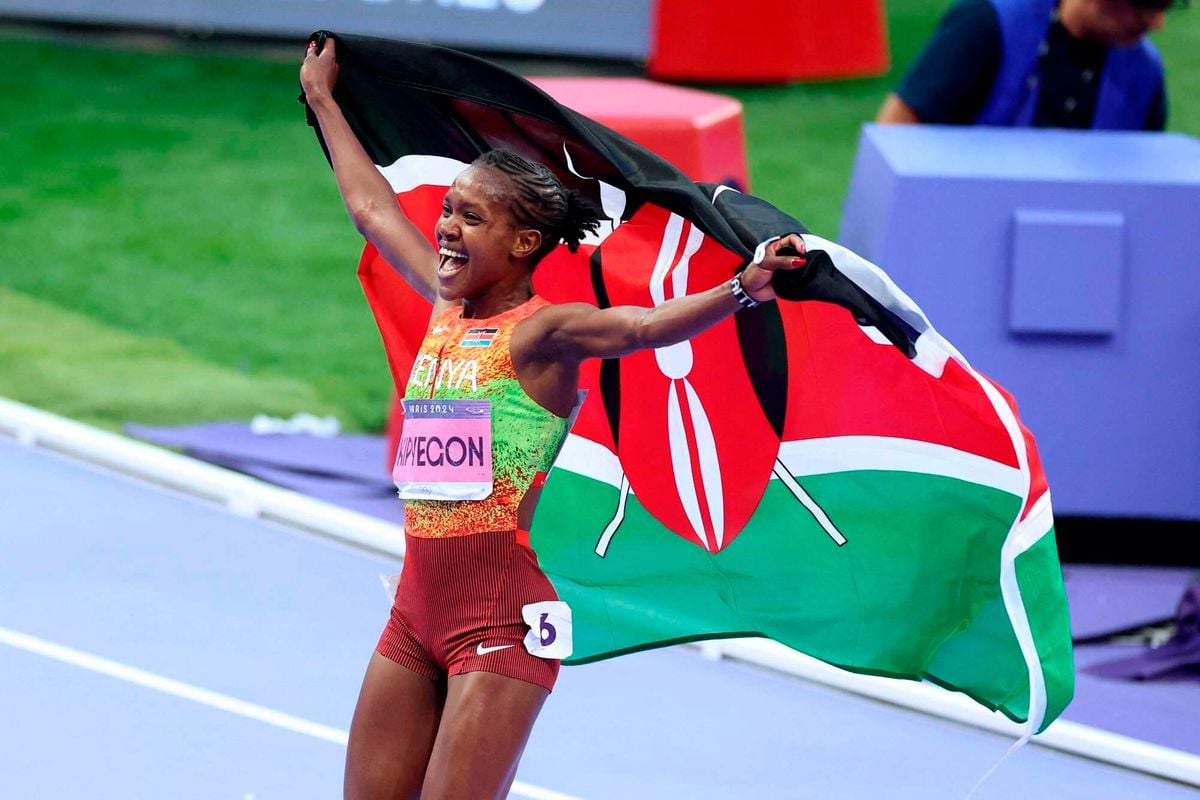
    Faith Kipyegon secured gold and silver in the 1,500 and 5,000 metres races, respectively, while Beatrice Chebet claimed gold in the 5,000 and 10,000 metres events. This is the first time since our first Olympic medal duck in 1964 that women have outshone men. In the men’s category, Emmanuel Wanyonyi was the sole gold medal winner for Kenya after emerging top in the 800 metres.

    Our overall performance at the Paris Olympic Games has revealed areas that should inform our preparations for the next event scheduled for Los Angeles in 2028. The key takeaways provide learnings and a myriad of opportunities that, if exploited, will bolster our sports and future performances, if indeed we are intent on improving our winning streak.

    Kenya’s dominance in track events demonstrates incredible talent amongst our sportsmen and women. It makes us imagine that they are naturally gifted and that winning medals comes easily. I have had many say that Steeplechase was our race, what happened? Is Steeplechase going the boxing route?

    It is high time we evaluated why we are doing well in certain disciplines and not others. What is Athletics Kenya doing in the middle and long-distance running that other federations are not doing? Or is it pure genetic talent?

    A closer look at our champions, however, reveals a different story. It is not all about talent. It takes dedication, time, and energy to excel in sports. Those winning medals have not held formal employment, and some do not even further their studies.

    They join training camps immediately after completing their secondary school education, and their lives revolve around a daily loop of sleep, training, eating, and running. Faith Kipyegon started running at 14 and has not stopped or paused since.

    For six days a week, she is at the training camp, maintaining a rigorous schedule that ensures she remains in top form. Eliud Kipchoge was quoted as having been at the training camps for the last 21 years, following the same six-day regiment.

    Also worth noting is that most of our medal-winning athletes – current and past are employees of our disciplined forces, where they are allowed time off to be at the camps while continuing to draw a salary. This arrangement allows them to support themselves and their families before making it to the paid ranks in athletics.

    Now contrast that with our Rugby and Volleyball players, the majority of whom have day jobs and can only dedicate a few hours each day to the sport. No matter how talented they may be, it will be difficult to compete against athletes who eat and sleep rugby for 12 months. Talent alone is insufficient for sustained success in sports. 

    The Ministry of Sports and sports federations, in partnership with other stakeholders, should create robust systems that not only identify talent but provide an environment for it to grow world-class athletes. This will include the establishment of high-performance programmes that will provide a livelihood for the participants as they pursue a career in professional sports.

    Such programmes must cut across all sports if we are to improve our 17th-place finish in Los Angeles.

    Source link

  • US widens indictment of Russians in ‘WhisperGate’ conspiracy to destroy Ukrainian and NATO systems

    US widens indictment of Russians in ‘WhisperGate’ conspiracy to destroy Ukrainian and NATO systems

    BALTIMORE — The U.S. Justice Department has widened its indictment of Russians in the so-called WhisperGate malware attacks aimed at destroying computer systems in Ukraine and 26 NATO allies including the United States.

    A superseding indictment announced Thursday names five Russian military intelligence officers in a conspiracy to demoralize the Ukrainian people on the eve of Russia’s full-scale invasion of Ukraine.

    The WhisperGate attacks in January 2022 could be considered Russia’s first shot in the war, said William DelBagno, special agent in charge of the FBI’s Baltimore field office. The cyberattacks penetrated U.S. companies and targeted Ukraine’s civilian infrastructure and computer systems unrelated to defense, including the judiciary, emergency services, food safety and education, officials said.

    “Seeking to sap the morale of the Ukrainian public, the defendants also stole and leaked the personal data of thousands of Ukrainian civilians, including by posting patient health information and other sensitive private data for sale online and then taunting those victims,” said Matthew Olsen, assistant attorney general for national security.

    The attacks weren’t limited to Ukraine, Olsen said at the news conference in Baltimore, which also included Maryland U.S. Attorney Erek Barron.

    Olsen said. “They went on to target computer systems in other nations supporting Ukraine in its fight for survival. Ultimately, their targets included computer systems in 26 NATO partners, including the United States.”

    A federal grand jury in Baltimore indicted military intelligence officers Vladislav Borovkov, Denis Denisenko, Yury Denisov, Dmitry Goloshubov and Nikolai Korchagin along with Amin Timovich Stigal, a 22-year-old Russian civilian indicted in June. It accuses them of conspiring to gain unauthorized access to computers associated with the governments of Ukraine and its allies.

    Combined, the U.S. government is offering $60 million in rewards for help leading to their locations or malicious cyberactivity. All six are most likely in Russia, but federal officials said the indictment is useful anyway, to prevent them from traveling and to show that the U.S. has exposed their conspiracy.

    The U.S. investigation, Operation Toy Soldier, found the accused committed fraud in the U.S. by illegally accessing bank accounts and using a U.S. company to unwittingly carry out their crimes, DelBagno said.

    “Adding insult to injury these individuals not only used tools to scan for vulnerabilities 63 times on a Maryland U.S.-based government agency, but they also scanned our allies throughout the world, including Ukrainian servers and servers in various other countries,” Barron said.

    The FBI and government partners in other countries are issuing a joint cybersecurity advisory that details how the attacks were carried out and what can be done to prevent them, officials said.

    Countering Russia’s cyber threat demands constant efforts, they said. In January, the Justice Department also disrupted a botnet controlled by Russian military intelligence that officials say was used to enable crimes and espionage, and in May, officials announced charges against the alleged developer of a prolific ransomware variant known as LockBit.

    Other Russia-related prosecutions announced just this week include indictments unsealed Wednesday charging two employees of RT, a Russia state media company, with covertly funneling millions of dollars to a Tennessee-based content creation firm that paid social media influencers to publish videos in line with Russia’s interests, such as on topics like the war with Ukraine.

    DelBagno said the indictments are the result of years of collaboration with partners and law enforcement in Europe.

    “To the Russian criminals, the world is watching,” DelBagno said. “You do not carry out misdeeds in the dark. We are united in identifying, prosecuting and protecting against future crimes.”

    In another move targeting Russia, the State Department on Thursday imposed sanctions against two Russian companies and two ships they own that export liquefied natural gas from a previously sanctioned Russian energy project in the Arctic. The department alleged that the companies were using profits from the natural gas exports to fund Russia’s war in Ukraine.

    The department said it was designating the Gotik Energy Shipping Co. and the Plio Energy Cargo Shipping Co. along with their ships LNG New Energy and LNG Mulan for “supporting Russia’s war effort and attempting to expand Russia’s global energy leverage.” The sanctions freeze any assets the companies may have in U.S. jurisdictions and bar Americans from doing business with them.

    Source link