hacklink hack forum hacklink film izle hacklink marsbahisizmir escortsahabetpornJojobetcasibompadişahbet

Tag: table

  • Are You Stress Eating During The Holidays? Check Out 5 Mindful Tips For The Holiday Table

    Are You Stress Eating During The Holidays? Check Out 5 Mindful Tips For The Holiday Table

    Rockhampton (Australia), Dec 23 (The Conversation) The holiday season can be a time of joy, celebration, and indulgence in delicious foods and meals. However, for many, it can also be an emotional and stressful period.

    This stress can manifest in our eating habits, leading to what is known as emotional or stress eating.

    There are certain foods we tend to eat more of when we’re stressed, and these can affect our health. What’s more, our food choices can influence our stress levels and make us feel worse. Here’s how.

    Why we might eat more when stressed

    The human stress response is a complex signalling network across the body and brain. Our nervous system then responds to physical and psychological events to maintain our health. Our stress response – which can be subtle or trigger a fight-or-flight response – is essential and part of daily life.

    The stress response increases production of the hormones cortisol and insulin and the release of glucose (blood sugars) and brain chemicals to meet demand. Eating when we experience stress is a normal behaviour to meet a spike in energy needs.

    But sometimes our relationship with food becomes strained in response to different types of stress. We might attach shame or guilt to overeating. And anxiety or insecurity can mean some people under-eat in stressful times.

    Over time, people can start to associate eating with negative emotions – such as anger, sadness, fear or worry. This link can create behavioural cycles of emotional eating. “Emotional eaters” may go on to develop altered brain responses to the sight or smell of food.

    What stress eating can do to the body Stress eating can include binge eating, grazing, eating late at night, eating quickly or eating past the feeling of fullness. It can also involve craving or eating foods we don’t normally choose. For example, stressed people often reach for ultra-processed foods. While eating these foods is not necessarily a sign of stress, having them can activate the reward system in our brain to alleviate stress and create a pattern.

    Short-term stress eating, such as across the holiday period, can lead to symptoms such as acid reflux and poor sleep – particularly when combined with drinking alcohol.

    In the longer term, stress eating can lead to weight gain and obesity, increasing the risks of cancer, heart diseases and diabetes.

    While stress eating may help reduce stress in the moment, long-term stress eating is linked with an increase in depressive symptoms and poor mental health.

    What we eat can make us more or less stressed

    The foods we choose can also influence our stress levels.

    Diets high in refined carbohydrates and sugar (such as sugary drinks, sweets, crackers, cakes and most chocolates) can make blood sugar levels spike and then crash.

    Diets high in unhealthy saturated and trans fats (processed foods, animal fats and commercially fried foods) can increase inflammatory responses.

    Rapid changes in blood sugar and inflammation can increase anxiety and can change our mood.

    Meanwhile, certain foods can improve the balance of neurotransmitters in the brain that regulate stress and mood.

    Omega-3 fatty acids, found in fish and flaxseeds, are known to reduce inflammation and support brain health. Magnesium, found in leafy greens and nuts, helps regulate cortisol levels and the body’s stress response.

    Vitamin Bs, found in whole grains, nuts, seeds, beans and animal products (mostly B12), help maintain a healthy nervous system and energy metabolism, improving mood and cognitive performance.

    5 tips for the holiday table and beyond

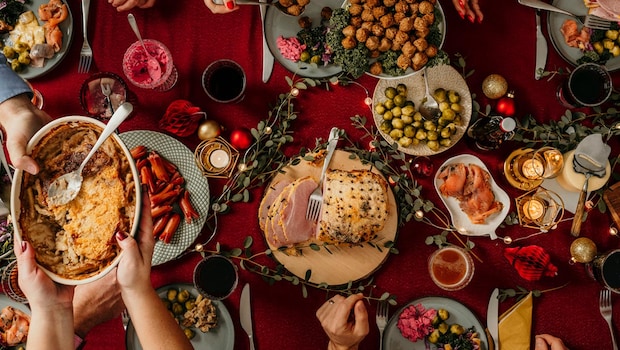
    Food is a big part of the festive season, and treating yourself to delicious treats can be part of the fun. Here are some tips for enjoying festive foods, while avoiding stress eating: 
    1. slow down: be mindful about the speed of your eating. Slow down, chew food well and put down your utensils after each bite 
    2. watch the clock: even if you’re eating more food than you normally would, sticking to the same timing of eating can help maintain your body’s response to the food. If you normally have an eight-hour eating window (the time between your first meal and last meal of the day) then stick to this even if you’re eating more 
    3. continue other health behaviours: even if we are eating more food or different food during the festive season, try to keep up other healthy behaviours, such as sleep and exercise 
    4. stay hydrated: make sure to drink plenty of fluids, especially water. This helps our body function and can help with feelings of hunger. When our brain gets the message something has entered the stomach (what we drink) this can provide a temporary reduction in feelings of hunger 
    5. don’t restrict: if we have a big day of eating, it can be tempting to restrict eating in the days before or after. But it is never a good idea to overly constrain food intake. It can lead to more overeating and worsen stress.

    Plus 3 bonus tips to manage holiday stress

    1. shift your thinking: try reframing festive stress. Instead of viewing it as “something bad”, see it as “providing the energy” to reach your goals, such as a family gathering or present shopping 
    2. be kind to yourself and others: practise an act of compassion for someone else or try talking to yourself as you would a friend. These actions can stimulate our brains and improve wellbeing 
    3. do something enjoyable: being absorbed in enjoyable activities – such as crafting, movement or even breathing exercises – can help our brains and bodies to return to a more relaxed state, feel steady and connected. (The Conversation)

    (Disclaimer: Except for the headline, this story has not been edited by NDTV staff and is published from a syndicated feed.)
    Source link

  • Himalayan Pink Salt Vs. Table Salt: Which Is The Real Winner?

    Himalayan Pink Salt Vs. Table Salt: Which Is The Real Winner?

    Salt enhances the flavour of our meals, bringing them to life. Without salt, dishes would taste bland and unappetizing. It also helps balance flavours, reducing excess bitterness or sweetness. In short, salt is an indispensable cooking essential. However, as much as we depend on it, salt also contains high levels of sodium, which, when consumed in excess, can lead to health issues. To address this concern, many have switched from regular table salt to alternatives like Himalayan pink salt. But is Himalayan pink salt truly a healthier choice or just another health fad? Let’s uncover the truth so you can make an informed decision.
    Also Read: 5 Unique Ways Salt Can Be Used In Everyday Kitchen Cleaning

    So, Should You Choose Himalayan Pink Salt Or Table Salt?

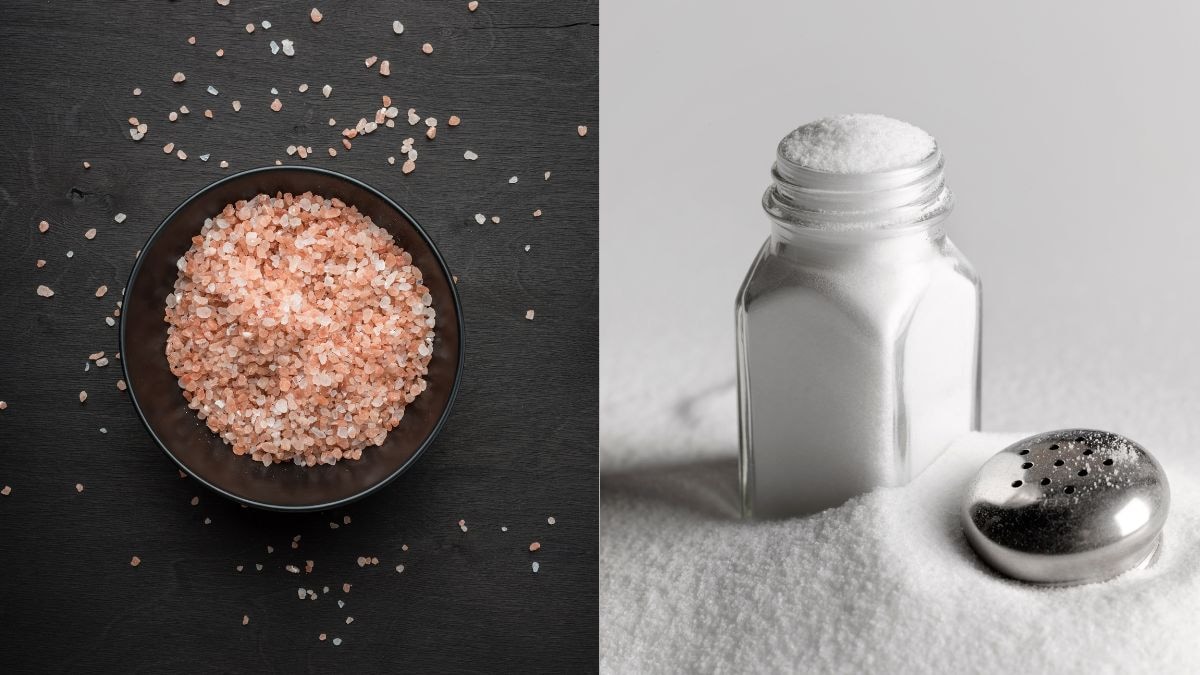
    Fitness coach Ralston D’Souza recently took to Instagram to clarify this question. According to him, Himalayan pink salt is not as healthy as it’s often claimed to be. He explains, “Regular table salt contains about 97 to 99% sodium chloride, with the remaining 1 to 3% made up mostly of anti-caking agents to prevent clumping. Himalayan pink salt, on the other hand, contains about 95 to 98% sodium chloride, with the remaining 2 to 5% consisting of trace minerals like iron, which gives it its distinct pink colour.”
    Ralston further emphasizes that the daily recommended salt intake is approximately 1 teaspoon. The trace minerals in Himalayan pink salt (2 to 5%) are too minimal to make any significant difference to your health. From a health perspective, there’s no major difference between the two types of salt. He advises sticking with regular table salt, as it contains iodine, which Himalayan pink salt lacks. For those with high blood pressure, he suggests opting for low-sodium salt.

    Watch the complete video below:

    Other Studies Supporting That Himalayan Pink Salt Is Not Superior

    Ralston’s insights are backed by several other studies. According to the National Institutes of Health (NIH), the mineral composition of pink salt available in Australia did show traces of essential nutrients and minerals. However, the concentrations were so low that one would need to consume approximately 6 teaspoons of pink salt to achieve any meaningful nutritional benefit-far exceeding the recommended daily intake.
    Also Read: Why A Low-Salt Diet Could Be Risky For Some People, According To A Doctor
    According to the expert, Himalayan pink salt isn’t significantly healthier than regular table salt. Both are nearly identical in their nutritional impact. Ultimately, the type of salt you choose matters less than the quantity you consume. Being mindful of your salt intake is crucial to avoid overconsumption and its negative health effects. As with many things in life, less is always more.

    (Disclaimer: This content including advice provides generic information only. It is in no way a substitute for qualified medical opinion. Always consult a specialist or your own doctor for more information. NDTV does not claim responsibility for this information.)


    Source link

  • From South India To Your Table: Discover Unique South Indian Snacks For Diwali Spread

    From South India To Your Table: Discover Unique South Indian Snacks For Diwali Spread

    From Tamil Nadu to Karnataka and Andhra Pradesh, Diwali is one of the biggest festivals on the calendar. Just like most parts of India, this is a time for family, friends, faith, fireworks and festivities. It’s also a time for Diwali delicacies. Most homes start prepping for Diwali a few weeks in advance and it’s not just shopping that’s on the cards. This is also a time when many home cooks prepare delicious sweets. It’s also a time for Diwali savouries that complement an array of sweets. In many homes across Tamil Nadu you will be served sweet, kaaram and kaapi (coffee). We’ll put the focus on the kaaram or savouries with three unique recipes that you can try at home:
    Also Read: Healthy Festive Recipes: These South Indian Desserts Combine Taste And Health – NDTV Food

    Add image caption here

    Photo Credit: iStock

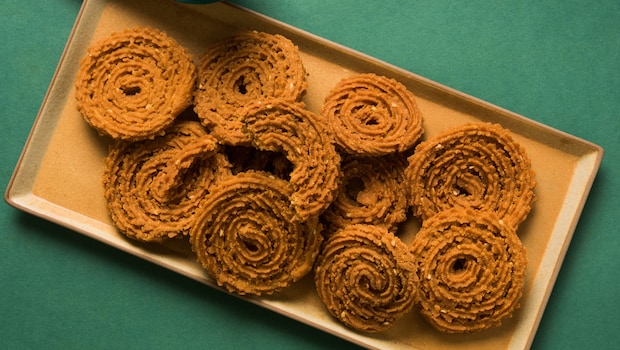
    Recipe – Kavuni Arisi Murukku

    This is a unique twist (Murukku gets its name from the twists) on the classic murukku (chakli), which is made with black rice. Many experts consider black rice (or kavunni arisi in Tamil) a superfood because of the presence of anthocyanin, a powerful antioxidant. Black rice is also rich in fibre and is a source of phytonutrients that cleanse the body. This unique rice varietal adds a unique chocolate brown hue to this murukku:

    Ingredients:

    • 1 cup black rice (Kavuni arisi)
    • 1/4 Cup gram flour
    • 1 tbsp red chilli powder
    • 2 tbsp ghee
    • 1/4 tbsp Asafoetida
    • 1 tbsp White sesame seeds
    • Oil for deep frying
    • Salt to taste
    • Water as required

    Method:

    • Wash the black rice. Soak the rice for at least two hours.
    • Drain water and spread it on a cloth; let it dry completely.
    • Grind the black rice to a fine powder in a mixer.
    • Add the powdered black rice, gram flour, asafoetida, sesame seeds, red chilli powder, salt and ghee in a bowl and mix well.
    • Add water as required, and knead it to make a soft dough; add oil and knead again.
    • Use a murukku mould, fill the prepared dough in and press to get the perfect shape as you squeeze it into hot oil.
    • Deep fry till crisp on medium hot oil and flip over to fry both sides evenly.
    •  Drain out the extra oil with tissue paper once it’s fried to perfection.Store in an airtight container once it cools down.

    Recipe – Ribbon Pakoda

    Takes its name from the unique ribbon shape (that you can achieve with the right mould).

    Ingredients:

    • 1 cup gram flour
    • 1 cup rice flour
    • 1 tsp asafoetida
    • 3/4 tbsp red chilli powder
    • 1 tbsp sesame seeds (white)
    • 1 tbsp melted butter
    • 1 tbsp oil
    • Salt and water – to taste
    • Oil For deep frying

    Method:

    • Mix the rice flour, gram flour, red chilli powder, melted butter, oil, asafoetida and salt in a bowl, and mix well.
    • Keep adding small quantities of water to make a non-sticky dough.
    • Use a ribbon pakoda mould. Fill the dough in the mould and press the dough into hot oil in a circular motion to form a single layer.
    • Flip the pakoda to fry both sides evenly.
    • Drain out the extra oil with tissue paper once it’s fried to perfection.
    • Store in an airtight container once it cools down.

    Recipe – Karuvapellai Murukku

    I first came across this interesting twist to the murukku at Anandas in Coimbatore, one of the city’s most popular vegetarian restaurants and sweet shops. Anandas has an array of interesting savouries including a beetroot murukku with its red velvet hues and the karuvapellai (curry leaf) version that incorporates the flavours and goodness of curry leaf.
    Also Read: Chettinad’s Kalkandu Vadai Gives A Sweet Twist To South Indian Breakfast Staple (Recipe Inside)

    Ingredients:

    • 1 cup rice flour
    • 1/4 cup roasted gram flour
    • 1/2 cup curry leaves tightly packed
    • 3 green chilis
    • 2 garlic pods
    • 1 tbsp cumin seeds
    • 1 tbsp sesame seeds
    • 1 tbsp melted butter
    • 1/4 tbsp asafoetida
    • Oil for deep frying
    • Salt as required

    Method:

    • Add rice flour, roasted gram flour, cumin seeds, sesame seeds salt, and asafoetida in a bowl.
    • Add melted butter and mix well.
    • Grind the curry leaves, garlic and green chilli along with water. Filter it before you add this to the flour mixture.
    • Knead the dough well, cover it with a cloth and set it aside for 5 minutes.
    • Use a murukku mould, fill the prepared dough in the mould and press to get the perfect shape as you squeeze it into hot oil.
    • Deep fry till crisp on medium hot oil and flip over to fry both sides evenly.
    • Drain out the extra oil with tissue paper once it’s fried to perfection.
    • Store in an airtight container once it cools down.

    About Ashwin RajagopalanI am the proverbial slashie – a content architect, writer, speaker and cultural intelligence coach. School lunch boxes are usually the beginning of our culinary discoveries.That curiosity hasn’t waned. It’s only got stronger as I’ve explored culinary cultures, street food and fine dining restaurants across the world. I’ve discovered cultures and destinations through culinary motifs. I am equally passionate about writing on consumer tech and travel.

    Source link

  • North Korean table tennis players may be punished for Olympic podium selfie with rivals from South | North Korea

    For most observers, it was proof of sport’s ability, if only for a fleeting moment, to bring people together – even when they live on opposite sides of one of the world’s most heavily armed borders.

    But one of the most celebrated images of the Paris Olympics – a selfie taken by medal-winning table tennis players from either side of the divided Korean peninsula – appears to have landed the North Korea duo in trouble back home.

    In a rare moment of Korean-style ping-pong diplomacy, the South Korean mixed doubles players Lim Jong-hoon and Shin Yu-bin and the North Korean pairing Kim Kum-yong and Ri Jong-sik beamed as they posed for a selfie on the podium after receiving their bronze and silver medals at the South Paris Arena last month. The Chinese gold medallists, Wang Chuqin and Sun Yingsha, also appear in the photos.

    One of the images was posted to the Games’ official Instagram site, where it drew hundreds of thousands of likes, while People magazine named it as one of the Olympics’ top 12 moments of sportsmanship in Paris.

    But this week media reports claimed that Kim and Ri had been placed under “ideological scrutiny”. The Daily NK, a North Korea-focused website based in Seoul, quoted a high-ranking source in Pyongyang as saying that athletes and members of the North Korean Olympic Committee had been undergoing a month-long “ideological scrubbing” since returning home in mid-August – reportedly standard procedure for sportsmen and women who have been exposed to life outside the communist state.

    The website reported the country’s athletes had been instructed not to interact with fellow competitors from other countries, including the South, and were warned that “fraternisers” could face punishment.

    The table tennis players were reportedly singled out for criticism in a report submitted to officials for “grinning” as they posed alongside athletes from a country the regime has described as its “number one enemy”.

    The selfie was snapped at a time of heightened tensions between the two Koreas, whose 1950-53 conflict ended in a truce but not a peace treaty. The North recently protested against joint military exercises involving the South Korean, US and Japanese forces, while growing cooperation between the North’s leader, Kim Jong-un, and Russian president Vladimir Putin have caused alarm across the region.

    It isn’t clear what, if any, sanctions the table tennis players could face. That, the Korea Times suggested, could depend on how much remorse they show for momentarily lowering their guard in Paris.

    North Korean athletes returning from international competitions undergo a three-stage “ideological review” that ends with self-reflection sessions by team members, in which they are expected to criticise “inappropriate behaviour” among their teammates, as well as reflecting on their own actions, the Korea Times said.

    The newspaper quoted a source as saying that heartfelt expressions of contrition can spare athletes “political or administrative punishments”, the nature of which is unclear.

    Human Rights Watch said the reports “demonstrate the North Korean government’s efforts to control behaviour beyond its borders.

    “The International Olympic Committee … has a responsibility to protect athletes from all forms of harassment and abuse, as set out in the Olympic Charter,” it said in a statement. “North Korean athletes should not fear retribution for actions at the Games, not least when their actions embody the values of respect and friendship, on which the Olympic movement is built.”

    While Kim and Ri won a silver medal, other athletes have reportedly been punished for underperforming.

    The Daily NK cited the case of the North Korean football team, who were knocked out of the 2010 World Cup in South Africa after losing all three of their group games and conceding 12 goals.

    The players were reportedly subjected to a six-hour excoriation for “betraying” the communist nation’s ideological struggle, while their coach, Kim Jung-hun, was forced to work on a building site.


    Source link

  • In Senegal’s thriving hip-hop scene, this beatmaker insists women have a seat at the table

    In Senegal’s thriving hip-hop scene, this beatmaker insists women have a seat at the table

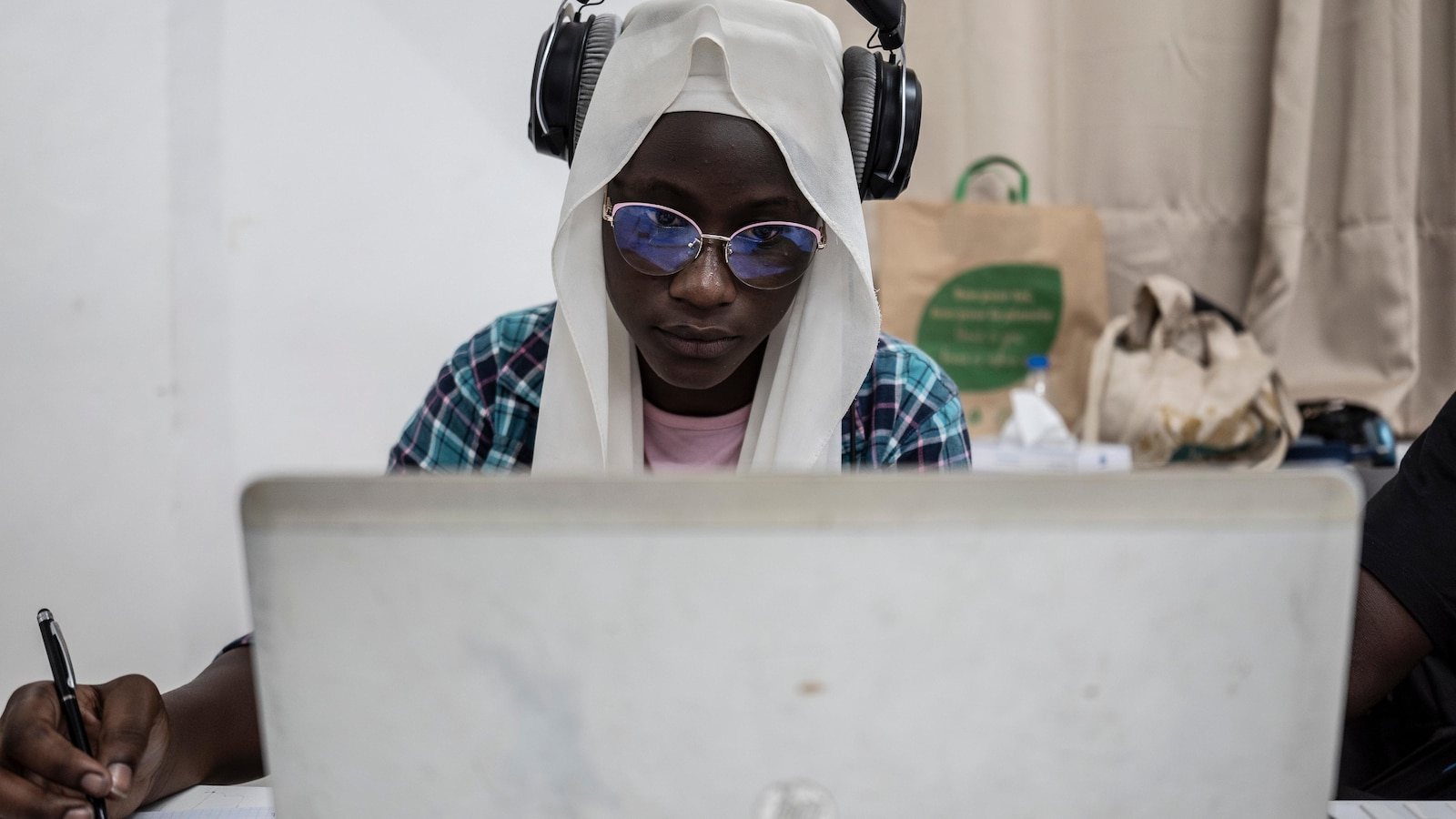
    DAKAR, Senegal — In a classroom at the House of Urban Culture, tucked away in the narrow streets of Dakar, Senegal, Aminata Thiam claps her hands in time with a beat she created on her computer.

    “You just have to find the loop that you want. Cut it, duplicate the sample, and then add your effects,” she says.

    She is teaching a beatmaking class to five young women, each working intently on beats of their own on the computers in front of them.

    Thiam, 31, is a beatmaker, one of only a few women in Senegal who call themselves such. Their discipline is the art of “making beats, making rhythms,” Thiam says. She traces a line from American DJs like Afrika Bambaataa and DJ Kool Herc, credited as among the founders of hip-hop, to beatmakers today.

    Those DJs made beats in the 1970s and ’80s using synthesizers or by isolating specific beats in a song and playing them on a loop by switching between two record players. “Now when we talk about beatmaking, we are talking about doing this with a computer,” Thiam says, crediting technology — including the advent of software — with democratizing the art.

    The House of Urban Culture sees a rotating crew of anyone and everyone part of Senegal’s burgeoning hip-hop scene — rappers, slam poets, skaters and even the graffiti artists whose works adorn the walls. The center that opened in 2018 hosts rap concerts and beatboxing festivals, and offers free training in everything from DJing to photography in an effort to transform young people’s interest in hip-hop into professions.

    Thiam’s stage name is “Myamy the Ay Girl,” a mixture of English and Wolof that means “the girl who can.” She was first drawn to beatmaking as a student a decade ago in Dakar, where a beatmaker had installed a studio at her university. She later trained with a program called Hip Hop Akademy, which now partners with the House of Urban Culture. Her current class here is only open to women — a necessity, she says, if there is to be any kind of equality in the field.

    “Not just for music, but for audiovisual work, for cinema,” she says, emphasizing that knowing how to make music on a computer isn’t just applicable to hip-hop.

    Although widespread access to computers has made beatmaking more accessible, the reliance on technology has also created a barrier inhibiting many of her students from continuing their work after the course has ended.

    “In one household you may find that almost all of the men have a computer, but the women might only have a phone,” she says. According to the 2020 GSM Association Mobile Gender Gap Report, women in Senegal’s urban areas have almost the same access to the internet as men, but much less financial autonomy: Only 26% of women have bought their own smartphone, compared to 68% of men.

    Djeneba Sylla, 21, is a singer who wanted to take Thiam’s class to learn how to make her own music.

    “For the time being I don’t have a computer. But I hope to have it by the end of the class,” Sylla says. Thiam has started a campaign to raise money for her students.

    The question of accessibility looms over much of the House of Urban Culture’s work in Senegal. Amadou Fall Ba was the center’s coordinator for 10 years, and now works with the city of Dakar on an initiative to create more public spaces for young people in an aim to make hip-hop more accessible.

    He says hip-hop came to Senegal through the country’s middle class, “people who had TVs, who could watch the private channels, who could watch what was happening in the U.S.” It eventually made its way to the masses, and he says that now, 80% of the stars in Senegal’s larger urban culture scene are from working-class neighborhoods.

    Women are still severely underrepresented though, he said.

    “Mentalities have changed a little bit, but we are still in a conservative country. A young woman who is 25 or 30 years old who isn’t married — there is a strong social pressure on her,” he described.

    In Thiam’s beatmaking class, the room is silent, each student lost in a different world underneath noise-canceling headphones. After six weeks of classes, the students are now able to produce beats of their own. They produce mostly modern hip-hop beats, though less refined than what Thiam can throw together in minutes in the studio.

    As they continued working, Thiam stepped outside in the courtyard to speak about her own history. She says there are only three women working as beatmakers in Senegal — often producing beats for Senegalese rappers, but also making an income as sound technicians for concerts and stage productions. She hopes that the more women who are active in the art, the more other women will be inspired to start.

    “If we train women who are capable of going far in this industry, this will encourage other women to join us,” she said.

    She added that, in Senegal, women in music are often encouraged to sing or join a choir, things seen as acceptably feminine.

    “I always liked music, but I didn’t want to be a singer,” she said. “I wanted to do something different.”

    ___

    The Associated Press receives financial support for global health and development coverage in Africa from the Bill & Melinda Gates Foundation Trust. The AP is solely responsible for all content. Find AP’s standards for working with philanthropies, a list of supporters and funded coverage areas at AP.org.

    Source link