hacklink hack forum hacklink film izle hacklink marsbahisizmir escortsahabetpornJojobet

Tag: targeting

  • Emirates NBD revitalises bespoke Emirati Package proposition targeting aspirations, lifestyle and financial needs of UAE Nationals

    Emirates NBD revitalises bespoke Emirati Package proposition targeting aspirations, lifestyle and financial needs of UAE Nationals

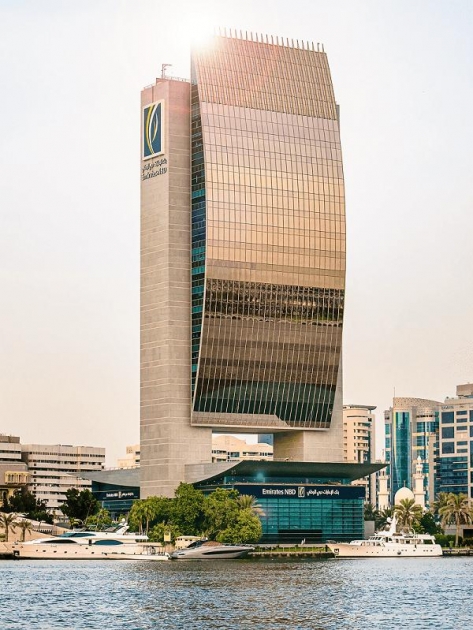
    Emirates NBD, a leading banking group in the Middle East, North Africa, and Türkiye (MENAT) region has bolstered its offerings for UAE Nationals, introducing a full suite of new, tailored offerings and services to empower UAE Nationals through its ‘Emirati Package’.


    The bespoke brand campaign by Emirates NBD caters to the financial needs of the bank’s Emirati customers under the tagline “Ramsatna Wehda” or “We speak your language.” The Emirati Package has been further enhanced in perspective of diversified needs with respect to accounts, loans, wealth management, cards and rewards. 


    As the UAE’s leading national banking group, Emirates NBD has a deep commitment to the local community, leading to the revamped Emirati Package. All Emirati customers with a salary of AED 30,000 and above or an account balance of AED 300,000 will receive Priority Banking premium services with a dedicated relationship manager to cater to all their financial needs. 


    The family story: An attractive proposition for family savings


    Emirates NBD recognises the prime importance that Emirati customers attach to savings, family and preparing for the future. To encourage the habit of saving, the bank is now offering interest on the pooled balances on Family Savings Accounts. An attractive rate of up to 2.75% per annum will be offered on family pooled balances in these accounts. 


    In addition, Emirates NBD has launched the Emirati Millionaire Account, including two 


    AED 5 million winners per year and other exclusive monthly prizes for account holders. This marks Emirates NBD’s Emirati Millionaire Account to be the single largest prize money programme exclusively for Emiratis in the UAE.


    Based on the bank’s insight into the banking and lifestyle needs of Emirati customers, Emirates NBD has focused on providing preferential pricing for loans. The bank ensures that UAE National customers benefit from the best rates available for personal, auto and home loans. A key milestone is the introduction of commercial loans that allow Emirati customers to invest in buildings, warehouses and groups of villas, helping them expand their wealth and asset base.


    Wealth management: An exclusive fund for local equity investment


    Another integral offering in the Emirati Package by Emirates NBD includes a strong emphasis on wealth management. The bank has introduced an exclusive investment fund designed specifically for local equity investments with special pricing for Emirati customers in addition to being able to opportunistically choose from and invest in a broad suite of other regional and global investment solutions across asset classes. 


    In another first, the bank is offering real estate advisory services for Emirati customers who are looking to invest in the UK, enabling them to access international opportunities to diversify their portfolios.


    Cards: Exclusive offerings and benefits 


    Emiratis will also receive additional card offerings, including exclusive complimentary credit cards with incremental rewards and benefits across a range of premium co-branded products. New exclusive offers will be available only to Emirati cardholders, ensuring they receive added value that speaks to their lifestyle. 


    A rewards app with fast-track access


    Based on independent research, Emirates NBD has identified that Emirati lifestyle is indeed distinctive. In response, the bank has introduced an exclusive Emirati rewards app filled with offers and discounts across sectors including retail, food and beverage, fitness and entertainment. 


    Yousuf Saeed Mohd, Head of Priority and Personal Banking at Emirates NBD


    , commented: “We are pleased to enhance our bespoke offerings within the Emirati Package, targeting the financial needs, lifestyle and future portfolio diversification of Emiratis. As a homegrown national financial institution, we have curated our proposition to Emiratis based on our vast experience and research into their banking and lifestyle habits. With the new added offerings, we hope to empower UAE Nationals with exclusive solutions by anticipating their needs and offering an innovative, practical and insightful banking platform.”


    Source link

  • 7 charged in cyberbullying campaign targeting Paris Olympics’ artistic director

    7 charged in cyberbullying campaign targeting Paris Olympics’ artistic director

    PARIS (AP) — French authorities said Friday they have charged seven individuals in connection with a cyberbullying campaign targeting Thomas Jolly, the artistic director behind the Paris Olympics’ opening and closing ceremonies.

    Jolly became the target of an online hate campaign filled with homophobic and antisemitic abuse following his acclaimed but controversial queer-inclusive opening show in July. He filed a complaint on July 31.

    The Paris prosecutor’s office, which launched an investigation, reported Friday that the arrests mark only the “first wave” of detentions, with more expected as authorities expand their probe.

    The seven defendants, who are 22 to 79 years old, face charges of making death threats, aggravated insults, and cyberbullying, with potential prison sentences and significant fines.

    Jolly’s opening ceremony was a daring blend of French tradition and LGBTQ+ expression, featuring drag performers, flamboyant runway sequences, and a scene that some have drawn parallels with Da Vinci’s “The Last Supper.”

    The event, held along the Seine and featuring stars like Celine Dion and Lady Gaga, was meant to be a celebration of freedom and inclusivity. But it became a flashpoint for criticism, with far-right politicians and religious figures condemning some scenes as provocative.

    Hungary’s ambassador to the Vatican criticized what became known as the “Last Supper” scene for allegedly mocking Christian iconography. Republican presidential nominee and former U.S. President Donald Trump also weighed in, calling the scene “a disgrace.”

    Jolly afterward drew attention away from “The Last Supper” references, saying that hadn’t been his intention.

    Among the performers, Hugo Bardin, known as the drag queen Paloma, expressed pride in the event’s bold message of inclusion and called it “a really important moment for the French people and the representation of France around the world.”

    Le Filip, the winner of Drag Race France, also expressed shock at the backlash against Jolly’s event, describing the ceremony as “a crowning moment” for the LGBTQ+ community.

    The prosecutor’s office Friday emphasized the seriousness of the charges, noting that the case reflects a troubling pattern of cyberbullying and hate speech directed at prominent figures.

    It said the suspects sought to “intimidate and silence expressions of inclusivity” and diversity in a highly public and symbolic event.

    The arrests are seen as a first step in France’s fight against cyberbullying, which authorities note has become increasingly sophisticated. In Jolly’s case, prosecutors pointed to the disturbing “pack behavior” of attackers acting independently to escalate the harassment, a pattern seen in other online hate campaigns.

    The seven accused are set to appear in court on March 5.


    Source link

  • 7 charged in cyberbullying campaign targeting Paris Olympics’ artistic director

    7 charged in cyberbullying campaign targeting Paris Olympics’ artistic director

    PARIS (AP) — French authorities said Friday they have charged seven individuals in connection with a cyberbullying campaign targeting Thomas Jolly, the artistic director behind the Paris Olympics’ opening and closing ceremonies.

    Jolly became the target of an online hate campaign filled with homophobic and antisemitic abuse following his acclaimed but controversial queer-inclusive opening show in July. He filed a complaint on July 31.

    The Paris prosecutor’s office, which launched an investigation, reported Friday that the arrests mark only the “first wave” of detentions, with more expected as authorities expand their probe.

    The seven defendants, who are 22 to 79 years old, face charges of making death threats, aggravated insults, and cyberbullying, with potential prison sentences and significant fines.

    Jolly’s opening ceremony was a daring blend of French tradition and LGBTQ+ expression, featuring drag performers, flamboyant runway sequences, and a scene that some have drawn parallels with Da Vinci’s “The Last Supper.”

    The event, held along the Seine and featuring stars like Celine Dion and Lady Gaga, was meant to be a celebration of freedom and inclusivity. But it became a flashpoint for criticism, with far-right politicians and religious figures condemning some scenes as provocative.

    Hungary’s ambassador to the Vatican criticized what became known as the “Last Supper” scene for allegedly mocking Christian iconography. Republican presidential nominee and former U.S. President Donald Trump also weighed in, calling the scene “a disgrace.”

    Jolly afterward drew attention away from “The Last Supper” references, saying that hadn’t been his intention.

    Among the performers, Hugo Bardin, known as the drag queen Paloma, expressed pride in the event’s bold message of inclusion and called it “a really important moment for the French people and the representation of France around the world.”

    Le Filip, the winner of Drag Race France, also expressed shock at the backlash against Jolly’s event, describing the ceremony as “a crowning moment” for the LGBTQ+ community.

    The prosecutor’s office Friday emphasized the seriousness of the charges, noting that the case reflects a troubling pattern of cyberbullying and hate speech directed at prominent figures.

    It said the suspects sought to “intimidate and silence expressions of inclusivity” and diversity in a highly public and symbolic event.

    The arrests are seen as a first step in France’s fight against cyberbullying, which authorities note has become increasingly sophisticated. In Jolly’s case, prosecutors pointed to the disturbing “pack behavior” of attackers acting independently to escalate the harassment, a pattern seen in other online hate campaigns.

    The seven accused are set to appear in court on March 5.


    Source link

  • Russia is behind viral disinformation targeting Walz, intelligence official says

    Russia is behind viral disinformation targeting Walz, intelligence official says

    WASHINGTON — Groups in Russia created and helped spread viral disinformation targeting Democratic vice presidential candidate Tim Walz, a senior U.S. intelligence official said Tuesday.

    The content, which includes baseless accusations about the Minnesota governor’s time as a teacher, contains several indications that it was manipulated, said the official with the Office of the Director of National Intelligence.

    Analysts identified clues that linked the content to Russian disinformation operations, said the official, who briefed reporters on the condition of anonymity under rules set by the office of the director.

    Digital researchers had already linked the video to Russia, but Tuesday’s announcement is the first time federal authorities have confirmed the connection.

    The disinformation targeting Walz is consistent with Russian disinformation seeking to undermine the Democratic campaign of Vice President Kamala Harris and Walz, her running mate. Russia also has spread disinformation aimed at stoking discord and division ahead of voting, officials said, and may seek to encourage violent protests after Election Day.

    Last month, analysts at Microsoft revealed that a viral video that baselessly claimed Harris left a woman paralyzed in a hit-and-run accident 13 years ago was Russian disinformation. More recently, a video surfaced featuring a man claiming to be a former student of Walz’s who accused the candidate of sexual misconduct years ago. Private researchers at firms that track disinformation, including NewsGuard, already have concluded the video was fake and that the man in the footage isn’t who he claimed to be.

    Some researchers have also suggested the video may contain evidence that it was created using artificial intelligence, but federal officials stopped short of the same conclusion, saying only that the video contained multiple indications of manipulation.

    China and Iran also have sought to influence the U.S. election using online disinformation. While Russia has targeted the Democratic campaign, Iran has gone after Republican Donald Trump with disinformation as well as hacking into the former president’s campaign. China, meanwhile, has focused its influence efforts on down-ballot races, and on general efforts to sow distrust and democratic dissatisfaction.

    There is no indication that Russia, China or Iran are plotting significant attacks on election infrastructure as a way to disrupt the outcome, officials said Tuesday.

    Jen Easterly, director of the U.S. Cybersecurity and Infrastructure Security Agency, has said improvements to election security mean there is no way any other foreign adversary will be able to alter the results.

    Russia, China and Iran have all rejected claims that they are seeking to meddle with the U.S. election. Messages left with the Russian embassy seeking comment on the Walz video were not immediately returned Tuesday.

    Source link

  • Alleged plots against US campaign are only the latest examples of Iran targeting adversaries

    Alleged plots against US campaign are only the latest examples of Iran targeting adversaries

    DUBAI, United Arab Emirates — Iran has emerged as a twofold concern for the United States as it nears the end of the presidential campaign.

    Prosecutors allege Tehran tried to hack figures associated with the election, stealing information from former President Donald Trump’s campaign. And U.S. officials have accused it of plotting to kill Trump and other ex-officials.

    For Iran, assassination plots and hacking aren’t new strategies.

    Iran saw the value and the danger of hacking in the early 2000s, when the Stuxnet virus, believed to have been deployed by Israel and the U.S., tried to damage Iran’s nuclear program. Since then, hackers attributed to state-linked operations have targeted the Trump campaign, Iranian expatriates and government officials at home.

    Its history of assassinations goes back further. After the 1979 Islamic Revolution, Iran killed or abducted perceived enemies living abroad.

    A look at Iran’s history of targeting opponents:

    For many, Iran’s behavior can be traced to the emergence of the Stuxnet computer virus. Released in the 2000s, Stuxnet wormed its way into control units for uranium-enriching centrifuges at Iran’s Natanz nuclear facility, causing them to speed up, ultimately destroying themselves.

    Iranian scientists initially believed mechanical errors caused the damage. Ultimately though, Iran removed the affected equipment and sought its own way of striking enemies online.

    “Iran had an excellent teacher in the emerging art of cyberwarfare,” wryly noted a 2020 report from the King Faisal Center for Research and Islamic Studies in Saudi Arabia.

    That was acknowledged by the National Security Agency in a document leaked by former NSA contractor Edward Snowden in 2015 to The Intercept, which examined a cyberattack that destroyed hard drives at Saudi Arabia’s state oil company. Iran has been suspected of carrying out that attack, called Shamoon, in 2012 and again in 2017.

    “Iran, having been a victim of a similar cyberattack against its own oil industry in April 2012, has demonstrated a clear ability to learn from the capabilities and actions of others,” the document said.

    There also were domestic considerations. In 2009, the disputed reelection of hard-line President Mahmoud Ahmadinejad sparked the Green Movement protests. Twitter, one source of news from the demonstrations, found its website defaced by the self-described “Iranian Cyber Army.” There’s been suspicion that the Revolutionary Guard, a major power base within Iran’s theocracy, oversaw the “Cyber Army” and other hackers.

    Meanwhile, Iran itself has been hacked repeatedly in embarrassing incidents. They include the mass shutdown of gas stations across Iran, as well as surveillance cameras at Tehran’s notorious Evin Prison and even state television broadcasts.

    Iranian hacking attacks, given their low cost and high reward, likely will continue as Iran faces a tense international environment surrounding Israel’s conflicts with Hamas and Hezbollah, Iran’s enrichment of uranium to near weapons-grade levels and the prospect of Trump becoming president again.

    The growth of 3G and 4G mobile internet services in Iran also made it easier for the public — and potential hackers — to access the internet. Iran has over 50 major universities with computer science or information technology programs. At least three of Iran’s top schools are thought to be affiliated with Iran’s Defense Ministry and the Guard, providing potential hackers for security forces.

    Iranian hacking attempts on U.S. targets have included banks and even a small dam near New York City — attacks American prosecutors linked to the Guard.

    While Russia is seen as the biggest foreign threat to U.S. elections, officials have been concerned about Iran. Its hacking attempts in the presidential campaign have relied on phishing — sending many misleading emails in hopes that some recipients will inadvertently provide access to sensitive information.

    Amin Sabeti, a digital security expert who focuses on Iran, said the tactic works.

    “It’s scalable, it’s cheap and you don’t need a skill set because you just put, I don’t know, five crazy people who are hard line in an office in Tehran, then send tens of thousands of emails. If they get 10 of them, it’s enough,” he said.

    For Iran, hacks targeting the U.S. offer the prospect of causing chaos, undermining Trump’s campaign and obtaining secret information.

    “I’ve lost count of how many attempts have been made on my emails and social media since it’s been going on for over a decade,” said Holly Dagres, a nonresident senior fellow at the Atlantic Council who once had her email briefly hacked by Iran. “The Iranians aren’t targeting me because I have useful information swimming in my inbox or direct messages. Rather, they hope to use my name and think tank affiliation to target others and eventually make it up the chain to high-ranking U.S. government officials who would have useful information and intelligence related to Iran.”

    Iran has vowed to exact revenge against Trump and others in his former administration over the 2020 drone strike that killed the prominent Revolutionary Guard Gen. Qassem Soleimani in Baghdad.

    In July, authorities said they learned of an Iranian threat against Trump and boosted security. Iran has not been linked to the assassination attempts against Trump in Florida and Pennsylvania. A Pakistani man who spent time in Iran was recently charged by federal prosecutors for allegedly plotting to carry out assassinations in the U.S., including potentially of Trump.

    Officials take Iran’s threat seriously given its history of targeting adversaries.

    After the 1979 Islamic Revolution, its leader Ayatollah Ruhollah Khomeini signaled how Iran would target perceived enemies by saying, “Islam grew with blood.”

    “The great prophet of Islam, he had the Quran in one hand, and a sword in the other hand — a sword to suppress traitors,” Khomeini said.

    Even before creating a network of allied militias in the Mideast, Iran is suspected of targeting opponents abroad, beginning with members of Shah Mohammad Reza Pahlavi’s former government. The attention shifted to perceived opponents of the theocracy, both in the country with the mass executions of 1988 and abroad.

    Outside of Iran, the so-called “chain murders” targeted activists, journalists and other critics. One prominent incident linked to Iran was a shooting at a restaurant in Germany that killed three Iranian-Kurdish figures and a translator. In 1997, a German court implicated Iran’s top leaders in the shooting, sparking most European Union nations to withdraw their ambassadors.

    Iran’s targeted killings slowed after that, but didn’t stop. U.S. prosecutors link Iran’s Revolutionary Guard to a 2011 plot to kill the Saudi ambassador to Washington. Meanwhile, a suspected Israeli campaign of assassinations targeted scientists in Iran’s nuclear program.

    In 2015, Iran signed a nuclear deal that saw it greatly reduce its enrichment in exchange for the lifting of sanctions. Two years later, Trump was elected pledging to unilaterally withdraw America from the accord. As businesses backed away from Iran, Tehran renewed a campaign of targeting opponents abroad, but this time capturing them and bringing them to Iran for trial.

    Belgium arrested an Iranian diplomat, Assadollah Assadi, in 2018 and ultimately convicted him of masterminding a thwarted bomb attack against an exiled Iranian opposition group. Iran also increasingly has turned to criminal gangs for some attempts, such as what U.S. prosecutors have described as plots to kill or kidnap opposition activist Masih Alinejad.

    Among those targeted after Soleimani’s death was former U.S. national security adviser John Bolton. The U.S. has offered a reward of up to $20 million for information leading to the capture or conviction of a Revolutionary Guard member it said arranged to kill Bolton for $300,000.

    An FBI agent quoted Guard Gen. Esmail Ghaani as saying in 2022 in a court filing, “Wherever is necessary we take revenge against Americans by the help of people on their side and within their own homes without our presence.”

    Source link

  • The US and Microsoft disrupt a Russian hacking group targeting American officials and nonprofits

    The US and Microsoft disrupt a Russian hacking group targeting American officials and nonprofits

    WASHINGTON — A hacking group tied to Russian intelligence tried to worm its way into the systems of dozens of Western think tanks, journalists and former military and intelligence officials, Microsoft and U.S. authorities said Thursday.

    The group, known as Star Blizzard to cyberespionage experts, targeted its victims with emails that appeared to come from a trusted source — a tactic known as spear phishing. In fact, the emails sought access to the victims’ internal systems, as a way to steal information and disrupt their activities.

    Star Blizzard’s actions were persistent and sophisticated, according to Microsoft, and the group often did detailed research on its targets before launching an attack. Star Blizzard also went after civil society groups, U.S. companies, American military contractors and the Department of Energy, which oversees many nuclear programs, the company said.

    On Thursday, a U.S. court unsealed documents authorizing Microsoft and the Department of Justice to seize more than 100 website domain names associated with Star Blizzard. That action came after a lawsuit was filed against the network by Microsoft and the NGO-Information Sharing and Analysis Center, a nonprofit tech organization that investigated Star Blizzard.

    Authorities haven’t gone into details about Star Blizzard’s effectiveness but said they expect Russia to keep deploying hacking and cyberattacks against the U.S. and its allies.

    “The Russian government ran this scheme to steal Americans’ sensitive information, using seemingly legitimate email accounts to trick victims into revealing account credentials,” Deputy Attorney General Lisa Monaco said in announcing the U.S. actions against Star Blizzard. “With the continued support of our private sector partners, we will be relentless in exposing Russian actors and cybercriminals and depriving them of the tools of their illicit trade.”

    Star Blizzard has been linked to Russia’s Federal Security Service, or FSB. Last year, British authorities accused the group of mounting a yearslong cyberespionage campaign against U.K. lawmakers. Microsoft said it has been tracking the group’s activities since 2017.

    Microsoft said it observed Star Blizzard attempt dozens of hacking efforts targeting 30 different groups since January 2023. The tech giant’s cybersecurity experts say Star Blizzard has proven to be especially elusive.

    “Star Blizzard’s ability to adapt and obfuscate its identity presents a continuing challenge for cybersecurity professionals,” the company wrote in a report on its findings.

    U.S. authorities charged two Russian men last year in connection with Star Blizzard’s past actions. Both are believed to be in Russia.

    Along with American targets, Star Blizzard went after people and groups throughout Europe and in other NATO countries. Many had supported Ukraine following Russia’s invasion.

    A message left with the Russian Embassy in Washington was not immediately returned Thursday.

    Source link

  • Faked video targeting France and UAE likely Russian

    Faked video targeting France and UAE likely Russian

    DUBAI, United Arab Emirates — A fake video that ricocheted across the internet claiming tensions between France and the United Arab Emirates after Telegram CEO Pavel Durov’s detention in Paris likely came from Russia, an analysis by The Associated Press shows, despite Moscow’s efforts to maintain crucial ties to the UAE.

    It remains unclear why Russian operatives would choose to publish such a video falsely claiming the Emirates halted a French arms sale, which appears to be the first noticeable effort by Moscow to target the UAE with a disinformation campaign. The Emirates remains one of the few locations to still have direct flights to Moscow, while Russian money has flooded into Dubai’s booming real estate market since President Vladimir Putin launched his full-scale invasion of Ukraine in 2022.

    France, however, remains one of the key backers of Ukraine and its President Volodymyr Zelenskyy as the war grinds on. Meanwhile, Russia likely remains highly interested in what happens to Telegram, an app believed to be used widely by its military in the war and one that’s also been used by activists in the past. And the move comes amid concerns in the United States over Russia, Iran and China interfering in the upcoming U.S. presidential election.

    Russia’s Embassy in Washington did not respond to a request for comment.

    The fake video began circulating online Aug. 27, bearing the logos of the Qatar-based satellite news network Al Jazeera and attempting to copy the channel’s style. It falsely claimed the Emirati government had halted a previously announced purchase of 80 Rafale fighter jets from France worth 16 billion euros ($18 billion) at the time, the largest-ever French weapons contract for export. It also sought to link Dubai’s ruler and his crown prince son to the decision, as Durov holds an Emirati passport and has lived in Dubai.

    Such a decision, however, was never made. The UAE and France maintain close relations, with the French military operating a naval base in the country. French warplanes and personnel also are stationed in a major facility outside the Emirati capital, Abu Dhabi.

    Reached for comment, Al Jazeera told the AP that the footage was “fake and we refute this attribution to the media network.” The network never aired any such claim when reporting on Durov’s detention as well, according to an AP check. On the social platform X, a note later appended by the company to some posts with the video identified it as “manipulated media.”

    The video also appeared to seek to exploit the low-level suspicion still gripping the Gulf Arab states following the yearslong Qatar diplomatic crisis by falsely attributing it to the news network. State-funded Al Jazeera has drawn criticism in the past from Gulf nations over its coverage of the 2011 Arab Spring, from the United States for airing videos from al-Qaida leader Osama bin Laden and most recently in Israel, where authorities closed its operation over its coverage of the war against Hamas in the Gaza Strip.

    The social media account that first spread the video did not respond to questions from the AP and later deleted its post. That account linked to another on the Telegram message app that repeatedly shared graphic images of dead Ukrainian soldiers and pro-Russian messages.

    Such accounts have proliferated since the war began and bear the hallmark of past Russian disinformation campaigns.

    In Ukraine, the Center for Countering Disinformation in Kyiv, a government project there focused on countering such Russian campaigns, told the AP that the account engaged in “systematic cross-quoting and reposting of content” associated with Russian state media and its government.

    That indicates the account “is aimed at an international audience for the purpose of informational influence,” the center said. It “probably belongs to the Russian network of subversive information activities abroad.”

    Other experts assessed the video to be likely Russian disinformation.

    The Emirati government declined to comment. The French Embassy in Abu Dhabi did not respond to AP’s request to comment.

    Durov is now free on 5 million euros bail after being questioned by French authorities and preliminarily charged for allegedly allowing Telegram to be used for criminal activity. He has disputed the charges and promised to step up efforts to fight criminality on the messaging app.

    Despite the video being flagged as fake online, captions and versions of the video continue to circulate, showing the challenge of trying to refute such messages. Meanwhile, Russian Foreign Minister Sergey Lavrov just attended a meeting of the Gulf Cooperation Council in Saudi Arabia attended by the UAE. Both Saudi Arabia and the UAE have mediated prisoner exchanges amid the war.

    Given those close ties, the UAE likely will or has reached out quietly to Moscow over the video, said Kristian Coates Ulrichsen, a research fellow at Rice University’s Baker Institute who has long studied the region.

    “It may be that this is a part of the Russian playbook which is to seek to create wedges between political and security partners, in a bid to create divisions and sow uncertainty,” Ulrichsen said.

    “The importance of the UAE to Russia post-2022 does make it unusual, but it may be that the campaign is aimed primarily at France and that any impact on the UAE’s image and reputation is a secondary issue as far as those behind the video are concerned.”

    ___

    Associated Press writer Volodymr Yurchuk in Kyiv, Ukraine, contributed to this report.

    Source link

  • The US is preparing criminal charges in Iran hack targeting Trump, AP sources say

    The US is preparing criminal charges in Iran hack targeting Trump, AP sources say

    WASHINGTON — The Justice Department is preparing criminal charges in connection with an Iranian hack that targeted Donald Trump’s presidential campaign in a bid to shape the outcome of the November election, two people familiar with the matter said Thursday.

    It was not immediately clear when the charges might be announced or whom precisely they will target, but they are the result of an FBI investigation into an intrusion that investigators across multiple agencies quickly linked to an Iranian effort to influence American politics.

    The prospect of criminal charges comes as the Justice Department has raised alarms about aggressive efforts by countries including Russia and Iran to meddle in the presidential election between Trump and Democratic nominee Kamala Harris, including by hacking and covert social media campaigns designed to shape public opinion.

    Iran “is making a greater effort to influence this year’s election than it has in prior election cycles and that Iranian activity is growing increasingly aggressive as this election nears,” Assistant Attorney General Matthew Olsen, the Justice Department’s top national security official, said in a speech Thursday in New York City.

    “Iran perceives this year’s elections to be particularly consequential in impacting Iran’s national security interests, increasing Tehran’s inclination to try to shape the outcome,” he added.

    The Trump campaign disclosed on Aug. 10 that it had been hacked and said Iranian actors had stolen and distributed sensitive internal documents. At least three news outlets — Politico, The New York Times and The Washington Post — were leaked confidential material from inside the Trump campaign. So far, each has refused to reveal any details about what it received.

    Politico reported that it began receiving emails on July 22 from an anonymous account. The source — an AOL email account identified only as “Robert” — passed along what appeared to be a research dossier that the campaign had apparently done on the Republican vice presidential nominee, Ohio Sen. JD Vance. The document was dated Feb. 23, almost five months before Trump selected Vance as his running mate.

    The FBI, the office of the Director of National Intelligence and the Cybersecurity and Infrastructure Security Agency subsequently blamed that hack, as well as an attempted breach of the Biden-Harris campaign, on Iran.

    Those agencies issued a statement saying that the hacking and similar activities were meant to sow discord, exploit divisions within American society and influence the outcome of elections.

    The statement did not identify whether Iran has a preferred candidate, though Tehran has long appeared determined to seek retaliation for a 2020 strike Trump ordered as president that killed an Iranian general.

    The two people who discussed the looming criminal charges spoke on condition of anonymity to The Associated Press because they were not authorized to speak publicly about a case that had not yet been unsealed.

    The Washington Post first reported that charges were being prepared.

    Justice Department officials have been working to publicly call out and counter election interference efforts. The response is a contrast to 2016, when Obama administration officials were far more circumspect about Russian interference they were watching that was designed to boost Trump’s campaign.

    “We have learned that transparency about what we are seeing is critical,” Olsen, the Justice Department official, said Thursday.

    “It helps ensure that our citizens are aware of the attempts of foreign government to sow discord and spread falsehoods — all of which promotes resilience within our electorate,” he added. “It provides warnings to our private sector so they can better protect their networks. And it sends an unmistakable message to our adversaries — we’ve gained insight into your networks, we know what you’re doing, and we are determined to hold you accountable.”

    Last week, in an effort to combat disinformation ahead of the election, the Justice Department charged two employees of RT, a Russian state media company, with covertly funneling a Tennessee-based content creation company nearly $10 million to publish English-language videos on social media platforms with messages in favor of the Russia government’s interests and agenda.

    Source link