hacklink hack forum hacklink film izle hacklink marsbahisizmir escortsahabetpornJojobetcasibompadişahbetGorabetcasibom9018betgit casinojojobetmarsbahismatbetmatbet

Tag: Tech

  • Big Tech wants to plug data centers right into power plants. Utilities say it’s not fair

    Big Tech wants to plug data centers right into power plants. Utilities say it’s not fair

    HARRISBURG, Pa. — Looking for a quick fix for their fast-growing electricity diets, tech giants are increasingly looking to strike deals with power plant owners to plug in directly, avoiding a potentially longer and more expensive process of hooking into a fraying electric grid that serves everyone else.

    It’s raising questions over whether diverting power to higher-paying customers will leave enough for others and whether it’s fair to excuse big power users from paying for the grid. Federal regulators are trying to figure out what to do about it, and quickly.

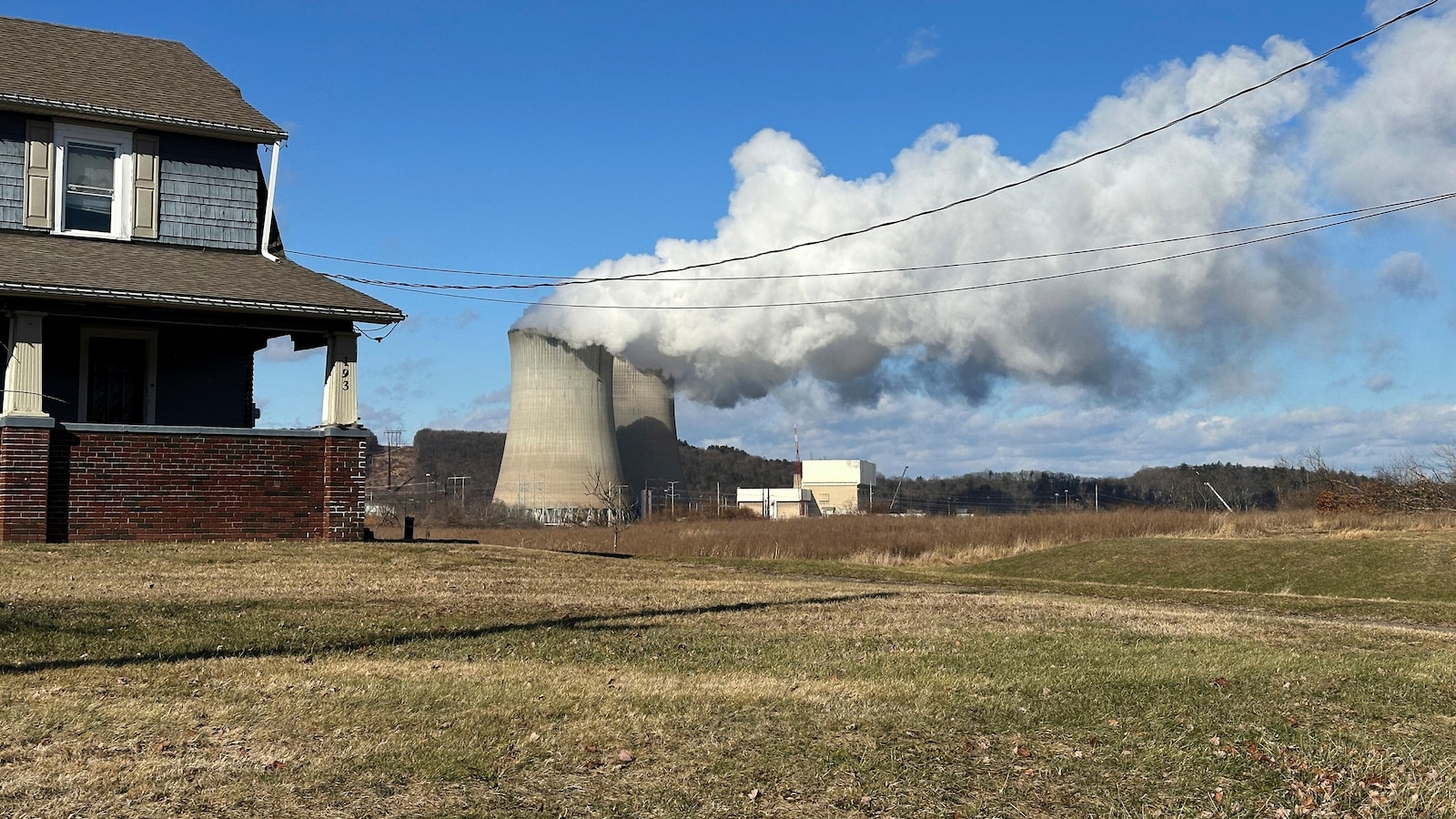
    Front and center is the data center that Amazon’s cloud computing subsidiary, Amazon Web Services, is building next to the Susquehanna nuclear plant in eastern Pennsylvania.

    The arrangement between the plant’s owners and AWS — called a “behind the meter” connection — is the first such to come before the Federal Energy Regulatory Commission. For now, FERC has rejected a deal that could eventually send 960 megawatts — about 40% of the plant’s capacity — to the data center. That’s enough to power more than a half-million homes.

    That leaves the deal and others that likely would follow in limbo. It’s not clear when FERC, which blocked the deal on a procedural ground, will take up the matter again or how the change in presidential administrations might affect things.

    “The companies, they’re very frustrated because they have a business opportunity now that’s really big,” said Bill Green, the director of the MIT Energy Initiative. “And if they’re delayed five years in the queue, for example — I don’t know if it would be five years, but years anyway — they might completely miss the business opportunity.”

    The rapid growth of cloud computing and artificial intelligence has fueled demand for data centers that need power to run servers, storage systems, networking equipment and cooling systems.

    That’s spurred proposals to bring nuclear power plants out of retirement, develop small modular nuclear reactors and build utility-scale renewable installations or new natural gas plants. In December, California-based Oklo announced an agreement to provide 12 gigawatts to data center developer Switch from small nuclear reactors powered by nuclear waste.

    Federal officials say fast development of data centers is vital to the economy and national security, including to keep pace with China in the artificial intelligence race.

    For AWS, the deal with Susquehanna satisfies its need for reliable power that meets its internal requirements for sources that don’t emit planet-warming greenhouse gases, like coal, oil or gas-fueled plants.

    Big Tech also wants to stand up their centers fast. But tech’s voracious appetite for energy comes at a time when the power supply is already strained by efforts to shift away from planet-warming fossil fuels.

    They can build data centers in a couple years, said Aaron Tinjum of the Data Center Coalition. But in some areas, getting connected to the congested electricity grid can take four years, and sometimes much more, he said.

    Plugging directly into a power plant would take years off their development timelines.

    In theory, the AWS deal would let Susquehanna sell power for more than they get by selling into the grid. Talen Energy, Susquehanna’s majority owner, projected the deal would bring as much as $140 million in electricity sales in 2028, though it didn’t disclose exactly how much AWS will pay for the power.

    The profit potential is one that other nuclear plant operators, in particular, are embracing after years of financial distress and frustration with how they are paid in the broader electricity markets. Many say they have been forced to compete in some markets against a flood of cheap natural gas as well as state-subsidized solar and wind energy.

    Power plant owners also say the arrangement benefits the wider public, by bypassing the costly buildout of long power lines and leaving more transmission capacity on the grid for everyone else.

    A favorable ruling from FERC could open the door to many more huge data centers and other massive power users like hydrogen plants and bitcoin miners, analysts say.

    FERC’s 2-1 rejection in November was procedural. Recent comments by commissioners suggest they weren’t ready to decide how to regulate such a novel matter without more study.

    In the meantime, the agency is hearing arguments for and against the Susquehanna-AWS deal.

    Monitoring Analytics, the market watchdog in the mid-Atlantic grid, wrote in a filing to FERC that the impact would be “extreme” if the Susquehanna-AWS model were extended to all nuclear power plants in the territory.

    Energy prices would increase significantly and there’s no explanation for how rising demand for power will be met even before big power plants drop out of the supply mix, it said.

    Separately, two electric utility owners — which make money in deregulated states from building out the grid and delivering power — have protested that the Susquehanna-AWS arrangement amounts to freeloading off a grid that ordinary customers pay to build and maintain. Chicago-based Exelon and Columbus, Ohio-based American Electric Power say the Susquehanna-AWS arrangement would allow AWS to avoid $140 million a year that it would otherwise owe.

    Susquehanna’s owners say the data center won’t be on the grid and question why it should have to pay to maintain it. But critics contend that the power plant itself is benefiting from taxpayer subsidies and ratepayer-subsidized services, and shouldn’t be able to strike deals with private customers that could increase costs for others.

    FERC’s decision will have “massive repercussions for the entire country” because it will set a precedent for how FERC and grid operators will handle the waiting avalanche of similar requests from data center companies and nuclear plants, said Jackson Morris of the Natural Resources Defense Council.

    Stacey Burbure, a vice president for American Electric Power, told FERC at a hearing in November that it needs to move quickly.

    “The timing of this issue is before us,” she said, “and if we take our typical five years to get this perfect, it will be too late.”

    ___

    Follow Marc Levy on X at: https://x.com/timelywriter.

    ___

    The Associated Press’ climate and environmental coverage receives financial support from multiple private foundations. AP is solely responsible for all content. Find AP’s standards for working with philanthropies, a list of supporters and funded coverage areas at AP.org.
    Source link

  • CES 2025 is here. What can we expect from the annual show of all-thing tech?

    CES 2025 is here. What can we expect from the annual show of all-thing tech?

    NEW YORK — NEW YORK (AP) — CES, the annual trade show of all things tech, is upon us.

    The multi-day event, organized by the Consumer Technology Association, kicks off this week in Las Vegas — where swaths of the latest gadgets and advances across industries like personal tech, transportation, health care, sustainability and more are set to be on display. And, like last year, artificial intelligence is everywhere you look.

    CES 2024 saw more than 138,000 attendees, according to the CTA, and organizers expect to see at least that amount again for this year’s show. Over 4,500 exhibitors, including 1,400 startups, are also anticipated across 2.5 million net square feet of floor space this week.

    “These are the people getting together, focusing on solving some of the world’s biggest problems — and magic occurs.” Gary Shapiro, CEO and vice chair of the CTA, told The Associated Press ahead of this week’s show.

    Formerly known as the Consumer Electronics Show, CES brings attendees and exhibitors from around the globe, with Shapiro noting that organizers expect some 50,000 attendees to come from outside the U.S. Beyond an array of startups, big-name companies set to make appearances this year include Nvidia, Delta Air Lines, Honda, Volvo, Panasonic and L’Oréal.

    There may be some increased security this year. CES 2025 arrives less than one week after a highly decorated Army soldier fatally shot himself in a Tesla Cybertruck packed with explosives before it burst into flames outside of President-elect Donald Trump’s hotel in Las Vegas — not far from much of the trade show’s planned event space. Shapiro said that organizers regularly work with officials for event safety and that “modest” changes were made in response to recent events, but couldn’t go into further detail.

    The AP spoke with Shapiro about what to expect for CES 2025. The conversation has been edited for clarity and length.

    CES 2025 will be an exceptional leap forward in terms of innovation and technology, with a focus on a variety of themes important to the future of humanity. Over 4,000 companies will be here, on literally miles and miles of exhibit space. And they’ll be showing solutions to fundamental human problems — like access to food, clean air, clean water and mobility, as well as health care technology.

    We also have newer categories. We’re seeing more technology for the disability community, for example. Products that can serve people with disabilities had a large presence last year, and we expect that to be even bigger this year. Overall, the show is serving humanity and using technology and innovation to fill in gaps where we need a lot more work.

    Generative AI is affecting virtually every area. Just about every major exhibitor will be talking about AI in one form or another at CES this week. For businesses, the focus is more on enterprise and productivity. But for individuals, it’s about personalization.

    We’ll see exhibitors, such as PC companies, focusing on personalization in new products for the PC and laptop marketplace. And then there’s AI being used in mobility — and not just in features for cars and self-driving. It’s for all sorts of vehicles, including agricultural products from companies like Caterpillar in Deere.

    The industry representing the companies involved welcomes government regulation. The government’s job is to say this is what is unsafe. And so the companies know what is legal and what is not. At the same time, a big challenge is if government stops innovation — so the question is for every country is finding that balance.

    We expect the Trump administration to take a much more pro-business approach that favors innovation, including a focus on all sorts of energy sources, which is very important important. But tariffs are taxes. And we know that they are inflationary and paid for by consumers.

    If we go forward with the proposals that the President-elect has indicated he may put in place, there would be severe impacts on the prosperity of the U.S. It depends on how exactly these tariffs are adopted but under some of the proposals, we estimate a range of a 30 to 50% price increases for basic products like PCs, cell phones, laptops, tablets, smartwatches and all sorts of different products that consumers get a great value on today. That means that fewer people will be able to access these products. And, of course, other countries may then retaliate against U.S. exports. We don’t want to go in that direction.

    CES has always focused on safety. There’s a lot of things we can’t talk about, but suffice it to say, we work with federal, state, local and facility officials for lots of planning. We’ve made some modest changes given the recent events, but we’re always trying to do it better.

    I think companies are excited to come here. And any requests we’ve gotten have been extremely isolated.

    Having top executives here, especially after COVID, is very special. People are focused on coming to Las Vegas and having this opportunity to meet face-to-face and finding the serendipity and discovery that happens when you’re making these business connections in person. That’s why trade shows like CES and others are such important events for the world.

    Source link

  • Tech Millionaire Bryan Johnson Suggests Avoiding Fast Food And Choosing Indian Food

    Tech Millionaire Bryan Johnson Suggests Avoiding Fast Food And Choosing Indian Food

    Millionaire tech entrepreneur Bryan Johnson, who is trying to reverse ageing, was in India earlier this month to promote his book ‘Don’t Die’. During his one-week trip, Johnson reportedly did not try any Indian food as he brought with him “every calorie I’ll eat for six days”. However, the tech mogul now seems to be impressed with Indian meals. In his recent X post, Johnson spoke about the goodness of Indian cuisine. He wrote, “Power is moving away from football and fast food and towards health, science, and Indian food.”

    Also Read: Ram Kapoor Opens Up About Losing 55 Kg Weight In 18 Months

    The post quickly gained attention on social media with users sharing divided views.

    A user wrote, “True! The world’s shifting focus toward wellness and diverse, nutritious options-Indian food definitely deserves the spotlight!”

    Another added, “Really upped my cooking game by taking your Blueprint diet and Indianizing it by making curries with lots of (healthy) spices. They go great together.”

    Also Read: 6 Times Foodies Were Wowed By The World Cooking Indian Food In 2024

    However, some were not ready to buy the claims made by Johnson.

    One asked, “Since when is naan bread healthy?”

    “Isn’t Indian food traditionally so carb-heavy/protein-light?” asked a section of the audience on the social media platform.

    A user wrote, “Indian food? Apart from turmeric… it’s oil, butter and fried – at least all the food I tried in India matched that description apart from lentil dishes…”

    Earlier, Bryan Johnson revealed his diet plan when he was in India. His diet plan included chickpea vegetable frittata, lemon red lentil soup and vegetable stir-fry with cauliflower rice. The millionaire mentioned, “What I’m eating for the next four days.”


    Source link

  • An online debate over foreign workers in tech shows tensions in Trump’s political coalition

    An online debate over foreign workers in tech shows tensions in Trump’s political coalition

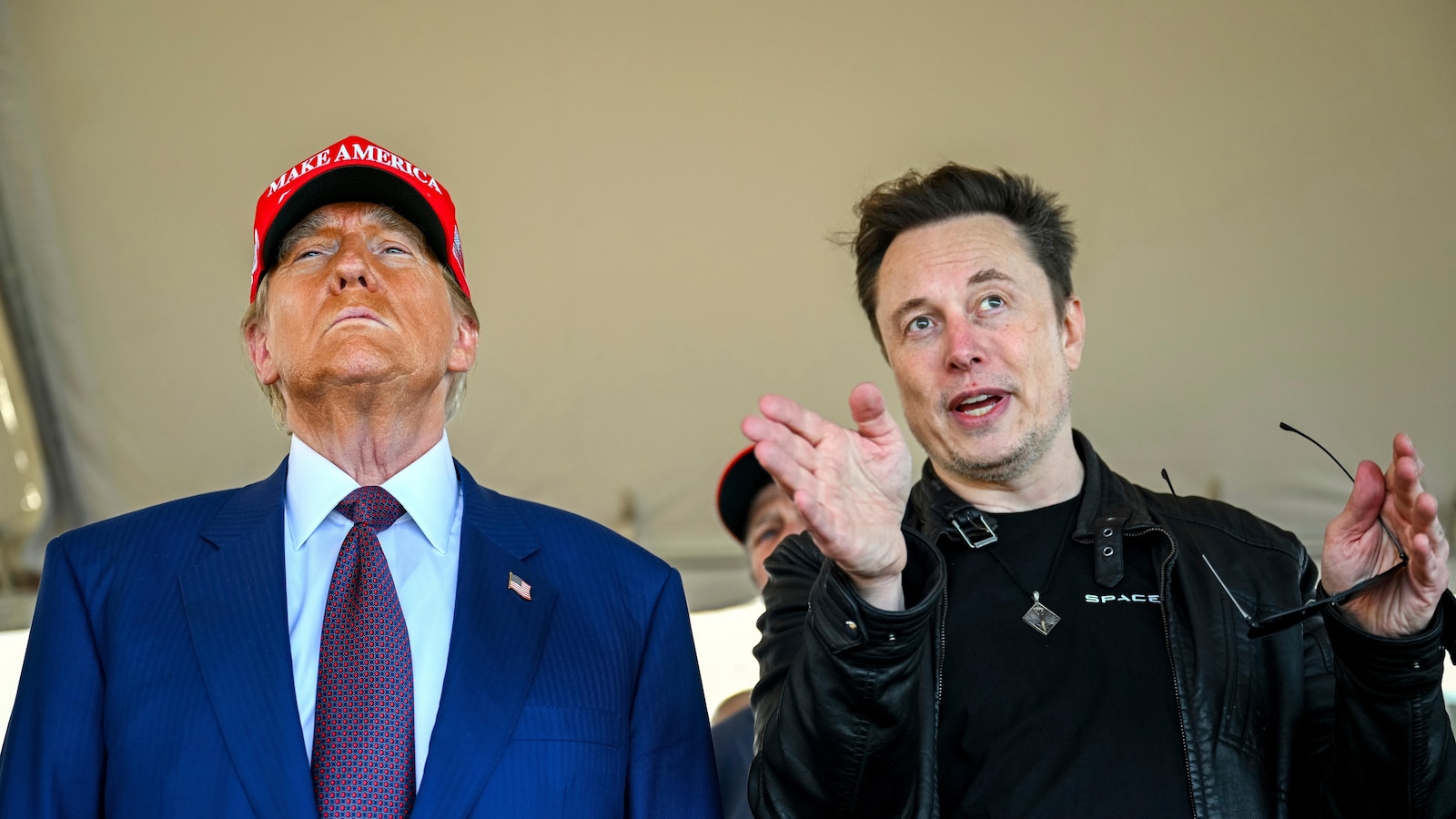
    WEST PALM BEACH, Fla. — An online spat between factions of Donald Trump’s supporters over immigration and the tech industry has thrown internal divisions in his political movement into public display, previewing the fissures and contradictory views his coalition could bring to the White House.

    The rift laid bare the tensions between the newest flank of Trump’s movement — wealthy members of the tech world including billionaire Elon Musk and fellow entrepreneur Vivek Ramaswamy and their call for more highly skilled workers in their industry — and people in Trump’s Make America Great Again base who championed his hardline immigration policies.

    The debate touched off this week when Laura Loomer, a right-wing provocateur with a history of racist and conspiratorial comments, criticized Trump’s selection of Sriram Krishnan as an adviser on artificial intelligence policy in his coming administration. Krishnan favors the ability to bring more skilled immigrants into the U.S.

    Loomer declared the stance to be “not America First policy” and said the tech executives who have aligned themselves with Trump were doing so to enrich themselves.

    Much of the debate played out on the social media network X, which Musk owns.

    Loomer’s comments sparked a back-and-forth with venture capitalist and former PayPal executive David Sacks, whom Trump has tapped to be the “White House A.I. & Crypto Czar.” Musk and Ramaswamy, whom Trump has tasked with finding ways to cut the federal government, weighed in, defending the tech industry’s need to bring in foreign workers.

    It bloomed into a larger debate with more figures from the hard-right weighing in about the need to hire U.S. workers, whether values in American culture can produce the best engineers, free speech on the internet, the newfound influence tech figures have in Trump’s world and what his political movement stands for.

    Trump has not yet weighed in on the rift. His presidential transition team did not respond to questions about positions on visas for highly skilled workers or the debate between his supporters online. Instead, his team instead sent a link to a post on X by longtime adviser and immigration hard-liner Stephen Miller that was a transcript of a speech Trump gave in 2020 at Mount Rushmore in which he praised figures and moments from American history.

    Musk, the world’s richest man who has grown remarkably close to the president-elect, was a central figure in the debate, not only for his stature in Trump’s movement but his stance on the tech industry’s hiring of foreign workers.

    Technology companies say H-1B visas for skilled workers, used by software engineers and others in the tech industry, are critical for hard-to-fill positions. But critics have said they undercut U.S. citizens who could take those jobs. Some on the right have called for the program to be eliminated, not expanded.

    Born in South Africa, Musk was once on an a H-1B visa himself and defended the industry’s need to bring in foreign workers.

    “There is a permanent shortage of excellent engineering talent,” he said in a post. “It is the fundamental limiting factor in Silicon Valley.”

    Trump’s own positions over the years have reflected the divide in his movement.

    His tough immigration policies, including his pledge for a mass deportation, were central to his winning presidential campaign. He has focused on immigrants who come into the U.S. illegally but he has also sought curbs on legal immigration, including family-based visas.

    As a presidential candidate in 2016, Trump called the H-1B visa program “very bad” and “unfair” for U.S. workers. After he became president, Trump in 2017 issued a “Buy American and Hire American” executive order, which directed Cabinet members to suggest changes to ensure H-1B visas were awarded to the highest-paid or most-skilled applicants to protect American workers.

    Trump’s businesses, however, have hired foreign workers, including waiters and cooks at his Mar-a-Lago club, and his social media company behind his Truth Social app has used the the H-1B program for highly skilled workers.

    During his 2024 campaign for president, as he made immigration his signature issue, Trump said immigrants in the country illegally are “poisoning the blood of our country” and promised to carry out the largest deportation operation in U.S. history.

    But in a sharp departure from his usual alarmist message around immigration generally, Trump told a podcast this year that he wants to give automatic green cards to foreign students who graduate from U.S. colleges.

    “I think you should get automatically, as part of your diploma, a green card to be able to stay in this country,” he told the “All-In” podcast with people from the venture capital and technology world.

    Those comments came on the cusp of Trump’s budding alliance with tech industry figures, but he did not make the idea a regular part of his campaign message or detail any plans to pursue such changes.

    Source link

  • Apple complains Meta requests risk privacy amid EU effort to widen iPhone tech access

    Apple complains Meta requests risk privacy amid EU effort to widen iPhone tech access

    LONDON — Apple complained that requests from Meta Platforms for access to its operating software threaten user privacy, in a spat fueled by the European Union’s intensifying efforts to get the iPhone maker to open up to products from tech rivals.

    The 27-nation EU’s executive Commission is drawing up “interoperability” guidelines for Apple under its new digital competition rulebook. The interoperability measures would ensure that devices like smartwatches or features like wireless file transfers work as smoothly with iPhones as do Apple Watches or AirDrop.

    The EU’s rulebook, known as the Digital Markets Act, aims to promote fair competition in digital markets and prevent Big Tech “gatekeeper” companies from cornering markets. The commission posted proposed measures late Wednesday on how Apple should make its iOS operating system work with other technology.

    In response, Apple said it’s “concerned that some companies — with data practices that do not meet the high standards of data protection law held by the EU and supported by Apple — may attempt to abuse the DMA’s interoperability provisions to access sensitive user data.”

    The company singled out Meta, saying it has made at least 15 requests “for potentially far-reaching access to Apple’s technology stack” that would reduce privacy protections for users.

    If those requests were granted, “Facebook, Instagram, and WhatsApp could enable Meta to read on a user’s device all of their messages and emails, see every phone call they make or receive, track every app that they use, scan all of their photos, look at their files and calendar events, log all of their passwords,” the company said in a report.

    Meta, which owns Facebook and Instagram, fought back.

    “Here’s what Apple is actually saying: they don’t believe in interoperability,” Meta spokesman Andy Stone said in a post on X. “In fact, every time Apple is called out for anticompetitive behavior, they defend themselves on privacy grounds that have no basis in reality.”

    The Brussels-based European Commission’s proposed measures call for an approach based on Apple’s existing “request-based process,” in which developers ask for access to features and functions.

    Apple should provide a “dedicated contact” to handle requests and give updates and feedback, and there should be a “fair and impartial conciliation” process to settle disagreements on technical issues.

    The commission is now asking for feedback from the public by Jan. 9 on the proposals, including from any companies that have made interoperability requests from Apple, or are thinking of doing so.

    Source link

  • What does Big Tech hope to gain from warming up to Trump?

    What does Big Tech hope to gain from warming up to Trump?

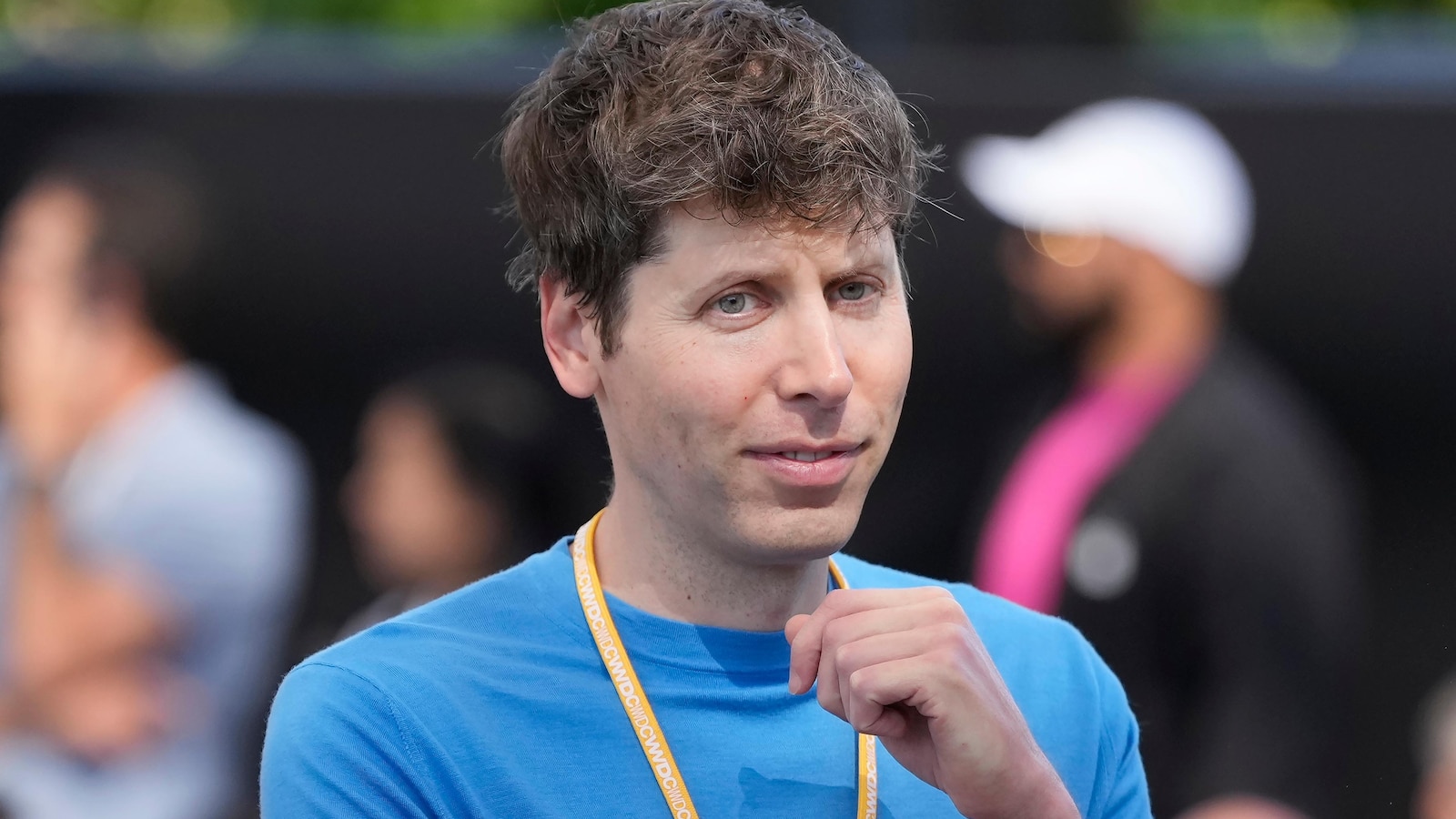
    NEW YORK — In a string of visits, dinners, calls, monetary pledges and social media overtures, big tech chiefs — including Apple’s Tim Cook, OpenAI’s Sam Altman, Meta’s Mark Zuckerberg and Amazon’s Jeff Bezos — have joined a parade of business and world leaders in trying to improve their standing with President-elect Donald Trump before he takes office in January.

    “The first term, everybody was fighting me,” Trump said in remarks at Mar-a-Lago. “In this term, everybody wants to be my friend.”

    Tech companies and leaders have now poured millions into his inauguration fund, a sharp increase — in most cases — from past pledges to incoming presidents. But what does the tech industry expect to gain out of their renewed relationships with Trump?

    A clue to what the industry is looking for came just days before the election when Microsoft executives — who’ve largely tried to show a neutral or bipartisan stance — joined with a close Trump ally, venture capitalist Marc Andreessen, to publish a blog post outlining their approach to artificial intelligence policy.

    “Regulation should be implemented only if its benefits outweigh its costs,” said the document signed by Andreessen, his business partner Ben Horowitz, Microsoft CEO Satya Nadella and the company’s president, Brad Smith.

    They also urged the government to back off on any attempt to strengthen copyright laws that would make it harder for companies to use publicly available data to train their AI systems. And they said, “the government should examine its procurement practices to enable more startups to sell technology to the government.”

    Trump has pledged to rescind President Joe Biden’s sweeping AI executive order, which sought to protect people’s rights and safety without stifling innovation. He hasn’t specified what he would do in its place, but his campaign said AI development should be “rooted in Free Speech and Human Flourishing.”

    Trump’s choice to head the Interior Department, North Dakota Gov. Doug Burgum, has spoken openly about the need to boost electricity production to meet increased demand from data centers and artificial intelligence.

    “The AI battle affects everything from defense to healthcare to education to productivity as a country,″ Burgum said on Nov. 15, referring to artificial intelligence. “And the AI that’s coming in the next 18 months is going to be revolutionary. So there’s just a sense of urgency and a sense of understanding in the Trump administration″ to address it.

    Demand for data centers ballooned in recent years due to the rapid growth of cloud computing and artificial intelligence, and local governments are competing for lucrative deals with big tech companies.

    But as data centers begin to consume more resources, some residents are pushing back against the world’s most powerful corporations over concerns about the economic, social and environmental health of their communities.

    “Maybe Big Tech should buy a copy of ‘The Art of The Deal’ to figure out how to best negotiate with this administration,” suggested Paul Swanson, an antitrust attorney for the law firm Holland & Hart. “I won’t be surprised if they find ways to reach some accommodations and we end up seeing more negotiated resolutions and consent decrees.”

    Although federal regulators began cracking down on Google and Facebook during Trump’s first term as president — and flourished under Biden — most experts expect his second administration to ease up on antitrust enforcement and be more receptive to business mergers.

    Google may benefit from Trump’s return after he made comments on the campaign trail suggesting a breakup of the company isn’t in the U.S. national interest, after a judge declared its search engine an illegal monopoly. But recent nominations put forward by his transition team have favored those who have been critical of Big Tech companies, suggesting Google won’t be entirely off the hook.

    Cook’s notoriously rocky relationship with the EU can be traced back to a 2016 ruling from Brussels in a tax case targeting Apple. Cook slammed the bloc’s order for Apple to pay back up to 13 billion euros ($13.7 billion) in Irish back taxes as “total political crap.”

    Trump, then in his first term as president, piled on, referring to the European Commissioner Margrethe Vestager, who was spearheading a campaign on special tax deals and a crackdown on Big Tech companies, as the “tax lady” who “really hates the U.S.”

    Brussels was eventually vindicated after the bloc’s top court rejected Apple’s appeal this year, though it didn’t stop Cook from calling Trump to complain, Trump recounted in a podcast in October.

    Trump hosted Cook for a Friday evening dinner at the president-elect’s Mar-a-Lago resort, according to a person familiar with the matter who was not authorized to comment publicly. Neither Apple nor the Trump transition team has commented on the nature of their discussions.

    Altman, Amazon and Meta all pledged to donate $1 million each to Trump’s inaugural fund.

    During his first term, Trump criticized Amazon and railed against the political coverage at The Washington Post, which billionaire Bezos owns. Meanwhile, Bezos had criticized some of Trump’s past rhetoric. In 2019, Amazon also argued in a court case that Trump’s bias against the company harmed its chances of winning a $10 billion Pentagon contract.

    More recently, Bezos has struck a more conciliatory tone. He recently said at The New York Times’ DealBook Summit in New York that he was “optimistic” about Trump’s second term, while also endorsing president-elect’s plans to cut regulations.

    The donation from Meta came just weeks after Zuckerberg met with Trump privately at Mar-a-Lago.

    During the 2024 campaign, Zuckerberg did not endorse a candidate for president, but voiced a more positive stance toward Trump. Earlier this year, he praised Trump’s response to his first assassination attempt. Still, Trump in recent months had continued to attack Zuckerberg publicly.

    And Altman, who is in a legal dispute with AI rival Elon Musk, has said he is “not that worried” about the Tesla CEO’s influence in the incoming administration. Musk, an early OpenAI investor and board member, sued the artificial intelligence company earlier this year alleging that the maker of ChatGPT betrayed its founding aims of benefiting the public good rather than pursuing profits.

    Source link

  • Why is tech giant SoftBank investing over $100 billion in the US?

    Why is tech giant SoftBank investing over $100 billion in the US?

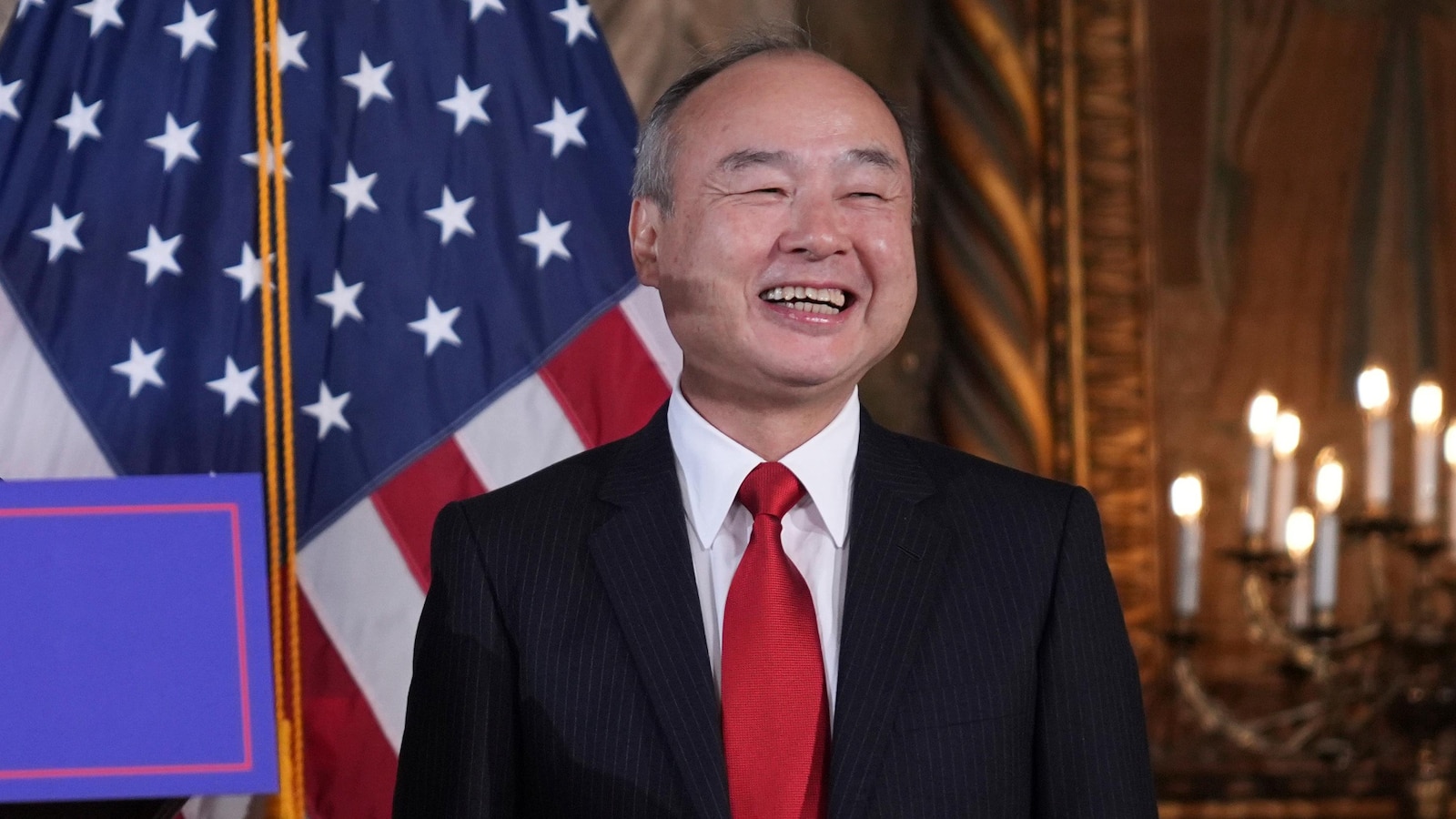
    BANGKOK — Japanese tycoon Masayoshi Son and President-elect Donald Trump have announced plans for technology and telecoms giant SoftBank Group to invest $100 billion in projects in the United States over the coming four years.

    Trump said the investments in building artificial intelligence infrastructure would create 100,000 jobs, twice the 50,000 promised when Son pledged $50 billion in U.S. investments after Trump’s victory in 2016.

    Son, a founder and CEO of SoftBank Group, is known for making bold choices that sometimes pay big and sometimes don’t. SoftBank has investments in dozens of Silicon Valley startups, along with big companies like semiconductor design company Arm and Chinese e-commerce giant Alibaba. The stock market rally and craze for AI has boosted the value of its assets, but it’s unclear whether its investments will create that many jobs.

    Son founded SoftBank in the 1980s, expanding it from a telecoms carrier to encompass renewable energy and technology ventures. A leading figure in Japan’s business world, he was an early believer in the internet, pouring billions into Silicon Valley start-ups and other technology companies.

    Son comes from a humble background. While at the University of California, Berkeley, he invented a pocket translator that he sold for $1 million to Japanese electronics maker Sharp Corp. He has made a career of risk-taking, pushing adoption of broadband services when the internet was still relatively new in Japan. His $20 billion takeover of U.S. mobile phone carrier Sprint Nextel Corp. in 2012 was Japan’s biggest foreign acquisition at the time.

    Son is philosophical about his missteps, such as SoftBank’s $18.5 billion investment in co-working space provider WeWork, which sought bankruptcy protection last year. SoftBank also invested in the failed robot pizza-making company Zume. Son is canny: SoftBank-related spending on lobbying and donations to U.S. politicians and parties runs into the billions of dollars. And both times Trump was elected, Son was quick to show his support.

    SoftBank has benefitted in recent months from rising values of some investments, such as U.S.-based e-commerce company Coupang, Chinese mobility provider DiDi Global and Bytedance, the Chinese developer of TikTok.

    Son built his fortune on early investments in search engine Yahoo and China’s Alibaba, an astute initial outlay of $20 million in what has become an e-commerce and financial empire with a market cap of more than $200 billion.

    SoftBank has investments in T-Mobile, Deutsche Telekom, Microsoft, Nvidia and ride-sharing platform Uber, among hundreds of other companies that it groups together in its Vision Funds. The Saudi Arabian sovereign wealth fund and Abu Dhabi national wealth fund are among the biggest investors in those funds.

    The hundreds of start-ups that have received SoftBank investments include Nuro, a robo-delivery company; the dog-walking app Wag; South Korean logistics company Coupang; the Southeast Asian ride-sharing app Grab; and the office messaging app Slack.

    After several rough years, SoftBank returned to profitability in the last quarter, helped by returns from its Vision Fund investments. A big factor? Royalties and licensing related to its holdings in the UK-based computer chip-designing company Arm, whose business spans smartphones, data centers, networking equipment, automotive, consumer electronic devices, and AI applications.

    SoftBank investor presentations have sometimes featured images of a goose labeled “AI Revolution” laying golden eggs.

    Son has said he believes artificial intelligence will surpass human intelligence within a decade, affecting every industry, from transportation and pharmaceuticals to finance, manufacturing, logistics and others and that companies and people working with AI will be the leaders of the next 10 to 20 years. SoftBank’s roughly 90% stake in Arm has positioned it well for expansion of AI applications since most mobile devices operate on Arm-based processors.

    Trump and Son said the $100 billion that SoftBank has promised to invest will go to building AI infrastructure, but the nature of that spending remains unclear. The eventual impact of AI on jobs remains an open question, but much of its infrastructure is based on energy-guzzling data processing centers that are likely to employ relatively few people once they are built.

    Even if SoftBank actually invested the promised $50 billion last time Trump was headed to the White House, it’s unclear how many jobs that created.

    Shutdowns during the COVID-19 pandemic complicated matters. Foxconn Technology Group, a Taiwan company best known for making Apple iPhones, won Trump’s praise after saying in 2017 it would build a $10 billion complex employing 13,000 people in a small town just south of Milwaukee. But that investment was scaled back drastically.

    SoftBank itself says it had 65,352 employees as of March.

    Officials in Tokyo praised Son’s initiative, viewing it as a goodwill gesture at a time of huge concern over whether Trump will impose blanket tariff hikes on imports from allies like Japan, as well as China.

    “Generally speaking, I believe expansion of investment through steady accumulation of efforts between Japanese and U.S. companies would help further strengthen Japan-U.S. economic ties, so I find it delightful,” said Yoji Muto, Japan’s Trade and Industry minister.

    ___

    Associated Press writer Mari Yamaguchi in Tokyo contributed.

    Source link

  • Trump hosts Apple CEO at Mar-a-Lago as big tech leaders continue outreach to president-elect

    Trump hosts Apple CEO at Mar-a-Lago as big tech leaders continue outreach to president-elect

    WEST PALM BEACH, Fla. — WEST PALM BEACH, Fla. (AP) — Donald Trump hosted Apple CEO Tim Cook for a Friday evening dinner at the president-elect’s Mar-a-Lago resort, according to a person familiar with the matter who was not authorized to comment publicly.

    Cook is the latest in a string of big tech leaders — including OpenAI’s Sam Altman, Meta’s Mark Zuckerberg and Amazon’s Jeff Bezos — who have sought to improve their standing with the incoming president after choppy relations with Trump during his first term.

    Trump has said he has spoken with Cook about the company’s long-running tax battles with the European Union.

    The meeting comes less than two months after Trump said he spoke to Cook by phone, and soon after Apple lost its last appeal in a dispute with the EU over 13 billion euros ($14.34 billion) in back taxes to Ireland.

    “He said the European Union has just fined us $15 billion,” Trump recalled of his conversation with Cook, in an October interview with podcaster Patrick Bet-David. “Then on top of that they got fined by the European Union another $2 billion.”

    The decision by the EU top court was the finale to a dispute that centered on sweetheart deals that Dublin was offering to attract multinational businesses with minimal taxes across the 27-nation bloc. The European Commission in 2016 ruled that Ireland granted Apple unlawful aid that Ireland was required to recover.

    Trump’s transition team and Apple did not immediately respond to a request for comment about his dinner with Cook.

    OpenAI CEO Altman is planning to make a $1 million personal donation to Trump’s inauguration fund, the company confirmed Friday. Amazon and Meta, the parent company of Facebook and Instagram, confirmed this week they had each donated $1 million to Trump’s inaugural fund.

    During his first term, Trump criticized Amazon and railed against the political coverage at The Washington Post, which Bezos owns. Meanwhile, Bezos had criticized some of Trump’s past rhetoric. In 2019, Amazon also argued in a court case that Trump’s bias against the company harmed its chances of winning a $10 billion Pentagon contract.

    More recently, Bezos has struck a more conciliatory tone. Last week, he said at The New York Times’ DealBook Summit in New York that he was “optimistic” about Trump’s second term while also endorsing president-elect’s plans to cut regulations.

    The donation from Meta came just weeks after Meta CEO Zuckerberg met with Trump privately at Mar-a-Lago.

    During the 2024 campaign, Zuckerberg did not endorse a candidate for president, but voiced a more positive stance toward Trump. Earlier this year, he praised Trump’s response to his first assassination attempt.

    Source link

  • One Tech Tip: How to protect your communications through encryption

    One Tech Tip: How to protect your communications through encryption

    LONDON — After a sprawling hacking campaign exposed the communications of an unknown number of Americans, U.S. cybersecurity officials are advising people to use encryption in their communications.

    To safeguard against the risks highlighted by the campaign, which originated in China, federal cybersecurity authorities released an extensive list of security recommendations for U.S. telecom companies — such as Verizon and AT&T — that were targeted. The advice includes one tip we can all put into practice with our phones: “Ensure that traffic is end-to-end encrypted to the maximum extent possible.”

    End-to-end encryption, also known as E2EE, means that messages are scrambled so that only the sender and recipient can see them. If anyone else intercepts the message, all they will see is a garble that can’t be unscrambled without the key.

    Law enforcement officials had until now resisted this type of encryption because it means the technology companies themselves won’t be able to look at the messages, nor respond to law enforcement requests to turn the data over.

    Here’s a look at various ways ordinary consumers can use end-to-end encryption:

    Officials said the hackers targeted the metadata of a large number of customers, including information on the dates, times and recipients of calls and texts. They also managed to see the content from texts from a much smaller number of victims.

    If you’re an iPhone user, information in text messages that you send to someone else who also has an iPhone will be encrypted end-to-end. Just look for the blue text bubbles, which indicate that they are encrypted iMessages.

    The same goes for Android users sending texts through Google Messages. There will be a lock next to the timestamp on each message to indicate the encryption is on.

    But there’s a weakness. When iPhone and Android users text each other, the messages are encrypted only using Rich Communication Services, an industry standard for instant messaging that replaces the older SMS and MMS standards.

    Apple has noted that RCS messages “aren’t end-to-end encrypted, which means they’re not protected from a third party reading them while they’re sent between devices.”

    Samsung, which sells Android smartphones, has also hinted at the issue in a footnote at the bottom of a press release last month on RCS, saying, “Encryption only available for Android to Android communication.”

    To avoid getting caught out when trading texts, experts recommend using encrypted messaging apps.

    Privacy advocates are big fans of Signal, which applies end-to-end encryption on all messages and voice calls. The independent nonprofit group behind the app promises never to sell, rent, or lease customer data and has made its source code publicly available so that it can be audited by anyone to examine it “for security and correctness.”

    Signal’s encryption protocol is so reputable that it has been integrated into rival WhatsApp, so users will enjoy the same level of security protection as Signal, which has a much smaller user base. End-to-end encryption is also the default mode for Facebook Messenger, which like WhatsApp is owned by Meta Platforms.

    Telegram is an app that can be used for one-on-one conversations, group chats and broadcast “channels” but contrary to popular perception, it doesn’t turn on end-to-end encryption by default. Users have to switch on the option. And it doesn’t work with group chats.

    Cybersecurity experts have warned people against using Telegram for private communications and pointed out that only its opt-in ‘secret chat’ feature is encrypted from end-to-end. The app also has a reputation for being a haven for scammers and criminal activity, highlighted by founder and CEO Pavel Durov’s arrest in France.

    Instead of using your phone to make calls through a wireless cellular network, you can make voice calls with Signal and WhatsApp. Both apps encrypt calls with the same technology that they use to encrypt messages.

    There are other options. If you have an iPhone you can use Facetime for calls, while Android owners can use the Google Fi service, which are both end-to-end encrypted.

    The only catch with all these options is that, as with using the chat services to send messages, the person on the other end will also have to have the app installed.

    WhatsApp and Signal users can customize their privacy preferences in the settings, including hiding IP address during calls to prevent your general location from being guessed.

    ___

    Is there a tech topic that you think needs explaining? Write to us at onetechtip@ap.org with your suggestions for future editions of One Tech Tip.

    Source link

  • European satellites launched to create artificial solar eclipses in a tech demo

    European satellites launched to create artificial solar eclipses in a tech demo

    CAPE CANAVERAL, Fla. — A pair of European satellites rocketed into orbit Thursday on the first mission to create artificial solar eclipses through fancy formation flying in space.

    Each fake eclipse should last six hours once operations begin next year. That’s considerably longer than the few minutes of totality offered by a natural eclipse here on Earth, allowing for prolonged study of the sun’s corona, or outer atmosphere.

    The launch took place from India.

    Billed as a tech demo, the two satellites will separate in a month or so and fly 492 feet (150 meters) apart once reaching their destination high above Earth, lining up with the sun so that one spacecraft casts a shadow on the other.

    This will require extreme precision, within just one millimeter, equivalent to a fingernail’s thickness, according to the European Space Agency. To maintain their position, the satellites will rely on GPS, star trackers, lasers and radio links, flying autonomously.

    Each cube-shaped spacecraft is less than 5 feet (1.5 meters) across. The shadow-casting satellite holds a disk to block the sun from the telescope on the other satellite. This disk will mimic the moon in a natural total solar eclipse, with the darkened satellite posing as Earth.

    “This has a huge scientific relevance” in addition to testing high-precision formation flying,” said the European Space Agency’s technology and engineering director Dietmar Pilz.

    Scientists need the glaring face of the sun completely blocked in order to scrutinize the wispy crown-like corona encircling it, getting an especially good look close to the solar rim on this mission. They’re particularly interested to learn why the corona is hotter than the surface of the sun, and also want to better understand coronal mass ejections, eruptions of billions of tons of plasma with magnetic fields out into space.

    The resulting geomagnetic storms can disrupt power and communication on Earth and in orbit. Such outbursts can also produce stunning auroras in unexpected places.

    With a lopsided orbit stretching from 370 miles (600 kilometers) to 37,000 miles (60,000 kilometers) away, the satellites will take nearly 20 hours to circle the world. Six of those hours — at the farther end of the orbit — will be spent generating an eclipse. The first results should be available in March, following checkout of both craft, according to the space agency.

    The $210 million mission, dubbed Proba-3, is expected to create hundreds of eclipses during its two-year operation. Once their job is done, both satellites will gradually drop lower until they burn up in the atmosphere, likely within five years.

    Liftoff was delayed a day by a last-minute issue with the backup propulsion system of one of the satellites, crucial for precision formation flying. The European Space Agency said engineers relied on a computer software fix.

    ___

    The Associated Press Health and Science Department receives support from the Howard Hughes Medical Institute’s Science and Educational Media Group. The AP is solely responsible for all content.

    Source link