Coco Gauff‘s mother is a perfect example of how a supportive family can fuel one’s passion for success. A former athlete, Candi Gauff not only passed her incredible genes to her children but also instilled in them a drive for excellence in their respective fields. Now that her kids are shining like stars, Candi Gauff acknowledges their efforts with a special mention. Her love for her children is evident in her adorable gestures, which show why she is cherished by all three of her kids.
Gauff’s mother recently shared an adorable Instagram post celebrating the presence of her two talented sons in her life. Currently in China to support her daughter’s run at the 2024 China Open, Candi Gauff posted a snippet from her recent trip to the Great Wall of China with her daughter, winning hearts with the sweet photos. While supporting her daughter’s professional journey, Candi didn’t forget to honor her sons, Codey and Cameron Gauff.
This former athlete posted a picture with her boys on her official Instagram and added a heartfelt message. “Happy National Sons’ Day! My favorite oldest and youngest sonshines,” she wrote, her choice of words reflecting her deep love for them. Although she wasn’t with them on this special day, Gauff’s mother made sure to celebrate her sons while also being there for her daughter.
ADVERTISEMENT
Article continues below this ad
Isn’t Coco Gauff’s family the epitome of athletic excellence? React!
Candi Gauff also had a special shout-out for Codey, who was selected to participate in the Minority Baseball Prospects Futures All-American game. Sharing the lineup on her IG story, Candi tagged her elder son and added two red hearts to express her pride and excitement.
ADVERTISEMENT
Article continues below this ad
In addition to supporting Codey, Candi has also shown unwavering support for Cameron, the youngest of the Gauff family, who has already impressed the family with his athletic talent. When Cameron completed his elementary school journey, Candi shared a picture of him with his grandmother and cheered him on with the caption, “CONGRATS CAMERON.” She had a similarly enthusiastic reaction when Cameron won an MVP tournament, writing, “Congratulations Cameron on winning the tennis tournament today. Thank you family for the support!!!”
As much as she loves her sons, Coco Gauff’s mother is equally proud of her daughter. Traveling to China with her, Candi has made it clear just how much she loves all three of her children.
Coco Gauff’s mother celebrated her daughter on a special occasion
ADVERTISEMENT
Article continues below this ad
Candi Gauff accompanied her daughter during her 2024 China Open run. Before the tournament, the mother-daughter duo enjoyed some fun times visiting iconic landmarks such as the Great Wall of China and the Forbidden City. While Gauff jokingly revealed her mother’s poor photography skills, Candi shared an adorable selfie with her daughter wishing her on National Daughter’s Day. “@cocogauff National Daughters Day ❤️ ❤️,” she wrote on her IG story. Gauff was touched by her mother’s adorable gesture and reshared it on her IG story with a special message for her mother. “Love my mom,” wrote the WTA star highlighting their love.
Coco Gauff’s mother, Candi, has been a pivotal figure in the family, whose encouragement and guidance inspired her children to excel in sports. As she supports her daughter during the China Open, many believe her presence will help Coco refresh her mind and focus more effectively on her victories.
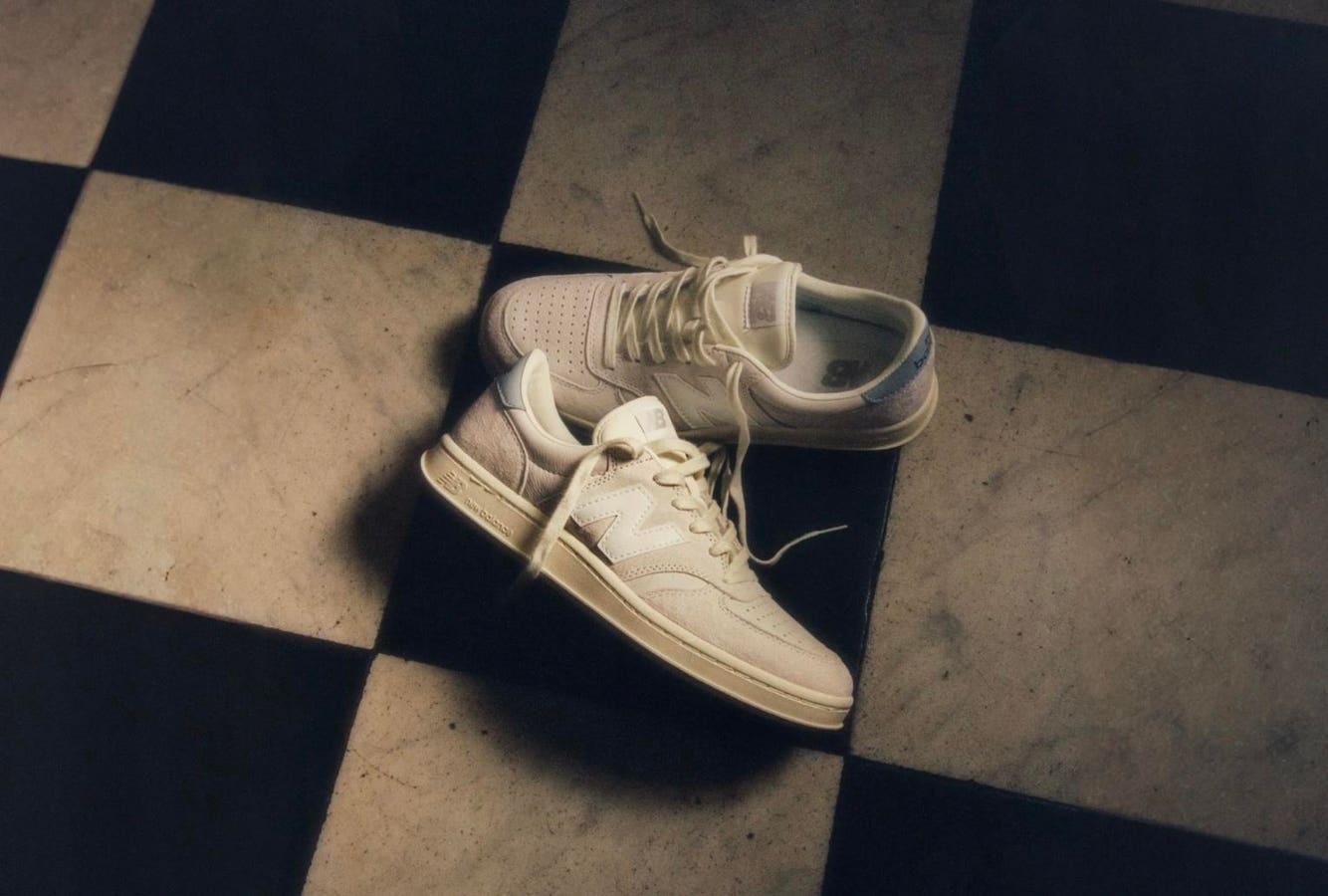
The New Balance T500 signifies a footwear push into lifestyle tennis for the Boston-based brand.
New Balance
After a roughly six-year break, New Balance again has a tennis sneaker in its lifestyle collection. And the T500 has taken a pinnacle spot, debuting with an Aime Leon Dore collaboration, offering mainline styles and now introducing a Ganni collaboration.
As tennis represents a growing element of today’s style trends and holds a key place in the New Balance performance culture, the brand expects the T500 to accentuate those elements in its lifestyle lineup for a long time coming.
“This is a style that very much our ambition is to build into the next New Balance icon,” Lauren Fitzsimmons, New Balance global lifestyle marketing manager, tells me. “We have a tactical, strategic approach. The positioning is really important and will set it up for long-term success.”
The fact that New Balance is aligning the T500 has a premium lifestyle sneaker isn’t just about its history in tennis, but about the silhouette itself. A near exact remake of a 1982 tennis performance shoe, Brian Lynn, New Balance global vice president of lifestyle, tells me the design is timeless and wearable. “It came out in 1982, but still has that sleekness and sharpness we are kind of known for,” he says. “We were very clear that we liked the look and aesthetic but had a lot of back and forth trying to get [the comfort] right. For us it was important to get as close to the original, but also update it so it is comfortable.”
New Balance has positioned the T500 lifestyle tennis sneaker as a luxury model.
New Balance
Lynn says he found a pristine 1980s pair on Ebay in his size. He loved the look and materials, but knew the brand had to update the fit after trying it on. “As much as it is a simple shoe, we were trying to get that shape and all the little details we had from back in those days right,” he says. “It is a lot of hard work making something look so simple.”
Dialing in the feel came alongside embracing the premium materials of the original. That’s why the T500 fills with suede and leather, giving New Balance what Fitzsimmons calls a “premium and considered court shoe” and opening the chance to highlight differing materials and emphasize the classic design in a variety of colors and styles. “As a brand,” Lynn says, “we do those materials better than anyone else. We do see ourselves as the most premium sports brand in the world. At every level, we want to make sure it can be the best it can be.”
Dipping back into tennis with the T500 was in part a reaction to trends, an embrace of the brand’s current growth and the desire to have a low-profile silhouette in a court style. The T500 fit the bill.
A New Balance x Ganni collaboration on the T500 puts a fresh spin on the sneaker.
Ganni
Lynn says the success of the New Balance 550, a remake of an archival basketball shoe, was one of the first lifestyle court offerings from a brand known for both performance and lifestyle running. Once the 550 took off, that opened the door for a additional court lifestyle offerings. “The T500 just has that timeless appeal to it,” he says, “it is almost classic New Balance but done on a cupsole. For us it was nice it has that heritage, but this shoe is timeless, well made, features premium materials. It is not meant to be a hype shoe, just look good with any outfit.”
And with so much similarity in the brand’s retro basketball styles, the T500 offers a fresh perspective. “Just given the landscape and marketplace at the moment and what the consumer is gravitating toward, it made sense to tap into our tennis archive,” Fitzsimmons says.
With the brand’s performance tennis continuing to grow—New Balance launched a second signature shoe for American star Coco Gauff in August, adding to a mix of popular on-court models from the Boston-based brand—having a lifestyle option in the sport “sits nicely with who we are as a brand,” Lynn says. “Let’s make sure we have a lifestyle component to compliment what we are doing in the performance space.”
Fitzsimmons says tennis is having a “thing at the minute,” both on court and in fashion off the court. “It is important to have a well-rounded view on what our tennis offering is,” she says. “Having a shoe like the T500 sitting alongside signature performance product makes a lot of sense, it just gives the consumer another alternative. It is not just performance tennis, but we do have lifestyle.”
A touch of leopard print on the heel tab of the New Balance T500 collaboration gives the shoe a … [+] Ganni spin.
Ganni
New Balance kicked off the T500 launch in late 2023 with the Aime Leon Dore collaboration and then created a “Quiet Please” campaign tied to the luxury positioning and materials of the mainline sneaker for early 2024. Next up comes the collaboration with Ganni, launching Sept. 20, all before a future leather version and additional color and material makeups.
“It was important for us to get a different lens on it,” Fitzsimmons says about the Ganni collaboration. “Obviously we have our view, but bringing Ganni and adding their perspective on how the T500 can show up in the market is another fun twist.”
Ditte Reffstrup, creative director at Ganni, tells me it’s no coincidence that Ganni chose the T500 when it came time to work with New Balance, but it isn’t just about the tennis, rather the “timeless appeal and versatility of the silhouette” that can be styled across a range of moods, adding that the minimalist roots allow it to fit everyday wear. Giving it a Ganni twist also allows the shoe to serve as a statement piece to contrast dressier looks. “Whether you’re pairing it with a relaxed sporty ensemble or using it to add contrast to a more polished suiting look, the T500 offers a freedom of styling,” Reffstrup says. “It’s all about expressing individuality, which is core to both our brands.”
The Ganni x New Balance T500 release will give the sneaker bold leopard prints and “unexpected twists that bring new energy to the silhouette,” he says, while focusing on high-quality materials.
The future of the New Balance T500 includes a wealth of new color and material options.
New Balance
“The T500’s simplicity allows for creative exploration, and its iconic status makes it a silhouette that resonates with both the past and the future,” Reffstrup says. “I really think this silhouette and shoe has a timeless appeal of a true evergreen.”
Working with collaborative partners is a process that helps New Balance give products a fresh perspective, all while bringing a different audience to the brand, exposing consumers to a new silhouette.
The roughly six-year gap without a tennis lifestyle model—the last silhouette, the New Balance Court 300, wasn’t a true archival model but an amalgamation of heritage designs—meant, Lynn says, that when it came time to bring tennis back, they knew they had to be in love with the shoe. “If we are going to do this again,” he says, “let’s do it correctly and properly.”
That means the T500 will remain a key focus for the next couple of years. As lifestyle offerings continue to grow in 2025 and 2026, New Balance will feature additional court-inspired designs even if there aren’t going to be direct tennis archival pieces returning, allowing the T500 to hold a pinnacle position for both New Balance and lifestyle tennis sneakers.
The New Balance T500 signifies a footwear push into lifestyle tennis for the Boston-based brand.
New Balance
After a roughly six-year break, New Balance again has a tennis sneaker in its lifestyle collection. And the T500 has taken a pinnacle spot, debuting with an Aime Leon Dore collaboration, offering mainline styles and now introducing a Ganni collaboration.
As tennis represents a growing element of today’s style trends and holds a key place in the New Balance performance culture, the brand expects the T500 to accentuate those elements in its lifestyle lineup for a long time coming.
“This is a style that very much our ambition is to build into the next New Balance icon,” Lauren Fitzsimmons, New Balance global lifestyle marketing manager, tells me. “We have a tactical, strategic approach. The positioning is really important and will set it up for long-term success.”
The fact that New Balance is aligning the T500 has a premium lifestyle sneaker isn’t just about its history in tennis, but about the silhouette itself. A near exact remake of a 1982 tennis performance shoe, Brian Lynn, New Balance global vice president of lifestyle, tells me the design is timeless and wearable. “It came out in 1982, but still has that sleekness and sharpness we are kind of known for,” he says. “We were very clear that we liked the look and aesthetic but had a lot of back and forth trying to get [the comfort] right. For us it was important to get as close to the original, but also update it so it is comfortable.”
New Balance has positioned the T500 lifestyle tennis sneaker as a luxury model.
New Balance
Lynn says he found a pristine 1980s pair on Ebay in his size. He loved the look and materials, but knew the brand had to update the fit after trying it on. “As much as it is a simple shoe, we were trying to get that shape and all the little details we had from back in those days right,” he says. “It is a lot of hard work making something look so simple.”
Dialing in the feel came alongside embracing the premium materials of the original. That’s why the T500 fills with suede and leather, giving New Balance what Fitzsimmons calls a “premium and considered court shoe” and opening the chance to highlight differing materials and emphasize the classic design in a variety of colors and styles. “As a brand,” Lynn says, “we do those materials better than anyone else. We do see ourselves as the most premium sports brand in the world. At every level, we want to make sure it can be the best it can be.”
Dipping back into tennis with the T500 was in part a reaction to trends, an embrace of the brand’s current growth and the desire to have a low-profile silhouette in a court style. The T500 fit the bill.
A New Balance x Ganni collaboration on the T500 puts a fresh spin on the sneaker.
Ganni
Lynn says the success of the New Balance 550, a remake of an archival basketball shoe, was one of the first lifestyle court offerings from a brand known for both performance and lifestyle running. Once the 550 took off, that opened the door for a additional court lifestyle offerings. “The T500 just has that timeless appeal to it,” he says, “it is almost classic New Balance but done on a cupsole. For us it was nice it has that heritage, but this shoe is timeless, well made, features premium materials. It is not meant to be a hype shoe, just look good with any outfit.”
And with so much similarity in the brand’s retro basketball styles, the T500 offers a fresh perspective. “Just given the landscape and marketplace at the moment and what the consumer is gravitating toward, it made sense to tap into our tennis archive,” Fitzsimmons says.
With the brand’s performance tennis continuing to grow—New Balance launched a second signature shoe for American star Coco Gauff in August, adding to a mix of popular on-court models from the Boston-based brand—having a lifestyle option in the sport “sits nicely with who we are as a brand,” Lynn says. “Let’s make sure we have a lifestyle component to compliment what we are doing in the performance space.”
Fitzsimmons says tennis is having a “thing at the minute,” both on court and in fashion off the court. “It is important to have a well-rounded view on what our tennis offering is,” she says. “Having a shoe like the T500 sitting alongside signature performance product makes a lot of sense, it just gives the consumer another alternative. It is not just performance tennis, but we do have lifestyle.”
A touch of leopard print on the heel tab of the New Balance T500 collaboration gives the shoe a … [+] Ganni spin.
Ganni
New Balance kicked off the T500 launch in late 2023 with the Aime Leon Dore collaboration and then created a “Quiet Please” campaign tied to the luxury positioning and materials of the mainline sneaker for early 2024. Next up comes the collaboration with Ganni, launching Sept. 20, all before a future leather version and additional color and material makeups.
“It was important for us to get a different lens on it,” Fitzsimmons says about the Ganni collaboration. “Obviously we have our view, but bringing Ganni and adding their perspective on how the T500 can show up in the market is another fun twist.”
Ditte Reffstrup, creative director at Ganni, tells me it’s no coincidence that Ganni chose the T500 when it came time to work with New Balance, but it isn’t just about the tennis, rather the “timeless appeal and versatility of the silhouette” that can be styled across a range of moods, adding that the minimalist roots allow it to fit everyday wear. Giving it a Ganni twist also allows the shoe to serve as a statement piece to contrast dressier looks. “Whether you’re pairing it with a relaxed sporty ensemble or using it to add contrast to a more polished suiting look, the T500 offers a freedom of styling,” Reffstrup says. “It’s all about expressing individuality, which is core to both our brands.”
The Ganni x New Balance T500 release will give the sneaker bold leopard prints and “unexpected twists that bring new energy to the silhouette,” he says, while focusing on high-quality materials.
The future of the New Balance T500 includes a wealth of new color and material options.
New Balance
“The T500’s simplicity allows for creative exploration, and its iconic status makes it a silhouette that resonates with both the past and the future,” Reffstrup says. “I really think this silhouette and shoe has a timeless appeal of a true evergreen.”
Working with collaborative partners is a process that helps New Balance give products a fresh perspective, all while bringing a different audience to the brand, exposing consumers to a new silhouette.
The roughly six-year gap without a tennis lifestyle model—the last silhouette, the New Balance Court 300, wasn’t a true archival model but an amalgamation of heritage designs—meant, Lynn says, that when it came time to bring tennis back, they knew they had to be in love with the shoe. “If we are going to do this again,” he says, “let’s do it correctly and properly.”
That means the T500 will remain a key focus for the next couple of years. As lifestyle offerings continue to grow in 2025 and 2026, New Balance will feature additional court-inspired designs even if there aren’t going to be direct tennis archival pieces returning, allowing the T500 to hold a pinnacle position for both New Balance and lifestyle tennis sneakers.
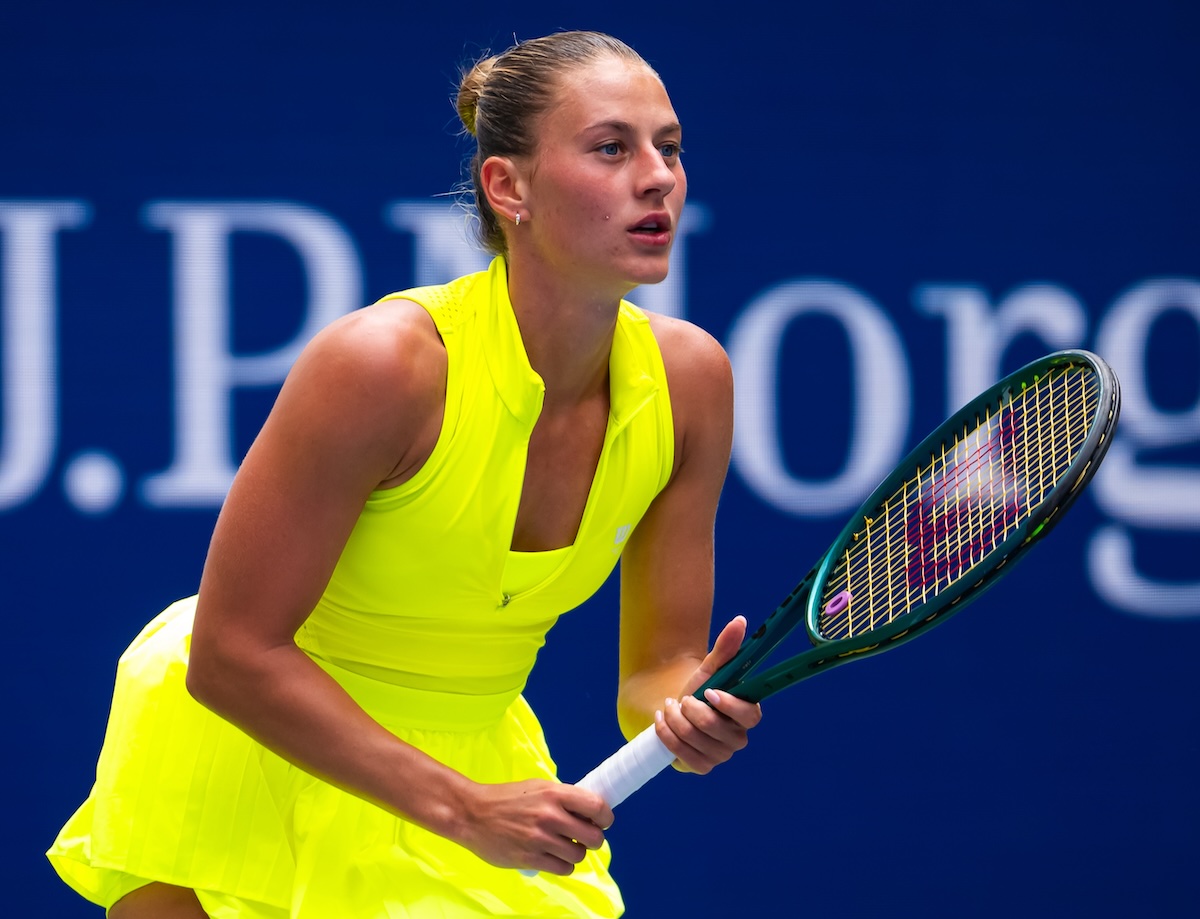
Marta Kostyuk is hitting tennis balls – in her two-piece set. In a new social media post the tennis star shows off her amazing body in her tennis whites, throwing her fans into a frenzy. “It’s just amazing how absolutely fit Marta is!!,” writes one of her followers. “Totally toned muscle 💪.. and very beautiful too.” Another added: “Marta Kostyuk looks very strong.” How does she approach diet, fitness, and self-care? Here is everything you need to know about her lifestyle habits.
Marta explains how she became a tennis player. “My mom was working a lot when I was small and, I don’t remember it, but my mom told me that I wanted to play tennis so much so I could see her. I have two more sisters, one older and one younger. I was in the middle but it was the period when my mom was working so much as a coach. I didn’t see mom that much. I wanted to see her a lot, so I was practicing. In the summer I was on the court from 8 in the morning to 8 in the evening, from when I was 4 or 5. At the same time I was doing pairs acrobatics, from 5 to 11. We finished fourth place in the national championships,” she told WTA Tour. “Tennis was the main goal, so I decided to stop acrobatics. I had to be so careful with my weight and it was so much stress. Evey day I was coming from school worrying about my weight. When I was 11, I decided to stop.”
Marta enjoys swimming. Swimming is a good way to get regular aerobic physical activity, according to the CDC. Just two and a half hours per week of aerobic physical activity, such as swimming, bicycling, or running, can decrease the risk of chronic illnesses. In addition to the many physical benefits, there are multiple studies supporting the mental health benefits of swimming as well.
Marta also enjoys stand up paddleboarding. The American Council on Exercise (ACE) agrees that paddle boarding is great for the core and also a great form of cardio. The water sport can burn an average of 385 calories for a 140 pound male and 436 for a female the same size, per a study conducted by Arizona State University.
To get her body ready for the court, Marta spends time in the gym strength training. “Warmed up? Yeah, dead,” she captioned a post. According to the Mayo Clinic, strength and weight training help reduce body fat, preserve and increase lean muscle mass, and burn calories more efficiently. Strength training may also help you:
Develop strong bones
Manage your weight
Enhance your quality of life
Manage chronic conditions
Sharpen your thinking skills
Another stay-fit in the water activity of Marta’s? Surfing. According to the Australian government’s Better Health, surfing provides many health benefits including cardiovascular fitness from paddling, shoulder and back strength, which also strengthens from the paddling, and leg and core strength. “Once you’re standing up on the board, strong legs and a strong core will keep you up,” they say.
Alexandra Engler is the senior beauty and lifestyle director at mindbodygreen and host of the beauty podcast Clean Beauty School. Previously, she’s held beauty roles at Harper’s Bazaar, Marie Claire, SELF, and Cosmopolitan; her byline has appeared in Esquire, Sports Illustrated, and Allure.com.
Image by mbg creative / courtesy of source
September 16, 2024
We love celebrating women at the top of their game. In our new series Game On, we’re interviewing top athletes about their well-being routines—covering everything from nutrition that makes them feel strong to the moments that bring them joy.
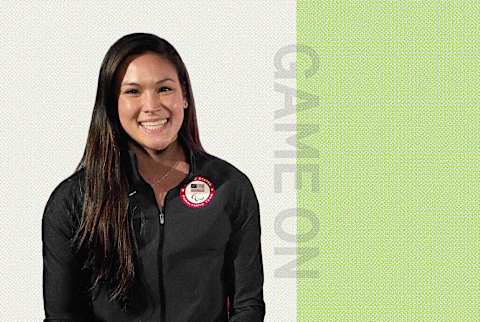
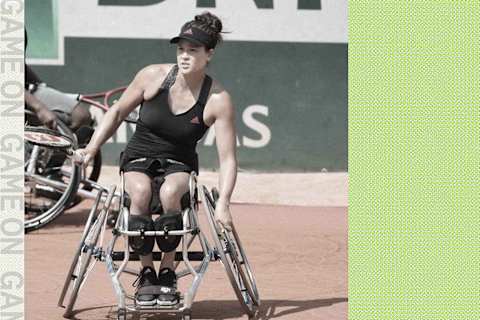
As the first American woman to win a Grand Slam Major title in wheelchair tennis and one of the top wheelchair tennis players in the U.S., 33-year-old Dana Mathewson knows what it means to be on top of your game.
Always an athletic kid, Mathewson played a variety of sports in her youth when she was able bodied. “I always liked soccer. I liked softball. I tried tennis once or twice at summer camp, but was not really into it,” she tells me over a recent video call.
However, after developing a rare autoimmune disorder called Transverse myelitis (TM), she became partial paraplegic, “or basically someone that needs to use a wheelchair to run or to get around,” she says.
After encouragement from her mom (which she says was, perhaps, insistent at times) she picked up adaptive sports—and this time tennis stuck. The rest unfolded all thanks to Mathewson’s sheer talent and drive.
Here, how she remains on top of her game.
mbg: What was it like when you started playing wheelchair tennis?
Dana Mathewson: My condition shut a lot of doors that I thought were my only doors leading to athletic pursuits. But luckily mom had talked to a lot of different people when I was in the hospital and found out what wheelchair sports and adaptive sports were.
At that stage of life, I had never seen anyone with a disability that wasn’t 90 years old. I just wasn’t exposed to a lot at that time, and I think that’s actually the case for a lot of Americans. Our country is so big that you don’t come into contact with a lot of different demographics.
At first I was one of the kids who had no interest in wheelchair sports. I thought it sounded really boring. I couldn’t conceptualize what it would be.
But my mom was like, “Nope! I want you to be active. I am signing you up for every camp possible.” And tennis was one of those.
I picked up a racket at—I think then I was around age 13—and something just clicked. I don’t know what it was that made me like wheelchair tennis more than able bodied tennis, because it’s virtually the same thing except one’s in a wheelchair. But it just clicked for me and I’ve been playing it ever since.
mbg: what means help you feel your strongest?
Mathewson: I’m a big breakfast person. I cannot start the day without breakfast. I know there’s lots of people that wake up and all they need is coffee and an apple. I’m not that girl.
I love waking up and having scrambled egg whites or an egg white omelet with toast. If I’m really in the mood, I’ll sauté mushrooms and spinach, and put that in there. That way I have protein and carbs to get me going. Having that hot meal just helps me feel ready.
Aside from that, I think that I’m very big on veggies. I’ve never been a big meat eater ever since I was a little girl. So if you were to offer me a steak, I wouldn’t really want to eat it. But I don’t have the vegetarian mindset of not wanting to eat meat because of ethical reasons, I just haven’t really enjoyed it.
So I eat a lot of tofu. I eat a lot of plant based proteins. And I do eat chicken and eggs and things like that. But I find that when I’m cooking—especially because my husband is vegan—we eat a lot of plant-based meals. And that’s also very easy to prepare when you have a tighter schedule like I do.
mbg: what is your strength training program?
Mathewson: I have a whole team of coaches down here in Orlando that I work with. My strength and conditioning team has specific programs I have to do every day.
So, for example, Mondays and Wednesdays are lifting days. So for me, that’s a lot of upper body, but we do actually have me doing stuff just to keep whatever muscles I have in my legs active. That will involve me using the SkiErg machine, the rower, free weights, bench press, and stuff like that.
Then Tuesdays and Thursdays are more conditioning based, so we’ll have court conditioning drills.
Friday is a circuit where I combine pulling a sled, rowing, lifting, and battle ropes. It’s brutal.
There’s good variability between conditioning and strength. I think that if you go completely one or the other, you can burn your body out—or you’re not providing your muscles the exercise that they need.
When I was in college I was just very obsessed with the idea of being skinny and being toned. I think a lot of girls fall into the trap of, “Well, I’m just going to be on the elliptical for 30 minutes or I’m going to be on the bike for an hour.” Yeah, that burns calories, but it doesn’t actually burn calories the same way it does like burning muscle.
So I try to make sure I get both: One day cardio, one day strength, one day cardio, one day strength. They’re both intense days, but your body gets a break.
When I was in college I was just very obsessed with the idea of being skinny and being toned. I think a lot of girls fall into the trap of, “Well, I’m just going to be on the elliptical for 30 minutes or I’m going to be on the bike for an hour.” Yeah, that burns calories, but it doesn’t actually burn calories the same way it does like burning muscle.
mbg: How do you recover?
Mathewson: After training, there’s a lot of stretching that we do. That was something that I have to admit I didn’t do for the bulk of my career and I was just lucky I didn’t have injuries. But now that I’m getting older, I really see the importance of stretching and cool downs after a workout.
I also think it’s important to recover mentally. I set aside time to play with my dog, call my friends, or even just sit on my couch and watch TV. I love the Real Housewives. It’s good to have things in your life that bring you joy!
A few years ago, my mindset was like, “I need to work hard. I just need to put my head down and be productive all of the time.” But I think it’s actually productive to be lazy sometimes. That’s what refuels you. Benign a couch potato, being a sloth, being by myself for a bit is what recharges my batteries.
My life is so much on-the-go, because I’m either training—exerting physical energy all day—or I’m traveling and competing—so there’s nervous energy. So it’s important for me to turn it off.
mbg: I wanted to ask you about the mental side, anyway. So we just talked about how you decompress. But I also want to know how you turn on and get ready for those matches?
Mathewson: That’s been something I’ve really had to work on in the past few years. Tennis is such mentally based sport, and I didn’t realize just how much until I got to the more elite level of playing. Because at that point, everyone has a good forehand. Everyone has a good backhand. Everyone has a good serve. Maybe one person is a little bit better than the other. But what really makes people win more often is their mindset.
And I think as an early tennis professional, I heard that, but didn’t really embrace it or didn’t really understand it, but I very much do now.
A lot of what I’ve been doing is positive self talk when I’m playing or before the match. I tend to give too much credit to my opponents before a match even starts. If you do that, then you’ve already lost the match, right? Because you’re already thinking like, Well, she hits super big or she’s really fast. She’s going to get everything.
I’ve had to learn to visualize positive outcomes. The night before a match, I will give myself jobs of things I want to do because I’m very goal oriented. What I mean by that is I’ll give myself assignments for myself for a match. I’ll write them down on a notecard, then try to visualize what it would look and feel like to achieve the goals. I do it again and again and again.
I tend to get quite distracted when I do visualization work. It’s actually really hard, as it can be hard for me to stay focused. It’s like training your muscles to do something. But I do that for a few minutes at a time and I’ll try to visualize as I’m falling asleep as well. It helps build confidence.
mbg: I think another thing that sets elite athletes apart is resilience. Some part of me thinks it might be something innate, that top athletes are born with. But I also think it’s a skillset that can be learned. How have you built resilience over the years?
Mathewson: I think you’re right that certain people have more of that stubborn mindset, which helps you be more resilient. What I mean by that is like you get knocked down five times, then you’ll get up six because you’re stubborn enough to keep trying. But I think that that can also be a learned trait too.
With tennis being my personal example, there’s only one person every week in a tournament that wins, right? So that means that everybody else has to lose. You play X number of tournaments a year. So there’s a lot of losing that you have to get comfortable with in tennis!
It’s week in and week out games, and most times you do lose. You might win a few,, but ultimately you’re ending up with an L most likely. Unless you’re Serena Williams. By nature of tennis being my job, it teaches you resilience because you learn how reframe loses.
It’s about fostering a resilient mindset—a growth mindset. There are ways of looking at “losing” that are positive. You’ll say, “I lost, but that’s OK because my serve was really good today.” Or “You know what, I need to work on my returns next time.”
Image by mbg Creative / courtesy of source
mbg: Oh, that’s so interesting. I’ve never thought of that, but it’s a great point. I bet that’s actually a great lesson to learn early on. I actually feel like tennis is probably a great sport for kids to learn for that reason. Speaking of, I wanted to ask you about advice you might have for young women athletes who want to play tennis? Or any sport really…
Mathewson: Tennis is really technical, so yes it can be frustrating. It can turn a lot of kids away from it. Or maybe kids will be frustrated because they don’t have a team they can play with, and that can be hard.
But tennis is one of the coolest sports in that it allows you to pick up a racket and play with anyone on any given day. You can just go to the park, meet someone, and play with them. You don’t need a whole team to play, like basketball or soccer.
But aside from that, I’d say to just stick with it and trust the process. Because it’s not always easy.
There’s sacrifices that have to be given to a sport that people don’t always think about when they’re kids. Like maybe you’ll have a tournament on a weekend when you want to go to a sleepover. Or maybe you’ll be getting frustrated that one practice didn’t go well, or other people are playing better than me.
So try and have fun with it still, because it’s not your job. You’re allowed to not be perfect. It is something you do for fun. So embrace the fun part of it.
Jessica Pegula of the United States return sa shot against Karolina Muchova of the Czech Republic … [+] during their women’s singles semifinal match at the 2024 US Open. (Photo by Sarah Stier/Getty Images)
Getty Images
Have you watched a healthy share of tennis action since the 2024 U.S. Open started on August 26? Well, if so, you may have noticed the slogan “The World’s Healthiest Sport” projected on the tennis courts. This, of course, refers to the sport of tennis as it wouldn’t make sense to place a reference to some other sport like basketball or cheese rolling there. This slogan is part of the big health and wellness vibe of the theme of this year’s fourth and final Grand Slam tennis tournament: “celebrating the power of tennis.” And that theme is an extension of the U.S. Tennis Association’s new give-em-health mission statement: “Growing tennis to inspire healthier people and communities everywhere.”
So is it fair to call tennis the “world’s healthiest sport?” Well, while there isn’t an official overall ranking of the health benefits of all sports, it’s not as if that “healthiest” claim is a complete swing and a miss. For example, a study published in 2018 in the Mayo Clinic Proceedings did find that among 8,577 Copenhagen, Denmark, residents, those who had regularly played tennis lived on average 9.7 years longer than those who had remained sedentary. And that nearly “tennish” years of additional life was longer than the gains seen among people who regularly played other sports such as badminton (on average 6.2 years more of life), soccer (4.7 years), cycling (3.7 years), swimming (3.4 years), jogging (3.2 years), calisthenics, (3.1 years) and health club activities (1.5 years).
These findings surely raised a racket among many sports enthusiasts. But there are a few caveats. The study did not include every sport out there. And tennis ain’t the only racket sport out there either. Plus, one study is never enough to draw a definitive conclusion. You always need multiple studies to show the same or similar result first. Additionally, the study showed a correlation or association between tennis and a longer life, which may or may not be a cause-and-effect relationship.
Frances Tiafoe of USA hits a backhand against Grigor Dimitrov of Bulgaria during a men’s singles … [+] quarterfinal match at the 2024 US Open. (Photo by Fatih Aktas/Anadolu via Getty Images)
Anadolu via Getty Images
That being said, other scientific studies have shown a range of different potential health benefits that can come from tennis. A review article in the British Journal of Sports Medicine from 2008 identified 24 studies that had evaluated the physical fitness of tennis players and summarized the findings of these studies. In general, those who played tennis tended to have “improved aerobic fitness, a lower body fat percentage, a more favourable lipid profile, reduced risk for developing cardiovascular disease, and improved bone health,” in the words of the authors.
All of this shouldn’t be super-surprising because tennis does involve quite a lot of vigorous movement that incorporates much of your body. You can’t really say that you’ll play a tennis match and keep a part of your body like your butt completely still all the time. Not with all the running movements with your legs and swinging motions with your arms.
And these bursts of movement can continue over sustained periods of time. A given point in tennis can last from a few seconds to much, much longer. The longest point in professional tennis history clocked in at a whopping 29 minutes. That’s as long as some episodes of Ted Lasso. This back-and-forth-back-and-forth-back-and-forth-and-so-forth occurred back in 1984 during a Virginia Slims of Richmond match between Vicki Nelson-Dunbar and Jean Hepner and consisted of 643 shots.
Aryna Sabalenka of Belarus returns a shot against Emma Navarro of the United States during their … [+] women’s singles semifinal match. (Photo by Jamie Squire/Getty Images)
Getty Images
That single point was significantly longer than the shortest ever professional tennis match in the Open era when Susan Tutt shellacked Marion Boundy in 20 minutes at the Surrey Championships in 1969. The longest professional tennis match ever was an 11 hour, 5 minute first-round men’s singles match between John Isner and Nicolas Mahut at the 2010 Wimbledon Championships. Most tennis matches fall within the hour to a few hours range.
Another advantage of tennis is that it can be played across a very wide age range. You probably aren’t going to find too many seventy year olds playing tackle football. But it’s not that uncommon to find people playing tennis well into that age range and beyond. Therefore, in theory, you could garner the health benefits of tennis for a longer period of time than sports that tend to more restricted to younger folks.
Moreover, the injury risks of tennis compare pretty darn favorably to many other sports. The Aspen Institute’s Sports and Society Program compiled the Healthy Sport Index that scored and ranked each of the 10 most popular high school boys and girls sports on their safety. This was based on a weighted composite of the overall injury rates, time loss due to injury, concussion rates, numbers of injuries requiring surgery, numbers of non-fatal catastrophic injuries and illnesses and expert opinion. Tennis came out on top for both boys and girls followed by swimming and cross-country running. The injury rate for tennis was lower than that of practically all other sports with the exception of swimming.
Finally, the surge in tennis popularity in 2020 highlighted not only the fact that tennis could be played even when Covid-19 made it difficult or impossible to play many other sports but also the social benefits of tennis. You can talk and interact with your partners readily during a tennis match. That may not always be the case in other sports like boxing unless you are saying something like, “Thank you for punching me in the face.”
So, while the “world’s healthiest sport” is certainly not official, the potential health benefits of tennis are undeniable. Sure, tennis may not be the healthiest and most ideal sport for everyone. The health benefits of tennis do indeed depend on how and how often you play the sport and who you are and what you body is like. And certainly, no single sport is going to offer everything to everyone over all other sports, which is why many elite athletes grow up playing multiple sports and health experts encourage everyone to cross-train and sample different sports rather than stick with only one.
But the 2024 U.S. Open probably didn’t serve up “The World’s Healthiest Sport” label as a formal claim, an official competition against other sports or an attempt to tell everyone to just play tennis and not other sports. No, instead the intended net result was likely to extol the health benefits of tennis. And to tell everyone that even though the U.S. Open is filled with fierce competition, tennis isn’t just about the competition.
For most observers, it was proof of sport’s ability, if only for a fleeting moment, to bring people together – even when they live on opposite sides of one of the world’s most heavily armed borders.
But one of the most celebrated images of the Paris Olympics – a selfie taken by medal-winning table tennis players from either side of the divided Korean peninsula – appears to have landed the North Korea duo in trouble back home.
In a rare moment of Korean-style ping-pong diplomacy, the South Korean mixed doubles players Lim Jong-hoon and Shin Yu-bin and the North Korean pairing Kim Kum-yong and Ri Jong-sik beamed as they posed for a selfie on the podium after receiving their bronze and silver medals at the South Paris Arena last month. The Chinese gold medallists, Wang Chuqin and Sun Yingsha, also appear in the photos.
One of the images was posted to the Games’ official Instagram site, where it drew hundreds of thousands of likes, while People magazine named it as one of the Olympics’ top 12 moments of sportsmanship in Paris.
But this week media reports claimed that Kim and Ri had been placed under “ideological scrutiny”. The Daily NK, a North Korea-focused website based in Seoul, quoted a high-ranking source in Pyongyang as saying that athletes and members of the North Korean Olympic Committee had been undergoing a month-long “ideological scrubbing” since returning home in mid-August – reportedly standard procedure for sportsmen and women who have been exposed to life outside the communist state.
The website reported the country’s athletes had been instructed not to interact with fellow competitors from other countries, including the South, and were warned that “fraternisers” could face punishment.
The table tennis players were reportedly singled out for criticism in a report submitted to officials for “grinning” as they posed alongside athletes from a country the regime has described as its “number one enemy”.
The selfie was snapped at a time of heightened tensions between the two Koreas, whose 1950-53 conflict ended in a truce but not a peace treaty. The North recently protested against joint military exercises involving the South Korean, US and Japanese forces, while growing cooperation between the North’s leader, Kim Jong-un, and Russian president Vladimir Putin have caused alarm across the region.
It isn’t clear what, if any, sanctions the table tennis players could face. That, the Korea Times suggested, could depend on how much remorse they show for momentarily lowering their guard in Paris.
North Korean athletes returning from international competitions undergo a three-stage “ideological review” that ends with self-reflection sessions by team members, in which they are expected to criticise “inappropriate behaviour” among their teammates, as well as reflecting on their own actions, the Korea Times said.
The newspaper quoted a source as saying that heartfelt expressions of contrition can spare athletes “political or administrative punishments”, the nature of which is unclear.
Human Rights Watch said the reports “demonstrate the North Korean government’s efforts to control behaviour beyond its borders.
“The International Olympic Committee … has a responsibility to protect athletes from all forms of harassment and abuse, as set out in the Olympic Charter,” it said in a statement. “North Korean athletes should not fear retribution for actions at the Games, not least when their actions embody the values of respect and friendship, on which the Olympic movement is built.”
While Kim and Ri won a silver medal, other athletes have reportedly been punished for underperforming.
The Daily NK cited the case of the North Korean football team, who were knocked out of the 2010 World Cup in South Africa after losing all three of their group games and conceding 12 goals.
The players were reportedly subjected to a six-hour excoriation for “betraying” the communist nation’s ideological struggle, while their coach, Kim Jung-hun, was forced to work on a building site.
NEW YORK — Caroline Garcia, a U.S. Open semifinalist two years ago, drew attention Wednesday to the ever-present problem of cyberbullying in tennis, particularly by people who bet on matches, after her first-round loss at the Grand Slam tournament.
Other players echoed Garcia’s lament, including defending champion Coco Gauff, who said: “You could be having a good day, and then somebody will literally tell you, ‘Oh, go kill yourself.’ You’re, like, ‘OK, thanks.’”
Garcia, a 30-year-old from France who has been ranked as high as No. 4, was seeded 28th at Flushing Meadows but was eliminated by Renata Zarazúa 6-1, 6-4 on Tuesday. Zarazúa is ranked 92nd and is making her U.S. Open debut.
“Maybe you can think that it doesn’t hurt us. But it does. We are humans,” Garcia wrote on social media. “And sometimes, when we receive (these) messages, we are already emotionally destroyed after a tough loss. And they can be damaging. Many before me have raised the subject. And still, no progress has been made.”
Garcia offered examples of “just a few” of the hundreds of messages she said she was sent after losing recent matches, including one telling her she should consider suicide and another that read, “I hope your mom dies soon.”
“At the end of the day, I’m just a normal girl working really hard and trying my best, I have tools and have done work to protect myself from this hate. But still, this is not OK,” Garcia wrote. “It really worries me when I think about younger players coming up, that have to go through this. People that still haven’t yet developed fully as a human and that really might be affected by this hate.”
As other players have mentioned in the past, she talked about the issue of being attacked verbally by gamblers upset about losing money.
“Tournaments and the sport keeps partnering with betting companies, which keep attracting new people to unhealthy betting,” Garcia said. “The days of cigarette brands sponsoring sports are long gone. Yet, here we are promoting betting companies, which actively destroy the life of some people.”
“You hear a lot of nasty things, and people talk about your appearance, your family’s appearance, and all these things,” Gauff said. “If you are already struggling with your own mental issues and, on top of that, you have people digging deeper, it is tough.”
As Frances Tiafoe, a semifinalist in New York in 2022, said: “People are saying outlandish … stuff. It’s just wild.”
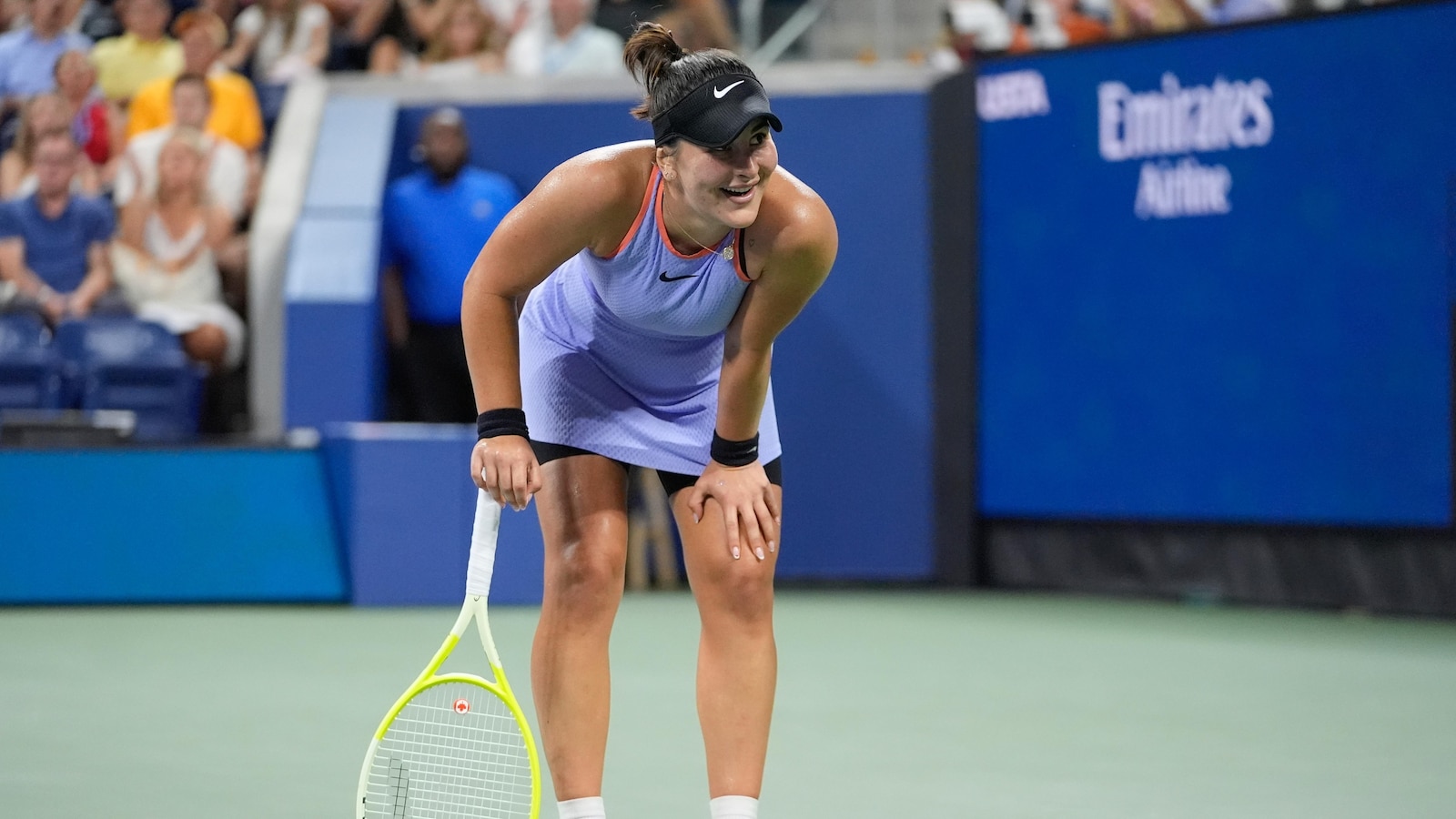
“I try not to look at the comments,” 2019 U.S. Open champion Bianca Andreescu said, mentioning that she will ask her PR person to scroll through and let her know when there are positive ones. “Because there’s always going to be a negative comment and I’ve learned that the hard way.”
Players have called it out in the past, and Grand Slam tournaments have been trying to help prevent messages from reaching the athletes.
The French Open partnered in 2022 with a company that uses artificial intelligence to filter players’ social media accounts, and the groups that run the U.S. Open, Wimbledon, the women’s tour and the lower-level ITF Tour announced in December they were starting a service to monitor for “abusive and threatening content” on X, Instagram, YouTube, Facebook and TikTok.
“Many before me have raised the subject,” Garcia said. “And still, no progress has been made. Social media platforms don’t prevent it, despite AI being in a very advanced position.”
She closed her message by addressing anyone reading it, suggesting that “next time you see a post from an athlete, singer or any other person, that has failed or lost, you will remember that she or he is also a human being, trying his best in life. Be kind. Give love. Enjoy life.”