hacklink hack forum hacklink film izle hacklink marsbahisizmir escortsahabetpornJojobetcasibompadişahbetjojobet

Tag: Trump

  • Trump says migrants who have committed murder have introduced ‘a lot of bad genes in our country’

    Trump says migrants who have committed murder have introduced ‘a lot of bad genes in our country’

    NEW YORK — Republican presidential nominee Donald Trump on Monday suggested that migrants who are in the U.S. and have committed murder did so because “it’s in their genes.” There are, he added, “a lot of bad genes in our country right now.”

    It’s the latest example of Trump alleging that immigrants are changing the hereditary makeup of the U.S. Last year, he evoked language once used by Adolf Hitler to argue that immigrants entering the U.S. illegally are “poisoning the blood of our country.”

    Trump made the comments Monday in a radio interview with conservative host Hugh Hewitt. He was criticizing his Democratic opponent for the 2024 presidential race, Vice President Kamala Harris, when he pivoted to immigration, citing statistics that the Department of Homeland Security says include cases from his administration.

    “How about allowing people to come through an open border, 13,000 of which were murderers? Many of them murdered far more than one person,” Trump said. “And they’re now happily living in the United States. You know, now a murderer — I believe this: it’s in their genes. And we got a lot of bad genes in our country right now. Then you had 425,000 people come into our country that shouldn’t be here that are criminals.”

    Trump’s campaign said his comments regarding genes were about murderers.

    “He was clearly referring to murderers, not migrants. It’s pretty disgusting the media is always so quick to defend murderers, rapists, and illegal criminals if it means writing a bad headline about President Trump,” Karoline Leavitt, the Trump campaign’s national press secretary, said in a statement.

    U.S. Immigration and Customs Enforcement released immigration enforcement data to Republican Rep. Tony Gonzales last month about the people under its supervision, including those not in ICE custody. That included 13,099 people who were found guilty of homicide and 425,431 people who are convicted criminals.

    But those numbers span decades, including during Trump’s administration. And those who are not in ICE custody may be detained by state or local law enforcement agencies, according to the Department of Homeland Security, which oversees ICE.

    The Harris campaign declined to comment.

    Asked during her briefing with reporters on Monday about Trump’s “bad genes” comment, White House press secretary Karine Jean-Pierre said, “That type of language, it’s hateful, it’s disgusting, it’s inappropriate, it has no place in our country.”

    The Biden administration has stiffened asylum restrictions for migrants, and Harris, seeking to address a vulnerability as she campaigns, has worked to project a tougher stance on immigration.

    The former president and Republican nominee has made illegal immigration a central part of his 2024 campaign, vowing to stage the largest deportation operation in U.S. history if elected. He has a long history of comments maligning immigrants, including referring to them as “animals” and “killers,” and saying that they spread diseases.

    Last month, during his debate with Harris, Trump falsely claimed Haitian immigrants in Ohio were abducting and eating pets.

    As president, he questioned why the U.S. was accepting immigrants from Haiti and Africa rather than Norway and told four congresswomen, all people of color and three of whom were born in the U.S., to “go back and help fix the totally broken and crime infested places from which they came.”

    ___

    Associated Press writer Will Weissert in Washington contributed to this report.

    Source link

  • Elon Musk makes first appearance at Trump rally casting election in dire terms

    Elon Musk makes first appearance at Trump rally casting election in dire terms

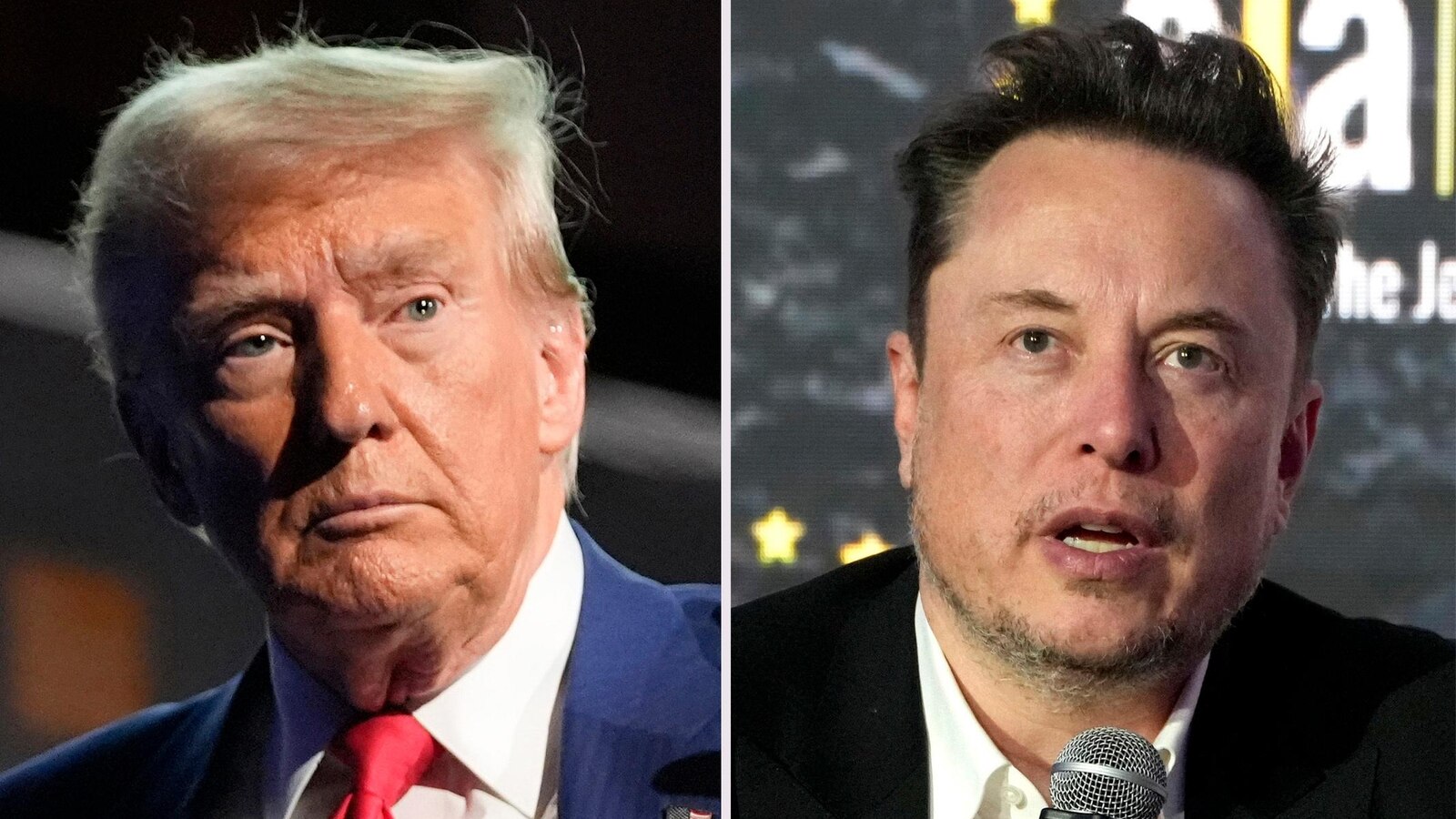
    Billionaire tech executive Elon Musk cast the upcoming presidential election in dire terms during a Saturday appearance with Donald Trump, calling the Republican presidential nominee the only candidate “to preserve democracy in America.”

    The CEO of SpaceX and Tesla who also purchased X, Musk joined Trump in Butler, Pennsylvania, where the former president survived an assassination attempt in July. He warned “this will be the last election” if Trump doesn’t win and, clad in a black-on-black cap bearing the “Make America Great Again” slogan of Trump’s campaign, appeared to acknowledge the foreboding nature of his remarks.

    “As you can see I am not just MAGA — I am Dark MAGA,” he said.

    The appearance marked the first time Musk joined one of Trump’s trademark rallies and represented the growing alliance between the two men in the final stretch of a competitive presidential election. Musk created a super PAC supporting the Republican nominee that has been spending heavily on get-out-the-vote efforts in the final months of the campaign. Trump has said he would tap Musk to lead a government efficiency commission if he regains the White House.

    Trump joined Musk in August for a rare public conversation on X, an overwhelmingly friendly chat that spanned more than two hours. In it, the former president largely focused on the July assassination attempt, illegal immigration and his plans to cut government regulations.

    Before a massive crowd on Saturday, Musk sought to portray Trump as a champion of free speech, arguing that Democrats want “to take away your freedom of speech, they want to take away your right to bear arms, they want to take away your fight to vote, effectively.” Musk went on to criticize a California effort to ban voter ID requirements.

    Saturday’s rally took place at the same property where a gunman’s bullets grazed Trump’s right ear and killed his supporter, Corey Comperatore. The shooting left multiple others injured.

    Several members of Comperatore’s family, as well as other attendees and first responders from the July rally, returned to the site on Saturday. Also appearing with the former president were his running mate Republican Ohio Sen. JD Vance, son Eric Trump, daughter-in-law and RNC co-chair Lara Trump, along with Pennsylvania lawmakers and sheriffs.

    ___

    Kinnard reported from Chapin, South Carolina, and can be reached at http://x.com/MegKinnardAP.

    Source link

  • WOMEN’S SOCCER: Bulldogs trump Dartmouth in first Ivy League game

    WOMEN’S SOCCER: Bulldogs trump Dartmouth in first Ivy League game


    Yale Athletics

    On Saturday night, the Yale Women’s Soccer team (6–3, 1–0 Ivy) etched their first conference victory in the books against Dartmouth (6–3–1, 0–1 Ivy) at Burnham Field in Hanover, New Hampshire.

    For the past three years, the Bulldogs have failed to defeat the Big Green, with two of those three games ending in home losses. It was their turn to give Dartmouth a taste of their own medicine.

    “1–0 each game has been our approach all season and this team has stayed so focused on that throughout the year,” Head Coach Sarah Martinez told Yale Athletics. “But I know this one was circled on the schedule wanting to set a tone in the Ivy League.”

    Quickly into the first period, Dartmouth attacked Yale goalkeeper Kyla Holmes ’27. Despite pressure from the opposition, Holmes maintained the sanctity of her goal, making three saves in just the first period, keeping the Big Green at zero. Although just a sophomore, Holmes has started more games for the Bulldogs than any Yalie on the roster and has been a staple for their defense.

    At 37:38 in the first period, Tanner Cahalan ’25 scored the first goal of the game on a strike from outside the box, assisted by Ashley Kirschner ’26. This was Cahalan’s second goal of the season. 

    The team maintained that lead going into the second period until 56:01, when Dartmouth’s Daisy Granholm pushed past Yale defenders and tied the game, 1–1. 

    As the clock dwindled, both teams desperately fought to avoid a tie in their Ivy League opener. 

    At 84:29, Ellie Rappole ’25 raced down the far side of the field and shot the ball high over the head of the Big Green goalie, securing the game-winning goal. This was Rappole’s third goal, a total that leads the team.

    This marked the team’s third win in a row. 

    Martinez told Yale Athletics how impressed she was by the way her team performed.

    “I am so proud of our team for this result,” she said. “The first half quality, the second half grit, and finding a way to get three points on the road is a huge accomplishment in this league.”

    The Bulldogs match up against the Boston University Terriers (2–6–3, 2–0–1 Patriot) on Tuesday, Oct. 1 at 7 p.m. at Reese Stadium in New Haven.  


    MEREDITH HENDERSON


    Meredith Henderson covers a variety of sports for the YDN. She is a sophomore in Saybrook College from Keller, Texas. She plays varsity softball and is double-majoring in Psychology and English with a concentration in creative writing.


    Source link

  • Trump will soon be able to sell shares in Truth Social’s parent company. What’s at stake?

    Trump will soon be able to sell shares in Truth Social’s parent company. What’s at stake?

    NEW YORK — For all the debate about just how rich former President Donald Trump is, one thing is clear: His ownership stake in Trump Media & Technology Group makes him a billionaire.

    The company behind the Truth Social platform is worth more than $3.5 billion on Wall Street, and Trump owns more than half of it. So far, Trump and other insiders in the company known as TMTG have been unable to cash in because a “lock-up agreement” has prevented them from selling any of their shares since TMTG began trading publicly in March.

    Trump’s lock-up deal looks set to expire later this week. But if he sells, Trump risks sending a negative signal to other shareholders and prompting them to dump their shares. For now, Trump says he’s not selling.

    Here’s a look at what the end of the lock-up could mean and what Truth Social actually does:

    Trump on Thursday will be free to start selling his shares of TMTG as long as they don’t close below $12 before then. They closed Friday at nearly $18.

    Trump entered into the lock-up agreement in March, when TMTG merged with a shell company named Digital World Acquisition Corp. and took its place on the Nasdaq stock market.

    Trump does not run TMTG. Its CEO is Devin Nunes, the former Republican U.S. Representative from California. But Trump is the biggest draw for its Truth Social network, posting his “truths” on the social-media platform.

    Trump owned 57.3% of all the company’s shares, as of Aug. 15. Based on the company’s total market value of nearly $3.6 billion coming into the week, that made Trump’s stake worth a little more than $2 billion.

    Trump launched Truth Social, in February 2022, after he was banned from major sites such as Facebook and the platform formerly known as Twitter following the Jan. 6 attack on the U.S. Capitol. He’s since been reinstated to both — and endorsed by X owner Elon Musk — but he still mostly posts on his own platform.

    While the platform sought to capitalize on the outrage over Trump’s social media bans to attract a broad audience, Truth Social, much like fellow right-leaning social media platforms Gettr and Parler, has not been able to move much beyond an echo chamber of conservative political commentary.

    Truth Social is marketed as the antidote to mainstream social media apps, which Trump and his supporters say discriminate against their views and limit free expression, said Roxana Muenster, a doctoral student at Cornell University who studies the far-right and digital communication. Its audience, she added, is mainly Trump’s MAGA base. “There is also a lot of hate speech and extremism on the platform due to their lax approach to content moderation.”

    As part of an agreement that runs until February 2025, Trump has agreed to wait six hours after posting on Truth Social before he can post any “non-political communications” on other social media platforms

    However, this is at the former president’s sole discretion, and as the company notes in a regulatory filing, as “a candidate for president, most or all of President Trump’s social media posts may be deemed by him to be politically related.”

    The company said in a recent regulatory filing that it relies on advertising for all of its revenue. That revenue is miniscule — it took in just $836,900 in its most recent quarter, down 30% from $1.2 million a year earlier. For the three-month period that ended June 30, the company posted a loss of $16.4 million. About half of that was legal expenses related to its merger with Digital World.

    In its latest quarter, Trump Media said it also incurred $3.1 million of technology consulting and software licensing expenses, mainly related to its software licensing agreement to power its new TV streaming service called Truth+.

    Unlike more mainstream social media platforms, Truth Social does not release information about certain measures of performance, such as signups and average revenue per user. This can make it more challenging for investors to determine how the company’s business is doing.

    Poorly, for the most part. After sitting above $60 in March, it tumbled toward $16 before perking up a bit on Friday and closing at $17.97.

    A stock’s price is supposed to rise and fall with its prospects for making money, but critics say TMTG’s stock has instead tended to move with investors’ expectations for Trump’s re-election chances. It’s also been incredibly volatile, diving and soaring through pulse-raising swings day to day if not hour to hour. The stock has had 15 days since the start of April where it’s jumped or dropped more than 10%.

    At a press conference on Friday, he suggested it may be because of fears that he would sell his own shares. “It’s different if I leave,” he said.

    The stock market works on supply and demand, and if many shares of any stock were suddenly to become available because a shareholder wanted to sell, that would likely hurt its price.

    Beyond that, though, Trump is a huge draw for TMTG’s stock himself. A stock is generally worth whatever the latest and the next buyer will pay for it. Investors would likely be less willing to pay higher prices for TMTG stock if its main draw were selling his own shares of the company.

    At the Friday press conference, he said he would not sell when the lock-up lifts. He said he does not need the money.

    “No, I’m not selling,” he said. “No, I love it. I use it as a method of getting out my word.”

    That caused a mini-rally for the stock of 11.8%.

    Yes. Major investors who own more than 10% of a company must report their sales of its stock to the U.S. Securities and Exchange Commission within two business days.

    When there will be a lot of selling, companies often arrange for a follow-on offering, an organized sale where underwriters can find buyers for the shares rather than just dumping them into the market, according to Jay Ritter, an expert on initial public offerings at the University of Florida’s Warrington College of Business.

    “With founders or large shareholders, such as Donald Trump, it is common for them to sell a modest fraction of their shares in order to diversify,” Ritter said. “It is unusual for them to sell a large fraction of shares as soon as they can.”

    No, says Ritter, who believes TMTG’s stock price is too high relative to how much money the company is making and looks set to make.

    Ritter said the stock could drop more than 80%. “Because of this probable large percentage decline, existing shareholders have a greater incentive than usual to sell now rather than wait,” he said.

    That could push other big shareholders, such as CEO Nunes, “to sell a lot of their shares quickly, whether or not Donald Trump sells any of his shares.”

    Source link

  • Donald Trump doesn’t share details about his family’s cryptocurrency venture during X launch event

    Donald Trump doesn’t share details about his family’s cryptocurrency venture during X launch event

    WASHINGTON — WASHINGTON (AP) — Republican presidential nominee Donald Trump on Monday launched his family’s cryptocurrency venture, World Liberty Financial, with an interview on the X social media platform in which he also gave his first public comments on the apparent assassination attempt against him a day earlier.

    Trump did not discuss specifics about World Liberty Financial or how it would work, pivoting from questions about cryptocurrency to talking about artificial intelligence or other topics. Instead, he recounted his experience Sunday, saying he and a friend playing golf “heard shots being fired in the air, and I guess probably four or five.”

    “I would have loved to have sank that last putt,” Trump said. He credited the Secret Service agent who spotted the barrel of a rifle and began firing toward it as well as law enforcement and a civilian who he said helped track down the suspect.

    World Liberty Financial is expected to be a borrowing and lending service used to trade cryptocurrencies, which are forms of digital money that can be traded over the internet without relying on the global banking system. Exchanges often charge fees for withdrawals of Bitcoin and other currencies.

    Other speakers after Trump, including his eldest son, Don Jr., talked about embracing cryptocurrency as an alternative to what they allege is a banking system tilted against conservatives.

    Experts have said a presidential candidate launching a business venture in the midst of a campaign could create ethical conflicts.

    “Taking a pro-crypto stance is not necessarily troubling; the troubling aspect is doing it while starting a way to personally benefit from it,” Jordan Libowitz, a spokesperson for the government watchdog group Citizens for Responsibility and Ethics in Washington, said earlier this month.

    During his time in the White House, Trump said he was “not a fan” of cryptocurrency and tweeted in 2019, “Unregulated Crypto Assets can facilitate unlawful behavior, including drug trade and other illegal activity.” However, during this election cycle, he has reversed himself and taken on a favorable view of cryptocurrencies.

    He announced in May that his campaign would begin accepting donations in cryptocurrency as part of an effort to build what it calls a “crypto army” leading up to Election Day. He attended a bitcoin conference in Nashville this year, promising to make the U.S. the “crypto capital of the planet” and create a bitcoin “strategic reserve” using the currency that the government currently holds.

    Hilary Allen, a law professor at American University who has done research on cryptocurrencies, said she was skeptical of Trump’s change of heart on crypto.

    “I think it’s fair to say that that reversal has been motivated in part by financial interests,” she said.

    Crypto enthusiasts welcomed the shift, viewing the launch as a positive sign for investors if Trump retakes the White House.

    Meanwhile, Vice President Kamala Harris’ campaign has not offered policy proposals on how it would regulate digital assets like cryptocurrencies.

    In an effort to appeal to crypto investors, a group of Democrats, including Sens. Chuck Schumer and Kirsten Gillibrand of New York, participated in an online “Crypto 4 Harris” event in August.

    Neither Harris nor members of her campaign staff attended the event.

    ____

    Gomez Licon contributed from Fort Lauderdale, Florida.

    Source link

  • Which candidate is better for tech innovation? Venture capitalists divided on Harris or Trump

    Which candidate is better for tech innovation? Venture capitalists divided on Harris or Trump

    LOS ANGELES — Being a venture capitalist carries a lot of prestige in Silicon Valley. Those who choose which startups to fund see themselves as fostering the next big waves of technology.

    So when some of the industry’s biggest names endorsed former President Donald Trump and the onetime VC he picked for a running mate, JD Vance, people took notice.

    Then hundreds of other VCs — some high profile, others lesser-known — threw their weight behind Vice President Kamala Harris, drawing battle lines over which presidential candidate will be better for tech innovation and the conditions startups need to thrive. For years, many of Silicon Valley’s political discussions took place behind closed doors. Now, those casual debates have gone public — on podcasts, social media and online manifestos.

    Venture capitalist and Harris backer Stephen DeBerry says some of his best friends support Trump. Though centered in a part of Northern California known for liberal politics, the investors who help finance the tech industry have long been a more politically divided bunch.

    “We ski together. Our families are together. We’re super tight,” said DeBerry, who runs the Bronze Venture Fund. “This is not about not being able to talk to each other. I love these guys — they’re almost all guys. They’re dear friends. We just have a difference of perspective on policy issues.”

    It remains to be seen if the more than 700 venture capitalists who’ve voiced support for a movement called “VCs for Kamala” will match the pledges of Trump’s well-heeled supporters such as Elon Musk and Peter Thiel. But the effort marks “the first time I’ve seen a galvanized group of folks from our industry coming together and coalescing around our shared values,” DeBerry said.

    “There are a lot of practical reasons for VCs to support Trump,” including policies that could drive corporate profits and stock market values and favor wealthy benefactors, said David Cowan, an investor at Bessemer Venture Partners. But Cowan said he is supporting Harris as a VC with a “long-term investment horizon” because a “Trump world reeling from rampant income inequality, raging wars and global warming is not an attractive environment” for funding healthy businesses.

    Several prominent VCs have voiced their support for Trump on Musk’s social platform X. Public records show some of them have donated to a new, pro-Trump super PAC called America PAC, whose donors include powerful tech industry conservatives with ties to SpaceX and Paypal and who run in Musk’s social circle. Also driving support is Trump’s embrace of cryptocurrency and promise to end an enforcement crackdown on the industry.

    Although some Biden policies have alienated parts of the investment sector concerned about tax policy, antitrust scrutiny or overregulation, Harris’ bid for the presidency has reenergized interest from VCs who until recently sat on the sidelines. Some of that excitement is due to existing relationships with Silicon Valley that are borne out of Harris’ career in the San Francisco area and her time as California’s attorney general.

    “We buy risk, right? And we’re trying to buy the right type of risk,” Leslie Feinzaig, founder of “VCs for Kamala” said in an interview. “It’s really hard for these companies that are trying to build products and scale to do so in an unpredictable institutional environment.”

    The schism in tech has left some firms split in their allegiances. Although venture capitalists Marc Andreessen and Ben Horowitz, founders of the firm that is their namesake, endorsed Trump, one of their firm’s general partners, John O’Farrell, pledged his support for Harris. O’Farrell declined further comment.

    Doug Leone, the former managing partner of Sequoia Capital, endorsed Trump in June, expressing concern on X “about the general direction of our country, the state of our broken immigration system, the ballooning deficit, and the foreign policy missteps, among other issues.” But Leone’s longtime business partner at Sequoia, Michael Moritz, wrote in the Financial Times that tech leaders supporting Trump “are making a big mistake.”

    Shaun Maguire, a partner at Sequoia, posted on X that he donated $300,000 to Trump’s campaign after supporting Hilary Clinton in the 2016 presidential election. Federal Election Commission records show that Maguire donated $500,000 to America PAC in June; Leone donated $1 million.

    “The area where I disagree with Republicans the most is on women’s rights. And I’m sure I’ll disagree with some of Trump’s policies in the future,” Maguire wrote. “But in general I think he was surprisingly prescient.”

    Feinzaig, managing director at venture firm Graham & Walker, said that she launched “VCs for Kamala” because she felt frustrated that “the loudest voices” were starting to “sound like they were speaking for the entire industry.”

    Much of the VC discourse about elections is in response to a July podcast and manifesto in which Andreessen and Horowitz backed Trump and outlined their vision of a “Little Tech Agenda” that they said contrasted with the policies sought by Big Tech.

    They accused the U.S. government of increasing hostility toward startups and the VCs who fund them, citing Biden’s proposed higher taxes on the wealthy and corporations and regulations they said could hobble emerging industries involving blockchain and artificial intelligence.

    Vance, a U.S. senator from Ohio who spent time in San Francisco working at Thiel’s investment firm, voiced a similar perspective about “little tech” more than a month before he was chosen as Trump’s running mate.

    “The donors who were really involved in Silicon Valley in a pro-Trump way, they’re not big tech, right? They’re little tech. They’re starting innovative companies. They don’t want the government to destroy their ability to innovate,” Vance said in an interview on Fox News in June.

    Days earlier, Vance had joined Trump at a San Francisco fundraiser at the home of venture capitalist and former PayPal executive David Sacks, a longtime conservative. Vance said Trump spoke to about 100 attendees that included “some of the leading innovators in AI.”

    DeBerry said he doesn’t disagree with everything Andreesen Horowitz founders espouse, particularly their wariness about powerful companies controlling the agencies that regulate them. But he objects to their “little tech” framing, especially coming from a multibillion-dollar investment firm that he says is hardly the voice of the little guy. For DeBerry, whose firm focuses on social impact, the choice is not between big and little tech but “chaos and stability,” with Harris representing stability.

    Complicating the allegiances is that a tough approach to breaking up the monopoly power of big corporations no longer falls along partisan lines. Vance has spoken favorably of Lina Khan, who Biden picked to lead the Federal Trade Commission and has taken on several tech giants. Meanwhile, some of the most influential VCs backing Harris — such as LinkedIn co-founder Reid Hoffman; and Sun Microsystems co-founder Vinod Khosla, an early investor in ChatGPT-maker OpenAI — have sharply criticized Khan’s approach.

    U.S. Rep. Ro Khanna, a Democrat whose California district encompasses part of Silicon Valley, said Trump supporters are a vocal minority reflecting a “third or less” of the region’s tech community. But while the White House has appealed to tech entrepreneurs with its investments in clean energy, electric vehicles and semiconductors, Khanna said Democrats must do a better job of showing that they understand the appeal of digital assets.

    “I do think that the perceived lack of embrace of Bitcoin and the blockchain has hurt the Democratic Party among the young generation and among young entrepreneurs,” Khanna said.

    Naseem Sayani, a general partner at Emmeline Ventures, said Andreessen and Horowitz’s support of Trump became a lightning rod for those in tech who do not back the Republican nominee. Sayani signed onto “VCs for Kamala,” she said, because she wanted the types of businesses that she helps fund to know that the investor community is not monolithic.

    “We’re not single-profile founders anymore,” she said. “There’s women, there’s people of color, there’s all the intersections. How can they feel comfortable building businesses when the environment they’re in doesn’t actually support their existence in some ways?”

    ___

    Source link

  • The US is preparing criminal charges in Iran hack targeting Trump, AP sources say

    The US is preparing criminal charges in Iran hack targeting Trump, AP sources say

    WASHINGTON — The Justice Department is preparing criminal charges in connection with an Iranian hack that targeted Donald Trump’s presidential campaign in a bid to shape the outcome of the November election, two people familiar with the matter said Thursday.

    It was not immediately clear when the charges might be announced or whom precisely they will target, but they are the result of an FBI investigation into an intrusion that investigators across multiple agencies quickly linked to an Iranian effort to influence American politics.

    The prospect of criminal charges comes as the Justice Department has raised alarms about aggressive efforts by countries including Russia and Iran to meddle in the presidential election between Trump and Democratic nominee Kamala Harris, including by hacking and covert social media campaigns designed to shape public opinion.

    Iran “is making a greater effort to influence this year’s election than it has in prior election cycles and that Iranian activity is growing increasingly aggressive as this election nears,” Assistant Attorney General Matthew Olsen, the Justice Department’s top national security official, said in a speech Thursday in New York City.

    “Iran perceives this year’s elections to be particularly consequential in impacting Iran’s national security interests, increasing Tehran’s inclination to try to shape the outcome,” he added.

    The Trump campaign disclosed on Aug. 10 that it had been hacked and said Iranian actors had stolen and distributed sensitive internal documents. At least three news outlets — Politico, The New York Times and The Washington Post — were leaked confidential material from inside the Trump campaign. So far, each has refused to reveal any details about what it received.

    Politico reported that it began receiving emails on July 22 from an anonymous account. The source — an AOL email account identified only as “Robert” — passed along what appeared to be a research dossier that the campaign had apparently done on the Republican vice presidential nominee, Ohio Sen. JD Vance. The document was dated Feb. 23, almost five months before Trump selected Vance as his running mate.

    The FBI, the office of the Director of National Intelligence and the Cybersecurity and Infrastructure Security Agency subsequently blamed that hack, as well as an attempted breach of the Biden-Harris campaign, on Iran.

    Those agencies issued a statement saying that the hacking and similar activities were meant to sow discord, exploit divisions within American society and influence the outcome of elections.

    The statement did not identify whether Iran has a preferred candidate, though Tehran has long appeared determined to seek retaliation for a 2020 strike Trump ordered as president that killed an Iranian general.

    The two people who discussed the looming criminal charges spoke on condition of anonymity to The Associated Press because they were not authorized to speak publicly about a case that had not yet been unsealed.

    The Washington Post first reported that charges were being prepared.

    Justice Department officials have been working to publicly call out and counter election interference efforts. The response is a contrast to 2016, when Obama administration officials were far more circumspect about Russian interference they were watching that was designed to boost Trump’s campaign.

    “We have learned that transparency about what we are seeing is critical,” Olsen, the Justice Department official, said Thursday.

    “It helps ensure that our citizens are aware of the attempts of foreign government to sow discord and spread falsehoods — all of which promotes resilience within our electorate,” he added. “It provides warnings to our private sector so they can better protect their networks. And it sends an unmistakable message to our adversaries — we’ve gained insight into your networks, we know what you’re doing, and we are determined to hold you accountable.”

    Last week, in an effort to combat disinformation ahead of the election, the Justice Department charged two employees of RT, a Russian state media company, with covertly funneling a Tennessee-based content creation company nearly $10 million to publish English-language videos on social media platforms with messages in favor of the Russia government’s interests and agenda.

    Source link

  • Trump says he’d create a government efficiency commission led by Elon Musk

    Trump says he’d create a government efficiency commission led by Elon Musk

    PHOENIX — Former President Donald Trump said Thursday he would create a government efficiency commission to audit the entire federal government, an idea suggested by billionaire Elon Musk, who would lead it.

    The commission is the latest attention-grabbing alliance between Trump and Musk, who leads companies including Tesla and SpaceX and has become an increasingly vocal supporter of Trump’s bid to return to the White House.

    The Republican presidential nominee claimed that in 2022, “fraud and improper payments alone cost taxpayers an estimated hundreds of billions of dollars.” He said the commission would recommend “drastic reforms” and develop a plan to eliminate fraud and improper payments within six months, which he said would save trillions of dollars.

    “We need to do it,” Trump said. “Can’t go on the way we are now.”

    Trump also promised to cut 10 government regulations for every new regulation implemented if he’s elected in November.

    He announced the plans in a speech to the Economic Club of New York, a group of executives and industry leaders, where he also unveiled proposals to slash regulations and boost energy production, embrace cryptocurrencies and drastically cut government spending as well as corporate taxes for companies that produce in the U.S.

    “I look forward to serving America if the opportunity arises,” Musk wrote on X, the social media platform he owns. “No pay, no title, no recognition is needed.”

    The former president and Musk discussed a role for the entrepreneur in a second Trump administration during a streamed conversation on X last month.

    “You’re the greatest cutter,” Trump told Musk then. “I need an Elon Musk — I need somebody that has a lot of strength and courage and smarts. I want to close up the Department of Education, move education back to the states.”

    Trump and Musk, two of the world’s most powerful men, have shifted from being bitter rivals to unlikely allies over the span of one election season.

    Musk, who described himself as a “moderate Democrat” until recently, suggested in 2022 that Trump was too old to be president again. Still, Musk formally endorsed Trump two days after his assassination attempt last month.

    Presidents have made various efforts to reform government over the years, including the National Partnership for Reinventing Government created during Bill Clinton’s presidency, which was headed by then-Vice President Al Gore. It aimed to simplify the federal bureaucracy, cut costs and make agencies more responsive to the public.

    Source link

  • Trump courts conservative male influencers to try to reach younger men

    Trump courts conservative male influencers to try to reach younger men

    WASHINGTON — At first glance, there’s little that a 78-year-old former president and a 23-year-old internet personality might have in common.

    Donald Trump admitted in a recent appearance on Adin Ross’ show that he only “more or less” understood livestreaming, the publishing of live video on social media. But he told Ross he appreciated that the show was part of “the new wave” of information — and he credited his youngest son, 18-year-old Barron, for helping educate him.

    “My son’s told me about you, and they told me about how big, he said, ‘Dad, he’s really big,’” Trump said during their two-hour conversation.

    Trump’s campaign has fully embraced the bravado-filled, macho, often contrarian online spaces popular with a subset of younger men on livestreaming platforms like Twitch and Kick, as well as on YouTube, TikTok and Instagram. The former president has appeared with the influencer Logan Paul, another personality Trump said was a favorite of his youngest son, and spoke on X with multibillionaire Elon Musk, a figure revered by many younger conservatives.

    The computer scientist and podcaster Lex Fridman, who also has a large audience of mostly younger men, said he will soon host an episode with Trump.

    Both Trump and Vice President Kamala Harris are competing for voters who increasingly get most of their news from non-traditional sources. Trump’s campaign aides talk to conservative influencers about potential topics and guests, while the Harris campaign credentialed around 200 content creators to the recent Democratic National Convention, with some getting free hotel stays and other perks from aligned liberal groups to be in Chicago.

    “This election is where influencers as news sources have really matured into a place where campaigns have real outreach programs and treat them almost like segments of the media,” said Tammy Gordon, a digital communications strategist. “And that’s one of the really neat things about the evolution of political advertising. Plus, the scary thing is that you can so finely slice and dice the electorate that you’re feeding different messages in different places.

    “That’s both a cool thing about technology and a terrifying thing about political advertising,” she added.

    It is unclear how much the Trump campaign’s ventures into online media will boost his campaign. The same social media platforms are filled with content creators highly critical of the former president who go viral by the same algorithms as Ross and other pro-Trump personalities.

    But Trump cultivating memes is in some ways an evolution of the strategy he used to boost his persona as a playboy, businessman and mogul. That image helped make him a New York tabloid darling in the 1980 and 1990s, a television personality with “The Apprentice” in the 2000s and, ultimately, president in the 2010s.

    The campaign now hopes to leverage Trump’s celebrity and bombast to garner attention online and in traditional media in ways that implicitly push his message to audiences who may not pay attention to political news. It views men under 50, including many Black and Hispanic men, as key demographics where Trump can make inroads.

    Younger Americans, communities of color and immigrant communities are all more likely than older or white Americans to receive their news online or from social media.

    In his appearance with Trump, Ross toned down his normally provocative persona and swapped out his normal discussion topics of video games, sports and women for Trump’s foreign policy and immigration talking points.

    Ross gifted Trump a Rolex watch and then walked with him to sit inside a Tesla Cybertruck decaled with a picture of the former president’s face after the July assassination attempt at a rally, along with images of a bald eagle and an American flag. Then the two danced outside the truck.

    Ross is an internet personality who gained prominence in 2020 by livestreaming video games with now-professional basketball player Bronny James, son of NBA legend LeBron James, and later appearing with rappers like Lil Uzi Vert. He became known for making provocative comments about sexuality and women on his livestreams.

    His stunts regularly brought him an audience of hundreds of thousands of mostly men but also suspensions across platforms for repeatedly using slurs and other transgressions. He was permanently banned from Twitch in 2023 for what the platform called “hateful conduct.” He increasingly espoused right-wing political views as he developed friendships with figures like Andrew Tate, a controversial influencer who was recently put under house arrest over new allegations of human trafficking with minors.

    The presidential campaign is hitting its apex at a time of perceived challenge for many young men, particularly those without a college degree who are struggling economically. Conservative politicians and internet personalities have sought to address a bevy of grievances.

    Solomon Brent is one of four men who post daily reaction videos to their YouTube channel, CartierFamily, offering their Gen Z, Black, right-wing perspective on the political news of the day to more than 1 million subscribers with hyperbolic headlines and casual conversation. They joke about former CNN host Don Lemon, praise conservative commentators who “destroy” and “obliterate” liberal politicians and activists, and mix their banter in with everyday debates over relationships, sports, music and other ostensibly non-political topics.

    “I think they just see our raw, honest opinions. We just pull up a clip that we’ve seen happen for the day and we just react to it,” Brent said. “We keep it all the way real about pretty much everything.”

    The videos have found appeal with an audience that is overwhelmingly male and under the age of 40, the group said, citing YouTube’s analytics.

    After garnering a following online with their videos, the group behind CartierFamily met top Trump aides at a 2021 Turning Point USA event, who have since “connected some dots for us,” Brent said, with political connections, amplifying content and flagging stories to discuss to their audience.

    The Trump campaign declined to disclose the number of online conservative creators it is working with in a similar manner to CartierFamily.

    “Our strategy has always been to meet voters where they are and that means entering nontraditional media spaces,” said Janiyah Thomas, the Trump campaign’s Black media director. “Black podcasters hold significant influence over this election, and it is important to utilize diverse voices to amplify our message to the Black community.”

    Harris’ presidential candidacy, meanwhile, has ignited an explosion of organic engagement online that the campaign has sought to harness, especially on platforms popular with younger Americans and people of color like Instagram, TikTok and YouTube.

    The campaign is paying close attention to Harris’ online footprint and responding with its own content echoing its newfound online supporters. Creators have also been welcomed by the broader progressive movement; multiple creators confirmed that liberal groups closely aligned with Democrats offered perks like paid flights, parties and hotel rooms to cover the Democratic National Convention in Chicago.

    Harris is also capitalizing on the White House’s years of engagement with the influencers to promote its agenda and hear their interests.

    “I think there’s a lot to critique about (Biden) but, comparatively, the Republican Party doesn’t have the same level of support or creator outreach,” said Kahlil Greene, a TikTok influencer who creates American history videos that often go viral across platforms. “If I had to give them a review, I would definitely rate it positively. And I think they have really pioneered a new way of interacting with the public that, no matter how you feel about the details you can critique, you have to give them credit for that.”

    Source link