hacklink hack forum hacklink film izle hacklink marsbahisizmir escortsahabetpornJojobetcasibompadişahbetGorabetcasibom9018betgit casinojojobetmarsbahismatbetmatbet

Tag: Voting

  • The 6 closest Heisman Trophy voting races in college football history

    The 6 closest Heisman Trophy voting races in college football history

    The most prestigious trophy in college football is the Heisman Trophy. Sometimes the winner dominates voting in a blowout — like Joe Burrow in 2019. But we’re here to look at the tightest Heisman finishes in history.

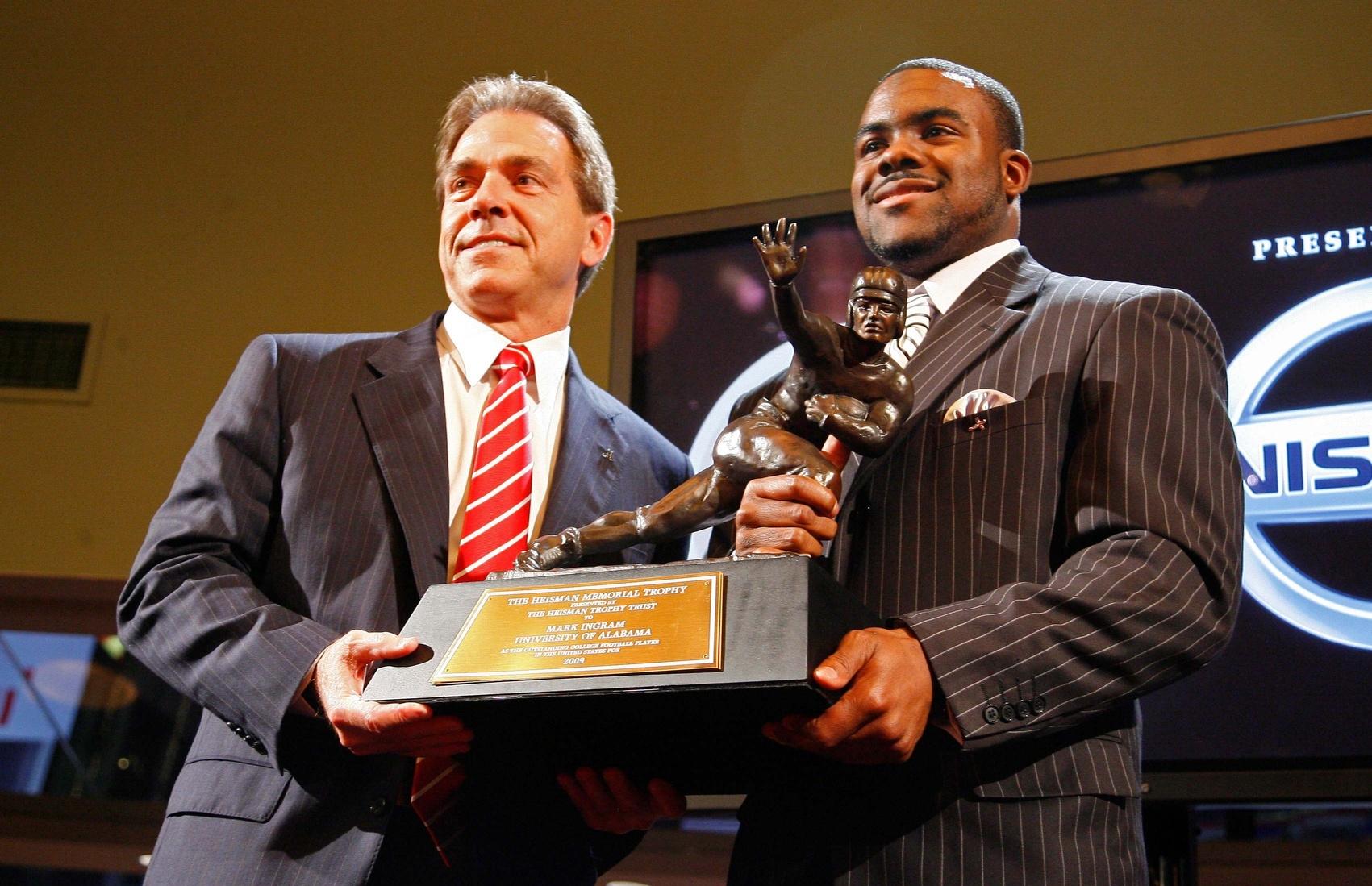
    2009: Mark Ingram vs. Toby Gerhart — and others (28-point margin)
    Mark Ingram Alabama Heisman 2009

    Alabama’s Mark Ingram clinched the Heisman Trophy in the closest race in the award’s history, beating Stanford running back Toby Gerhart by a razor-thin 28 points. Ingram’s pivotal performances, like a career-best 246-yard game against South Carolina, helped carry Alabama to an undefeated season and their first SEC title in a decade.

    Gerhart’s eye-popping 1,871 rushing yards and 28 touchdowns made it a fierce race, and Texas quarterback Colt McCoy (1,145 points) and Nebraska defensive star Ndamukong Suh (815 points) were also hot contenders. For added perspective, the gap between first and fourth that year was just 489 points; compare that to Joe Burrow’s 2019 record-setting margin of 1,846 points — a larger difference than Ingram’s entire winning vote total (1,304).

    1985: Bo Jackson vs. Chuck Long (45-point margin)

    Bo Jackson Auburn Heisman winner

    In a tight finish, Auburn’s Bo Jackson edged out Iowa’s Chuck Long by just 45 points, the closest margin in Heisman history until 2009. Jackson’s season was defined by resilience — he played through multiple injuries, including two broken ribs, and still rushed for 1,786 yards and 17 touchdowns. Meanwhile, Long’s passing (2,978 yards and 26 touchdowns) powered Iowa to a 10-1 record.

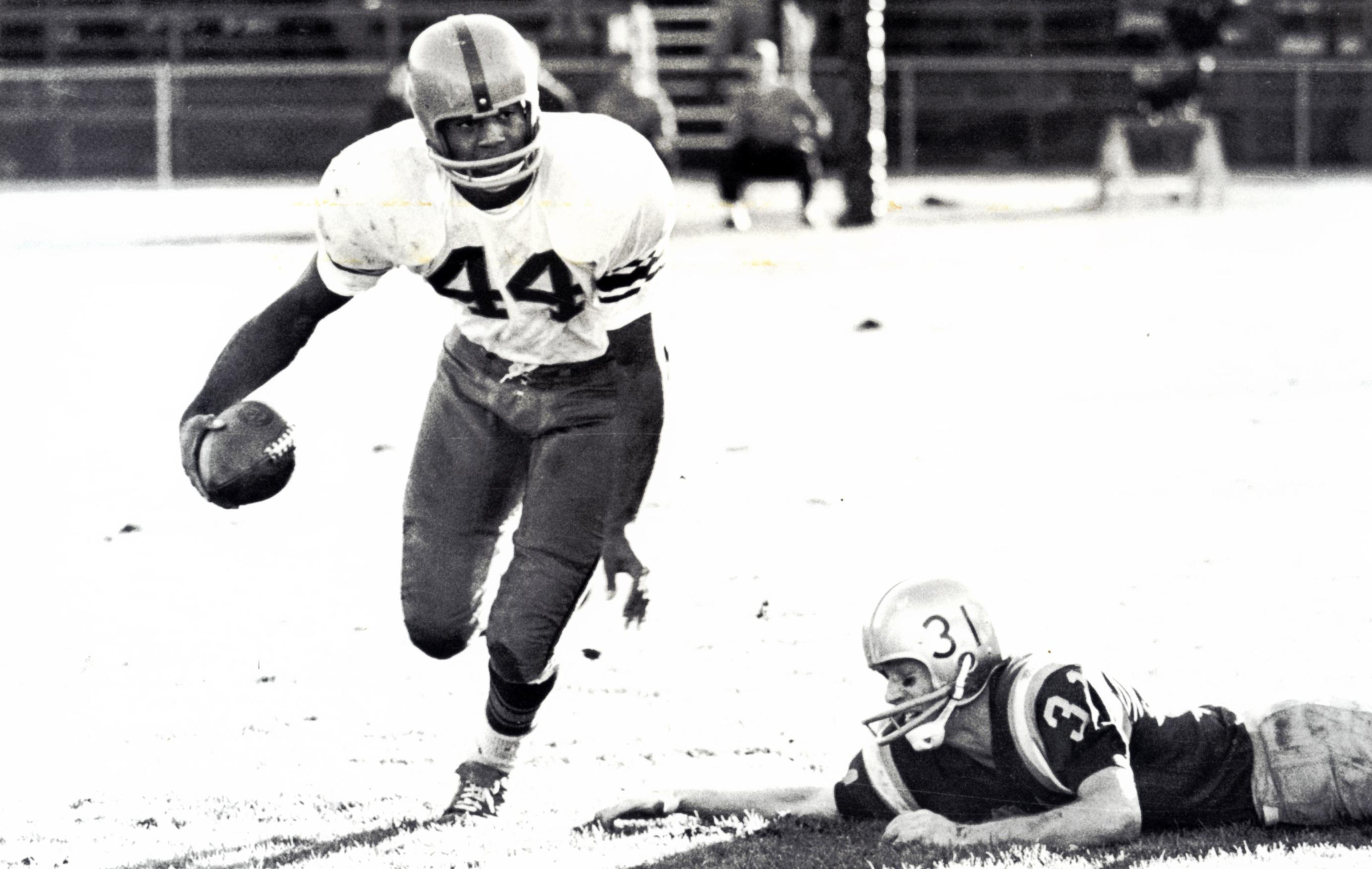
    1961: Ernie Davis vs. Bob Ferguson (53-point margin) 
    Ernie Davis Syracuse Heisman

    In one of the closest Heisman votes ever, Ernie Davis beat Ohio State’s Bob Ferguson by just 53 points, making history as the first Black player to win the award. Davis’s dynamic play as both a rusher and receiver helped Syracuse to a top-10 finish. He broke school records set by Jim Brown and capped off his college career with an MVP performance in the Liberty Bowl.

    Off the field, Davis’s success represented a cultural breakthrough during the Civil Rights Movement. After his win, Davis received a congratulatory handshake from President John F. Kennedy, making his Heisman win a symbol of both athletic and social progress.

    1953: John Lattner vs. Paul Giel (56-point margin)

    John Lattner Notre Dame

    In one of the tightest Heisman races in history, Notre Dame’s Johnny Lattner edged out Minnesota’s Paul Giel by just 56 points. Lattner was a true all-around player, contributing as a rusher, receiver, kick returner and defensive back. Despite not leading the Irish in any single offensive category, his versatility shined through with 651 rushing yards, nine touchdowns, and four interceptions for the 9-0-1 Notre Dame squad. 

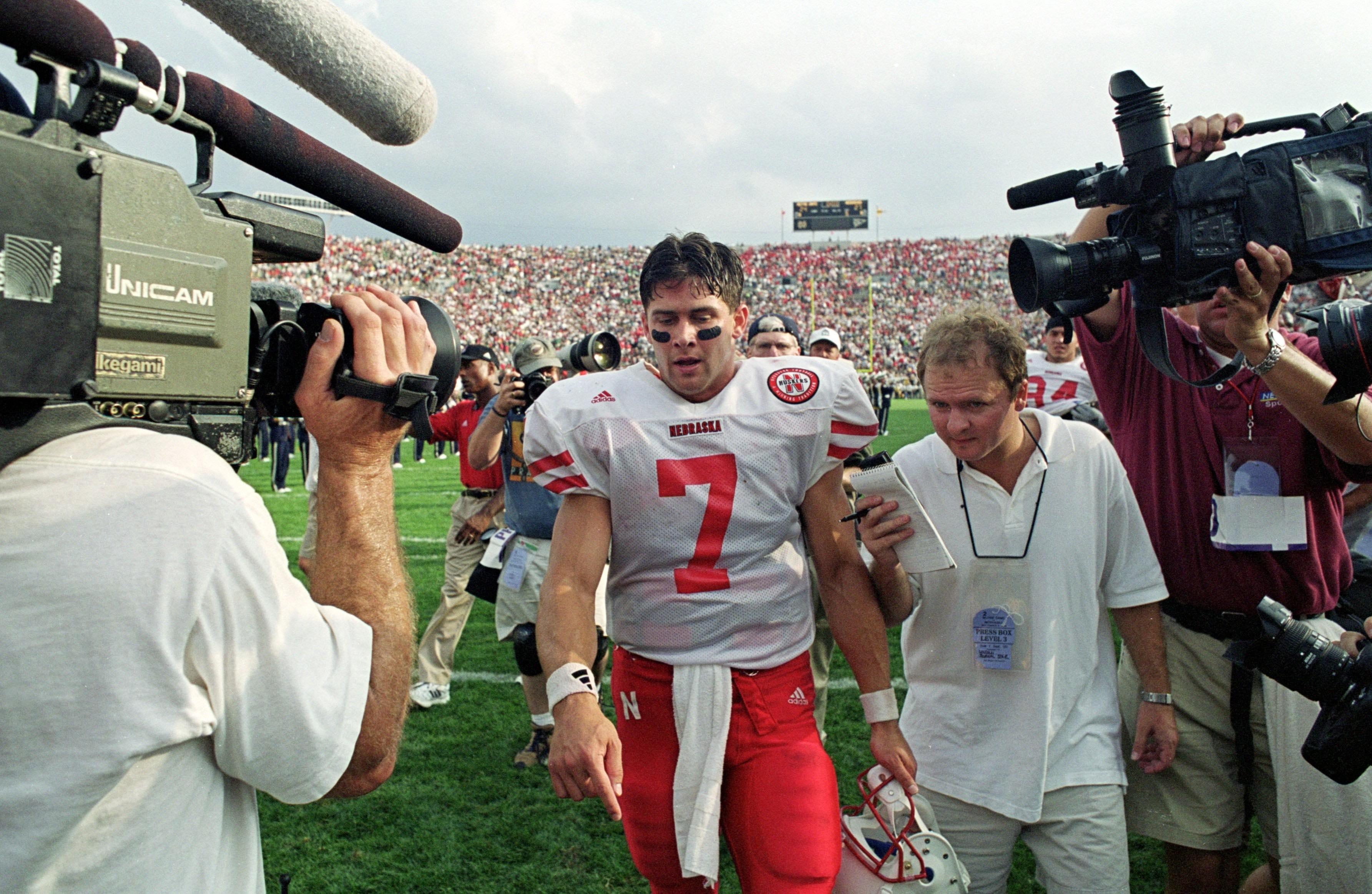
    2001: Eric Crouch vs. Rex Grossman (62-point margin)
    Eric Crouch Nebraska Heisman

    The 2001 race ended with Nebraska’s Eric Crouch sneaking by Florida’s Rex Grossman by 62 points. Crouch’s game-changing 63-yard touchdown reception against Oklahoma helped secure his place in Heisman lore. The Nebraska star’s ability to impact the game both on the ground and in the air gave him a slight edge. The option quarterback’s 1,510 passing yards and seven touchdowns with 1,115 rushing yards and 18 more touchdowns were enough to offset Grossman’s 3,896 passing yards and 34 touchdowns.

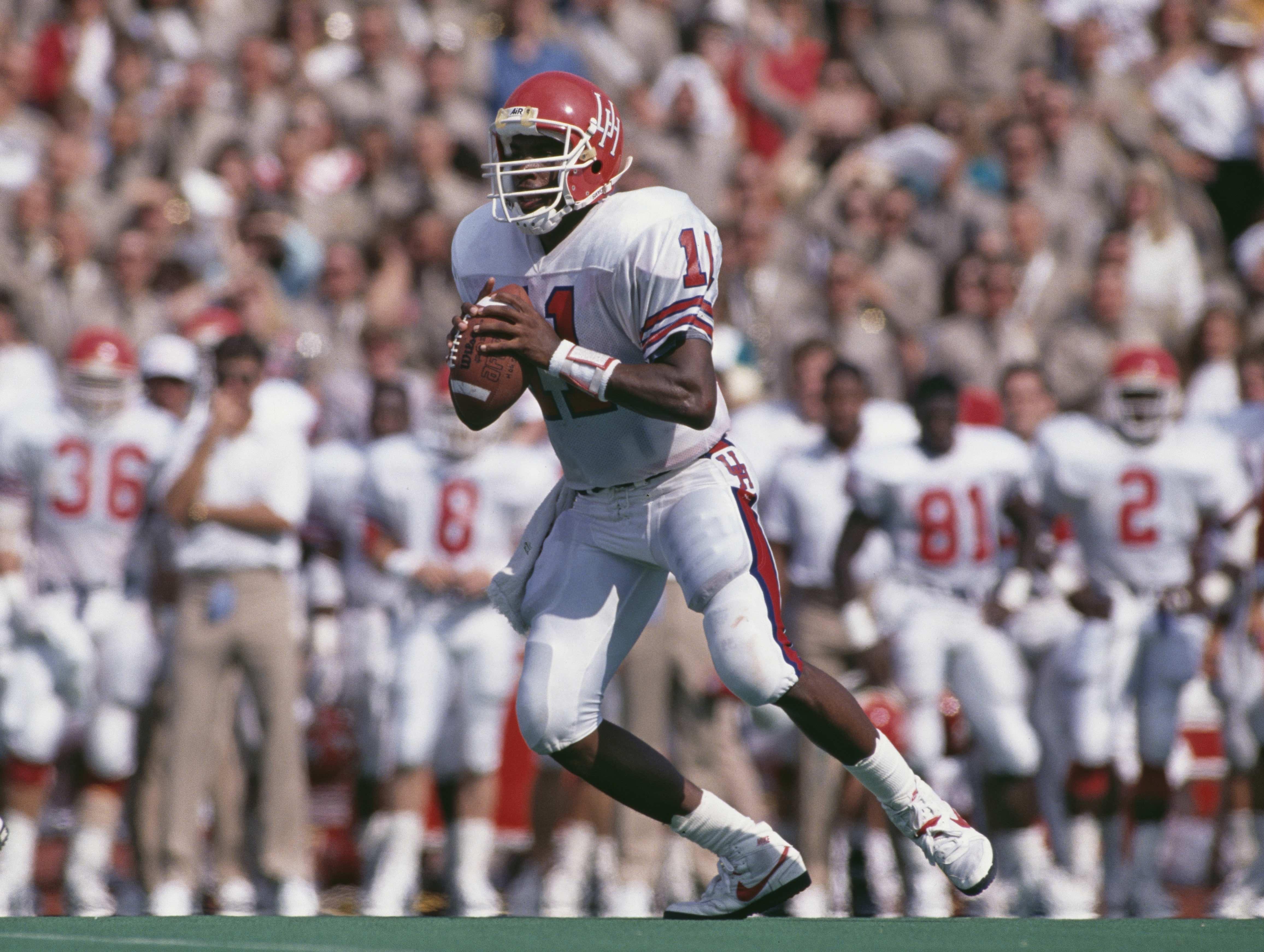
    1989: Andre Ware vs. Anthony Thompson (70-point margin)
    Andre Ware 1989 Heisman

    In 1989, Houston’s Andre Ware made history as the first Black quarterback to win the Heisman, defeating Indiana’s Anthony Thompson in a tightly contested vote. Despite Houston’s probation, which kept Ware’s high-octane offense off TV screens, his record-breaking season couldn’t be ignored. Ware threw for 4,699 yards and 46 touchdowns, setting 26 NCAA records. His unforgettable season, including a 95-point game against SMU, solidified his legacy as one of college football’s most electrifying quarterbacks.

    Source link

  • Voting rights groups worry AI models are generating inaccurate and misleading responses in Spanish

    Voting rights groups worry AI models are generating inaccurate and misleading responses in Spanish

    SAN FRANCISCO — With just days before the presidential election, Latino voters are facing a barrage of targeted ads in Spanish and a new source of political messaging in the artificial intelligence age: chatbots generating unfounded claims in Spanish about voting rights.

    AI models are producing a stream of election-related falsehoods in Spanish more frequently than in English, muddying the quality of election-related information for one of the nation’s fastest-growing and increasingly influential voting blocs, according to an analysis by two nonprofit newsrooms.

    Voting rights groups worry AI models may deepen information disparities for Spanish-speaking voters, who are being heavily courted by Democrats and Republicans up and down the ballot.

    Vice President Kamala Harris will hold a rally Thursday in Las Vegas featuring singer Jennifer Lopez and Mexican band Maná. Former President Donald Trump, meanwhile, held an event Tuesday in a Hispanic region of Pennsylvania, just two days after fallout from insulting comments made by a speaker about Puerto Rico at a New York rally.

    The two organizations, Proof News and Factchequeado, collaborated with the Science, Technology and Social Values Lab at the Institute for Advanced Study to test how popular AI models responded to specific prompts in the run-up to Election Day on Nov. 5, and rated the answers.

    More than half of the elections-related responses generated in Spanish contained incorrect information, as compared to 43% of responses in English, they found.

    Meta’s model Llama 3, which has powered the AI assistant inside WhatsApp and Facebook Messenger, was among those that fared the worst in the test, getting nearly two-thirds of all responses wrong in Spanish, compared to roughly half in English.

    For example, Meta’s AI botched a response to a question about what it means if someone is a “federal only” voter. In Arizona, such voters did not provide the state with proof of citizenship — generally because they registered with a form that didn’t require it — and are only eligible to vote in presidential and congressional elections. Meta’s AI model, however, falsely responded by saying that “federal only” voters are people who live in U.S. territories such as Puerto Rico or Guam, who cannot vote in presidential elections.

    In response to the same question, Anthropic’s Claude model directed the user to contact election authorities in “your country or region,” like Mexico and Venezuela.

    Google’s AI model Gemini also made mistakes. When it was asked to define the Electoral College, Gemini responded with a nonsensical answer about issues with “manipulating the vote.”

    Meta spokesman Tracy Clayton said Llama 3 was meant to be used by developers to build other products, and added that Meta was training its models on safety and responsibility guidelines to lower the likelihood that they share inaccurate responses about voting.

    Anthropic’s head of policy and enforcement, Alex Sanderford, said the company had made changes to better address Spanish-language queries that should redirect users to authoritative sources on voting-related issues. Google did not respond to requests for comment.

    Voting rights advocates have been warning for months that Spanish-speaking voters are facing an onslaught of misinformation from online sources and AI models. The new analysis provides further evidence that voters must be careful about where they get election information, said Lydia Guzman, who leads a voter advocacy campaign at Chicanos Por La Causa.

    “It’s important for every voter to do proper research and not just at one entity, at several, to see together the right information and ask credible organizations for the right information,” Guzman said.

    Trained on vast troves of material pulled from the internet, large language models provide AI-generated answers, but are still prone to producing illogical responses. Even if Spanish-speaking voters are not using chatbots, they might encounter AI models when using tools, apps or websites that rely on them.

    Such inaccuracies could have a greater impact in states with large Hispanic populations, such as Arizona, Nevada, Florida and California.

    Nearly one-third of all eligible voters in California, for example, are Latino, and one in five of Latino eligible voters only speak Spanish, the UCLA Latino Policy and Politics Institute found.

    Rommell Lopez, a California paralegal, sees himself as an independent thinker who has multiple social media accounts and uses OpenAI’s chatbot ChatGPT. When trying to verify unfounded claims that immigrants ate pets, he said he encountered a bewildering number of different responses online, some AI-generated. In the end, he said he relied on his common sense.

    “We can trust technology, but not 100 percent,” said Lopez, 46, of Los Angeles. “At the end of the day they’re machines.”

    ___

    Salomon reported from Miami. Associated Press writer Jonathan J. Cooper in Phoenix contributed to this report.

    ___

    This story is part of an Associated Press series, “The AI Campaign,” exploring the influence of artificial intelligence in the 2024 election cycle.

    ___

    The Associated Press receives financial assistance from the Omidyar Network to support coverage of artificial intelligence and its impact on society. AP is solely responsible for all content. Find AP’s standards for working with philanthropies, a list of supporters and funded coverage areas at AP.org.

    Source link