hacklink hack forum hacklink film izle hacklink marsbahisizmir escortsahabetpornJojobet

Tag: womens

  • More Agencies Sense Value In Women’s Soccer

    More Agencies Sense Value In Women’s Soccer

    Racheal Kundananji was finding the net with unerring accuracy.

    Her reward? The then 23-year-old striker, averaging roughly three goals every four games at Madrid CFF in Spain’s Liga F, had earned a move to Bay FC in the U.S. National Women’s Soccer League—to the melody of €735,000 (now around $774,000) before possible extras, making her the most expensive signing ever in the women’s game.

    A steep price in female transfer terms and many sporting contexts, it’s peanuts at the upper echelon of men’s professional soccer. Here, players jumping from team to team in deals under a million euros or dollars—as the Zambian star Kundananji did in February—is more common a level below the elite leagues, as the celebs occasionally change jerseys for nine-figure fees, then picking up a mega salary.

    It’s no secret that agencies and agents earn a commission when their clients sign a new contract. So, they look for the money. In the U.S., the women’s soccer market has been huge for a while, and larger agencies like Wasserman see sense in representing some of the best men and women. In Europe, it’s different; the biggest bucks are in the men’s game, so they usually work with them, while some specializing in the women’s side stick to that niche.

    That could be about to shift, however.

    “It offers resources that I haven’t seen in any other women’s football (soccer) companies,” says Xènia Pérez, a center-back for Atlético Madrid and Spain’s national team. The defender is talking about Leaderbrock, an agency that has just launched Leaderbrock W—a branch providing the same services to women as its men, with the latter comprising talents such as Ferran Torres (Barcelona), Pedri (Barcelona), Alfonso Pedraza (Villarreal) and Joan Jordán (Alavés).

    “You can feel the ambition to keep growing,” Pérez continues. “Little by little, companies are becoming more committed to the women’s discipline. But there is still a long way to go—to avoid (us) having a secondary role in most of them.”

    While there is room to develop, the fact agencies can now strategically market women’s players rather than solely aid their movements across the transfer market is worth raising. “When we started, agents weren’t even part of a representation agency. They were just people helping you,” Andrea Falcón of Benfica, whose career highlights include a coveted Champions League title with Barcelona Femení, tells me.

    “The main thing is drafting qualified professionals who can guide athletes, as we are often less familiar with this world than men,” the striker adds, noting that agents and players often have different motivations. “We need professionals to establish a relationship of trust because, in the end, we’re entrusting our future to them. It’s important to know they will always look out for our best interests.”

    In Pérez and Falcon’s case, as well as pros Paula Tomás (Aston Villa), Alejandra Bernabé (Chelsea), Natalia Escot (Barcelona), and María Valenzuela (Levante Badalona), they are part of an organization treating men and women’s soccer as equals. With offices in Germany, Portugal, and the Netherlands—and input from the Liga F’s only women’s coach, Sara Monforte—the idea is a complete service, with advisory, legal help, tax support, and building players’ brands all key facets in the sport.

    At this point, the question on some agencies’ minds might be: How viable is incorporating women into their business?

    Breaking Into Women’s Soccer

    It seems interest in women’s soccer is constantly rising. One barometer is World Cup viewership, where the number of people tuning into the 2023 edition was estimated at over two billion, almost double that of 2019—1.12 billion. Matching the popularity is television rights’ values; these are more valuable than ever, though the hype around the game’s potential could leave some overestimations of their actual worth—when pitted with how much they bring in return.

    The quality and personalities are certainly there. At the top, players like Aitana Bonmatí—winning two Ballon d’Ors back to back—are leading the way. All this provides a strong enough base to give women further visibility by promoting them and striking sponsorship deals, which agencies are pouncing on more—a boost to their own PR, too.

    “In recent years, we’ve managed to have more role models. Everyone knows Alexia Putellas, Aitana Bonmatí, or Patri Guijarro. Before, that possibility didn’t exist—you couldn’t watch women’s football on TV or have female references. We’ve grown a lot in that regard, but there is still room to improve,” adds Falcón.

    “It’s not just about knowing players who win Ballon d’Ors or Barça players who win the Champions League—it’s about making women players and football more visible overall. Everyone knows the players from any team in La Liga, the English Premier League, the German Bundesliga, or leagues in France or Italy, but that’s not the case for us (in Portugal).”

    Of course, the counter is a healthy separation between the men’s and women’s craft—not comparing them to each other and allowing them to exist and evolve independently. Given the differences, not least the often wide financial disparity, that is always a natural—and even healthy—tendency.

    Only, given the talent and exposure across the sport, businesses are now spotting ways to incorporate both, leveling the playing field a little in the process.

    Source link

  • North Carolina wins the 2024 NCAA DI women’s soccer championship

    North Carolina wins the 2024 NCAA DI women’s soccer championship

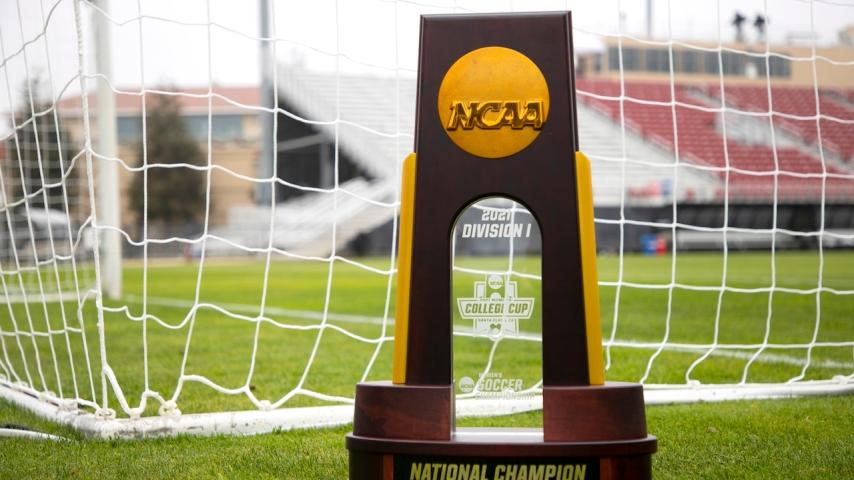
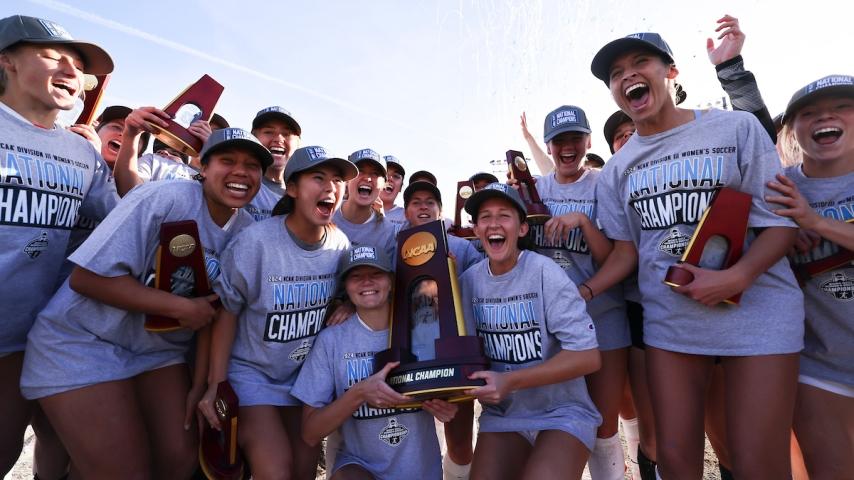
    North Carolina took down Wake Forest, 1-0, to win the 2024 DI women’s soccer national championship. It’s the Tar Heels’ first title since 2012, and the program’s 22nd NCAA title in totality. 

    Below you can find the bracket, schedule and every score from the 2024 tournament.

    The championship bracket was revealed during a selection show on Monday, Nov. 11 on NCAA.com. Thirty conference champions earned automatic qualification, with the remaining 34 teams selected at-large by the Division I Women’s Soccer Committee.

    2024 NCAA DI women’s soccer tournament bracket

    Click or tap here for the 2024 interactive bracket. Here’s the final bracket:

    2024 NCAA DI women’s soccer tournament scores

    Women’s College Cup (semifinals & final)

    Monday, Dec. 9 | National Championship

    Friday, Dec. 6 | Semifinals


    First round

    Friday, Nov. 15

    Saturday, Nov. 16

    Sunday, Nov. 17

    Second round

    Friday, Nov. 22

    Third round 

    Sunday, Nov. 24

    Quarterfinals

    Friday, Nov. 29

    Saturday, Nov. 30

    2024 NCAA DI women’s soccer tournament schedule

    • Selection show: 4 p.m. ET Monday, Nov. 11 on NCAA.com
    • First round: Friday- Sunday, Nov. 15,16 or 17
    • Second and third rounds: Friday, Nov. 22 and Sunday, Nov. 24
    • Quarterfinals: Friday or Saturday, Nov. 29 or 30
    • Women’s College Cup: 
      • Semifinals: Friday, Dec. 6
      • National Championship: Monday, Dec. 9

    NCAA DI women’s soccer championship history

    The North Carolina Tar Heels have the most all-time national titles (22) while the reigning national champs Florida State have claimed four titles in the past decade. Here is every champion and runner-up in the last ten years:

    Year Team (Record) Score Runner-Up Site
    2023 Florida State (22-0-1) 5-1 Stanford Cary, N.C.
    2022 UCLA (22-2-1) 3-2 (ot) North Carolina Cary, N.C.
    2021 Florida State (22-1-2) 0-0 (2ot, pk) BYU Santa Clara, Calif.
    2020 Santa Clara (10-1-1) 1-1 (2ot, pk) Florida State Cary, N.C.
    2019 Stanford (24-1-0) 0-0 (2ot, pk) North Carolina San Jose, Calif.
    2018 Florida State (20-4-3) 1-0 North Carolina Cary, N.C.
    2017 Stanford (23-1-0) 3-2 UCLA Orlando, Fla.
    2016 Southern California (19-4-2) 3-1 West Virginia San Jose, Calif.
    2015 Penn State (22-3-2) 1-0 Duke Cary, N.C.
    2014 Florida State (23-1-1) 1-0 Virginia Boca Raton, Fla.

     Click here for the full championship history since 1982.

    Women’s soccer teams with the most NCAA DI national championships

    North Carolina won its 22nd NCAA women’s college soccer title in 2024, which leads all DI programs. Here’s the complete history of the championship match.

    READ MORE

    What to know about the DII women’s soccer semifinals

    The final four teams are set for the 2024 DII women’s soccer championship. TNT Sports’ Wayne Cavadi takes a look at each team and what to expect.

    READ MORE

    Wash U wins the 2024 NCAA DIII women’s soccer tournament

    Washington-St. Louis won its second-ever DIII women’s soccer title in 2024.

    READ MORE


    Source link

  • Shepherd’s historic women’s soccer season ends in the Elite Eight | Journal-news

    Shepherd’s historic women’s soccer season ends in the Elite Eight | Journal-news

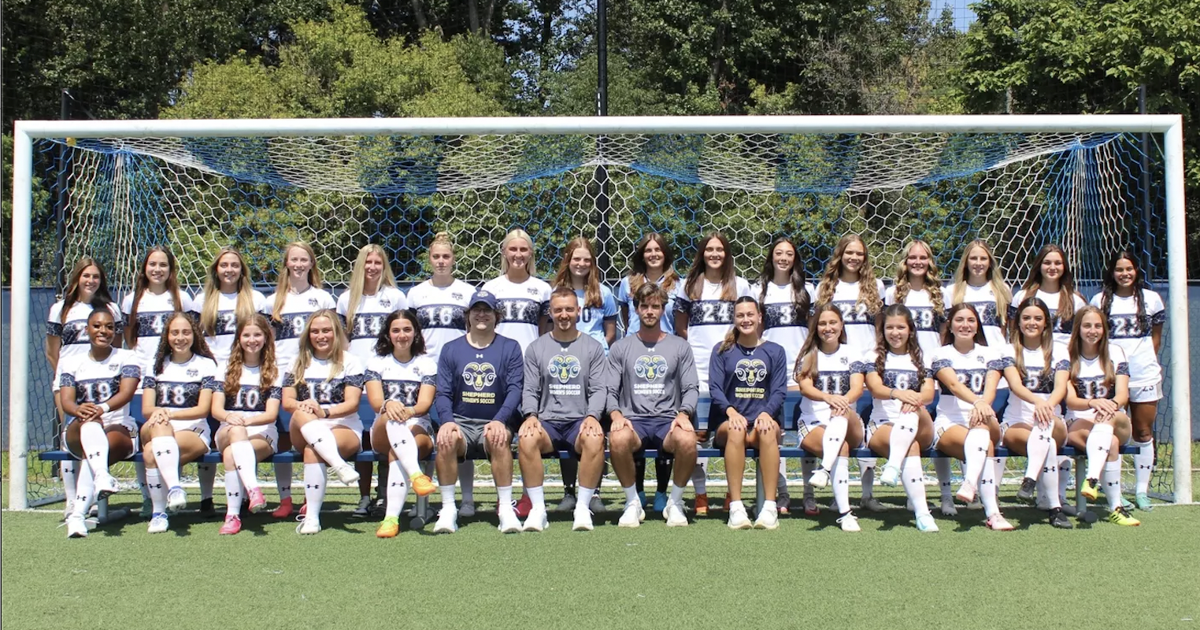
    RIDGE, N.H. — The Shepherd University women’s soccer team’s historic 2024 season ended in an Elite Eight matchup with Franklin Pierce on Saturday afternoon.

    Sophomore midfielder Jenni Huttunen led the Ravens to a 2-1 victory with two goals in the second half, one of which was a penalty kick.

    Junior midfielder Josie Beezel scored the Rams’ lone goal in the final eight minutes of play on an assist from sophomore midfielder Reagan Ackermann.

    By the final whistle Franklin Pierce had outshot Shepherd 16-8 however, the Rams outshot the Ravens 5-4 on goal.

    “We played fantastically today, I think by all accounts we were the better team,” Shepherd head coach Sam Odell told Shepherd University Athletics.

    “We dominated chances, territory, hit the bar twice, and had a couple cleared off the line, but it wasn’t our day.

    I couldn’t be prouder of the team and their accomplishments this season. This is not the way we wanted the story to end, and it’s especially tough for it to be in this manner – sometimes you just wish that you were second best as it can be easier to accept when that happened, but that was not the case today.

    We had a really good chance of winning the national championship this year and are devastated to be going out in the Elite Eight. That speaks volumes for the team’s goals and standards this season. This year we won all three trophies available, won 18 games, and have become a force on the Division II stage.

    We will be back here next year, and knowing this amazing group as well as anyone, they will use this experience as fuel to win the national championship next year.

    I am a proud and disappointed coach at the same time today, but I love this team and couldn’t be prouder of them for how they played today and all season. We have an amazing group that has a special collective quality which is so powerful when they channel it. We will be back.” Odell concluded.

    The Rams may have seen their historic season end in heartbreak, but their journey will be remembered as a turning point for the program.

    With a record-breaking 18-2-4 season, their first Pennsylvania State Athletic Conference championship and a spot in the Elite Eight, the Rams solidified their place as a rising power in Division II soccer.

    This season was not just about victories but about setting a new standard for what Shepherd women’s soccer can achieve.

    With a core of talented players and a coach who believes in their potential, the Rams are already looking ahead. Shepherd has proven their unwavering grit, determination and ability to come together as a cohesive unit as they are set to come back stronger next year with hopes of turning their national championship dreams into a reality.

    Source link

  • Australia v Brazil: international women’s football friendly – live | Matildas

    Key events

    Samantha Lewis has been following the Matildas since well before they were cool and has dug deep into her notebooks to pull out a close look at their history of clashes with Brazil. The blue touch paper was lit on the rivalry during the Women’s World Cup 2007 when Australia reached the quarter-finals for the first time (spoiler alert: Brazil were runners-up).

    Their first opponents in the knockout stage were Brazil: a team who have since become one of the Matildas’ longest-standing rivals, and who were led, back then, by the great Marta, who would go on to win the tournament’s Golden Boot and MVP awards.

    Australia lost that game 3-2 – not a boilover, by any stretch – with the core of that team going on to become the country’s first Asian Champions just three years later.

    Brazil XI

    Brazil: Natascha (gk), Fe Palermo, Isa Hass, Vitoria Calhau, Yasmim (capt), Laís Estevam, Duda Sampaio, Gabi Portilho, Aline Gomes, Marilia, Amanda Gutierres

    Matildas XI

    Clare Polkinghorne starts and wears the captain’s armband in her 168th and last appearance for Australia. The defender scored in the Matildas’ back-to-back friendlies against Brazil three years ago and no doubt would love another tonight to sign off in style.

    Emily Van Egmond becomes the fourth player to make 150 appearances for the Matildas, drawing equal with Lisa De Vanna and now one cap behind Cheryl Salisbury. Winonah Heatley is very much at the other end of her career and will start after a debut against Germany last month amid a very defensive looking line up.

    Matildas: Mackenzie Arnold (gk), Winonah Heatley, Clare Polkinghorne (capt), Clare Hunt, Alanna Kennedy, Steph Catley, Ellie Carpenter, Emily Van Egmond, Kyra Cooney-Cross, Hayley Raso, Caitlin Foord.

    While we can hope to see some fresh faces for the Matildas this evening, one of the true stalwarts of the side will be closing the curtain on an illustrious career in her home town Brisbane. Clare Polkinghorne will line up for the national side for the 168th time – a record number of caps for an Australian footballer – since making her debut in 2006.

    Our own Jack Snape looks at Polkinghorne’s career in green and gold and what comes next for the former Australia captain (with some kind words from interim coach Tom Sermanni thrown in).

    She is the defensive stalwart for the sporting team that has become Australia’s darling, yet after 18 years with the Matildas, Clare Polkinghorne has a clear-cut view of retirement: “I’ll definitely need a job.”

    Preamble

    Martin Pegan

    Martin Pegan

    Hello and welcome to live coverage of the women’s international friendly between the Matildas and Brazil at Suncorp Stadium. This is the beginning of a two-match series between the highly-ranked teams, with the second clash to come on Sunday, as Australia return to Brisbane for the first time since the Women’s World Cup last year.

    The Matildas and Brazil took different paths through the global showcase as the hosts reached the semi-finals and the visitors were knocked out at the group stage, though they have been heading in opposite directions since then. Brazil have risen to No 8 in the Fifa rankings after their silver medal at the Paris Games, while Australia have slumped to No 15 – their lowest ranking since 2007 – in part due to a disappointing Olympic campaign.

    Australia are taking tentative steps towards regeneration since the departure of coach Tony Gustavsson and are likely to field a dash of the old mixed with the new tonight, especially with several stars sitting out. Mary Fowler has joined Cortnee Vine in taking a break from the Matilda’s four-match home series, while captain Sam Kerr is of course still recovering from an ACL injury.

    Football Australia revealed about two hours ago that only 1,000 tickets remain for the friendly at Suncorp Stadium, so if you’re still intending to try your luck at the gate I suggest you run, don’t walk. The likely sell-out will make it the 15th home match in a row where the doors are shut behind the Matildas. A competitive showing, perhaps even a victory, feels increasingly critical to ensuring the sheen remains on the women’s team.

    Kick-off time in Brisbane is 8pm local / 9pm AEDT. I’ll be back shortly with the line-ups and team news.

    In the meantime, get in touch with any comments, questions, thoughts and predictions. You can shoot me an email, or find me on Bluesky @martinpegan.bsky.social and X @martinpegan. Let’s get into it!

    Share

    Updated at 


    Source link

  • The PWHL pulled off its inaugural season. Year 2 will decide the future of women’s pro hockey

    The PWHL pulled off its inaugural season. Year 2 will decide the future of women’s pro hockey

    Marie-Philip Poulin stood on the blue line at the Bell Centre, fighting back tears.

    She had just been introduced to a world record crowd in Montreal and the fans were giving her a deafening ovation. Poulin, the best women’s hockey player in the world for almost a decade, typically gets the loudest pregame cheer, especially in her home province of Quebec. But this applause — over 20 seconds long and delivered by 21,105 people — was different.

    “Honestly, I didn’t know what to do, how to react, the emotions were so high,” Poulin said. “Having the Bell Centre packed for women’s hockey … it (felt like) we finally made it.”

    That April 20 game broke the all-time attendance record for women’s hockey, one of many milestones for the inaugural Professional Women’s Hockey League season. Since its launch in January 2024, the long-awaited six-team league featuring the world’s best players has largely been heralded as a success. Millions of viewers tuned in for games; attendance records were repeatedly set and broken; and demand for tickets in some markets was so high that teams have already moved into bigger venues. Just last month, the league announced that it was preparing for expansion as soon as the 2025-26 season — sooner than anticipated.

    But there were bumps along the way, and with the arrival of the PWHL’s second season, which begins on Saturday, big-picture questions loom. Now that the league is no longer sparkling brand new, can it maintain positive momentum? And what needs to happen to set the PWHL up for long-term success?


    Five days into the PWHL’s inaugural season, Stan Kasten had seen enough.

    Kasten was on a tour around the league, making stops at most teams’ home openers during the first week of the season. He visited Toronto for the first PWHL game on Jan. 1, attended a sell-out in Ottawa the next day, and watched games in New York and Boston.

    Then Kasten got to Minnesota for the team’s home opener, which set a women’s pro hockey attendance record with over 13,000 fans at the Xcel Energy Center.

    “That was the day I knew this was going to work,” Kasten said.

    The longtime sports executive and president of the Los Angeles Dodgers became a central figure in women’s hockey after Dodgers majority owner Mark Walter and his wife, Kimbra, agreed to bankroll a new professional women’s hockey league.

    The PWHL came together in a six-month sprint. Six markets and venues were chosen. A 72-game schedule was assembled. General managers and coaches and league staff were hired; players were signed and drafted. With so little time, teams played without traditional names, logos or jerseys.

    “I will look back in amazement that we did it,” Kasten said. “We set the six months as our goal. … I was too dumb to know it wasn’t possible.”

    The inaugural game on Jan. 1, between Toronto and New York, was sold out, albeit at Toronto’s 2,600-seat venue. Tennis legend Billie Jean King — who sits on the league’s advisory board — dropped the ceremonial puck alongside PWHL senior vice president of hockey operations Jayna Hefford. The game reached over 3 million views on Canadian television networks and the league’s YouTube stream.

    “It was that moment where you’re like, ‘my childhood dream is coming true,’” said Toronto defender Jocelyne Larocque. “I had tears in my eyes because as a kid, my dream was to play pro hockey. And then, as you get a bit older, you think because I’m a woman, this isn’t going to happen for me.”

    The next day, the league broke an attendance record for a women’s professional hockey game in Ottawa with over 8,000 fans at TD Place Arena. That was the record Minnesota smashed only four days later.


    Fans packed the Tsongas Center in Lowell, Mass., for a Minnesota-Boston PWHL game during the first week of the league’s inaugural season. (Maddie Meyer / Getty Images)

    The honeymoon phase didn’t end after the first few weeks of the season either. The league set a world record for attendance in Toronto (19,285) in February at Scotiabank Arena, which was broken two months later at the Bell Centre when Poulin received the ovation.

    Overall, the league beat its own modest attendance projections for the inaugural year. According to Kasten, the internal projection was around 1,000 fans per game. The actual figure — over 5,000 — is a major accomplishment considering that previous women’s hockey leagues mostly struggled at the gate.

    “Going into this season, no one really knew what to expect. We knew that we had a product that was worth watching and that we were going to do the best we could to showcase women’s hockey,” said Toronto goalie Kristen Campbell. “The fan support (exceeded) my expectations.”

    Games throughout the season were uptempo, highly skilled and surprisingly physical. They were also easy to watch, since every game was available on YouTube for free — with high-quality broadcast production paid for by the league.

    “I just don’t think a lot of people understood the skill level and the athleticism of these players,” said Ottawa GM Mike Hirshfeld. “And I think once they saw that, it became really attractive.”

    The league landed several partnerships with major brands — such as Air Canada, Scotiabank, Bauer and Barbie — and worked with the NHL, going to All-Star Weekend and playing two neutral-site games at NHL venues in Pittsburgh and Detroit.

    But the inaugural season was far from perfect.

    PWHL merchandise flew off the shelves despite a lack of team names or logos, but the rollout was criticized because of supply issues and the limited size ranges.

    The New York franchise played in three different rinks and struggled to draw fans, finishing with the worst attendance in the league. One game in Bridgeport, Conn., had only 728 fans — the league’s only game with fewer than 1,000 all season.

    And just nine days after Minnesota won the first-ever Walter Cup, the league announced it was parting ways with the team’s general manager, Natalie Darwitz, “effective immediately.”

    Some reports suggested there was a rift between Darwitz — a legend of Minnesota hockey and now a Hockey Hall of Fame inductee — and head coach Ken Klee, with some influential players siding with Klee. However, the league maintained the decision came after a review of the team’s operations that found “there wasn’t a path forward with the current personnel in place.”

    Still, when the PWHL hosted the 2024 draft and awards in St. Paul, Minn., four days after Darwitz departed, fans were dispirited. Klee, who was responsible for the team’s draft picks, was booed at points during the night. He was also heavily criticized for selecting Britta Curl, who stirred controversy in the weeks leading up to the draft for her social media activity.

    When asked about Darwitz’s departure this month, Minnesota captain Kendall Coyne Schofield said it was a league decision. Klee, meanwhile, said the team was focused on moving on.

    “It’s pro hockey. Things happen,” he said. “We’re excited to get the season going.”
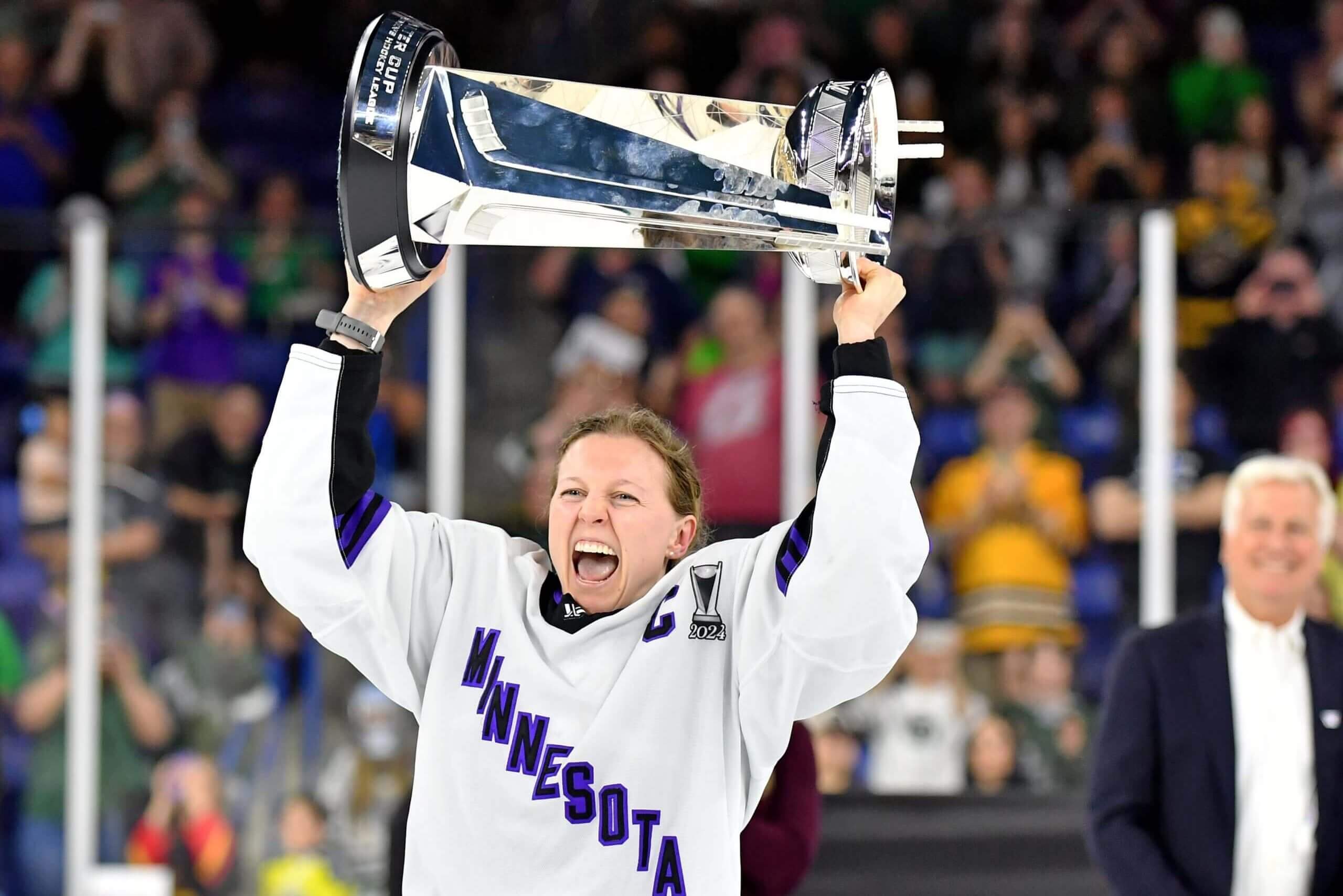

    Kendall Coyne Schofield raised the Walter Cup after Minnesota won the PWHL’s inaugural league championship. (Troy Parla / Getty Images)

    If the PWHL’s first season was about celebrating the league’s existence, its sophomore year, just days away, will focus on maintaining momentum while remaining in startup mode.

    “We are far from a finished product,” said Kasten.

    The league has taken several positive steps in its first real offseason.

    In September, it unveiled team names and logos; jerseys were released earlier this month. The coinciding merchandise offerings have included more design options and size ranges.

    New York has moved into a single primary venue — the Prudential Center in Newark, N.J., where the team played in front of its biggest crowd (5,132) last season — while Toronto and Montreal have moved into bigger venues full-time.

    “We always hoped and planned to be in bigger buildings, but I don’t think we expected it so quickly,” said Hefford. “But that demand was real and it wasn’t just a blip. It wasn’t just inaugural-year excitement. And we’re seeing that in the response from fans this year in terms of ticket sales and memberships.”

    Even with an 8,150 capacity at Coca-Cola Coliseum, Toronto’s season-ticket memberships sold out for a second year in a row. And Kasten said the league expects average attendance to increase.

    The PWHL will also play nine neutral-site games, mostly in NHL buildings including Seattle, Vancouver, Denver and St. Louis.

    “It’s a reinforcement of what we perceive as widespread and growing interest around our sport,” he said of the neutral-site games. “I can’t say it enough times, these women, these world-class athletes who have been overlooked for so long, are finally seeing the recognition they should have been receiving for years and years.”

    Perhaps the biggest development of the offseason is that the league is already looking to add up to two teams as soon as 2025-26. Last season, league leadership often tried to head off questions about expansion but Kasten said the success of Year 1 convinced league leaders to start the process sooner.

    “I don’t know if we do it,” he said. “But we’re looking at it because the interest is really there.”

    The league has sent out over 20 requests for proposals to interested potential expansion partners, said Amy Scheer, the PWHL’s senior vice president of business operations.

    A major driver of PWHL expansion is the influx of international players. In June, over a dozen international players — from Finland, Sweden, Russia, Czechia and more — were drafted, alongside dozens more players from the NCAA. That so many players have decided to make the jump to North America is an encouraging sign. Most top players elected to stay in Europe last season and track the new league’s progress from afar.

    “It became more clear what the league is going to look like and so now, I feel like everybody is trying to get a spot here,” said Team Germany forward Laura Kluge, who was invited to Toronto’s training camp after going undrafted in June. “The goal is to come here and play because (it’s) the most professional league out there.”

    One of the major critiques of the PWHL last season was that — with the seven-team Premier Hockey Federation shutting down in June 2023 — the ecosystem for women’s hockey in North America became too small, with very few roster spots and development opportunities. Expansion would fix that without diluting the product, given how much talent should be coming from Europe and the NCAA over the next two years.

    How expansion might work still remains to be seen. All six current PWHL teams, as well as the league itself, are owned by the Walters.

    The single-entity ownership model was critical, Kasten said, to the league getting up and running as quickly as it did. But the question remains: Will the business eventually outgrow unilateral control?

    Women’s hockey has attempted individual ownership in the past. The original National Women’s Hockey League folded, in part, because owners stopped seeing the value in investing. The PHF sold some teams, but the league’s main financial backers — John and Johanna Boynton — still owned four of the league’s seven teams.

    “I love how it has worked for us so far. I don’t know when that model stops being the most efficient, if ever,” Kasten said. “Could that change in the future? I suppose it could, but we don’t have any plans to change it now.”

    For all the progress made during this offseason, there are some longer-term benchmarks left.

    The PWHL does not have the kind of media rights deals that are traditional in men’s pro sports, and those more recently signed in women’s professional basketball and soccer.

    “Let’s face it, until we get a mature media plan and media revenue we won’t really be a full-fledged league,” said Kasten.

    Last season, every game was broadcast on the league’s YouTube channel. This season, however, Canadian audiences won’t have access to the PWHL’s YouTube stream. Those streaming rights are now exclusive to the league’s Canadian broadcast partners, which include TSN, CBC and Amazon Prime. U.S. broadcast rights have not been announced. Pulling games off YouTube in Canadian markets is a hit to access and visibility, but the league is expected to make more money from an increase in rights fees.

    “The change is positive for the league because it helps us grow in terms of stability,” Scheer said. “It helps us grow to ensure that the league is on the path to long term health and that women’s hockey will be here for good.”

    The biggest challenge for the league is going to be the wage gap that exists between top players and those who make up the majority of each team’s roster, due to how the collective-bargaining agreement set player compensation and roster construction.

    In Year 1, the top six players on each team were required to make at least $80,000 on guaranteed three-year contracts, per the CBA. Meanwhile, the league minimum was set at $35,000, which will increase by 3 percent to $36,050 in 2024-25. Many players’ salaries are closer to league minimum on non-guaranteed contracts. And given how much of the salary cap has already been allotted to top players, incoming players — or free agents deserving of raises — will be feeling the squeeze until those contracts expire after the 2025-26 season.

    It’s a trickier problem to fix with the CBA locked in until July 31, 2031. But it’s something the league will inevitably be judged on if the business continues to grow.

    Despite all these questions, perhaps the biggest change in Year 2 will be a focus not so much on milestones and records but more on the game itself.

    “There were a lot of firsts last year and a lot of emotional moments — moments that were bigger than hockey,” said Poulin. “This year is about making it normal that we play in bigger buildings that sell out, that people are excited (to be there). And now we’re just going to play hockey because that’s our job.”

    (Illustration: Meech Robinson / The Athletic. Photos: Mark Blinch, Minas Panagiotakis, Bruce Bennett / Getty Images; Kevin Sousa / NHLI via Getty Images; M. Anthony Nesmith / Icon Sportswire via Getty Images)

    Source link

  • No. 9 Women’s Soccer Drops Heartbreaker in Overtime to Trinity (TX) in NCAA Sweet 16, 1-0

    No. 9 Women’s Soccer Drops Heartbreaker in Overtime to Trinity (TX) in NCAA Sweet 16, 1-0

    Article Courtesy of Sports Information Intern, Vin Rinella

    SCRANTON, PA — The University of Scranton women’s soccer team saw their season come to an end with a heartbreaking 1-0 overtime loss to Trinity University (TX) in NCAA Tournament Sweet 16 action on Saturday afternoon at Weiss Field.

    The Basics

    • Final Score (OT): Trinity (TX) – 1, No. 9 Scranton – 0
    • Records: No. 9 Scranton (19-2-2), Trinity (18-2-3)
    • Scranton ends a historic season, reaching 19 wins for just the third time in program history (1999, 2003).

    How it Happened

    • Scranton put the pressure on Trinity from the start, but the Tigers’ fourth ranked defense was up to the task.
    • Goalkeeper Lauryn Lewis denied two shots from Royals’ graduate student Niamh Healy and freshman Molly Martys en route to making three saves in the first half.
    • Scranton’s defensive unit also came to play early, limiting the Tigers to just four shots in the first half.
    • Senior goalkeeper Nicole Olson made one save in the opening half.
    • The Royals continued to pressure the Tigers’ defense in the second half, recording 17 shots, five shots on goal. 
    • Senior Samantha Goffice had her shot get deflected off the crossbar in the 48th minute.
    • In the 78th minute graduate student Mary Haggerty ripped a shot from long-range that was bound for the top right corner but Lewis made a leaping save.
    • Graduate student Claire Mulholland drilled the crossbar on a shot from distance in the final minutes of regulation.
    • Despite the number of opportunities the Royals had, the game was deadlocked at 0-0 after regulation, forcing overtime.
    • With under a minute left in the first overtime period, the Tigers earned a corner kick. After Michaela Bosco served the ball into the box, it was redirected by Alex Doran to freshman Elie Kriek who softly flicked it over the diving Olson and into the back of the net to send Trinity into the Elite Eight of the NCAA Tournament. The game-winning goal was the first of Kriek’s collegiate career.

    Top Performers

    • Healy led the Royals with seven shots and three shots on goal.
    • Olson tallied three saves in the loss.

    Inside the Box Score

    • Scranton out shot Trinity 22-11 in the contest. 
    • The Royals held an 8-2 edge in corner kicks over the Tigers.

    Source link

  • US Soccer gets $30 million from Mihcele Kang to boost women’s teams

    NEW YORK — U.S. Soccer received a $30 million dollar gift from businesswoman and Washington Spirit owner Michele Kang, the organization announced Tuesday.

    The donation, which will be dispersed over the next five years, is the largest ever given to U.S. Soccer’s women’s and girls’ programs and is the largest gifted by a woman to the organization. It will be used to expand and improve the talent pool in soccer and provide professional development for female players, coaches and referees.

    “Michele Kang’s gift will transform soccer for women and girls in the United States,” said U.S. Soccer President Cindy Parlow Cone in a statement. “It will impact generations of women and girls in our game, including players, coaches, and referees. I know firsthand the power soccer can have in someone’s life and thanks to Michele, we will be able to provide more support and opportunities for women and girls.”

    Source link

  • No. 5 seed Michigan State women’s soccer knocks off Western Michigan 3-1 in the first round of the NCAA Tournament

    No. 5 seed Michigan State women’s soccer knocks off Western Michigan 3-1 in the first round of the NCAA Tournament

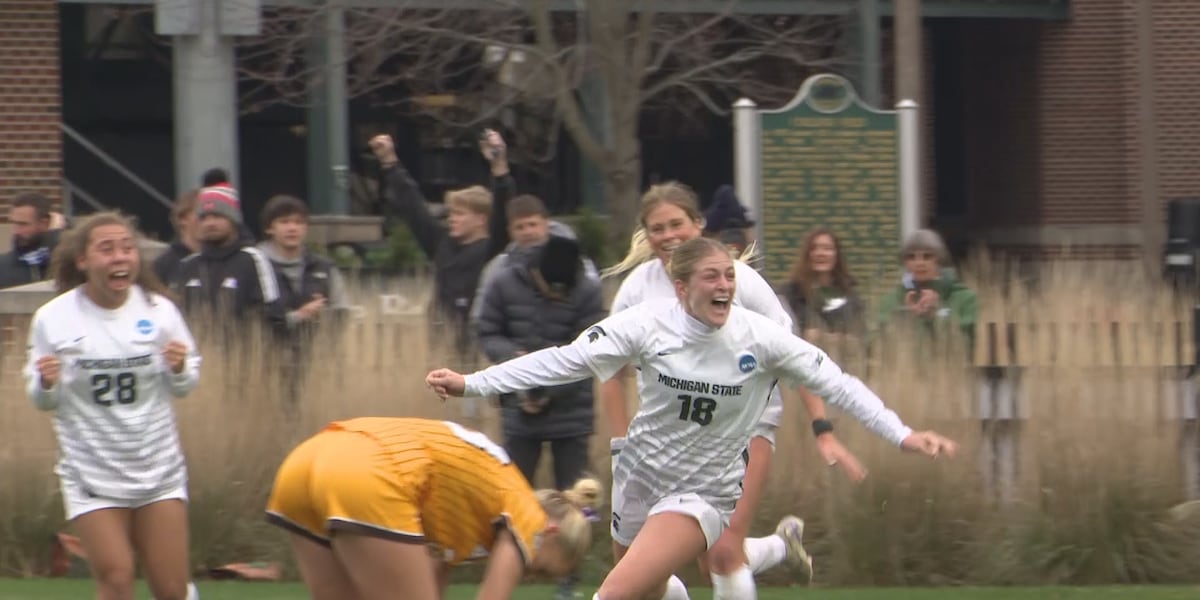
    EAST LANSING, Mich. (WILX) – Fifth-seeded Michigan State women’s soccer punched its third-consecutive ticket to the second round of the NCAA Tournament with a 3-1 first-round victory over Western Michigan on Saturday at DeMartin Stadium.

    MSU moves to 13-2-5 with the win, while Western Michigan ends its season at 13-2-6. The Spartans advance to play No. 4 seed and SEC champion Texas on Friday, Nov. 22 at 4 p.m. in the second round at Duke.

    Graduate midfielder Emily Mathews opened the scoring for the Spartans in the 16th minute before graduate midfielder Justina Gaynor added another in the 18th minute. Sophomore midfielder Bella Najera sealed MSU’s victory with her seventh goal of the season late in the second half. In goal, MSU graduate goalkeeper Kaitlyn Parks secured her 11th win of the season, making one save.

    The Spartans held an 11-9 advantage in shots, including a 9-2 edge in shots on goal and held the Broncos without a corner kick for the game while registering nine of their own. “It’s a race to one in this game because if they score first, then they would sit much deeper and make it more challenging on us,” said head coach Jeff Hosler. “To score first, to keep the game wide open made a world of difference, not just in the first half, but carried onto the second half. It is important to keep your foot on the gas. We talked about that as a team the last few weeks, if you get a goal, have a little bit more urgency to go forward. Go get that next goal. It’s important for us to keep our foot on the gas, and we did that today.”

    MSU controlled possession throughout the opening minutes but was unable to record a shot. In the ninth minute, WMU’s Jen Blitchok registered the Broncos’ only on-target look of the game, but her shot was easily corralled by Parks.

    The Spartans’ first two shots of the game resulted in a pair of goals. Mathews opened up the scoring in the 16th minute after graduate forward Meg Hughes found her just outside the box. Mathews dribbled into the box and shot into the bottom left corner for her seventh goal of the season and first since Sept. 19 against Nebraska. Hughes was credited with the assist, recording her team-leading 20th point of the season.

    Still lethal on the attack, MSU doubled its lead a minute later with Gaynor’s fifth goal of the season. Gaynor found junior defender Sofia Beerworth’s cross in front of the WMU goalkeeper and shot through a group of Bronco defenders for the 2-0 MSU lead.

    The Broncos found their offensive footing after the MSU goals while holding the Spartans without a shot for the following 10 minutes. After an MSU turnover, Blitchok capitalized on a loose ball and shot past Parks to get the Broncos within a goal in the 32nd minute.

    Neither side was able to get off any quality looks for the remaining 15 minutes, heading to the break with a 2-1 Spartan lead.

    WMU’s Brielle Gomez was issued a red card early in the second half, forcing the Broncos to play with 10 players for the remainder of the game. MSU took advantage, recording five-straight on-target shots throughtout the opening 15 minutes of the half.

    MSU continued to dominate possession throughout the second half. Despite an offensive push from WMU with 25 to go, the Broncos could not get off any quality looks.

    Najera added the insurance goal for the Spartans in the 83rd minute, sending graduate forward Mackenzie Anthony’s cross to the top right corner of the net for her team-leading seventh goal of the season.

    WMU could not get any shots off in the final minutes as the Spartans secured the 3-1 win.

    Duke hosts the NCAA Second and Third Rounds, scheduled for Friday, Nov. 22 and Sunday, Nov. 24, respectively. The winner of Friday’s Michigan State/Texas match will play the winner of top-seeded Duke and No. 8 seed Texas Tech in the third round.

    Subscribe to our News 10 newsletter and YouTube page to receive the latest local news and weather. Looking to hire people, or grow your business through advertising? Gray Digital Media is your one-stop marketing solution. Learn more.

    Source link

  • Women’s Soccer: Virginia downs Princeton, 2-1, in NCAA first round : Jerry Ratcliffe

    Women’s Soccer: Virginia downs Princeton, 2-1, in NCAA first round : Jerry Ratcliffe

    By Colin Moore
    JerryRatcliffe.com correspondent

    Photos by Nikolozi Khutsishvili

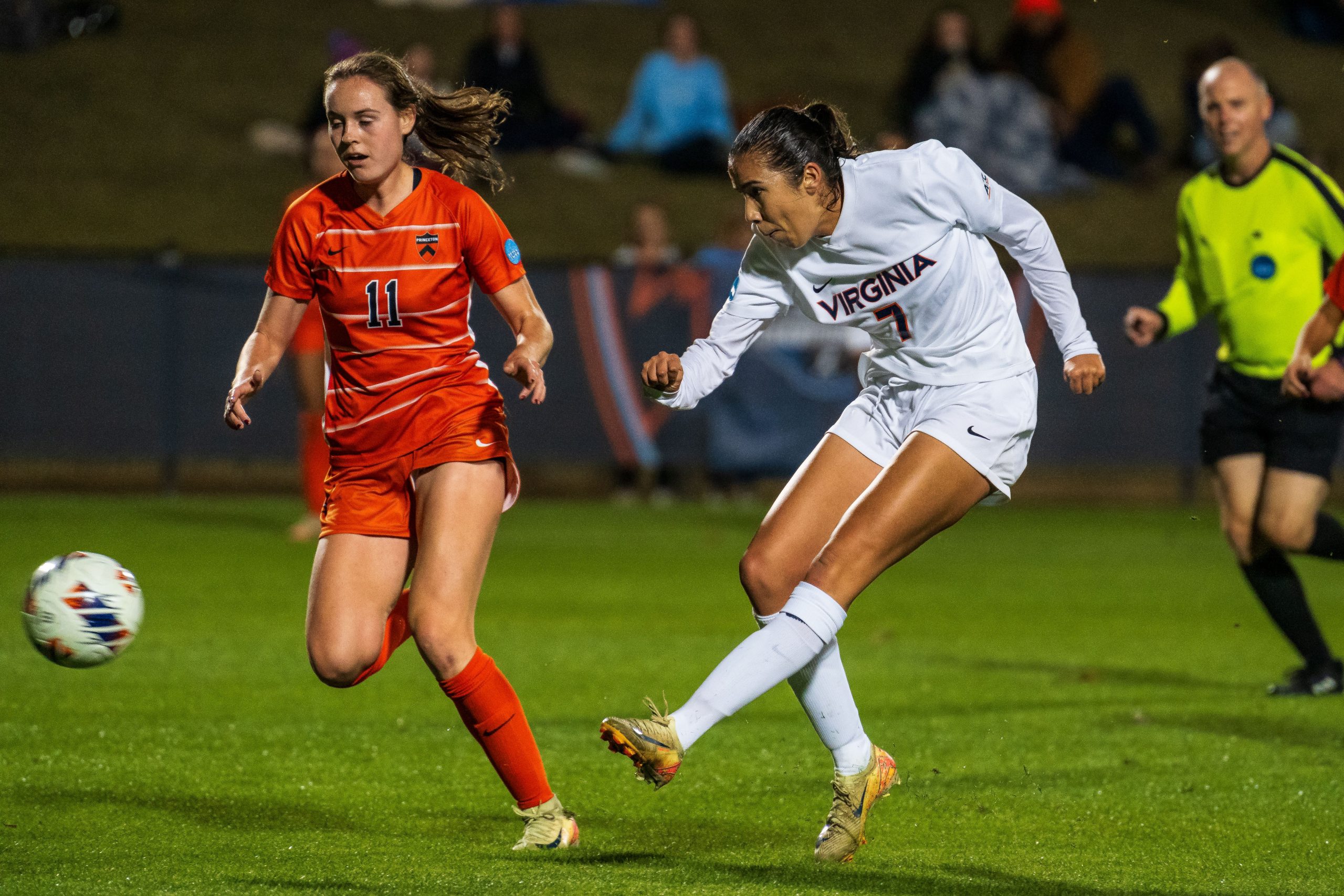
    Virginia was able to seal a 2-1 victory at Klöckner Stadium Friday night in the opening round of the NCAA Tournament against Princeton, thanks to a game-winning goal from Maggie Cagle.

    Both teams battled hard and there were numerous goal-scoring opportunities during the entire match, which kept all the fans engaged until the final whistle.

    Princeton (14-4-1) actually outshot the Hoos (13-5-0), with 10 shots to UVA’s six. The teams were even on corner kicks with six each, and the Hoos held an advantage in saves, with Victoria Safradin coming up with three, opposed to none from Tyler McCamey.

    The game started fairly sloppy in the first few moments as both teams were trying to settle into the postseason competitiveness. There is a difference to the postseason, as you are playing each second to continue your season. It’s either win or go home.

    The Cavaliers were stunned just six minutes into the match, as Princeton was able to open the scoring. The Tigers were able to capitalize on a loose ball on their left attacking third, as Heather MacNab found the ball and some open space before playing a perfectly weighted through-ball to Pietra Tordin, who chipped the ball past Safradin from a difficult angle.

    The Hoos seemed to be playing with some nerves, as they made unforced careless turnovers all over the field, making it difficult to gain any sort of rhythm.

    Meredith McDermott brought great energy and hustled non-stop, pressuring the Princeton defenders and forcing turnovers trying to motivate her team.

    In the 14th minute, the Cavaliers struck with a brilliant goal from the left foot of Yuna McCormack. McCormack found the ball from Lia Godfrey in the middle of the field, took one touch to her left and struck a great bouncing ball far-post past McCamey to get the Hoos level again.

    UVA made subtle adjustments at the half, as coach Steve Swanson was able to spark the team as they scored just moments into the second half. Cagle found the back of the net for her 7th goal of the season after some incredible play from Godfrey.

    Godfrey managed to turn over a Princeton player in the midfield and make a dangerous run towards the back line before slotting a ball out wide to Cagle.

    Cagle set up her defender to cut inside on her left foot and shot the ball, which was deflected off the defender’s shin and went up and over McCamey’s outstretched arms for the 2-1 advantage.

    There were more chances over the remainder of the half for both teams. The Cavaliers had another near goal from a direct corner from Godfrey. Godfrey possibly went for the “Olimpico” (scoring directly from the corner) as she took an in-swinging corner with her right foot and hit the near post, which ricocheted the ball into the middle of the box and was eventually cleared by the Tigers.

    Princeton also had opportunities, notably two free kicks just outside the Cavaliers’ box. The Hoos were able to defend the first opportunity well, as the ball was able to skip into the arms of Safradin. The other opportunity was shot just over the Cavaliers’ crossbar. It was a great, competitive match, as the Hoos were able to battle, going down one goal and getting the important win to continue their season.

    GOALS
    Princeton: 6’ – Pietra Tordin (Zoe Markesini)
    UVA: 14’ – Yuna McCormack (Lia Godfrey)
    UVA: 48’ – Maggie Cagle (Lia Godfrey)

    ADDITIONAL NOTES

    • The NCAA Tournament berth marks the 36th appearance for the Hoos, which is the second-most appearances nationally in tournament history
    • Virginia and Princeton had met twice before, with the Hoos claiming games played in 1997 and 1998, with every match being played in Charlottesville. This was the first meeting in the postseason
    • UVA hadn’t played in nearly two weeks, as they didn’t qualify for the ACC tournament
    • Godfrey added two more assists, making her eighth all time in UVA history with 29
    • Virginia improved to 52-19-7 in NCAA Tournament play under Swanson

    FROM HEAD COACH STEVE SWANSON

    “That was a good result from our group. We worked hard the last two weeks and it’s not very easy to sit idle for two weeks, train and come back and get a first-round opponent like Princeton. They were very good. What a great season they’ve had. Full respect to their team and program.

    “They gave us everything they had, and we knew it was a game that could have gone either way. I’m proud of our team after going down a goal, especially the way that goal happened, and to come back and get the win on two pretty nice goals is great. We’re glad to be moving on and our fans were really fantastic tonight – they made a difference for us.”

    UP NEXT

    Virginia will face No. 5 seed Wisconsin in the second round of action. The location of the second-round matchup will be determined after top-seeded USC faces Sacramento State on Sunday. See the full tournament bracket here.


    Source link

  • Newly-elected World Rugby boss Brett Robinson vows to tackle sport’s ‘financial crisis’, promote women’s game and stop time-wasting – after first southern hemisphere chairman sees off rivals to succeed Sir Bill Beaumont

    Newly-elected World Rugby boss Brett Robinson vows to tackle sport’s ‘financial crisis’, promote women’s game and stop time-wasting – after first southern hemisphere chairman sees off rivals to succeed Sir Bill Beaumont

    World Rugby’s new chairman, Brett Robinson, has outlined his urgent mission to tackle the sport’s acute financial crisis, after narrowly winning the vote to succeed Sir Bill Beaumont.

    The former Australia flanker became the first elected figurehead of the global governing body from the southern hemisphere, by edging out ex-France captain Abdelatif Benazzi 27-25 in the second round of voting. 

    As expected, it had become a two-horse race when the Italian candidate, Andrea Rinaldo, was eliminated after gaining just nine votes in the first round, compared to 22 for Robinson and 21 for Benazzi.

    Having come through the tense, tight ballot at a luxury hotel here in the Irish capital, the 54-year-old victor spoke about his pride and pressing priorities. 

    ‘It’s a great privilege and honour to be elected to chair World Rugby,’ said Robinson. ‘I was honoured to be put up, but to have the game come and support me is fabulous.

    ‘Work starts today. There are a list of things that (World Rugby’s) Council want from me, having elected me, and I’ve got to start looking at those in some detail. 

    Brett Robinson has seen off the competition to become the new World Rugby chairman

    Brett Robinson has seen off the competition to become the new World Rugby chairman

    Robinson (second-right) will replace outgoing Sir Bill Beaumont (second-left) in the role

    Robinson (second-right) will replace outgoing Sir Bill Beaumont (second-left) in the role

    The result was a disappointment for former French star Abdelatif Benazzi who expected to win

    The result was a disappointment for former French star Abdelatif Benazzi who expected to win

    ‘I was very clear leading into the elections that the financial sustainability of our member unions is at crisis point, so we have to find ways, collectively, to deal with that. I was really clear about the need to grow the game, while ensuring our core markets are in a good place.

    ‘I was clear about the competitions that matter to us – the Nations Championship getting off the ground, the women’s game continuing to grow, and our platform around the Sevens being reset after the Olympics. I was also really clear about listening to our fans.

    ‘There is not enough ball in play, too much senseless kicking, and we’re not promoting teams to attack. Finally, World Rugby as an organisation has been in the professional era for about 30 years. 

    ‘Now, we’ve got so much to think about as an organisation, what our priorities are, and how we can be fit, lean, and ready to deliver.’

    The perception going into the election was that Robinson was a status quo candidate while Benazzi was more focused on overseeing an era of global expansion. 

    Asked if his aim was to reinforce the game’s core unions and nations rather than targeting new markets, Robinson added: ‘We’ve done some great work in the past few months bringing our top unions together.

    ‘There are revenue and cost levers we can play with. We did a workshop four weeks ago, and last night the CEOs and chairs of the major unions came together as a follow-on from that. We’re into some detail about those things now.’

    This was not only a satisfactory outcome for Australia, it also represented a perfect result for the RFU, who have been able to maintain English influence at the top of World Rugby. 

    Robinson drew attention to the Rugby Sevens platform being 'reset' after the Olympics

    Robinson drew attention to the Rugby Sevens platform being ‘reset’ after the Olympics

    He also vowed to assist the women's game as it 'continued to grow' in popularity

    He also vowed to assist the women’s game as it ‘continued to grow’ in popularity

    The result is good news for the RFU as it maintains English influence at the top of rugby

    The result is good news for the RFU as it maintains English influence at the top of rugby 

    Former England full-back Jonathan Webb will serve as vice-chairman after being elected to the executive board, after the RFU strongly and openly backed Robinson’s campaign.

    Benazzi had been confident of victory in the chairman election and as he hurried to leave the hotel after his agonising defeat, he lamented the decision by Rugby Africa to cast their two votes in favour of Robinson. 

    The Morocco-born candidate had evidently expected to be supported by the region whose leading nation, South Africa, were staunchly supportive of Benazzi’s bid for the lead role.

    Shortly after the voting concluded, the president of Rugby Africa, Herbert Mensah – a Ghanaian businessman and sports administrator – could be seen posing for selfies with Robinson. It emerged that Mensah had been voted on to the new executive board.

    Another man hoping to gain one of those coveted seats at the top table was former Argentina captain Agustin Pichot, who had narrowly lost the previous chairman election to Beaumont in 2020. However, the popular Pumas legend missed out, as did the president of Rugby South America, Sebastian Pineyrua.

    Source link