hacklink hack forum hacklink film izle hacklink marsbahisizmir escortsahabetpornJojobetcasibom girişgalabetBakırköy Escortcasibom9018betgit casinomarsbahismatbet girişcasibomlink 5k depositjojobetonwinmatbetalobet

Tag: Young

  • Would you take your young child to boarding school?

    Would you take your young child to boarding school?

    At St Elizabeth Academy in Nairobi’s Karen location, any child who has graduated from using diapers can be in boarding school.

    Its proprietor Anne Wanjiku Munene tells DN2 Parenting children just getting started with their primary school journey can stay at the school full-time.

    “We normally have the boarders starting from Grade One, and that is because at Grade One, they have stopped using diapers. But children with diapers are not allowed to be boarders,” she says. “We recommend any age that is not using a diaper.”

    A range of reasons, she notes, makes parents want to have their children in a boarding set-up. One of them is the type of business the parent is engaged in.

    “If they are working in Marikiti and they have to wake up very early and they sleep very few hours, and they are in Marikiti seven days a week, these people don’t have time for the kids,” says Ms Munene.

    “And if a parent is importing things from China to go and sell them in Malawi, they don’t have time to sit down and check the homework and the handwriting of a child. This is why they bring them to boarding school,” she adds. “They also bring them to boarding school if they are running very busy offices where they are employed, and they find that they are so exhausted at the end of the day that it becomes difficult for them to manage the children. So, we offer a five-day boarding for such parents.”

    The debate on the ideal age for a child to join boarding school has been reignited following the September 7 incident in Nyeri County where 21 children at the Hillside Endarasha Academy died in a dormitory fire. Those who died were aged between 9 and 12, and the average age of learners at the institution has been put at nine.

    That children in the second to third year of primary school education could find themselves in a boarding environment is a matter that has raised debate, with strong arguments on either side. On one side of the debate are persons like author Deborah Auko Tendo, the woman behind the book Rough Silk.

    “Stop blaming the parents who have lost kids in the fire disaster. Having a child is like having your heart live outside your body. Anything can happen to it and you have no control,” she posted on Facebook while responding to the other side that argued that taking a child to boarding school too early in life is leaving them to their own devices when they need parental mentoring and coaching.

    Ms Tendo went to boarding school aged nine because she was in a troubled family setup where her parents tussled over who should take custody of her. When she was a day scholar, she would sometimes be snatched by one parent on the way from school and hidden.

    “Boarding schools are okay if only, as parents and teachers, we can keep a standard that’s safe and healthy for the growth of children; where children are not prone to mental harm, hunger, neglect, bullying or hazards like fires. There are special kinds of kids that are better off in boarding schools,” Ms Tendo wrote.

    Nation Lifestyle spoke with 67-year-old Nairobi resident Jane Ouma who went to boarding school in Standard Four and took her daughter to boarding school from Class One to Class Eight.

    “I did not see anything wrong with boarding school. However, my daughter, to date, thinks I made a mistake to take her away when she was that young,” Ms Ouma said.

    The front office expert said she enrolled her daughter in a boarding school because she could not secure admission anywhere else. She was six but tall, and most schools only took in seven-year-olds.

    “So, all the schools I went to could say no. But the girl was tall, and she looked too big for her age. So, she schooled in boarding school,” said Ms Ouma.

    However, with hindsight, Ms Ouma believes she should have waited. “Now, the way I see it, it is not proper to take children to boarding school too early. We can take them perhaps in Class Six. I took my grandchild to boarding school at Class Four. Why? I had taken the child to a private school in Nairobi and I was not seeing any (progress). So, I took him to a boarding school, and he did well,” noted Ms Ouma.

    Mr Francis Ohuru, another Nairobi resident, took his daughter to boarding school when she was in Standard Four. “At that school, they were boarding from Standard One to Eight. I didn’t experience any problems because, in that school, children were always under the care of the school matron. So, my child finished school without any incident and left for high school. She is now done with education,” he said.

    Parents send their teenagers to boarding schools primarily for better education and to learn to live independently

    Photo credit: Shutterstock

    The concept of boarding schools dates back to the colonisation of Kenya. A paper published by the Kenya Scholars and Studies Association in 2021 states that pioneering teachers in Kenya saw the schools as a way to “fast-track” learning and also draw some children from their “inhibitive” backgrounds.

    “Kenya’s past experience was not different from boarding schools for native ‘Indians’ in the USA that were built with the clear intention of assimilating them into the mainstream American way of life and intended to eradicate all vestiges of Indian culture,” said the paper written by Dr Charles Manyara, who is based at Radford University in the US.

    “The post-independence expansion of boarding schools was born out of the need to meet the competitive job market and admission to the best schools available. The haste for parents to send their children to boarding schools picked up in the 1970s and more so in the 1980s. The prevailing perception in Kenya was that anyone wishing to raise successful children ought to send them to a boarding school,” Dr Manyara added. “Parents send their teenagers to boarding schools primarily for better education and to learn to live independently.”

    The fad has not died down, and it is the one that has led to the thriving of institutions like Endarasha.

    Ms Munene, the proprietor of the Karen-based institution, said that 90 per cent of her pupils are boarders.

    If homesick children in boarding schools could sue, they have the 2022 amendment of the Children Act on their side.

    “Except as is otherwise provided under this Act, every child has the right to live with his or her parents,” says the law that took effect in July 2022.

    It adds that a child can only be separated from parents “where the [children’s] court or the [Cabinet] Secretary determines that the separation is in the best interest of the child”.

    Ms Munene says family troubles and the absence of one parent also create the need for children to live in their schools.

    “We also have boarders where one of the parents has passed away, and there’s only one parent left to take care of them. At times, they have to look for money to pay the mortgage, and this is why they bring the kids to the boarding school. They normally pick them on the weekends,” says Ms Munene.

    “To me, the boarding environment is the best, given the type of things that are shown on the internet,” she adds. “To me, the best study environment for the children in the Republic of Kenya is one that is free of phones.”

    Some of the people who have been subjected to boarding school as children have previously voiced their resentment to the arrangement. Some say they became withdrawn from their parents, became too aggressive, or found it hard to socialise.

    Mr Erick Kirimi wrote in an article in the Nation in 2017 that he was taken to boarding school when he was barely seven years.

    “The feeling of abandonment has stuck with me ever since,” he wrote. “At this vulnerable age, what children need most is an emotionally meaningful relationship, not pressure. And only parents can offer that. Teachers, however, dedicated, cannot provide emotional satisfaction to every kid in the class.”

    He went on: “Boarding schools are a fraud; a shell game. Parents are short-changed. It is humbug to pretend that we don’t see that. There is nothing special they offer kids below 13 years which parents cannot provide at home.”

    Nation Lifestyle posed to Dr Philomena Ndambuki, a psychologist who has specialised on child development, the question of whether going to school too early has an impact on a child’s wellbeing.

    “I was in a boarding school from Class Four to Form Four in high school. It worked well for me and the other students because the school management was very good,” said Dr Ndambuki. “My recommendation is that it is possible to run a boarding school for young children.”

    Ms Munene said that at her school, children have a nanny who attends to the younger children day and night.

    “The services that we give the kids are equal to those of a mother. We take care of their homework, we take care of their feeding, and we also take care of their learning. And while we find that you have a boarding school, the best that you can do is to be alert. You have to be alert at all times, imagine the kids are yours,” she said.

    One of the people who don’t buy into the theory of boarding schools being better than day ones is Mr Kennedy Buhere, a communications officer at the Education Ministry.

    In a December 2022 article in the Nation, weighing on a plan by the government to ban boarding school for learners from Grade One to Nine, he stated: “The argument that boarding school gives learners more time to study and play doesn’t hold water. Day schools don’t compromise students’ learning and play. The Basic Education Regulations 2015 take care of the instructional needs of all learners, regardless of whether they are in boarding or day school.”

    Even Ms Tendo, in her recollection of the life she led at her primary school as a boarder, where the conditions required one to be tough to withstand the theft of items and the survival-for-the-fittest environment, says sometimes young children are thrown in the deep end.

    “There is no glory in that. That is not how children should grow up. That is not how human beings should develop,” she wrote as she made her case for boarding schools with pro-child standards.

    The safety standards manual for Kenyan schools outlines several safety measures for dormitories.

    They include a provision that there should be a space of at least 1.2 metres between beds; a doorway that is at least five feet wide and which opens outwards; a door at each end of the dorm and an emergency exit in the middle; windows that don’t have grills and which open outwards; fire extinguishing equipment, among others. However, these are often overlooked, only to be discovered when learners have died at an institution.

    “There is no one school or school structure that is perfect for all students. Students bring with them a variety of intelligence, dispositions, learning styles, cultures, religions, family backgrounds, and personal tastes and preferences. Therefore, there is a need to re-think and have an education system responsive to the needs of Kenya and its people in the 21st century,” wrote Dr Manyara.

    Source link

  • Black Grace’s The Next Wave: Meet the young NZ dancers challenging stereotypes

    Black Grace’s The Next Wave: Meet the young NZ dancers challenging stereotypes

    Source link

  • Woodleigh’s new hawker centre has many stalls run by young entrepreneurs, here’s what they’re offering, Lifestyle News

    Woodleigh’s new hawker centre has many stalls run by young entrepreneurs, here’s what they’re offering, Lifestyle News

    Those lucky enough to score a Build-to-Order flat in the Woodleigh, Bidadari and Potong Pasir areas will be happy to know that there’s a new and affordable meal option in your hood. 

    Woodleigh Village Hawker Centre just opened on Thursday (Sept 5) and there are 39 new hawkers to patronise. 

    It spans around 3,255 sqm and has more than 600 seats.  

    The hawker centre is also conveniently located next to Woodleigh MRT and is connected to The Woodleigh Mall.

    Additionally, in the future, there will be a bus interchange, which is part of an integrated development that includes retail, childcare, dining and community spaces. 

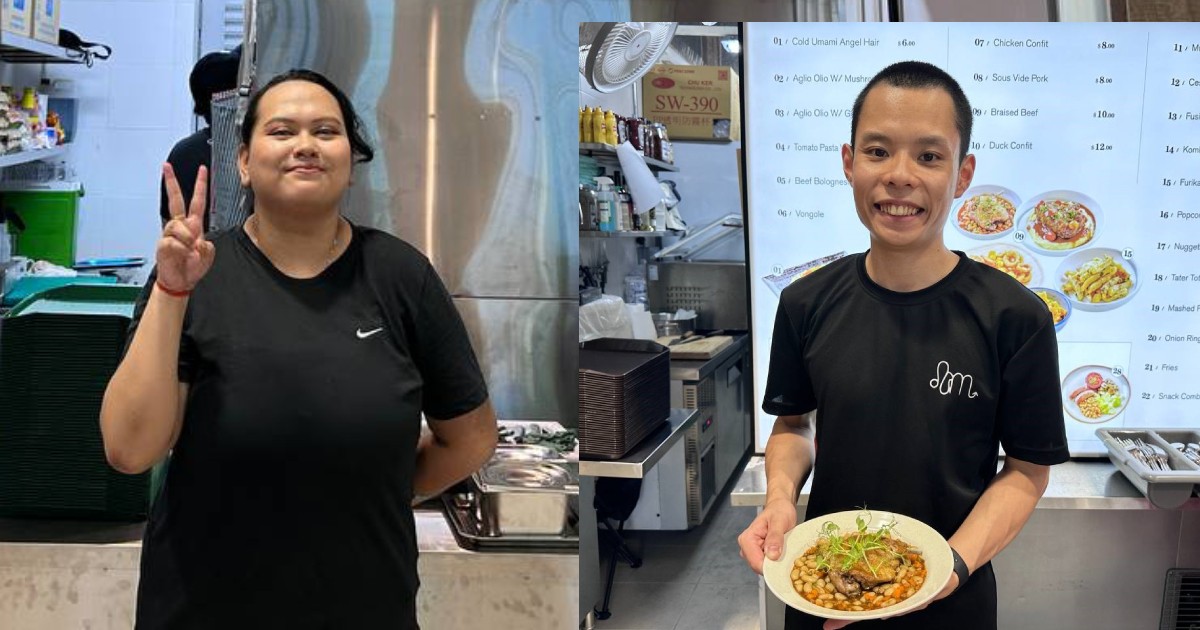
    But the real highlight is the number of young entrepreneurs who’ve set up shop at the hawker centre, from a 25-year-old prawn mee specialist to a couple in their 30s selling Mexican fusion food.  

    When AsiaOne visited Woodleigh Village Hawker Centre on Wednesday (Thur 4), we were surprised by the number of millennials and Gen Zs manning the stalls.

    Here are some you can patronise. 

    Ji Hui Lai Nasi Kerabu, #01-07 

    As the name suggests, this stall sells nasi kerabu and is co-owned by Wong Yi Xiong, 34, who formerly worked in logistics in a multinational corporation. 

    Yi Xiong also has experience in the food and beverage (F&B) industry in Malaysia and set up Ji Hui Lai Nasi Kerabu together with a friend. 

    They’ve created their own Nasi Kerabu ($7.80) recipe with a twist to appeal to Singaporeans, and the dish comes with bright blue pea rice, fried chicken, various spices, a cracker and chilli. 

    We really enjoyed their rendition of the dish and the chicken was extremely tender, pairing well with the accompanying spices. 

    Style Palate, #01-30 

    Twenty-five-year-old Shi Long is the owner of Style Palate, which specialises in restaurant-quality French cuisine. 

    Shi Long started his culinary journey at the age of 16 and even did an exchange programme at a prestigious culinary institution in France. Back in Singapore, he honed his craft in several Michelin-star restaurants. 

    What inspired him to start a hawker stall was an encounter with a customer who was not able to afford high-end restaurant food. 

    He wanted to make quality food affordable for all, so he opened Style Palate. 

    Dishes such as braised beef, sous vide pork and duck confit are uncommon finds in a hawker centre setting, but Shi Long sells just that for wallet-friendly prices. 

    We tried the duck confit, which cost $12, and were pleasantly surprised by how tender the meat was. If you didn’t tell us otherwise, we would have thought that the dish was from an upscale restaurant. 

    Guan Kee Kway Chap, #01-19 

    Esther is no stranger to Singapore’s hawker scene.

    For years, the 33-year-old has helped managed several large F&B companies. 

    She also happens to be the daughter of the owners of the famous Guan Kee Kway Chap and has helped out at her parent’s stall since she was a child. 

    It has been her dream to continue their legacy, especially after seeing many popular hawker stalls close down and sell their recipes. 

    And she finally has made this come true with her new stall at Woodleigh Village Hawker Centre. 

    M+ Fried Rice, #01-11 

    Another Gen Z entrepreneur to watch out for is Siti Nurnameera Abdul Samad. 

    The 26-year-old runs M+ Fried Rice, which sells a halal version of Chinese-style cuisine with a fusion twist. 

    Nurnameera was a former lab technician at a local polytechnic, and she felt that her calling was more with food than with science, so she made a bold career switch. 

    Her goal is to attract a diverse audience and celebrate culinary diversity in Singapore’s local food scene. 

    What makes her fried rice even more special is the machine she uses to cook it. 

    This was designed by a Hong Kong tzi char chef and it efficiently blends ingredients like eggs and rice to preserve the wok hei taste. 

    We got to try her Sambal Sakura Shrimp Fried Rice ($8) first-hand, and we couldn’t tell that it had been prepared with a machine — it was pretty good! 

    Nan Xiang Chicken Rice, #01-28 

    There’s also Shaun, 26, who owns Nan Xiang Chicken Rice and is taking over the reins from his ageing mother. 

    The second-generation hawker initially was pursuing a degree in marketing before deciding to make a career switch to preserve his mother’s business legacy. 

    After learning the ropes and adapting her chicken recipe, he took a leap of faith and opened his very first hawker stall at Woodleigh Village Hawker Centre.

    We tried his Steamed Chicken Rice ($4.50). It takes a lot of skill to get the texture of chicken right, but Shaun nailed it.

    Liu Da Xia, #01-31 

    One of the youngest hawkers at Woodleigh Village Hawker Centre is 25-year-old Liew Xiao Xuan. 

    As her parents are also in the F&B scene, she grew up immersed in the culinary world. 

    After graduating from Institute of Technical Education (ITE) last year in 2022, she worked in F&B for a while before deciding to set up her own stall. 

    While she is known for her umami-packed bowls of prawn mee, her speciality dish is white curry, something that one does not see often in Singapore.

    She hopes that more Singaporeans will learn about the dish and enjoy it like she does. 

    Pura Vida Cocina Mexican Fusion, #01-25 

    One stall that really stood out among the rest was Pura Vida Cocina.

    Specialising in Mexican fusion food, it was started by Millennial hawkers Kok Pin and Wong Min. 

    The husband-and-wife duo, who are both 36 years old, noticed the growing popularity of Mexican food among the Gen X and Gen Z communities and wanted to make the cuisine more accessible and healthier to them. 

    Prior to this, Kok Pin already had more than 10 years of experience in the F&B industry, so he was no stranger to the culinary world. 

    Wong Min left her job at an investment company to run the business with him. 

    Their colourful, extensive menu features Mexican rices, tacos, nachos and burrito bowls. 

    Our favourite was the Spiced Chicken Mexican Rice ($7.50). The chicken was well marinated and extremely tender. It’s a healthy, filling option for those who need more protein in their diet. 

    We also love the Vegetarian Nachos ($7.50), which makes a great sharing dish. 

    Origanics, #01-13

    Thirty-one-year-old Darryl is changing the way people eat vegetarian and vegan food with his stall, Origanics. 

    He began his culinary journey over a decade ago after he dropped out of polytechnic. During the Covid-19 pandemic, he also ran tuck shop stalls in schools. 

    After being a vegetarian for a few years, he opened his first hawker stall selling plant-based dishes at Buangkok Hawker Centre. Now, he also has a branch at Woodleigh Village Hawker Centre. 

    While his menu items like Caramelised Char Siew Don ($7.50) and Chicken Cutlet Kolo Noodle ($6.50) don’t sound vegetarian, they actually are. 

    We tried their Signature Caramelised Char Siew Kolo Noodle ($5.90) and were blown away by how good it was.

    Upon first glance, the char siew does look like the real deal but when you bite into it, you can tell that it is plant-based. 

    Kallang Wantan Mee, #01-33 

    The 36-year-old owners of the stall, Sze En and Shen Ping, wanted to bring traditional Malaysian wantan mee to Singapore. 

    The dark sauce dish is not as commonly found in Singapore and Sze En, who grew up in Malaysia, prefers it. 

    Every element, from the wantan noodles and the spicy chilli, is made from scratch so that diners can get the authentic experience. 

    If you don’t feel like crossing the border to satisfy your wantan mee cravings, this is a fantastic option! 

    Other hawkers to try

    Apart from the hawkers we mentioned, there are a variety of other stalls to patronise too. 

    For soothing bowls of porridge, there is Fat Fat Food, which specialises in authentic Cantonese porridge. 

    Those hankering for food from the Land of Smiles can try No. 9 Thai Kitchen. 

    There’s also the famous Eng Kee Chicken Wings, which some say sell the best chicken wings in the whole of Singapore. 

    Want to end your meal on a sweet note? Head over to Munchi Pancake for some of the best min jiang kueh (pancakes) in town. 

    ALSO READ: Duo makes ‘impulsive decision’ to set up hawker stall selling 2 dishes, already drawing regular customers

    melissateo@asiaone.com

    Source link

  • Olympic champion Toby Roberts’ example is sending young people up the wall | Rock climbing

    “He’s really good at climbing,” says eight-year-old Ivy Wilson, who has just scaled a wall at the Cambridge branch of Clip ’n Climb, the New Zealand-founded “theme-park meets climbing walls” experience that spawned a global phenomenon. “I like how he did it so fast.”

    The man in question is Toby Roberts – the 19-year-old ­climbing wunderkind who struck gold for Team GB in the men’s boulder and lead event at this summer’s Olympics in Paris.

    The fresh-faced Roberts, who was given the unlikely nickname of “the Terminator” by his teammates, became the first British male climber to qualify for the games when he won the 2023 European qualifiers in Laval, France.

    His unexpected win in Paris is now propelling a whole new ­generation of climbers through the door of this Cambridge climbing centre, says the owner Beth Walthew – so many that she saw a 35% rise in footfall the week following Roberts’ triumph.

    Walthew is not alone in feeling “the Terminator” effect: climbing centres across Britain are reporting a surge in interest after the teenager’s historic win.

    Toby Roberts on his way to winning gold in the men’s boulder and lead final at the Paris Olympics. Photograph: Christophe Ena/AP

    “There was a lot of buzz here around Toby Roberts,” says Walthew. “We had an in-house speed climbing competition the week of the games and everyone was talking about it. Anything that gets climbing into the public psyche is a good thing.”

    Walthew estimates that about 80% of her customer base is under 18, with children as young as two ­giving the sport a go as part of the centre’s “Little Rockers” toddler group. “Kids will come to us as a first step before they move on to traditional indoor climbing walls and that’s brilliant to see.”

    Climbing is a new addition to the Olympic roster, having debuted at the Tokyo 2020 games. But interest in the sport has been a slow burn, says Katie Varian, managing director of Eden Rock Edinburgh, which is home to Scotland’s biggest indoor bouldering wall. “Climbing seems so behind other sports in terms of the number of people who know about it,” she says.

    Unlike Tokyo 2020, where climbers competed for a combined top score across speed, boulder and lead events, climbing at this year’s Olympics was split into two separate competitions – with speed climbing standing as a separate event and boulder and lead climbing combined as another.

    Ivy Wilson, eight, navigates a series of climbing poles at the Clip ’n Climb centre in Cambridge. Photograph: Antonio Olmos/The Observer

    Which is just as well, because it was Ivy’s favourite fixture. “I climb everything,” she says. “Even at places where I’m not supposed to.”

    Her mother Sarah’s interest in the sport, meanwhile, will resonate with parents the world over: “It’s a great place to take them because it means they won’t be climbing the furniture in my house.”

    Ashley Loveday, 15, is considering enrolling in an indoor climbing course having honed his skills at Clip ’n Climb. “It’s just fun to do,” he says. “I really like climbing to new heights and completing new challenges.”

    skip past newsletter promotion

    Walthew opened the centre with her husband, Chris, in 2016, having visited one of the UK’s first Clip ’n Climbs while on holiday in Exeter. “Our daughter just loved it, and it was amazing to see how quickly she was able to ­progress,” she says.

    The Clip ’n Climb approach uses an auto-belay system that means ­children can climb trails of up to seven metres knowing that if they fall, they will be released gently back to the ground. The UK has been the Kiwi company’s biggest success story, with 80 centres and counting across the nation.

    Beth Walthew, left, owner of Clip ’n Climb in Cambridge, with Tamara Willoughby, the centre’s manager. Photograph: Antonio Olmos/The Observer

    But not all in the climbing community welcome the craze. “It’s a bit like if we’d won gold and everyone went and played crazy golf,” says Phil Minal, co-owner of Redpoint Birmingham.

    “It wouldn’t exactly increase golf participation. Not to diss Clip ’n Climb, but indoor ­climbing gyms like ours are more of a chance to learn proper ­technique, which ultimately leads to people becoming independent climbers.”

    But for many, the ­colourful walls of these school holiday hotspots provide an important stepping stone. “We have had an increase in interest in our climbing classes, which hopefully means that there will be a steady flow of future climbers feeding into Team GB in the future,” says Keely Weir, managing director of Clip ’n Climb Bicester.

    Oliver Scott, 11, first climbed at Weir’s centre aged five and has now progressed to a traditional climbing gym. “I would love to be as good as Toby Roberts one day,” he says. “It’s cool that my friends now know the name of a climber. Before he got gold they didn’t know many.”

    Source link

  • Latest lifestyle News, Live Updates Today September 1, 2024: Which skincare products should young girls use? Dermatologists suggest simple is best. Details

    Latest lifestyle News, Live Updates Today September 1, 2024: Which skincare products should young girls use? Dermatologists suggest simple is best. Details

    Live

    Stay informed with Hindustan Times’ live updates! Track the latest lifestyle news including fashion trends, style guide & Tips, India & World Events. Don’t miss today’s key news for September 1, 2024.

    Latest news on September 1, 2024: Simple is best before puberty hits, dermatologists say.

    Latest news on September 1, 2024: Simple is best before puberty hits, dermatologists say.

    Get the latest news updates and breaking news stories from the world of lifestyle. Track all the latest fashion trends, delicious recipes, travel tips and more. Disclaimer: This is an AI-generated live blog and has not been edited by Hindustan Times staff.…Read More

    Follow all the updates here:

    Sep 1, 2024 10:28 AM IST

    Health News LIVE: Which skincare products should young girls use? Dermatologists suggest simple is best. Details

    • Simple is best, dermatologists say. Before puberty hits, most kids only need three things: a gentle cleanser, a moisturiser and sunscreen.


    Read the full story here

    Sep 1, 2024 10:03 AM IST

    Health News LIVE: Should you stop smoking before conception? Is there ‘no safe period’ for smoking during pregnancy? Study answers

    • A new study sheds light on whether women should stop smoking before conception and if there is ‘no safe period’ for smoking during pregnancy.


    Read the full story here

    Sep 1, 2024 10:00 AM IST

    Art and Culture News LIVE: Home office furniture buying guide: How to choose the right desk and office chair for your study

    • Struggling with your home office setup? Our home office furniture buying guide will help you choose the right desk, office chair, storage solutions and more.


    Read the full story here

    Sep 1, 2024 9:30 AM IST

    Art and Culture News LIVE: Best decorative table lamps: Enhance your space with top 7 stylish and unique choices

    • Explore our top picks for decorative table lamps that are perfect for every home, including bedside, desk and decorative table lamps.


    Read the full story here

    Sep 1, 2024 9:30 AM IST

    Recipes News LIVE: Healthy meets delicious: Ultimate recipe for gluten-free caramelised pineapple ragi cake

    • For health-conscious individuals or those simply looking for delicious twist on classic dessert, here’s a recipe of gluten-free caramelised pineapple ragi cake


    Read the full story here

    Sep 1, 2024 8:22 AM IST

    Fashion News LIVE: No revenge dress! Jennifer Lopez wore this outfit for first public appearance after divorce from Ben Affleck. Pics

    • Jennifer Lopez stepped out for the first time since filing for her divorce from Ben Affleck. The singer ditched Revenge Dress for a stylish yet casual outfit.


    Read the full story here

    Sep 1, 2024 8:00 AM IST

    Lifestyle News LIVE: How fashion conquered television

    Sep 1, 2024 6:00 AM IST

    Recipes News LIVE: Kickstart your mornings: Try these wholesome smoothie recipes for a healthier start to your day

    • Looking for a quick and nutritious way to begin your day? These smoothie recipes are perfect for a refreshing breakfast or snack.


    Read the full story here

    Source link

  • Young girls are using anti-aging products they see on social media. The harm is more than skin deep

    Young girls are using anti-aging products they see on social media. The harm is more than skin deep

    SACRAMENTO, Calif. — When she was in fifth grade, Scarlett Goddard Strahan started to worry about getting wrinkles.

    By the time she turned 10, Scarlett and her friends were spending hours on TikTok and YouTube watching influencers tout products for achieving today’s beauty aesthetic: a dewy, “glowy,” flawless complexion. Scarlett developed an elaborate skin care routine with facial cleansers, mists, hydrating masks and moisturizers.

    One night, Scarlett’s skin began to burn intensely and erupted in blisters. Heavy use of adult-strength products had wreaked havoc on her skin. Months later, patches of tiny bumps remain on Scarlett’s face, and her cheeks turn red in the sun.

    “I didn’t want to get wrinkles and look old,” says Scarlett, who recently turned 11. “If I had known my life would be so affected by this, I never would have put these things on my face.”

    Scarlett’s experience has become common, experts say, as preteen girls around the country throng beauty stores to buy high-end skin care products, a trend captured in viral videos with the hashtag #SephoraKids. Girls as young as 8 are turning up at dermatologists’ offices with rashes, chemical burns and other allergic reactions to products not intended for children’s sensitive skin.

    “When kids use anti-aging skin care, they can actually cause premature aging, destroy the skin barrier and lead to permanent scarring,” says Dr. Brooke Jeffy, a Scottsdale, Arizona, dermatologist who has posted her own social media videos rebutting influencers’ advice.

    More than the physical harm, parents and child psychologists worry about the trend’s effects on girls’ mental health — for years to come. Extensive data suggests a fixation on appearance can affect self-esteem and body image and fuel anxiety, depression and eating disorders.

    The skin care obsession offers a window into the role social media plays in the lives of today’s youth and how it shapes the ideals and insecurities of girls in particular. Girls are experiencing high levels of sadness and hopelessness. Whether social media exposure causes or simply correlates with mental health problems is up for debate. But to older teens and young adults, it’s clear: Extended time on social media has been bad for them, period.

    Young girls’ fascination with makeup and cosmetics is not new. Neither are kids who hold themselves to idealized beauty standards. What’s different now is the magnitude, says Kris Perry, executive director of Children and Screens, a nonprofit that studies how digital media impacts child development. In an era of filtered images and artificial intelligence, some of the beautiful faces they encounter aren’t even real.

    “Girls are being bombarded with idealized images of beauty that establish a beauty standard that could be very hard — if not impossible — to attain,” Perry says.

    The obsession with skin care is about more than the pursuit of perfect skin, explains 14-year-old Mia Hall.

    It’s about feeling accepted and belonging to a community that has the lifestyle and look you want, says Mia, a New Yorker from the Bronx.

    Skin care was not on Mia’s radar until she started eighth grade last fall. It was a topic of conversation among girls her age — at school and on social media. Girls bonded over their skin care routines.

    “Everyone was doing it. I felt like it was the only way I could fit in,” says Mia. She started following beauty influencers like Katie Fang and Gianna Christine, who have millions of young followers on TikTok. Some influencers are paid by brands to promote their products, but they don’t always mention that.

    Mia got hooked on “Get Ready With Me” videos, where influencers film themselves getting ready — for school, for a night out with friends, packing for a trip. The hashtag #GRWM has over 150 billion views on TikTok.

    “It’s like a trance. You can’t stop watching it,” Mia says. “So when they tell me, ‘Go buy this product’ or, ‘I use this and it’s amazing,’ it feels very personal. Getting what they have makes me feel connected to them.”

    Mia started saving her $20 weekly allowance for trips with friends to Sephora. Her daily routine included a face wash, a facial mist, a hydrating serum, a pore-tightening toner, a moisturizer and sunscreen. Most were luxury brands like Glow Recipe, Drunk Elephant or Caudalie, whose moisturizers can run $70.

    “I get really jealous and insecure a lot when I see other girls my age who look very pretty or have an amazing life,” she says.

    The level of detail and information girls are getting from beauty tutorials sends a troubling message at a vulnerable age, as girls are going through puberty and searching for their identities, says Charlotte Markey, a body image expert and Rutgers University psychologist.

    “The message to young girls is that, ‘You are a never-ending project to get started on now.’ And essentially: ‘You are not OK the way you are’,”’ says Markey, author of “The Body Image Book for Girls.”

    The beauty industry has been cashing in on the trend. Last year, consumers under age 14 drove 49% of drug store skin sales, according to a NielsonIQ report that found households with teens and tweens were outspending the average American household on skin care. And in the first half of 2024, a third of “prestige” beauty sales, at stores like Sephora, were driven by households with tweens and teens, according to market research firm Circana.

    The cosmetics industry has acknowledged certain products aren’t suitable for children but has done little to stop kids from buying them. Drunk Elephant’s website, for example, recommends kids 12 and under should not use their anti-aging serums, lotions and scrubs “due to their very active nature.” That guidance is on the site’s FAQ page; there are no such warnings on the products themselves.

    Sephora declined to comment for this story.

    Ingredients like retinol and chemical exfoliants like hydroxy acids are inherently harsh. For aging skin, they are used to stimulate collagen and cell production. Young or sensitive skin can react with redness, peeling and burning that can lead to infections, acne and hypersensitivity if used incorrectly, dermatologists say.

    Dermatologists agree a child’s face typically needs only three items, all found on drugstore shelves: a gentle cleanser, a moisturizer and sunscreen.

    A California bill aimed at banning the sale of anti-aging skin care products to children under age 13 failed this spring, but Democratic Assemblymember Alex Lee says he plans to continue pursuing industry accountability. Lee and other critics say popular brands use colorful packaging and product names like “Baby facial” to attract younger buyers in the same way that e-cigarette companies and alcohol brands created fruity flavors that appeal to underage users.

    Lee points to Europe as setting the right example. The European Union enacted legislation last year that limits the concentration of retinol in all over-the-counter products. And one of Sweden’s leading pharmacy chains, Apotek Hjartat, said in March it would stop selling anti-aging skin care products to customers under 15 without parental consent. “This is a way to protect children’s skin health, finances and mental well-being,” the company said.

    Around the country, concerned mothers are visiting dermatologists with their young daughters, carrying bags filled with their child’s skin care products to ask: Are these OK?

    “Often the mothers are saying exactly what I am but need their child to hear it from an expert,” says Dr. Dendy Engelman, a Manhattan dermatologist. “They’re like, ‘Maybe she’ll listen to you because she certainly doesn’t listen to me.’”

    Mia’s mother, Sandra Gordon, took a different approach. Last spring, she noticed dark patches on Mia’s face and became alarmed. Gordon, a nurse, threw all her daughter’s products into the trash.

    “There were Sephora bags on top of bags. Some things were opened, some not opened, some were full. I got rid of them all,” she says.

    Mia wasn’t happy. But as she starts high school, she now feels her mother was right. She has switched to a simple routine, using just a face wash and moisturizer, and says her complexion has improved.

    In Sacramento, California, Scarlett missed early signs the products were hurting her skin: She developed a rash and felt a stinging sensation, within days of trying out viral skin care products. Scarlett figured she wasn’t using enough, so she layered on more. That’s when her cheeks erupted in blistering pain.

    “It was late at night. She came running into my room crying. All of her cheeks had been burned,” recalls Anna Goddard, Scarlett’s mother, who hadn’t realized the extent of Scarlett’s skin care obsession.

    When Goddard read the ingredients in each product, she was shocked to find retinol in products that appeared to be marketed to children — including a facial sheet mask with a cat’s face on the packaging.

    What worries her mother most is the psychological consequences. Kids’ comments at school have caused lingering anxiety and self-consciousness.

    Goddard hopes to see more protections. “I didn’t know there were harmful ingredients being put in skin care that is marketed to kids,” she says. “There has to be some type of warning.”

    ___

    The Associated Press’ education coverage receives financial support from multiple private foundations. AP is solely responsible for all content. Find AP’s standards for working with philanthropies, a list of supporters and funded coverage areas at AP.org.

    Source link